Maybe we’re a little biased as in the not-too-distant past we released a magazine of our own, but it’s always good to see the resurgence in print media, and Exquisite Terror – now in its fifth edition – is a stylish, studious take on horror, with original illustrations and content. Running to just over 50 pages, the focus is once again on quality not quantity, with a range of features and interviews spanning both film and literature.
By far the longest article in the publication – running to nine pages, minus the accompanying full-page illustrations – is James Gracey’s study of Dario Argento, entitled Penetrating Flesh. It’s a detailed analysis, by and large ‘critiquing the critiques’ by discussing a range of existing articles or books which allude to the intersections of horror, sex and cinema. There are some intriguing points made, though several of these critiques hinge upon pornography as a misogynistic monolith, something I feel needs to be looked at with a more nuanced eye by those who so often invoke it. That said, Gracey does question some of the ideas about women as passive mutes, pointing out that in Argento’s films, this is refuted as much as reinforced. Penetrating Flesh is scholarly in tone, though also displays a fan’s knowledge, whilst referencing a lot of further reading and research.
On the Trail of the Witchfinder
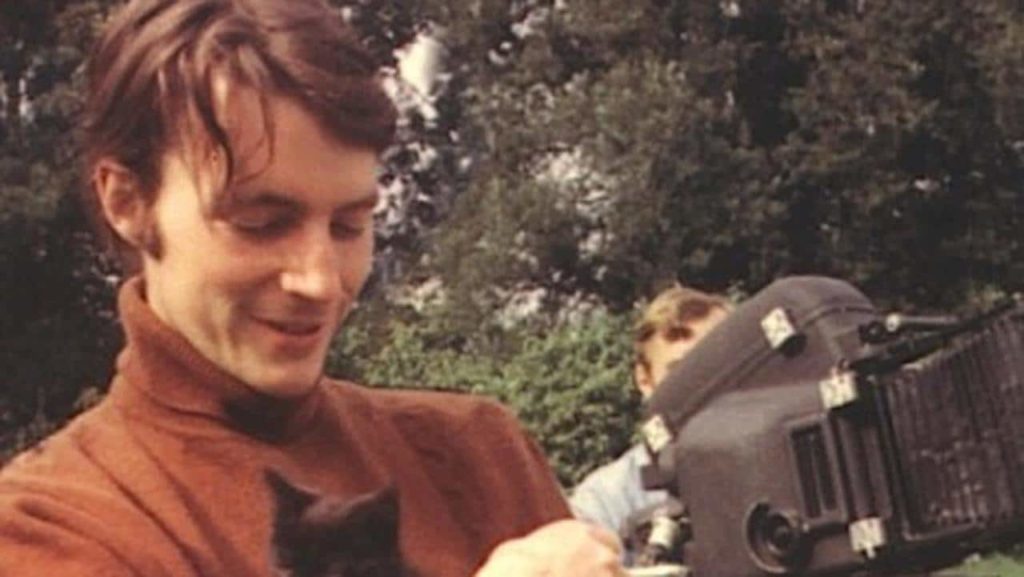 Personally, out of the entire publication, I most enjoyed Jon Towlson’s feature on British director Michael Reeves. Reeves, who directed two phenomenal films (The Sorcerers and Witchfinder General) died as a very young man following an overdose. Towlson’s feature focuses on the psychogeography of Reeves’ life, looking at the homes and pubs which were not only close to his heart, but probably integral to how he lived. These spaces were where he socialised, threw ideas around and – towards the end – grappled with what he saw as the deeply wrongheaded criticisms of his work, particularly the then much-maligned Witchfinder General, now considered a classic of its genre. It’s an interesting perspective, looking squarely at the seeming incongruity between Reeves’ films and his surroundings but always remaining sympathetic and engaged. It’s hard to disagree with the conclusion of this piece – that the death of Michael Reeves so very young was a phenomenal loss.
By and large, Exquisite Terror 5 belongs to older, dare I say ‘classic’ horror, for the most part. The Script Behind the Classic: The Omen by Martyn Conterio offers a neat potted history and some interesting facts about the film, contextualising it by pointing to the increasing absence of ‘God’ from society at the time. It’s a fair point; Time Magazine ran its ‘Is God Dead?’ cover in the late 1960s and some good godless horrors were spawned in the years which followed, including The Omen. This is a readable and engaging article.
A new perspective on Hannibal Lecter is offered in Impenetrable Sanity, a feature which considers the character from the point of view of legal definitions of sanity, deciding that it’s unlikely Lecter would have got away with an insanity ruling in the first place, given his profile and behaviour. This is a somewhat dry account in places, but I can’t deny that it’s an interesting way to come at one of the most notorious characters in crime fiction. Sticking with fiction writing, a conversation with esteemed author Ramsay Campbell on his memories of fellow author, Robert Aickman, is full of warmth and good humour, though of course if you’re unfamiliar with Aickman, then reading some of his work should be your first port of call. There’s another interview in ET5, definitely of interest to 80s horror fans, with ‘Uncle’ Bob Martin, formerly of Fangoria Magazine. Integral to early fandom for many, Martin discusses his early experiences of running the magazine (including where it got its name) and chats about his work with Frank Henenlotter, the master of bizarre body horror.
God Bless America…
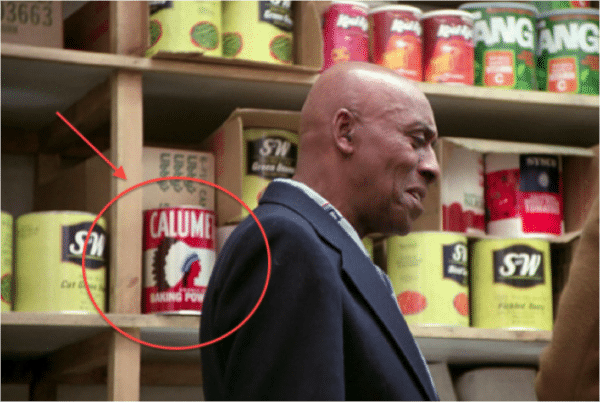 Exquisite Terror doesn’t seem to have an overarching editorial policy, meaning there’s no impetus to toe a line, one way or another. This boosts the variety of features on offer – a good thing – though of course it also means that I, like anyone else, will always prefer some articles to others. God Bless America: Stephen King’s Shining by Jim Reader comes to mind here I’m afraid: there’s nothing whatsoever wrong with how this piece is written, as it flows well, but the claims it makes about Kubrick’s seminal horror film seem based on very tenuous evidence. These feel like pre-existing tenuous claims, too, as many improbable interpretations of The Shining already featured in the frankly bonkers documentary film Room 237 (2012), which at the very least made me wonder what it is in particular about The Shining that bears such strange fruit. The premise – that Kubrick’s film is a commentary on the historical treatment of Native Americans, based on two lines of dialogue and some incidental images of Native Americans – is no more convincing now that I encounter it for the second time here. On a similar note, Once Bitten: The Queerness of Becoming Other ostensibly features a ‘queering’ of a handful of werewolf films, but what’s counted as lycanthropic in nature seems a little broad. Also, to my eye, some of the interpretation seems somewhat awry (I don’t know Der Samurai, but one of the key scenes mentioned as evidence of the links between queerness/othering seems to have firm markers of hetero-, rather than homo-erotic lust.) Finally, if you say that werewolf films reflect the anxieties about the AIDS panic of the 80s, then I think we need specific examples.
Still, overall I enjoyed Exquisite Terror 5, just as I enjoyed Exquisite Terror 4. It doesn’t really matter if I don’t agree with every word; sometimes it’s half the fun if I don’t, whilst I can appreciate the trials and tribulations involved in keeping a project going to such a good standard and appreciate the magazine as a worthwhile endeavour. The only slight shame is that Naila sticks to editing rather than writing herself these days, but she’s clearly comfortable handling the editorial aspects. Should you enjoy a somewhat more highbrow take on horror, then this magazine is one for you. Long may it reign.
Exquisite Terror 5 is now available for pre-order. You can find it, and previous editions, here.
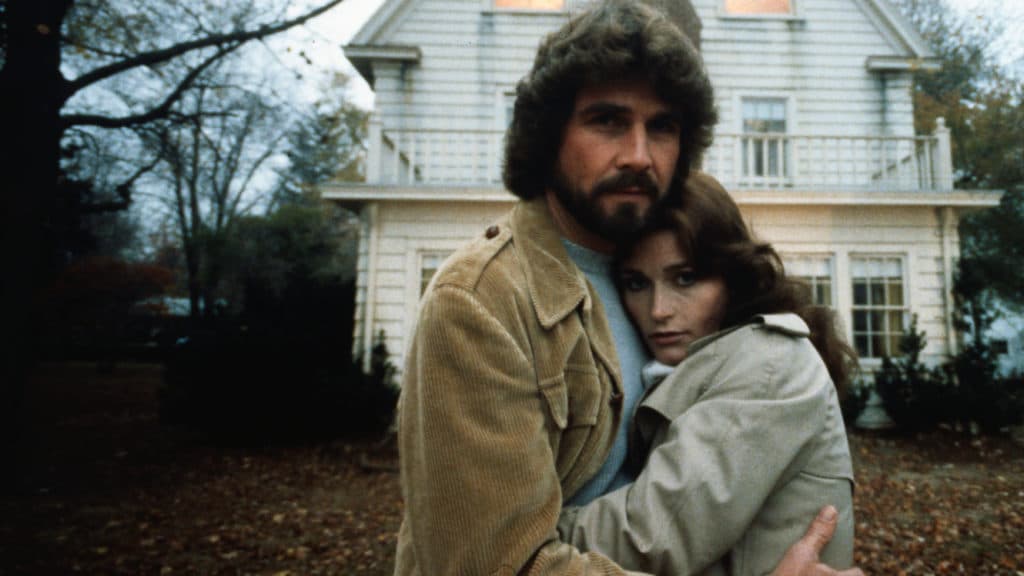 For someone not given to supernatural beliefs, I have a fascination with supernatural horror, and there are few supernatural horrors more famous than The Amityville Horror; close to forty years after it first appeared, there are still films getting made which carry the Amityville moniker. One of the key reasons for the success of the original film was the link between the screenplay and the ostensibly ‘true story’ of the Lutz family, whose experiences are dramatised in the film. The Lutz haunting is itself well known, and a fascinating, terrifying story in its own right, comprising a bizarre blend of testimony from the family themselves and a host of others who had become involved with them, such as the self-styled ‘demonologists’ Ed and Lorraine Warren, whose case films have incidentally turned up elsewhere in horror cinema – such as in The Conjuring (2013) and Annabelle (2014). Any description of a haunting as ferocious as the one recounted by the Lutz family always seems to me to be a detective story, too: people corroborate or contradict one another, recount or re-assert what they experienced. Still, the film itself doesn’t much trouble with these ambiguities, preferring to play out many of the events described by the Lutzes on screen, in as straightforward a way as you can muster when those events include inexplicable phenomena.
 …And there are some successful elements – the ‘red eyes’ scene still works well, for instance – enough so, that the film has enjoyed great influence on other horror films which have followed in its wake. The impact of these key scenes is always increased, for me, when you remember that an adamant family was convinced that these phenomena were real – enough so that they eventually fled the house, leaving all of their belongings there, even leaving food on the table. The whole ‘based on a true story’ preamble, which we’re so used to now, owes much to the success of Stuart Rosenberg’s movie, as does the ‘real time’ unfolding of events, a technique still integral to many scare stories (it’s relevant to note that much ghostly ‘found footage’ embeds real time via its shooting style.) Sure, there’s some back-and-forth between banality and histrionics, but The Amityville Horror is an important chapter in the genre and is worth a place in your collection.
 For many people, horror films wouldn’t be the obvious choice if they wanted to feel in some ways uplifted. Horror isn’t about feeling good, after all – or at least, that’s not the usual verdict. It’s about feeling scared. Many people would perhaps be more likely to go for a period drama, a musical, a romantic comedy, or something of that kind: the type of film where, when it comes down to it, everyone eventually settles for something or someone and lives ‘happily ever after’. That’s the more normal thing to help a person relax, and probably the last thing which would pick me up.
 The recent return of Twin Peaks has meant a wonderful thing: David Lynch is back on our screens again, and even in the short time since my recent retrospective piece on
  The Alien franchise has been around for the same amount of time as I have, and it’s fair to say that (alongside many other people roughly the same age as me, no doubt) the alien creatures of its universe still feel as ingenious and horrifying now as they ever did, having been around in our peripheral vision for so long. I’m not one of those people who maligns Aliens 3 or indeed Alien: Resurrection, either – I think that they are each, in their way, compelling further chapters in the mythos – but, when it turned out that Ridley Scott was coming back to add a prequel to this story, it was exciting news. The resulting piece of work, Prometheus (2012) is undoubtedly an attractive film, with meticulous photography and striking visuals throughout, but its plot is sadly garbled, and it contains a series of unforgivable plot holes which are large enough to lose a ship in. After so many years of waiting and wondering about where the xenomorphs had come from, it didn’t feel as though we were any further ahead by the time the titles rolled – in fact, many viewers had more unanswered questions than ever, even taking into account the general murmur which said that this was NOT an Alien film, and shouldn’t be treated as such. So, what about all those questions then? Turns out Ridley Scott didn’t intend Prometheus to be a stand-alone prequel, and he was working on another prequel – this time a film which picks up a decade in time after the loss of the Prometheus.
 When David Lynch released Mulholland Drive in 2001, he took the unusual move of releasing a list of “ten clues to unlocking this thriller”, for audiences who may have needed guidance on how to decipher what was going on in the film. These clues direct us to pay particular attention to certain objects, places and to the behaviour of characters. This has always seemed an unusual move on Lynch’s part. In common with most of his films, Mulholland Drive has those qualities which have given us a new eponym – ‘Lynchian’, which we usually understand to mean a film which is non-linear, with emphasis on unconventional character and often bewildering, unsettling non-sequiturs. It’s never seemed as if Lynch is particularly given to expounding his own work, and handing out a road map seems an unusual move by any filmmaker, though especially him, a man more given to challenging audiences than guiding them. There are typically no easy ways through his films. The slathering of artistic imagery in his work is a key component, but chimes with Lynch’s idea that “if one looks a little closer at this beautiful world, there are always red ants underneath.”
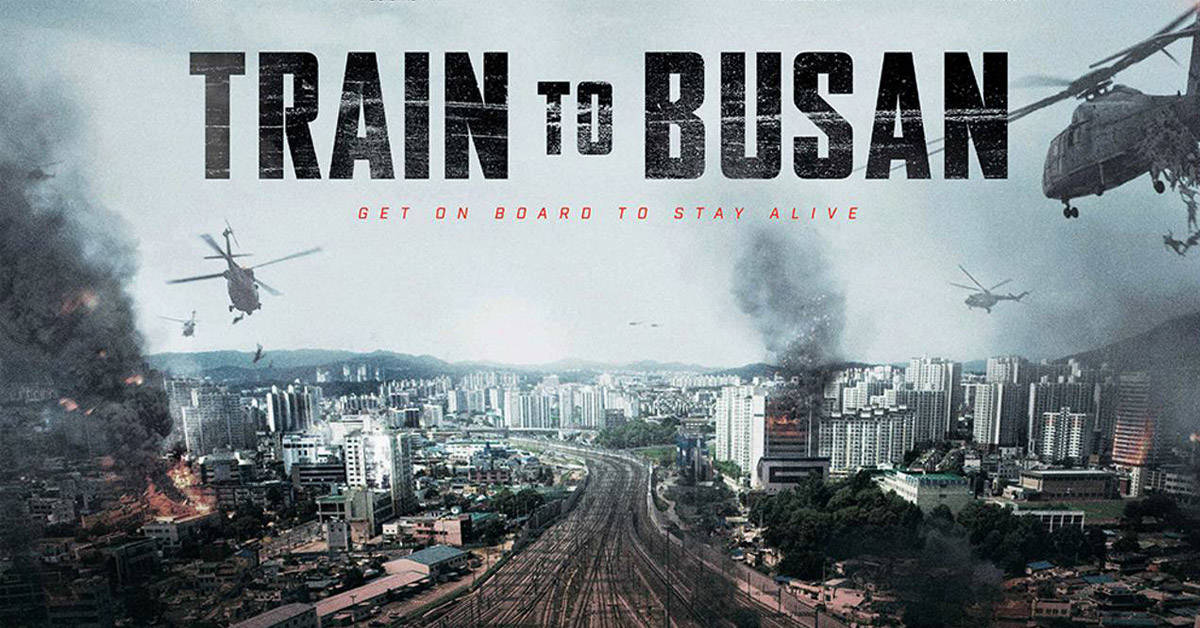 Zombies in cinema have gone from being one of my go-to good fun film monsters to something approaching a personal phobia. For that, I blame years of reviewing low-budget horror films. I mean, I know the earliest zombie films were low budget too, but they made the mistake of being modestly successful; this success has thereafter announced to every dick and his dog that they, too, could make a few quid off of unfussy horror fans who will be genuinely entertained every time they see a horde of bozos in bloodstained shirts shuffling around, groaning. Better still, if you’re a director, you can get your mates to pretend to be zombies, which saves even more hassle – like writing a decent script, or bothering to watch all the other films which have had the exact same idea as you, in order to avoid making the same damn film they did.
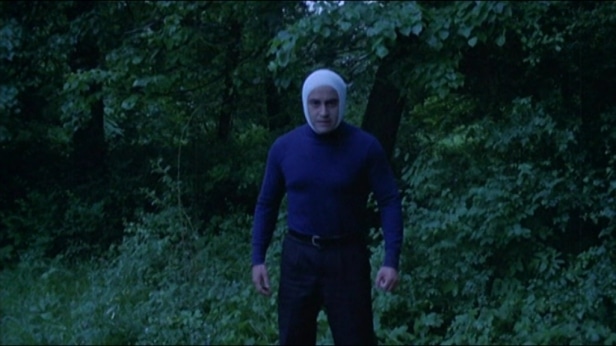 Ah, Paul Naschy. It’s entirely possible that I’m speaking for myself here, but the ratio of ‘how well I know his films’: ‘how well I feel I should know his films’ needs a little revision. His name certainly precedes him, and he’s instantly recognisable, but there only seems to be a handful of decent UK releases of Naschy films, even now. A cursory glance over at Amazon shows you still need to rely on imports; I’ve seen lots of Naschy stills, but haven’t stumped up the extra for many of his movies. Well, step forward Black House Films, who – in their recent release rota – have included Crimson (A.K.A. The Man with the Severed Head) and it’s an entertaining way to right this wrong. Is it wall-to-wall with false advertising, from the title right down to the plot and beyond? Yes, it damn well is, and you’ll sit there and bloody well enjoy it anyway.