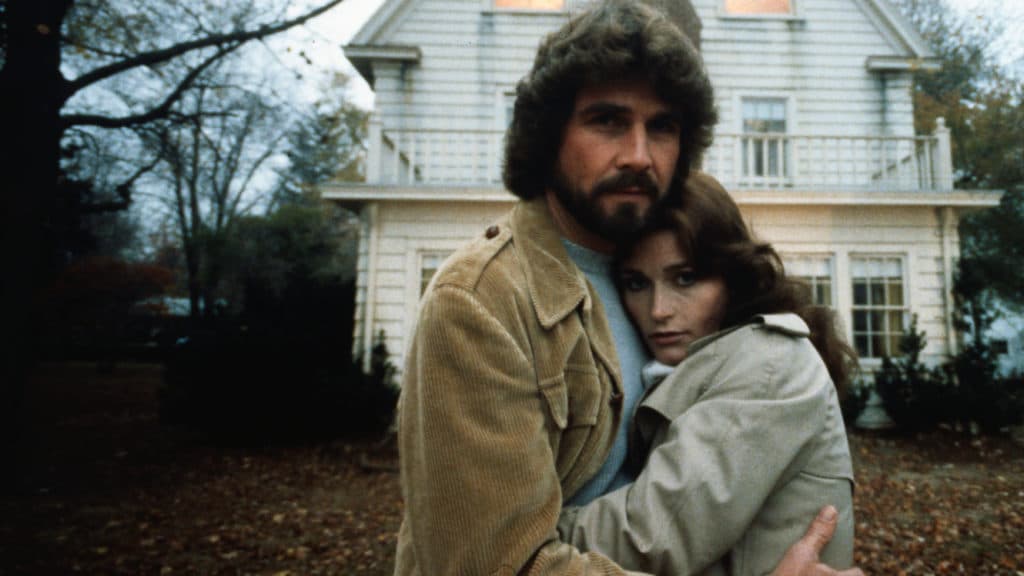
 For someone not given to supernatural beliefs, I have a fascination with supernatural horror, and there are few supernatural horrors more famous than The Amityville Horror; close to forty years after it first appeared, there are still films getting made which carry the Amityville moniker. One of the key reasons for the success of the original film was the link between the screenplay and the ostensibly ‘true story’ of the Lutz family, whose experiences are dramatised in the film. The Lutz haunting is itself well known, and a fascinating, terrifying story in its own right, comprising a bizarre blend of testimony from the family themselves and a host of others who had become involved with them, such as the self-styled ‘demonologists’ Ed and Lorraine Warren, whose case films have incidentally turned up elsewhere in horror cinema – such as in The Conjuring (2013) and Annabelle (2014). Any description of a haunting as ferocious as the one recounted by the Lutz family always seems to me to be a detective story, too: people corroborate or contradict one another, recount or re-assert what they experienced. Still, the film itself doesn’t much trouble with these ambiguities, preferring to play out many of the events described by the Lutzes on screen, in as straightforward a way as you can muster when those events include inexplicable phenomena.
“GET OUT!”
The film begins with a multiple homicide at the property – an event which did occur at the address – before winding the clock forward by a year. The house is now on the market, and going at a steal; it’s an ideal proposition for the newly-married Kathy and George Lutz (Margot Kidder and James Brolin respectively). At very first, things are of course fine; however the priest (Rod Steiger) who wanders in to the property to give it a blessing, before becoming overwraught and spending most of the rest of the film incapacitated, is the one who seems to exacerbate things, if you ask me. From that point on, strange things begin to happen: daughter Amy begins to talk about an imaginary friend; the house is plagued with flies; George begins to maniacally chop wood (?) and disembodied voices are heard…
Whilst I’ve condensed down the strange phenomena into a list, that doesn’t mean a great deal, for the most part, is going on here. Truth be told, The Amityville Horror has many limitations and relies primarily on bad vibes (with the obligatory spook’s-eye-view camera shots replacing more ambitious goings-on) and the threat of worse, with limited pay-off. A great deal of time is afforded to George’s mysterious flu-like symptoms and shortening temper, which aren’t particularly diverting – or perhaps not handled so well, as the equivalent testimony from the real-life George Lutz is far scarier. There are a fair few vomiting clergy in the film as well, which means only that we are left to imagine unholy bad smells.
So, I think it’s fair to say that some elements seem rather contrived now. The personified house with the glowing red eyes, the obligatory kids’ choir over the opening credits, and the HUGE and OBVIOUS foreshadowing (3:15! You got that? 3:15! 3:15!) has been done to death ever since. I hadn’t seen this film since I was unreasonably young, and I must say, it hasn’t retained much of the impact it had on me then, as I remember being quite disturbed by it. That said, as I was watching my screener copy, a chunk of my ceiling fell down for no reason I could see, and I jumped out of my skin – so the film was clearly doing something right…
“Jody doesn’t like George…”
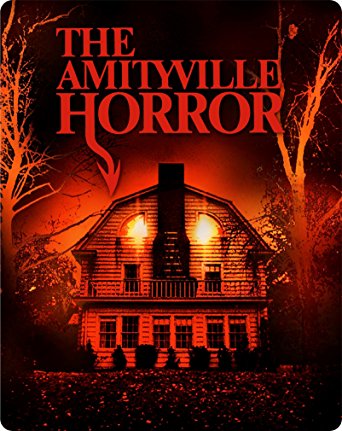 …And there are some successful elements – the ‘red eyes’ scene still works well, for instance – enough so, that the film has enjoyed great influence on other horror films which have followed in its wake. The impact of these key scenes is always increased, for me, when you remember that an adamant family was convinced that these phenomena were real – enough so that they eventually fled the house, leaving all of their belongings there, even leaving food on the table. The whole ‘based on a true story’ preamble, which we’re so used to now, owes much to the success of Stuart Rosenberg’s movie, as does the ‘real time’ unfolding of events, a technique still integral to many scare stories (it’s relevant to note that much ghostly ‘found footage’ embeds real time via its shooting style.) Sure, there’s some back-and-forth between banality and histrionics, but The Amityville Horror is an important chapter in the genre and is worth a place in your collection.
Should you wish to part with your cash for a new edition, I can only compliment the steelbox version recently released by Second Sight: it’s an attractive bit of kit, and comes with a set of four replication lobby cards. There are a wealth of extras on the disc, too, comprising cast & crew interviews as well as an interview with a member of the Lutz family (son Daniel) and the usual stack of trailers, TV spots and radio spots.
The Amityville Horror is available on remastered Blu-ray now.
 For many people, horror films wouldn’t be the obvious choice if they wanted to feel in some ways uplifted. Horror isn’t about feeling good, after all – or at least, that’s not the usual verdict. It’s about feeling scared. Many people would perhaps be more likely to go for a period drama, a musical, a romantic comedy, or something of that kind: the type of film where, when it comes down to it, everyone eventually settles for something or someone and lives ‘happily ever after’. That’s the more normal thing to help a person relax, and probably the last thing which would pick me up.
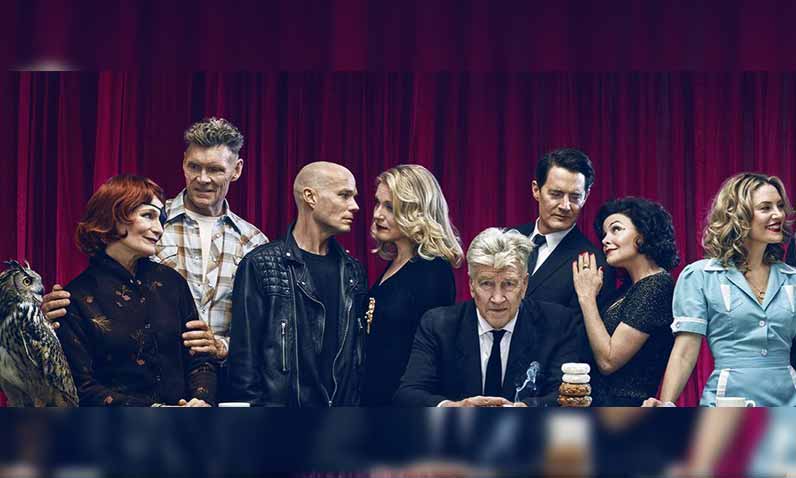 The recent return of Twin Peaks has meant a wonderful thing: David Lynch is back on our screens again, and even in the short time since my recent retrospective piece on
 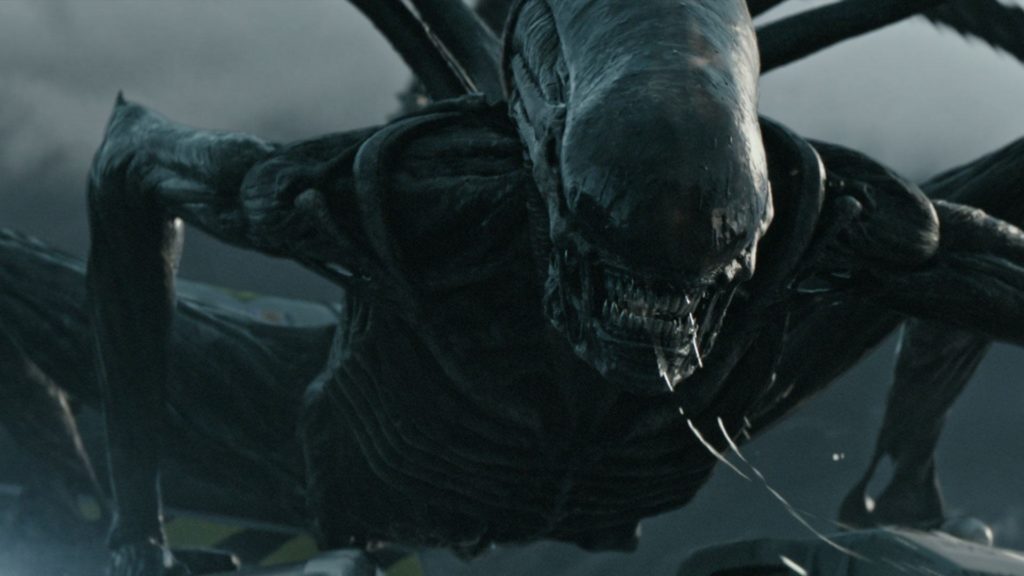 The Alien franchise has been around for the same amount of time as I have, and it’s fair to say that (alongside many other people roughly the same age as me, no doubt) the alien creatures of its universe still feel as ingenious and horrifying now as they ever did, having been around in our peripheral vision for so long. I’m not one of those people who maligns Aliens 3 or indeed Alien: Resurrection, either – I think that they are each, in their way, compelling further chapters in the mythos – but, when it turned out that Ridley Scott was coming back to add a prequel to this story, it was exciting news. The resulting piece of work, Prometheus (2012) is undoubtedly an attractive film, with meticulous photography and striking visuals throughout, but its plot is sadly garbled, and it contains a series of unforgivable plot holes which are large enough to lose a ship in. After so many years of waiting and wondering about where the xenomorphs had come from, it didn’t feel as though we were any further ahead by the time the titles rolled – in fact, many viewers had more unanswered questions than ever, even taking into account the general murmur which said that this was NOT an Alien film, and shouldn’t be treated as such. So, what about all those questions then? Turns out Ridley Scott didn’t intend Prometheus to be a stand-alone prequel, and he was working on another prequel – this time a film which picks up a decade in time after the loss of the Prometheus.
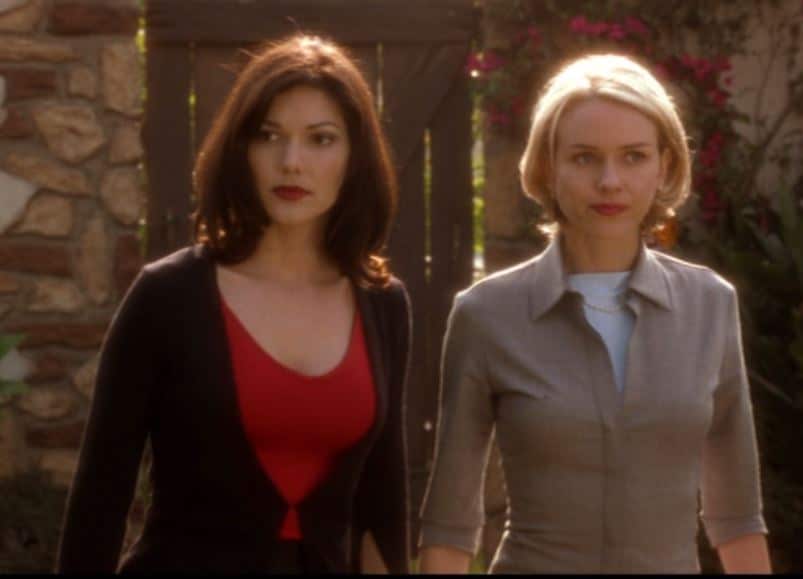 When David Lynch released Mulholland Drive in 2001, he took the unusual move of releasing a list of “ten clues to unlocking this thriller”, for audiences who may have needed guidance on how to decipher what was going on in the film. These clues direct us to pay particular attention to certain objects, places and to the behaviour of characters. This has always seemed an unusual move on Lynch’s part. In common with most of his films, Mulholland Drive has those qualities which have given us a new eponym – ‘Lynchian’, which we usually understand to mean a film which is non-linear, with emphasis on unconventional character and often bewildering, unsettling non-sequiturs. It’s never seemed as if Lynch is particularly given to expounding his own work, and handing out a road map seems an unusual move by any filmmaker, though especially him, a man more given to challenging audiences than guiding them. There are typically no easy ways through his films. The slathering of artistic imagery in his work is a key component, but chimes with Lynch’s idea that “if one looks a little closer at this beautiful world, there are always red ants underneath.”
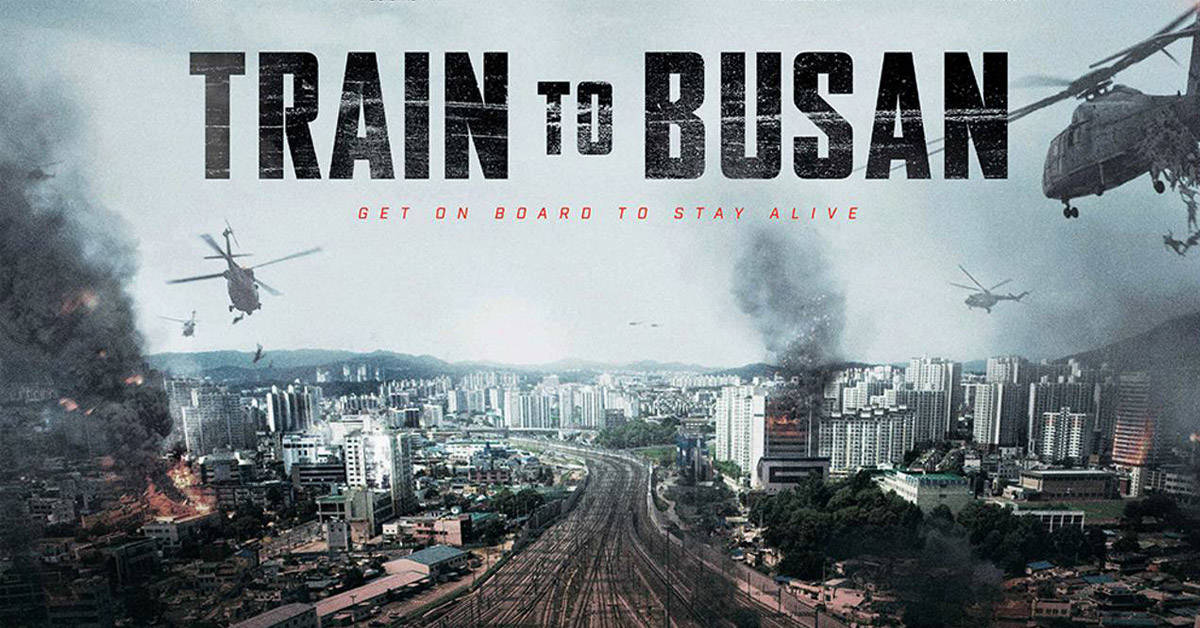 Zombies in cinema have gone from being one of my go-to good fun film monsters to something approaching a personal phobia. For that, I blame years of reviewing low-budget horror films. I mean, I know the earliest zombie films were low budget too, but they made the mistake of being modestly successful; this success has thereafter announced to every dick and his dog that they, too, could make a few quid off of unfussy horror fans who will be genuinely entertained every time they see a horde of bozos in bloodstained shirts shuffling around, groaning. Better still, if you’re a director, you can get your mates to pretend to be zombies, which saves even more hassle – like writing a decent script, or bothering to watch all the other films which have had the exact same idea as you, in order to avoid making the same damn film they did.
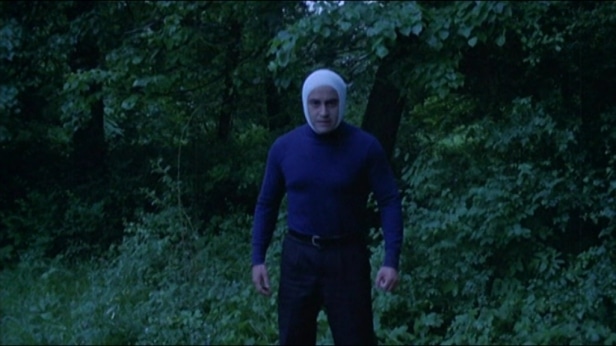 Ah, Paul Naschy. It’s entirely possible that I’m speaking for myself here, but the ratio of ‘how well I know his films’: ‘how well I feel I should know his films’ needs a little revision. His name certainly precedes him, and he’s instantly recognisable, but there only seems to be a handful of decent UK releases of Naschy films, even now. A cursory glance over at Amazon shows you still need to rely on imports; I’ve seen lots of Naschy stills, but haven’t stumped up the extra for many of his movies. Well, step forward Black House Films, who – in their recent release rota – have included Crimson (A.K.A. The Man with the Severed Head) and it’s an entertaining way to right this wrong. Is it wall-to-wall with false advertising, from the title right down to the plot and beyond? Yes, it damn well is, and you’ll sit there and bloody well enjoy it anyway.
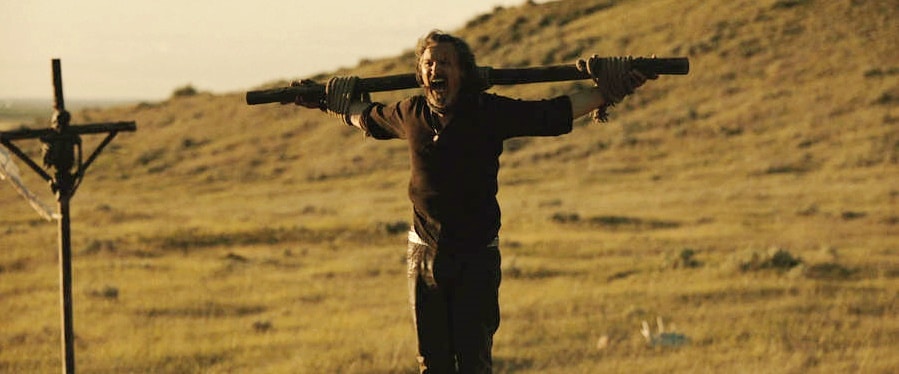 It’s no secret that I adored the first Stake Land film. For me, it epitomised just how much you could do with familiar horror elements, if you had a clear idea of the importance of character, and an understanding that good horror stories depend on an awareness of the ratio of ordinary:extraordinary, whether that ratio be skewed greatly in one direction or another. For all of my enthusiasm for the film, however, I had absolutely no idea that a sequel had been made; I have since found out that actor/writer Nick Damici has hopes of getting a Stake Land franchise off the ground, but in any case, it’s a pleasant thing to get the chance of a screener which is – at least in promise – a very happy surprise. Now having watched the second film, I’m completely torn. On one hand, it’s immensely gratifying to again see characters on screen that (for me) work so well, in a film which re-captures some of the striking visuals and atmosphere of the first film. But in re-capturing much of what made the first film so effective, Stake Land II has seemingly re-trod a very, very similar story arc. This has led me to ponder – when is a sequel truly a sequel? And when is a sequel justifiable?