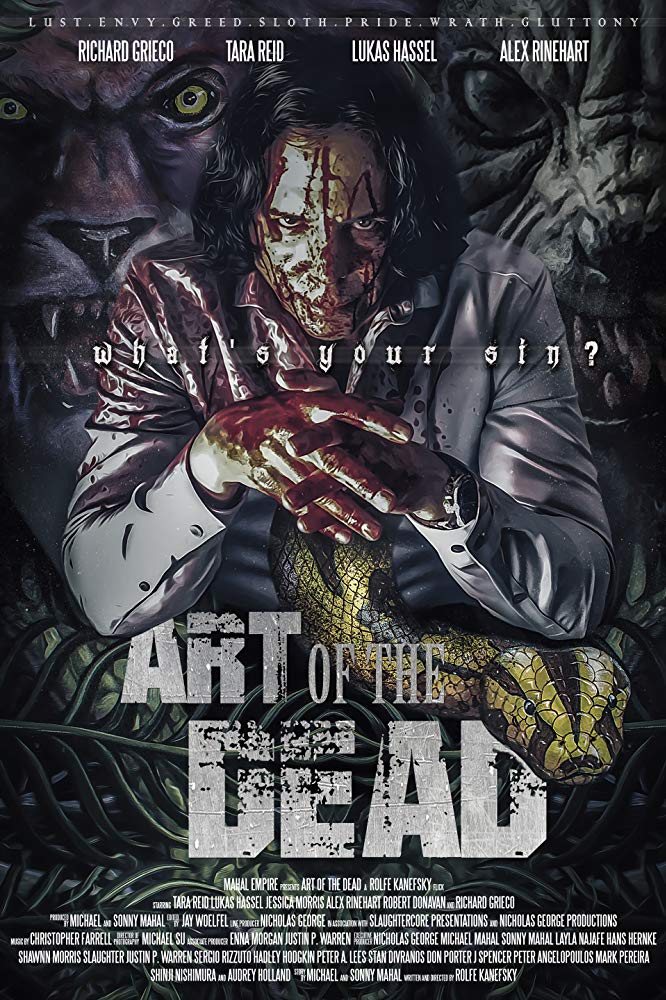
Art as either a conduit for evil, or a form inspired by evil has been used in many horror films down through the years, and Art of the Dead makes no bones about taking a little of both of these ideas as its central thread. The resulting film is a crowd of ideas, which translates to an attempt to throw a great deal at the screen in the nowadays rather slim running time of ninety minutes.
We begin with an art collector returning home with a new piece, a canvas depicting a lion. The piece of art clearly has quite an effect on him, not least because this means he’s completed his collection of other animal paintings by the same artist. His family are strangely uninterested however; this provokes great irritation on his part. He retreats to his collection – but, the now completed range of paintings suddenly seems to have a bewildering, disturbing effect on him. And then…are they time lapses? Hallucinations? Or genuine murders, which the paintings have inspired? (We can assume these aren’t hallucinations, I’d say.) When our erstwhile art collector tries to destroy the works, he finds that they have a supernatural ability to ward him off…and thus concludes our experiences with this particular family. Safe to say it hasn’t ended well.
The artwork is retrieved, and we next encounter it at auction – an auction hosted by a lady called Tess (the indefatigable Tara Reid in a small cameo role). Now listed as ‘Dorian Wilde’s collection’, there’s a great buzz around the auction room as some very well-dressed bidders try to get their hands on said collection. The winning bidders are the Wilsons (Lukas Hassel and Jessica Morris), but they are soon warned by a mysterious former priest (Robert Donavan) not to hang the paintings; no one encounters these works of art without incurring serious harm, he tells them. Well. They don’t listen of course, displaying the art all over their plush mansion, and they soon have a strange, negative effect on the family members – including Dylan’s visiting twentysomething son Louis (Zachary Chyz), who only happens to be an artist himself. Gradually, Louis begins to see vision of Dorian Wilde, all whilst his family members get subsumed by the deadly sins which have inspired each artwork, and while those in the know – including before too long Louis’s girlfriend Kim (Alex Rinehart) – try to break the spell.
That’s a brief synopsis of the plot then, but rest assured, there are hints and pointers to all manner of other potential themes along the way too. Clearly there are ideas here, but I can’t help but feel that less would be more – for example, having Dorian Wilde reference Jack the Ripper, albeit briefly, was a whole other avenue which wasn’t (and probably couldn’t have been) explored with the time and resources available. In doing so much, the film felt a little like the series Night Gallery, though not confined to one painting/one episode, instead cramming a series worth in. Tonally the film was a little difficult to place, too: in some aspects, it’s played for high camp (a tactic which I think works best, given other practical factors), but then again, there are some moments of (pretty decent) practical gore effects and prosthetics, which seem to suggest the film reaching for something else (as do the frequent moments of titillation along the way, one of the director Rolfe Kanesky’s major calling cards). All told, it’s very busy, and there’s quite a lot to digest, which can be a little jarring as you wonder whether this is a straightforward horror yarn, or something altogether more wry. Also – and it’s the eye of the beholder I know – but the paintings themselves are not quite as ominous as the characters seem to suggest in their behaviour, so it’s a little difficult to suspend disbelief here as people refer to them as ‘masterpieces’. Again – high camp? I could never fully relax into a sense of this.
Essentially, there is just so much going on that events begin to zip past you in Art of the Dead – as much as it’s largely a positive trait in a film to have such ambitions to get a great deal done in a film on a low budget. Sometimes taking a breath and stripping things back a little might have been the best course of action, however.
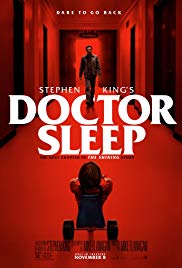
When Mike Flanagan and his creative partners stepped into horror cinema’s big time with the announcement of their adaptation of Doctor Sleep, they were assuming responsibility for one of the most eagerly anticipated sequels in modern cinema. Widely (if not necessarily universally) heralded as a classic, Kubrick’s The Shining is an established treasure trove of modern cinematic iconography, casting its brooding shadow since its release in 1980. With such an atmosphere, and so many scenes, lines and photographic stills firmly embedded within the contemporary consciousness, any sequel would have plenty to live up to in order to be regarded as ‘worthy’. Factor in too, that Doctor Sleep is not ‘just’ a film sequel but also a literary one, its author ‘Master Of Horror’ Stephen King – and suddenly the hordes waiting with baited breath are swollen in number by those who are invested in Kubrick’s vision, to those who, as they say ‘preferred the book.’
Happily, for fans of both iterations, stewardship of the storytelling universe centred upon the Overlook Hotel could hardly be in safer hands. Mike Flanagan, along with principle collaborators such as producer Trevor Macy and cinematographer Michael Fimognari, has in recent years established a body of work that has skilfully woven an appreciation of horror’s classic tropes with a thread of contemporary relevance, in keeping with the demands of a modern reading that looks for a certain degree of humanism at the heart of its central premise. So, for haunted houses, haunted dreams, haunted objects and urban monsters, we have interconnected wider themes of family, negative forces and how they can be passed from locations to persons, from person to person and thus from generation to generation. Also, how these negative forces may originate from human agency but can also be nullified by the right kind of human interference. Crucially, the depiction of these distinctly human themes do not come at the cost of atmosphere or scares.
Another notable factor is the patronage of King, who praised not only the adaptation of his novel Gerald’s Game but also Flanagan’s most noteworthy success to date, Netflix horror The Haunting Of Hill House, itself adapted from Shirley Jackson’s 1959 novel. If nothing else, this thumbs-up from the author should surely embolden Flanagan and co to carry on interpreting King’s writing with confidence. Also, for those who grew up as fans of the King literature ahead of the Kubrick cinema, any doubts they may have harboured about their hero’s work being misinterpreted would surely be dispelled by such a vote of approval.
So much for the hype…what about the film itself? If anyone who watched the remake of King’s IT like me baulked at the almost instant use of blood and violence as poor Georgie has his arms ripped off by gutter-haunting clown Pennywise, rest assured there is a greater degree of subtlety employed in the opening scenes of Doctor Sleep. We are at first introduced to The True Knot, a sinister group whose lives are made unnaturally long through predation upon young people who exhibit various powers of Shining. More than simply feeding upon them, it is in fact necessary to ensure that they die in as much agony as possible, for the greater the pain inflicted, the greater the purity of the essence (or ‘steam’) released during their dying moments. The de facto leader of this group is the charismatic Rose the Hat, who, alongside her lover Crow Daddy, decide whether to harvest their victims there and then, turn them into one of their own, or eke out their suffering (and their precious steam) over as long a time as possible. This vampiric tribe exists in a state of nomadic hunger, searching it seems ever farther and wider for the once plentiful supply of children with Shining who seem to be ever rarer, their Shine more and more diluted by modernity.
In the same timeframe as we discover the Knot, we also reacquaint ourselves with young Danny Torrance and his mother Wendy, shortly after the events of The Shining. They now live in Florida, but as far removed as they appear to be from the mountain fortress of the Overlook, the rapacious revenants of that place still haunt young Danny. He is shown a way to harness his power to rid himself of these shades and their seemingly ceaseless quest for his life, as he is visited once more by the ghost of kindly fellow-Shiner Dick Halloran (memorably played by Scatman Crothers in The Shining). Fast-forward to 2011 though, and it seems that for all he was taught to defeat the ghosts of his past, nothing suppresses the disturbing visions inherent with the Shining like alcohol, drugs and cheap sex. Dan, as he is now known, lives by at once drowning his past and racing toward an inevitably bleak future. He receives another visit from his old protector Halloran, who tries to turn him away from his path of self-destruction.
Dan is forced to travel far and wide, to try to run away from himself, as far from the destruction and horror of his past as possible. Finally, he washes up in a small town where he is accepted by a kindly local, a man who seems to recognise the roots of the fragility in Dan’s eyes. Discovering support and employment, he finds the courage to put down the bottle and begins to forge a new life. As the previously suppressed Shining returns in strength, so he finds a way to use the power he has as a force for good, ushering the dying patients of the hospice he works at across the threshold from life to death, in peace, unafraid. In so doing, he finally comes to live up to his old nickname ‘Doc.’
Another consequence of his returning powers of the Shining
is a strange friendship with another who shines, who begins to leave messages
scrawled on the wall of Dan’s room. Young Abra Stone is aware of her ‘magical’
abilities, much to the bemusement of her parents, who refuse to talk about it
and so force Abra to reach out into the world using her powers, looking for
understanding. Sensitive to those who use the Shining and herself acting as a
beacon for those who are also sensitive, inevitably she comes into contact with
Rose and The Knot, their own search for sustenance these days growing
increasingly desperate. In this way, the stories of Dan, Abra and Rose begin to
converge. The stage is now set for a battle of astral projection, the hunter
becoming the hunted, and the inexorable pull of the past and its demons upon
Dan…
On many levels, Doctor Sleep is a story in which the past, in its brooding, dogged way, must be conquered or at least reconciled, in order to defeat both its hungry ghosts and its multifarious consequences – tendrils that reach out as if in pursuit, only to be found waiting exactly where they came from, all along. Danny Torrance must therefore come full circle in his journey, returning to the place he has spent so long trying to escape from, whether with some magical trick taught to him by Dick Halloran, or by turning to drugs, drink and violence much as his father once tried to do. In the end, although he spends his life running ‘from himself’, as he puts it, the absurdity of trying to do so is made apparent when he decides, in his desperation, to head for the old hotel once more.
For the makers of this sequel-of-sorts, reconciling the past and the future to create a cogent resolution to the 42-year old cycle started by King’s 1977 novel, similarly meant finding a way to step from beneath the looming shadows of giants. Flanagan and co wisely choose to embrace those shadows, and as such everything in Doctor Sleep is cast in much the same hue as The Shining. Pacing and score contribute to the heavy sense of foreboding, and much weight is given to the Kubrick contribution to the story. The scenes in the Overlook itself are faithfully recreated, waves of blood and all, as if to emphasise the timeless waiting presence of the place. The comparison with Hill House is an obvious one – both buildings conceal a patient yet ravening hunger behind their grand facades; both are homes to ghosts who crave the succour of living souls. Both Hill House and the Overlook Hotel pursue their quest for souls via the agency of family, of blood ties that are so strong as to bind against madness. Families that can be so catastrophically inverted by the corruption of a parent or parents against their children.
By choosing to integrate The Shining and Doctor Sleep, rather than reframe or reinvent the former to suit the latter, a strong element of continuity is preserved. This attention to detail is followed meticulously, such as with the cameo performances of Alex Essoe and Henry Thomas as Wendy and Jack Torrance, as well as the visual elements of the Overlook. Whether The Shining was a film in need of a sequel is perhaps arguable, but having decided to tell the story of what happened to Danny Torrance, Stephen King could hardly have hoped for a more sympathetic or diligent team to bridge the gap of years. The casting is excellent all round. Ewen McGregor is easy to sympathise with as Dan, his fragility and basic goodness as a person shine (ahem) through, as much as Rebecca Ferguson’s witchy Rose is cold and unknowable. Kyleigh Curran is likeable as the surprisingly confident Abra Stone, even if her almost happy-go-lucky performance is slightly at odds with the sense of imminent threat that pervades throughout. Support from Cliff Curtis and Zahn McClarnon is also standout.
All told, Mike Flanagan has taken what might at first appear to be a daunting and thankless task – producing a follow up to a cinematic classic 40 years down the line – and made of it about as successful an attempt as anyone could do, given the various demands of those various factions invested in it; be they King fans, Kubrick fans or book-over-film fans and so on. True to his style, humans themselves are not portrayed as wholly evil or wholly good – rather they are able to become corrupted all too easily; by drink, by their lusts, by the nameless power resident in an old hotel. In one of the most affecting scenes, Dan stands up in an AA meeting, ‘eight years sober’ chip in hand. He recounts the tale of his father, who he only really knew when the darkness of drink and violence descended upon him. There was a time, he says, when his father tried to embark upon his own recovery and would have wanted nothing more than to stand where his son proudly stood that day, eight years sober. In this way the humanity of Jack Torrance is reclaimed, after 40 years as a virtual comic book villain.
It is this power to ‘reclaim’ the traditional ghost story or
horror film from the ignominy of mere shlock entertainment that has made the
work of Mike Flanagan so effective, but this is not merely a case of watering
down the essential darkness at the heart of the best horror. There are plenty
of chilling moments; in particular the Knot’s ghoulish pursuit of children with
the Shine produces some grisly scenes. Having already whetted their blade upon Hill
House, the Overlook is of course milked for all it’s worth. There is a certain
degree of satisfaction as we return there to the ominous strains of Wendy
Carlos and Rachel Elkind’s original, hauntological score. Whether you will feel
equally as satisfied upon the film’s resolution is your choice – for me it felt
like as suitable a way for the story to resolve itself as any other. Well-acted
characters who are easy to care for or dislike, a heavy atmosphere of inevitable,
looming dread, and plenty of ‘Easter eggs’ for those who look out for such things.
Perhaps the greatest compliment you can give Mike Flanagan is that he took the
work of King, Kubrick et al, and made it part of his own, increasingly recognisable
storytelling universe.
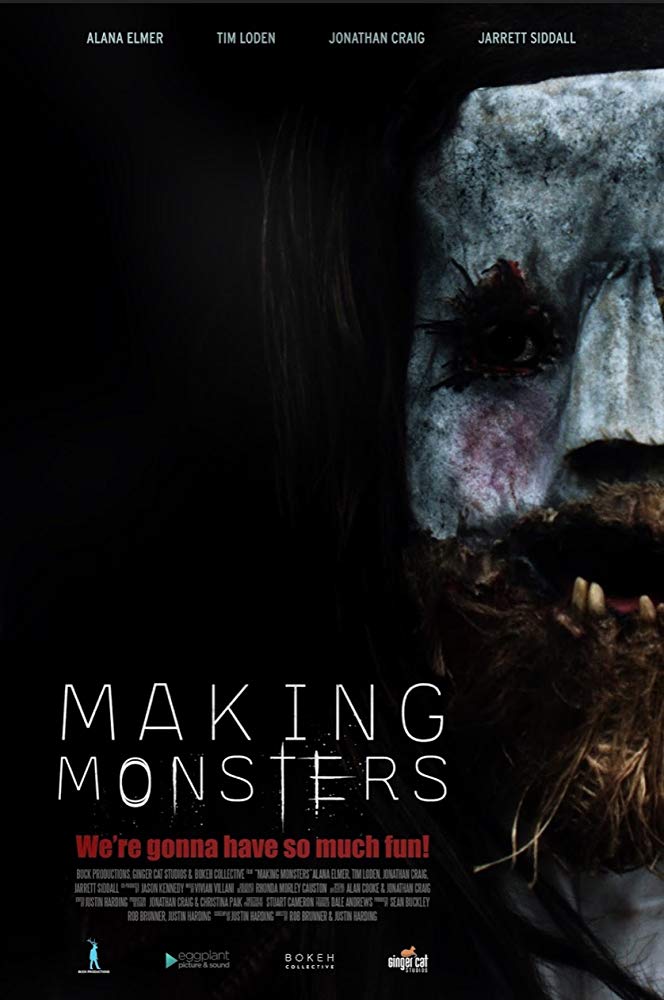
It’s perhaps pretty inevitable that ideas and anxieties about social media stardom have begun spilling into horror cinema. As a relatively new means of attaining wealth and stature presents itself, and as new risks to autonomy and privacy come along, the human imagination begins to ponder all the things which could go awry. Tragedy Girls (2017) depicted two social media-obsessed teenagers who transform their minor stardom into something big when they begin documenting real-life murders in their town; last year’s Assassination Nation looked at the real-life threats caused by a data breach where the deepest, darkest secrets of people’s social media usage were exposed. We’re primed for this kind of thing. Making Monsters melds elements of ideas present in the films mentioned above, but more overtly marries these to what is by and large a slasher movie – albeit one which hinges upon the potentially malign presence of the internet. It’s a very watchable, often imaginative film, even if one which struggles in places to sustain all of its ideas (and there are far worse crimes than that in debut features).
Chris (Tim Loden) and Allie (Alana Elmer) are a young, engaged couple who make a living through their online videos. Precisely, Chris is a prankster, and the person he exclusively pranks? Allison. This has been massively popular, with millions of hits and a successful social media presence – but Allison, who is on the verge of IVF treatment, wants Chris to stop. She argues that she is about to go through a great deal and constantly being made to jump out of her skin will help their chances of conceiving none. Chris is very disappointed by this request and how it could impact upon his brand, but he’s cheered up a little when, upon leaving a fertility clinic with Allie, he runs into Jessie, an old friend of his. Jessie is living in a big, renovated church out in the boonies and he immediately invites them to come and stay that weekend – it’ll be a great chance to catch up, and an opportunity for them to meet his husband, David. The couple agree, and that weekend they make their way there.
They’re greeted not by Jessie but David (Jonathan Craig), an odd character to say the least, but he soon deadpans them into a state of ease. Unfortunately, Jessie’s flight has been severely delayed and he won’t be able to join them until the following morning; never mind, David reassures them, it’s a chance for them all to get to know one another a little better via a total drink-and-drugs blow-out. This they do. In fact, by the time Allison comes to, the house is ice cold, David is nowhere to be seen and she is having severe difficulties getting a handle on what time it even is. Her disorientation is not helped by the fact that she begins to see visions of deformed supernatural entities which seem to be trying to communicate something to her. Are they really there, or is this another facet of a trip which has clearly gone horribly, horribly wrong?
When she and Chris locate each other, they slowly attempt to piece together events of the previous evening (if indeed it was an evening ago). It’s clear that something has gone badly wrong somewhere – Jessie hasn’t appeared and his husband is still MIA – so they decide to leave. That, unfortunately for them, is not so easy. Then there’s the small matter of the surveillance cameras they notice…
Making Monsters successfully adds a few twists and turns in its plot that I didn’t necessarily expect, which is to its credit, and much of the film’s overall success depends on the good acting performances of the three leads as the power dynamic shifts around and the film heads off in its different directions. Some of these shifts raise an eyebrow in that early plot motifs disappear (or at least don’t figure highly after all) and as the narrative shifts, there are a couple of minor lulls in the action. However, Making Monsters does raise a few interesting ideas along the way: what substitutes entertainment? Where is the line to be drawn between real life and online life, and do we now have a generation of people for whom this is a problem? What is fame, and what is it worth? All the while, though, this is a fairly grisly film, one which may come to resemble a certain older genre in the end (with the visual tropes of that genre) but nonetheless rewards the attention it demands.
This is the first feature-length film from director Justin Harding, alongside co-director Rob Brunner. I’m familiar with Harding from a short film he made called Latched, which has burned its way into my memory forever; I’ll say no more as I think it deserves to be burned into your memories too. In any case, even from my limited experience of his work, he’s clearly a guy with ideas and a particularly effective way of presenting them on screen; I hope he continues to make horror movies, as the range of ideas on offer in Making Monsters is a pleasing thing. Any film which can go from black humour to gory fare and make both work is something to be proud of.
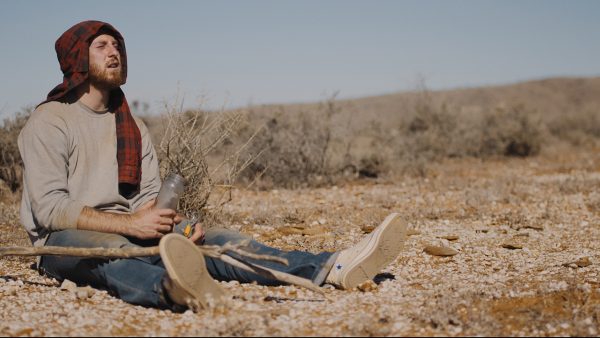
Australia’s tourism board must read movie synopses from behind their hands: Wolf Creek might not have been the first outback horror, but it’s become pretty well-known to a whole generation now, feeding into all the (true) stereotypes of a harsh, remote climate ready to isolate and endanger the unwitting and unwary, coupled with the (rather less accurate, hopefully) stereotype of the lone maniac who knows the landscape and might just kill for kicks. Well, take away the lone maniac altogether and you’ve still got the recipe for an unsettling film. This is the case in Outback, a film which underlines its point that if you wander off the beaten path, you’ve had it, unless a miracle comes along. Hell, you don’t even need to go very far. If you aren’t equipped, and if you’re – shall we say – a tad naive, then you’re potentially a goner. Such is the case here, in an ordeal based on a true story.
Unlike many ordeal/survival films, we aren’t faced with a group of happy friends or a loving couple who have their love and loyalty tested by incoming circumstances, because in the case of Wade (Taylor Wiese) and his fiancee Lisa (Lauren Lofberg), they’ve already hit a pretty big bump in the road, even before arriving in the country. Childhood sweethearts, Wade decided to pop the question on the flight over; Lisa however turned him down. Needless to say, things are a little frosty after this point, as they embark on their holiday of a lifetime. Wade is coping by shutting down completely; clearly hurt, he can barely bring himself to speak at all. Lisa is coping by reverting to inane conversation, as if nothing ever happened and as if it will all be just fine, if they avoid tackling their very big problems head on. Whilst most of us, hopefully, won’t end up stranded in a deadly environment at any point during our lives, we might still recognise the hell of the awkward silence. Perhaps to break its momentum, Lisa proposes a change to their trip: why not go to Ayer’s Rock, or Uluru to give it its proper name? Sure, it’s a few hundred kilometres out of their way, but they have a decent vehicle, fuel and most importantly of all, the modern altar: a sat-nav. For reasons best known to himself, Wade entertains this momentary madness, and so they begin their (new) journey, on roads which increasingly look less and less like they have been designed for cars…
Convinced that his tech could not let him down, Wade begins to follow the sat nav in circles, until daylight is almost running out and the pair are growing more and more disorientated. Now, here is where the couple begins to make a series of deeply stupid decisions, decisions which form the bedrock of all the other stupid decisions to follow (and I hope that isn’t a spoiler, but this would probably not be a film we’d cover here if a couple of tourists simply had a lovely time at a popular Australian landmark).
They decide, towards the end of day, to get out of the car and hike to the top of a nearby mountain, in the hopes of being able to see a light or some evidence of a nearby road. As darkness draws in and the unadulterated outback night masks everything, they inevitably cannot remember where the car was. Problem number one. Without adequate clothing, a long-life flashlight, a sleeping bag or any substantial food or water, they’re immediately in trouble. Thus begins a chain of events which, considering they take place in vast expanses of deserted landscape, feel oddly claustrophobic (the film frequently shows us via overhead shots just how tiny and insignificant humans are here, and that’s without Lisa alluding to the same fact in the script). The emphasis is often on the small-scale, focusing on interactions between Wade and Lisa; he tends to know best, right up until he doesn’t, whilst she does her best to rise to the challenges of the situation, but often reverts to insecurity and fear.
These human relationships are placed under a pretty extraordinary microscope and, by and large, the two actors sustain audience interest in their plight. The surrounding environment is stark and beautifully shot, whilst director Mike Green knows just how to intersperse the inevitable lulls in movement and action with something foreboding and downright physically harmful; both Wade and Lisa are physically threatened and harmed by their plight in a range of gruesome and unpleasant manners. However, any sympathy you might have for these two is dampened a little by, well, marvelling just how stupid they’ve been. If most horrors or thrillers contain the odd daft decision, the kind of thing where you almost cannot believe anyone would do it, then Outback does it far more frequently than ‘the odd time’. This is based on a true story, too, and this intermingles with your assessment of character behaviour; you can’t get too exercised, as this really happened to real people, people who clearly suffered a great deal. Mixed emotions result, particularly just before the credits roll and you find out about the final outcomes here.
So – a frustrating watch at times in terms of its key players, but still a tense, decently-made film which makes good use of its shooting location and joins a proud tradition of Australian films which, if they don’t put you off completely, might make you think carefully about taking on this landscape. Or, you know, implicitly trusting your sat nav.
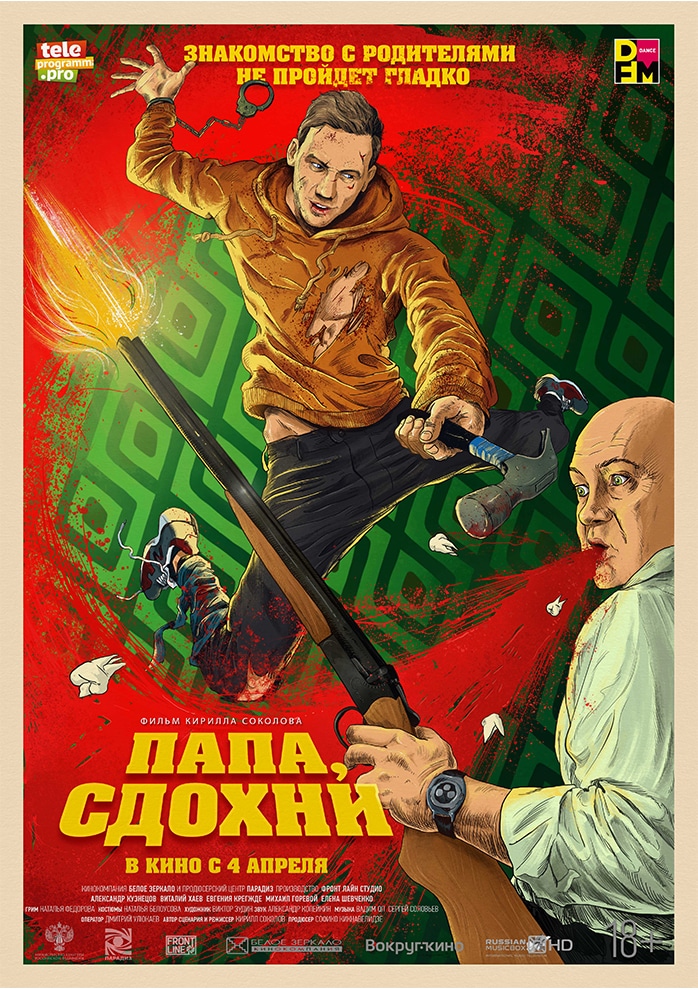
One of the great things about film festivals is the sheer range of films you get, even though most of them might be loosely assembled in one particular genre or other. Horror in particular has a broad remit and can veer from terrifying in one incarnation to hilarious in another, without dropping any of the expected qualities such as peril or the fantastic/improbable. Why Don’t You Just Die! leans very heavily towards ‘splatstick’, playing largely for laughs. It takes place almost entirely in one setting with a limited, but larger-than-life set of characters and wears its heart very much on its sleeve, splicing cartoonish levels of ultraviolence with darkly comedic characterisation and a steady supply of comeuppance for its worst offenders. It skirts very close to the improbable or impossible in terms of what characters can physically withstand, but you quickly park your common sense and enjoy where the film is taking you.
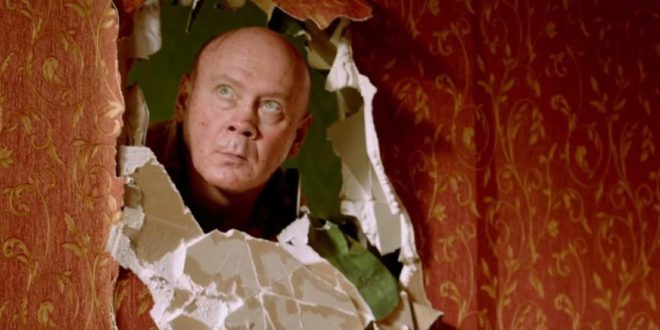
Matvey (Aleksandr Kuznetsov) is just dropping by his girlfriend Olya’s parents’ apartment for a visit. They haven’t met yet, but mother Tasha (Elena Shevchenko) immediately swings into hostess mode whilst father Andrey, a detective, although rather more standoffish, at least seems like he’s trying, in his gruff way, to be friendly. That is, until he notices that Matvey has a hammer sticking out of his back pocket, which he claims to be lending to a friend later. This naturally sets alarm bells ringing; well, it would, wouldn’t it? This excuse is of course untrue: actually, it’s one of the few dishonest things Matvey really does, although he has indeed come into the apartment with the intention of killing Olya’s father, based on something she has recently revealed about her childhood. It’s a murder planned for noble intentions in its own way. Only wanting to help her, and acting entirely at her behest, Matvey attempts to get the better of Andrey – isn’t able to – and so the film’s energetic, grisly sequence of fights, stand-offs and reveals begins to kick in. Believing Matvey to be in his apartment for a whole other reason, Andrey takes the first opportunity to panic, going straight for a stash of illicit cash he’s concealed; as the film progresses, we learn where the cash comes from, and why it could be Andrey’s undoing. None of which interrupts the grisly violence for long…
There is a real host of unsavoury folk here, with the possible exclusion of Matvey and perhaps Tasha, who doesn’t seem to have a lot of options open to her: Andrey does an excellent turn as a well-loved, well-established but essentially corrupt police officer, a man who has passed on his tendencies to serve himself first and foremost to his daughter, the incredibly blasé Olya ( Evgeniya Kregzhde). Thise who have been caught up in Andrey’s machinations may have come off badly, but weren’t massively moral in the first place – though it’s hard not to feel some sympathy for Andrey’s old partner Evgenie (Mikhail Gorevoy), whose life has disintegrated since his dodgy dealings with his old partner. However, the film doesn’t dwell too long on emotional trauma, other than for a light gloss of ‘you reap what you sow’: it’s really more about a rapid rotation of double crosses and revelations, with the graphic violence being quick-edited and layered on for kicks.
You could probably tie yourself in knots trying to link the corrupt farce at the heart of Why Don’t You Just Die to some wider point about modern Russia, but all told, I think it would be a shame to waste a film which is clearly going for the fun approach to electric drill torture. Perhaps there is something there distinctively Russian in here, but this is just as much of a splatter movie as it is a satire, and one is far more available to us as viewers. At just 29 years of age, director Kirill Sokolov is certainly one to watch and as a first feature, this deserves to get him hired again and quickly. Why Don’t You Just Die looks great, is colourful and inventive, and moves at just the right pace without ever outstaying its welcome.
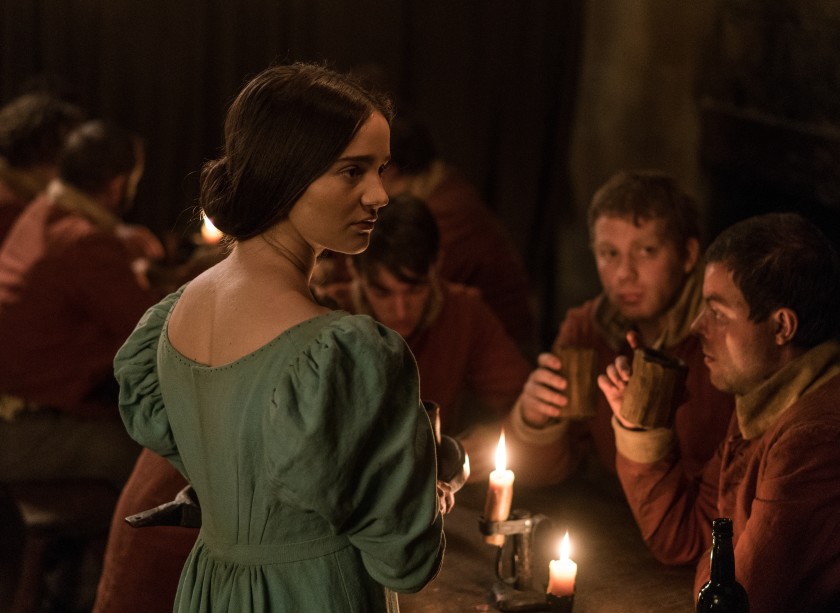
If ever a film spoke to unpalatable truths, then it’s Jennifer Kent’s most recent film, The Nightingale. Where her previous feature The Babadook put a fantastical spin on mental trauma, The Nightingale strips back all varieties of artifice and fantasy, striving to represent a notoriously brutal period in Australia’s colonial past as realistically as possible. In so doing, it thankfully avoids getting mired in modern-day political predilections – there’s not, in my opinion, a clumsy script, nor talking to the audience loudly and slowly to make them get the point. But, by faithfully representing the horrors of history through a plausible, sensitively-acted drama, the history lesson here is doubly effective, because human drama will always appeal to us more than academic treatises. The resulting film is a difficult watch. Certain scenes led to audible gasps from the audience. The Nightingale prevents you, or should prevent you, from looking away.
Set in the early decades of the 19th Century, transportation and the conquest of Australia was in full swing, with Tasmania in particular one of the most brutally-managed and exploited territories in the whole of the country. Were you sent to the penal colonies there, then ostensibly you could eventually earn your freedom but, as both an Irishwoman and a woman, Clare (Aisling Franciosi) has been unable to exercise this right, despite completing her sentence for a petty crime. Hawkins, the commanding officer of the incumbent British militia (Sam Claflin) sees her as barely human, justifying his sexual exploitation of her by reminding her that he’s allowed her to marry – to a fellow Irishman, Aidan (Michael Sheasby). Aidan and Clare are penniless and to a large extent tainted by their pasts as ex-cons, but they have a young baby together, and they seem very happy. Clare keeps hope that she will receive her ticket (her guarantee of freedom) and they will be able to leave for good. Well, that would never do for Hawkins, who has Clare right where he wants her. An altercation follows when Aidan tries to intercede on her behalf, to make Hawkins make good on his promise. The worst happens; in a world where the British military make the rules, and where any semblance of law and order is a long way away, there was never going to be a positive outcome for this powerless, impoverished family, who have no recourse. That said, the brutality of the outcome is truly hideous.
Clare is left a broken woman, with nothing now left to keep her docile. After she tries and fails to get justice via conventional means, she learns that Hawkins and his men have left to go to the nearest town where Hawkins is hopeful of an important promotion. Determined to catch them and avenge herself, she turns to a member of a nearby Aboriginal camp who knows the land. Billy (Baykali Ganambarr) agrees to take her – for a fee – but makes no promises of offering her any help beyond directing her to where she wants to go, making it clear that he doesn’t relish working for white folks. Together, they track Hawkins and his men, working their way through an often hostile, if beautiful landscape.
One of the most interesting dynamics in the film occurs between Billy and Clare; who has the most power here? Is it the disinherited local, who nonetheless has recourse to knowledge and skills? Or is it Clare? Clare is white, and she instantly begins to use language to exercise her authority over Billy (such as by calling him ‘boy’), but then being female carries its own vulnerabilities in this brutal world, and as an Irish woman, she’s a few rungs further down on the ladder the other whites she encounters. It’s a distinction she tries to make clear to Billy, who has little concept of any difference between whites and listens to her with some surprise as she rails against him calling her English. It’s also interesting that Clare uses Irish language, and refreshing to hear it on the big screen – in a similar way to Billy, who uses a moribund Tasmanian language called Palawa Kan, the first time this language has ever appeared in a mainstream film. Language is both power and powerlessness, a marker of culture, but one that is invariably suppressed; Clare and Billy, to a large extent, find that they share some common ground through their use of non-English languages and a friendship begins to grow. It becomes the bedrock of the film, supported by phenomenal acting performances. What isn’t said is as important as what is. Billy infers a great deal about Clare’s plight, and handles it carefully.
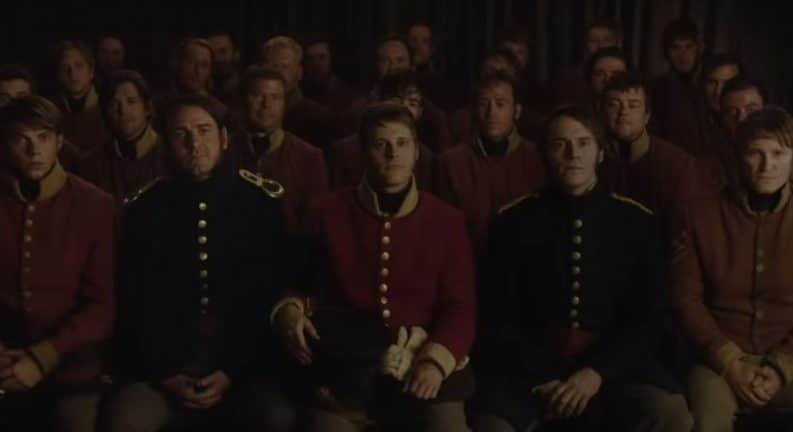
Throughout, there is little let-up in the unflinching hardship and cruelty here; thankfully, the British aren’t turned into simplistic villains, and as the narrative follows their own journey we see them as flawed, arrogant, but also frequently scared and isolated from one another, scared boys clinging to the only systems they know. You find yourself hating them, sure, but you see them as weak as much as you see them as bad, particularly in the case of Jago (Harry Greenwood) who is haunted by his role in Clare’s tragedy – a panicked, troubled young man. Eddie (Charlie Shotwell), a child who picks up with the military men and at first gains Hawkins’ favour, is a sad emblem of a broken system, a world where unattached women and children are terrible things to be. But then, almost no one thrives in this environment. Those that had thrived in the environment have been disinherited, transported people are still at the mercies of the system and even the self-assured Hawkins cannot operate without help to do it. The representation of Tasmania at this point in time is of a merciless, indifferent place. Some critics have commented on the detached, under-explored nature of some of the visuals and motifs on screen but for me, it’s exactly as it should be. We glean some sense of other tragic stories unfolding, but then the landscape draws us quickly elsewhere. Likewise, there were several walk-outs during some of the scenes of rape and sexual assault in the film, and it’s absolutely fine for audiences to do that if they feel they simply cannot watch such things any longer, but as I see it, you’re exempting yourself from the nub of the narrative. Perhaps cruel things just are, and desperate people simply try to make sense of this, try to go on.
Admittedly not a film for everyone, then, but an important, ambitious historical drama which clings to you like a fever dream. You do not come out of viewing The Nightingale feeling good about humanity, but you can at least grasp what fragile elements of human goodness there are, and marvel at how this could ever be in such circumstances.
The notion of the ‘cursed film’ is nothing new in horror cinema, and it has formed the basis of some deeply disturbing, evocative projects over the course of the years. The Ring was a hugely successful crossover from what was, for many viewers, a largely unknown horror tradition with its own mythology and rules of operation, but even without an understanding of Japan’s fantastical relationship with the seas which surround it, the curse of Sadako still made hideous sense. More recently, the Masters of Horror television series offered us an episode called Cigarette Burns, taking for its central premise the idea of a mysterious, dangerous film which endangers its audiences via its very being, even causing cinemas to burst into flames upon screening.
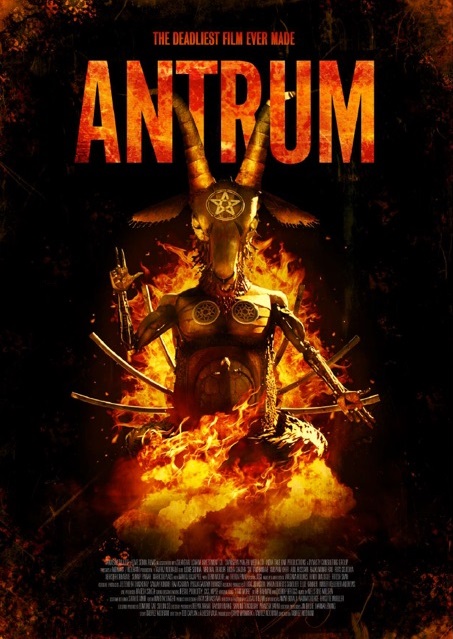
This brings us fairly neatly to Antrum: The Deadliest Film Ever Made (2018), which shares many characteristics of each of the above; there’s an oddball, somewhat intractable cursed film which only hints at any bigger message it may have, but there’s also a broader awareness of this cursed film’s reputation, and what could befall audiences who watch it. Using a brief mockumentary format to bookend Antrum itself, we are primed for the potential ill-effects of seeing the film, with examples of calamities which have befallen audiences in the past. The resulting experience is a lot stronger in premise than in execution, though, with perhaps more attention paid to the cosmetic appearance of this ‘lost film from the 70s’ than to a film which really rewards being seen. After all, if the curse ain’t real, what we are really looking for is an entertaining film – not a verdict you can easily come away with here, even whilst you might enjoy aspects of the atmosphere.
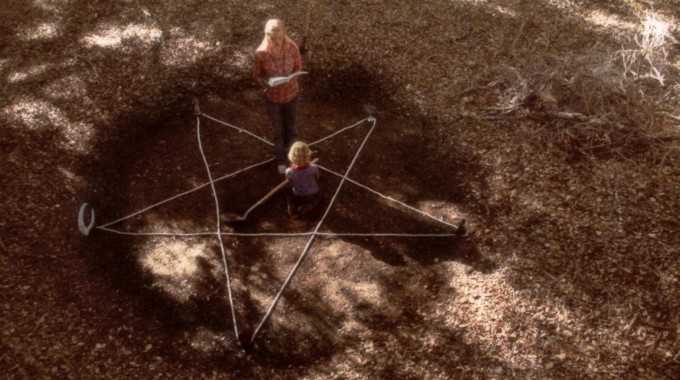
Antrum (which means ‘chamber’) follows a teenage girl, Oralee (Nicole Tompkins) and her younger brother Nathan (Rowan Smyth). Nathan is bereft after recently having his dog Maxine put to sleep; due to an offhand comment which his mother then makes about her being a bad dog, Nathan’s childish imagination therefore places Maxine in hell, something which terrifies him and gives him nightmares. In an unorthodox way of relieving his anxiety, Oralee devises a story whereby using a grimoire she’s gotten hold of, they can go and access hell itself to free Maxine. This involves digging at the spot where Satan allegedly fell to earth, which will take them down through the different levels of hell. Using on-screen titles to tell the audiences at what point they are currently, it quickly becomes apparent that their efforts to get into hell are symbolic at best, but they begin to notice odd phenomena and people around them in the remote woods: could they really have freed harmful entities? Or drawn attention to themselves in a dangerous way?
As you might well already have gathered from that summary, the plot itself is very low in the mix, with the directorial emphasis much more on sound, unusual visuals and cutaways to some unknown, unexplained scenes of torture. There are also multiple examples of occult symbols being allegedly scratched onto the film itself, leading to a deliberately multi-layered approach presumably intended to generate a sense of unease. This is referred to directly via the mockumentary frame at the end of the film, though even without this it’s pretty clear that the various sigils are intended to signify malign efforts, presumably to hex the lot of us.
Antrum is therefore fairly successful on the unease front, though I found myself craving more explication; beyond that atmosphere, the film was so thin that any genuine impact or occult content – i.e. being able to believe in the central premise or its implications in any way – was soon lost. Perhaps making this a short film, taking Antrum closer again to Ring (or at least to that film’s own cursed film) would have avoided this, and I note that directors Michael Laicini and David Amito have collectively got more experience of the short film format; Antrum is an odd choice for a full-length, all told. It’s very hard to sustain both artifice (making a film appear to be from the late 70s) and interest across a feature-length project. Whilst the ambition here is laudable, as a feature Antrum can’t quite live up to what is essentially its own hype, its notional existence as a somehow dangerous film.
Still, in terms of aesthetics, Laicini and Amito have done good work in presenting something which genuinely does look like an unearthed film reel from forty years ago. The audio track is equally very fitting to the time and place intended to have generated Antrum, nicely discordant and suitably strange for the subject matter and the style. It’s just that it doesn’t really work on a deeper level to me, which is a shame.
The opening scenes of any film are important in setting the style and tone of the film to follow; accepting this, the beginning of The Golden Glove rapidly establishes that what is to follow will be saturated with grime, misery and desperation, coming in immediately with largely intimated, but no less horrific violence. Based on a true story, the serial murders committed by Hamburg resident Fritz Honka during the 1970s, perhaps this film was never going to be able to represent that story without delving so fully into the misery and vulnerability of the red light district’s unfortunate inmates – but even so, The Golden Glove is a barely palatable foray into those crimes, a film which is very nearly void of any redemptive moments whatsoever. If this was director Fatih Akin’s aim, then bravo.
So in our opening scenes, there is already a woman lying dead in Honka’s ramshackle apartment. The suggestion is that he has lost his temper, leading to the woman’s death at his hands, and his predicament is simple: what does he do with the body? The camera pans away as he dismembers the corpse, stashing parts of it into black bags which he later dumps, whilst ominously, TV news reports state that parts of the woman’s body have not been found. Years move on, with Honka continuing to live his hand-to-mouth existence, harbouring malingering fantasies or clear contempt for the women who drift into his life, whilst daily drinking himself into a stupor in The Golden Glove of the title – a dive bar in the red light district, frequented by various oddballs and, for the most part, older women who are severely down on their luck. It is amongst these women that Honka usually spends his time, and – as downtrodden as they are – he sometimes convinces them to go home with him. Whilst murder is not necessarily his aim, he is without doubt a misogynist, and his treatment of Gerda Voss, for example – a lone woman who drifts into his life as a de facto housekeeper and sometime sexual target – is one of the toughest aspects of this film. I said that there are barely any redemptive moments in The Golden Glove; thank heavens there’s something approaching this where Gerda is concerned.
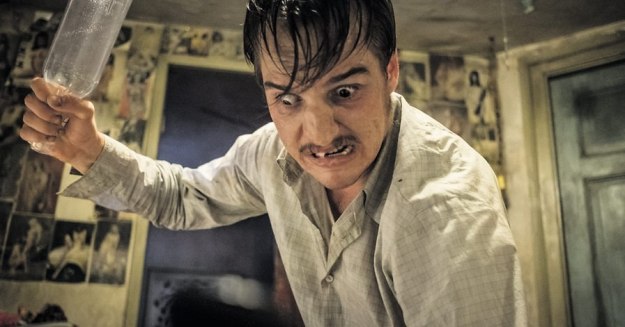
The Golden Glove would be pretty unpalatable on an audience-engagement level were it simply a run-through of murders, but instead, the film follows Honka as he makes some sort of an attempt to clean up his act, quitting the bottle at one point and endeavouring to break away from his dead-end job and deadbeat friends. It is during this section of the film that I found myself wondering if we are intended to feel any sort of sympathy for Honka here – as the film shows him almost handling a new role and new people, even turning into a shoulder to cry on. Perhaps seeing him humanised in this way makes it even more unpalatable. However, his fall from grace feels fairly inevitable when it comes, his behaviour and predilections ultimately inescapable. The performances are excellent. Jonas Dassler, in his prosthetics, is unrecognisable as himself and for such a young actor his rendition of a misshapen middle age man is quite something. He spins something incredibly dismal out of his role. Similarly, all the women here, with the exception of seen-from-afar schoolgirl, are shown at their absolute nadir – impoverished, dishevelled, sick with drink. The humanity they demonstrate in-role redeems the film from simply being a stalk-through the streets of Hamburg; the pace is more languid, giving enough time to really feel for the characters. Margarete Tiese and Martina Eitner-Acheampong in particular are superb (Eitner-Acheampong is able to assert herself, if momentarily – something which led to audible approval from the festival audience, which in turn reveals just how effectively repellent Dassler makes his own role.)
Whilst The Golden Glove is not overtly graphic, it feels almost as though it is – it implies the horrific, and where violence takes place, it is delivered with such hatred that it makes it seem all the more upsetting. Elsewhere, vomit and stench permeate the film, putting audience on the same level as the people who have to live near Honka. The Greek family dinner – shown after Honka has been seen blaming them for the stench in his apartment – uses a fairly simple technique, but does so well enough to seriously underline the disgusting conditions upstairs. Perhaps the film’s biggest trump card though is where it becomes clear towards the end credits just how meticulously the film represents the real-life settings and people of the crimes. It adds a verisimilitude which actually makes the film harder-hitting. Not only is the film nauseating, but its events actually took place. Odd moments of humour stand out as odd stylistic choices, but by no means can the film be said to be funny; it’s far too close to the knuckle for that.
The Golden Glove is absolutely not for everyone; this is a grim story reproduced incredibly faithfully. How it begins and ends should warn the viewer that they are not being helped to any clean sense of closure here – this is simply a snapshot of a warped, dangerous man and the misery he inflicts on people who can get no lower. It’s as much an anthem to the dangers of alcoholism as it is the ensuing violence, as it is alcohol that mars every relationship and gesture throughout.. However, if you can tolerate incredibly unsettling cinema, then this is immensely well done for what it is: an evocative, if appalling examination of serial murder.
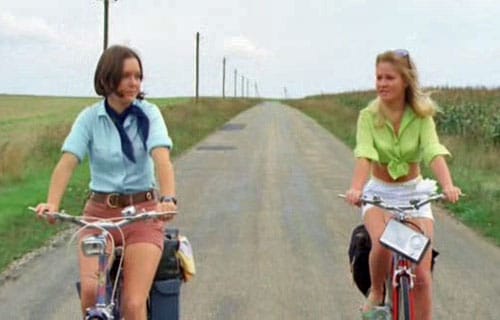
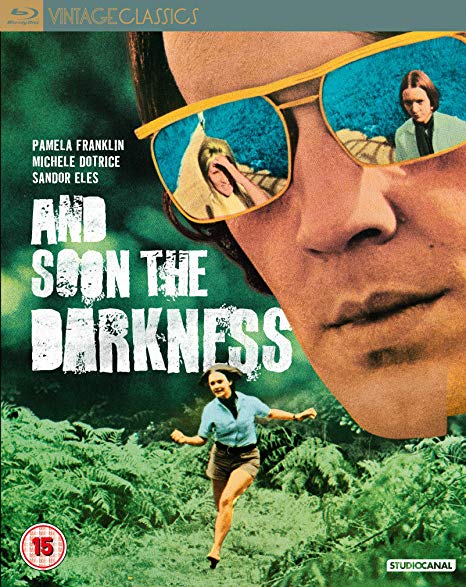
Two young girls, Jane (Pamela Franklin) and Cathy (Michelle Dotrice) are on a summer cycling holiday in rural France. It’s sunny, bright and picturesque; the atmosphere is relaxed, both girls are having fun and Cathy is keen to soak up the sun a little, but Jane is keen to press on to the next village. As they leave a youth hostel on their way onwards, they pass a young man who seems to take an interest in the pair; he overtakes them on the road, and seems to be waiting for them at the next town.
In actual fact, the girls aren’t coming – they’re squabbling about how best to spend the rest of the holiday, and the argument escalates to the point that Jane decides to leave the recalcitrant Cathy to her own devices, cycling off alone. Cathy is happy enough at first, but soon both girls become acutely aware of the dangers of their isolation. Jane waits for her friend to arrive, but all is not well and she cycles back to look for her. She’s been warned in broken English that the area is ‘bad’, and by now she’s gleaned a little about a murder in the local vicinity too. It remains to be seen whether Jane is in time to find her friend safe; equally so, the young man from the earlier village, Paul (Sandor Elès) is still on the scene and claims to want to help, but Jane is finding it very difficult to know who to trust…
Directed by Robert Fuest, who would go on to make rather more ornate, overblown films like The Abominable Doctor Phibes, And Soon The Darkness is a rather different beast. It’s very economical, making excellent use of a very small cast and a small number of key locations, albeit that there are more than enough shots of the wider countryside and its deserted roads to make the point that this is a very isolated part of the world. As attractive as the area is, it pales against the small-scale human drama going on within it – a point which is underlined, at the very end of the film, by the sight of two other female cyclists departing into the great beyond. Whatever befalls Jane and Cathy, it is almost immediately lost within the wider environment, something which makes their story all the more plaintive; they are small-scale, lost against something bigger.
With regards the colourful, bright summer landscape, there are a couple of films which have used similar to good effect but – regardless of the fact that the horror itself is different – it put me somewhat in mind of Midsommar, which features another idyll which turns out to not be as idyllic as it at first appears to be. Also, the language issue is a key factor in the bewilderment and fear which overtakes Jane as she tries to help; the foreign land might be in Europe, and might be ostensibly as modern and as forward-thinking as we would hope, but without being able to understand what anyone is saying, it might as well be a million miles away. The fact that the film retains the original French without throwing the audience so much as a subtitle helps to preserve this sense of isolation. Female vulnerability is also a key plot component in And Soon The Darkness, and it would be foolish to glance over this: the girls are followed, warned and ultimately endangered here on account of their sex, although we’re probably primed nowadays to see all of the girls’ encounters as potential problems – a lot of the male attention they receive never turns into anything sinister, and they seem fairly confident in how to handle it – well, for the most part, of course, and as ever, there’s always a point where things ultimately turn irreparably sour. The film was made in 1970, and the past is (also) a foreign country, though that’s as often as not part of the appeal of these older films – taking in the world in which the narratives operate, how it looks and how it works.
Amongst the film’s many strengths, you can also count ambiguity; it’s difficult to trust anyone here, appearances are monstrously deceptive and (with the exception of one absurd plot point where one of the girls hangs her clean, dry underwear on a nearby tree, presumably simply to generate clues) the events which befall these girls are very plausible, again given the time and place. Certainly, the perils of lone travel in an unfamiliar country have seen the film judged worthy of a remake within the past ten years; spoiler alert, but there, mobile phones don’t seem to solve the core issues either.
Trust is a hard thing to come by in this well-wrought, often unbearably tense piece of cinema. The audience is kept on the same level as the girls throughout, never privy to some great saving grace or way through, and that – together with the fantastic job Studiocanal have done with their remaster – makes for a worthwhile, prudent and clever film.
And Soon The Darkness received a release by Studiocanal (Blu-ray and DVD) on 14th October 2019.
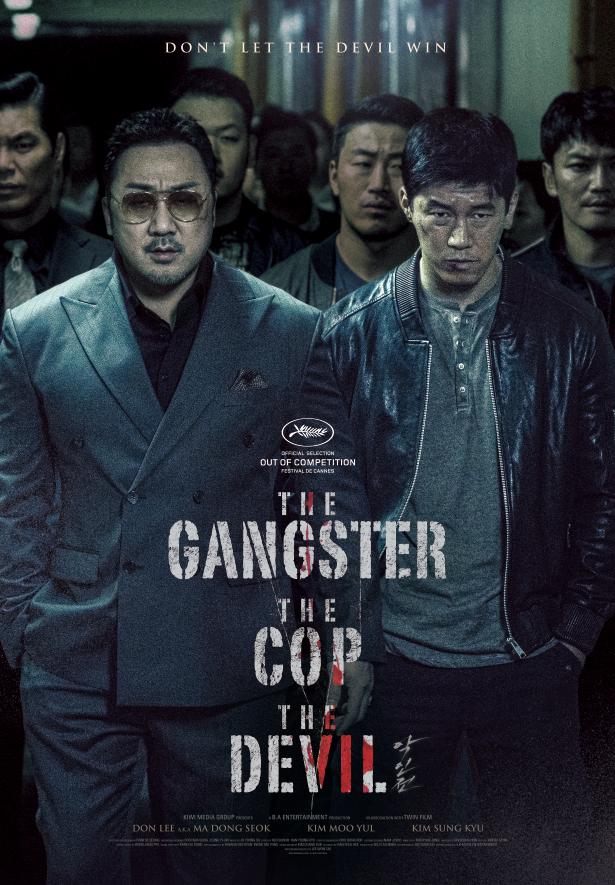
There’s a brutal serial killer on the loose in South Korea. His modus operandi is quite simple: by faking a collision with another vehicle on a deserted road, he encourages the aggrieved party to get out of their car: when they do so, he waits for them to get distracted, then stabs them to death. Thus begins The Gangster, The Cop, The Devil – a particularly brutal slab of Korean crime drama, an unholy trinity of unorthodox policing, gang warfare and compulsive murder – albeit one which manages to offer more than a few moments of bizarre camaraderie and even humour along the way.
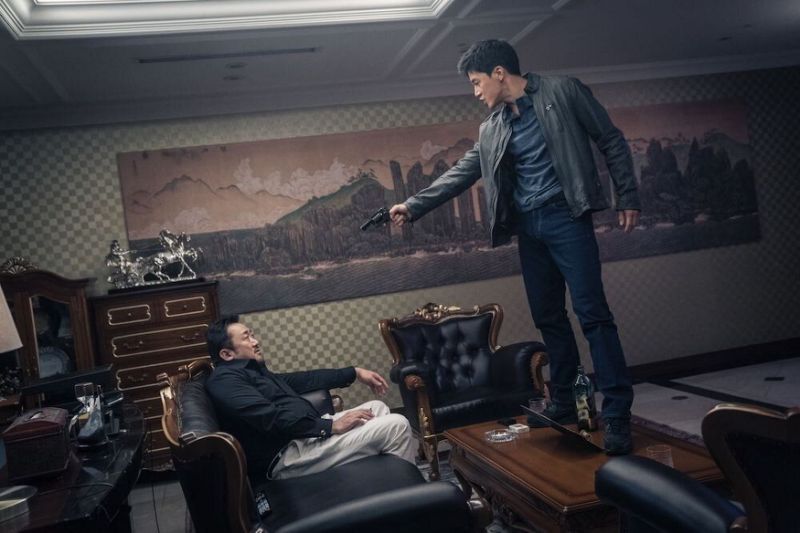
The serial killer’s antics are of great interest to local cop Jung Tae-seok (Mu-Yeol Kim), who would much sooner investigate this case than all of the other, to his mind, petty cases which his boss insists should take precedence. It’s quickly clear that the world in which Jung Tae-Seok operates is incredibly corrupt; the local crime syndicates exert control over the local area via a system of intimidation and bribes, and seem largely left to fight it out amongst themselves when any issues arise (spoiler: issues very much arise). At the very top of the chain is boss Jang Dong-su (the inimitable Dong-seok Ma); however, his usual assured position in life is severely challenged one night when he himself has a minor traffic accident, gets out – and walks straight into the serial killer, now known simply as ‘K’. Dong-Su is severely injured in the encounter, but escapes with his life. Naturally, as he recovers he wants to seek revenge in his own way, but the police have their own ideas. When meeting with his old nemesis Jung Tae-Seok shortly after his encounter, Dong-Su proposes both a truce of sorts, and a challenge: he tells Jung Tae-Seok that he’ll set his own enquiries in motion to find ‘K’, and invites the cops to do the same. Who will find the killer first? And at what cost?
We’re left in no uncertain terms from his opening scenes that Jang is a mercilessly violent man on his own terms, and we also see that Jung is an essentially decent man, severely hamstrung by his own department’s apparent corruption and inability to really tackle the crime going on at ground level; we are prepared for each man to really go for the challenge of finding the killer with some relish. Each is unafraid to manipulate their rival, as well as brooking no opposition to their respective schemes. Along the way, we get a sense of each man’s deeper character; this would be a weak film indeed if we were presented with nothing but a couple of blockheads, one in the ‘right’ and one in the ‘wrong’, and left to watch them play at a whodunnit as they look for the ‘devil’ of the title. There is a lot more to enjoy in this slick, well-paced film. The cat and mouse scenario at the heart of the film isn’t the only element of the plot to play out, as we also see Jang grapple with the power struggles within his own demi-monde, often fixing said issues with immense shows of brutality (the film boasts some seriously accomplished, brilliantly-choreographed sequences of gang warfare). Jung, on the other hand, has to endlessly sidestep the bureaucracy and boastfulness even of those operating legitimately – all against the backdrop of the machinations of a clever and conniving murderer, who seems to be enjoying the power he has over both men, making it his business to demonstrate to them that they are each being watched.
However, as both crook and cop get closer to finding their man, the action escalates; a clever character study this might be – at least in key places – but towards the film’s close, The Gangster, The Cop, The Devil demonstrates that director Won-Tae Lee is no slouch with shooting action; there are some particularly brutal car chases and pursuits, the end-points of meticulous surveillance and patience on behalf of each man. Their truce with one another is always uneasy, and there’s a keen sense of competition between them as they each try, in their own way, to make the streets of Seoul safer. Jang may be a crook, but it’s not a monster; he is depicted in many ways as a gentleman thug, only allowing himself to spill over into ultraviolence when the rules he lives by are violated. Likewise, Jung is something of a likeable rogue, someone who may be prepared to bend the rules, but only where he believes people’s best interests lie. The film falls broadly into key acts – though thankfully without the current obsession with on-screen chapter titles – and the last act of all contains a deep lull in the action which has come before, but it allows the film to finish on a sizeable pay-off, and a grim, black humorous conclusion which rounds off the film as a whole very well.
Fans of crime thrillers will find plenty to enjoy in this tense, well-realised example of the genre. It skates the line between overtly bloody and oddly picturesque, and there is more than enough here to engage audiences throughout. As Won-Tae Lee’s only second feature, there’s quite a remarkable amount of skill on display, a story which works on its own right but perhaps also has a few things to say about Korean society and its deeper issues. Whilst the finer points of this may be lost on Western audiences, I’m sure we can recognise the idea of odd bedfellows and contested motivations, things which this film showcases brilliantly well. Skilled, almost joyful acting performances within the key roles on display aid the film in landing a big impression. By the film’s close, I felt I’d seen something well-written and worthwhile. The Gangster, The Cop, The Devil might not always be an easy watch, but it’s absolutely a satisfying one.
The Gangster, The Cop, The Devil screened as part of the Mayhem Film Festival in Nottingham, UK in October 2019.
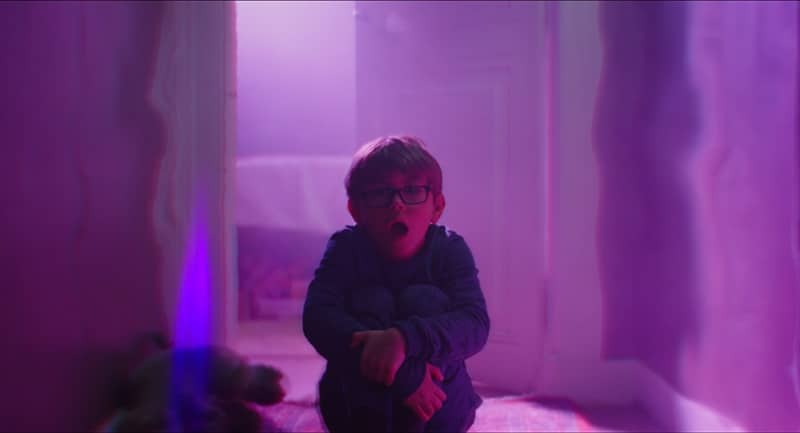
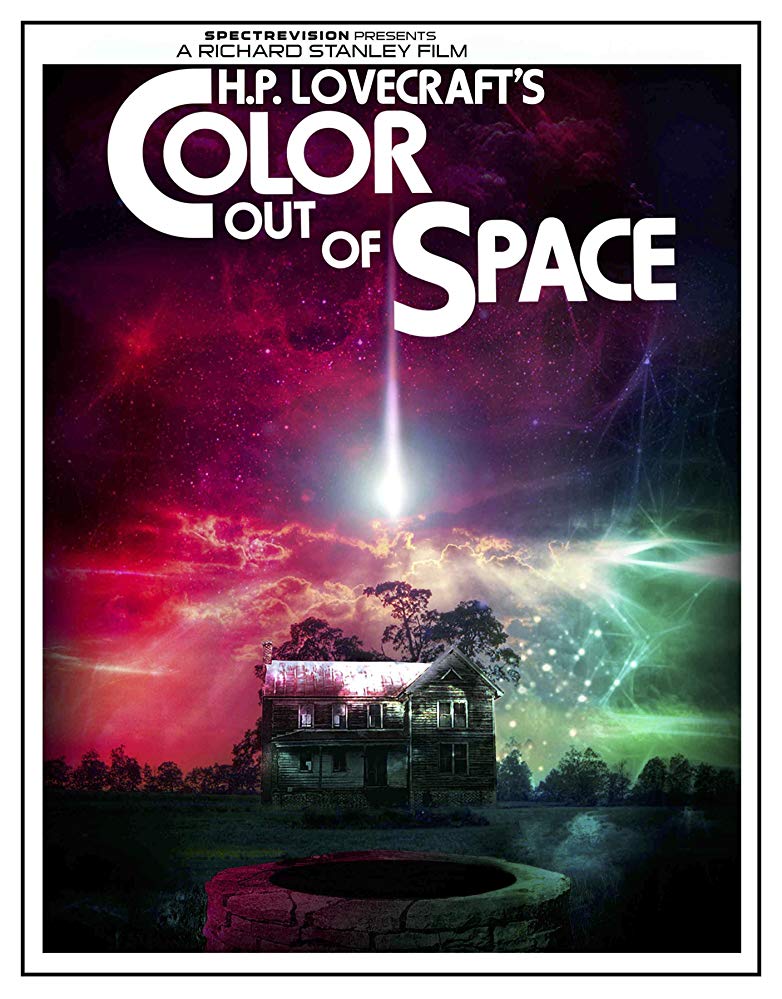
It’s a sad fact that director Richard Stanley is as well known for not making films as he is for making them; since the debacle surrounding The Island of Doctor Moreau in the mid nineties Stanley hasn’t made a creative feature-length film, and given the quality of his earlier projects such as Hardware, this can only be our loss. Still, he’s apparently decided to ‘go big or go home’ with his latest offering – an adaptation of an HP Lovecraft short story, brought bang up to date and crafted into something both incredibly lurid and incredibly dismal. I don’t think you make the attempt to adapt Lovecraft without having a determination to push yourself or, to an extent, having something to prove. Color Out of Space may have its flaws, but no one can argue with its sense of purpose. It’s a graphic, artistic assault on the family; almost a home invasion film as it’s imagined here, it spins something very interesting and unsettling out of the extra-dimensional force which lands on this particular corner of the world.
The film starts in rural New England: the Gardner family have moved there to escape city life, and although they need to keep on-grid to an extent make a living, they seem to be enjoying it there. Daughter Lavinia (Madeleine Arthur) is getting into the spirit of Gaia in the woods, enacting versions of magic rituals as a means of protecting her family; her brothers Ben and Jack (Brendan Meyer and Julian Hilliard) seem fairly well-adapted and parents Theresa and Nathan (Joely Richardson and Nicholas Cage) are in the throes of re-assembling their marriage after Theresa’s fight with breast cancer, even if Nathan seems to have an unorthodox idea for his new career in farming (if you’ve never seen an alpaca in a horror film, then get ready). We get just enough of a sense of this happy, if eccentric family before all hell lets loose; a meteorite lands on their property overnight, causing a fair amount of obvious damage. However, the impact of this event goes far beyond the obvious; whatever the meteorite has brought, it soon has an impact on the landscape around the farmstead. The local authorities arrive and, finding that the water has been contaminated, they advise (too late) that the family avoid drinking it. New, hitherto-unseen flora begin to bloom around the area; the well on the property seems to be a particular focus for whatever malign (or at least indifferent) force has just arrived; crops come in sooner than expected, but they’re all putrefying. Technology begins to fail; mobile phones do their thing of capitulating the moment they’re genuinely needed. The family are more than a little perturbed.
It’s perhaps not such a leap to suppose that whatever can impact upon the local flora and fauna in this way can have an equally disruptive effect on the people who live there, and the ways in which these changes are shown are by turns very creative and gruelling to watch. At first, quite subtle shifts in mood and space/time perception give way to more physically harmful phenomena. These go from close-up minutiae (not for the squeamish) to something approaching body horror as the film approaches its end. I said the film was ambitious; it encompasses everything from magical/extraterrestrial phenomena, all in glorious technicolour, to grotesque practical effects – the one balancing the other, though without letting up on the overall sense of pressure. Watching this fairly relentless assault may not be for everyone, as there is little in the way of redemption here, and the film is escalatingly nasty for a film with such a magnificent colour palette.
Perhaps the main sticking point for many genre film fans will be the range of performances on display here, though, and how you feel about Nicolas Cage in particular in his role as Nathan Gardner will depend on your overall tolerance for his style. Here, he seems to drawl his way through a lot of his earlier scenes; these actually make for harder viewing than the inevitable ‘full Cage’ scenes, as to be fair, when these occur, they’re for good reason. Stanley apparently had to cut some of Cage’s wilder improvs, so we can only wonder what that would have been like. Against the other performances, Cage can seem a little jarring; Joely Richardson in particular has a very different manner in front of the camera, but perhaps the main danger of casting Cage is that many viewers don’t seem able to see past his mannerisms at all – some people laugh if he draws breath – so it runs the risk of taking people out of the film altogether. Of course, for just as many viewers, this is part of the appeal and can only contribute to the overall sense of detachment from reality. Personally, I preferred to look past Cage, for fear of getting absorbed by one aspect of the film only.
Still, overall, the film is an engaging piece of cosmic horror, with some visually bold, effective plays on the ideas of space, time, bodily integrity and (of course, being a Lovecraft adaptation) the notion of sanity. It looks great, with an almost painterly eye in places. As entertainment it’s largely successful, and as a return to the big screen, it’s evidence of ambition realised. I sincerely hope Richard Stanley can build and build on this, as it’s clear he has much to offer and he certainly needn’t languish for another twenty-odd years.
Color Out of Space screened as part of the Mayhem Film Festival (UK) in October 2019.