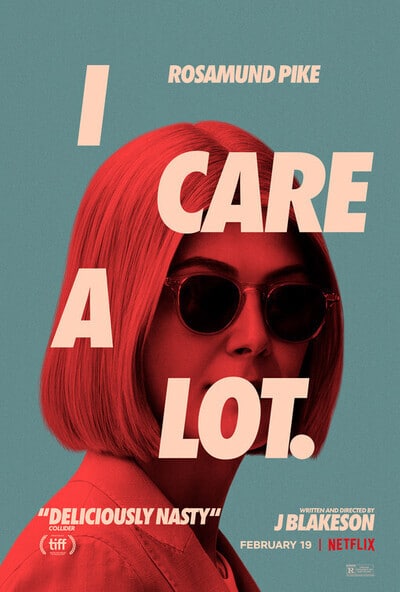
I Care a Lot is a story of utterly dismal, conscience-free people doing spectacularly well for themselves; on several occasions, it mentions the old adage (or variants thereof) that, in life, you take or you are taken. It’s a light-touch but often galling examination of the ‘American Dream’ which, when it comes down to it, rewards enterprise and hard wealth gotten by any means. The film is described in many of the usual places as a comedy, but – as entertaining as it is – it’s no comedy, not to my mind. It’s eminently watchable, and yet it’s far too appalling to laugh at, and certainly too appalling to laugh with. It’s not a satire, either, because despite its fantastical (even horror movie) turns, the backbone of its plot is not just plausible, it’s a going concern.
It tells the story of Marla Grayson, a kind of everywoman figure for a system engendered to care for the elderly and vulnerable, but, as the US legal guardianship model is almost inevitably ripe for exploitation, guardians have unprecedented power and access to people’s lives which is not always in the ward’s best interests whatsoever. Marla Grayson is a court-appointed legal warden, whose job is to take over and ‘care’ for people no longer able to care for themselves. The revulsion is almost instant. From the second you see Marla’s sharp, blonde bob and designer clothes (she’s often filmed from behind) then hear her assured, jargon-rich language and calm, confident tone, it’s absolutely easy to hate her, a feeling which Rosamund Pike maintains with some panache throughout.
Marla is simply doing what she does; it’s all in a day’s work. She’s ticking away nicely: preventing children from visiting their elderly parents because it’s not ‘in their best interests’, seizing and selling a lifetime of savings and real estate and paying herself out of the proceeds. Then, she is presented with what the stooges and know-alls in the trade refer to as a ‘cherry’. This simply means an older person with significant means, but no trace of an inconvenient family to prevent them getting misrepresented to the court as incapacitated (crooked doctors are, of course, integral in all of this). Perfect! Marla and her equally dreadful partner Fran (Eiza González) begin scoping out the unsuspecting woman, Jennifer Peterson (a phenomenal Dianne Wiest, even if it would have been even more phenomenal to see more of her). Miss Peterson looks like a ‘cherry’, alright. No husband. No kids. Nice house. Nice assets. Marla and Fran, enthused, discuss their next steps: in short, this means getting a medical report to assert that she is in the early stages of dementia, then locking her up in a home. When Marla finds out that Jennifer has a safety security box with even more of a haul inside, she begins to hope and pray that this is her ticket to the kinds of money she has always felt she deserves. In a genuinely unpleasant scene, the older lady is bamboozled by official documents and taken to a retirement village; they always come quietly when they see the paperwork, Marla smiles.
Everything seems to be going perfectly, but – when Fran is at the house choosing swatches ready for the house sale – a taxi arrives for Miss Peterson. Fran explains that she has moved, but the driver seems perplexed. It seems that Miss Peterson was expected at a rendezvous with…hang on, does she have family? It seems that she does. It also seems that the secret family have the kind of cash, connections and clout to cause some significant problems for Ms Grayson and her until-now very successful grift.
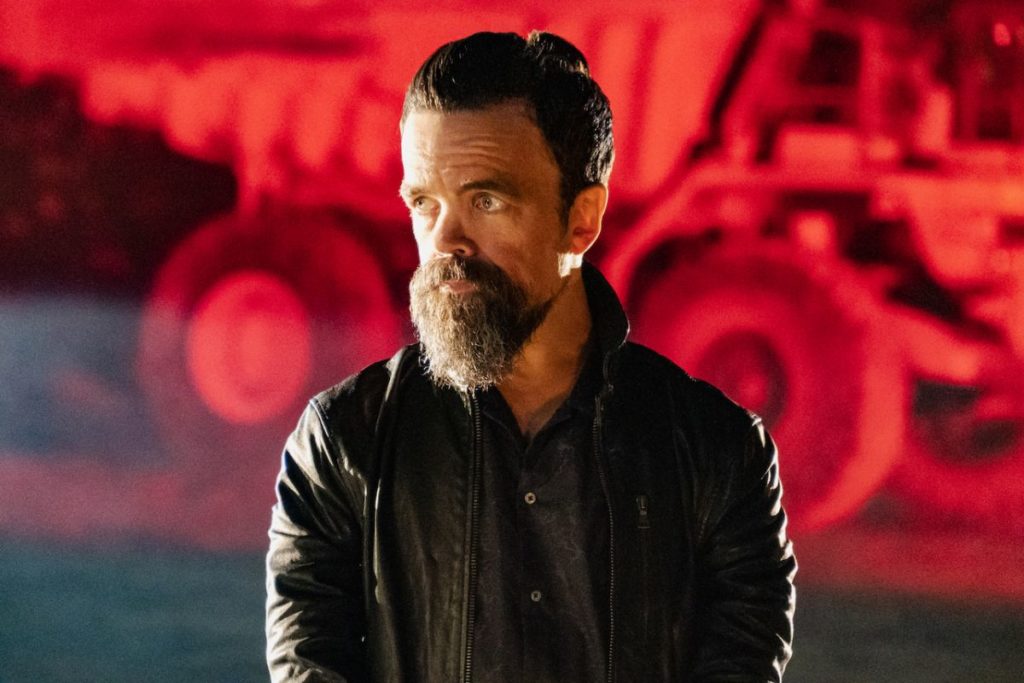
When Roman (Peter Dinklage) and his associates enter the fray, the film becomes less of a rather strangely bright and breezy sack-beating about how we as a culture have allowed our eldest to be treated, and more of a battle of rather well-matched adversaries. There are no moral winners here; although Roman is genuinely concerned about ‘Miss Peterson’, he couldn’t care less about the other people of her age who are getting turned over, a point which is reiterated throughout the film and more so at the film’s end. Likewise, Marla’s devotion to Fran is her own Achilles Heel, but it hardly makes her into a good person – although, at some points, the film seems to be trying to get us to applaud Marla’s undoubted ingenuity, which was a bridge too far for me. I was less than enthused by Marla’s feminist speech after she deals with the hot-headed lawyer, too: as a tale of ‘sisters doing it for themselves’, it barely works, because it’s just too hard to applaud this. However, a good balance between characters and plot developments means that we trot past any major writing concerns in almost no time, and a few more high-tension interludes command the interest too (even if this doesn’t engender any positive feelings for anyone involved).
The last act, perhaps, asks a great deal, pushing proceedings as far as they could feasibly go; this, too, is a big ask in terms of character arcs. But the finale, I feel, is a superb way of bringing the focus back to the nub of the whole plot, re-introducing an aspect which has been almost forgotten and offering something which felt quite cathartic and – dare I say it – right. I would maybe stretch things too far myself if I mentioned Les Liaisons Dangereuses here, but there is something of that; there’s a sense of one’s smartness and sins coming back to you in the end. A saddening, maddening film, I Care a Lot perhaps makes light of misery in some respects, but then if you see past the entertainment, it does have its own grim points to make.
I Care a Lot (2020) is available now on VOD such as Amazon Prime and Netflix.
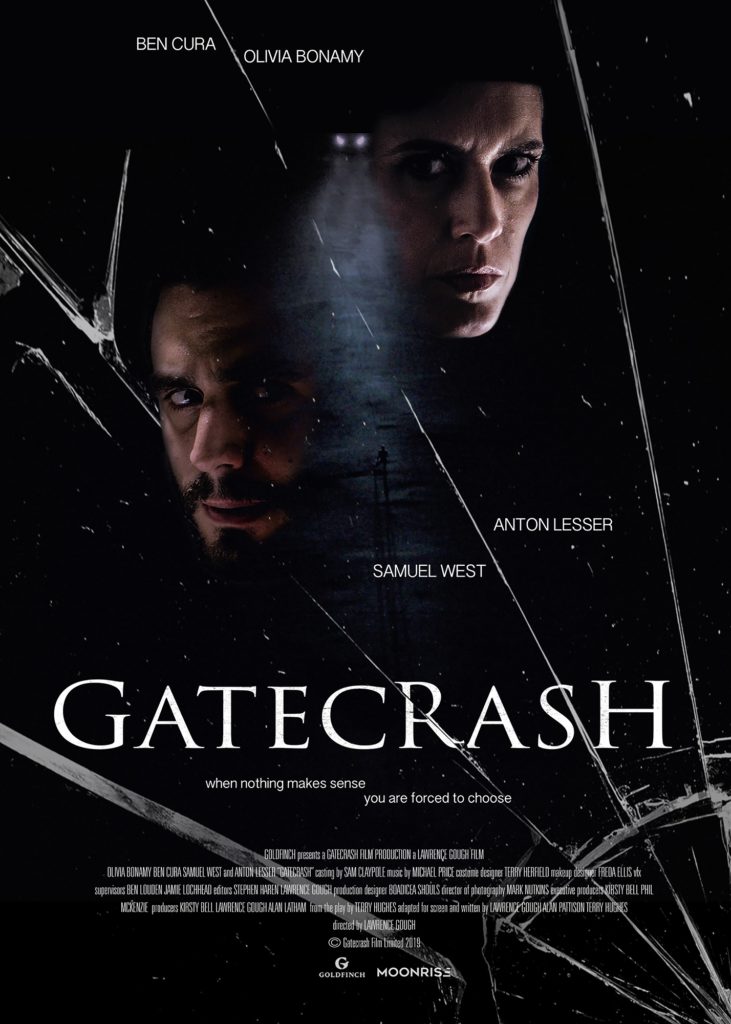
Gatecrash (2020) has an interesting pedigree; based on a play, and directed by Lawrence Gough – who has spent far more of his time working on television than cinema over the past decade – it’s a film which contains aspects of both the stage and the small screen. That being said, there are some similarities with Gough’s earlier film, Salvage (2009): remember Salvage? Gatecrash is by far the superior project, showing the benefits of directorial experience over the intervening decade or so; it’s an often jarring, discomfiting film which, like Salvage, unfolds almost entirely in a narrow domestic setting with just a handful of characters. Unfolding some neat tricks along the way, it is able to overcome its few odd omissions or oversights.
The film begins as a car arrives, late at night, back to a rather plush house and grounds. The driver, Steve (Ben Cura) and his partner Nicole are already in conflict because it seems that their vehicle has been involved in a hit and run incident and, in a panic, they have headed straight for home. Recriminations soon begin to fly: Steve had been drinking, the man they struck came out of nowhere, and – most damning – Nicole suggests that it was no accident, that Steve drove into the pedestrian deliberately. Seems plausible, to be honest; he is presented as a Bad Man pretty early on. The initial whirlwind subsides as they discuss what to do, but when the house landline is rung by Steve’s missing mobile phone, it’s clear more is going on here. Oh, and then there’s the small issue of another car pulling up on the drive…
The film starts strong, with Gough clearly knowing how to show tension: the quick edits, the way in which things open mid-conversation and the close, claustrophobic focus all give a sense of things being blurry, disjointed – and veering ever towards hostile. Nicole and Steve are either within inches of one another, or shown momentarily alone in different areas of the house – there’s no sense of a united front here, something which grows increasingly important. If anything, the successful disorientation of the first fifteen minutes or so works against characterisation initially, but them’s the breaks with this kind of approach. Some of the dialogue, similarly, feels a little thin at first – sacrificing the plausible to amplify the odd – but, when Gatecrash settles into a pace and a mode, or perhaps at the point when I settled into the film’s pace and mode, it does hold the interest very well.
Nicole rises to the fore as the film moves on, and the use of long, continuous takes as she runs from room to room helps to keep the audience on her level; our viewpoints emulate hers, and it creates empathy. She’s not your usual ‘final girl’ sort of character, thankfully, but when the film makes a sizable shift and shifts forward in time (like a play, the film falls broadly into two ‘acts’) it’s Nicole’s fate we are engaged by, and Olivia Bonamy does well with her role, balancing a kind of strained, terrorised civility with moments of plausible horror; Nicole is a woman clearly shattered by her treatment. Also, Bonamy may be French, but she gets the required British ‘squirm’ very well; this film, in several ways, represents a peculiarly British type of home invasion. Gatecrash manages its latter shifts in direction nicely, albeit it generates plenty of questions on how – or if – this situation could ever be resolved. And, whilst it’s a shame that one actor disappears, it’s equally a real treat when another appears.
Much more about the threat of violence and exposure than it is overtly violent, Gatecrash is a decent, well-wrought film which, although it doesn’t answer every question you may have, does more than enough to stay engaging across its ninety minutes. It certainly moves away from the predictable, and for that alone it deserves credit in a genre which has tried every trick in the book. Nice to have you back, Mr. Gough.
Gatecrash will be available on digital download 22nd February.
More and more, anxieties about what we’re sharing online and who is watching are making their way into cinema. Scouting for clicks and ‘likes’ is a new version of the Satanic pact, it seems; surely, a horror unfolding on a TikTok timeline cannot be far away. And the appearance of ‘influencers’ was simply bound to show up in horror, because it’s such a new, recognisable and widely-reviled phenomenon. Influencers are the epitome of do-nothing celebrity, with people growing unaccountably wealthy by selling aspirational lifestyles from their own bedrooms; no longer is there the necessity to even get on TV. I thought Pop Idol and similar were bad enough; having worked in education and run the gamut of students who cared little for literacy because they were going to get discovered as singers, it now seems a lot less exasperating, because at least they were hoping to be good at singing. Now singing seems secondary – unnecessary, even. All you need is batwing eyeliner and good luck.
I digress.
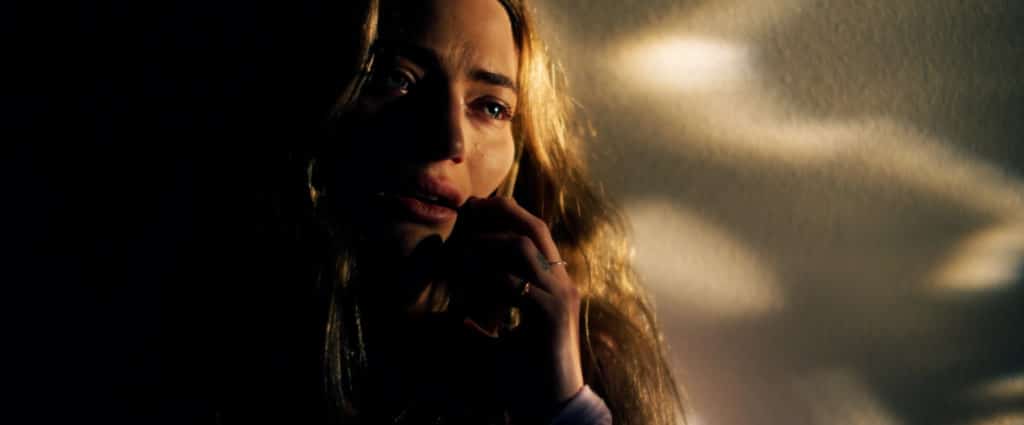
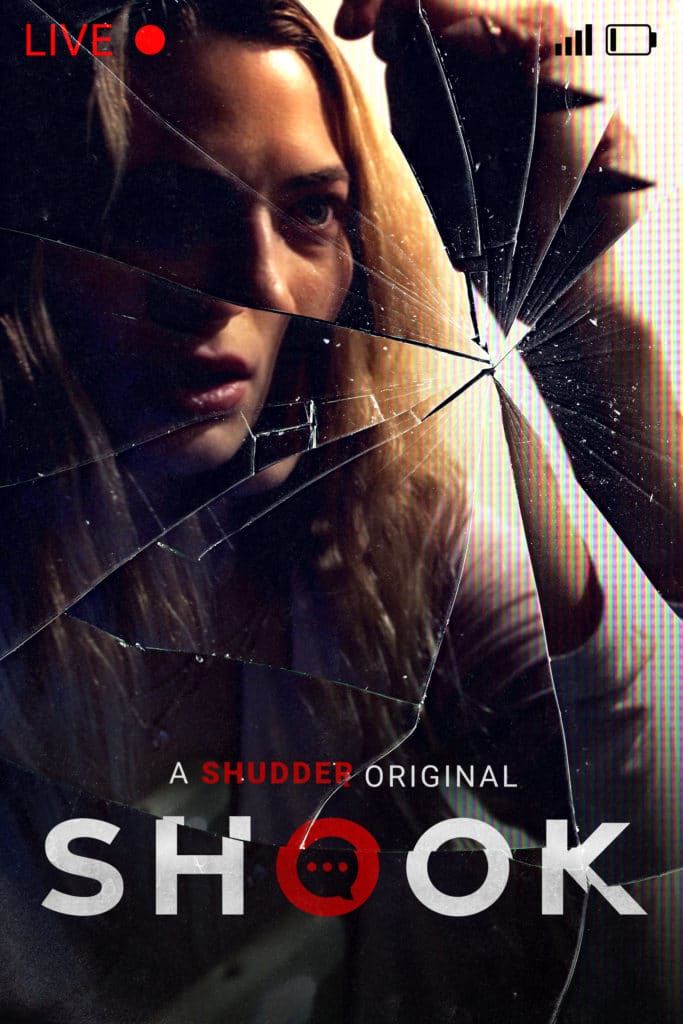
Shook is a stylish, grisly piece of entertainment which clearly knows its chosen terrain: it keeps social media in its sights throughout, even whilst the style and content of the horror moves elsewhere. It’s bleak, it’s often funny and it is scathing – more a cry of despair and a seized opportunity than a satire, but it all feels pretty cathartic. After the fitting murder of cosmetics influencer Jenelle (offed, a little like Drew Barrymore in Scream, sooner than you’d expect) another influencer, Mia (Daisye Tutor) is keen to say the right things to camera about her grief – even cancelling a live stream she had planned. Off-camera, though, it’s clear that Mia couldn’t really care less. This would all be more palatable were Mia not also neglecting her family commitments; it seems that her mother recently passed away, and her sister Nicole is heading to San Francisco for a medical appointment, as she suffers from the same progressive genetic condition as their mother did: it was Nicole who nursed mom through her final illness. Nicole talks Mia into house/dog-sitting whilst she’s away, and she reluctantly agrees. The house being incredibly well-served by webcams is explained by their mother’s illness, as Nicole needed to keep an eye on her and to know if she was awake. It’s something by way of giving just reason, at least: this is one hyper-connected home.
Mia isn’t much of a dog-sitter, and busies herself accepting friends requests (the oddball over the road, natch) and watching what her dreadful friends are getting up to online without her. So the set up and the lingo are very up to date, but what we have here is familiar: a girl, alone, watching strange goings-on unfolding around her, events she has to unpick in order to save herself.
Shook does several things very well: one of these is to show the fallibility of our mod cons, and how powerless people are when they fail, or play up, or get commandeered. It’s a well-observed backdrop to the film’s more familiar elements: together with the horrors of the online age, we also get lots of traditional slasher elements, as well as Noughties endurance fests, like the Saw franchise. It’s interesting that Mia appears genuinely unable to put her phone down, even before the unfortunate turn of events; everyone is constantly on-grid, though, and all the more vulnerable for it. Tech itself takes on a kind of supernatural role, too, with static-heavy voicemails and withheld numbers played for scares. I did find the friend group a tad difficult to differentiate, but we see their names and photos enough by about halfway in – so, again, it’s a plausible fix.
Alongside several of the titles which streaming service Shudder have released as originals recently, there is no lull at any point in Shook and the film busies itself with a number of plot shifts, which keep on coming until the credits roll. This may be a little excessive for some viewers, especially given the nature of the final ‘reveal’, but for me, I feel that it all hangs together pretty well: the tone of the film works to its advantage, and it successfully skates the line between enough depth and enough pace. I mean absolutely no disrespect with this comment, but Shook probably isn’t a film which is going to change your life: it does, however, offer a snapshot of where we are now and crafts an entertaining horror yarn out of that. It’s refreshingly unpretentious, and it calls to other films in the horror canon in a way which suggests a real fondness for the genre. Sometimes, that’s all you want.
Shook (2021) lands on Shudder on Thursday, 18th February 2021.
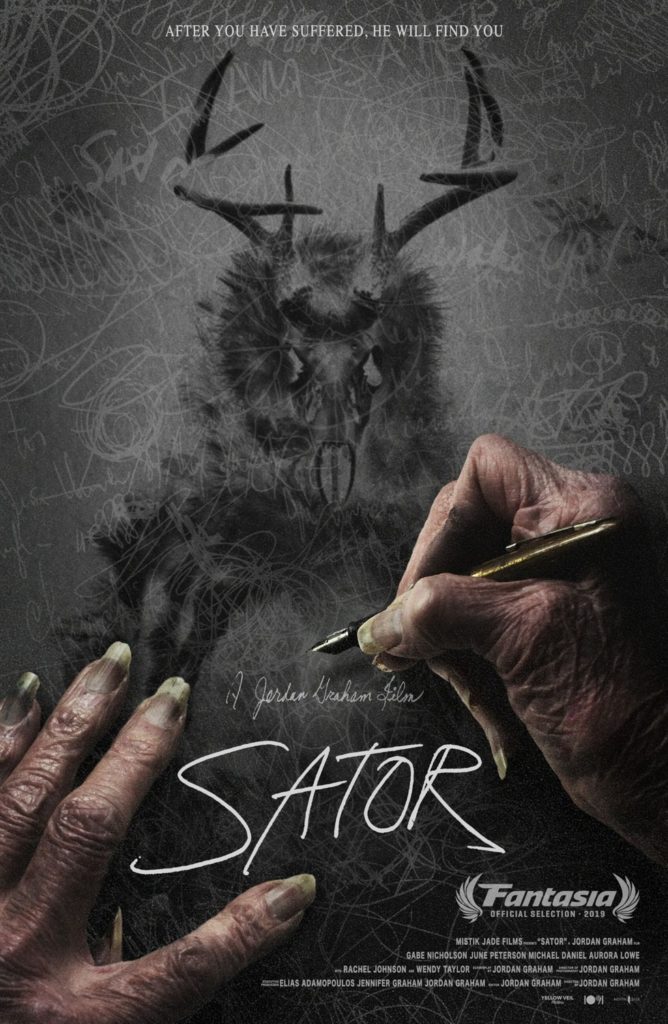
The back story of Sator (2019) is a deeply interesting one. It’s a film seven years in the making, with director Jordan Graham doing far more than even most first-timer indie directors find themselves doing (right down to building a cabin used for one of the sets). Not only this, but the film has a deep resonance with Graham, as it not only features footage of his family (with his late grandmother June Peterson also acting in the film) but also hinges upon an entity given the name of ‘Sator’ by Peterson herself; her belief in this being, and her certainty that it had a mysterious hold over the events of her life, led her to be committed to a psychiatric ward in the Sixties. Recordings of ‘Nani’ Peterson open the film; she explains that Sator is somehow ‘in charge of everything’. This real-life footage segues into the world of the film, which overlaps with the family story throughout; however, for all of the tantalising elements suggested by Nani’s tales, the film never quite rises to the framework offered, opting to front mood and aesthetics over dramatic and narrative payoff. This is fine on many levels, though I’d argue that, to truly generate scares, you need something of a cogent narrative – you need to have characters, in order to truly take note of whatever happens to them.
After a scene featuring an old, dark house full of candlelight and inhabitants in period dress to suggest, at a guess, that the being in the woods has claimed many scalps down through the centuries, we meet our main protagonist – nameless and almost wordless for the largest share of the film. His connections to others are not made clear immediately, but it seems he belongs to a rural family for whom the spectre of Sator hangs heavy – alongside a shared history of bereavements. He spends his evenings at his shack, listening to audio describing Sator’s characteristics; when another man arrives – apparently his brother – they head over to the family home, where grandma still lives. Nani still clings to folders full of automatic writing which she claims was generated by Sator and certain other beings with a mysterious, insistent interest in her and those she holds dear.
And what is this Sator, exactly? The audio files and the – now expected – analogue tapes uncovered at the house, together with Peterson’s early testimony, conspire only to …keep it all rather confusing, actually. At different times, Sator is described as a guardian, a source of surveillance, a confessor, a bane, a demon and a guide; the only thing which seems certain is that Sator has a vested interest in this isolated rural clan. There’s a suggestion that it has had some hand in the bereavements which afflicted the family, too. Then it seems that Adam, for ’tis his name (Gabriel Nicholson) is himself in Sator’s sights. Strange encounters by candle- and torchlight ensue.
Be aware: the last couple of paragraphs reads like a fairly standard brief plot synopsis, but it also feels like an ill fit, as it doesn’t really represent the tone and style of the film at all. You have to work to glean as much as this; it’s not made readily available to an audience. Dialogue typically takes the form of short, rare flourishes of conversation, and then there’s some use of monologue in the form of the excerpts of recorded voices. (I struggled with much of this, too, simply in terms of being able to make it out. Perhaps muffled voices were intended, but I don’t think the atmosphere would have been compromised by better audio clarity.) Outside of the dialogue, silence is key.
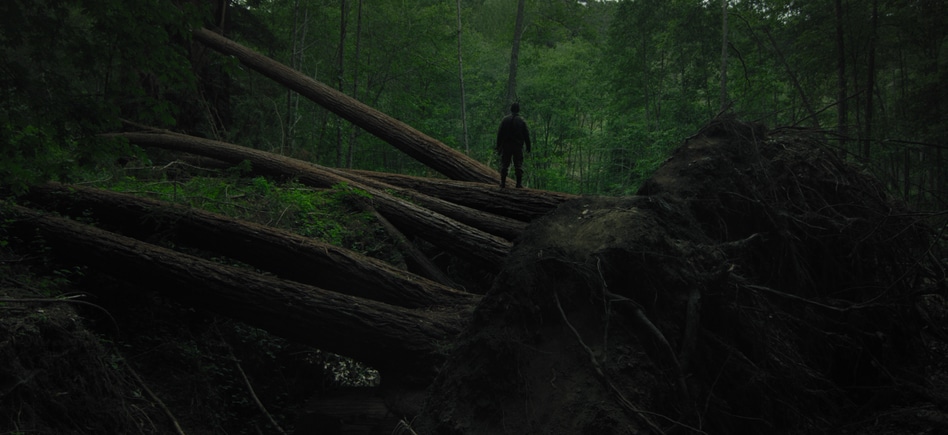
So much for how it sounds. Sator is very much a film of well-composed set pieces, folk horror leitmotifs and stunning landscapes, all bathed in the kind of natural light or candlelight which is often associated with The Witch (2015): unlucky, perhaps, as Sator was already being shot before Robert Eggers got in there. Sator certainly looks fantastic, its national park shooting location offering great examples of the inhospitable picturesque. It generates atmosphere, too, which is eminently possible, even without much story. Great Romantic paintings can be atmospheric and can convey mood; they’re not tales, though, and this roots them in a moment or a fantasy.
With regards Sator, I’d argue that waiting until after the hour mark to quickly get through some exposition is just too little and far too late. Waiting until two thirds of the way through a film makes it difficult to then invest in that character, or characters – it misses the critical period. You can appreciate the beauty, the style and the bold decision-making which turns the film away from being a re-tread of The Blair Witch Project (1999), without necessarily investing anything in Sator‘s key players. That all being said, Jordan Graham clearly has great strengths and a ferocious attachment to his peculiar vision: I’d certainly still be intrigued by anything else he may work on in future, whatever my feelings about the lack of pay-off here.
Sator will be available on Digital Download from 15th February & DVD from 22nd February and can be pre-ordered on iTunes here.
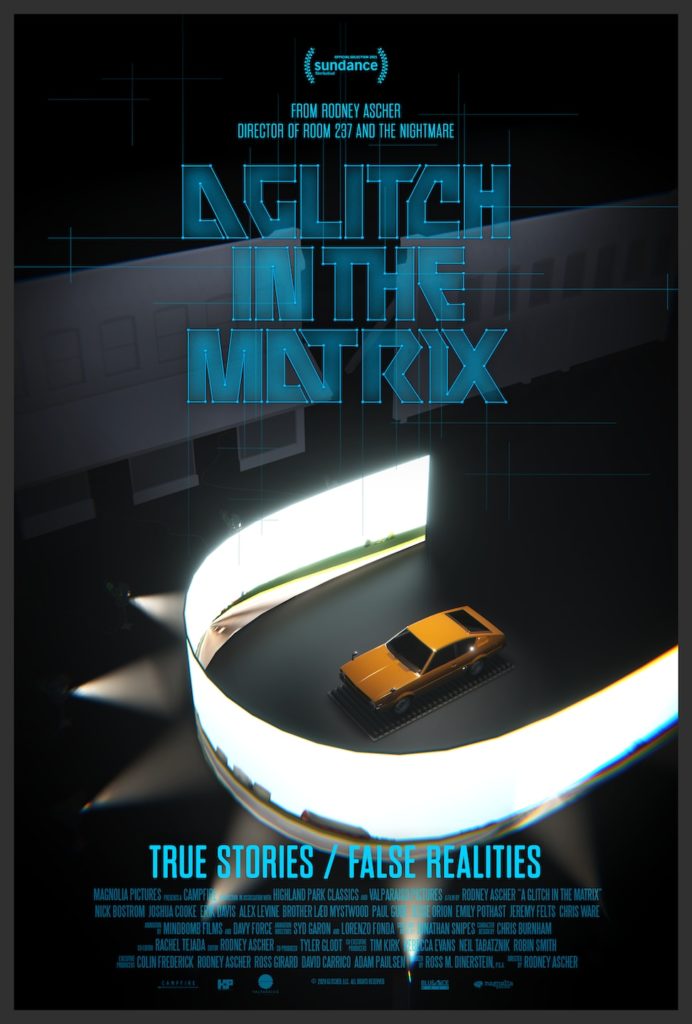
I’ve made my feelings about the contributors to director Rodney Ascher’s documentary about The Shining – Room 237 (2012) – quite clear elsewhere; I’m still far from clear on some of the ideas held by its interviewees, nor indeed how there is any link between skiing and the Minotaur, much less how it’s related to Kubrick’s film. Well, upon seeing A Glitch in the Matrix, it’s clear that Ascher has once more found a lesser-heard minority with unorthodox ideas, and I suppose we shouldn’t shoot the messenger: it’s clearly something he’s rather good at. A Glitch in the Matrix examines ‘simulation theory’, the idea probably most-famously mooted in The Matrix in 1999 that we are, in fact, living in a simulation controlled by higher forces. Ascher’s approach here, as in Room 237, is to allow the participants to extoll their views without question; it’s…interesting to hear, but giving free rein to these people misses a trick, as far as I’m concerned. They’re crying out to be challenged.
The film starts as it means to go on, with an interviewee appearing in an avatar disguise; documentaries are choc-full of talking heads, but I suppose they aren’t often huge cyborg Anubis heads or vaping spacemen. Most of the main participants use these CGI guises, which look the part thematically whilst being presumably pointless; their views are outlandish but not illegal, and our simulation-creating overlords probably already know who they are, for reasons which become clear later. We’re coaxed into the worldview with an early consideration of how man has always sought analogy for his higher powers in whatever technology was available at any given point in time; once, this was aqueducts; now we see the brain as ‘a computer’, cos that’s what we have. The point here, apparently, is that one day in the future people may look down on us for our simplistic understanding of mind; therefore, we should appreciate that we know comparatively little.
This sounds fine to me, without being a step on the ladder to agreeing that we’re definitely subject to greater external forces which encompass everything we know – but for our documentary subjects, it’s practically a given. However, their journey to this acceptance is both the film’s most intriguing aspect and its biggest waste. Via a potted history of the growth of simulation theory, with time given to author Philip K. Dick’s late-life assertions that he had experienced ‘recovered memories’, via The Matrix (natch) through to Elon Musk’s high-profile support of the theory, we consider the likelihood that we exist in a complex programme which monitors us, dupes us and responds to us, doubling down if we get too close.
And here’s the rub: simulation theory, when it comes down to it, differs barely at all to the vast majority of conspiracy theories out there. To decipher them, it seems that we need a few good men: intelligent, but rootless, aimless characters, probably honed by gaming, who are primed to ‘spot the signs’, crack the code. Here, it’s with things like spotting alleged synchronicities and patterns, abilities which show off one’s open-eyed readiness to engage with the world on a higher level. One interviewee describes a long car journey with his father – the road was quiet, almost no people were around. From this, he extrapolated a scenario where ‘his’ simulation was being amended and rolled out to encompass his impromptu car journey; he fantasises that a small army of higher beings were all hands on deck at this moment, running additional footage and tweaking their software to keep him happy in his simulation. Not only does this kind of thinking emulate other, similar modern egotistical conspiracy theories, such as fantasising that a billionaire would care enough about your inconsequential movements to microchip you, but it allows the clearly socially-awkward, even socially-maladaptive to shift emphasis from their impaired ability to read other people, by creating a narrative which says these aren’t really people at all. The film does at least make clear, albeit indirectly, why this line of thinking is so appealing. It has the self-importance of every conspiracy which feels like a pat on the back for the clever person who finally saw things for what they are; it has the ‘I saw the light’ mentality of born-again Christianity, the existential angst which attempts to answer the question, ‘is this really it?’ and at its furthest, most pathological reaches, it’s schizophrenia with a tech manual, a paranoid fantasy of needing to protect oneself against malign others, people who look human, but can’t be.
So much for the content. This is all communicated fairly clearly – or, as much as it can be – with light-touch involvement from the filmmaking team. I do wish documentary films would dispense with that irritating trend of showing people getting seated and waiting for their take to start, but all in all, A Glitch in the Matrix is well edited together, with film clips, animated inserts, vintage TV footage, photographs and other efforts to give us something interesting to look at as we listen. It’s such a shame that there’s no opportunity to interrogate any of these ideas, though. I know, I know Ascher’s usual style is to give his participants the benefit of the doubt, but I think things could really have got interesting with even a few well-chosen questions. The film is one you almost can’t help talking over, so hard is it to resist picking faults with the logic at hand. Aside from anything else, no one gets to ask what is surely the most burning question: what on earth would be the purpose to such a simulation – in operating a coherent, consistent, continual system to dupe us all? What’s the bloody point? Give me billions of years of cold, hard chance and the chance evolutionary systems which gave rise to us humans any day – us flawed, unprecedented, pointless, pointlessly brilliant humans, as we are; oddities without answers, floating momentarily through space with no masters. A Glitch in the Matrix is an interesting, infuriating peep at a small number of representatives of a narrative very much of its time, though it’s a film which floats a few tantalising issues without address.
Magnolia Pictures released A GLITCH IN THE MATRIX in cinemas and on demand on February 5th, 2021.
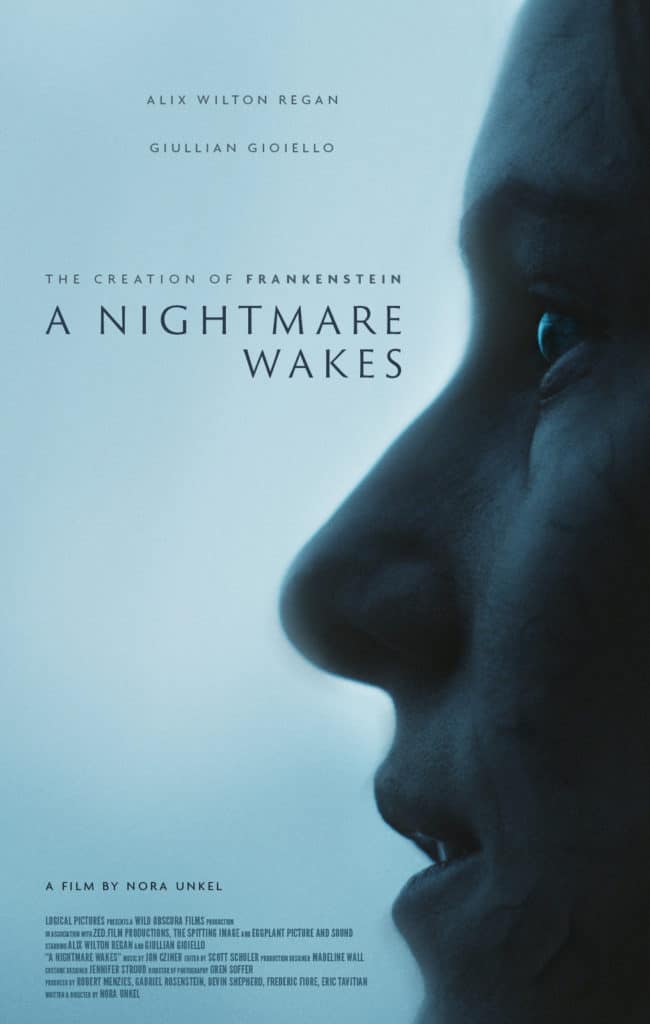
It’s no great surprise that the early relationship between Mary Shelley (née Godwin) and Percy Bysshe Shelley has proven irresistible to filmmakers, given its importance to the development of horror. Perhaps my favourite version of the events at the Villa Diodati comes via Ken Russell’s Gothic (1986), which presents a colourful, but nightmarish spin on those long rainy summer nights. There is something of Gothic in A Nightmare Wakes, at least in terms of its characters, setting and topic, and in how it encompasses imagined sequences alongside verifiable facts. However, it takes this same premise and explores it in quite a subtle, understated manner, with a carefully-constructed female perspective. It’s muted, very picturesque and uses low-key period details effectively, alongside the sparing use of chiaroscuro bad dreams. Mary is the focus, and as her situation feels ever more precarious and vulnerable, the film presents writing as her escape.
I suspect that this was, to an extent, true – though early 19th Century folk probably didn’t see the creative arts as a kind of self-help in the way which is current for us. We see the early days of the gathering at the Villa, with a small role for Byron and Polidori – but really the film follows Mary, Shelley, and – somewhat surprisingly given Byron’s small role, Claire Clairmont, Mary’s stepsister. We see Mary go through a gamut of miscarriage, cot death and romantic difficulties. True enough, Mary was less open to Shelley’s much-vaunted ideals of ‘free love’ and saw clearly enough how ill-supported she would be were she never to marry, a point the film makes, but the main thing to take away here is the sense of distance between the men and the women. Mary’s quiet agonies (she screams and rages mainly in her hallucinations) are presented alongside the playful, immediately-resilient behaviour of Shelley and his male friends, with Shelley getting over Mary’s late-term miscarriage almost immediately. Obviously, this is one of the film’s uses of artistic license, and it’d be wrong to suggest that Shelley was completely unaffected by all of this; Mary did say in her journals, though, that she found the impact of pregnancy and miscarriage absolutely draining, and therefore this emphasis does chime with the focus which the screenplay has chosen.
We do get something of the writing competition which helped to produce Polidori’s novella The Vampyre and Mary Shelley’s first novel, but it soon becomes clear that only Mary is really making any progress – and always against the backdrop of a philandering partner and a thirsty stepsister, one of whom envies her writing prowess and one of whom envies her family dynamic – patchy as it seemingly is. As Mary begins to struggle with her feelings of abandonment, some of the symbolism in some of the sequences is pretty straightforward; that said, the film does a good job generally at playing on the content of Mary’s journals and the descriptions of her nightmares, bringing them to bear on her attempts to hold her home life together as she writes her novel.
Unusually, Shelley is presented here as a deliberately stymying influence on Mary and her writing; that’s a new development, but it takes the narrative in some interesting places, even if the divide between dream and real life isn’t always fully clear. The way in which Mary’s imagination begins to link Shelley with Victor Frankenstein is inspired; there isn’t a mass of script in this film, but what is there is a good fit, economical, without simply leaving a void. The performances are very good too: one quibble is that the actress playing Mary is rather older than Mary would have been (Mary was eighteen when she started the book; actor Alix Wilton Regan is thirty-five) but, look, it would be tough to find an eighteen year old to pull off this role, and Wilton Regan is very compelling and sympathetic here, easily carrying the largest share of the screen time. Giullian Yao Gioello as Shelley, and Claire Glassford as Claire Clairmont are themselves excellent in their roles.
Ultimately, this is a film for people who already have some interest in the origins of Frankenstein, and by the same token, people who do have that interest may have a few misgivings with some of the artistic license taken by director and writer Nora Unkel. All in all, though, this is a worthwhile snapshot of that period, a visually-appealing film which is both sensitive and ambitious enough to present something engaging. It’s a thoughtful historical drama which successfully sees its own perspective through to the end.
A Nightmare Wakes comes to Shudder on Thursday, February 4th 2021.
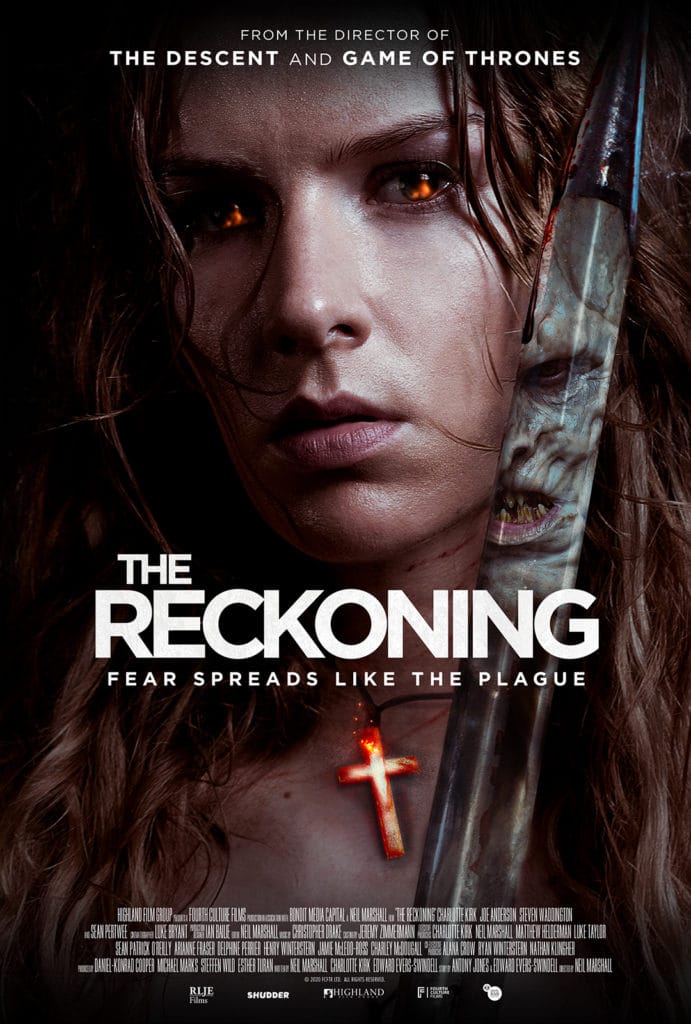
It’s not something I’d normally do but, prior to writing up my own review of the new Neil Marshall film The Reckoning, I took a peek at a few other reviews of the film. Almost without exception, other critics prefaced their review by mentioning how much they loved his work, how The Descent (2005) and Centurion (2010) were amongst their favourite films, and so on and so forth. Well, having seen The Reckoning, I’ve decided against that approach. I’ll say only this: how can a director go from the sublime to the ridiculous to this extreme? ‘Studio interference’ was mooted as the reason that Hellboy (2019) bombed so badly; given that this newer film presumably had none of that, we can only wonder what has happened here. I really wanted to like The Reckoning. A historical horror set during the 17th Century witch trials? Sign me up. Sadly, the end result is an appalling, unworthy mess.
The film starts, as we’re told with some on-screen text, in the year 1665: the plague is running rampant in England, and in their terror the people have become prone to blaming the Devil. By the 1660s witch trials were dwindling in Europe but quite honestly, given the thundering anachronisms which follow, this is more than acceptable artistic licence. So in the film, people’s fears have given rise to the opportunism of witchfinders, who enjoy power and influence as they move throughout England, summarily trying and punishing suspected witches.
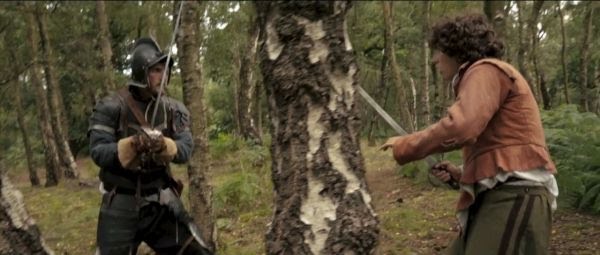
Grace (Charlotte Kirk) is a happily-married young woman whose husband leaves her unprotected when, finding himself displaying symptoms of ‘the sickness’, decides to take his own life. Early scenes – where Grace has to cut down and bury her afflicted husband – provide brief hope that this perhaps isn’t going to be half bad. The landscapes and the cottage look appealing; the score, by Christopher Drake, is very good too. Still, bucolic England or not, life for a lone female is tough in the 17th Century and Grace struggles to raise money to pay rent on the farm. This is apparently all part of the plan by dastardly squire Pendleton (Steven Waddington) who wants his wicked way with her. When she refuses his advances…hang on, why does he accept her refusing anything, when he has all the physical clout and, as the script clumsily informs us more than once, a higher social position? No matter. On with the plot. When she refuses his advances and, erm, kicks his ass, he starts rumours in town that she’s a witch, so that she can be arrested and tried.
This means that she must then reside in the local dungeon, where she has the odd inscrutable sexy hallucination, until such time as witchfinder Moorcroft (Sean Pertwee) can get to her. When he does, almost two hours of boring, boring tortures ensue – tortures which we are meant to read as incredibly severe, except Grace emerges from each bout looking no worse for wear than if she’d been caught in a light shower of rain. This unbelievability is cemented by the fact that Charlotte Kirk is woefully miscast here in a lead role, or perhaps in any role; she has one, mouth-slightly-agape pout-scowl which she uses for nearly every circumstance, heinous torture or otherwise. The use of on-screen chapters – a current obsession with filmmakers – to tell us helpfully how many days of ‘torture’ have passed only emphasises how long all of this is taking. It doesn’t matter how many times she gets her arse out – this is dull.
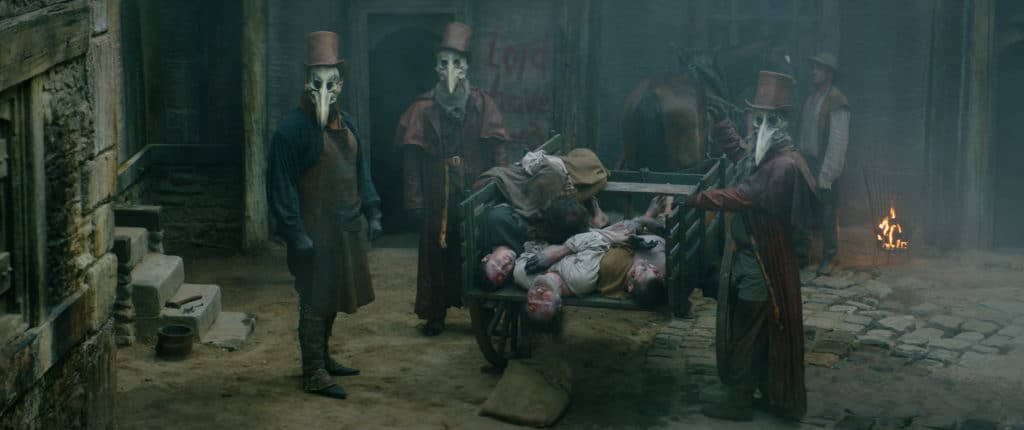
There was a point around forty minutes into this film when I began to wonder if I was reading it all wrong. Was this actually a camp masterpiece, intended as such? I’m yet convinced that this wasn’t the intention. It’s all too pouty, too scowly, too much in earnest. On reflection, as much as this would be a decided move away from Marshall’s past body of work, camp really was the only way to go with The Reckoning – making it more akin to Season of the Witch (2011) rather than aiming for – and missing – Witchfinder General (1968). It would have made the nudity more understandable; it would have disposed with the questions over the Satanic visions which ultimately go nowhere. And, given the juddery, laughable lunacy of the ‘Restoration final girl’ act, much could have been forgiven there, too. The Reckoning’s biggest issue is of its own doing: when you bookend your film with reminders of the real, horrific treatments of women accused of witchcraft, then this invites an eye seeking accuracy, and accuracy there is none. The script has elected not to try and use Early Modern English – fine. But the use of the word ‘okay’, which didn’t appear for around two centuries? The leading lady’s Estuary twang? Plague doctors in top hats (not invented for over another century)? Nuns i.e. illegal dissidents, being used as court officials in Protestant England? Who researched this stuff? Anyone?
The Reckoning is an embarrassing, clumsy film which displays a complete lack of plausibility, plot lulls, plot lurches, dreadful casting (or a misuse of its few good actors) and an array of errors in almost every technical aspect. Neil Marshall no doubt has significant strengths as a director, but this film makes his best work feel very, very far away indeed. By the way, that ain’t how wells work. Avoid, avoid, avoid.
RLJE Films and Shudder will release THE RECKONING in theatres, On Demand and digital on February 5, 2021.
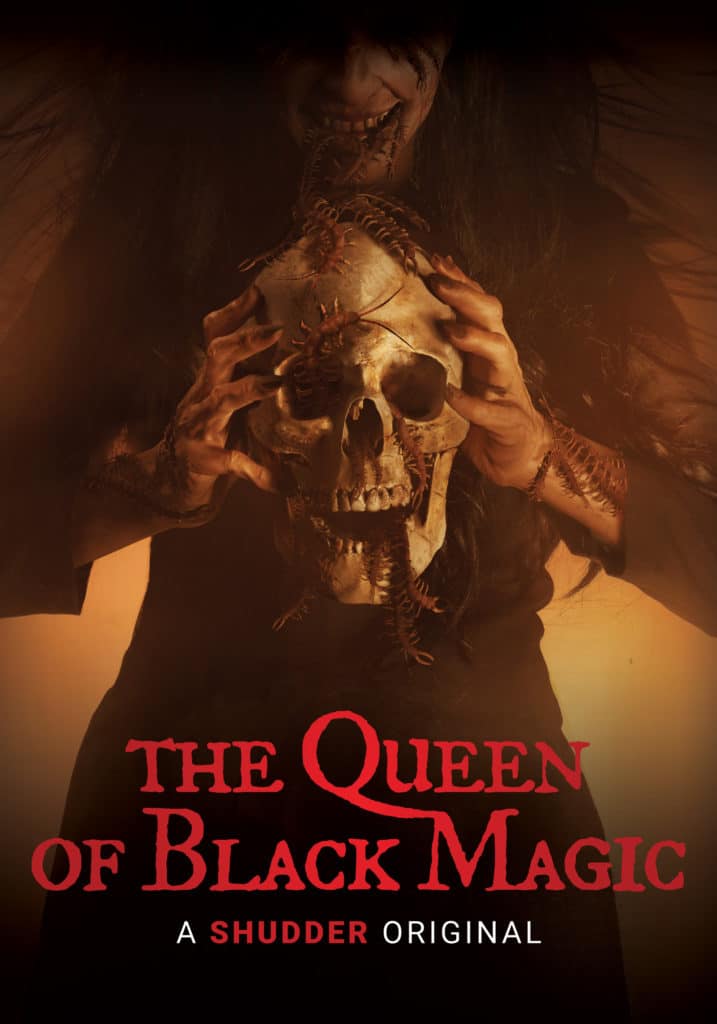
The Indonesian genre cinema which I know best is decades old now, but it certainly tends toward the unforgettable; during the country’s 1980s cinema boom, its genre film was clearly in love with the opportunities afforded by SFX (however rudimentary), leading to some incredibly lurid, overblown pieces of work, heavy with folkloric influences. In some ways, the reimagined Queen of Black Magic is a continuation of that early work, not least through its new spin on the classic 1981 title – even if its plot deviates quite a long way from the original and even if the newer film is mostly a wholly more slick, polished affair – more New French Extremity than old-school Indonesian. That being said, as the newer film ratchets up the action, it definitely shakes hands with its predecessor in a few places. It’s a visually-strong, very modern looking film which builds on familiar horror story elements to unleash something both grotesque and – on several levels – disturbing.
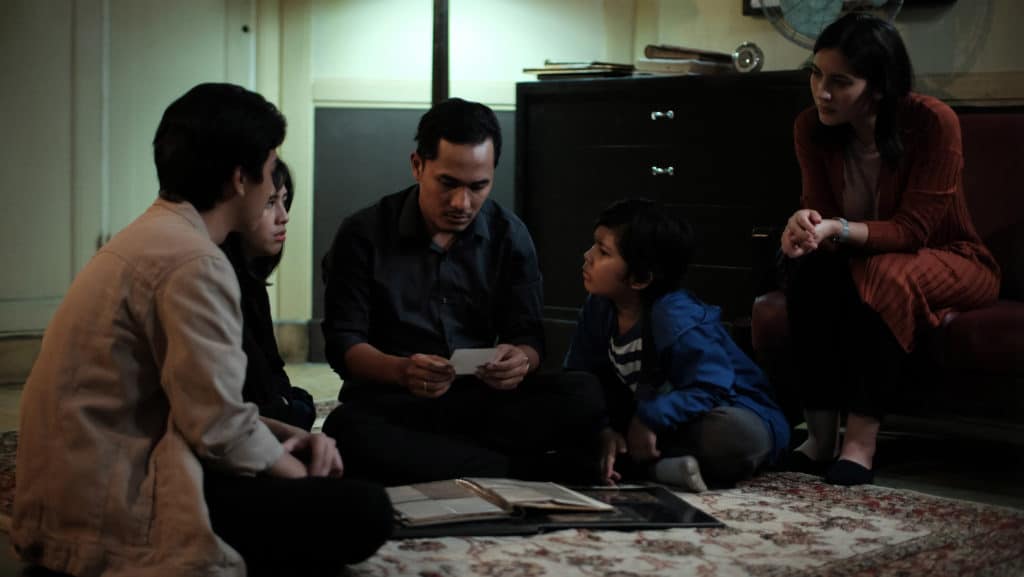
I said the film makes use of familiar horror elements: there are no surprises, then, when we begin with a car trip to a place which apparently doesn’t feature in any maps, or have any phone signal. The reason for this family outing is that Hanif (Ario Bayu) wishes to revisit the orphanage where he was raised. The man who was instrumental in his upbringing, one Mr Bandi (Yayu A.W. Unru) is ill and likely close to death. This trip also brings up the fact that not everyone has a regular family upbringing, something which Hanif wants to bring out into the open with his wife Nadya (Hannah Al Rashid) and their kids. This is a plausible family group, by the by, and kudos to all concerned parties that the kids themselves aren’t immediately unlikeable offspring. It really helps. Moving on, after that somewhat tropey journey to their destination, the family arrives: Hanif is meeting up with some other old friends from their orphanage days, themselves accompanied by their wives. Also present is Maman (Ade Firman Hakim) and his wife Siti (Sheila Dara Aisha), who made the decision to stay on at the orphanage as workers.
They all visit Mr. Bandi; it seems to be an affectionate reunion at first, but the old man soon afterwards seems to grow distressed – ostensibly at the appearance of Nadya, though it’s not clear. He’s non-verbal, and unable to explain his fears. The ex-inmates of this place are a little perturbed by now, and it isn’t too long before reminders of a troubling episode in their childhoods makes its way into conversation, albeit via one of the teenage resident’s scary stories. But in this house, scary stories have a backbone of fact. Tensions, incrementally at first, begin to rise. Hanif begins to wonder if the event which waylaid his household on the way to the orphanage was all that it seems, and wants to go back, take another look. Bad idea. As the past of this place erupts into the present, every clue makes these returners confront it, before it finally confronts them. People isolating themselves from the group is one of the first things which bring the real horrors onward.
And yet, the first thirty minutes or so of this film are very low-key, give or take. The Queen of Black Magic sidesteps the tendency to make the location creepy in a formulaic way; the orphanage is a little threadbare, but not dismal; likewise, the small number of older children still living there are not deliberately scary Others, but just kids contending with the double whammy of poverty and being orphaned, or abandoned. The visiting adults are initially pleased to be back too, even if it’s a little bittersweet. But this steady development of ease and calm is all the readier to be suddenly hacked away; if the film feels somehow like it’s on the verge of breaking out, then – oh, boy. The shift from uneasy restraint to overblown macabre is handled very nicely. Any divisions between magic, ghosts, curses and demons feels very arbitrary here; likewise, the term ‘black magic’ covers a seemingly very different range of phenomena than a Western audience might expect…
On its own terms as a horror film, The Queen of Black Magic works perfectly well but – in one of its significant shifts away from the 1981 version, it chooses to explore a few ideas which add subtext (rather than starting with a subtext and then adding a film, which is emphatically not the best way to tell a story). Wealth, class and the effects of modernisation are all touched upon here; a potential shift in the orphanage’s use is highlighted, bringing concerns about gentrification and its impact on the most impoverished, whilst we see a conversation between one child who doesn’t know what a VCR is and a girl who has never heard of streaming. More poignantly, the film deals with the subject of being orphaned and the vulnerability of children with no family, with a few conversations quite subtly introducing this; this in itself links specifically to the treatment of girls and women, be they utterly expendable, exploited, ignored – or seeking agency. It’s never a sermon; it does, however, weave through the horror itself and makes some unpalatable links to a world beyond the fantasy, even if the fantasy definitely takes over towards the film’s conclusion.
The Queen of Black Magic looks very recognisable in its earlier scenes, and it clearly has an awareness of Western horror which it adds to its Indonesian elements. (You’ll recognise some Eastern tropes, too, to be fair). You may, in the early parts of the film, have a few guesses as to where it’s all going, and you may be right. However, as it moves on, the film moves much closer to the action-heavy, even grandiose style which its Indonesian genre film predecessors typically went for. It manages a fairly effective twist, too, without sacrificing the direction it’s heading in or its grisly set pieces. All in all, this is an effective blend of styles and supernatural beliefs which makes for an entertaining, ‘familiar-different’ horror. Director Kimo Stamboel keeps things visually pleasing (if unpleasant) throughout.
The Queen of Black Magic comes exclusively to Shudder on 28th January 2021.
It’s already been eight years, give or take, since Brandon Cronenberg’s first film, Antiviral (2012): a cold, unflinching and decidedly grotesque satire on celebrity culture, explored via the body horror genre which his father David helped to establish. Possessor (2020) picks up the questions of personhood which Antiviral posed and takes them still further, delivering an even more accomplished film which retains that artistic Cronenberg Jr. flair for presenting the horrors of disassociation.
And we’re straight in with the body horror: a young woman called Holly (Gabrielle Graham) slots a cable into a port on her head: as she moves a dial on the piece of kit to which the cable is attached, it seems to whirl her through the whole gamut of human emotions. Thus adjusted and purged of them – like a hi-tech version of catharsis – she goes to work as a hostess in a hotel club, where she is suitably compos mentis to walk calmly up to a patron, stabbing him to death. She then dithers on committing suicide by pistol, before instead committing suicide by cop.
This is an ending, but not the ending: it’s all been possible via mind-control technology, through which hitwoman Tas (Andrea Riseborough) has taken over Holly’s mind and actions, using her to assassinate a target and escaping punishment by conveniently ending the life of the stooge who did the deed. Terminal for Holly; suitably arduous for Tasya, for whom it takes time to re-ground herself afterwards. These scenes are reminiscent of Blade Runner 2049 (2017), with its own ‘recalibrations’ for its lead character. The shady company in charge of all of this needs to be sure that she’s back to herself again before she takes on the next job; the answer is not a resounding ‘yes’. But, agreeing to take a short break, Tas goes to visit her estranged husband Michael (Rossif Sutherland) and young son Ira (Gage Graham-Arbuthnot). The name ‘Ira’ means ‘watchful one’ in Hebrew; this nicely sums up a little boy who seems old beyond his years, whilst his relationship with his mother is remote enough that she seems surprised by his interests and aptitudes. It’s clear she has divided loyalties. On one hand, there’s her work life – a technically-abetted lie, as she commits murder with no direct comeuppance. On the other hand, her roles as wife and mother are clearly compromised, increasingly impinged upon by the horrors of her job.
Before long, Tas wants to get back to work. We see her preparing for the experience, spying, studying the character of the man she is going to inhabit before the sync takes place. Her target this time is called Colin Tait (the incredible Christopher Abbott). Tait would be almost beneath contempt, were he not in a relationship with Ava Parse (the incredibly-named Tuppence Middleton). Ava’s father is the owner of a vast data-mining corporation which, as we see, observes its quarry to an absurd level of detail. John Parse (Sean Bean) has given Tait a job, essentially as a way of lording it over the shmuck who is dating his daughter, but this is good news for Tas’s employers: Tait can get close. Very close. If they can take out Parse, they can facilitate getting hold of an awful lot of money and power.
Tasya achieves the sync, but something is wrong: the job seems precarious from the outset, and she struggles to keep it together. The ad libs which caused her trouble in the first sync we saw are resolutely more harmful here, and it becomes less clear who is in the ascendancy. It’s far more clear things are going to take a disastrous turn: how the film achieves this, and the experience this gives the viewer is certainly not predictable, or an easy watch.
This battle for autonomy is a more sombre, sober kind of vision than David Cronenberg ever brought to the screen; as such it very much feels like a stylistic continuation of Antiviral, with the same fantastic eye for cinematography: the interiors, the lighting, the colour palettes and the composition of shots are a joy to look at. It’s also a very tactile film. Synced bodies linger over the details – blood, fabric, skin, hair – whilst Tasya ‘proves’ her personhood by examining mementos, simple objects with elevated significances. I also adored the use of distance and silence in the film: people are dwarfed by expanses of dark space around them, dialogue is rendered more expressive by long periods of quiet – or else, you find yourself noticing what characters don’t say, as much as what they do. Accordingly, given all this calm and quiet, the film’s moments of violence seem all the more vivid; that being said, there’s no film in which these scenes wouldn’t be shocking. They punctuate the film, brief moments of rage and desperation against a backdrop of minimal exposition. It’s important that they’re there.
Despite this backdrop, the film does extraordinary things with its characterisation – the more extraordinary, given we essentially have people hidden inside other bodies here. The shifts in the power balance between these people are cleverly achieved and remain plausible throughout. To successfully enact all of this requires great skill, and as such Abbott really steals the second act of this film, as much as Riseborough retains presence throughout, an increasingly cornered, harried character, sympathetic if unlikeable. There are highly imaginative sequences which explore what happens to selfhood during the processes suggested, doing more with the idea of dreams or hallucinations than we might have seen elsewhere lately; on the flip side, Possessor throws in a version of reality which maybe feels too close for comfort, especially its vision of internet privacy gone to hell.
As all certainties dissolve, Possessor cements itself as a bleak, sad, discomfiting experience. It’s definitely a film which will reward a rewatch, though – given its almighty impact – this may not be for a while, all considered. Brandon Cronenberg may not be churning out the features, but if they’re as good as this, then so be it. We’ll wait.
Possessor is on digital HD 1 February and Blu-ray & DVD 8 February from Signature Entertainment.
Having added The Droving (2020) as one of my favourite films of the year, it was great to catch up with Droving director George Popov for a chat about his career to date, priorities, future plans and the importance of working together to support film in these troubled times…
WP – So you have made two feature films to date: Hex (2017), which you co-directed, and The Droving (2020), which you wrote and directed yourself. Your career doesn’t seem to have followed the usual pattern of working in supporting roles, then maybe making some short films etc. Tell us about how you came to filmmaking.
Well there’s a lot of career paths that can be taken when you want to become a filmmaker. I mean, I’ve been interested in being a director for a long time. And I think, mainly, because a lot of my interest came from different arts. My father is a painter, my grandfather was a theatre director, my mother is an actress. As a kid, I understood that I needed to pursue the one role which combined all these different little passions that I had; eventually it became clear to me. The more I did my own writing and wrote stories, to be told in a specific fashion the way I wanted them to be, it became clear that the role of director was one I had to take. I decided to go the film school: I was itching to tell some stories, and I just really wanted to see how people – just general audiences and critics – will react to these stories in different ways. Short films are definitely a way to do that, but I don’t think I’m that great at short form storytelling anyway. You know, I tend to overdo stuff a little bit. For a lot of people, short films are the way that they hone their skills or send their work out to the festivals, hoping to rise up from that. I knew it would be a very difficult task to just make a feature film. But once you’ve done that, you have a bigger chance to get spotted. I was able to find like minded people like Jonathan, when we started our company Rubicon Films, and then from there, we put everything into making our first film, Hex.
WP – Both The Hex and The Droving play with what we could probably loosely call ‘folk horror’, though you definitely put your own spin on it. What draws you to this kind of storytelling?
To be honest, I don’t think myself or Jonathan were really thinking about the term ‘folk horror’ when we started working on on Hex. I think Jonathan was more familiar with the sub genre as a whole though, because I think he’s watched more movies in that area. I’ve seen a bunch of the staples – Wicker Man, Witchfinder General – though I watched that in reference to the story we wanted to bring to Hex, so it’s hard to think we necessarily set out to make a folk horror film. But, I was happy when people were calling Hex a folk horror because they were getting excited about the genre. And it seemed that Hex came out at a time where, just a few years ago, this folk horror genre now started having this resurrection. Films like The Witch had some mainstream intention and that really, really pushed it forward. Then with The Droving later on, I think that the folk elements came mainly from taking inspiration specifically from stories and from legends we’re both interested in. We gravitate towards the darker stories. For me personally, I always been interested in dark fairy tale structures. I read a lot of Brothers Grimm when I was a kid: sure, you may encounter them when you’re five, six years old, but they’re all pretty dark – horrific stuff happens in these kids’ stories. So now, I like telling tales which have that same fatalistic structure that they have. These kinds of tales are great because you can juxtapose the real world horror with the fictional.
WP -What are your own cinematic influences, and in what ways have these impacted upon your own filmmaking so far?
There are probably so many that I can’t even consciously register many of them – probably 90% of them! The ones that I do register and I know are always there at the back of my mind; I think I must have seen Alien at an irresponsibly young age, for which I’m thoroughly grateful: it’s amazing. And I think it was very hard to think about filmmaking being done with any lesser attention than that film. Everything about it, to this day, still absolutely consumes me. As a slightly older child, the Lord of the Rings trilogy mesmerised me too. Apocalypse Now; pretty much everything by David Fincher. I regard him as belonging to the highest class of filmmaker; likewise, Martin Scorsese and how his films tackle subject matters in which, you know, usually there’s no easy answers, and there are no easy people to read.
WP – You seem to make a point of offering an ending which both generates shock, and disrupts the story which has come before. Is this kind of ending important to you? Do you always have this kind of ending in mind when you write?
I mean, it’s one of the most human things: that we are all chasing some sort of meeting and some sort of closure in what we experience or do. It’s no different in films that you can have a great film, but if the ending’s kind of weak, the influence on you is never as good as it should have been. And vice versa. I mean, there’s definitely films that I love that in the first twenty minutes, I was kind of like, okay, where is this going? It really stays with you. In my career, in terms of the shock of the endings of both films, we weren’t looking to shock necessarily, but I wanted to make sure that the ending does stay with you. I do like endings that in some degree also recontextualize the way that maybe you’ll see the film again. I think you have a huge responsibility as a filmmaker, when you’ve held people’s attention for that time. Either you’re presenting some sort of meaning or an answer, or you’re just posing a question that you’re leaving for the audience to answer: for that, you require a strong case about either what you’re trying to say, or what we’re talking about more broadly. It’s a great, great thing to hear when people say, ‘hey, look, I love that ending’, ‘I can’t forget that ending’, or ‘That made ending made me watch the film like a few more times’ because to some degree, the ending is the story: it’s that moment that stays with you, and makes you think about everything before that.
WP – Tell us about the significance of landscape and setting in your films.
Setting is crucial to me, absolutely. All the choices on setting, and exploring that to the fullest, just gives me a chance to craft and explore my atmosphere, which is something I really care about. It’s something that I’ve paid a lot of attention to so far, and I want to do even better in the future; I want to explore it more. Getting the atmosphere right makes the viewer so much more susceptible to your content. If you have crafted that setting, that atmosphere, it’s the equivalent of having decorated your house and invited the guests and got the right music: you get your audience where you want them to be, and all of a sudden they live in your world. With the first two films, that definitely has been the case. Landscape is a huge part of them. I get very excited about locations and trying to find ‘golden nuggets’ of places that other people might not have perceived earlier, and really make the most out of them – maybe look at them with it with a bit of a different lens.
WP – What would be the ultimate compliment which could be paid to your work to date?
I don’t know what I’d regard as the ultimate compliment: in a way, I don’t want to, because once you’re only going to be satisfied by a certain compliment someone gives, you’re starting to chase that compliment and beg for it in some ways with your movies – and you always sell yourself short that way. So I try to do the best I can and do what I want, in terms of what the films are to be; if there are compliments, then great. The moment you see that you’ve reached people with something that you’re doing, even if they just enjoyed it, and having people that say that the film’s meant a lot to them and made them somehow think in a different way, or had a personal impact. Those stick with me: more so maybe than the more generalised feedback you get from film critics on things like great atmosphere, great visuals, good storytelling, good dialogue, great acting, you know, all of that. I don’t want to put that down, because it’s incredibly important. But when you have someone send you a message or a tweet or saying how personally, those films meant something to them – that’s powerful.
WP – Finally, the situation with Covid-19 has no doubt impacted upon plans for 2021, but that being understood – what are you hoping to do next in your career?
I mean, in terms of 2020 we were lucky that we had The Droving done and ready to go. I definitely appreciate how tough it has been for filmmakers generally. But yeah, I mean, there has been an impact: development stages for some projects have been slower, especially some of the bigger ones. Still, we have Rubicon Films, we have a few projects that we are developing and which we hope to realise as soon as possible. And so far, so good. There are different budgetary levels and a different scope to all of them: these are more ambitious than the films we’ve done before: we really want to expand and explore and show more what we’re capable of. We have plans for different genres as well, some some dark fantasy on a bit of a bigger scale, some some horror thriller films, and some other more weird stuff as well in there. We’ve already invoked some really, really quality, interesting people, producers and filmmakers on some of those projects.
8 – Is there anything else which you would like to add?
Well, I just want to add something that’s probably a continuation of the previous question. I just want to say to all to all our other filmmakers: I know that, because of the situation, things have been tough, and we don’t know how long that will continue. I just want to say to that we need to stay strong and, help each other and especially here in the UK with regards to indie films, certain genres; we could be helping one another out more. So if anyone needs anything, contact us: let’s talk and see if we can help in any way. And in general: keep a positive mindset. Yes, changes are still taking place and there have been so many changes to cinemas, theatres – but we’re going to survive, and we’re going to be stronger than before, whatever happens. People watch a lot of content, much more so than before. There’s so many platforms, there’s so many ways of getting your film out there. And we have to keep trying, doing the best we can. To some degree, because of this COVID-19 situation, just as with society on a larger scale, we can’t socialise as much: I don’t want that to happen to filmmakers as well. For us, that is a lifeline. If we’re not doing the usual things – guild parties, screenings or festivals or any of that, then our collaborative spirit needs some direction to keep going forward. No matter if it’s if it’s just filmmakers, or journalists like yourself or festivals, or critics, or whoever: it means everyone who is in some way involved with the industry. We should try to really keep that alive, collaborate more with each other and talk to each other.
So thank you to everyone who’s doing that already. We’re stronger together. We can always come up with something, as long as we have the passion and drive. We’ll find the audience. It’s out there, and people need that as well. And so they’ll keep supporting. We just need to support ourselves.
Thanks to George and Jonathan at Rubicon Films. You can find out more here.
American Psycho (1991), third novel of self-styled enfant terrible Bret Easton Ellis, was one of those books whose notoriety preceded it and swept it along. Becoming a kind of double-dare-you read in the same way that many films have become rites of passage, it no doubt found a sizable audience that quite simply wanted to experience its shocks first-hand. Alongside its feted brutality, it was also a novel which had acquired the rep for being ‘unadaptable’ for film – too busy, too repetitive, too grotesque. However, it turns out it could make a good film, thanks to the hard work of director Mary Harron and co-writer Guinevere Turner – who transformed the novel and, along the way, vastly improved it.
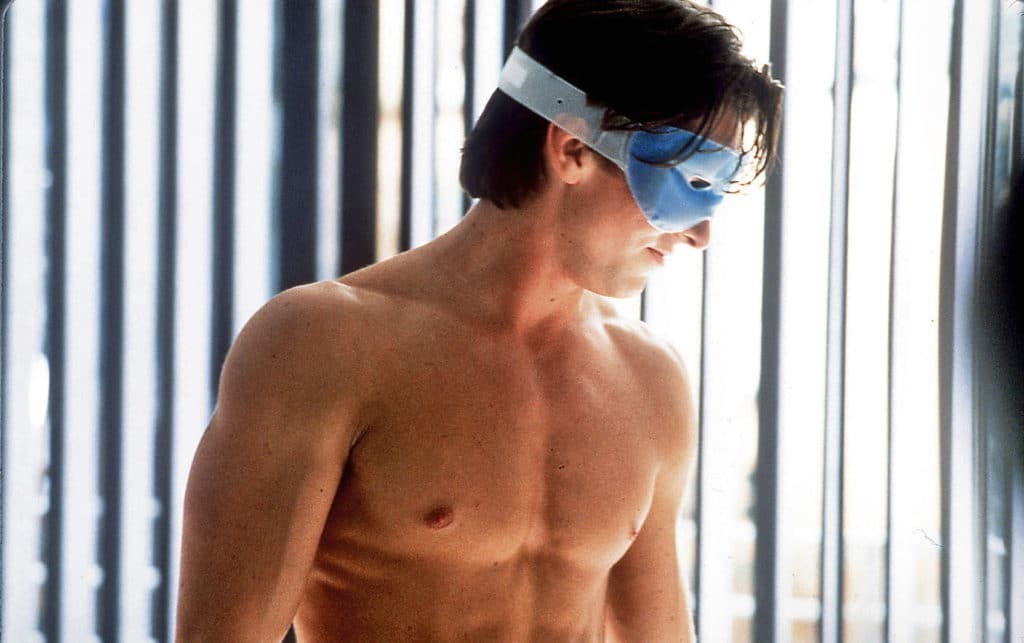
By focusing closely on the character of Bateman himself, they were able to refine the novel’s key, if sprawling emphasis on the cavalier lifestyles of the Wall Street wealthy in the 1980s. Bateman becomes a kind of yuppie Everyman, a scion for his ‘kind’, but whilst we’re invited to witness the array of petty obsessions and easy money which surrounds him, he remains an aloof, unknowable character – perhaps, as Bateman (Christian Bale) himself suggests, he ‘simply is not there’. It is this non-person status which, for me, is the bedrock of the film’s true horror. Bateman represents everyone around him, but he is no one. He openly recognises this, and the film’s initial rising tension stems from his early acknowledgement of, and exploitation of this anonymous state. Bateman artfully flits from one identity to another, committing (or fantasising) his worst crimes under the names of other people. This cannot be sustained forever, though, and by the end of the film, his missing identity is the source of his greatest, inescapable misery. In effect, his character has travelled no distance, and his rebellion has been an appalling fantasy.
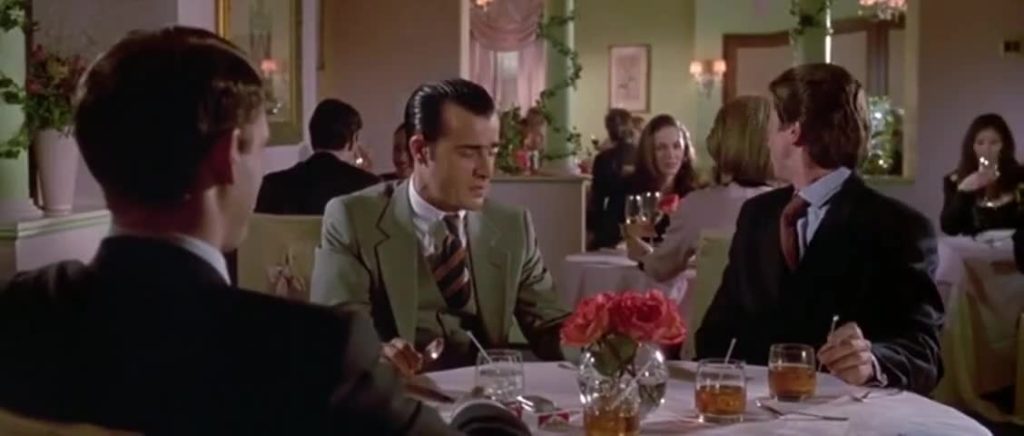
The world which Patrick Bateman inhabits is a strange one, and the film takes pains to showcase its odd fixations and competitiveness. This competitiveness is not based on the usual things: doing well at work, showing due diligence, putting in the hours. It’s made abundantly clear, by Bateman’s early feet-on-desk work pose, that a work ethic is not part of the deal here. What seems more important – beyond the sheer luck which seems to bestow prestigious accounts on one man and not on another – is the display of doing well: you play the game by looking the part, wearing the right suits and being able to book the right tables at the best restaurants. In one of the film’s finest comic elements, a restaurant called Dorsia attains Waiting for Godot-levels of significance – the place everyone wants to go to but, at least within the confines of the film’s narrative, never does. That is, except for a suit named Paul Allen (Jared Leto). Well, so he says. For Bateman, Allen is the embodiment of ‘making it’. He can get a table at Dorsia. That’s it. Add to that his handling of a sought-after account and Bateman’s enmity knows no bounds.
“The world just opens up and swallows them…”
It is in this Mecca of disaffected and wealthy men that Bateman develops a plan. When Allen mistakes Bateman for yet another financial sector worker called Marcus Halberstam – which, as Bateman admits, is a pretty easy mistake to make – Bateman decides to keep up the ruse. Answering Allen as if he were Halberstam, Bateman decides to use this as an opportunity, committing a crime under this false name and making damn sure that Allen believes that he is Halberstam, reinforcing it time and again before taking an axe to the competition, citing Allen’s friendly terms with the Dorsia as he does so. To complete the display, Bateman lets himself into Allen’s apartment, fakes a trip to London (no one apparently recognising his voice when he impersonates Allen on his answerphone) and then, when the disappearance is investigated, Bateman doubles down on his rootlessness, his forgettability. Had he seen Allen? He’s not sure, as he explains to Detective Kimball (Willem Dafoe). He evades his questions by listing names and venues, possible sightings, and giving obfuscation after obfuscation: in effect, he uses his lifestyle as a shield, and Kimball is not able to get past it in any meaningful way. So far, so good.
With Allen out of the picture, Bateman is free to colonise his identity, too. On one hand, this furthers his assertion that Paul Allen is still alive and well and still ‘part of that Yale thing’; on the other hand, it shows Bateman having fun with his non-persona, able to commit acts of aggression and sexual violence under another new name – Paul Allen’s. Reinforcing his new persona of Paul Allen by carefully repeating his name to anyone he needs to listen, Bateman hoodwinks a young prostitute – herself given a fake name for the proceedings which follow – and harms her with impunity, now treating what had been expedient as personal entertainment. At this stage in the film, ‘Patrick Bateman’ is liberating as it is simply a tabula rasa, ready to adapt and adopt whatever useful identity comes his way. With this new agency and awareness of what can be done, Bateman’s crimes escalate rapidly. Interestingly, it is only the women in his life who seem to really see him as Patrick Bateman; his closest friends throw wisecracks at him, but seem to not see even his most self-evident crises. Evelyn, his fiancée (Reese Witherspoon) and Courtney, his lover (Samantha Mathis) always address him personally, which is a step above other interactions he has, even if they, too, are part and parcel of an anonymous web of people who value women even less than men. But at the points in the narrative where they appear and seem to care, Bateman is in the ascendant. He doesn’t want to know. He doesn’t want to be tied down, and certainly doesn’t want to be tied down to his own identity in any quantifiable way.
“I’m not here…”
Little by little, however, Bateman’s agency is eroded by inconvenient encounters with real life. Kimball’s attentions are key here: not only do his questions force Bateman to address the quantifiable – the dates, the times which attach to the names and the venues – but they reveal something else entirely. In effect, the certainties which Bateman was willing to hang on to are not certainties at all. Kimball points out that, on a contested date which Bateman believed required an alibi, he already had one. He was with Paul Allen. Was he? This may or may not be correct, but the initial relief Bateman feels when it seems he is, finally, off the hook, quickly turns into a raging disappointment. His rootlessness is now the province of others, allotted by them, and as such controlled by them. It now becomes his priority to reclaim his own identity, which, now that it is being doled out by other people, feels less and less like it truly belongs to him. When he visits Paul Allen’s apartment to check on the place – which he has apparently been using as a dumping ground for bodies – it is pristine, redecorated and waiting for a new owner. He tries and fails to masquerade as an interested party with an appointment to look over the place, but the realtor in attendance is unconvinced. Bateman’s powers of disguise are on the wane.
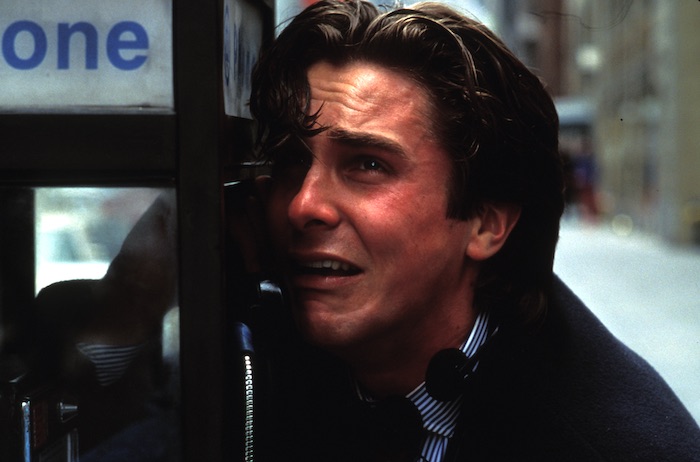
As the film’s final acts of ultraviolence take place, we see a Patrick Bateman now desperate to get caught – as Patrick Bateman. After a final killing spree he runs away at first, presumably by impulse, but almost immediately he decides to take the credit for the crimes – as shown in that tragicomic late night phonecall to his lawyer. Now, he names himself over and over. He finally feels that it’s time to claim ownership, but not only that; he seems to crave a way out of the lifestyle which has now shown that it’s bigger than him, even dwarfs him. Desperate, he confesses to the killings, leaving nothing out (other than where his memory is challenged) and, by all accounts, he seems to expect a way out. He heads out to lunch the following day, and is relieved to see his lawyer is there. Expectantly, he approaches him.
In a supreme moment of irony, Bateman’s escape is denied; it is denied on the same grounds which Bateman earlier exploited to his benefit. His lawyer doesn’t recognise him, and thinks he is someone else, ‘Davis’; he thanks him for the phone prank, but tells him there was one glaring error in the joke: Patrick Bateman would never, ever do something so outlandish. He is “such a boring, spineless lightweight.” Angry and frustrated, Bateman tries to convince him that it wasn’t all a joke and that he is, in fact, Pat Bateman. This is never acknowledged or accepted; instead, still addressing him as Davis, Carnes tells him that the joke is no longer funny anymore. As for his assertions about killing Paul Allen? Impossible. He had dinner with him just ten days previously.
“Something illusory…”
Did he? Who really knows. American Psycho swarms with names, interchangeable people who seem to have no remarkable features or identities. Not for nothing does the film make much of the business cards which, to an untrained eye, all look largely identical. The names embossed on the cards may differ, but for all intents and purposes, the cards display how identikit each of these men are. Bateman, realising this, at first takes advantage of the liberty this affords. If no one knows him, then he can be anyone, and he can indulge his darkest fantasies accordingly. And yet, this isn’t a true escape either: it’s only fun when he seems to be in control. Once he comes to crave that old anchor point of self, he sees – too late – that he is as much a victim of his anonymity as he is empowered by it. Having no real internal life, the ‘abstraction’ that is Patrick Bateman will never really be able to creep out of his two-dimensional existence. Whilst it’s a story which takes place before the internet age, there’s certainly something recognisable in our modern ability to design online personae which may seem liberating but, ultimately, allow perishingly few people to make real changes. Bateman seeks escape; this eludes him. It’s an existential nightmare, one where – pleasingly – the film returns to the book to show us its infamous final line, on the wall behind Bateman as he finds he has to rejoin the group, despite his best efforts: ‘this is not an exit’. This confession has meant nothing.