Note: unusually for the site this review contains mild spoilers – words failed me else – so read on with caution.
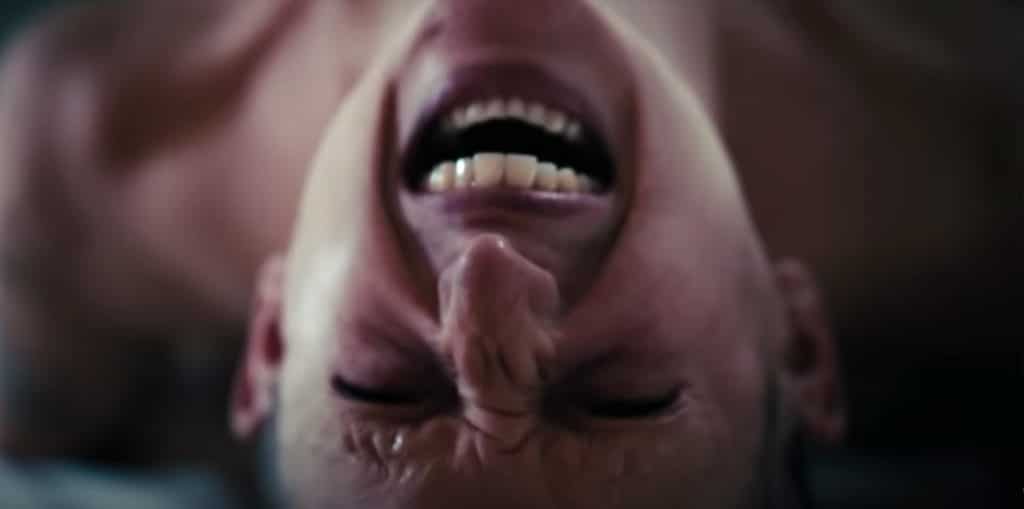
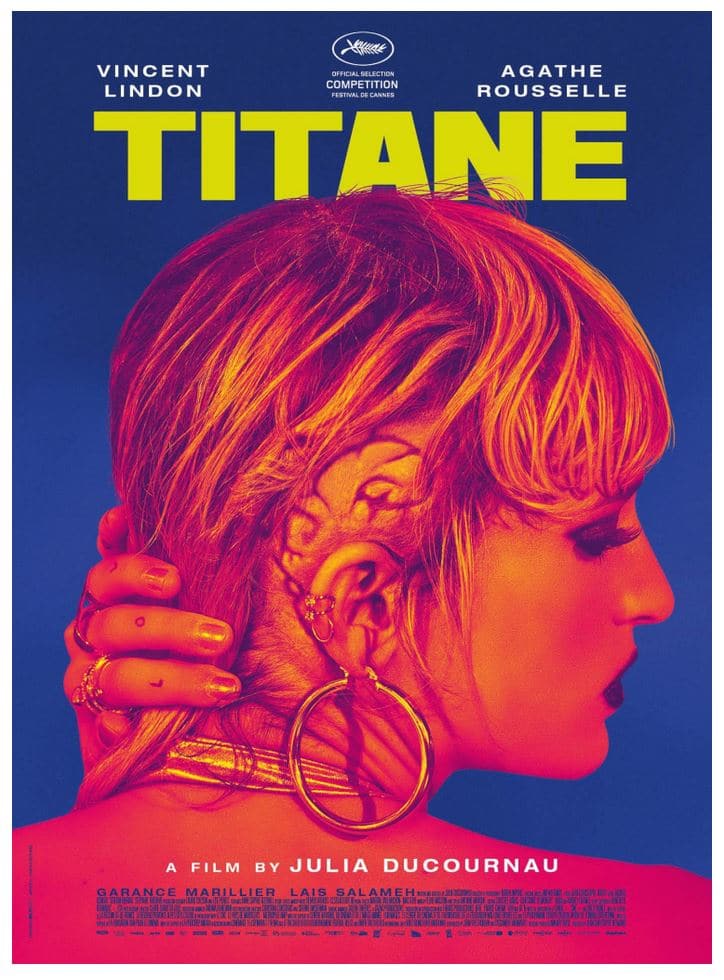
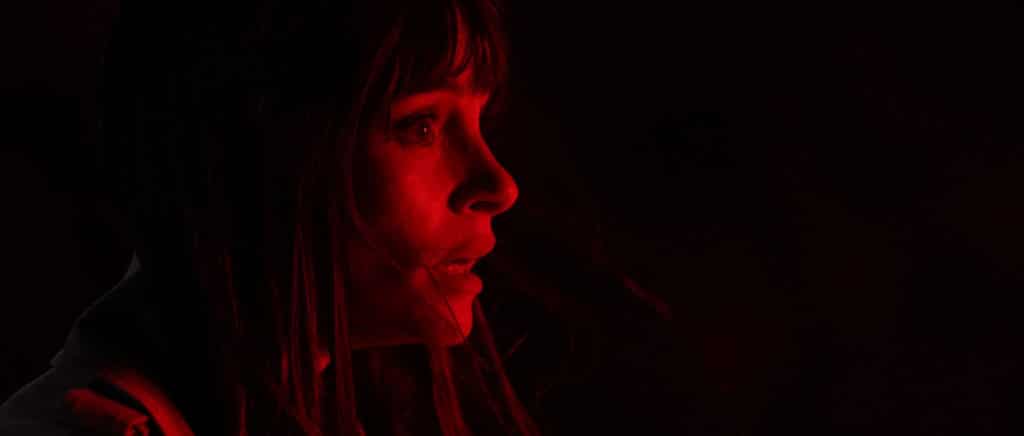
On first consideration, Julia Ducournau’s new film, Titane (2021) is quite unlike Raw (2016), her last feature and, for most people, the most familiar point of comparison. To put it mildly, Titane is an odd beast, where much remains unexplained; on first impressions alone, it all feels rather thinner than Raw, with less clear subtext and symbolism. However, there is some overlap, with many of the most satisfying moments of the newer film stemming from this: the twisted, but oddly redemptive family dynamic, the strong, if often mystifying female lead and the excruciating focus on the body all lead to some satisfying sequences. My main criticism of Titane is that it does feel like a series of sequences rather than a solid storyline, but in the madness of how it all unfolds, there’s a great deal to make your jaw drop. It’s very uneasy viewing, and it keeps you guessing at where on earth it’s all going. (You may not feel that you know the answers to those question when the credits roll, mind you.)
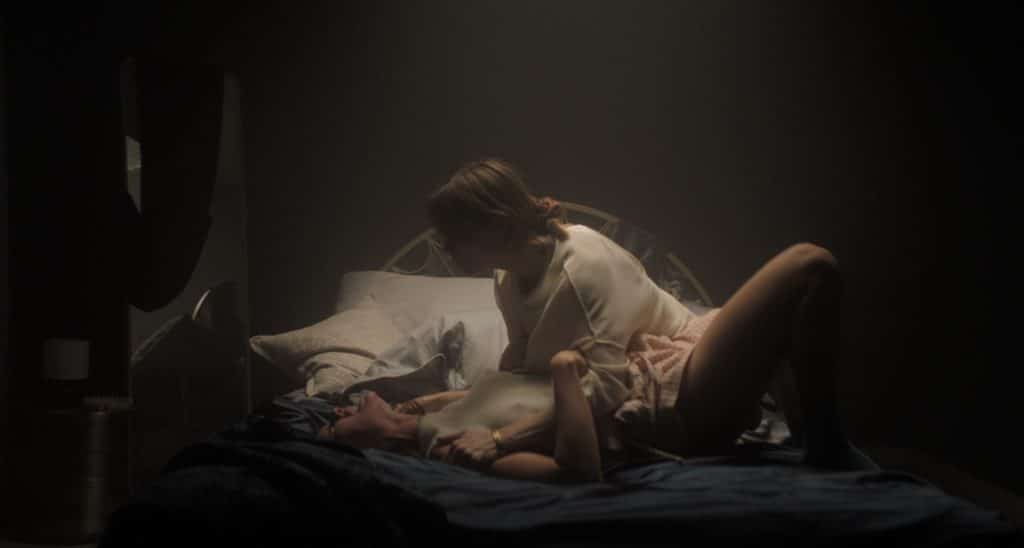
As the film begins, we’re certainly not encouraged to like Alexia, played first as a little girl (and compellingly so by Adèle Guigue). Alexia decides to distract her father whilst he’s driving; not long after the film starts, this causes an accident, after which the seven year old girl has to have titanium plates put into the side of her head. She glowers at her father after the operation, not seeming to understand that she played no small part in this, but one thing’s for sure – this is no loving, conventional family home. Flash forward: Alexia is now a woman (the rather intimidating Agathe Rousselle). She still lives at home, to dad’s clear dislike, and makes a living bumping and grinding on a car as a dancer. Apparently, this is a thing, and imagine that conversation with the insurance. Alexia is more or less silent and closed off, but knows how to dance, coming alive when she does – then closing down again when the music ends, a strange, formative sex scene involving a car notwithstanding. We see a dark side to all this when she’s pursued by a man who doesn’t seem to understand ‘no’, and we also see that Alexia will take strong measures to defend herself, perhaps reasoning that only ultraviolence will reset the balance.
Any expectations that this will be a linear consideration of how women navigate the world and its male entitlement are soon scuppered, however; for whatever reason, it seems that Alexia has had enough of her lot, but to make her escape from it, she begins to progress through different roles. The first is as a grand failure at human empathy, leading to scenes of barbaric, inexplicable violence against people who do not deserve it (one criticism I have about the film is in how it seems to lob in characters only to dispatch them, whilst simultaneously reaching for deeper significance which eludes it precisely because of its unwavering focus on the suffering of innocents). After this, she flees her old life by disguising herself as someone else – a son, Adrien, who has been missing since childhood, reuniting with his father. More ultraviolence accompanies this transformation, but then the film segues more into an examination of how Alexia behaves as Adrien, whether she can maintain the pretence – and why she chooses to.
Shades of Calvaire (2004) creep in here, as the wonderful Vincent (Vincent Lindon) persists on believing Alexia is his son, leading to some strange comedy of errors moments but showing that Vincent, too, is a damaged man who would believe in his son come what may. The very male environment of the fire station over which Vincent presides affords some funny moments, particularly when Alexia resorts to type and dances for ‘the guys’ just like she would have done as a girl. But there are also lots of poignant moments, too. Gradually, these two strangers develop an affinity for each other which is very pleasing, and counterbalances the rather jagged first half of the film.
Much has been made of the gender subtext used in Titane, but despite the very real issues relating to Alexia convincingly appearing as a male, it seemed more about expedience than anything else – a convincing disguise as a means of escape. This is something, though, which would certainly withstand a second viewing, as more may yet come to the fore. First impressions? Gender is there, but deeper significance seems to have been mooted, rather than anything else. Similarly, the fantastical elements are entertaining, but left unexplained, and these at times jar against the plausible human relationships which spring up later. It’s a feature which may need more unpacking with a revisit. Should a film need multiple viewings to work fully? It depends, probably, on what comes out on these multiple viewings.
So at the end of this admittedly meandering review, the first-viewing verdict is mixed on Titane, despite it being a film which can take some pondering. That is perhaps its saving grace, that it generates a lot of reaction, even if some of that is questioning. For all the bellyaching, it was a fascinating watch and the more I’ve tried to pull it apart, the more I like it, on reflection. Extra credit to Rousselle, here in her first film role, terrifying and vulnerable by turns. Ducournau may have changed tack here, but it’s another impressive, thought-provoking piece of work.
Titane (2021) screened at the Celluloid Screams film festival in Sheffield, UK.
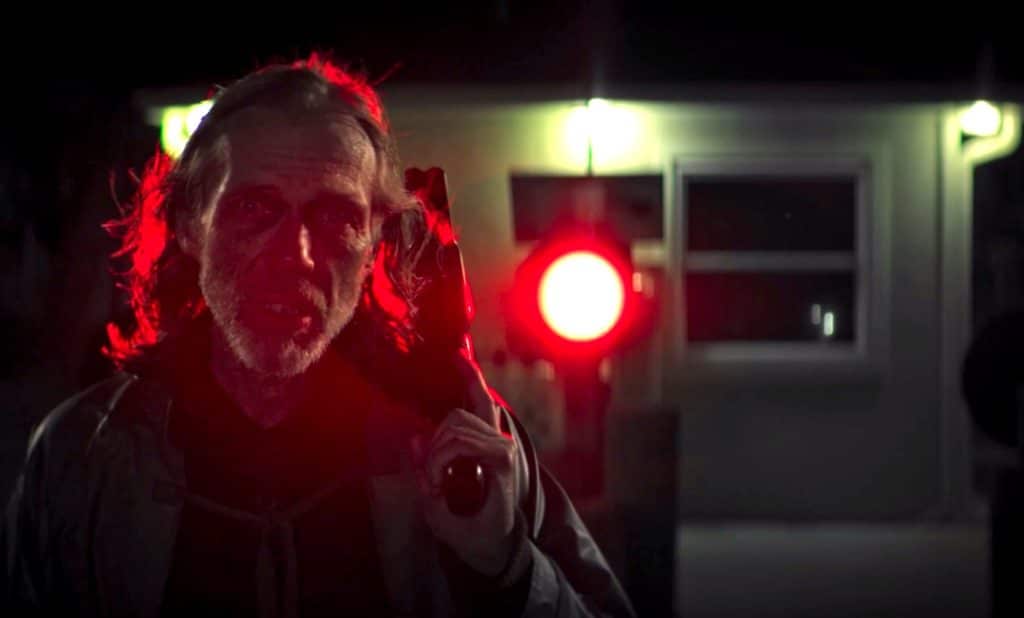
Given the success of Get Out a few years ago, it was inevitable that we’d get a few follow-up, socially conscious horror movies. Likewise, it was inevitable that some of these would fall short of Get Out: it turns out that balancing a political message with elements of fantasy is not all that easy to get right. This brings us to The Welder (2021), a film which unfortunately doesn’t get this right; in trying to tackle racism, it seems to hunker down, hanging on to the kinds of oddball attitudes it purports to critique. It’s not without ideas, for sure, and it looks great throughout. However, my resounding feeling, come the end, was a kind of mortified confusion.
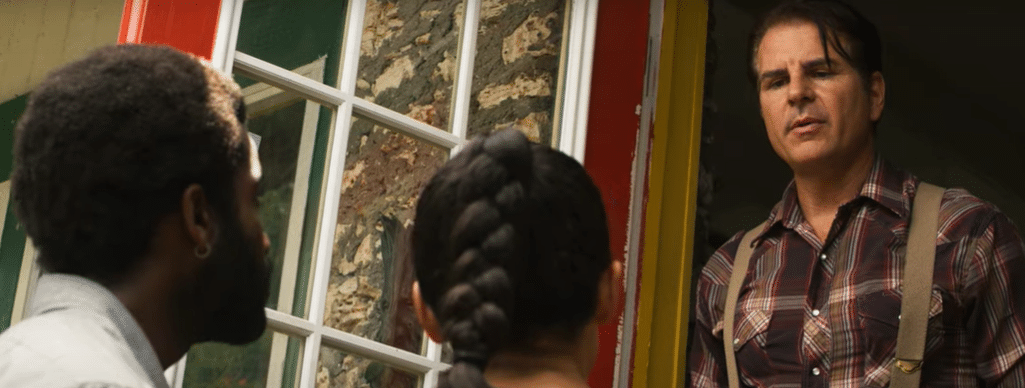
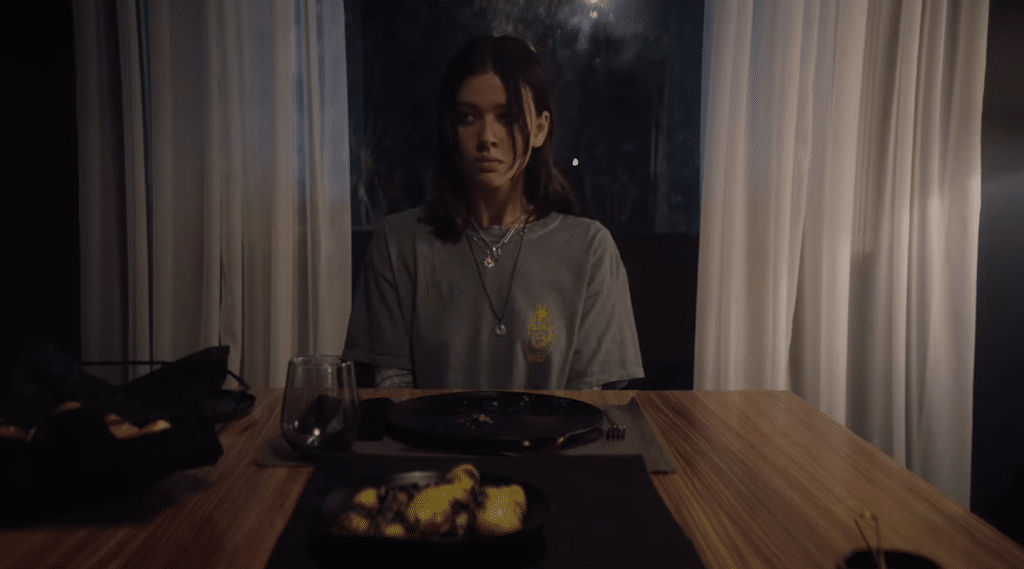
With quite an abrupt beginning, commencing with some sleepwalking and a partial flashback to an as-yet unknown traumatic event, we meet Eliza (Camila Rodríguez), ex-Army (we know this because she has ‘ARMY’ printed on her shirt in the flashback). Her boyfriend Roe (Roe Dunkley) retrieves her from the porch, where she has wandered; the next day, they discuss what’s best to do and decide a holiday at a remote ranch would be the best course of action. They pack and head off, with their dialogue establishing and re-establishing the fact that this place is Secluded (a similar thing happens in the script when they try and fail to access the Wi-Fi, though that comes later.)
They arrive at their destination. Sadly, it seems that the person we’ve seen in short cut scenes throwing pieces of raw flesh around is the proprietor, but he greets them politely enough and introduces himself. This is William Godwin – no relation to Mary Shelley – and he takes a particular interest in the pair, not least because they are mixed race; Godwin’s wife was herself black, which seems to make him feel kinship with Eliza and Roe. Godwin has a companion in the almost-catatonic but otherwise benign Don (Cristian Howard), who helps him manage the estate; if he knows any more details about whatever tragedy befell Godwin’s wife, then he isn’t saying so yet.
What we do know is that Godwin has made it his life’s business to ‘eradicate racism’. Fair enough, it’s a well-intentioned aim, even if one person working alone on a ranch in the middle of nowhere would have limited influence, you’d think. But then you discover how he plans on achieving this aim, and – well, you wouldn’t credit it. It would be great to discuss it here, but that would spoiler the film’s key plot point, the single thing the film deems worth hanging onto. So let’s just refer back to the film’s title, and leave your imaginations to run with it. (Some of the press literature dispenses altogether with worrying about spoilers, mind you, so beware.)
There are good features here. Director David Liz’s experience as a cinematographer shines through in how the film looks: aesthetically, it’s rock solid, with great locations, aerial shots, great lighting and composition – the technical prowess is all there. However, atmosphere alone cannot sustain a film entirely, and in many respects it is peculiar. There are strange disparities in how the dialogue is delivered, with Roe seeming to overdeliver his lines as Rodríguez barely gets hers out; there are some odd moments of comic relief here, which don’t quite marry together with the rest of the film, which is otherwise a protracted, but still rather flat affair: glances are held too long, incidental music blares, quick edits dominate, but there feels like too little plot here, right up until the lurch towards a big, bizarre reveal. If this unsettled, shifting effect is deliberate, then it’s a success. Everything feels off.
All in all, The Welder is an attractive film which overreaches, either scrimping on the narrative and character development, or changing tack altogether, offering up something too preposterous to fit into the film as a whole. It’s likely that this is all coming from a place of compassion, and let’s assume that it is, but in trying to cram a weak social message into a barely-realised horror story, it simply underlines its own flaws. If the film is critiquing a well-meaning but piecemeal attempt to tackle racist attitudes with a well-meaning, piecemeal attempt to tackle racist attitudes, then that simply reiterates the issues, rather than advancing any meaningful exploration.
The Welder (2021) will screen on November 2nd as part of the Raindance Film Festival. For more details on the festival, please click here.
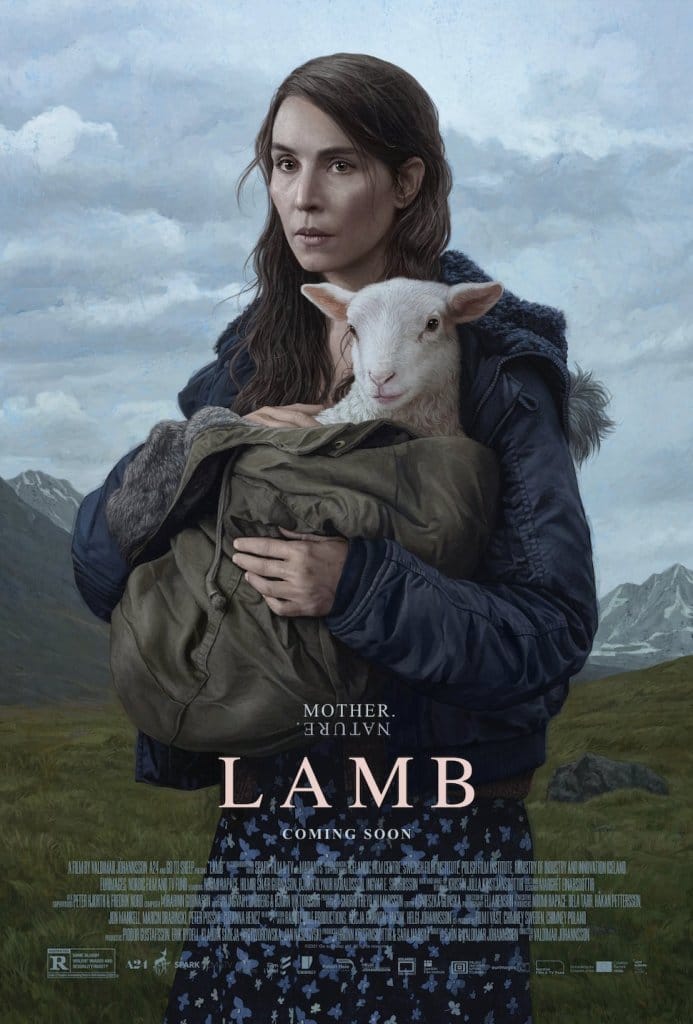
There no other obvious way to start this review than by saying: Lamb is an odd one. Beautiful; sure. Evocative; yes. However, it only tantalises at the mythology or events which underpin the narrative, and as such the world it offers is a partial one. How forgiving you are of this will depend on how you weight aesthetics and mood against old fashioned coherence.
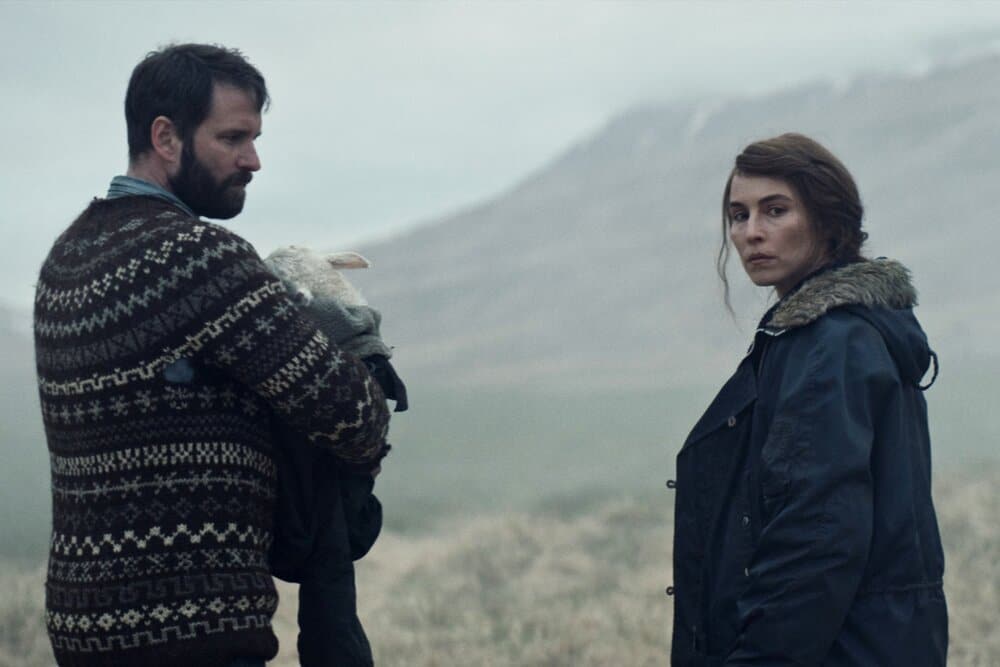
Lamb is loosely based on a story from Icelandic folklore – though you would only know that if you’d read the film’s ‘liner notes’ – and it features a married couple, Maria (Noomi Rapace) and Ingvar (Hilmir Snær Guðnaso). They are sheep farmers somewhere in remote Iceland, a thankless enough task, but one underpinned by a certain lack of communication between them; they simply get on with the jobs at hand. Other critiques have noted their relationship as characterised by deep misery, though this reviewer didn’t read it as anything that severe, more a kind of unsaid acceptance of their lot. Things are about to change, however. At winter, something ‘other than normal’ seems to be threatening their flock (and one of the things which this film does amazingly is to show animals apparently getting into their acting roles). Come lambing season, one of their ewes delivers a lamb with some sort of as-yet unseen difference. Rather than placing the lamb back with its mother, Maria takes it – wrapping it with a shawl as if it was a human baby. This all happens very early on in the film, by the way, so hopefully isn’t a spoiler; more anon.
At this point, her decision to do so is a mystery; likewise, the acceptance of this lamb, christened ‘Ada’ by Maria, simply takes place with a largely accepting response from Ingvar. Maria’s maternal jealousy swiftly shapes events for the worse, but it’s the fact that Ada seems to be some kind of human-sheep hybrid which begs the most questions; neither ‘parent’ questions it. The return of Ingvar’s brother Petur (Björn Hlynur Haraldsson) affords the script one or two opportunities to question this bizarre course of events, but other than generating a handful of suggestions of some kind of sexual undertone between Maria and Petur, simply slots another family member into this set-up. We simply observe what Ingvar refers to as their “happiness” in raising little Ada.
The film is sweet and considerate of this happiness, and this is one of its key strengths. Indeed, Lamb did not turn out as I expected, which was either as a symbolic exploration of the pain of loss, or a riff on the perils of nurturing unnatural offspring – something like Grace (2009). Lamb is neither of those, and Ada – even as a CGI-generated entity – is a pleasant little critter; director Valdimar Jóhannsson has done a great job capturing the nuances and commonplace gestures of small children, even if said small child isn’t your average child (can we also assume that putting Ada in a wool sweater was an example of the film’s few moments of dark humour?) But in focusing on this meandering family bliss, the film omits things, choosing to say almost nothing about bereavement or the impact of it. There are gaps, which prioritise atmosphere, but at some expense to how easy it is to engage with these events. Given that the film opts for the trendy device of adding on-screen title chapters, there must have been some awareness of providing structure and linearity, but it doesn’t really arrive. (That being said, do not watch the film trailer, which condenses down all the measurable plot points and therefore ruins them in ways which no review has done).
Lamb has many merits – its performances, its terrific setting, its quite unique strangeness – but it can’t quite offset its omissions with these. Taken as a whole, though, it’s a gentle and considerate piece of work which will charm many viewers with its careful ambience.
Lamb (2021) screened as part of the Celluloid Screams film festival in Sheffield, UK.
A Banquet (2021) is an incredibly slow-burn, incredibly meticulous family drama with only a distant-feeling link to its more supernatural content – if that is the right way to even describe the direction it takes. As such, it may feel too remote and abstract for some audiences. However, at its heart it’s a story about the love between a mother and her daughters, and this is explored very beautifully in places, though obliquely in others. It will likely be divisive, even whilst everyone should be able to note its strengths.
In an unaccountably wealthy English family, we’re first made privy to a suicide. The father of the family, it seems, has been labouring under a long and excruciating illness which requires the dedicated care of his wife, Holly. He decides to take matters into his own hands, swallowing a quantity of bleach; the scene where his bloodied bile and stomach contents flow out onto the polished floor sums up a lot about the film and its visuals, where affluence is sidestepped by the people living in the midst of it.
Left behind after his death are Holly, and daughters Betsey and Isabelle. The family seems, at least on the surface, to be coping well. However, Betsey (Jessica Alexander) is finding it difficult to focus: she hasn’t chosen her university yet, for example, and seems hesitant about studying further at all. At a house party, where she again feels left out, she notices a vast-seeming, crimson moon, and goes outside to better see it. This leads her away from the house, and she returns having had a strange experience of some kind, leaving her catatonic for a few moments. She’s taken home but these interludes continue, gradually closing her off from her friends and family.
One of the most immediate impacts of this is on Betsey’s eating habits. Suddenly, she can no longer tolerate food – any food (and all the food presented in this film looks incredibly appetising, which makes Betsey’s rejection of it look more and more surprising). Fearing anorexia, which she scornfully categorises as a ‘white, middle class’ illness, mum Holly begins to pathologise Betsey’s behaviour and to struggle against it, with a raft of medical appointments and the like. Grandmother June (the wonderful Lindsay Duncan) is sceptical of the whole business, thinking Betsey has spent her life to date an actress, seeking attention; now she has successfully hit on a winning strategy to get it. Surprisingly though, Betsey’s weight seems to remain constant, but she behaves as defensively as if she was deliberately self-harming. But then, she continues to go into the strange reveries which started with the party. If she makes an explanation for this to anyone close to her, then whatever she tells them traumatises them to the point that their behaviour shifts, making them want to avoid her company altogether. She holds off from having this conversation with her mother, though, to the mutual frustration of both. Left in the middle of all this is younger sister Isabelle (Ruby Stokes) who is largely left to get on with it as her mother focuses on her self-declared ‘special girl’. Whilst the actresses playing Betsey and Holly deserve much credit for their performances, it’s the character of Isabelle which really appeals – Stokes offers a subtle, nuanced portrayal of what it feels like to be ignored.
Lots remains unsaid here. Some elements reminded me of Honeymoon (2014), with character Bea’s gradual disappearance from her body after a similarly mysterious encounter in the woods. However, most of all A Banquet calls to mind The Killing of a Sacred Deer with its own somewhat marred family dynamics, its own reams of unspoken explanations for what goes on between those four walls. A Banquet is a very ambiguous piece of cinema, though there are issues. For one, perhaps it takes too long to creep so carefully towards its destination. It certainly does not prioritise explanation and there are some frustrations incumbent on this. It hints at some kind of mythos, and more of this as pay-off for the time spent on difficult family drama would have balanced things more, but save for a few read-between-the-lines moments, it demurs for the most part.
However, A Banquet does offer a sensitive, considered exploration of family beliefs and boundaries, and it’s sympathetically acted by a talented cast with its catastrophic end note which finally upsets the awful quiet. For fans of atmosphere over narrative, there’s a lot to get lost in and to appreciate here. As the first feature by director Ruth Paxton, it promises very heady, detailed and thought-provoking work to come.
A Banquet (2021) screened as part of the Celluloid Screams film festival in Sheffield, UK.
There’s frequently something in the woods in horror movies, but what the filmmaker chooses to do with this is more open to question. Where’s Rose presents us with a horror-spliced family drama, looking at the impact of a brief crisis on a household. It’s somewhat slight in places, notably around the mid-section of the film, but it works hard to brings its different elements together in an imaginative way. We start with eight year old Rose (Skyler Elyse Philpot), a little girl who seems to have an imaginary friend, as many kids her age do. Bearing in mind the genre of film we’re watching, however, faint alarm bells may already be ringing. These are put aside for the moment: a family gathering is taking place to congratulate her teenage brother Eric (Ty Simpkins) on getting a college place. Everyone’s happy about this news, all except Rose, but Eric reassures her that he’ll still be looking out for her. She can call him any time. This seems to assuage her; clearly, these two are close, despite their age difference.
His celebrations proper continue with his friends, although there may be a little overcompensation on his part over some unspecified issues with girl-almost-next-door Jessica (Anneliese Judge); perhaps what we’re seeing is a relationship which never was, but this doesn’t hold him back for long and he continues to enjoy himself. Crashing out in his bedroom at home afterwards, Eric is woken up early in the morning by his mother who is in a (considerable) panic: Rose isn’t in her room. They begin to search for her but, thankfully, she turns up in the woods and all seems to be fine. Well, sort of.
Eric has strange doubts about Rose at this point. She doesn’t seem to be the same child. At first, only her brother seems to pick up on this, though the rest of the household notice enough to find her newly distant behaviour a little strange. However, as Rose seems to return to her self – or at lease to make it seem that way – Eric is far from convinced, and he’s suspicious enough to investigate the change.
Early impressions of Where’s Rose call to mind Leigh Janiak’s Honeymoon (2014), which starred a Rose of its own (Rose Leslie of Game of Thrones). The film does seem to be leading the audience in a similar direction – some mysterious Other, perhaps, out there in the woods, with much of the unsettling horror coming from the perspective of a character locked out of the mystery. There are elements of that here, though shifting the narrative to encompass an older brother and younger sister is an interesting choice, permitting the pair’s parents to figure in the plot. They remain peripheral and/or a little flat, though, with mom acting like a palimpsest of stereotypical motherly attributes (making breakfasts, cooing, scolding) and dad almost negligible. These two characters are, clearly, not priorities, though it would be interesting to consider how they could have figured more in what unfolds within their family. Still, Simpkins – in his first starring role – does a decent turn as Eric, a young man on the brink of a brand new life who finds himself in a very isolating situation, bearing the brunt of unforeseen events. Skyler Philpot, as Rose, gets an increasing amount to do with some good scenes, if a few too many ‘motionless at window’ sequences.
There are some very effective moments during the film, many of which are the more subtle aspects, which provoke more questions than the admittedly small number of jump-cuts. There are some lulls in the plot progression midway through, despite the film’s tight run time, but as the film moves towards a conclusion, there’s a big leap in terms of ambition and imagination. This potentially leads to a reconsideration of what came before, which works and, although a few questions remain, this works too. There’s a lot to be said for a filmmaker ready to take a gamble in order to deliver a slick, thoughtful finale and considered as a whole, John Mathis’s writing/direction here pays off. Where’s Rose is, ultimately, a sad, disturbing, horror-infused family story.
Where’s Rose (2021) will screen as part of the Raindance Film Festival on November 1st, 2021. For more information, please click here.
Setting your film in a very limited space has its risks. All of the usual components – your characters, your pace, your plot – will be held to the utmost scrutiny, with no sweeping vistas or changing scenes to distract the eye. It’s certainly gone wrong in the past; get it right, however, and you deliver a sharp, focused and rigorous piece of storytelling. We Need To Do Something Falls into the latter category. It’s wicked, it’s incredibly engaging and it feels quite dizzying, despite taking place more or less in one room.
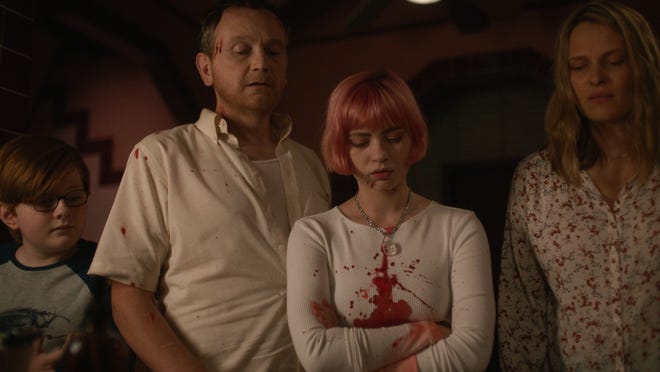
We meet our main characters as they’re entering this room – the family bathroom – and the film begins. They are sheltering there due to an incoming tornado, and it’s apparently the toughest room in the house. There’s not much time to preapre, it seems, so mother Diane (Vinessa Shaw), dad Robert (a riotous Pat Healy) Bobby Jr (John James Cronin) and teenage sister Melissa (Sierra McCormick) all rush to barricade themselves ahead of the storm. It’s a bad one: at its peak, it fells a tree which lands on the family home, wedging the door shut. Try as they might (and dad really tries) the door will not budge.
So they’re stuck. Without food. The power is intermittent. They do at least have running water still, but Diane puts her faith in the fact that someone will soon come along to help them. Dad passes the time swigging alcohol and lashing out at his family, and Melissa quietly panics about her lack of contact with girlfriend Amy. Before too long, the situation has very negative vibrations, and it’s increasingly uncomfortable. Still, no one comes. Each member of the family copes with this differently, but the tension is palpable.
It’s testament to this cast and to the direction that I could have quite happily followed this story as it stands, watching to see which family member cracks first (and Pat Healy is jaw-dropping here, a hectic blend of Al Bundy and Jello Biafra). It could also have turned into a very different kind of ordeal, something like Crawl, and it throws some of this in there for good measure. But the film happens to be based on a horror novella which goes far beyond mere confinement as the source of its horror. In keeping with the novella, it transpires that this is, perhaps, no regular storm. The house seems to be under assault by something quite different, and via Melissa, we are able to piece together what this could be…
Whilst the main story unfolds in the bathroom, through the select use of flashbacks we do get to glean more context and this comes to us through Melissa, who moves into ascendance as the story’s key character. Sierra McCormick is more than equal to this, doing a great turn as an at first disinterested teen, before revealing there is far more to her. Her flashbacks also allows the film to extend its reach, showing some horrific, grisly content and fleshing out the plot with some well-realised occult material (occult and left-field publishers Feral House were consultants for these scenes, and it shows). The skill shown in linking flashbacks to the current moment is impressive; things come together in just the right way here, leading to a brilliant crescendo. All of these things take directorial confidence and the end result, without giving anything away, joins the dots in a really engaging way. The level of exposition offered is just right.
We Need To Do Something is terrifically innovative, solid and entertaining. It’s a riot. Listen out for that scream-worthy Ozzy Osbourne cameo, too! A film I can’t wait to rewatch, and my personal favourite of the festival.
We Need To Do Something screened as part of the Celluloid Screams film festival in Sheffield, UK.
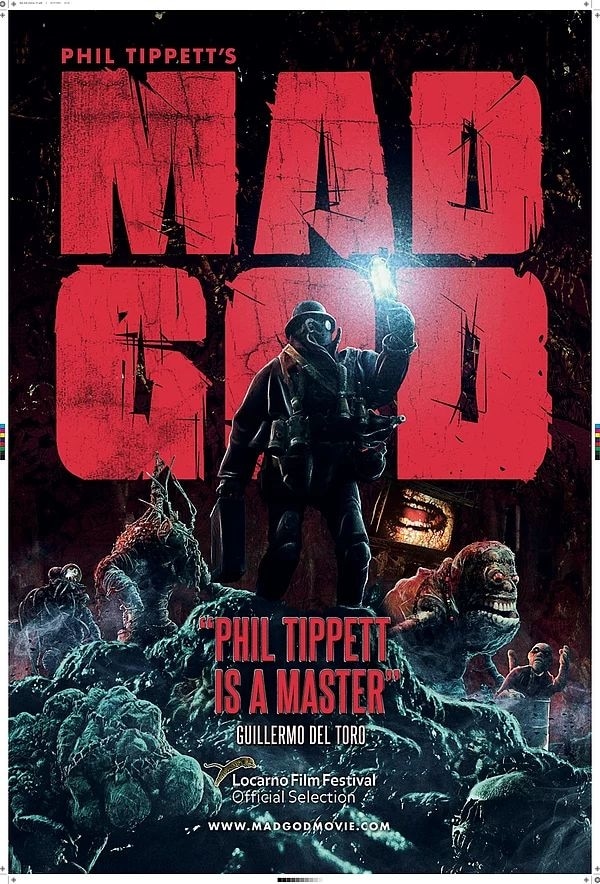
Don’t let the 2021 release date for Mad God fool you; this is a film which has been an incredible thirty years in the making. The reasons for the long hiatus between conception and completion encompass a few things – as you’d expect, given that time scale – but essentially, the big shift from practical SFX to CGI around the time of Jurassic Park initially convinced creator Phil Tippett to shelve Mad God indefinitely. Phil Tippett? Name sound familiar? Well, if you’re into Star Wars…or RoboCop, or Starship Troopers, or any number of influential films from the 80s and 90s, then you know the man’s work. He’s a legendary visual effects specialist who has worked with little fanfare – bizarre, given his influence and raw bloody talent.
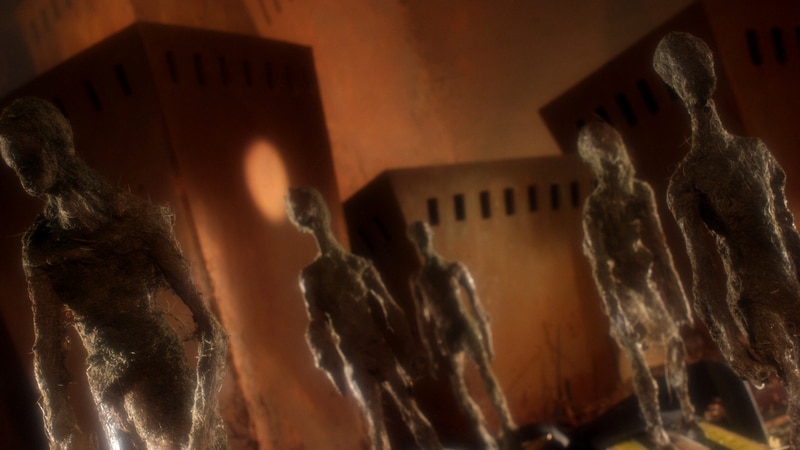
Mad God was first planned out in the late 80s, and then resurrected in the Noughties when Kickstarter did its thing and saw the film through to completion. It’s the project which very, very nearly wasn’t, and so we owe a big debt of gratitude to the Kickstarter backers who moved things on – urging Tippett that it needed to be done, too. The resulting film is absolutely astonishing. Having experienced the completed film on the big screen, it’s difficult to think of a better example of stop-motion animation out there, particularly if your tastes lean towards the nightmarish and bleak. You could freeze-frame Mad God at any given second and spend an hour poring over the fine details; it is an incredible work of art.
Whilst the film is far more than just an array of disturbing images, the narrative is minimal; Mad God has no dialogue whatsoever, and save for a handful of live-action segments is entirely animated. It begins with an armour-wearing figure in a diving bell being dropped down to the surface of a dystopian world – if Earth, then post-apocalyptic in the extreme, with almost no remnants of normal life. The figure emerges and begins to traverse this hellscape, somehow swerving the disaster unfolding around him as he follows some kind of map – a map which is steadily disintegrating every time he tries to read it. As he travels, he observes all sorts of horrors. One of the many things which the film excels at is in its manipulation of scale, which only adds to the disorientating atmosphere. In one second, the traveller is looming over (and usually, stepping on) tiny figures he encounters; in the next frame, he is peering up at gigantic beings, or striding through broken figures in a lapidarium. Another excellent source of disorientation stems from the nature of the landscape; it’s never quite clear whether the traveller is above ground or underground, below water or in a different kind of existence altogether. Cumulatively, it’s quite something. It’s also fascinating where the film breaks off and shows us different characters going about their business in this place, before veering away from them again. Each of these is superb in its own right.
Later, this narrative arc disintegrates too and seems to loop, after our traveller is taken and opened up surgically for a grisly little interlude of birth and sacrifice. We also see a human male sending a traveller (the same? Different?) into the void with a map, necessitating another dangerous journey. Despite this narrative shift, there are themes to follow here: the world is clearly at war, it’s wracked with grotesque industry, and the sequences where the faceless workers are picked off by the machines they seem to serve are amongst the darkest of the lot (and dare I say, a bit of black humour as well). In some respects the film looks like it was conceived in the 80s and worked on in the 90s, as there are visual resemblances here to the likes of H R Giger, 2000 AD and Fred Stuhr/Adam Jones’ stop-motion work for the band Tool in the early 90s, but hey: absolutely no complaints. This is just the sort of biomechanical dystopia I want to feast my eyes on. For many viewers of a certain vintage, this will feel like coming home.
There’s not a moment’s cop out here. Mad God is unsettling, innovative and intricate, with not a square centimetre of frame wasted. Seeing it has been a fantastic experience, and given its long journey to completion, it feels significant too. Everything in this gloomy, desolate, stark universe is worthwhile and staggering in the extreme to take in. Nothing comes close to it and I can’t wait to see it again, existential angst notwithstanding.
Mad God (2021) screened as part of the Celluloid Screams film festival in Sheffield, UK.
It’s always a pleasure to encounter filmmakers who are interested in Southern Gothic – a genre which is difficult to define, but easy to recognise in its effete communities, its crumbling facades, its bizarre characters and its mysterious landscapes. Offseason (2021) is one such film, a clever and often understated horror which wears its influences on its sleeve. It doesn’t give up every detail of its narrative, but it never feels like it doesn’t have those details at hand. Instead, we get a dark, often disturbing mystery, where the audience and main protagonist are, for the most part, kept uneasily outside what is going on. And, as things progress, the grisliness intensifies.
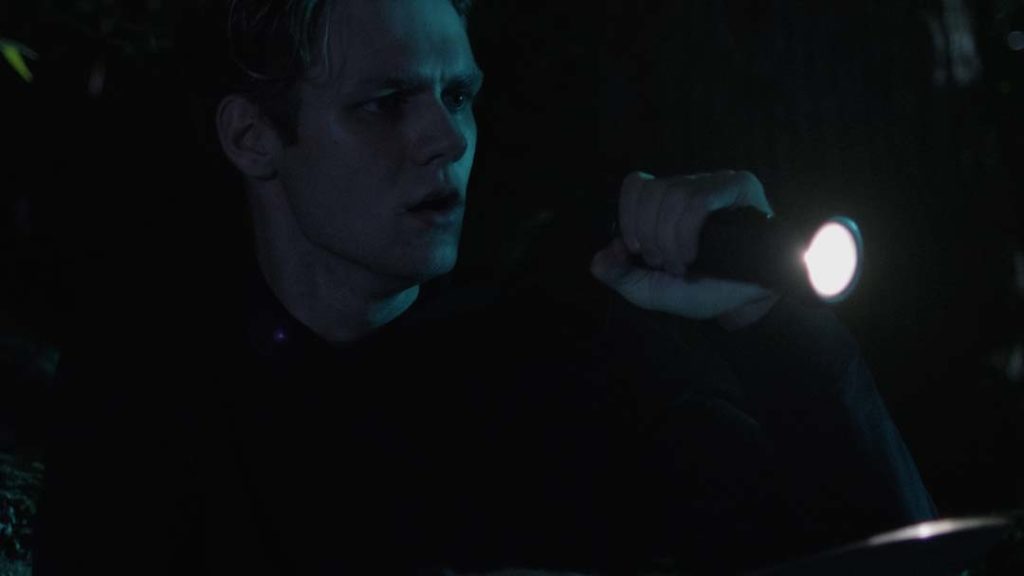
Marie (Jocelin Donahue), who lives in New York, receives a letter from the caretaker of the Lone Palm Island cemetery in deepest, darkest Florida, where her mother was recently interred. The letter brusquely informs her that her mother’s grave has been vandalised, and the matter needs her urgent attention. Horrified, Marie and her partner drive down to rural Florida to amend the situation, with no relish on Marie’s part, either for the task itself or for the place. When they reach the last main bridge en route, they are told by the attendant that they can’t cross. The season is over; the bridge will be accessible again in the spring. It’s only when Marie produces the letter, proving that she has business in Lone Palm, that she’s allowed through (after a delightful encounter with Richard Brake as the ‘bridge guy).
There’s no sign of the letter writer at the cemetery, and the only residents which Marie can find are…well, wonderfully, scarily odd, seeming to flit between mild-mannered concern and, well, something else entirely. Honestly, it would be no sort of isolated island set-up if everyone was normal and helpful. But by now, Marie is beginning to have serious misgivings about not just the trip, but the reason behind it. It transpires that Marie’s mother, a former silver screen actress, begged her daughter not to return her to the island after her death, but an amendment to the will forced the issue. She remembers her mother’s ravings and nightmares, too, and -whilst unpacking her own grief and the psychological damage delivered by her mother’s words – begins to try and decipher what is going on here: who has sent for her, and with the bridge now out of use behind her, how can she leave?
Jocelin Donahue as Marie Aldrich (now, why does that surname sound familiar?) is excellent, providing great balance between indignant city dweller and a stranger in a strange land. She takes the initial signs that something is wrong remarkably coolly, actually, but then it all seems so improbable at first that this works; she can barely believe her eyes, because it’s so unbelievable. As the situation escalates and as she comes to understand the mythology of the place, her desperate practicality comes under fire. It’s a superb performance, contributing to the overall claustrophobia and unease. Amongst the island folk, it’s also great to see indie star Jeremy Gardner turning up as one of the town fishermen, both as he delivers some tantalising exposition and also as he’s definitely a solid actor in his own right – doing things here (or having things done to him) that he has yet to undergo in his own movies. It works really well and only shores up (yeah, sorry) director Mickey Keating’s reputation as a real up-and-coming directorial presence.
Visually, Offseason draws on a range of other films, with some scenes seeming to reach right back to the 40s, with some of the decade’s weird communities and outsider anxiety – the barroom scene seemed straight out of that era with its tinkling piano music and overblown characters. But the clearest influences here are surely John Carpenter and Lucio Fulci – Fulci in particular, you could argue, as the atmosphere of Offseason feels remarkably akin to the likes of City of the Living Dead, mist and all. Other plot elements resemble Lovecraft stories, blending these but giving them an interesting, up to date polish. By no means are you talked through every detail, but it hangs together beautifully. The nature of the situation in which Marie finds herself remains tenuous to a degree, which holds onto that sinister, compelling mystery.
If it’s evocative horror you’re after, then Offseason fulfils that and forges a link to other, equally atmospheric cinema without feeling like just homage. It looks and sounds superb, and does a great deal in its economical run time.
Offseason (2021) screened as part of the Celluloid Screams film festival in Sheffield, UK.
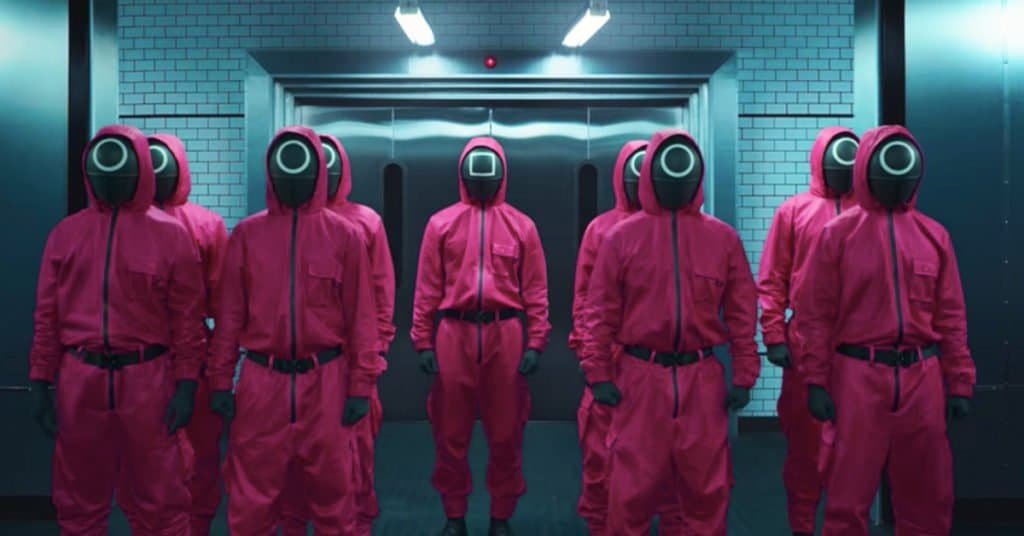
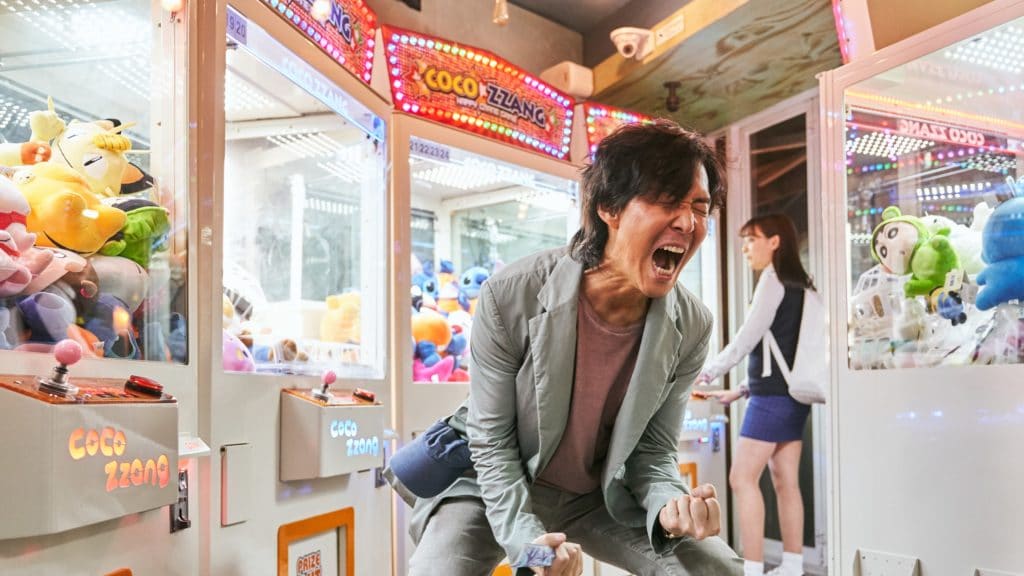
It’s a little curious, speaking from a personal perspective, that Netflix’s Squid Game has turned into such a break-out success. This is not to claim it’s anything other than great TV – in many respects, it is – but, given the sheer amount of new series routinely arriving on the streaming service, for a Korean language drama to make it to the top of the pile is rather unusual. Certainly, the ways in which we watch TV and films has changed; it was on the cards for some time before a succession of lockdowns closed the cinemas and closed off one of the traditional viewing options, but Covid led to a boom which is only just starting to slow. Netflix is now commonplace, and its reach and influence not only bring in television from around the world, but have the clout to promote it. And so, Squid Game – an idea ten years in the making – has finally reached its global market, with the true mark of success – media terror of copycat games – now hitting the news.
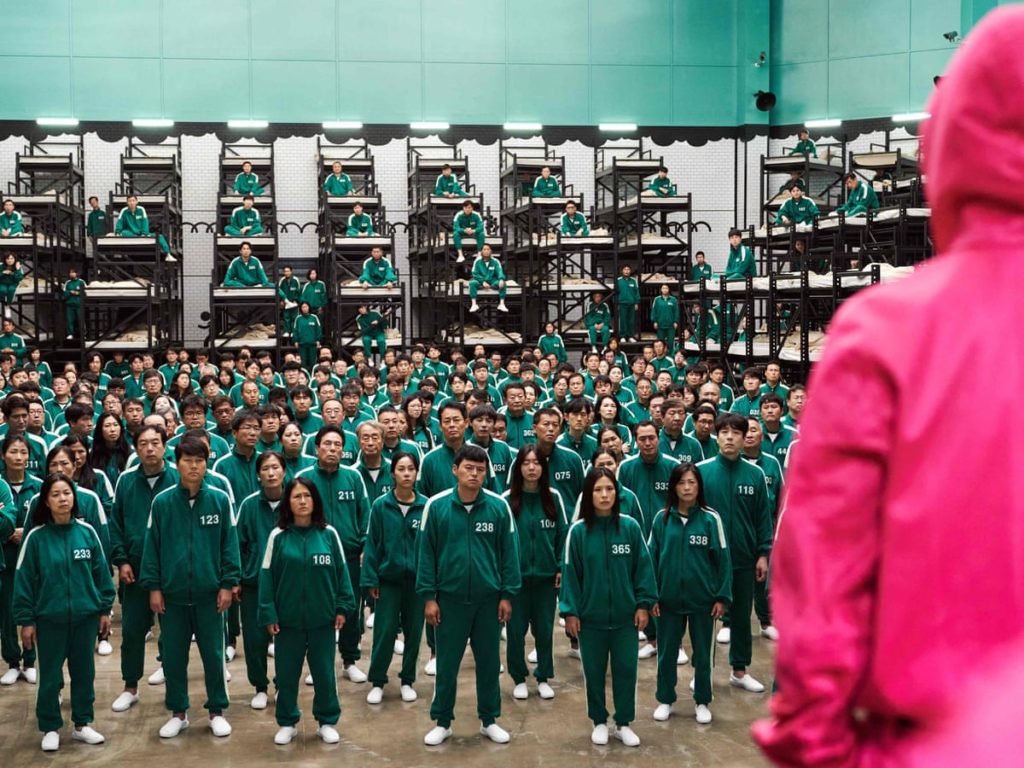
But why has it grabbed people’s imaginations in this way? Many of the issues which drive people into the games come from what seems a very Korea-specific set of problems. Of course, debt stalks people in all parts of the world, and the gap between richest and poorest continues to widen across developed countries, but in many ways the Korea of the first couple of episodes – a Korea riven with poverty, mass-occupancy hostels, endemic zero hours employment, all-too-easy loans, crippling personal debt, rocketing property prices in the country’s cities – is out there as a particularly serious example of what debt can do in a toxic slew of high-concentration population, a deep culture of shame and a country where debt exceeds GDP by 5%, making it all but impossible to clear what you owe. Gi-hun’s desperate spree in the first episode, betting money, gambling for a gift, stealing and committing fraud – is bleak, but plausible. Only a quick fix can set him free.
The same is true for his peers – a disparate bunch, each with their own motivations, but each vulnerable through poverty, exacerbated by debt and fear. Where the family at the heart of Parasite (2019) find a carefully-constructed ruse to improve their fortunes, the players in Squid Game find themselves instead seduced into a bizarre competition, where children’s games are given a deadly edge, making the incentive to win as much about survival as profit. However, this is not explanation enough on its own for the show’s success, and nor – quite – is the snowball effect which hits once a critical number of people begin to enthuse about something. Nor does it explain away some of the show’s weaker moments. Parasite is, for many people, probably one of the sole points of comparison for Squid Game and in many respects, it is a useful one to think about as it, too, tackles South Korea’s significant class divide. For a lot of genre film fans, though, other existing Korean (and other Far Eastern) films may spring to mind, even if these belong more to the horror tradition: the slow-burn cruelty, the artistic gore, the ways in which human behaviour is put under unique pressure, many of the most notable movies which have tackled these over the past twenty years have emerged from an explosion in Eastern Asian cinema, from the fights to the death of Battle Royale (2000) to the fantastical class divisions of Snowpiercer (2013) and to As The Gods Will (2014). These films share some commonality with the likes of the Saw franchise, The Hunger Games, and similar; horror and sci-fi love a fatal contest. So what does Squid Game do which distinguishes itself from these?
The rest of this article discusses the series as a whole and as such contains spoilers.
‘Free will’ and the games
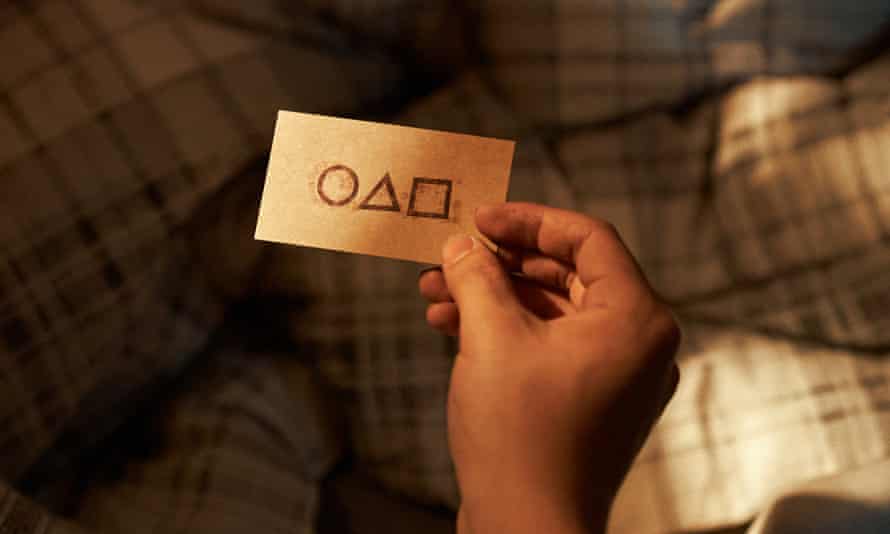
One of the things which the series does really well is to explore the idea of personal choice. When Gi-hun is first approached by the mysterious promoter, it is at a time when he has hit his lowest ebb. Long since made redundant from his job, eking out a living as a driver, living with his elderly mother, estranged from the daughter who is about to be taken to the other side of the world – it seems that he has few options left in his life, and has developed a taste for gambling. He can’t resist the promoter’s too-good-to-be-true patter, and takes the bait, playing his first game, later phoning the number given to him and gaining access to the contest. But the brutality of the first game (a skit on what a lot of us in the UK would probably call Grandmother’s Footsteps, only without the artillery) sickens those who make it across the line. They discuss: what should they do?
By the narrowest of margins, they opt out, and, in one of the series’ first real surprises, the organisers allow them. They are put safely back in mainland Korea, where they are free to go about their lives again. The lesson which the show puts across isn’t an ornate one, but it’s important, because it invites us to wonder – could they, really, resist the lure of the cash to be won in the game? Are they free at all?
Gi-hun is immediately back to where he started, a seeming failure by most measures: still dependent on his ailing parent, making occasional money, blowing most of it. His neighbour and co-entrant, golden boy Sang-woo, may have a great education and a wardrobe full of sharp suits, but he is in no better state – something which is later pointed out to him by a desperate Gi-hun. His phone buzzes with threatening, cajoling messages demanding the money he owes. Elsewhere, Pakistani immigrant Ali has created a dangerous situation for his wife and infant son; the as-yet nameless elderly player, who bumps into Gi-hun by chance outside, is still left wondering if he could have progressed in the game, won the money. As their situations as free citizens come home to them, they feel less and less free. So they decide they want to pursue the tournament after all, and though they have to fight to find their way back inside, this time it seems that it’s set in place, with an expectation that everyone present now plays on, as required; at least, it’s not until close to the series ending that the suggestion of opting out is mentioned again. Whilst it’s less clear as the tournament progresses and the staff have less to say which doesn’t relate to game rules, it seems as though it would be highly difficult to quit a second time; for the players, their options have now run out, in a literal sense. Were the controllers of the game always aware that this would happen? Their certainty that they would get their players back eventually seems reasonable. Again, it’s a subtle point, but the inescapability of the game could stand in for the wider point about the inescapability of debt. It also, to an extent, underlines the ferocity of the competition: the element of choice is called into question, but the end result is kin to any number of brutal, often ‘reality TV’ themed battles. It’s an opt-in torment, at least at first.
‘Gganbu’
If the series does seek to dramatise the desperation felt by people mired in money worries, then it’s significant that you get such a range of players from all walks of life (although only a small number of these are characterised in any depth; it’s still not really clear what Mi-Nyeoh’s deal is, other than a frantic need to form alliances which dissipates just as unexpectedly). But we get white collar, blue collar, criminal underclass, elderly, immigrant and North Korean players, who really are left to their own devices because for the most part, the games are unpredictable. If there is inequality on the outside, then that’s replaced by a different kind of inequality on the inside, because each game requires different skills and strengths. That’s not to say the process isn’t flawed, however, during the period where one of the players gets – and shares – a distinct, if short-lived advantage. For the most part, attempts to predict what game will be played come to nothing, or worse, lead to a disastrous misjudgement.
The earliest games are brutal because they accrue vast numbers of casualties; as the vast majority of players remain nameless, the effect is cumulative and can feel overwhelming, but it’s probably not especially shocking for fans of horror, or other related genres come to that. But the most effective emotional kick is yet to come – an example of perfect timing by the series team.
This episode of Squid Game comes just after we have started to develop a liking for some of our characters and their attempts to work together, even if we might be able to predict the glorious unravelling of Sang-woo, already acting like a hawk amongst the doves. As the characters have already successfully worked together, when they are asked to pair up, they do so expecting to have to represent a united front and the initial clamour is from people trying to find a ‘strong’ pairing, expecting a physical challenge of some kind (which itself leads to a rejection of all the women and older players present; equality quickly dissipates when there’s a potential strength or dexterity contest in the offing). But the game itself is – marbles. This leads to one of the show’s greatest about-face moments, when it turns out that they will have to compete against their partner, not work with them. Titling the show ‘Gganbu’ – which translates roughly to ‘buddies’ or ‘partners’ – is another of the show’s very strong moments, a dramatic irony as the nature of the term is unpicked. Excuse the reference but this is an episode which could have been penned by Arthur Miller – its minute focus on people breaking apart, on nostalgia becoming something toxic in the moment when characters need anything but immersion in nostalgia.
Gi-hun is at first sad and reluctant to partner with the as-yet nameless, elderly man whose illness seems to affect his concentration, as well as leaving him especially vulnerable. Gi-hun is aware, then, that were this a game of physical prowess, he is a dead man, but he also fears that a no-partner situation would make him a dead man too. The trick up the sleeve is that marbles relies on skills of luck and bluff alone. This, when it becomes clear, spreads through the rest of the players like a wave, particularly where people have paired up with someone they know and like, or love. There is a husband and wife team in the game, for instance, and it is understood that only one of any pair will progress to the next game – something alluded to only later, when the entire weight of the episode has already seemingly been felt.
We see two distinct progressions here in the lead characters of Gi-hun and Sang-woo, and this is probably the high point of their character arcs, where everything which follows feels like a direct progression from the events of the marbles game, how they decided to act on that occasion and how they feel about what follows. Does the show’s ending undermine that? Yes, to an extent it does, but Gganbu is nonetheless the show highlight, and still works as a solid foundation, even given the writing decisions which bring the series to a close.
Childhood friendships?
The series starts out following Gi-hun (Lee Jung-jae, usually a straightforward hero). And, first impressions of him are far from positive, even whilst slowly taking on board why he behaves as he does. He is childish, erratic and unlikeable, resorting to teenage-like fits of rage and frustration when he is challenged on anything; he steals, he cajoles and – even where the first episode seems to be showing him catching a break – his ineptitude quickly turns his good luck around. It takes time before his struggles with money and the newsworthy way he left his old job at a vehicle factory are revealed. If we feel any real sympathy with him at this stage, it is in his loving, but problematic relationship with his ten year old daughter, whose successful, eminently reasonable stepdad wants her inept biological father out of the way. Even then, though, he messes things up, acts ridiculously. He could stand shoulder-to-shoulder with the unreconstructed Dae-Su Oh from Oldboy (2003) and get along with him perfectly well. Whilst it’s clear that Gi-hun’s character will change, this happens in unexpected ways.
It takes time – and exposure to the tournament – before Gi-hun becomes to blossom into a good-hearted man, and much of this comes through his contact with the elderly player, eventually revealed to be called Il-nam, or Player 001. Perhaps they share a father-son dynamic, as the older man speaks a little about his son’s childhood and Gi-hun’s own father is no longer around, but Gi-hun first takes it upon himself to treat Player 001 respectfully, showing deference to him and trying to protect him from the mob rule which quickly takes hold. This protective element in his behaviour soon comes to encompass other players, even the ‘pickpocket’, as he once knew her: defector Sae-Byeok (Jung Hoyeon). It also creates his greatest dilemmas, contributing directly to his failing moral conscience in ‘Gganbu’.
Gi-hun eventually has to confront his old friend and on-paper success story, Sang-woo, and whilst the camera spends slightly less time on the latter’s own journey through the game, they have developed differently. Sang-woo is terrified at the beginning, meek and in every way a man who is not worldly, but he learns fast. This to an extent paints him as a straightforward villain, however, letting him step in for the cartoonish, but no less watchable gangster, Player 101: Sang-woo even emulates his deadly behaviour, minutes afterwards. If this transformation is a little hard to take, then it is given a little more depth back by the finale, where it’s revealed that Sang-woo is still human, and is regretful. It’s as if each of the childhood friends take a different route to their final conflict, but remember enough about themselves to be equally humane, in the midst of it all.
Criticisms: The VIPS
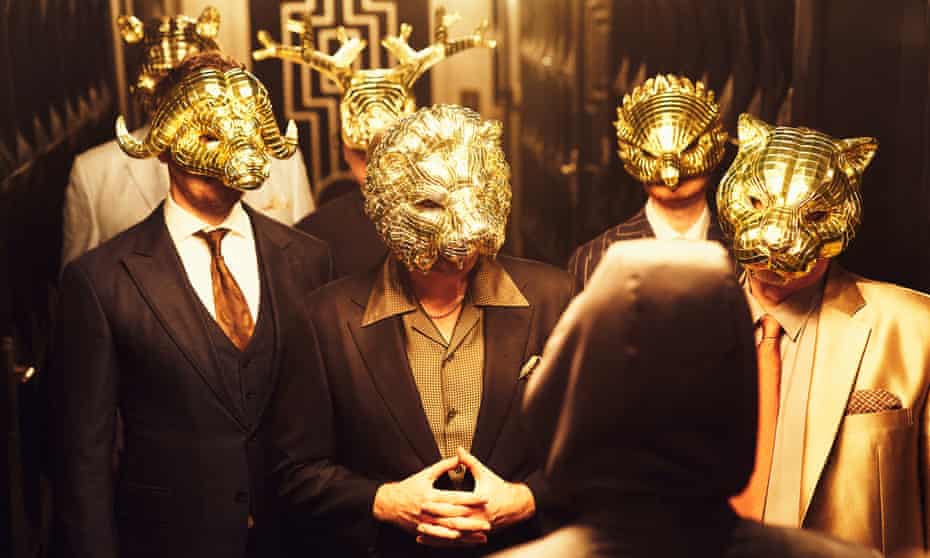
This site won’t be the first to comment on the presence of the ‘very special guests’ at the games, and it won’t be the last, but frankly, the VIPs element of the plot, as we see it, is a misfire. Much of the criticism so far has been around their language and speech, something the actors have already addressed, with some indignation. But it’s a reasonable thing to criticise. The presence of English language sequences in a Korean, or any other non-English language production always has the potential to go awry wherever you have actors who don’t know what they are saying, or a production team who don’t know what they’re saying, or both. It breaks up the plausibility very quickly, and it just sounds…bad. It’s clear that lines have been learned, rather than someone making an organic attempt to converse. However, that’s not my main issue with these characters.
They contribute almost nothing to Squid Game, because it would have been more than enough to believe that South Korea had enough of its own unprincipled rich people getting off on the suffering of their countrymen. As discussed earlier, Squid Game takes for its basis an acutely Korean problem. It is set in Korea, it stars Korean actors and it is a Korean language production; is it so hard to believe that Korea’s rich wouldn’t be in on this universe, without a supporting cast of the almost obligatory fat, unpleasant, unfeeling Europeans and Americans? If their inclusion was an attempt to suggest that ‘the games’ are a global phenomenon of some kind – a sort of Hostel-style in-group, like Elite Hunting – then the VIPs are just not strongly drawn enough, and barely present enough to successfully add this layer to the plot. They are simply there, deliver a few hesitant lines from a chaise longue or two, and then they’re gone.
It would be good to think we’re past having to bung in a couple of Americans etc. to properly have a chance in a global market, and the fact that Squid Game has done so well despite the VIPs would support that. There’s a certain cliché aspect to the ‘evil pervert foreigners’, too, given that the games are usually perfectly well organised from inside Korea, and evil pervert foreigners have had plenty of franchises of their own. Unfortunately, the VIPs are a fairly unnecessary bit of window-dressing from a series which was doing just fine without them, and returns to form when it moves past them.
Criticisms: the ending…
Waiting for a series finale is a toughie if it’s one you’ve enjoyed, and the way in which Squid Game wraps up isn’t perfect. There was always going to be a lot riding on this one, and there are some fundamental issues.
Whilst seeing our main guy win after a final redemptive moment feels like a relief, the series then disrupts expectations. That’s no bad thing, and any expectations of Gi-hun going around simply fulfilling the wishes of his old teammates are dashed by the decision to represent him as a broken man, ill-equipped to go on, with a timeframe spanning another year. This is, though, a reasonable addition, because the money hasn’t been an instant fix; the big problems of life before are not only still in Gi-hun’s life, but they’ve worsened. The episode lulls a little around this time regardless, and it isn’t really clear where we are going next.
Then, how things move forward is divisive, and sadly it’s divisive because it undercuts some of the effective emotional development which came before, notably in ‘Gganbu’. That episode required some real emotional work, so plucking a key character from that and revealing them to be a different character entirely seems more about revealing the trick shot which kept them around, rather than really building anything significant out of it. In fact, by stripping the meaning out of some of the care and consideration which Gi-hun showed at that point, it jeopardises that element of his development, and I’d always prefer consistent writing to the phenomenon of ‘Easter eggs’, which is something which screenwriters seem hard-pressed to leave alone.
The series also seems to feel under pressure to account for the bleak cruelty of it all, and its method for bringing it all together relies on a blend of ennui and nostalgia, which Sang-woo alludes to far more effectively in one line when he realises aloud that their childhood innocence is gone forever. This is a theme throughout – the arenas are a blend between Disneyland and The Thunderdome – but it unfolds more in the background, an intriguing feature of the tournament which blends horror with childhood throwbacks, a creepy aesthetic choice. It’s more effective left there, frankly, as something to think about but not get a clear answer; the final episode decides it’s time to talk us through a significant part of this, and immediately lays itself open to seeming thinly sentimental. It’s just hard to buy the rationale we get for this character turnaround, and the add-on about ‘people not being kind anymore’ feels unnecessary. We’ve seen what people can do, and we’ve seen them being kind too, at length; this is what has redeemed Gi-hun.
Could it be that all of this is simply to set up a Series 2? Whilst at the time of writing there are no clear indications that a S2 will be happening, some of the issues in the end episode could certainly be cleared up by further address. With the greatest of respect to the series, however, this isn’t the most satisfying way to conclude S1. Gi-hun seems to have work ahead of him; there is potential there for a completely different character arc, and perhaps this is on its way, though it’s a shame that this has come at some cost to the superb writing in what we have already.
Squid Game is, nonetheless, worthy of the attention which has been paid to it. It is aesthetically strong, with moments of absolutely superb writing and acting, fantastic use of spectacle and gripping storylines. In its struggle to finish its story, it perhaps goes astray, and it is unfortunate that some of these moments detract from what has come before. However, it has plenty to recommend it, and if this is the first experience of Korean TV/film for many people, then it’s a solid one which could itself lead on to good things.
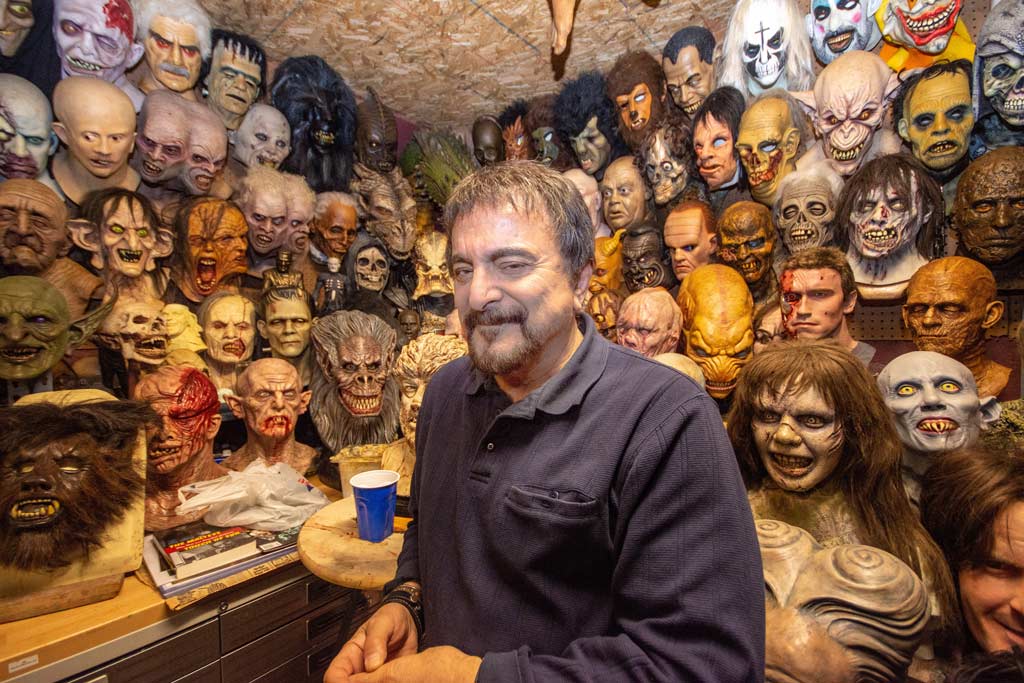
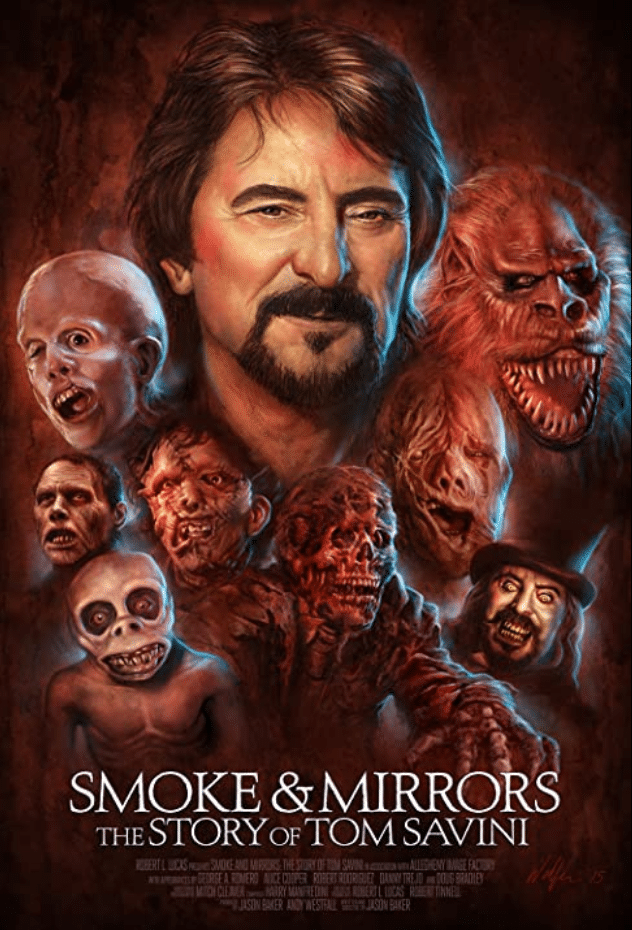
Horror fans are unusual in the way we know the names of many of the people working behind the scenes in film, and this is particularly true of SFX artists; we can all name a few, and it’s highly likely that Tom Savini will be on that list. In many ways, this documentary film about Savini is a potted history of independent horror movies, as he’s played such an important part in developing what it was possible to see on our screens during our formative decades. There’s plenty to enjoy here, and whilst it doesn’t do anything particularly zany or experimental, it’s nonetheless a decent film with a whole host of big names and some great inclusions.
The opening reel sets up an idea which Savini himself comes back to several times throughout the film – not a controversial one, but a reasonable enough point about cinema resembling a magic show, with a nice guest spot for Doug Bradley as a circus master. From here on in, though, it’s a fairly straightforward, chronological trip through Savini’s early life and experiences, making a few interesting links between events in his childhood and his later career (for instance, his brother spent time training as a mortician). What he seems to have got from his upbringing, as a child of Italian immigrants, is the importance of hard graft, though it was quite surprising to hear Savini say that he also suffered from low self-esteem as a teen, and this drove him to overcompensate in some respects – taking on absolutely everything, from being on the school wrestling team to working in theatre. Time is given over to some key places in his life – notably, the Plaza cinema in downtown Pittsburgh, now apparently a big name coffee shop. It makes perfect sense that seeing Lon Chaney in The Man With a Thousand Faces was an incredibly influential experience, as does discovering that Savini played Dracula in a travelling show, after impressing the rest of the cast when chosen as a ‘boy in the audience’ to get dressed up as Dracula and successfully terrifying the spectators.
Savini’s time in the Army and Vietnam gets covered here, and it’s as grim as you’d imagine, though he manages to lighten the tone with an anecdote about having to open fire on what he took to be the Viet Cong…and, well, it wasn’t them. But as you’d expect, his career as an SFX specialist, actor and stuntman gets featured at the greatest length. Savini’s career in SFX came about almost by accident, surprisingly, and it’s from this point onwards that the documentary shifts into material that most of us would recognise. That all being said, the show reel which features here does demonstrate just how innovative a lot of Savini’s techniques really were, and still are. There are a lot of purists in horror who feel that computer-generated effects should be avoided at all costs; I don’t quite share that view (though bad CGI is certainly enough to ruin an otherwise solid idea) but Savini’s body of work is definitely a good argument for the merits of practical effects. It has underpinned a huge number of classic horror films of the 70s and 80s, though of course Savini is probably best-known for his collaborations with George A. Romero, with whom he started working during the filming of Martin (1976) and continued until Romero’s death (Romero features here, by the way, which tells you that not all of the ‘talking heads’ footage is exactly brand new – but, hey. Nice to see him again.)
With a mixture of interviews, still images, clips and some storyboards/cut scenes which are worthwhile on their own merits, this is a decent film. There’s an impressive array of interviewees, too, and no overreliance on just one or two of them. At ninety minutes, there’s just about enough to hold the attention, and I did learn a few things along the way. The point here isn’t to teach about technique or the more specialist aspects of Savini’s work, but if you would simply like to hear a bit more from an affable, talented fella about his career, then this is worth a watch.
Smoke and Mirrors: The Story of Tom Savini arrives on digital platforms on October 19th 2021.
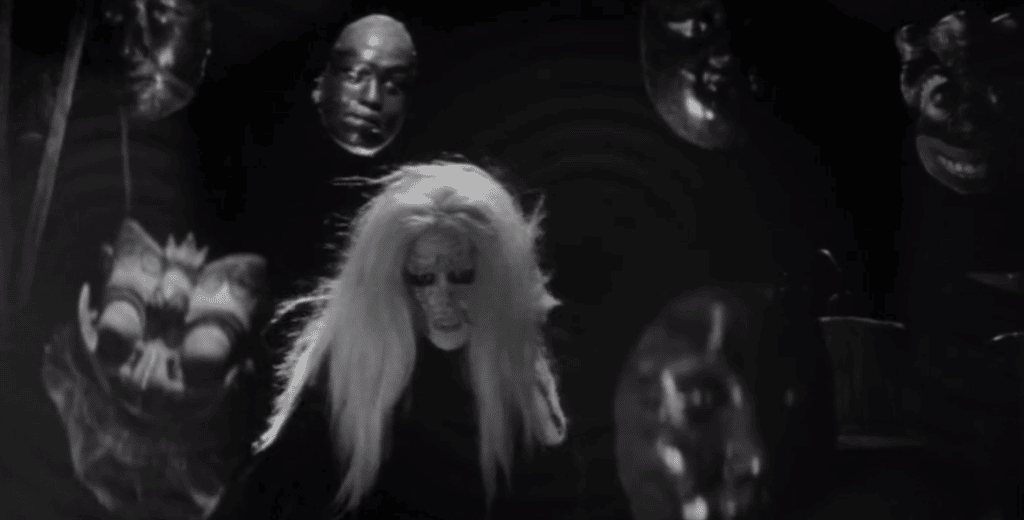
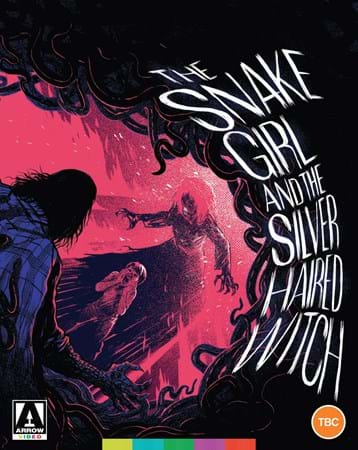
The Snake Girl and the Silver Haired Witch can not be accused of misrepresenting itself with that title; it’s an engaging, fairytale-like film which overlays a warped family dynamic with ‘old dark house’ style horrors, though it never becomes a full-blown horror, balancing its supernatural scares with something far more saccharin. Tonally, it works, and it doesn’t skimp on the snakes or the silver-haired witch, either.
We start as we mean to go on – an unsuspecting maid is scared to death by having a snake hurled at her in the Nanjo household (this isn’t as unlikely as it sounds, as Mr Nanjo is a venomous snake expert and has tanks of them in the house). Into all of this, a child is about to arrive: Sayuri (Yachie Matsui) has been raised in a children’s home, but it’s recently been discovered that she isn’t an orphan after all, and she is in fact the daughter of Mr and Mrs Nanjo. So, she’s packed up and shipped off there, with a warning ringing in her ears that Mrs Nanjo has recently had an accident which has affected her memory. Sayuri is clearly being pitched as the World’s Most Pleasant Child, though, so she obligingly tells her newfound father that there’s nothing to worry about, and she will make the best of it. She bids a farewell to the nuns, and to big brother figure Hayashi (Shin Godzilla’s Sei Hiraizumi).
They weren’t kidding about her mother being a little confused; when she greets Sayuri, she calls her ‘Tamami’, and has trouble recognising her daughter. The fact that Mr Nanjo is soon thereafter called away to Africa to study a rare venomous snake seems to trouble her, too. He’s not gone long when Sayuri notices someone seems to be hidden in the house; no one will believe her when she explains what she’s seen, but she sees Mrs Nanjo leaving food for someone at night, and sees a strange, hybrid-looking girl in her bedroom. It’s explained to her that this is Tamami – her secret older sister, who will now be staying with Sayuri – well, until father gets back, that is. Tamami isn’t too keen on having competition for affection in the house, and soon takes to doing the usual, sisterly things, like threatening to dissolve Sayuri in acid, displacing her from her room and forcing her to live in the attic, dismembering her toys and so on. As the situation escalates, Tamami’s disturbing background is explored further, and this is just the beginning of the ordeal for Sayuri…
Like so many Japanese films, The Snake Girl and the Silver Haired Witch is based on a popular shoujo manga, which more or less guarantees that the film will stick very closely to Sayuri’s personal perspective given that these manga chiefly concern themselves with young female protagonists. In fact, the film frequently uses Sayuri as a narrator, as she mentally unpacks what is going on around her: this is also done with Tamami, though only very briefly. It all feels very storybook in the way it is done; the plot gives us the lonely orphan/stranger in a new household, things which go bump in the dark. a mysterious house, apparently secret rooms and locked doors and a child who must navigate all of the secrets and plots which threaten her. It feels a little like The Reptile via Enid Blyton in some respects, with a lot of the slightly earlier film’s menacing atmosphere though – given there’s a child star in the lead role – the film is mainly atmospheric and suggestive, rather than genuinely frightening, graphic or bloody (with the exception of one scene towards the end of the film, which really is an unsettling moment of peril). Sayuri plays this throughout with wide-eyed innocence, and Tamami is an excellent foil to her character; Mayumi Takahashi has a genuinely eerie presence and looks the part, as well as very plausibly enacting being a nadsty piece of work; Sayuri is sickly sweet, but it’s hard not to empathise with her as she gets put through the mill by her domineering, snake-obsessed sister.
The Snake Girl and the Silver Haired Witch does an excellent job of showing us what’s going on being refracted through an impressionable child’s point of view, and it becomes steadily more clear that a lot of the phenomena Sayuri witnesses is embellished by her imagination: this allows the film to plump for some nicely experimental special effects. Some of these place the film squarely in the late 60s, which is no bad thing – a dream sequence wouldn’t be a dream sequence without a swirling spiral and a theremin, after all – but others are very innovative, and have held up very well. And as for the plot, well, by the hour mark you may have begun to guess at what is going on here, but it’s all nicely-paced and looks gorgeous on screen, doing plenty to reward the interest. It even carries a hint of the modernising Japan of the 60s around the edges, with the lowering high-rise which is being built nearby finding its way into the action.
For fans of the likes of Hausu, there is plenty to love in The Snake Girl and the Silver Haired Witch. It’s an attractive film (looking fabulous on the transfer here) and an atmospheric little time capsule in its own right.
The Snake Girl and the Silver Haired Witch (1968) is available now via Arrow Films. For more information, please click here.