Blood in the Snow 2021: The Chamber of Terror

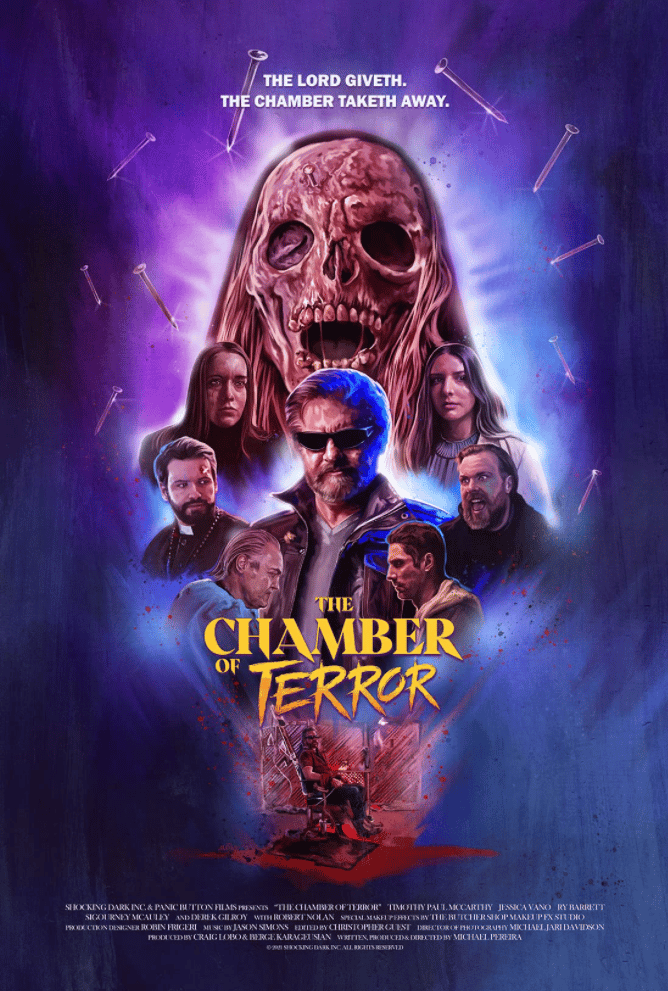
In a darkly comic film which seems to strive to fit in as much practical gore FX as possible, The Chamber of Terror suffers to an extent for its ambition, but on balance, achieves much of what it sets out to do. You can’t really criticise its enthusiasm, even if there are a few missteps along the way.

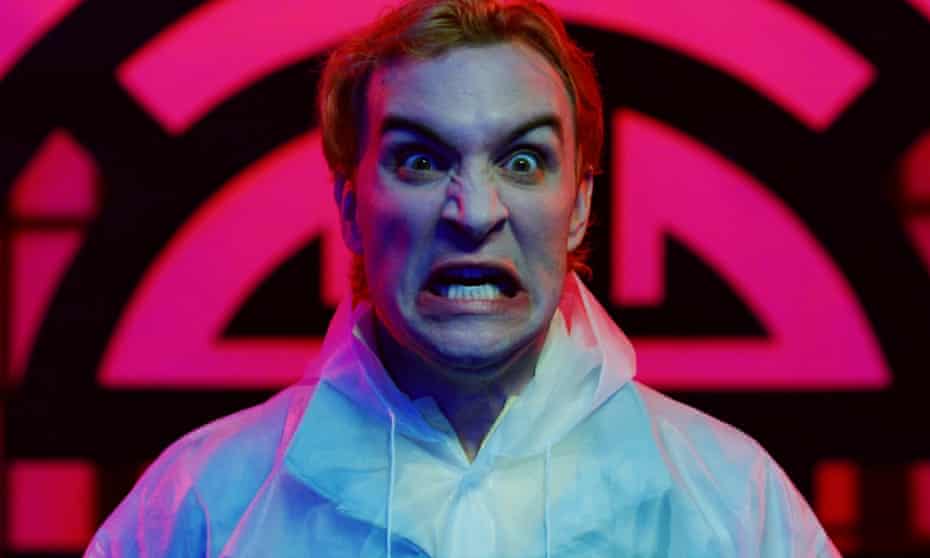
We start with what is clearly intended to be a franchise character – one Mr Nash Carruthers, who has a ‘shit list’: this means gathering up a number of people and putting them through some pretty unpleasant situations, and all in the name of personal vengeance. It wouldn’t be much of a shit list otherwise. We see some of this going on before the credits even roll; this is another love letter to 80s horror in many respects, right down to the title font, and certainly in Carruthers’ badass characterisation. And, it seems that Carruthers has the son of a local mobster in his sights. He tortures one Tyler Ackerman, hammering him into a box and leaving him there. We’re led to believe that Tyler’s a goner, and that’s that: we’re primed for Carruthers doing more of the same.

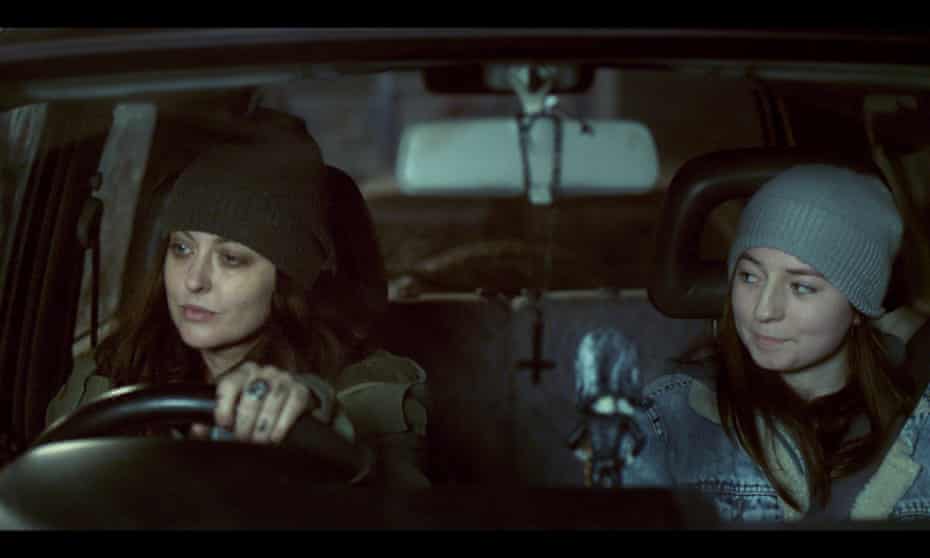
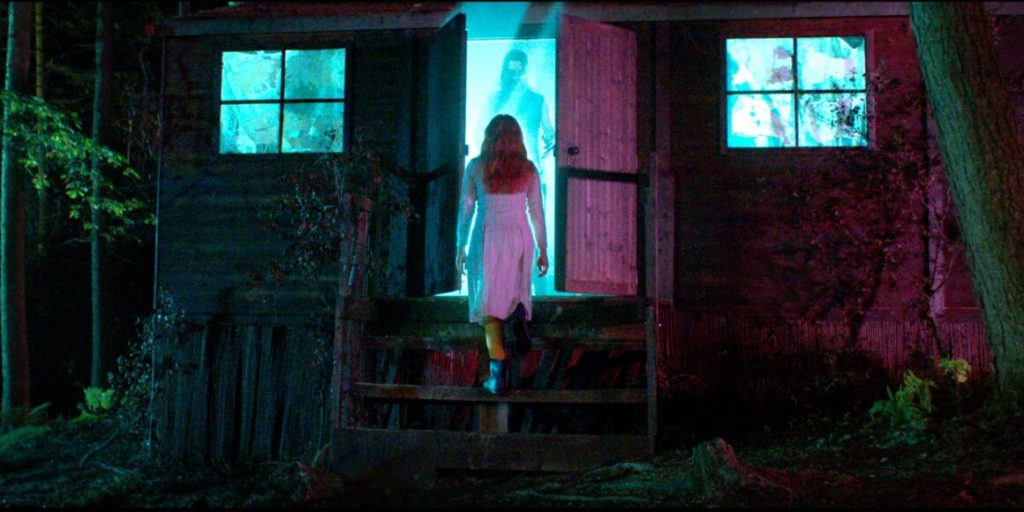
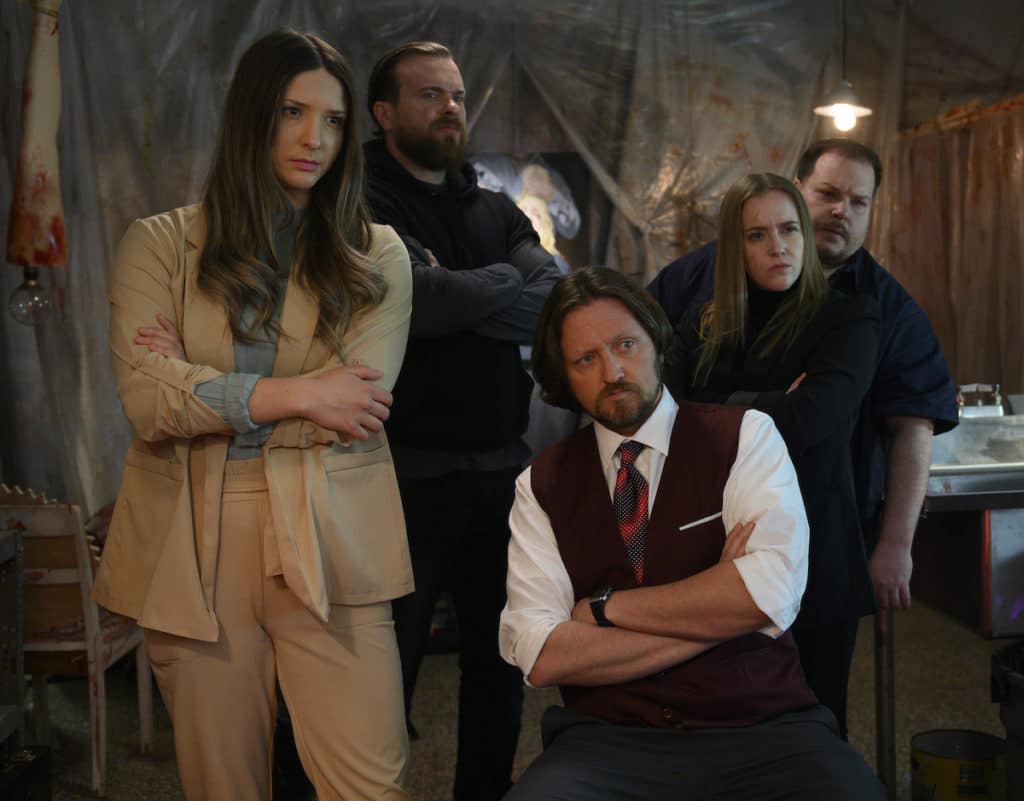
Instead, a month passes: Carruthers is still at large, but his down time gets disturbed by a couple of masked intruders. They’re not entirely pros, but they’re still able to capture Carruthers and take him to the Chamber of Horrors itself, a torture set-up in a safe house which is being overseen by Ava Ackerman, Tyler’s sister. The Chamber of Horrors has a long standing, and Ava is prepared to use it to find out where her brother is. Carruthers is taking it all rather well; it even seems like he’s enjoying himself.

As Ava strives to take control of the situation, things take an…unexpected turn. Not only does Ava get the information she wanted about her brother, but there’s more taking place, meaning that this is no longer a straightforward torture horror – which it could have been, all told. The film changes tack completely, transforming into a very gory homage to a hundred and one existing horrors, and perhaps one of its issues is that it does try to fit so much in, swinging the plot away from one thing to something else entirely. There’s clearly affection for the genre, though this does veer towards self indulgence in some places; there’s a lot of dialogue, but it takes some time for the characters to really ‘stick’, which holds the film back in the earlier acts to some extent. Some characters are there, loud, and then they’re gone, which can be a little jarring. But it knows what it’s doing in terms of how it paying lip service to horror, openly alluding to it in the script on more than one occasion. You may or may not enjoy this approach, but it’s loud and proud at least, and it does manage the about-face rather well, turning into a different genre of horror entirely.

Whilst the film could have used some cuts where it starts to dawdle – the hot-cold-hot game, for example – when it gets going, its change of direction makes it into a dead cert festival crowd pleaser, the sort of thing which elicits cheers from an audience. It spends a lot of time setting up what is essentially a gore fest, and perhaps sacrifices some plot to get there, but the SFX is very good fun, as well as nicely done on the film’s limited budget. There are viewers for whom this kind of back-to-basics gore is the most important element of their horror cinema, and it’s clearly close to the heart of director Michael Pereira, here directing his first feature-length film, but with a back catalogue of similarly OTT fare in his filmography. So yes, there are a few lulls and a few choices which could be questioned along the way, and its self-referential style may not be for everyone, but there’s plenty of ambition here, as well as – overall – enough going on to keep The Chamber of Terror entertaining.

The Chamber of Terror will screen as part of the Blood in the Snow Film Festival on 20th November 2021.

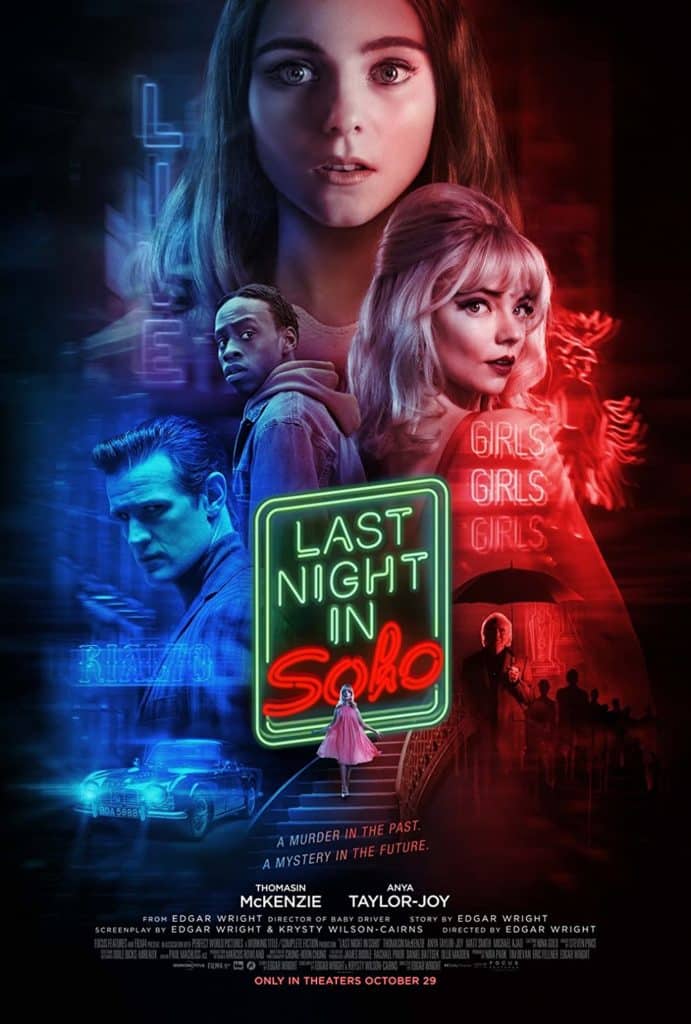
Last Night in Soho (2021)

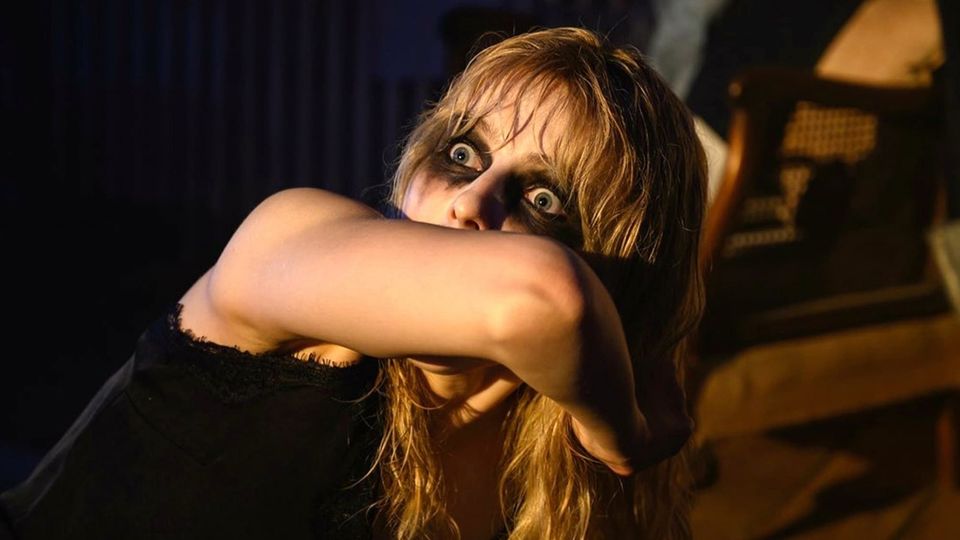
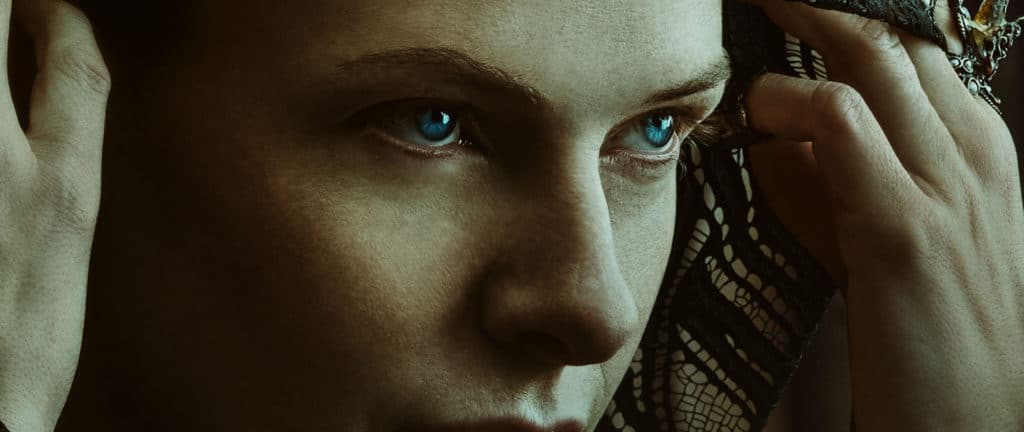
There’s already been abundant proof of Edgar Wright’s love of horror, but his most recent film, Last Night in Soho, changes tack from what we may have seen already; it’s a ghost story, but it pushes at the boundaries of what a ghost story can be; it’s a kind of 60s-glam spin on The Mezzotint in some respects, and a very modern, hardline assault on selfhood in others. Or, is a time travel story? Perhaps finally it’s a cautionary tale about wallowing in nostalgia which is not your own, or at least, the perils of living vicariously. All in all it’s a fascinating and engrossing story and whilst some aspects of the plot are laid on rather thickly at first, it’s so carefully constructed and paced that you want to go wherever it takes you.

The psychically-sensitive Eloise (Thomasin McKenzie) has inherited her gran’s tastes in music, fashion and cinema; when she receives news that she has been accepted into the London College of Fashion, she’s thrilled and can’t wait to take her 60s inspirations away with her. We know that she lost her mum at a young age; she sees her, sometimes, and feels her mum’s approval. Batting away grandma’s concerns about London as a kind of entity which swallows people up, Ellie moves out, very excited for her future. Needless to say, this rather naïve young girl should have listened to her gran (Rita Tushingham). A few crude encounters later – with a pervy taxi driver who jokingly tells her he’s going to lurk around her Halls of Residence and stalk the girls living there (!) and her wonderfully awful, if cartoonish new roommate Jocasta (Synnove Karlse) – and suddenly Ellie isn’t so sure about big, bad London. She soon makes the decision to find somewhere else to live and happens upon a dated little bedsit not too far away: it’s perfect. The landlady, Miss Collins, is a bit of a stickler, but that suits Ellie just fine. She begins to feel like she could do this.

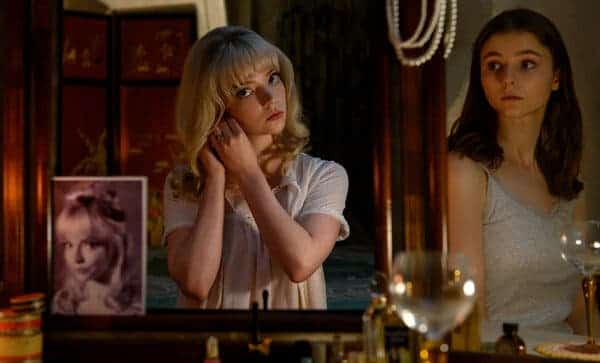
Once she has moved in to her new place, though, Ellie begins having odd visions – lucid dreams of the old Soho, a world which looks almost impossibly glamorous and classy. In this, her aesthetic paradise, she sees the reflection of a young woman about her own age and begins to follow her; she is in awe of her confidence and charisma, finding her incredibly aspirational as she charms her way into the life of a club booker called Jack (a dapper Matt Smith) and, seemingly, commences a career as a singer. But the girl – Sandie (Anya Taylor-Joy) – is not on the trajectory that Ellie first supposes she is. Soon, Ellie’s visions are intrusive rather than tantalising, and they begin to crowd out her real life, tentative as it already is. Ellie no longer feels like a bystander, and feels somehow that she has to find out what happened at the end of the story which she has, to some extent, been living.

The beginning of the film has some very clunky male characterisation which feels like it has taken on the message of #MeToo and run amok with it, though thankfully later developments balance this out. The instant addition of the bad man in the taxi and some of the godawful men Sandie encounters in her life, for instance, are eventually balanced out by a screenplay which begins to weave something far more considered out of its initial elements. Last Night in Soho is at its best once it has established its key players and plot points and is then in a position to weave everything together in a fascinating way, with surprises and developments which encourage viewers to think again about what they’ve seen. The little visual link-ups, and the use of references which make new sense in light of something we’ve already been shown are truly skilled, subtle and effective – far more skilled, subtle and effective than any number of ‘Easter egg’ type packages beloved of lesser screenwriters and directors, whilst showing a level of trust in the audience to understand and appreciate them. And, at the risk of wallowing in nostalgia which is not my own, either, 60s Soho looks absolutely phenomenal: it’s rendered incredibly well, it makes for a superb backdrop to the story and it’s every inch the gorgeous fantasy. Note the addition of photo comparisons with London now, which use some particularly unflattering shots taken during Covid lockdown, but make their point. Doesn’t it look soulless, lonely? No wonder Ellie gets drawn in to the old Soho, however brutal and malign it is beneath the surface.

The performances here are solid, with McKenzie offering up a suitably blank slate character at first, one who runs the gamut of emulation and self-determination. Anya Taylor Joy is really in a supporting role here, but exudes the kind of magnetism which makes her appeal – and everything else which befalls her – very plausible, whilst Michael Ajao – carrying the flag as the film’s Sole Straightforward Good Bloke – is good to watch because, frankly, he’s the only humane fellow student enrolled on Ellie’s course, so thank god for him. But as is so often the case it’s the older actors who really have the gravitas here, namely the wonderful Terence Stamp and of course the much-missed Diana Rigg, here in her swansong performance and perhaps appropriately starring in a film set – in part – during her heyday as an actress. She will, probably, be remembered in her later years as the Queen of Thorns, but Miss Collins is a great role with some great lines. Responding to Ellie’s distress that something terrible may have happened in the past in her room, she retorts simply, “This is London. Someone has died in every room in every building…” Her worldliness, her eyeroll-realism is an important part of the film, and she plays it beautifully: the film is dedicated to her memory.

Fans of the era will of course absolutely adore the music, the cars, the clothes, but beyond all that, Last Night in Soho is a bloody effective, creative and classy take on supernatural storytelling. It would certainly merit a rewatch, and this would no doubt turn up more evidence of Wright’s brilliant, meticulous ideas.

Last Night in Soho is in UK cinemas now.

Blood in the Snow 2021: Woodland Grey

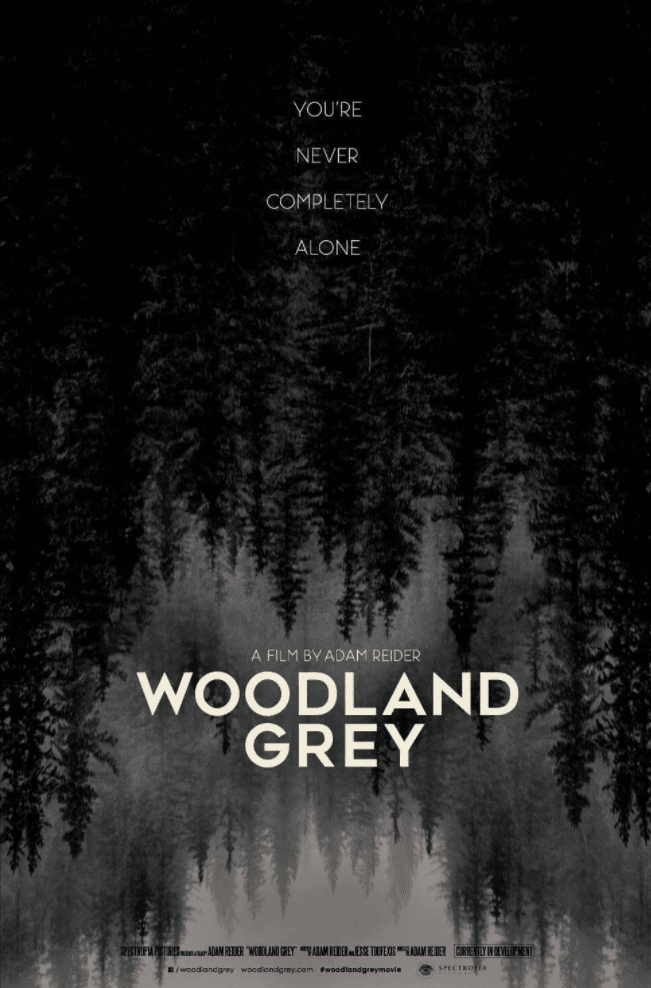
In many respects, a good way to sum up the sylvan horror of Woodland Grey is with the old adage, ‘the road to hell is paved with good intentions’. It’s an unusual film, calling on some familiar horror elements, but then in other ways completely rejecting these, in order to create something far more introspective, fractured and surreal.

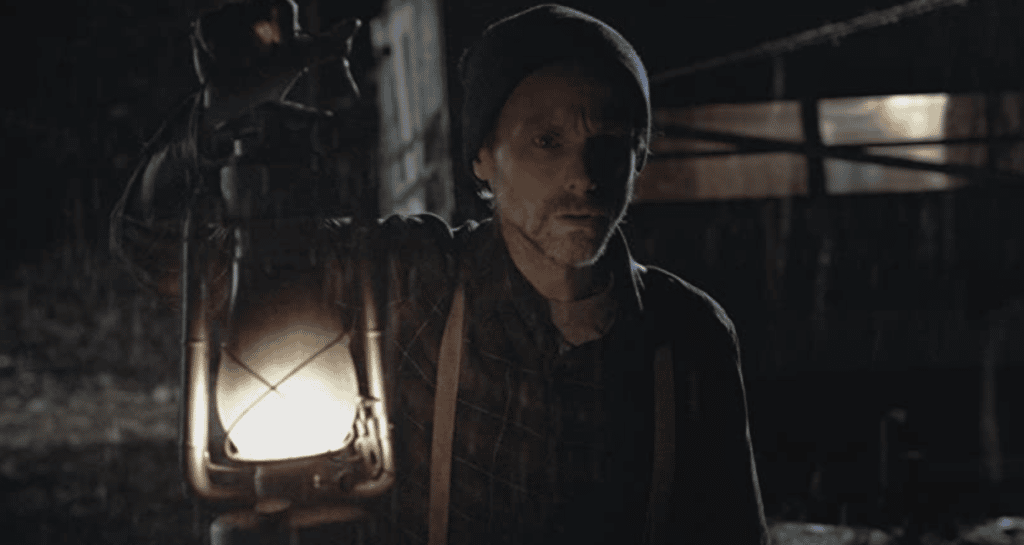
From the very beginning, the film asks questions, questions, questions. It begins in the middle of some mysterious, stressful event, with a man (Ryan Blakely) leaving his rundown trailer in the woods to investigate a strange sound… we don’t, at this juncture, discover what is going on. The next day, life seems to go mutely on – he hunts, he makes a fire – but he’s given to casting odd looks towards a small, locked-up building a little way away from his camp. This may be yet another of the film’s already growing list of questions, questions, questions, but a rather more pressing one comes with the nameless man’s imminent discovery of an unconscious, injured woman in the woods.

He brings her home. She revives, disorientated and scared of course, but, as her injuries won’t allow her to move very much, she reluctantly accepts the man’s help. He is not used to company, and finds her conversation quite a challenge – but it’s when this girl, Emily (Jenny Raven) herself discovers the locked building (and what seems to be inside it) that their relationship becomes more… strained. Steadily, as the film adds additional information about why Emily came to the woods when she did, the plot weaves together in a very interesting way – pulling audience loyalties here, there and everywhere. Emily’s early attempts at conversation with the man are tonally odd and stilted, and whilst the man is still an unknown quantity, this troubled, loner character seems most deserving of sympathy. But, through careful plot layering, this response shifts. Characterisation is expansive here, able to subvert expectations, even whilst dialogue and exposition are doled out very sparsely.

Sylvan horror is always a favourite. Best of all is where films are able to embed ‘the woods’ as a character in their own right, and even where ideas and development are lacking, some nicely-shot woodland scenes are often enough to contribute at least some decent atmosphere. ‘The woods’ are definitely character-worthy here, with some intriguing exposition. Ideas are certainly not lacking and it is pleasingly difficult to predict where things are going. Actually, though, for the most part the film feels quite claustrophobic, and any sense of the scale of the woods is held back for most of the running time, with the camp and its environs really feeling like a very very small space hemmed in by trees, to the point that it’s inescapable.

The plot’s progress, with gradual invocations of something very weird, profound and all-encompassing, is able to hold interest, albeit there’s a slight lull around the hour mark as the characters reset before being drawn further into their own nightmare scenarios. Along the way, and as per the title maybe, this is a pale, washed-out, cold looking film, very sparse in its beauty. It’s almost dwarfed by its soundtrack in places, which offers a varied blend of delicate and looming; you are led to understand that you will feel unsettled via the soundscape on offer, which works very well with the tone of the film.

Woodland Grey is difficult to review without spoilering, but suffice to say that it is a largely low-key, reality-disrupting film which draws you in to its strange world. It could have done without some of the looping false conclusions, perhaps, and its increasingly surreal direction will lose some viewers, but many more will enjoy picking through the deeper meanings here, appreciating that the film dodges the expected. Regardless of a couple of minor issues, this film is disconcerting, smart and creepy.

Woodland Grey (2021) will receive its World Premiere at the Blood In The Snow Film Festival on Monday, November 22nd 2021. For more information, click here.

Celluloid Screams 2021: Titane

Note: unusually for the site this review contains mild spoilers – words failed me else – so read on with caution.

On first consideration, Julia Ducournau’s new film, Titane (2021) is quite unlike Raw (2016), her last feature and, for most people, the most familiar point of comparison. To put it mildly, Titane is an odd beast, where much remains unexplained; on first impressions alone, it all feels rather thinner than Raw, with less clear subtext and symbolism. However, there is some overlap, with many of the most satisfying moments of the newer film stemming from this: the twisted, but oddly redemptive family dynamic, the strong, if often mystifying female lead and the excruciating focus on the body all lead to some satisfying sequences. My main criticism of Titane is that it does feel like a series of sequences rather than a solid storyline, but in the madness of how it all unfolds, there’s a great deal to make your jaw drop. It’s very uneasy viewing, and it keeps you guessing at where on earth it’s all going. (You may not feel that you know the answers to those question when the credits roll, mind you.)

As the film begins, we’re certainly not encouraged to like Alexia, played first as a little girl (and compellingly so by Adèle Guigue). Alexia decides to distract her father whilst he’s driving; not long after the film starts, this causes an accident, after which the seven year old girl has to have titanium plates put into the side of her head. She glowers at her father after the operation, not seeming to understand that she played no small part in this, but one thing’s for sure – this is no loving, conventional family home. Flash forward: Alexia is now a woman (the rather intimidating Agathe Rousselle). She still lives at home, to dad’s clear dislike, and makes a living bumping and grinding on a car as a dancer. Apparently, this is a thing, and imagine that conversation with the insurance. Alexia is more or less silent and closed off, but knows how to dance, coming alive when she does – then closing down again when the music ends, a strange, formative sex scene involving a car notwithstanding. We see a dark side to all this when she’s pursued by a man who doesn’t seem to understand ‘no’, and we also see that Alexia will take strong measures to defend herself, perhaps reasoning that only ultraviolence will reset the balance.

Any expectations that this will be a linear consideration of how women navigate the world and its male entitlement are soon scuppered, however; for whatever reason, it seems that Alexia has had enough of her lot, but to make her escape from it, she begins to progress through different roles. The first is as a grand failure at human empathy, leading to scenes of barbaric, inexplicable violence against people who do not deserve it (one criticism I have about the film is in how it seems to lob in characters only to dispatch them, whilst simultaneously reaching for deeper significance which eludes it precisely because of its unwavering focus on the suffering of innocents). After this, she flees her old life by disguising herself as someone else – a son, Adrien, who has been missing since childhood, reuniting with his father. More ultraviolence accompanies this transformation, but then the film segues more into an examination of how Alexia behaves as Adrien, whether she can maintain the pretence – and why she chooses to.

Shades of Calvaire (2004) creep in here, as the wonderful Vincent (Vincent Lindon) persists on believing Alexia is his son, leading to some strange comedy of errors moments but showing that Vincent, too, is a damaged man who would believe in his son come what may. The very male environment of the fire station over which Vincent presides affords some funny moments, particularly when Alexia resorts to type and dances for ‘the guys’ just like she would have done as a girl. But there are also lots of poignant moments, too. Gradually, these two strangers develop an affinity for each other which is very pleasing, and counterbalances the rather jagged first half of the film.

Much has been made of the gender subtext used in Titane, but despite the very real issues relating to Alexia convincingly appearing as a male, it seemed more about expedience than anything else – a convincing disguise as a means of escape. This is something, though, which would certainly withstand a second viewing, as more may yet come to the fore. First impressions? Gender is there, but deeper significance seems to have been mooted, rather than anything else. Similarly, the fantastical elements are entertaining, but left unexplained, and these at times jar against the plausible human relationships which spring up later. It’s a feature which may need more unpacking with a revisit. Should a film need multiple viewings to work fully? It depends, probably, on what comes out on these multiple viewings.

So at the end of this admittedly meandering review, the first-viewing verdict is mixed on Titane, despite it being a film which can take some pondering. That is perhaps its saving grace, that it generates a lot of reaction, even if some of that is questioning. For all the bellyaching, it was a fascinating watch and the more I’ve tried to pull it apart, the more I like it, on reflection. Extra credit to Rousselle, here in her first film role, terrifying and vulnerable by turns. Ducournau may have changed tack here, but it’s another impressive, thought-provoking piece of work.

Titane (2021) screened at the Celluloid Screams film festival in Sheffield, UK.

Raindance 2021: The Welder

Given the success of Get Out a few years ago, it was inevitable that we’d get a few follow-up, socially conscious horror movies. Likewise, it was inevitable that some of these would fall short of Get Out: it turns out that balancing a political message with elements of fantasy is not all that easy to get right. This brings us to The Welder (2021), a film which unfortunately doesn’t get this right; in trying to tackle racism, it seems to hunker down, hanging on to the kinds of oddball attitudes it purports to critique. It’s not without ideas, for sure, and it looks great throughout. However, my resounding feeling, come the end, was a kind of mortified confusion.

With quite an abrupt beginning, commencing with some sleepwalking and a partial flashback to an as-yet unknown traumatic event, we meet Eliza (Camila Rodríguez), ex-Army (we know this because she has ‘ARMY’ printed on her shirt in the flashback). Her boyfriend Roe (Roe Dunkley) retrieves her from the porch, where she has wandered; the next day, they discuss what’s best to do and decide a holiday at a remote ranch would be the best course of action. They pack and head off, with their dialogue establishing and re-establishing the fact that this place is Secluded (a similar thing happens in the script when they try and fail to access the Wi-Fi, though that comes later.)

They arrive at their destination. Sadly, it seems that the person we’ve seen in short cut scenes throwing pieces of raw flesh around is the proprietor, but he greets them politely enough and introduces himself. This is William Godwin – no relation to Mary Shelley – and he takes a particular interest in the pair, not least because they are mixed race; Godwin’s wife was herself black, which seems to make him feel kinship with Eliza and Roe. Godwin has a companion in the almost-catatonic but otherwise benign Don (Cristian Howard), who helps him manage the estate; if he knows any more details about whatever tragedy befell Godwin’s wife, then he isn’t saying so yet.

What we do know is that Godwin has made it his life’s business to ‘eradicate racism’. Fair enough, it’s a well-intentioned aim, even if one person working alone on a ranch in the middle of nowhere would have limited influence, you’d think. But then you discover how he plans on achieving this aim, and – well, you wouldn’t credit it. It would be great to discuss it here, but that would spoiler the film’s key plot point, the single thing the film deems worth hanging onto. So let’s just refer back to the film’s title, and leave your imaginations to run with it. (Some of the press literature dispenses altogether with worrying about spoilers, mind you, so beware.)

There are good features here. Director David Liz’s experience as a cinematographer shines through in how the film looks: aesthetically, it’s rock solid, with great locations, aerial shots, great lighting and composition – the technical prowess is all there. However, atmosphere alone cannot sustain a film entirely, and in many respects it is peculiar. There are strange disparities in how the dialogue is delivered, with Roe seeming to overdeliver his lines as Rodríguez barely gets hers out; there are some odd moments of comic relief here, which don’t quite marry together with the rest of the film, which is otherwise a protracted, but still rather flat affair: glances are held too long, incidental music blares, quick edits dominate, but there feels like too little plot here, right up until the lurch towards a big, bizarre reveal. If this unsettled, shifting effect is deliberate, then it’s a success. Everything feels off.

All in all, The Welder is an attractive film which overreaches, either scrimping on the narrative and character development, or changing tack altogether, offering up something too preposterous to fit into the film as a whole. It’s likely that this is all coming from a place of compassion, and let’s assume that it is, but in trying to cram a weak social message into a barely-realised horror story, it simply underlines its own flaws. If the film is critiquing a well-meaning but piecemeal attempt to tackle racist attitudes with a well-meaning, piecemeal attempt to tackle racist attitudes, then that simply reiterates the issues, rather than advancing any meaningful exploration.

The Welder (2021) will screen on November 2nd as part of the Raindance Film Festival. For more details on the festival, please click here.

Celluloid Screams 2021: Lamb

There no other obvious way to start this review than by saying: Lamb is an odd one. Beautiful; sure. Evocative; yes. However, it only tantalises at the mythology or events which underpin the narrative, and as such the world it offers is a partial one. How forgiving you are of this will depend on how you weight aesthetics and mood against old fashioned coherence.

Lamb is loosely based on a story from Icelandic folklore – though you would only know that if you’d read the film’s ‘liner notes’ – and it features a married couple, Maria (Noomi Rapace) and Ingvar (Hilmir Snær Guðnaso). They are sheep farmers somewhere in remote Iceland, a thankless enough task, but one underpinned by a certain lack of communication between them; they simply get on with the jobs at hand. Other critiques have noted their relationship as characterised by deep misery, though this reviewer didn’t read it as anything that severe, more a kind of unsaid acceptance of their lot. Things are about to change, however. At winter, something ‘other than normal’ seems to be threatening their flock (and one of the things which this film does amazingly is to show animals apparently getting into their acting roles). Come lambing season, one of their ewes delivers a lamb with some sort of as-yet unseen difference. Rather than placing the lamb back with its mother, Maria takes it – wrapping it with a shawl as if it was a human baby. This all happens very early on in the film, by the way, so hopefully isn’t a spoiler; more anon.

At this point, her decision to do so is a mystery; likewise, the acceptance of this lamb, christened ‘Ada’ by Maria, simply takes place with a largely accepting response from Ingvar. Maria’s maternal jealousy swiftly shapes events for the worse, but it’s the fact that Ada seems to be some kind of human-sheep hybrid which begs the most questions; neither ‘parent’ questions it. The return of Ingvar’s brother Petur (Björn Hlynur Haraldsson) affords the script one or two opportunities to question this bizarre course of events, but other than generating a handful of suggestions of some kind of sexual undertone between Maria and Petur, simply slots another family member into this set-up. We simply observe what Ingvar refers to as their “happiness” in raising little Ada.

The film is sweet and considerate of this happiness, and this is one of its key strengths. Indeed, Lamb did not turn out as I expected, which was either as a symbolic exploration of the pain of loss, or a riff on the perils of nurturing unnatural offspring – something like Grace (2009). Lamb is neither of those, and Ada – even as a CGI-generated entity – is a pleasant little critter; director Valdimar Jóhannsson has done a great job capturing the nuances and commonplace gestures of small children, even if said small child isn’t your average child (can we also assume that putting Ada in a wool sweater was an example of the film’s few moments of dark humour?) But in focusing on this meandering family bliss, the film omits things, choosing to say almost nothing about bereavement or the impact of it. There are gaps, which prioritise atmosphere, but at some expense to how easy it is to engage with these events. Given that the film opts for the trendy device of adding on-screen title chapters, there must have been some awareness of providing structure and linearity, but it doesn’t really arrive. (That being said, do not watch the film trailer, which condenses down all the measurable plot points and therefore ruins them in ways which no review has done).

Lamb has many merits – its performances, its terrific setting, its quite unique strangeness – but it can’t quite offset its omissions with these. Taken as a whole, though, it’s a gentle and considerate piece of work which will charm many viewers with its careful ambience.

Lamb (2021) screened as part of the Celluloid Screams film festival in Sheffield, UK.

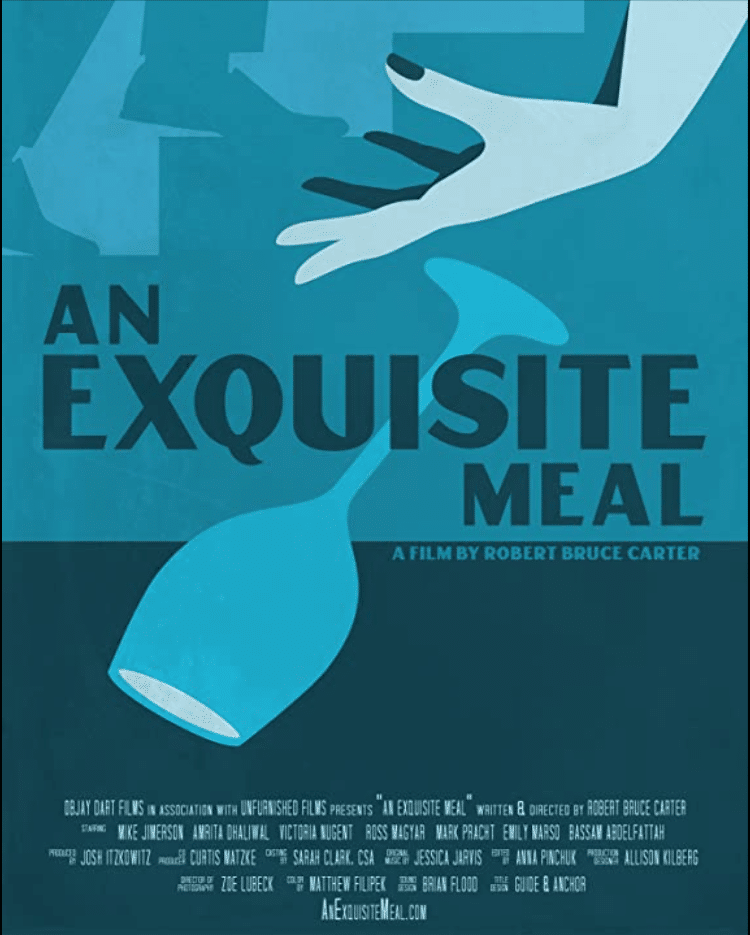
Celluloid Screams 2021: A Banquet

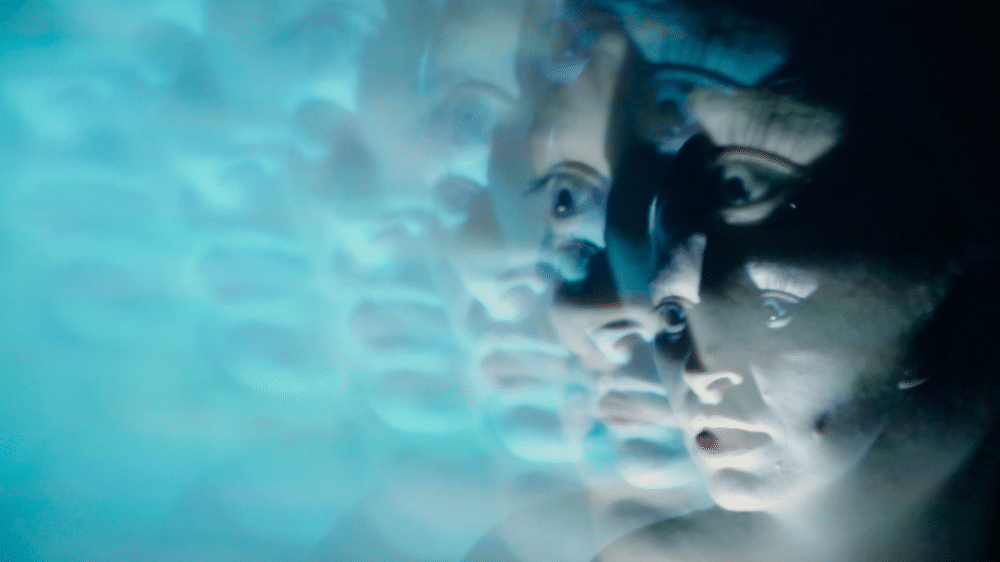
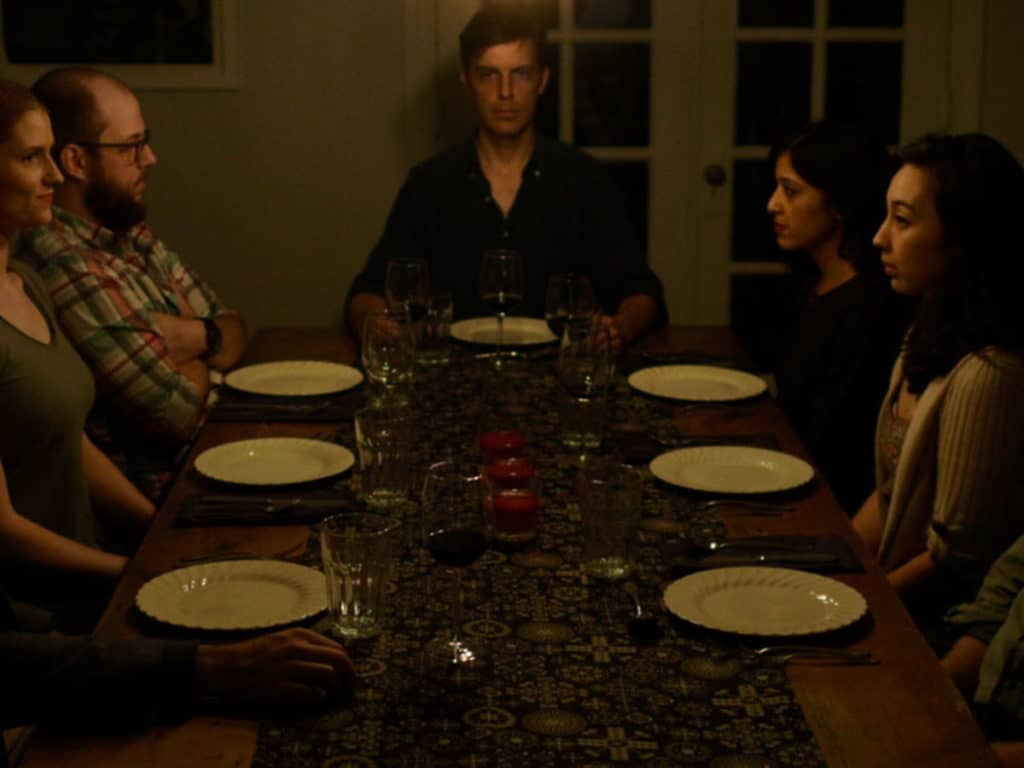
A Banquet (2021) is an incredibly slow-burn, incredibly meticulous family drama with only a distant-feeling link to its more supernatural content – if that is the right way to even describe the direction it takes. As such, it may feel too remote and abstract for some audiences. However, at its heart it’s a story about the love between a mother and her daughters, and this is explored very beautifully in places, though obliquely in others. It will likely be divisive, even whilst everyone should be able to note its strengths.


In an unaccountably wealthy English family, we’re first made privy to a suicide. The father of the family, it seems, has been labouring under a long and excruciating illness which requires the dedicated care of his wife, Holly. He decides to take matters into his own hands, swallowing a quantity of bleach; the scene where his bloodied bile and stomach contents flow out onto the polished floor sums up a lot about the film and its visuals, where affluence is sidestepped by the people living in the midst of it.


Left behind after his death are Holly, and daughters Betsey and Isabelle. The family seems, at least on the surface, to be coping well. However, Betsey (Jessica Alexander) is finding it difficult to focus: she hasn’t chosen her university yet, for example, and seems hesitant about studying further at all. At a house party, where she again feels left out, she notices a vast-seeming, crimson moon, and goes outside to better see it. This leads her away from the house, and she returns having had a strange experience of some kind, leaving her catatonic for a few moments. She’s taken home but these interludes continue, gradually closing her off from her friends and family.


One of the most immediate impacts of this is on Betsey’s eating habits. Suddenly, she can no longer tolerate food – any food (and all the food presented in this film looks incredibly appetising, which makes Betsey’s rejection of it look more and more surprising). Fearing anorexia, which she scornfully  categorises as a ‘white, middle class’ illness, mum Holly begins to pathologise Betsey’s behaviour and to struggle against it, with a raft of medical appointments and the like. Grandmother June (the wonderful Lindsay Duncan) is sceptical of the whole business, thinking Betsey has spent her life to date an actress, seeking attention; now she has successfully hit on a winning strategy to get it. Surprisingly though, Betsey’s weight seems to remain constant, but she behaves as defensively as if she was deliberately self-harming. But then, she continues to go into the strange reveries which started with the party. If she makes an explanation for this to anyone close to her, then whatever she tells them traumatises them to the point that their behaviour shifts, making them want to avoid her company altogether. She holds off from having this conversation with her mother, though, to the mutual frustration of both. Left in the middle of all this is younger sister Isabelle (Ruby Stokes) who is largely left to get on with it as her mother focuses on her self-declared ‘special girl’. Whilst the actresses playing Betsey and Holly deserve much credit for their performances, it’s the character of Isabelle which really appeals – Stokes offers a subtle, nuanced portrayal of what it feels like to be ignored.


Lots remains unsaid here. Some elements reminded me of Honeymoon (2014), with character Bea’s gradual disappearance from her body after a similarly mysterious encounter in the woods. However, most of all A Banquet calls to mind The Killing of a Sacred Deer with its own somewhat marred family dynamics, its own reams of unspoken explanations for what goes on between those four walls. A Banquet is a very ambiguous piece of cinema, though there are issues. For one, perhaps it takes too long to creep so carefully towards its destination. It certainly does not prioritise explanation and there are some frustrations incumbent on this. It hints at some kind of mythos, and more of this as pay-off for the time spent on difficult family drama would have balanced things more, but save for a few read-between-the-lines moments, it demurs for the most part.

However, A Banquet does offer a sensitive, considered exploration of family beliefs and boundaries, and it’s sympathetically acted by a talented cast with its catastrophic end note which finally upsets the awful quiet. For fans of atmosphere over narrative, there’s a lot to get lost in and to appreciate here. As the first feature by director Ruth Paxton, it promises very heady, detailed and thought-provoking work to come.

A Banquet (2021) screened as part of the Celluloid Screams film festival in Sheffield, UK.

Raindance 2021: Where’s Rose

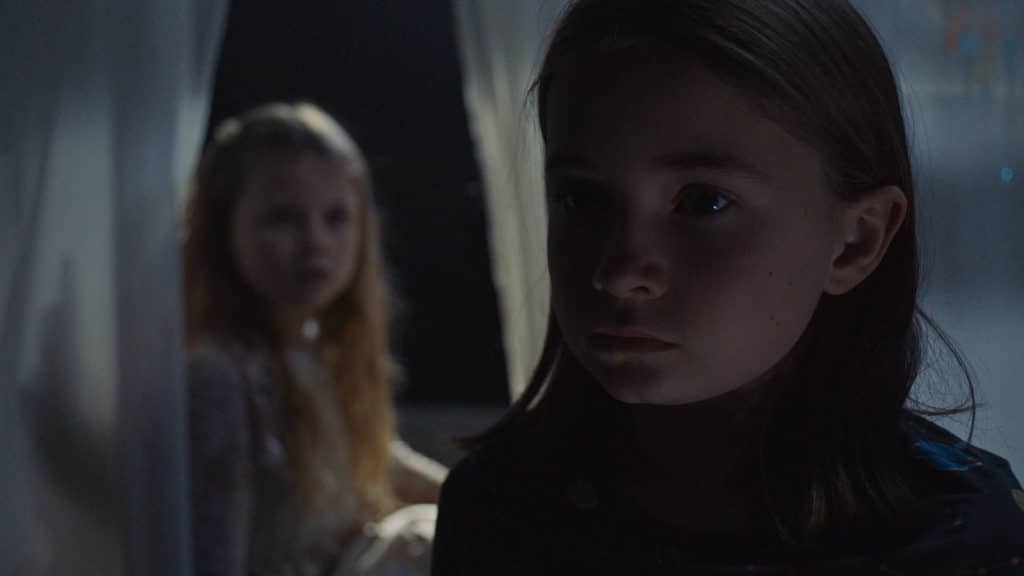
There’s frequently something in the woods in horror movies, but what the filmmaker chooses to do with this is more open to question. Where’s Rose presents us with a horror-spliced family drama, looking at the impact of a brief crisis on a household. It’s somewhat slight in places, notably around the mid-section of the film, but it works hard to brings its different elements together in an imaginative way. We start with eight year old Rose (Skyler Elyse Philpot), a little girl who seems to have an imaginary friend, as many kids her age do. Bearing in mind the genre of film we’re watching, however, faint alarm bells may already be ringing. These are put aside for the moment: a family gathering is taking place to congratulate her teenage brother Eric (Ty Simpkins) on getting a college place. Everyone’s happy about this news, all except Rose, but Eric reassures her that he’ll still be looking out for her. She can call him any time. This seems to assuage her; clearly, these two are close, despite their age difference.

His celebrations proper continue with his friends, although there may be a little overcompensation on his part over some unspecified issues with girl-almost-next-door Jessica (Anneliese Judge); perhaps what we’re seeing is a relationship which never was, but this doesn’t hold him back for long and he continues to enjoy himself. Crashing out in his bedroom at home afterwards, Eric is woken up early in the morning by his mother who is in a (considerable) panic: Rose isn’t in her room. They begin to search for her but, thankfully, she turns up in the woods and all seems to be fine. Well, sort of.

Eric has strange doubts about Rose at this point. She doesn’t seem to be the same child. At first, only her brother seems to pick up on this, though the rest of the household notice enough to find her newly distant behaviour a little strange. However, as Rose seems to return to her self – or at lease to make it seem that way – Eric is far from convinced, and he’s suspicious enough to investigate the change.

Early impressions of Where’s Rose call to mind Leigh Janiak’s Honeymoon (2014), which starred a Rose of its own (Rose Leslie of Game of Thrones). The film does seem to be leading the audience in a similar direction – some mysterious Other, perhaps, out there in the woods, with much of the unsettling horror coming from the perspective of a character locked out of the mystery. There are elements of that here, though shifting the narrative to encompass an older brother and younger sister is an interesting choice, permitting the pair’s parents to figure in the plot. They remain peripheral and/or a little flat, though, with mom acting like a palimpsest of stereotypical motherly attributes (making breakfasts, cooing, scolding) and dad almost negligible. These two characters are, clearly, not priorities, though it would be interesting to consider how they could have figured more in what unfolds within their family. Still, Simpkins – in his first starring role – does a decent turn as Eric, a young man on the brink of a brand new life who finds himself in a very isolating situation, bearing the brunt of unforeseen events. Skyler Philpot, as Rose, gets an increasing amount to do with some good scenes, if a few too many ‘motionless at window’ sequences.

There are some very effective moments during the film, many of which are the more subtle aspects, which provoke more questions than the admittedly small number of jump-cuts. There are some lulls in the plot progression midway through, despite the film’s tight run time, but as the film moves towards a conclusion, there’s a big leap in terms of ambition and imagination. This potentially leads to a reconsideration of what came before, which works and, although a few questions remain, this works too. There’s a lot to be said for a filmmaker ready to take a gamble in order to deliver a slick, thoughtful finale and considered as a whole, John Mathis’s writing/direction here pays off. Where’s Rose is, ultimately, a sad, disturbing, horror-infused family story.

Where’s Rose (2021) will screen as part of the Raindance Film Festival on November 1st, 2021. For more information, please click here.

Celluloid Screams 2021: We Need To Do Something

Setting your film in a very limited space has its risks. All of the usual components – your characters, your pace, your plot – will be held to the utmost scrutiny, with no sweeping vistas or changing scenes to distract the eye. It’s certainly gone wrong in the past; get it right, however, and you deliver a sharp, focused and rigorous piece of storytelling. We Need To Do Something Falls into the latter category. It’s wicked, it’s incredibly engaging and it feels quite dizzying, despite taking place more or less in one room.

 
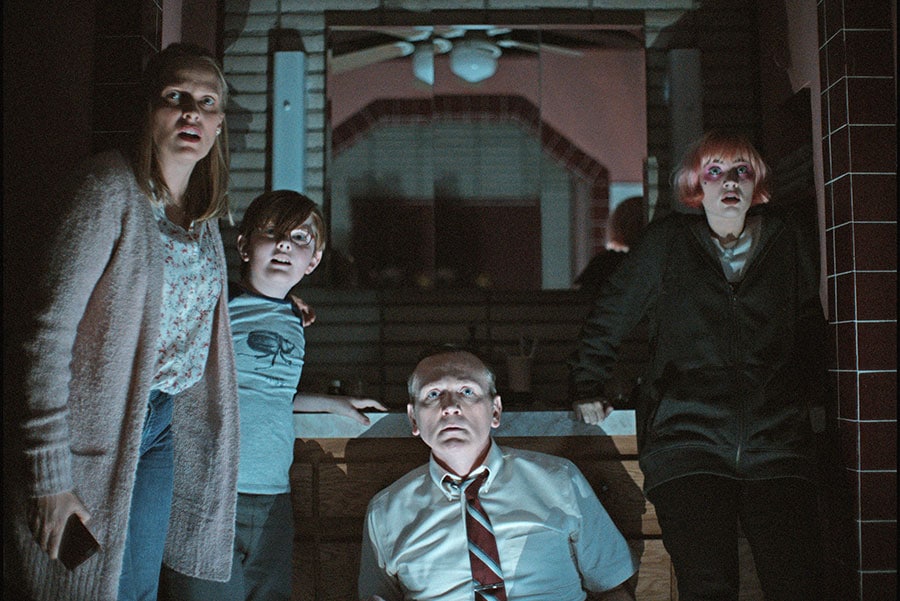
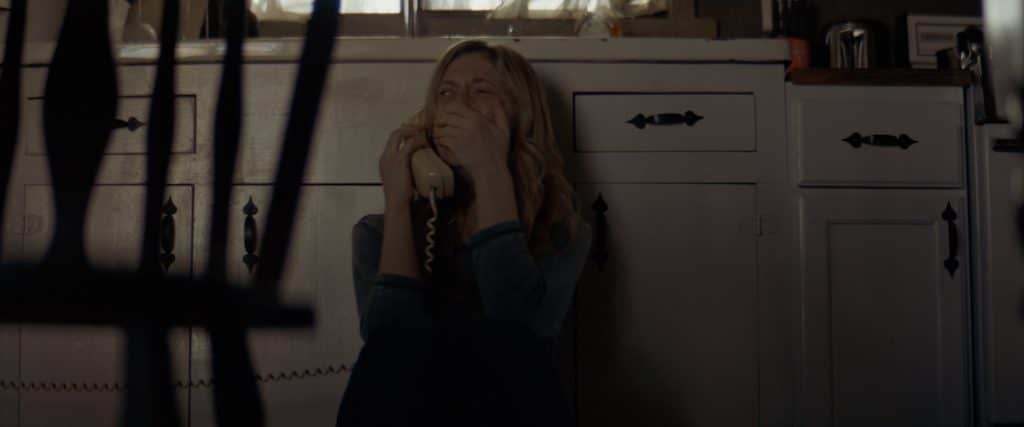
We meet our main characters as they’re entering this room – the family bathroom – and the film begins. They are sheltering there due to an incoming tornado, and it’s apparently the toughest room in the house. There’s not much time to preapre, it seems, so mother Diane (Vinessa Shaw), dad Robert (a riotous Pat Healy) Bobby Jr (John James Cronin) and teenage sister Melissa (Sierra McCormick) all rush to barricade themselves ahead of the storm. It’s a bad one: at its peak, it fells a tree which lands on the family home, wedging the door shut. Try as they might (and dad really tries) the door will not budge.


So they’re stuck. Without food. The power is intermittent. They do at least have running water still, but Diane puts her faith in the fact that someone will soon come along to help them. Dad passes the time swigging alcohol and lashing out at his family, and Melissa quietly panics about her lack of contact with girlfriend Amy. Before too long, the situation has very negative vibrations, and it’s increasingly uncomfortable. Still, no one comes. Each member of the family copes with this differently, but the tension is palpable.


It’s testament to this cast and to the direction that I could have quite happily followed this story as it stands, watching to see which family member cracks first (and Pat Healy is jaw-dropping here, a hectic blend of Al Bundy and Jello Biafra). It could also have turned into a very different kind of ordeal, something like Crawl, and it throws some of this in there for good measure. But the film happens to be based on a horror novella which goes far beyond mere confinement as the source of its horror. In keeping with the novella, it transpires that this is, perhaps, no regular storm. The house seems to be under assault by something quite different, and via Melissa, we are able to piece together what this could be…


Whilst the main story unfolds in the bathroom, through the select use of flashbacks we do get to glean more context and this comes to us through Melissa, who moves into ascendance as the story’s key character. Sierra McCormick is more than equal to this, doing a great turn as an at first disinterested teen, before revealing there is far more to her. Her flashbacks also allows the film to extend its reach, showing some horrific, grisly content and fleshing out the plot with some well-realised occult material (occult and left-field publishers Feral House were consultants for these scenes, and it shows). The skill shown in linking flashbacks to the current moment is impressive; things come together in just the right way here, leading to a brilliant crescendo. All of these things take directorial confidence and the end result, without giving anything away, joins the dots in a really engaging way. The level of exposition offered is just right.

We Need To Do Something is terrifically innovative, solid and entertaining. It’s a riot. Listen out for that scream-worthy Ozzy Osbourne cameo, too! A film I can’t wait to rewatch, and my personal favourite of the festival.

We Need To Do Something screened as part of the Celluloid Screams film festival in Sheffield, UK.

Celluloid Screams 2021: Mad God

Don’t let the 2021 release date for Mad God fool you; this is a film which has been an incredible thirty years in the making. The reasons for the long hiatus between conception and completion encompass a few things – as you’d expect, given that time scale – but essentially, the big shift from practical SFX to CGI around the time of Jurassic Park initially convinced creator Phil Tippett to shelve Mad God indefinitely. Phil Tippett? Name sound familiar? Well, if you’re into Star Wars…or RoboCop, or Starship Troopers, or any number of influential films from the 80s and 90s, then you know the man’s work. He’s a legendary visual effects specialist who has worked with little fanfare – bizarre, given his influence and raw bloody talent.

Mad God was first planned out in the late 80s, and then resurrected in the Noughties when Kickstarter did its thing and saw the film through to completion. It’s the project which very, very nearly wasn’t, and so we owe a big debt of gratitude to the Kickstarter backers who moved things on – urging Tippett that it needed to be done, too. The resulting film is absolutely astonishing. Having experienced the completed film on the big screen, it’s difficult to think of a better example of stop-motion animation out there, particularly if your tastes lean towards the nightmarish and bleak. You could freeze-frame Mad God at any given second and spend an hour poring over the fine details; it is an incredible work of art.

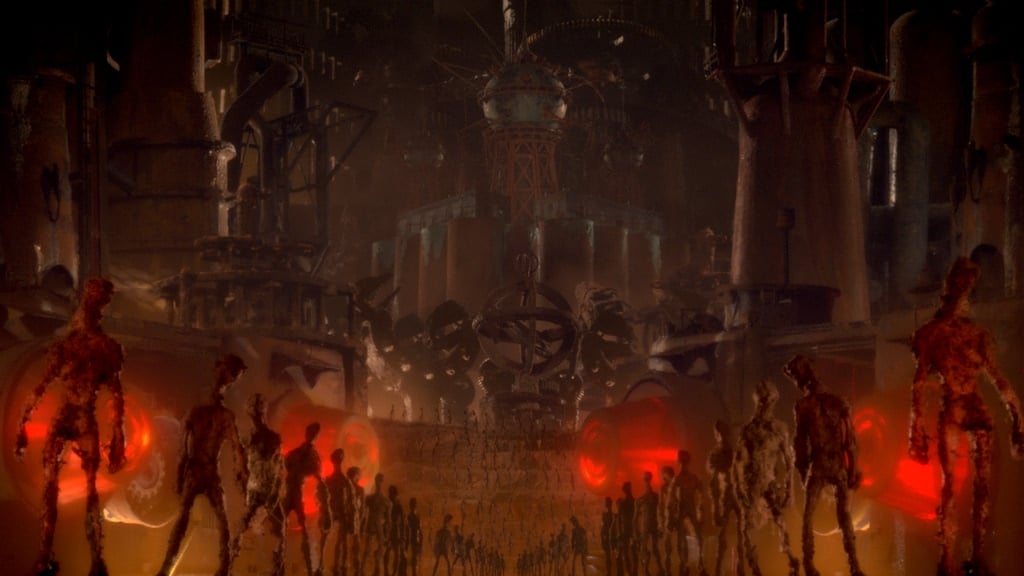
Whilst the film is far more than just an array of disturbing images, the narrative is minimal; Mad God has no dialogue whatsoever, and save for a handful of live-action segments is entirely animated. It begins with an armour-wearing figure in a diving bell being dropped down to the surface of a dystopian world – if Earth, then post-apocalyptic in the extreme, with almost no remnants of normal life. The figure emerges and begins to traverse this hellscape, somehow swerving the disaster unfolding around him as he follows some kind of map – a map which is steadily disintegrating every time he tries to read it. As he travels, he observes all sorts of horrors. One of the many things which the film excels at is in its manipulation of scale, which only adds to the disorientating atmosphere. In one second, the traveller is looming over (and usually, stepping on) tiny figures he encounters; in the next frame, he is peering up at gigantic beings, or striding through broken figures in a lapidarium. Another excellent source of disorientation stems from the nature of the landscape; it’s never quite clear whether the traveller is above ground or underground, below water or in a different kind of existence altogether. Cumulatively, it’s quite something. It’s also fascinating where the film breaks off and shows us different characters going about their business in this place, before veering away from them again. Each of these is superb in its own right.

Later, this narrative arc disintegrates too and seems to loop, after our traveller is taken and opened up surgically for a grisly little interlude of birth and sacrifice. We also see a human male sending a traveller (the same? Different?) into the void with a map, necessitating another dangerous journey. Despite this narrative shift, there are themes to follow here: the world is clearly at war, it’s wracked with grotesque industry, and the sequences where the faceless workers are picked off by the machines they seem to serve are amongst the darkest of the lot (and dare I say, a bit of black humour as well). In some respects the film looks like it was conceived in the 80s and worked on in the 90s, as there are visual resemblances here to the likes of H R Giger, 2000 AD and Fred Stuhr/Adam Jones’ stop-motion work for the band Tool in the early 90s, but hey: absolutely no complaints. This is just the sort of biomechanical dystopia I want to feast my eyes on. For many viewers of a certain vintage, this will feel like coming home.

There’s not a moment’s cop out here. Mad God is unsettling, innovative and intricate, with not a square centimetre of frame wasted. Seeing it has been a fantastic experience, and given its long journey to completion, it feels significant too. Everything in this gloomy, desolate, stark universe is worthwhile and staggering in the extreme to take in. Nothing comes close to it and I can’t wait to see it again, existential angst notwithstanding.

Mad God (2021) screened as part of the Celluloid Screams film festival in Sheffield, UK.

Celluloid Screams 2021: Offseason

It’s always a pleasure to encounter filmmakers who are interested in Southern Gothic – a genre which is difficult to define, but easy to recognise in its effete communities, its crumbling facades, its bizarre characters and its mysterious landscapes. Offseason (2021) is one such film, a clever and often understated horror which wears its influences on its sleeve. It doesn’t give up every detail of its narrative, but it never feels like it doesn’t have those details at hand. Instead, we get a dark, often disturbing mystery, where the audience and main protagonist are, for the most part, kept uneasily outside what is going on. And, as things progress, the grisliness intensifies.


Marie (Jocelin Donahue), who lives in New York, receives a letter from the caretaker of the Lone Palm Island cemetery in deepest, darkest Florida, where her mother was recently interred. The letter brusquely informs her that her mother’s grave has been vandalised, and the matter needs her urgent attention. Horrified, Marie and her partner drive down to rural Florida to amend the situation, with no relish on Marie’s part, either for the task itself or for the place. When they reach the last main bridge en route, they are told by the attendant that they can’t cross. The season is over; the bridge will be accessible again in the spring. It’s only when Marie produces the letter, proving that she has business in Lone Palm, that she’s allowed through (after a delightful encounter with Richard Brake as the ‘bridge guy).


There’s no sign of the letter writer at the cemetery, and the only residents which Marie can find are…well, wonderfully, scarily odd, seeming to flit between mild-mannered concern and, well, something else entirely. Honestly, it would be no sort of isolated island set-up if everyone was normal and helpful. But by now, Marie is beginning to have serious misgivings about not just the trip, but the reason behind it. It transpires that Marie’s mother, a former silver screen actress, begged her daughter not to return her to the island after her death, but an amendment to the will forced the issue. She remembers her mother’s ravings and nightmares, too, and -whilst unpacking her own grief and the psychological damage delivered by her mother’s words – begins to try and decipher what is going on here: who has sent for her, and with the bridge now out of use behind her, how can she leave?


Jocelin Donahue as Marie Aldrich (now, why does that surname sound familiar?) is excellent, providing great balance between indignant city dweller and a stranger in a strange land. She takes the initial signs that something is wrong remarkably coolly, actually, but then it all seems so improbable at first that this works; she can barely believe her eyes, because it’s so unbelievable. As the situation escalates and as she comes to understand the mythology of the place, her desperate practicality comes under fire. It’s a superb performance, contributing to the overall claustrophobia and unease. Amongst the island folk, it’s also great to see indie star Jeremy Gardner turning up as one of the town fishermen, both as he delivers some tantalising exposition and also as he’s definitely a solid actor in his own right – doing things here (or having things done to him) that he has yet to undergo in his own movies. It works really well and only shores up (yeah, sorry) director Mickey Keating’s reputation as a real up-and-coming directorial presence.


Visually, Offseason draws on a range of other films, with some scenes seeming to reach right back to the 40s, with some of the decade’s weird communities and outsider anxiety – the barroom scene seemed straight out of that era with its tinkling piano music and overblown characters. But the clearest influences here are surely John Carpenter and Lucio Fulci – Fulci in particular, you could argue, as the atmosphere of Offseason feels remarkably akin to the likes of City of the Living Dead, mist and all. Other plot elements resemble Lovecraft stories, blending these but giving them an interesting, up to date polish. By no means are you talked through every detail, but it hangs together beautifully. The nature of the situation in which Marie finds herself remains tenuous to a degree, which holds onto that sinister, compelling mystery. 


If it’s evocative horror you’re after, then Offseason fulfils that and forges a link to other, equally atmospheric cinema without feeling like just homage. It looks and sounds superb, and does a great deal in its economical run time. 

Offseason (2021) screened as part of the Celluloid Screams film festival in Sheffield, UK.