Fantasia 2022: We Might As Well Be Dead

The spectre of the tower block looms appropriately large over modern society. On one hand these blocks are still ‘modern’ and ‘aspirational’, but on the other, they’re seen as unfriendly spaces, whether because degraded, dangerous or just suspiciously separate from other modes of living. Cinema has examined the worst extremes – Land of the Dead (2005), Citadel (2012), Judge Dredd (2012) – but what if we just stick with the idea of the closed community? Of tower blocks as aspirational spaces, designed to keep us safe?

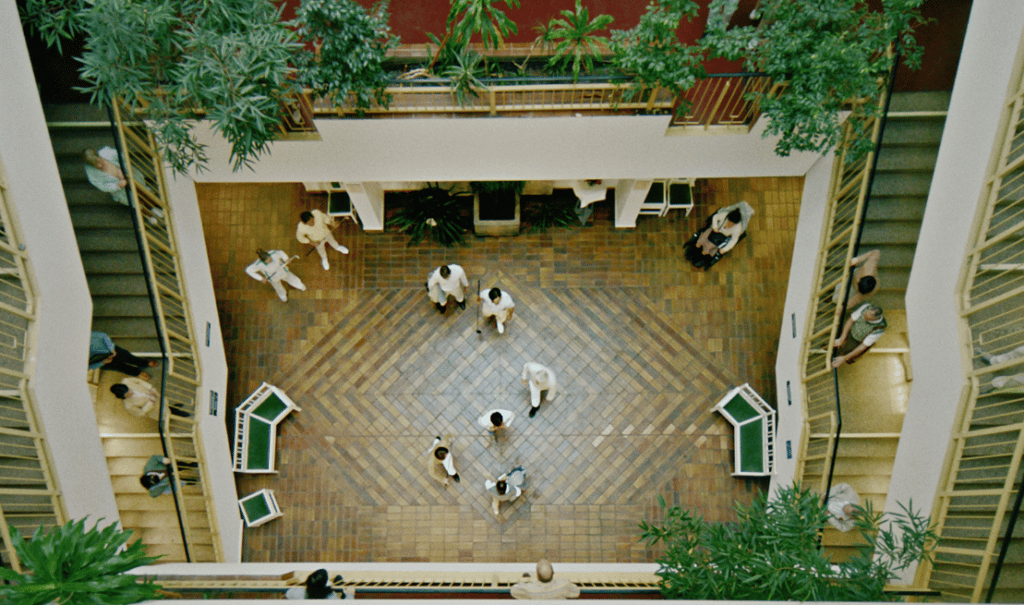
That’s what happens in We Might As Well Be Dead (2022), director Natalia Sinelnikova’s debut feature: here, the most obvious readings and metaphors of the high-rise are replaced by something more shrewd and subtle. The film starts as the camera follows a well-dressed family making their way through woodland before a high-rise appears on its outskirts. They gawp at it: this is clearly their destination. When they get near, we see the building is gated – of course it’s gated – but the gates are opened, allowing them through. At the main entrance, the building’s security officer scans them and asks a number of questions about their health and wellbeing: it’s all part of the application process, it seems. The family begs for clemency: they’re desperate not to be turned back. None of this moves Anna (Ioana Iacob), who has her job to do, that’s all. The committee, which is part of the next stage of the application, takes it all equally seriously.

It’s soon clear that belonging to this highly desirable community of Phoebus House is a meticulous performance; we get this from an actual performance too, a St. Phoebus Day celebration being put on in the building. When someone messes up, interrupting the performance to declare that his dog has escaped, the approbation from the others is matched by a stiff penalty – being made to spend the night outside. Anna, who initially seems a very closed-off individual whose personal life must surely mirror her professional standards, has issues of her own. Her daughter Iris (Pola Geiger) was meant to have performed at the St Phoebus Day show, but refuses at the last minute; she has shut herself in the bathroom, claiming that she’s receiving visions of bad things happening in Phoebus House – this all started, she says, with the dog going missing. Anna tries to be patient, but her concern is that the others will realise Iris isn’t conventionally ‘sick’, but disturbed. That could jeopardise their position; as the entry questions make clear, anyone with undesirable traits may be turfed out.

It doesn’t take much to rattle the residents, either. These people have very little recent experience of living outside the confines of the building, or else they may remember all too well what it’s like, and fear it accordingly. Anna knows this, and tries to head off any more disturbances by looking for the dog herself; it’s at this point that she notices the usually impeccably-behaved inhabitants are beginning to pick away at one another; little by little at first. Then, rumours that an outsider is trying to infiltrate the building seems enough to tip the same inhabitants over the edge. Anna is in an interesting position here: she’s being swept up by the same mounting tension (including within her own family) but it’s her job to try and contain matters, acting as the voice of reason. One of the film’s key lessons for Anna is that her authority is on a knife-edge; if she pleases the others, she’s lauded, and if she doesn’t, she’s sidelined. The shift between the two can happen in minutes. Frightened people are changeable, and that’s key here. But this doesn’t come from the perspective used in other films and stories where people in closed communities act kind, but are really sinister, even cultish; there’s no grand sophisticated conspiracy here, just reactive, skittish people acting absurdly.

But there’s more to it, too: there’s an early visual hint at Anna and Iris’s Polish Jewish heritage and, when push comes to shove, this matters. It takes very little time for the community to begin worrying away at markers of difference, and the family’s Jewishness or, as it’s euphemistically described, their ‘kind’ becomes – or more correctly turns back into – a concern. It’s interesting that a committee member reaffirms her commitment to ‘multiculturalism’ before acting in a way which would suggest the opposite, but so long as the lip service is paid, she seems to feel absolved. Imagine that, eh? Other markers of difference are also used as weapons: for example, length of residence, social morality, status within the building. Through it all – this surprisingly subtle lesson about fractured social cohesion – there runs a thread of very dry, bitter humour. It feels completely appropriate, too, to quietly laugh at some of this weird, irrational, perceived vulnerability: the agony of privilege is as darkly funny as it is exasperating. Again, fittingly, the film looks fantastic throughout. There is lots of low, muted lighting in a building full of mod cons. It has a kind of Ikea-by-night vibe, with a beautiful autumnal world outside – which the residents fear too much to really enjoy.

So what is out there? It almost doesn’t matter; it’s the perception of its terrors which guides all of this irrational behaviour. We Might As Well Be Dead – an intriguing choice of title, come to think of it – emphasises how people rank and persecute one another for reasons which are, ultimately, deeply selfish. It’s a clever, meticulously-made gem.

We Might As Well Be Dead was shown as part of the Fantasia International Film Festival 2022, screening on 19th July.
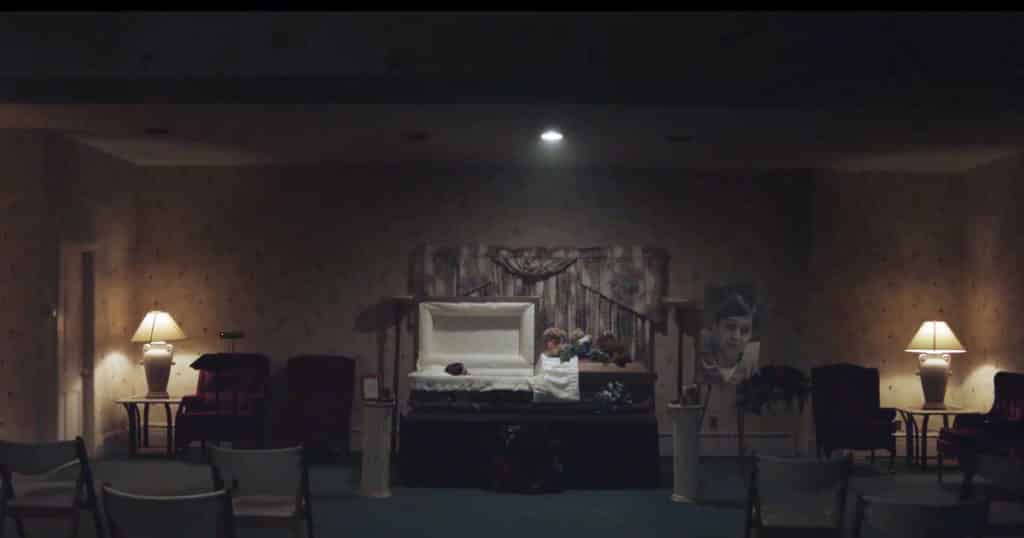
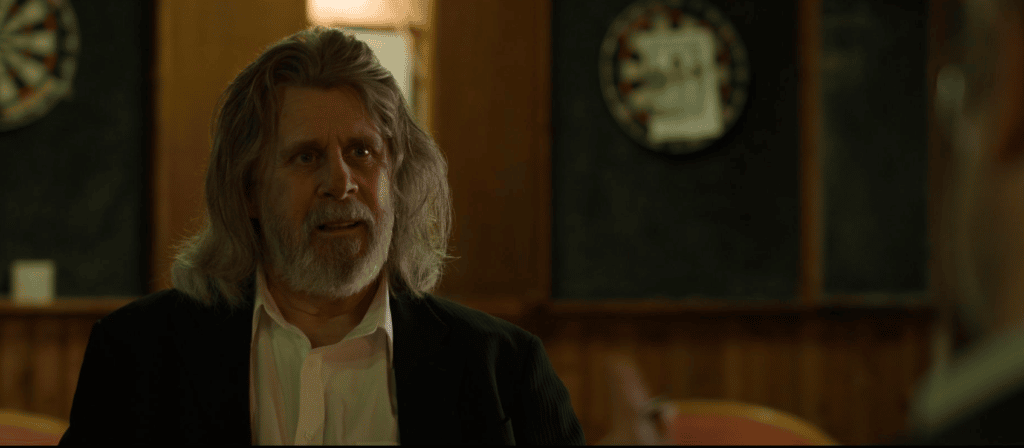
Fantasia 2022: The Harbinger

It’s clear by now that the pandemic has had a profound impact upon filmmaking – whether from a logistical point of view, or in terms of subject matter. Skeleton crews, deserted streets, plotlines about contagion…horror, more than other genres, has seen them all in the past couple of years. This is to be expected: as a genre, it’s long been adept at picking up current concerns and hurling them back, distorted, right at us. But arguably, this hasn’t been done as horribly literally as in The Harbinger (2022), which personifies the fears of illness and its attendants: loneliness and paranoia. Think The Babadook (2014) and even a dash of the Nightmare on Elm Street series; there’s a similar use of symbolism and sleep deprivation, of fighting against something which exploits human frailty.

When we meet Mavis (Emily Davis) she is already distressed and suffering, seemingly sleepwalking: building manager Jason (Jay Dunn) is able to pacify her when called to do so, but isolation has clearly got the better of her. This is at the height of the pandemic and lockdown, by the way: she hasn’t been outside in weeks, and as her family are all under lockdown too, they are in no position to assist her. So she calls an old friend instead, her former roommate Mo (Gabby Beans). Mo lives out in the ‘burbs but agrees to go to her, a decision which infuriates her family: they’re angry that she may get sick and bring something back with her, to a house with a clinically vulnerable father (her brother less than sensitively refers to NYC, where Mavis lives, as ‘ground zero’). But Mo promises to be careful, and heads into the city anyway.

Mavis is delighted and a little surprised to see her, but after the initial pleasure of a catch-up, she confides that her current state is not simply due to pandemic paranoia. She’s been having horrifying dreams – dreams which ‘break the rules’ and allow her to die in them before she’s back alive again, stuck in some kind of fugue state. There’s also a mysterious entity appearing to her, a being which gets closer each time – promising her that she’ll soon be gone. Not dead, but gone – not even a memory will be left.

Appalled by what she hears, but sympathetic to a woman she always promised she would support no matter what, Mo agrees to do everything she can to help: she promises to keep an eye on Mavis, firstly to try and let her sleep; she is obviously exhausted. Before long, though, and in a building which is by now really infiltrated by Covid, it seems that the strange dreams are also contagious. The two women, when they can extract themselves from their own individualised nightmares, try to work together to investigate the entity – which appears as a plague doctor, seemingly exploiting the current cultural preoccupation with disease, or at least showing a sense of showmanship.

Paranoia is incredibly well-used in this film, though perhaps most of all in the film’s first half, which steadily and insistently builds. The real and the unreal are linked via the motif of dreams, which operate here as highly effective distillations of fears old and new. Many people did report an upsurge in nightmares and bizarre dreams during the worst days of the pandemic, so it’s fitting that it’s given such a presence in The Harbinger. (Some of these particular dreams are bone-chilling; talk about picking away at a person’s deepest fears.) Running alongside all of this is the recognisable world of lockdown which, at the time of writing (let us sincerely hope), feels like a strange fever-dream of the past: the arguing about shared spaces, Zoom calls, stickers thanking key workers, talk of bubbles, quarantines and susceptibility. What a strange time it was. This is not just a fertile source for horror, but it feels important somehow to record this through horror: it acknowledges the pandemic’s unpleasant strangeness like nothing else can, plus there’s a possible sense of catharsis too. Maybe some of the Covid caution shown in the film is a little OTT – we’ll all have our own thoughts on that, largely dictated by our personal circumstances – but it’s important to remember that some did (and do) still behave in such a fierce, fearful way, particularly when the virus gets close. This is true of our characters.

The film’s weakest aspect is in the short-and-snappy ‘explication mode’ it enters around halfway through its runtime: this feels a little too convenient, a little brusque and largely unnecessary, because the symbolism works clearly enough to circumvent that tell-all segment. It also works well to keep the audience on the same level as Mo, never fully certain of where she is or if she is awake, or of what is happening. However, in its defence, the explication does allow the script to illuminate some finer details which may have been missed otherwise; this part of the plot recurs for another gut punch later, too.

Whilst some of the initial impetus and ratcheting scares unravel a little in the final half of the film, The Harbinger is nonetheless an effective and very ominous allegory. It’s successfully rooted in an extraordinary time and more, it’s permeated with the fear of simply disappearing – itself an extraordinarily, seemingly inescapable modern anxiety.

The Harbinger (2022) appeared as part of the Fantasia International Film Festival 2022 on 20th July.

Short Film Double Feature: Elbows and Lips

Whilst the two short films, Elbows (2021) and Lips (2022) are not thematically linked – apart from perhaps, the perils of lending an ear – they still share something in common which goes beyond the fact that they’re both Black Octopus Productions releases. Namely, the basis for each of these understated and appallingly funny films feels incredibly British. It’s always seemed odd to this reviewer’s mind that the English language uses the German loan word ‘schadenfreude’ to describe something which already seems so British: perhaps, though, a slightly different British variant of schadenfreude is more a kind of joy in a shared and understood source of misery, and a relief that it’s happening to someone else. Maybe you don’t need a word for that. We certainly have a lot of books, TV and films which explore it, though, and Elbows and Lips feel like a part of it. It’s not for British folks, but it’s definitely of them.

Elbows is a bizarre skit on one of the most recognisable intrusions into our modern psyche – namely, a crap office job – only made horribly, perplexingly literal. Understandably, Nathan (John Thacker) doesn’t seem particularly engaged by his crap office job: he wears a blank-eyed look of boredom and dismay, he wheels around in his chair and he wastes time by looking around at all the other poor bastards, typing away. As he toys with a pen, twiddling it in his ear, he suddenly loses it: it can only be, he tries to reason, in his ear somehow. A pep talk from his boss distracts him momentarily from this problem, but then he has to act: so he calls – Dave. But, somehow, this only exacerbates things…

You can’t help but feel for poor old Nathan: every affirmative thing he tries to do ends badly, but he’s trying, he really is. Tellingly, everyone he turns to for help ends up part of the bigger problem; he’s harangued and cajoled by everyone around him and fittingly, his ultimate problem takes him back to the office for a little more humiliation. In some respects, the film edges towards body horror comedy (which surely is a thing), but holds back from making it about that: it’s more a literal representation of trying and failing to fit in nicely. Therefore, when it all ends at just the right point, it means we don’t lose focus on Nathan’s more existential plight – and it also shows a careful directorial hand, leaving us with something very funny and perhaps surprisingly understated.

You can watch Elbows for yourselves here.

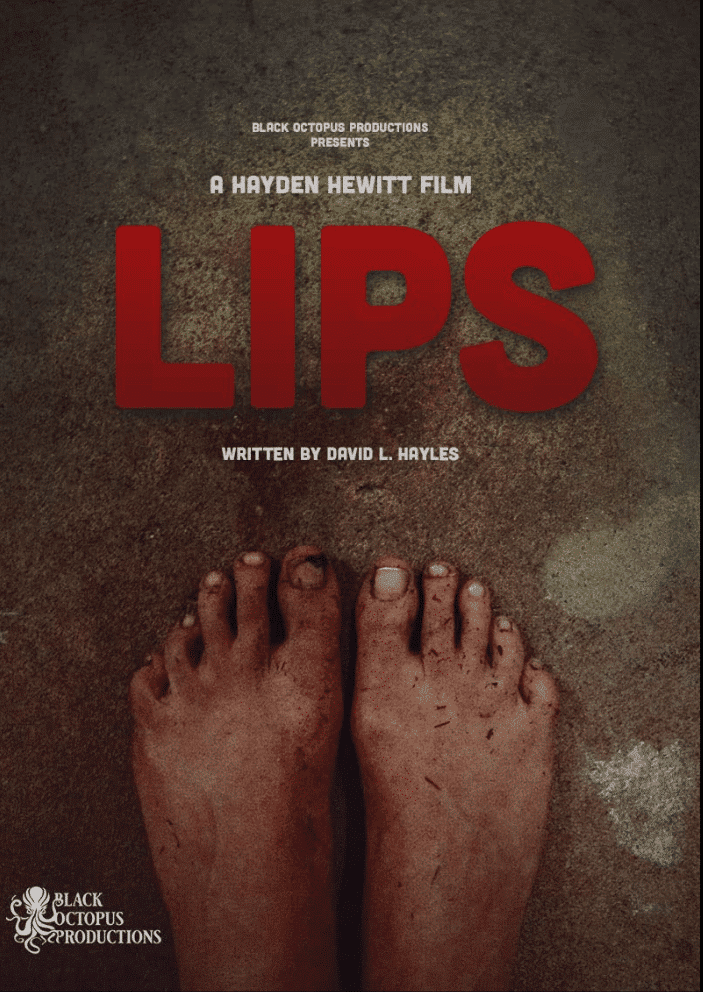
We move on to Lips, whose protagonist is very much to be pitied because the fella is only trying to have a quiet pint. But of course, the desire for quiet acts like a beacon to people who can’t stay quiet: it was ever thus. Human annoyance expands to fill all available space – though, to be fair, not usually quite to this extent.

As Michael (James Dreyfus) tries very hard to just read his paper, he can’t help but notice when a guy turns up at the bar with no socks or shoes on, but – given the indications of this – he then tries especially hard to ignore him. It is, of course, simply not to be. The man is indefatigable, and a chat begins which unfolds a very peculiar, alarming tale. The nameless pub talker (Paul Dewdney) is a compelling speaker, yet it’s difficult to read him: is he for real? Is this a glorified preamble before he asks for something? But wherever you feel you’re going with it, he definitely draws you in to this unlikely yarn, as well as carrying the greatest share of the dialogue very well. But key to Dewdney’s success at this is in James Dreyfus’ performance as his captive audience. Dreyfus is representative of us all: he runs through irritation, tedium, disbelief, and finally helpless disgust in ways we all might.

The horror – and this film does contain horror – is really all in the sharp script, making for a super-subtle and very funny take on the subject matter. There are small plot resolutions along the way which show skill in bringing ideas together and overall, provide us with a grim but still humorous play on the cultural tradition of the ‘pub tale’. The next time a stranger sits at my table, I’m out the door.

You can see Lips via Black Octopus Productions by clicking here and following the instructions.

Fantasia 2022: Sissy

Childhood is hell and it can lead to traumas which follow you around for, oh, at least a decade or so, maybe much longer: we shouldn’t expect people to change all that much in that amount of time, either. That’s been the lesson in many excellent horror titles up until now and it’s been given a colourful, brutal and social media-savvy update in Sissy (2022). We start with a video from childhood, with two kids – Emma and Cecilia, or Sissy for short – declaring that they are going to be best friends forever. Uh-oh: that is almost always a portent, right? Needless to say, when we cut to adulthood, it’s a different picture – but what a picture. When things go south here, they really go south.

Cecilia (the fab Aisha Dee) is now an online influencer, preaching mindfulness and meditation to her sizeable number of followers (as well as grifting a little, too: making a few bucks is just as important as the dopamine hit of all those ‘likes’). She lives via her smartphone, not even putting it down after recording that day’s video and going to make something to eat in front of her TV. For a while, the film itself is punctuated by emojis which appear on our screen, showing us just how blended her world really is – real, but refracted. But this safe, if lonely little haven is about to get seriously disrupted. When Cecilia has to make an emergency visit to the local chemist’s for a time-of-the-month issue (notes of Carrie White here) she bumps into Emma, her old BFF – whom she hasn’t seen in a decade. Emma (director/writer Hannah Barlow) is delighted to see her, can’t wait to tell her all about her life and insists that she come along to her engagement celebration that night.

For Cecilia, the thought of rekindling the friendship feels very scary at first, but she goes along to Emma and Franny’s party anyway and, despite a few of those awkward moments she was right to dread, she does get to share some quality time with Emma, which clearly means a lot to her. Emma then invites her on her upcoming hen weekend; Cecilia is flattered, delighted even – until she scrolls through some of the likes and comments which are appearing under photos from the party. A woman called Alex has commented a few times. Alex…Alex? This immediately triggers a run of less than happy childhood memories, taking the gloss off the reunion in all sorts of unsettling ways. Worse, the hen weekend is taking place at Alex’s holiday home out in the sticks. This is a set-up which is going to really test Cecilia – or Sissy, a nickname she actually came to hate – on all those positive affirmations. Past and present begin to jar very uncomfortably together and things start to unravel rapidly, moving towards a crescendo which is by turns uncomfortable, unbearable and vicious.

Sissy is a really effective combination of familiar-feeling sources of social anxiety and a more up-to-date, relatively new array of additional ones. So the unfamiliar social circle, the awkwardness, the uncomfortable dinner, the long history of feeling excluded – those are all there, and the film builds cleverly on what is already well-established. The inclusion of social media as a plot point – how it reveals truths, hides truths, and ultimately provides another means of creating a fallible persona – is done well, with a lively but sensitive script. ‘Woke’ buzzwords meant to come from a place of deep respect for one’s fellow human beings are used like weapons here, showing that whatever the language, it can always be used for the same old, same old mean tendencies. Sure, Cecilia is an influencer, but how does this really help her, and how much can she practice what she preaches? That’s not to say that the film is always super-subtle and all in the script: some of its foreshadowing and visual clues are as bold as brass, but it all works well, forming up part of a very vivid, richly coloured and beautifully shot film. One of the cutaway scenes is to die for.

In amongst all this – as awkwardness and grievance give way to something far darker and more visceral – Dee’s performance keeps Sissy plausible and vulnerable, even from the point where she (accidentally or otherwise) takes ownership of her surroundings. The supporting cast are great too, veering in a heartbeat from what seem to be genuine moments of interest and contrition to waspish, adolescent snark. On one of the videos, the childhood Cecilia states that she never wants to grow up – she wants to stay just as she is. The film is a testament to what it means to do just that, to be forever shaped by an unpleasant past. Emma is the key to unlocking all of this, and her attempts to understand how her behaviours have affected her old friend are also enacted incredibly well; you have some sympathy with her, too, as a woman who since girlhood has just tried to please people, have a quiet life: lots of people are no worse. Sissy is a snappy, smart and well-realised examination of these social minefields, which just happens to edge into ultraviolence. In short, this film really is something, satirical and grisly by well-executed turns.

Sissy (2022) will feature at the Fantasia International Film Festival 2022 on 19th July.

Moloch (2022)

Rural Denmark, 1991: a little girl, playing in a small room in her home, is terrified by what seems to be a violent attack taking place upstairs, in the room right above her head. That’s bad enough, but the attack seems to take on a surreal quality almost instantly, with blood seemingly cascading down the walls as the house itself shakes; this is one of the ways Moloch (2022) immediately sets out its stall as a film which blends reality and unreality very well. It’s a horror story about family, maturely acted and scripted, with some significant, creepy aspects which call on folk horror tropes without slavishly accommodating them.

The little girl of the opening scenes is all grown up by the time we encounter her again: Betriek (Sally Harmsen) is by now a mother herself, living at the old family home with her parents and young daughter Hanna. It’s a reasonably happy home, despite a history of trauma which has cast something of a shadow over its inhabitants, but things are about to become far more unsettled when a local eccentric, the ‘bag man’ as he’s known, dies of hypothermia outside after attempting to dig in the nearby peat bog – but not before precipitating an important archaeological discovery at the site.

A team descends to excavate it; this is a nuisance to Betriek and her family at first, as they are bothered by people from the team investigating the environs of their house – or at least, that’s what they assume is happening. Soon, Betriek befriends the manager of the excavation site, and as they get to know one another, it seems that the excavation itself may be interwoven with the events which have overtaken her family.

The film doles out its plot details very carefully, with a pace which allows the audience to spend time pondering what is going on, and how what we see fits together. It is not overwritten, and it only slowly cedes to its more recognisable folklore elements – all of which are new to this reviewer, and if this wasn’t interesting enough, it comes via links to archaeology as a plot point: some of the best, creepiest horror stories have taken a similar route. It is even more careful with its explicitly horror content, for the most part, which makes the more horror-heavy scenes land all the more – although, some of this impact is lost as the film strives to finish its story in the allotted time, with a few ‘oh wow, it must be true!’ moments which are less effective. However, it’s the plausible, affectionate – if not uncomplicated – relationships within the family at the heart of this story which really sustain the film. These are loving, if occasionally recalcitrant people, and watching what unfolds around them is imbued with significance because of how well they are drawn as characters. Supporting characters are good, too, despite there being a bit of that slight muddying which can occur when actors are trying to segue from one language to another (here, between Dutch and English).

A film which makes very few missteps and lands an impressive punch by the time all’s told, Moloch is a worthwhile, intriguing film. It all looks great, too, bringing eminently tonal Dutch landscapes together with classic horror’s creeping mists and some great interior shots, including elements of home invasion here too, to really up the ante. If there’s any danger of the resurgence in folk horror becoming a little hackneyed, then Moloch dispenses with this, by offering a careful reinvigoration of the key fear behind the genre – namely, that there is something older and wiser than ourselves in the places we inhabit.

Moloch (2022) will be released on Shudder on July 21th 2022.

This is Gwar (2021)

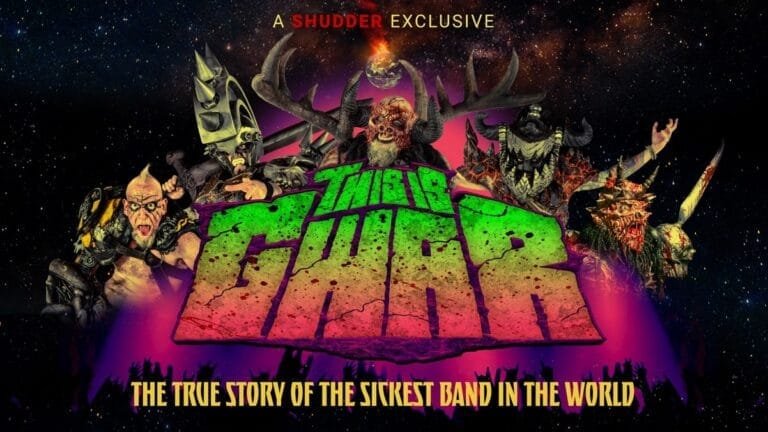
There has been a minor run of punk and metal documentary-making in recent years: some of these do a fine job of simply retelling an interesting band history, and some go a step further, telling us more about what it means to be in a certain band or to have lived through a certain time period. This is Gwar (2021) is in the latter camp, and it’s one of the best examples of these documentaries. Sure, it follows the standard trajectory of the rise, the fall, the comeback – and it’s plotted fairly linearly by album releases, once it explains how Gwar came to be in the first place. But along the way, it turns out to be a really engaging time capsule, all about a brief window of opportunity which was taken up by a few enterprising individuals: it’s a coming together of art, punk, comics, filmmaking and music which it feels really difficult to imagine happening now. You don’t need to be a huge Gwar fan to appreciate this; huge Gwar fans should, of course, pick this up, as there’s little need or likelihood of another film like this one, but if you’re in any way a music fan wondering how the stars seemed to align on certain highly improbable projects, then look no further.

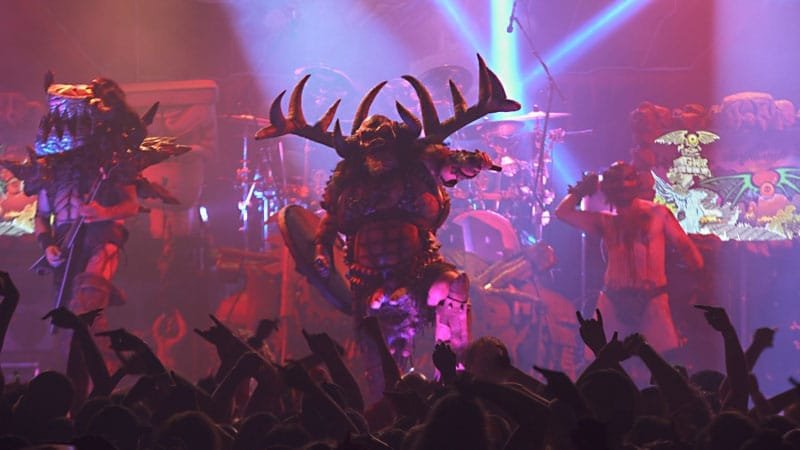
Because let’s be honest: Gwar is a highly improbable project which has just been going long enough for us all to get used to it. Even within the realms of metal, which has never been averse to a grisly stage show or lacking the propensity to shock, Gwar made a name for themselves by always going that bit further. It still feels hard to place them, but for the uninitiated – imagine the most grisly Grand Guignol moments of Alice Cooper’s old stage shows, and cross it with Peter Jackson’s early filmmaking career – think Bad Taste in particular. It’s rock music, it has a sense of demented spectacle, and it’s overlaid with a narrative about how the band are in fact interplanetary aliens, stuck on a lousy planet – yes, this one – which they hate (so rather like Jackson’s aliens, again, even if Gwar are better partially-dressed). The film opens with one of the band’s crew, tasked with prepping the tanks and hoses for a live show: he explains, with a wry smile on his face, all of the different mock bodily fluids that this kit will be expected to churn out. There you go – do something long enough, and it becomes normal. It’s a fitting place to start: but how did we get here?

The film moves into a potted history of 80s Richmond, VA, where there was a clash between a generally very conservative mainstream and the student art scene there – a kind of Reaganism vs subculture which was being played out everywhere at the time, but perhaps even more so in highly-traditionalist Virginia. From this burgeoning scene came a young man called Hunter Jackson, a student who loved horror, sci-fi, Dungeons & Dragons and making film props. As a talented drawer and painter, he wasn’t made welcome by his art lecturers, who disliked his ‘low-brow’ style (which is in the eye of the beholder, but sadly in this case the beholder was running the art classes). Hunter had been planning to make a film, working title Scumdogs of the Universe, which he then went ahead with as a big ‘fuck you’ to the sense of rejection he had felt; his film, of course, needed a cool soundtrack. Step forward, Dave Brockie, at the time heading up a performance-heavy punk outfit called Death Piggy; later, Death Piggy asked to borrow some of Jackson’s sci-fi gear to open for themselves, pretending to be a band called GWAR (which was just a guttural roar, a name which stuck). The band, and the back story, began to form into a whole, albeit in a rudimentary fashion at first.

A section of the film is given over to the burgeoning Gwar line-up, how the stage show grew, changed and grew again over the next couple of years, with some very entertaining (and on occasion, shocking) anecdotes about the ‘school bus’ touring days (a repurposed yellow school bus which the band gutted, and kitted out as highly uncomfortable, toilet-less sleeping quarters/prop transportation vehicle). Of course censorship was on its way – unsurprising, given the lyrics and the live show, though when the band eventually got hauled through the courts and answered to a judge called Dick Boner, it kind of made their next movie title, Phallus in Wonderland, sound tame by comparison. Maybe that’s how it got a Grammy nomination, and opened up a brief window to the mainstream: via Beavis & Butthead, Gwar wound up on The Joan Rivers Show, Jerry Springer and MTV News. It was perhaps at around this juncture – when the band was big enough to be known, in demand enough to be constantly on the road, but still small enough to do without security or any of the other trappings which could keep them safe – that they ended up being run off the road by would-be thieves who shot at them, hitting band member Peter Lee in the chest, puncturing his lung. Despite this near death experience, band members of the time note that they still went and took part in a This Toilet Earth promo shoot: by that point, a certain level of success was keeping them rolling, come what may.

It’s really at this point that, for this viewer, the film began to take on a different kind of significance. I’d even say – profound? As the band entered a far more tempestuous phase towards the late Nineties and early Noughties, with a run of resignations, personal issues, and of course deaths – a later incarnation of guitarist Flattus Maximus was found dead in the tour bus just before the band was due to cross the border into Canada – the band members left speaking about this now understandably change their tone. Sure, they reason, playing and performing was still fun, but the major shocks they endured either cemented, or damaged their friendships; things began to change, founding members began to peel off, and this triggered a lot of soul-searching about what was best to do. It’s a tale as old as time perhaps, but discussing the balance between success, reputation and living a life off the stage leads to some engaging content here, particularly from a band like Gwar. Gwar had, and has a life of its own which is a glorious thing, but also particularly difficult to separate from everything else. For the most part, the remaining members speak very warmly about their time in the band, but there’s a sense of the deepest sadness and regret about some aspects, particularly the death of wunderkind Dave ‘Oderus Urungus’ Brockie himself in 2014 – from an accidental heroin overdose, of all things. Sure, there’s some remnant bitterness too, but evidence of bridges being built now, and of course the band – now with no founding members left in it – keeps on going, with a new album out this year, thirty years down the line. Who saw that coming?

All in all, by the time the credits roll, you feel as though you’ve been privy to something at times deeply personal and moving – an odd sensation, given the film is about a band which has spent three decades bleeding, vomiting and ejaculating on their audiences. This is Gwar is funny, it’s entertaining, but it captures something else about what a rock band is and how it impacts on the people who perform in it. As bands change and popular entertainment shifts gear irrevocably, it definitely feels like we’ll not see the likes of Gwar again anytime soon, so I’d highly recommend this film: it’s a well-made, well-presented chance to be let in on the conversation about a very particular period in time.

The film is also peppered with the usual collection of early photos, flyers, backstage footage and promo material – all linked together by a comic strip, which illustrates the anecdotes being told – and some knowledgeable talking heads, from Weird Al to Brian Slagel. At nearly two hours long, that’s a lot of bloodied loin cloths, but quite honestly, the time flies by.

This is Gwar (2021) will be released on Shudder on July 21st, 2022.

Fantasia 2022: The Blood of the Dinosaurs

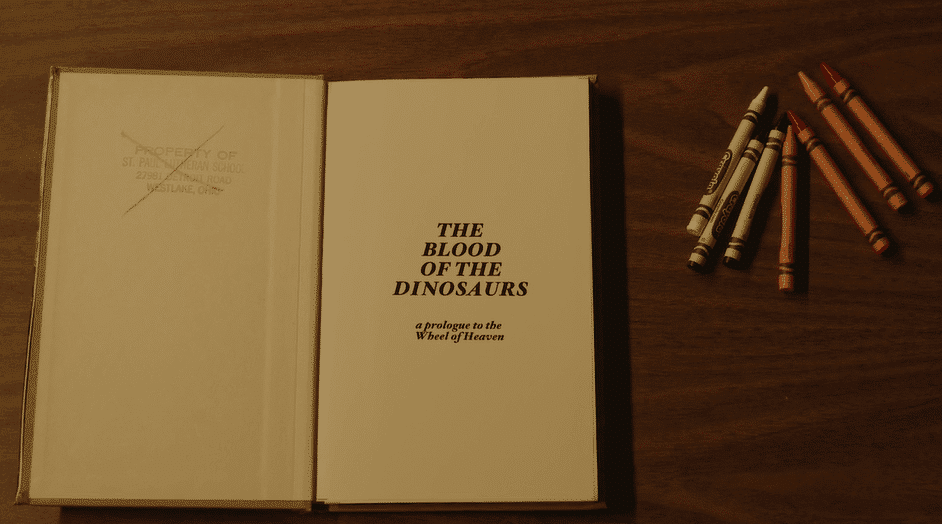
Before The Blood of the Dinosaurs gets properly started, we see a few seconds of footage where director and writer Joe Badon is chatting to one of the film’s stars, Kali Russell. So, what’s your movie about?’ she laughingly asks, before Badon turns the question back on her: ‘What do you think it’s about?’ In effect, one of the film’s clearest narrative elements is to be found here, and only here, in the question: the film has no other clear narrative elements. Not really. Instead it’s a hugely experimental kind of smorgasbord of animation, puppetry, embedded video, static artwork and live performance. It runs from one thing to another like Adult Swim but lands a couple of times as an Einstürzende Neubauten video. Is that clear? No? Good.

The set-up we get at first (after a charmingly lo-fi rendition of the end of the dinosaur age, as modelled with kids’ toys) is a cable TV show – the likes of which we don’t really get in the UK, but which may be most familiar to people outside of the US from Mrs Doubtfire (1993): I actually didn’t expect to make that reference, come to think of it, but it’s the closest thing I have. Well, except for the fact that this host, Uncle Bobbo (Vincent Stalba) is a faintly menacing young man who intones his words as if he really has been hiding behind his desk for 45 days, as he claims direct-to-camera. It’s a Xmas [and other winter festivals] special, but save for a handful of plastic Santas on set, we wouldn’t know: instead, Uncle Bobbo wants to talk about – tyres. He found one behind the desk while he was down there. Do you know what tyres are made from, he asks the canned laughter kids which form up part of the show? It’s dinosaurs – the blood of the dinosaurs, if you like – and he needs to spread the word about how this impacts upon the world we live in. It’s an ecocritical message menacingly given by someone who seems to be on Quaaludes.

Don’t be fooled, by the way – this doesn’t thereby establish a direction and a plot; it’s just a stop on the tour. The film then heads off on many tangents, stopping by Naked Gun via a segment on the rather risqué action of an oil derrick (there are a few other visual metaphors here which would fit right into Naked Gun, come to think of it) before a run of different sequences, including a Pornhub pastiche which instead of porn features science videos and existential melodrama. As we go, the film worries away at the fourth wall and erodes any real sense of distance between film and audience; it’s hard not to feel a little like you’ve been beaten up by the time the film ends.

If short films are intended to serve as a calling card for what a filmmaking team can do, then the message here seems to be: we haven’t taken your expectations or level of comfort into consideration, take it or leave it. This can be a disorienting experience, but the film is bold, colourful, varied and eccentric, and it’s certainly impossible to be bored as you fathom it out. Oh, and there seems to be another film on the way: this is just a prologue…

The Blood of the Dinosaurs will feature as part of the Fantasia International Film Festival 2022.

Fantasia 2022: All Jacked Up and Full of Worms

With such a long pedigree of films which have explored altered states in impressively oddball ways, it presumably gets tougher and tougher for filmmakers to distinguish their own impressively oddball films from the rest. Well, a title like ‘All Jacked Up and Full of Worms‘ is certainly a good start. The film itself goes further still, by electing to almost completely detach itself from anything like narrative coherence or expected plot markers. Sure, there have been others along these lines, but All Jacked Up does it to an impressive and – strangely enough – consistent extent. Is it enjoyable? No, not really; it’s still something you want to wander along with for the full extent of its seventy minutes, though, even if only to honour the commitment you wind up feeling you’ve made to it.

So, plot, plot…we start with a by-now obligatory analogue TV and 80s-heyday talk show where a character lays down some of our key themes by talking about his personal experiences: paganism, making a study out of the occult, extensive drug use and a descent to hell which he relates to – consuming worms. Write those terms down on some cards and overlay them on what follows, if you will. We meet a bunch of drug users seemingly united by their desire to escape their own physical confines through drugs; it works to an extent, but one of them, motel worker Rosco (Phillip Andre Botello) doesn’t always have the most positive experiences. Part of his ongoing desire to imbibe seems to stay in favour with girlfriend Samantha (Betsey Brown), whose quest to get high is an existential thing.

Meanwhile, frustrated wannabe dad Benny (Trevor Dawkins) has had a disconcerting experience with what he somehow thought was a mail order baby he could nurture, but turns out to be even weirder than that. Consoling himself with a visit to a local sex worker, he is surprised when she offers him a…worm, a regular garden worm, from a cigarillo box – which she swears can be taken to get high. His initial refusal soon turns into a ‘yes’, and he’s joined by a despondent Rosco who also agrees to try it. Cue a band of merry misfits wandering the streets in a fine old state, though not everyone with the worm habit is as friendly and harmless as these guys initially seem to be.

When I read the title and synopsis for this, my mind went to two titles: Fried Barry, which featured at Fantasia in 2020, and Frank Henenlotter’s film Brain Damage, with its own mind-bending – but rather more erudite – hallucinogenic worm, called Aylmer/Elmer. All told, All Jacked Up is more similar to Fried Barry than the Henenlotter title: it shares that kind of scuzzy, but muted, meandering feel, its characters rocking up often aimlessly in the worst dives and backstreets of the city where it takes place. Think a kind of Don Quixote, but with hallucinogenic worms (and by the way, the worms appearing as extras definitely pull their weight here). So All Jacked Up takes place in a grubby array of places, and features a small array of characters who are linked by only the barest of connections. They each seem bewildered whilst speaking to one another for the most part, their conversations a dawdling array of non-sequiturs and clearly lots of improvised lines, albeit some of the dialogue is very droll. Eventually, the film introduces more SFX; the film becomes briefly splattery, with a few imaginative additions.

Perhaps the film’s main issue for this viewer is that it never quite opts for the big, bold ick factor or a weightier/funnier character study, but rather meanders between these points; of course, that’s laden with generic expectations of one kind and another, which presumably the director and writer Alex Phillips knows full well and has deliberately dodged. Fair enough. So it’s not really a cautionary drugs tale and it’s not really a study of modern alienation, though it skirts close to the latter; in its way All Jacked Up is a kind of lockdown nod to Cronenberg as much as Henenlotter. This is arthouse with no gloss whatsoever but a few nods to horror and some wry moments of humour.

All Jacked Up and Full of Worms will feature at the Fantasia International Film Festival 2022 on 16th July.

The Unbearable Weight of Massive Talent (2022)

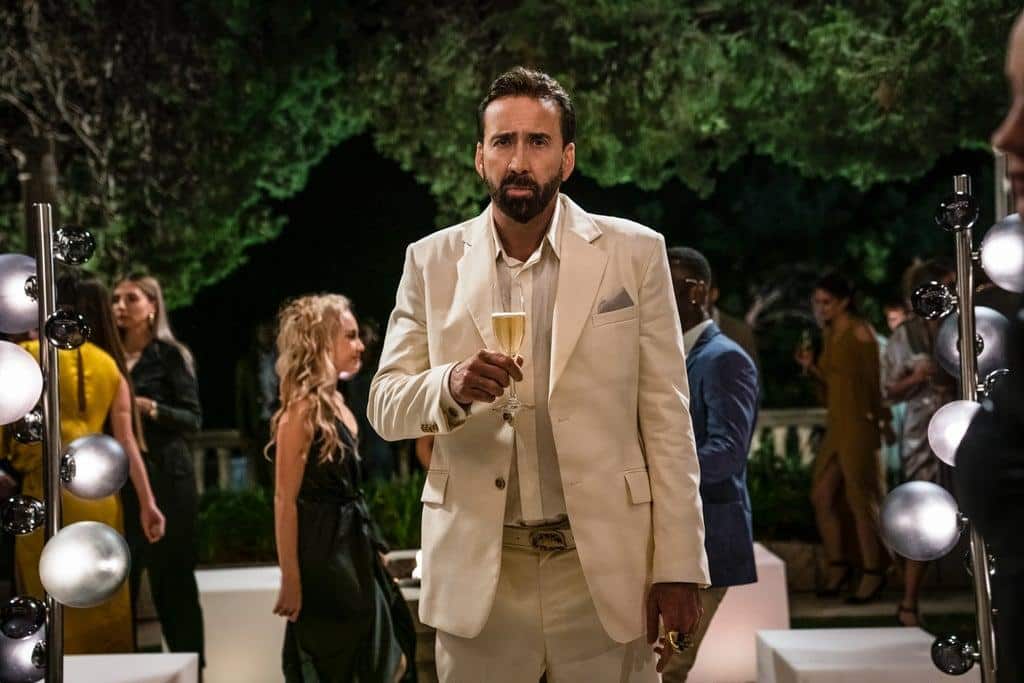
There’s a small, but noteworthy number of films in which actors appear as themselves – that is, as actors reflecting in some way on the fact that they’re actors. It’s a risky thing in some ways: ego has to be balanced against just enough self-deprecation to make it all hang together, else it could all become more of a puff piece than a genuinely entertaining narrative. But it can be done very well. Some of the best examples of this, to my mind, include Being John Malkovich (1999), with all of its strange, highly original fantasy elements; there’s also My Name is Bruce (2007), again with the kinds of fantasy and horror material you might associate with star Bruce Campbell, who is undoubtedly best known as a horror movie guy, here sending himself and his fans up with good-natured humour. Really, The Unbearable Weight of Massive Talent (2022) could quite easily rest somewhere between the two titles mentioned above, at least in terms of the career of its leading man. Whilst Nicolas Cage, its star, has appeared in many successful, mainstream Hollywood films like Captain Corelli’s Mandolin (2001) – akin to John Malkovich – he has also happily put his name to numerous underground, deliberately culty projects like Mandy (2018), a film with quite a few things in common with Evil Dead, chainsaw included. You also get the distinct impression that Nicolas Cage is no stranger to self-deprecation; nor can he possibly be oblivious to his fandom, whether those people who watch him simply to see him have a Full Cage meltdown or those who see him in more serious terms.

Happily, The Unbearable Weight of Massive Talent is incredibly good fun, encompasses the Full Cage and the more…well, normal man behind it all, and draws upon Cage fandom in an affectionate and engaging way. Its best quality, though, is in its writing: it’s warmly self-referential, and also manages to weave from one genre of film to entirely another, picking up on all of the little clues which it has lined up neatly along the way.

It starts with a young Spanish couple enjoying a Nicolas Cage movie (but of course) before a host of thugs wreck the vibe, breaking in and grabbing them. What does this have to do with the man himself? We soon find out. Our first glimpse of NC is speaking to…or at… his casting agent back in LA: clearly Cage is after a new role to get his teeth into, rocking out a few scenery-chewing lines to show he deserves one. He’s especially keen to work because the old trilogy of marital breakdown, estranged teenage daughter and vast hotel room bill have him at crisis point. Luckily, something has come up just in time: a trip to Mallorca, at the behest of rich guy Javi (Pedro Pascal) who has a screenplay to show him…

It’s a bad time to show up. It seems that Javi – who soon becomes a kindred spirit to Cage, as not just a rich guy but a superfan and a diehard film-as-art advocate – is being investigated by the CIA. They collar Cage and insist that he helps them in their rather urgent enquiries into Javi: there’s not much Cage can do but agree, so he starts bodging his way through the tasks they set him, seeing it all as just another new kind of role. Errors, twists and skits ensue: however, the main question is, is the CIA correct in their suspicions?

Whilst the film moves smoothly from a character-led drama to something far more action-led (commenting wittily on the shifts as they happen), all in all this is a caper: the jump from ‘unknown secret agents’ commanding Cage what to do, to people who seem almost like buddies who eyeroll at his mistakes is perhaps a bit of a leap, but it’s more than forgivable in the grand scheme of things. The comedy of errors material is great, but as well as that, there is great dialogue and rapport between the two leads; Pascal (Oberyn Martell from Game of Thrones!) is deeply funny, but also plausible, with Javi genuinely appearing to love Nick Cage and to want nothing more than his good opinion. Dare I say it, but it’s quite moving in places, again because it’s all so well-written and acted.

The balance of just enough emotional weight to laugh-out-loud idiocy is spot on. As for Nicolas Cage and the self-deprecation angle so necessary in films like this, well he’s clearly good with it, even though the actual distance between man and actor remains somewhat oblique, even taking into account that the Nick Cage in the film is still a role: you get the impression that some part of him has been doing the overblown stuff so long that it’s become a sort of tic, albeit one played out with aplomb in the appearances of ‘young Nicky’, visions of Cage’s younger, more egotistical self who rocks up to insist that “Nick FUCKINNNNNG Cage!” should call all the shots. And of course, it’s a glorious war cry which is as absolutely OTT as you’d hope and expect.

With lots of nods to his past roles, celebrating acting and film whilst teasing it at the same time, this is a great piece of entertainment, really, and to describe more of the plot twists and turns would be to ruin it. ‘Meta’ style scripts can be very tiresome, but that’s not the case here. To end this review, let’s just reflect on the fact that Cage gifted everyone in the cast a pillow with his face on it, and be done.

The Unbearable Weight of Massive Talent (2022) is available on digital 8th July and Steelbook, 4K UHD, Blu-ray and DVD 11th July.

Good Madam (2021)

Good Madam (2021) is a very quiet film. There are no explosive moments; the vast majority of the story unfolds in a limited domestic space; there is a tiny cast. Opting for a restricted setting and a limited number of characters like this either speaks to a filmmaker’s make-a-film-any-film bravado, or genuine confidence that this is the right way for the story to carry across. Happily, director and co-writer Jenna Cato Bass knows exactly what she’s doing – her decisions are sound. It’s very difficult not to fall back on calling the film ‘slow burn’ here, as this is often the description of choice for something which so deliberately eschews realism, sharply-drawn and ordered plot points, and clear denouement. Good Madam is slow-burn though; perhaps to balance things out, the adjective should be taken away from another film which is less abundantly slow-burn than this one. Rich in symbolism, subtly underpinned by anxiety and careful in its use of moral messages, the story simmers away nicely – with only a handful of moments which in any way disrupt this. Overall, it’s very successful.

The film’s domestic setting – and its positioning of this as a weird, alienating thing – are flagged up very early. It happens before the titles roll, in fact, with an array of macro shots of household chores and trappings in a stiffly genteel, if dated home which show the big contrast between owner and worker. The woman cleaning this space is at first only seen from the back, or partially – hands scrubbing, but face omitted. Perhaps it’s to read too much into it – yeah, a film writer just said that – but the ways in which the camera limits what we see seems to mirror the film as a whole, where were are almost never certain, never in a position of complete understanding.

Finally, though, we see some faces: Tsidi (Chumisa Cosa) and her young daughter Winnie (Kamvalethu Jonas Raziya) are first seen as Tsidi tries to contact someone by phone: her estranged mother, Mavis – the domestic worker from the house, (partly) seen earlier. She has no luck, but decides to head to Mavis’s live-in place of work anyway, driving way out into the ‘burbs. Mavis (Nosipho Mtebe) is understandably surprised by the visit – to the point of not even recognising her daughter’s name when she announces it via the intercom – but she lets them both in, begrudgingly allowing them to stay for a while. It turns out that Tsidi, in the wake of her grandmother’s death, has ended up in a family feud, leaving her with nowhere to live. This has cut short her mourning period, so she’s already in a tense state when Mavis lays down the law. She is housekeeper for a wealthy, but largely catatonic white ‘madam’ called Diane, and Diane is not to be disturbed: the house needs to stay virtually silent, Diane’s things must not be used and certain rooms are no-go areas. It’s apartheid in microcosm, surviving long past its official timespan. But Mavis – who is quietly formidable – defends Diane, saying that her boss has done a great deal for her. It’s yet another sticking point between mother and daughter.

The house, with its insular feel, is not a welcoming place, even without the long list of house rules to abide by. Tsidi acknowledges this, saying that the place ‘weighs heavily’ on her. Now, whether this is because of her own unexplored grief and her initially frosty relationship with her mother or something else, forms the bedrock of this tale, developing in an interesting direction. Where all of this eventually goes is somewhat less successful: the journey is more compelling than the destination, if you like.

The immaculate, if faded interiors are used effectively, providing a claustrophobic and potentially frightening place out of time. Within it, jarring, unsettling phenomena begin to assail Tsidi; interestingly, lots of these relate directly to domesticity and domestic chores, which are every bit as inescapable as whatever else is going on here – make of that what you will. Key to all of this is Diane herself: she’s both an absence and a presence, but she looms over the film, even in her incapacitated state. She’s not exactly a madwoman in the attic, though some aspects of that seem to fit; she retains more agency than that, a shut-in who happens to own the property and the grounds, and seems also to own the staff. As the plot begins to move in a certain direction, it’s unclear what Tsidi does or doesn’t hear regarding Diane, too, which adds a level of additional foreboding: are we, as the audience, being privileged with extra information?

There’s always a nagging worry about how a film which clearly has a social/political ‘Message’ is going to go about it, some of which is dependent on how the film promo has already gone about it, but thankfully Good Madam trusts in its audience enough not to hit them repeatedly with something chidingly simplistic until they want to pull away. The story and the subtext here work together well, with the latter filtering through via excellent, naturalistic dialogue and good performances across the board. Chumisa Cosa really is excellent as a woman fighting against family estrangement and her own demons, and she frequently, sensitively ponders where the dividing line is. True, the film subtly explores race and apartheid, but class, language, wealth and gender are bound up in this too: there are some similarities to Get Out (2017) in there in terms of how the fantastical shines a light on uneasy topics, but Good Madam is its own beast.

Good Madam (2021) will be released on Shudder on Thursday, July 14th 2022.

Win Martyrs Lane on DVD

Martyrs Lane was one of my favourite films of 2021: an intricate, domestic ghost story, it exercises a deft hand in characterisation and storytelling. If you missed it, then please check out the Warped Perspective review; as of 4th July 2022 the film is now available to buy, and thanks to Aim Publicity have a copy of the film on DVD for you to win.

All you need to do to be in with a chance is to email the site, using Martyrs Lane as your title. Please provide your name and address (all personal data is stored securely and deleted as soon as the competition ends. UK residents only, sorry!)

The competition will end on Wednesday 13th July at 12:00 GMT and the winning disc will be sent out shortly after that. Get entering, and good luck.