Fantasia 2022: The Breach

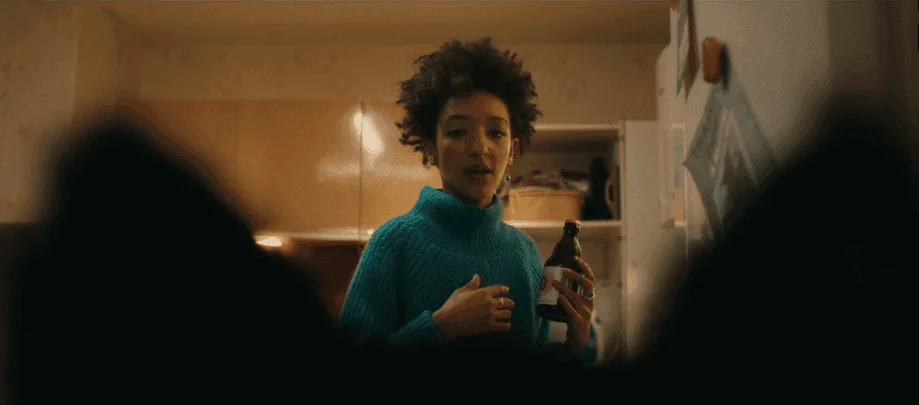
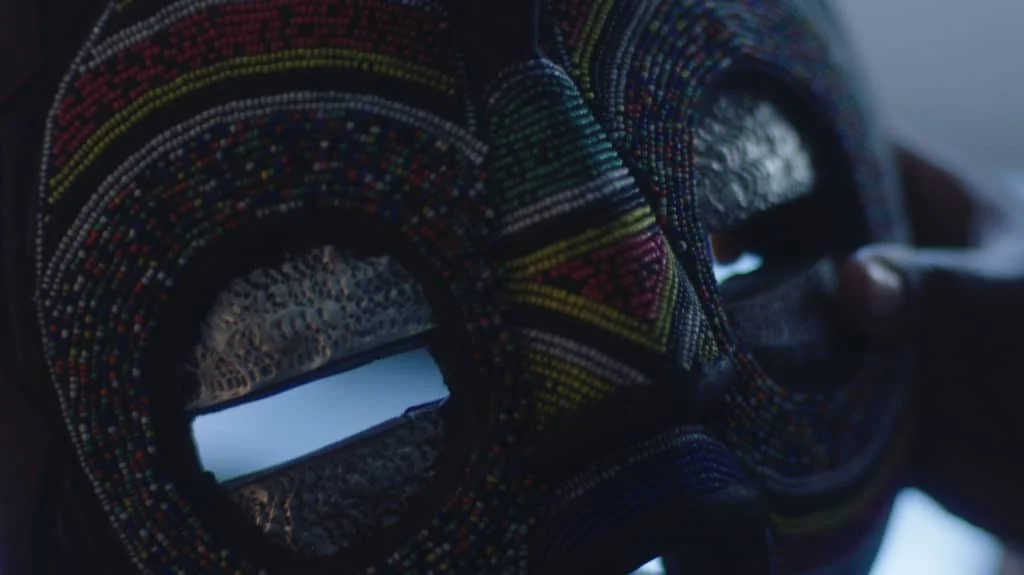
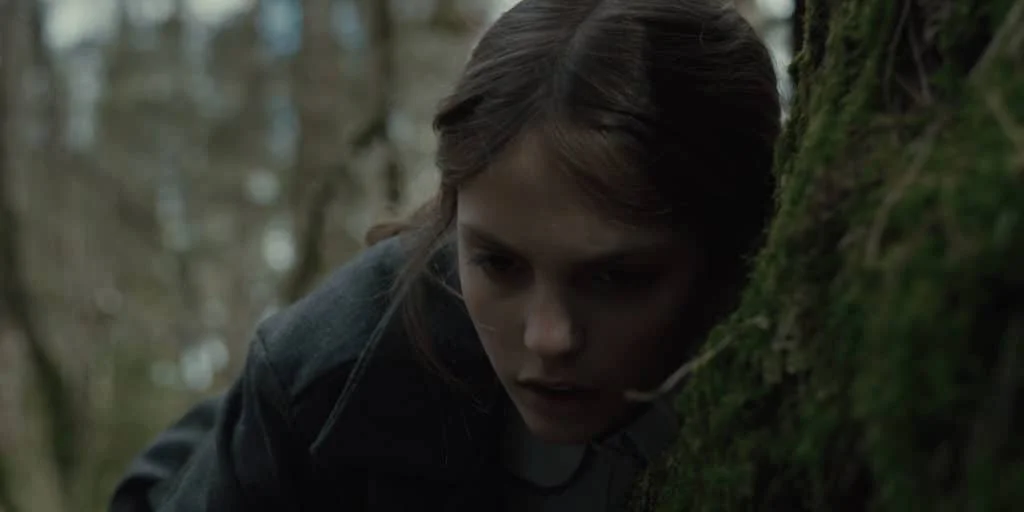
The Breach (2022) knows exactly what it wants to be: that is, a solid horror yarn, a midnight movie by design which might not surprise you with its plot elements, but will keep you consistently entertained as it burns through a significant number of genre features. Directed by Rodrigo Gudiño, founder of Rue Morgue magazine, and produced by Slash (who also worked on the film’s soundtrack) it certainly comes from an interesting and knowledgeable place; it’s also quite a different prospect from Gudiño’s very gloomy, more atmospheric films to date, although The Breach, too, does add in a few effectively ominous moments along the way.

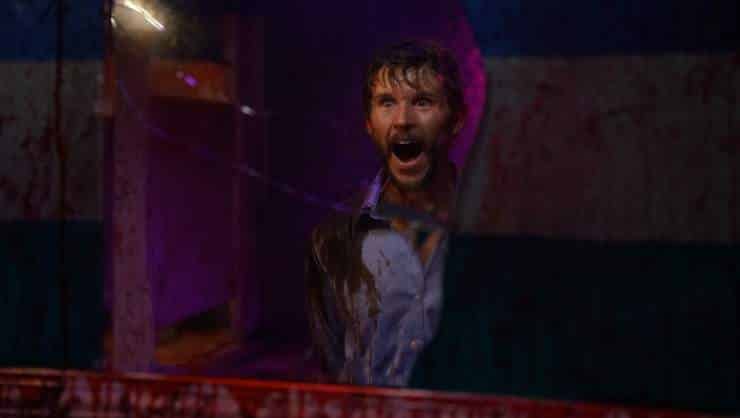
When an abandoned boat picks its way down the Porcupine River and eventually gets stranded on a nearby shoreline, it’s found to contain a very badly disfigured body (which, by the way, ruins a picnic). At Lone Crow Police Station, the damage is deemed so extensive that they need to call in a coroner to examine the remains; in a way, they needn’t have troubled him, as how a body could end up in such a state stays a mystery. In the meantime, ID found with the body suggests it’s what’s left of a Dr Cole Parsons, physicist, who had rented out a remote farmhouse up at Lynx Creek. You know what he was doing up there without being told; he was doing some grand, secretive experiment which necessitated him shipping in a lot of scientific equipment. You also know that no one does science in a horror movie and actually turns out anything benevolent.

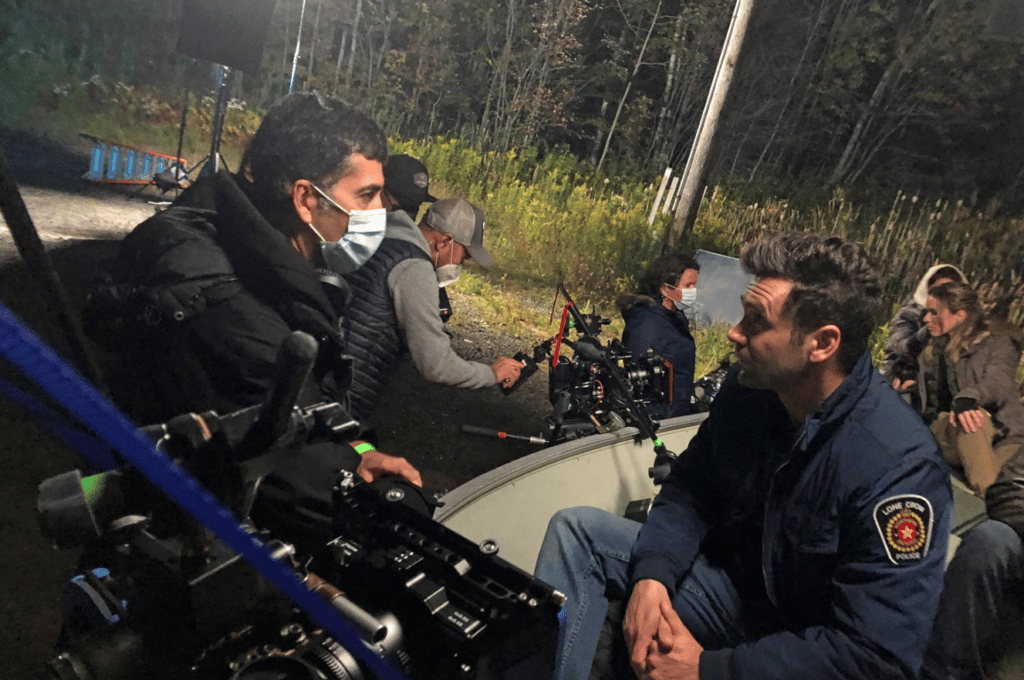
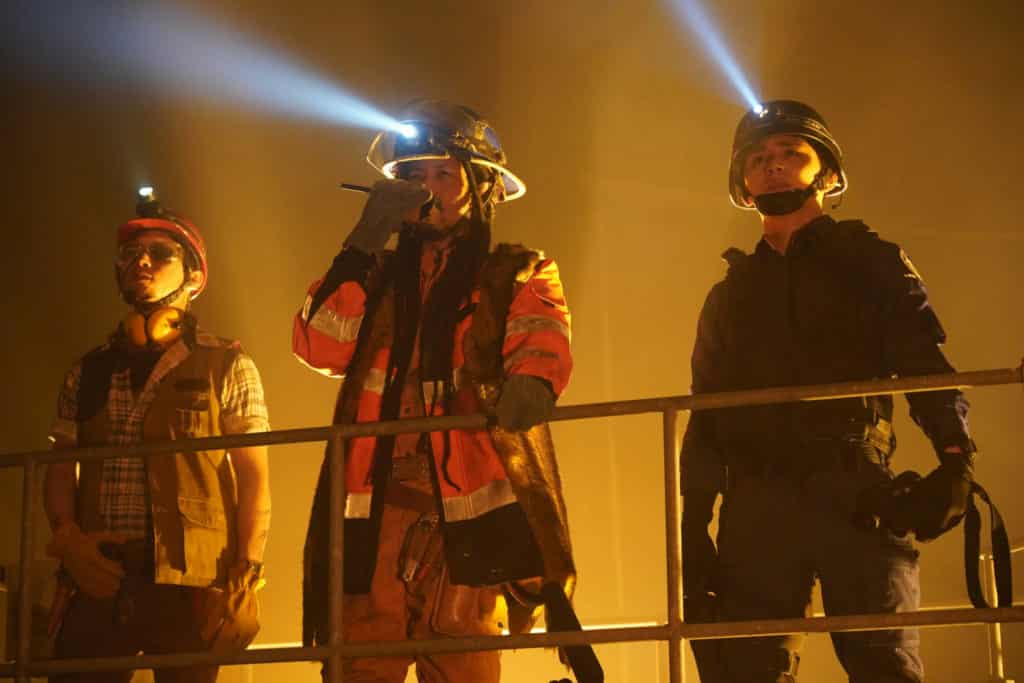
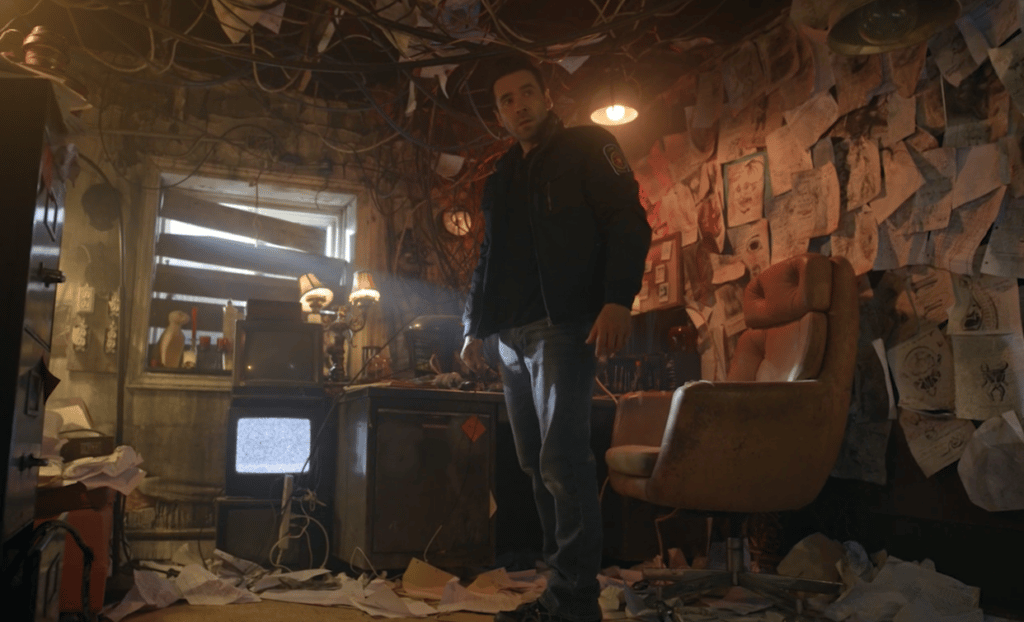
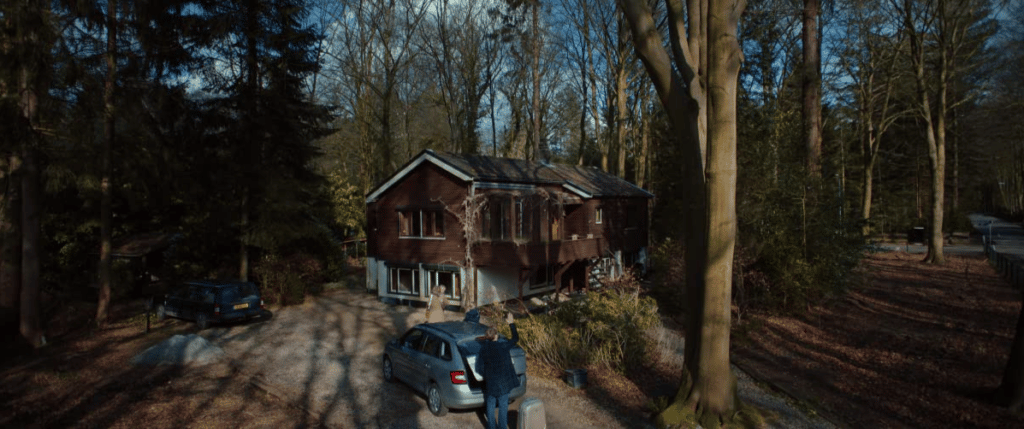
A team of specialists from Lone Crow go up to the house to investigate: this is soon-to-head-for-pastures-new police chief, John Hawkins (Allan Hawco), a ranger, Meg (Emily Alatalo) and the coroner, Jacob (Wesley French). There’s some bad blood between these three, stemming from a love triangle of sorts, which is plausible enough in such a small town. Thankfully, there’s not much time for this to become a problem. When they get to their destination, it seems dilapidated and deserted: it’s also as good a creepy abandoned house in the woods as you could hope for, and as luck wouldn’t have it, they all need to stay the night given how far from civilisation the house is. There’s some fun second-guess-yourself strangeness from the outset here; there’s also abundant evidence of Bad Science, with cables, monitors and a strange pod of some kind which could easily have turned up in The Fly (1986), whilst the walls are covered with scrawled occult symbols and foreboding artwork (demons; pained, spectral faces). This could quite easily and straightforwardly have turned into a game of Survive the Night, and the film no doubt would have done a good job of that, but it gets stranger still: other people begin to turn up at the remote house, including Dr Parsons’ estranged wife, looking for their missing daughter, and next – Parsons himself. So whose was the body in the boat?

Based on an Audible story by Nick Cutter (Craig Davidson), The Breach plays it fairly close to the book but takes up the challenge of illustrating the scenes which unfold, which to this reviewer gives the film a kind of graphic novel feel and look; most of the scenes would work as panels, and this kind of treatment also goes some way towards excusing some of the film’s minor issues: these being its performances, and its well-meaning, but sometimes harried determination to rattle through quite so many different kinds of horror genres and plot points, particularly in its third act. All of that being said, the homage feels affectionate throughout, and you can have fun picking up on some of the cosmic horror and body horror references which unfold. Lovecraft would of course be the immediate go-to, namely in The Beyond and to some extent, The Whisperer in Darkness, but also William Sloane’s In The Edge of Running Water with its own rendition of the road to hell being, at least at first, paved with good (scientifically sound) intentions.

To come back to the performances and the script, there are odd lulls and issues in these which are inescapable: the thought of there being some unresolved emotional relationships between the three key protagonists don’t quite come together, for example, though when the actors are given something more physical to do – as they soon are – things improve. In the script, too, there are moments where the fantastical developments don’t seem to generate the sheer concern which they might, but – again, given the fairly quick pace and rate of reveals – suspending disbelief doesn’t feel particularly difficult across the board. The film settles into a kind of campy, OTT and layered horror story, with increasing amounts of effective practical SFX. Whilst the resolution will delight fans of this kind of SFX perhaps more than people holding out for neat or novel plot denouement, overall the film’s busy energy and sense of its place in horror tradition will charm far more viewers than it will disappoint.

The Breach (2022) screened as part of the Fantasia International Film Festival and will also feature at FrightFest (UK) on Friday 26th August 2022.

Fantasia 2022: Speak No Evil

Speak No Evil (2022) is so effective because it comes from such a familiar place: in many respects – and stick with me here – it’s the ultimate middle class European horror, where politeness and social norms conspire to place decent-enough people in a devastatingly precarious condition. It opens with a car driving through the night in the middle of nowhere, its headlamps ominously picking up just a little of the road ahead; it’s a good piece of foreshadowing, because restricted vision is definitely something of a theme here.

But we’re soon in idyllic Tuscany, where Danish family Bjørn (Morten Burian), Louise (Sidsel Siem Koch) and daughter Agnes (Liva Forsberg) are enjoying a summer holiday with a lot of other thinly genteel types; dad Bjørn seems particularly charmed by its escapism, and noticeably less so by the daily rigmarole of family life (though his daughter’s stuffed toy and her equal devotion to it/ability to lose it would drive anyone mad). Whilst there they befriend a Dutch family – a mirror reflection of themselves – husband Patrick (Fedja van Huêt), wife Karine (Karina Smulders) and son Abel (Marius Damslev). They hit it off, and the Dutch extend an invitation for them to come and visit; probably assuming this is just one of those things people say, Bjørn and Louise are surprised to receive a postcard a couple of months later, reiterating the invite. Denmark is getting cold and dark by now: after ruminating on the ethics of taking another flight that year, or the perceived impoliteness of turning the offer down, they decide to go (and the film is very well-observed in its script, capturing that kind of lip service to current concerns which is instantly recognisable).

The family drives to Holland, and it’s a happy reunion, although there are immediately a few minor issues: Patrick has forgotten that Louise is a vegetarian, insisting that she try the roast boar he’s spent all day preparing; Agnes will have to sleep on the floor in Abel’s room, which doesn’t exactly look comfortable – but these minor etiquette issues probably could have been forgotten, were there not more and more of them, escalating quickly towards a very uneasy situation. Of course the family soon wants to leave, but again, its their due diligence to what they ought to do which lands them in seemingly inescapable trouble. The sheer awkwardness of being in someone else’s home is used to unendurable effect here: the film takes it to extremes, sure, but it can do so because it understands that most people are creatures of habit, and we’re protective of our own habits. It’s all so plausible. And the film isn’t one straight line from bad to worse; it meanders, so that sometimes things are better, and sometimes worse. You don’t know what to think. Patrick and Karin, with their nearly mute son, are odd, sure, but are they villains? Or do they, as they insist, just do things differently?

As for Bjørn and Louise, they are vulnerable in many ways because they are so devoted to doing things the right way, though it’s clear that Bjørn is more than a little detached and bored of his life, going through the motions; he says as much, later, where his wife can’t overhear. Louise is a little more comfortable living within the trammels of social rules and expectations – we see her enjoying a dinner party – but there can be tension between husband and wife, and she’s fiercely defensive over Agnes. Well, for the most part: they both make mistakes, too, even where their daughter is involved, and this is used against them. But moments of wrongdoing, if you like, or rebellion, are short-lived. It’s interesting that, at the dinner table, the Danes and the Dutch joke over the stereotype of the Swedes being very tightly-laced; the Danes are, too, to enough of an extent that they nod through all kinds of troubling behaviour. But then that’s no doubt the point – people will tolerate anything rather than cause conflict. Patrick and Karine know this, and play the game; they know what will and won’t be challenged. The film is a hell of familiar situations all growing so volatile, that you can hardly bear to see them through.

Language contributes to the smouldering tension, with English being used as a lingua franca, Danish being used for Bjørn and Louise to thrash out/smooth over things without being understood by Patrick and Karin, whilst Dutch (not translated) is occasionally spoken too, placing us in the same situation as Bjørn and Louise – assuming we’re not Dutch speakers, we are locked out of some of that communication along with them. It blends a little of the ‘stranger in a strange land’ paranoia with a very domestic kind of horror. Whilst elements of the plot eventually reach breaking point, the film’s immensely cruel and even relatable ending will stay with you, even if you dislike it because it disrupts your expectations. Remember, the one constant running through Speak No Evil is its study of good people doing nothing; director Christian Tafdrup burns that message into his closing scenes. It’s unbearable, yes, but it’s very powerful.

Speak No Evil featured at the Fantasia International Film Festival 2022.

He’s Watching (2022)

If you go by the title and the poster art alone, you might be forgiven for assuming He’s Watching (2022) is some kind of slasher movie – but you’d be wrong. Instead, the film blends a couple of different kinds of horror, blending anxieties old and new to come up with something quite unique. Yes, it’s a ‘lockdown project’, but rather than being hamstrung by that as other projects have been, it’s genuinely done a very good job of using this all-too recognisable backdrop/limiting factor in some intriguing ways. There are some lulls and lapses, particularly in the last half of the film, but overall it works really well, and successfully puts together some unnerving scenes along the way.

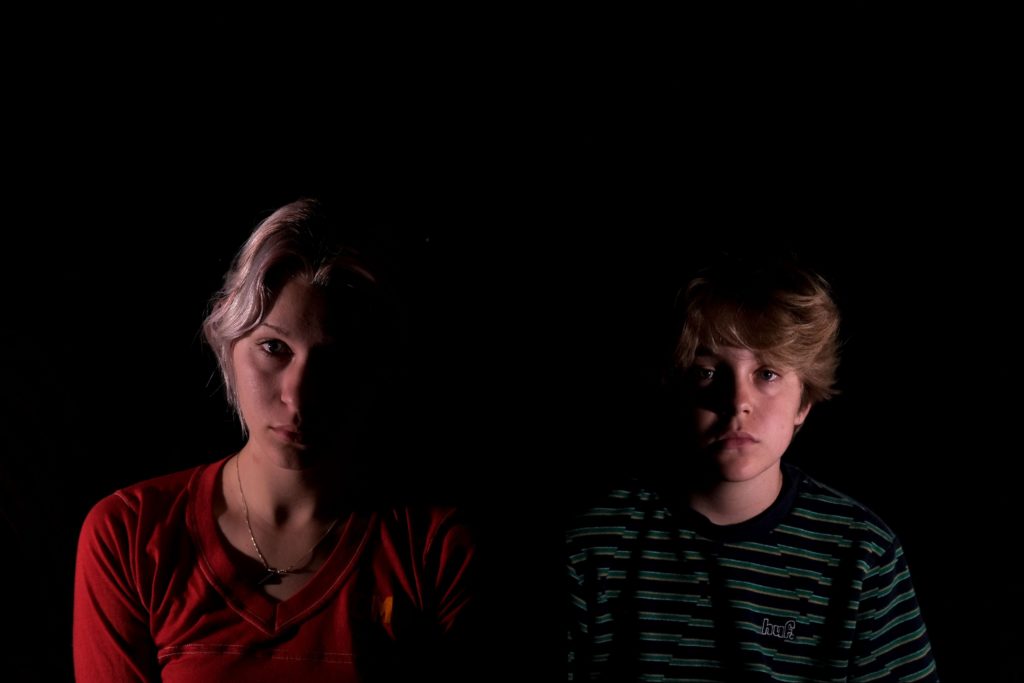
A pandemic is raging: it’s not named, and it’s certainly not Covid given the symptoms, but this plot device both explains the eerily empty streets and the fact that Iris and her younger brother Lucas (played by themselves) are home alone. Both of their parents are ill, receiving hospital treatment, whilst it seems that children are largely unaffected by the virus. Kids being kids, the siblings decide to record a video diary for their parents – just day to day stuff, them getting on with running the household, taking exercise, tidying up or not tidying up – that kind of thing. Concerningly, when the messages are sent they’re read immediately, but neither parent is replying; Iris questions this, but those messages go unanswered, too. Really, this could all be enough of a source for a good horror yarn on its own as the world burns, but there’s more.

Someone seems to be watching them; they begin to get disturbed at night, with Iris finding a lot of household items scattered on the floor and cryptic notes from ‘the closet creeper’, which she blames on her increasingly bored kid brother. He, on the other hand, blames her: things get fractious. Finally, it becomes clear that it can’t be Lucas, as both of them find video footage on their devices which couldn’t be shot by them – it features them, and at times each of them has an alibi. An intense, often disorientating ordeal ensues; the film heads off in a (fairly) unexpected direction, but one in which filmmaking itself is key to the horror which unfolds.

That in itself is interesting, and works in a few different ways. Firstly, we discover that Iris and Lucas’s dad is a filmmaker; the house is full of filmmaking kit, the children know a little about how to make and edit their own films and the cut-ins which appear are therefore fairly plausible. Dad’s career (and yep, Iris and Lucas’s real father and the writer/director here, Jacob Estes) becomes important to the plot in a different way in the final half of the film; this touches on an age-old idea which has underpinned a lot of horror, but true to form, He’s Watching updates it with its various technological additions: it’s a decent idea. The little films and video diaries which the kids shoot become documents which contribute to the unfolding of the plot, but allow the prospect of the videos themselves becoming scary, uncertain things. The audience is invited to look at snippets of film for the second time and to see them differently, or to question whether what we’re seeing is an arty insert, filmed by the kids, or something else – something more sinister. To avoid the trap which has so often undone found footage films (namely – who has edited all of this together, if it’s just been ‘found’?) the film is open about the fact that it has been edited together, but that doesn’t detract from the ambiguous feel of a lot of the footage. You still never quite know who is filming, or whether what you’re seeing is ‘real’ at all.

That being said, the film does start to lose the momentum it has generated when it allows itself to segue all the way into a run of surreal, arthouse scenes which separate Iris and Lucas and don’t do much to advance the story, other than to over-extend the already-understood sense that something or someone is manipulating them. The strongest idea here in terms of generating horror is really that, in a pandemic as serious as the one in the film, there is no one coming to help them: the two siblings have to try and solve the problem of their situation, like a puzzle. Once we get back to that, the film picks up again, but it does come perilously close to undoing the solidly good work it does in the first thirty to forty minutes. Still, it throws some more intriguing ideas in there before the ending, even if it can’t quite drive towards a really effective conclusion. All in all, though, He’s Watching is a surprisingly weighty, nuanced, creative film which not only overcomes the limitations of lockdown, but builds them into its story. There’s a lot to admire about this family-led project.

Fantasia 2022: Hypochondriac

Hypochondriac (2022) starts by announcing that is it “based on a real breakdown”, and you quickly believe it. Whilst you may, throughout the film, understand that the protagonist is undergoing a mental health trauma with all of the hallucinations and sensory overload this can bring, it nonetheless feels very real, immediate and personal, something which distinguishes it from a number of other ‘mental health as monstrous’ horror films.

The film starts in Will’s childhood, to the sound of breaking glass. Frightened out of sleep, Twelve year old Will (the excellent Ian Inigo) follows the sound, finding a shattered mirror in the bathroom sink and – reflected in what’s left of it – his mother, who grabs at him, insisting that he go somewhere with her. Her appearance startles the boy as if she were an intruder; that, along with Will’s later passive, pained exhaustion, tells us that this isn’t the first time that his mother’s manic episodes have taken their toll on him. When the worst seems over, it isn’t, not really; the next day, other kids cajole and question him when she doesn’t turn up to pick them up, which underlines his feelings of isolation more. She’s been admitted to hospital; Will’s father is very matter-of-fact about this, which makes the boy’s disorientation and fear more marked.

There’s a moment of ‘oh, thank god’ when the film moves on by eighteen years. Will (Zach Villa) is now grown up and – okay, good even. He works as a potter, he makes good money and he has a boyfriend, Luke (Devon Graye). However, he is thrown off course by a sudden raft of phonecalls and a package from his mother, who has been absent from his life for a decade; he has even told Luke she’s deceased. Her calls and voicemails – paranoid, threatening, unintelligible – trigger something in Will; it’s mainly dizziness and disorientation at first, but soon more and more symptoms begin to occur. These include visual and aural hallucinations, which begin to really take hold when Will and Luke attempt a weekend getaway to try and address some of his buried traumas.

The timid, tired boy at the start sets an important aspect of the tone in Hypochondriac, in that it shows it’s okay to be scared by someone else’s mental illness. The impact of this kind of thing in a family member, particularly a caregiver, must be immense; were we only to establish this in flashback having met the adult Will, I think the film would have lost out on elements of that. Yes, illness is involuntary, but this kind of manic episode also terrifies people, exasperates people and can harm them in many ways – hence Will’s own breakdown, nearly two decades on, and its own impact on others. Fear is the trigger for his own issues. It’s appropriate, then, that his fear soon takes the physical form of a predator, though overblown/unreal in the vein of Donnie Darko: there is more to unpack here, but the very close focus on Will, whose certainty in reality begins to slip, is more than enough on its own – even without the literal personification.

Other, lighter touches are also very effective: the repeated image of a poster, a cutesy image which looks to be promoting champagne (in doctors’ offices?) keeps catching Will’s eye, until it feels like a running bad joke, a bizarre moment of humour; there are others, like the inappropriate boss (who would date him if he was straight but sack him if he was sick) and the dudebro doctor, whose medical advice sounds like something from Sports Illustrated. This works because it maintains a link with the mundane, where everything ticks along as it ever did. But also, it shows how personally disinterested, or uninterested a lot of people are, and how little they help Will when an early intervention could have benefitted him. He gets told over and over, like a catchphrase, that “stress” does a lot, and that the mind can have a big impact on the body. Well, yeah. You empathise with Will, and also with Luke, as their relationship has a real warmth, even when things get to their worst between them. All in all, Hypochondriac is a heavy, unsettling but engrossing watch, with likeable characters you really wish the best. It moves between terrifying and life-affirming very effectively, and offers a poignant glimpse at breakdown from a very intimate perspective.

Hypochondriac (2022) featured at the Fantasia International Film Festival 2022. Look out for the film at the UK’s FrightFest in August.

Fantasia 2022: Honeycomb

Honeycomb (2022) is an odd prospect. Electively surreal with a minimal storyline, it often feels a little clumsy where it intends to be out-there. But it’s not without charm, even if much of that derives from its long, mood-drenched shots of long summer days. If you can imagine Yellowjackets remade as a Beck video (complete with Nineties setting, maybe, unless all those Doc Martens and hair scrunchies weren’t visual clues after all? Maybe they’re back in?) – then you’re getting close; make of that what you will.

The film follows a group of teenage girls out in the sticks somewhere in the US, pondering what to do with the summer ahead of them. Without planning anything, it looks like they’ll be doing what they did the summer before – that is, hanging out with a group of local boys who dominate the conversation with whatever trivial comes to mind. But Willow (Sophie Bawks-Smith) has found an abandoned cabin out in the woods, where she says she’s been secretly staying for a while. She wants the other girls to join her there, and when they agree, the next conversation is how much to allow the boys access. Whether they’re with the boys or not, their presence or otherwise still dominates a lot of the girls’ conversations. Anyway, they are permitted, but gender differences redouble as the boys continue… largely as they were, whilst the girls begin to run things along certain rules – meaning a sudden upsurge in nastiness when the rules are broken, albeit it’s given the same oblique treatment as everything else, and occupies little screen time, in the grander scheme of things. But it’s there, ticking along.

The ‘honeycomb’ of the title refers to a couple of different things, though all of these overlap on the idea of a closed community, sealed against the world: bees are a minor theme in the script, and then of course there’s the mysterious ‘bee girl’ portrait in the cabin which is mooted as a kind of household god by some of the girls. The main point, if there is one, is that bees live by strict hierarchical rules, and can be brutal in the pursuit of them: where Yellowjackets runs through a similar theme/setting/cast with terse energy and narrative lucidity, Honeycomb is stylistically obtuse, allowing long, lingering shots of sunny fields and almost still-life shots of the girls, all dressed for the occasion, to lead things; there’s also that commonplace reliance on oddball synth in the soundtrack to provide atmosphere, which seems to be shorthand everywhere in indie film at the moment…

Aspects of this approach work well, at least aesthetically; the film flounders in other ways, though, most notably in the performances. The immediate question which leaps to mind is: are they deliberately acting like this because they’ve been directed to, or does this just smack of inexperience? Is it stylistics, or genuine awkwardness? You may feel that this works fine with all of the other clearly surreal elements, but for this reviewer, the sense of discomfort and unfamiliarity with being in front of a camera hobbled the film overall. What looks like playing with the fourth wall (or at least leaving footage in which would otherwise presumably be edited out) is also risky, though these kinds of postmodern factors are, again, almost expected in indies.

There’s a wish fulfilment aspect to the film which isn’t displeasing. This idea of the ‘summer to remember’ which – although it goes sour – is an important part of adolescent life, offers a good source for cinema: there’s a tiny dash of Picnic at Hanging Rock (1975) in here in places too (a film I gather the director hasn’t in fact seen!) It’s probably wise not to fixate on the reality or unreality of this particular set-up, given the direction and approach the film takes, but still – the idea of parents not caring or knowing where their children are, or the heavily-signposted mentions of the absinthe they’re about to drink and what it’s going to do to them: some of these aspects feel a little too simplistic or naïve. But hey: your enjoyment of this film will very much come down to how much patience you have for these sorts of avant-garde, dreamy, unreal exercises in indie film. It’s a little too muzzy for me, but others will approve of the surreal, liminal qualities (particularly critics, I’d be willing to bet, rather than general fans). It’s a first-time feature from twenty-two year old Avalon Fast, too, so if this is any indication of their work to come then we have a filmmaker who isn’t afraid to take creative risks: that’s no bad thing, with potential for the future.

Honeycomb (2022) will appear at the Fantasia International Film Festival 2022 on Monday 25th July.

Fantasia 2022: Megalomaniac

There’s been a tendency in pop culture to present serial killers as monolithic: they’ve often been painted as almost supernatural, not only ungoverned by the usual social and cultural norms but devoid of familial ties, too. But that is changing: more recent films and TV have hinted at least at something more going on with these characters, sometimes showing them capable of (very select) care and affection. Megalomaniac (2022) hovers in the space between both of these approaches – the old and the new. It deals in extremes of nastiness and cruelty, but it also offers a different perspective, one where the sins of the serial-killer father are visited upon children, and how this legacy impacts upon them in adulthood. The resulting film ain’t pretty, so be warned.

The film starts from the point of a real-life Belgian criminal case, the unsolved ‘Butcher of Mons’ murders of the late Nineties during which several women’s bodies were found dismembered. Before police could locate their killer, the case went cold, suggesting that the culprit had either died, or been caught for something separate (people with this much of a fixation on vulnerable women rarely ‘just stop’ because they change their minds). Megalomaniac starts with a hefty and unpalatable ‘what if?’, imagining that the Butcher of Mons had other victims and had children: the film starts with a bloodied woman giving birth, the man at her side immediately handing the baby to another child, a little boy. There’s no tenderness or happiness here, just a kind of horrible acceptance that there’s another member of the family.

We are invited to infer that this little boy – Felix – is the same person we then follow into adulthood, where it seems he has picked up where dear old dad left off: he captures and kills women himself now, as visions of the older man seem to steer him along – or at least accompany him. The baby has grown up to be Martha (Eline Schumacher), who is attempting a different route through her life: she has a low-status but respectable job (as a cleaner at a small factory) and regularly engages with a visiting social worker, who has clearly been enlisted to keep an eye on this withdrawn and troubled young woman. But what comes across as mute acceptance in the workplace gives way to a raging, angry kind of loneliness when she’s alone at home, in the to-be-expected shambles of a house she shares with Felix. Felix (Benjamin Ramon) seems to care for her and he looks out for her, to some extent. She conceals the worst from him, largely obeys his edicts and tries to do what he wants – that is, appear normal, raise no cause for alarm. (It’s a bit rich, coming from him.)

Martha’s attempts to live normally were probably always doomed, but her treatment at the factory – where she is routinely mocked, attacked and raped by one of the workers – makes her more desperate to cling onto something normal, or what looks normal through her distorted view. The next meeting with the social worker – which falters and gives way to mocking, sexualised language – nearly blows Martha’s cover altogether. But ultimately, the people in a position to help her do so little, that her jagged behaviour is understandable – at least to an extent. Things are growing more difficult: her brother’s murders are beginning to frighten the people of Belgium who fear that the Butcher of Mons has made a comeback. Perhaps sensing the change, Felix makes a grand, sordid gesture and offers to share one of his victims with her, another occasion where Martha’s tenuous grasp on reality shines through; she is pleased. However, the real issue here is what happens when the ‘family’ once again expands, as the past harms suffered by these siblings draws other people inescapably into their orbit.

Megalomaniac makes it feel as though the New French Extremity (albeit counting in Belgium here) never went away; it just paused, regrouped, and came back more brutal and unpleasant than before. The film looks that part, too: everything is dismal, blue-hued and devoid of any warmth; even the dream sequences are nearly fully in charcoal tones. It could also be criticised along some of the same lines as the most striking New French Extremity titles were: namely, in its treatment of women. It is genuinely horrific throughout, with unflinching shots lingering on nameless, blameless women being hammered, stabbed and tortured; we are privy to this via Felix, who relives these moments again and again. It could hardly be less comfortable to watch. Of course, the savageness is the point and the film is intended as a character study of a dreadful, damaged man operating on the outskirts of a deeply misogynistic world (of which Martha, too, is a victim). There are people like him out there. However, he remains an enigmatic man in black, a person whose horrific past has still been turned to his will; he controls the world he finds, he is the master of the house, he is Martha’s custodian. He will ‘look after her’. This won’t endear him to many viewers, but nor should it.

Similarly, people waiting for the big, redemptive, expected arc where someone like Martha begins shooting and hacking her way to Final Girl supremacy may be disappointed; the film does not consider it owes us that, and maybe feels that kind of disingenuous plot motif being so often added obliterates a lot of disturbing truths about men and women at their lowest. The plot instead follows her to a more complex, ignominious place altogether; what befalls her tests her through her limited emotional vocabulary, for she is a young woman who lacks the means to escape her fate. It’s a study in suffering, where female redemption is hamstrung by other factors; you may choose to see that as symbolic of a wider truth, broader patterns. A film which contains no points of light, Megalomaniac is a queasy, unsettling watch. Its ugliness is so complete that you feel defeated by the end, but then what redemption could, would or should make all of this ugliness palatable? If this lesson was always the point – then bravo.

Megalomaniac screened as part of the Fantasia Film Festival 2022 on 22nd and 24th July.

Fantasia 2022: We Might As Well Be Dead

The spectre of the tower block looms appropriately large over modern society. On one hand these blocks are still ‘modern’ and ‘aspirational’, but on the other, they’re seen as unfriendly spaces, whether because degraded, dangerous or just suspiciously separate from other modes of living. Cinema has examined the worst extremes – Land of the Dead (2005), Citadel (2012), Judge Dredd (2012) – but what if we just stick with the idea of the closed community? Of tower blocks as aspirational spaces, designed to keep us safe?

That’s what happens in We Might As Well Be Dead (2022), director Natalia Sinelnikova’s debut feature: here, the most obvious readings and metaphors of the high-rise are replaced by something more shrewd and subtle. The film starts as the camera follows a well-dressed family making their way through woodland before a high-rise appears on its outskirts. They gawp at it: this is clearly their destination. When they get near, we see the building is gated – of course it’s gated – but the gates are opened, allowing them through. At the main entrance, the building’s security officer scans them and asks a number of questions about their health and wellbeing: it’s all part of the application process, it seems. The family begs for clemency: they’re desperate not to be turned back. None of this moves Anna (Ioana Iacob), who has her job to do, that’s all. The committee, which is part of the next stage of the application, takes it all equally seriously.

It’s soon clear that belonging to this highly desirable community of Phoebus House is a meticulous performance; we get this from an actual performance too, a St. Phoebus Day celebration being put on in the building. When someone messes up, interrupting the performance to declare that his dog has escaped, the approbation from the others is matched by a stiff penalty – being made to spend the night outside. Anna, who initially seems a very closed-off individual whose personal life must surely mirror her professional standards, has issues of her own. Her daughter Iris (Pola Geiger) was meant to have performed at the St Phoebus Day show, but refuses at the last minute; she has shut herself in the bathroom, claiming that she’s receiving visions of bad things happening in Phoebus House – this all started, she says, with the dog going missing. Anna tries to be patient, but her concern is that the others will realise Iris isn’t conventionally ‘sick’, but disturbed. That could jeopardise their position; as the entry questions make clear, anyone with undesirable traits may be turfed out.

It doesn’t take much to rattle the residents, either. These people have very little recent experience of living outside the confines of the building, or else they may remember all too well what it’s like, and fear it accordingly. Anna knows this, and tries to head off any more disturbances by looking for the dog herself; it’s at this point that she notices the usually impeccably-behaved inhabitants are beginning to pick away at one another; little by little at first. Then, rumours that an outsider is trying to infiltrate the building seems enough to tip the same inhabitants over the edge. Anna is in an interesting position here: she’s being swept up by the same mounting tension (including within her own family) but it’s her job to try and contain matters, acting as the voice of reason. One of the film’s key lessons for Anna is that her authority is on a knife-edge; if she pleases the others, she’s lauded, and if she doesn’t, she’s sidelined. The shift between the two can happen in minutes. Frightened people are changeable, and that’s key here. But this doesn’t come from the perspective used in other films and stories where people in closed communities act kind, but are really sinister, even cultish; there’s no grand sophisticated conspiracy here, just reactive, skittish people acting absurdly.

But there’s more to it, too: there’s an early visual hint at Anna and Iris’s Polish Jewish heritage and, when push comes to shove, this matters. It takes very little time for the community to begin worrying away at markers of difference, and the family’s Jewishness or, as it’s euphemistically described, their ‘kind’ becomes – or more correctly turns back into – a concern. It’s interesting that a committee member reaffirms her commitment to ‘multiculturalism’ before acting in a way which would suggest the opposite, but so long as the lip service is paid, she seems to feel absolved. Imagine that, eh? Other markers of difference are also used as weapons: for example, length of residence, social morality, status within the building. Through it all – this surprisingly subtle lesson about fractured social cohesion – there runs a thread of very dry, bitter humour. It feels completely appropriate, too, to quietly laugh at some of this weird, irrational, perceived vulnerability: the agony of privilege is as darkly funny as it is exasperating. Again, fittingly, the film looks fantastic throughout. There is lots of low, muted lighting in a building full of mod cons. It has a kind of Ikea-by-night vibe, with a beautiful autumnal world outside – which the residents fear too much to really enjoy.

So what is out there? It almost doesn’t matter; it’s the perception of its terrors which guides all of this irrational behaviour. We Might As Well Be Dead – an intriguing choice of title, come to think of it – emphasises how people rank and persecute one another for reasons which are, ultimately, deeply selfish. It’s a clever, meticulously-made gem.

We Might As Well Be Dead was shown as part of the Fantasia International Film Festival 2022, screening on 19th July.

Fantasia 2022: The Harbinger

It’s clear by now that the pandemic has had a profound impact upon filmmaking – whether from a logistical point of view, or in terms of subject matter. Skeleton crews, deserted streets, plotlines about contagion…horror, more than other genres, has seen them all in the past couple of years. This is to be expected: as a genre, it’s long been adept at picking up current concerns and hurling them back, distorted, right at us. But arguably, this hasn’t been done as horribly literally as in The Harbinger (2022), which personifies the fears of illness and its attendants: loneliness and paranoia. Think The Babadook (2014) and even a dash of the Nightmare on Elm Street series; there’s a similar use of symbolism and sleep deprivation, of fighting against something which exploits human frailty.

When we meet Mavis (Emily Davis) she is already distressed and suffering, seemingly sleepwalking: building manager Jason (Jay Dunn) is able to pacify her when called to do so, but isolation has clearly got the better of her. This is at the height of the pandemic and lockdown, by the way: she hasn’t been outside in weeks, and as her family are all under lockdown too, they are in no position to assist her. So she calls an old friend instead, her former roommate Mo (Gabby Beans). Mo lives out in the ‘burbs but agrees to go to her, a decision which infuriates her family: they’re angry that she may get sick and bring something back with her, to a house with a clinically vulnerable father (her brother less than sensitively refers to NYC, where Mavis lives, as ‘ground zero’). But Mo promises to be careful, and heads into the city anyway.

Mavis is delighted and a little surprised to see her, but after the initial pleasure of a catch-up, she confides that her current state is not simply due to pandemic paranoia. She’s been having horrifying dreams – dreams which ‘break the rules’ and allow her to die in them before she’s back alive again, stuck in some kind of fugue state. There’s also a mysterious entity appearing to her, a being which gets closer each time – promising her that she’ll soon be gone. Not dead, but gone – not even a memory will be left.

Appalled by what she hears, but sympathetic to a woman she always promised she would support no matter what, Mo agrees to do everything she can to help: she promises to keep an eye on Mavis, firstly to try and let her sleep; she is obviously exhausted. Before long, though, and in a building which is by now really infiltrated by Covid, it seems that the strange dreams are also contagious. The two women, when they can extract themselves from their own individualised nightmares, try to work together to investigate the entity – which appears as a plague doctor, seemingly exploiting the current cultural preoccupation with disease, or at least showing a sense of showmanship.

Paranoia is incredibly well-used in this film, though perhaps most of all in the film’s first half, which steadily and insistently builds. The real and the unreal are linked via the motif of dreams, which operate here as highly effective distillations of fears old and new. Many people did report an upsurge in nightmares and bizarre dreams during the worst days of the pandemic, so it’s fitting that it’s given such a presence in The Harbinger. (Some of these particular dreams are bone-chilling; talk about picking away at a person’s deepest fears.) Running alongside all of this is the recognisable world of lockdown which, at the time of writing (let us sincerely hope), feels like a strange fever-dream of the past: the arguing about shared spaces, Zoom calls, stickers thanking key workers, talk of bubbles, quarantines and susceptibility. What a strange time it was. This is not just a fertile source for horror, but it feels important somehow to record this through horror: it acknowledges the pandemic’s unpleasant strangeness like nothing else can, plus there’s a possible sense of catharsis too. Maybe some of the Covid caution shown in the film is a little OTT – we’ll all have our own thoughts on that, largely dictated by our personal circumstances – but it’s important to remember that some did (and do) still behave in such a fierce, fearful way, particularly when the virus gets close. This is true of our characters.

The film’s weakest aspect is in the short-and-snappy ‘explication mode’ it enters around halfway through its runtime: this feels a little too convenient, a little brusque and largely unnecessary, because the symbolism works clearly enough to circumvent that tell-all segment. It also works well to keep the audience on the same level as Mo, never fully certain of where she is or if she is awake, or of what is happening. However, in its defence, the explication does allow the script to illuminate some finer details which may have been missed otherwise; this part of the plot recurs for another gut punch later, too.

Whilst some of the initial impetus and ratcheting scares unravel a little in the final half of the film, The Harbinger is nonetheless an effective and very ominous allegory. It’s successfully rooted in an extraordinary time and more, it’s permeated with the fear of simply disappearing – itself an extraordinarily, seemingly inescapable modern anxiety.

The Harbinger (2022) appeared as part of the Fantasia International Film Festival 2022 on 20th July.

Short Film Double Feature: Elbows and Lips

Whilst the two short films, Elbows (2021) and Lips (2022) are not thematically linked – apart from perhaps, the perils of lending an ear – they still share something in common which goes beyond the fact that they’re both Black Octopus Productions releases. Namely, the basis for each of these understated and appallingly funny films feels incredibly British. It’s always seemed odd to this reviewer’s mind that the English language uses the German loan word ‘schadenfreude’ to describe something which already seems so British: perhaps, though, a slightly different British variant of schadenfreude is more a kind of joy in a shared and understood source of misery, and a relief that it’s happening to someone else. Maybe you don’t need a word for that. We certainly have a lot of books, TV and films which explore it, though, and Elbows and Lips feel like a part of it. It’s not for British folks, but it’s definitely of them.

Elbows is a bizarre skit on one of the most recognisable intrusions into our modern psyche – namely, a crap office job – only made horribly, perplexingly literal. Understandably, Nathan (John Thacker) doesn’t seem particularly engaged by his crap office job: he wears a blank-eyed look of boredom and dismay, he wheels around in his chair and he wastes time by looking around at all the other poor bastards, typing away. As he toys with a pen, twiddling it in his ear, he suddenly loses it: it can only be, he tries to reason, in his ear somehow. A pep talk from his boss distracts him momentarily from this problem, but then he has to act: so he calls – Dave. But, somehow, this only exacerbates things…

You can’t help but feel for poor old Nathan: every affirmative thing he tries to do ends badly, but he’s trying, he really is. Tellingly, everyone he turns to for help ends up part of the bigger problem; he’s harangued and cajoled by everyone around him and fittingly, his ultimate problem takes him back to the office for a little more humiliation. In some respects, the film edges towards body horror comedy (which surely is a thing), but holds back from making it about that: it’s more a literal representation of trying and failing to fit in nicely. Therefore, when it all ends at just the right point, it means we don’t lose focus on Nathan’s more existential plight – and it also shows a careful directorial hand, leaving us with something very funny and perhaps surprisingly understated.

You can watch Elbows for yourselves here.

We move on to Lips, whose protagonist is very much to be pitied because the fella is only trying to have a quiet pint. But of course, the desire for quiet acts like a beacon to people who can’t stay quiet: it was ever thus. Human annoyance expands to fill all available space – though, to be fair, not usually quite to this extent.

As Michael (James Dreyfus) tries very hard to just read his paper, he can’t help but notice when a guy turns up at the bar with no socks or shoes on, but – given the indications of this – he then tries especially hard to ignore him. It is, of course, simply not to be. The man is indefatigable, and a chat begins which unfolds a very peculiar, alarming tale. The nameless pub talker (Paul Dewdney) is a compelling speaker, yet it’s difficult to read him: is he for real? Is this a glorified preamble before he asks for something? But wherever you feel you’re going with it, he definitely draws you in to this unlikely yarn, as well as carrying the greatest share of the dialogue very well. But key to Dewdney’s success at this is in James Dreyfus’ performance as his captive audience. Dreyfus is representative of us all: he runs through irritation, tedium, disbelief, and finally helpless disgust in ways we all might.

The horror – and this film does contain horror – is really all in the sharp script, making for a super-subtle and very funny take on the subject matter. There are small plot resolutions along the way which show skill in bringing ideas together and overall, provide us with a grim but still humorous play on the cultural tradition of the ‘pub tale’. The next time a stranger sits at my table, I’m out the door.

You can see Lips via Black Octopus Productions by clicking here and following the instructions.

Fantasia 2022: Sissy

Childhood is hell and it can lead to traumas which follow you around for, oh, at least a decade or so, maybe much longer: we shouldn’t expect people to change all that much in that amount of time, either. That’s been the lesson in many excellent horror titles up until now and it’s been given a colourful, brutal and social media-savvy update in Sissy (2022). We start with a video from childhood, with two kids – Emma and Cecilia, or Sissy for short – declaring that they are going to be best friends forever. Uh-oh: that is almost always a portent, right? Needless to say, when we cut to adulthood, it’s a different picture – but what a picture. When things go south here, they really go south.

Cecilia (the fab Aisha Dee) is now an online influencer, preaching mindfulness and meditation to her sizeable number of followers (as well as grifting a little, too: making a few bucks is just as important as the dopamine hit of all those ‘likes’). She lives via her smartphone, not even putting it down after recording that day’s video and going to make something to eat in front of her TV. For a while, the film itself is punctuated by emojis which appear on our screen, showing us just how blended her world really is – real, but refracted. But this safe, if lonely little haven is about to get seriously disrupted. When Cecilia has to make an emergency visit to the local chemist’s for a time-of-the-month issue (notes of Carrie White here) she bumps into Emma, her old BFF – whom she hasn’t seen in a decade. Emma (director/writer Hannah Barlow) is delighted to see her, can’t wait to tell her all about her life and insists that she come along to her engagement celebration that night.

For Cecilia, the thought of rekindling the friendship feels very scary at first, but she goes along to Emma and Franny’s party anyway and, despite a few of those awkward moments she was right to dread, she does get to share some quality time with Emma, which clearly means a lot to her. Emma then invites her on her upcoming hen weekend; Cecilia is flattered, delighted even – until she scrolls through some of the likes and comments which are appearing under photos from the party. A woman called Alex has commented a few times. Alex…Alex? This immediately triggers a run of less than happy childhood memories, taking the gloss off the reunion in all sorts of unsettling ways. Worse, the hen weekend is taking place at Alex’s holiday home out in the sticks. This is a set-up which is going to really test Cecilia – or Sissy, a nickname she actually came to hate – on all those positive affirmations. Past and present begin to jar very uncomfortably together and things start to unravel rapidly, moving towards a crescendo which is by turns uncomfortable, unbearable and vicious.

Sissy is a really effective combination of familiar-feeling sources of social anxiety and a more up-to-date, relatively new array of additional ones. So the unfamiliar social circle, the awkwardness, the uncomfortable dinner, the long history of feeling excluded – those are all there, and the film builds cleverly on what is already well-established. The inclusion of social media as a plot point – how it reveals truths, hides truths, and ultimately provides another means of creating a fallible persona – is done well, with a lively but sensitive script. ‘Woke’ buzzwords meant to come from a place of deep respect for one’s fellow human beings are used like weapons here, showing that whatever the language, it can always be used for the same old, same old mean tendencies. Sure, Cecilia is an influencer, but how does this really help her, and how much can she practice what she preaches? That’s not to say that the film is always super-subtle and all in the script: some of its foreshadowing and visual clues are as bold as brass, but it all works well, forming up part of a very vivid, richly coloured and beautifully shot film. One of the cutaway scenes is to die for.

In amongst all this – as awkwardness and grievance give way to something far darker and more visceral – Dee’s performance keeps Sissy plausible and vulnerable, even from the point where she (accidentally or otherwise) takes ownership of her surroundings. The supporting cast are great too, veering in a heartbeat from what seem to be genuine moments of interest and contrition to waspish, adolescent snark. On one of the videos, the childhood Cecilia states that she never wants to grow up – she wants to stay just as she is. The film is a testament to what it means to do just that, to be forever shaped by an unpleasant past. Emma is the key to unlocking all of this, and her attempts to understand how her behaviours have affected her old friend are also enacted incredibly well; you have some sympathy with her, too, as a woman who since girlhood has just tried to please people, have a quiet life: lots of people are no worse. Sissy is a snappy, smart and well-realised examination of these social minefields, which just happens to edge into ultraviolence. In short, this film really is something, satirical and grisly by well-executed turns.

Sissy (2022) will feature at the Fantasia International Film Festival 2022 on 19th July.

Moloch (2022)

Rural Denmark, 1991: a little girl, playing in a small room in her home, is terrified by what seems to be a violent attack taking place upstairs, in the room right above her head. That’s bad enough, but the attack seems to take on a surreal quality almost instantly, with blood seemingly cascading down the walls as the house itself shakes; this is one of the ways Moloch (2022) immediately sets out its stall as a film which blends reality and unreality very well. It’s a horror story about family, maturely acted and scripted, with some significant, creepy aspects which call on folk horror tropes without slavishly accommodating them.

The little girl of the opening scenes is all grown up by the time we encounter her again: Betriek (Sally Harmsen) is by now a mother herself, living at the old family home with her parents and young daughter Hanna. It’s a reasonably happy home, despite a history of trauma which has cast something of a shadow over its inhabitants, but things are about to become far more unsettled when a local eccentric, the ‘bag man’ as he’s known, dies of hypothermia outside after attempting to dig in the nearby peat bog – but not before precipitating an important archaeological discovery at the site.

A team descends to excavate it; this is a nuisance to Betriek and her family at first, as they are bothered by people from the team investigating the environs of their house – or at least, that’s what they assume is happening. Soon, Betriek befriends the manager of the excavation site, and as they get to know one another, it seems that the excavation itself may be interwoven with the events which have overtaken her family.

The film doles out its plot details very carefully, with a pace which allows the audience to spend time pondering what is going on, and how what we see fits together. It is not overwritten, and it only slowly cedes to its more recognisable folklore elements – all of which are new to this reviewer, and if this wasn’t interesting enough, it comes via links to archaeology as a plot point: some of the best, creepiest horror stories have taken a similar route. It is even more careful with its explicitly horror content, for the most part, which makes the more horror-heavy scenes land all the more – although, some of this impact is lost as the film strives to finish its story in the allotted time, with a few ‘oh wow, it must be true!’ moments which are less effective. However, it’s the plausible, affectionate – if not uncomplicated – relationships within the family at the heart of this story which really sustain the film. These are loving, if occasionally recalcitrant people, and watching what unfolds around them is imbued with significance because of how well they are drawn as characters. Supporting characters are good, too, despite there being a bit of that slight muddying which can occur when actors are trying to segue from one language to another (here, between Dutch and English).

A film which makes very few missteps and lands an impressive punch by the time all’s told, Moloch is a worthwhile, intriguing film. It all looks great, too, bringing eminently tonal Dutch landscapes together with classic horror’s creeping mists and some great interior shots, including elements of home invasion here too, to really up the ante. If there’s any danger of the resurgence in folk horror becoming a little hackneyed, then Moloch dispenses with this, by offering a careful reinvigoration of the key fear behind the genre – namely, that there is something older and wiser than ourselves in the places we inhabit.

Moloch (2022) will be released on Shudder on July 21th 2022.