Surrogate (2022)

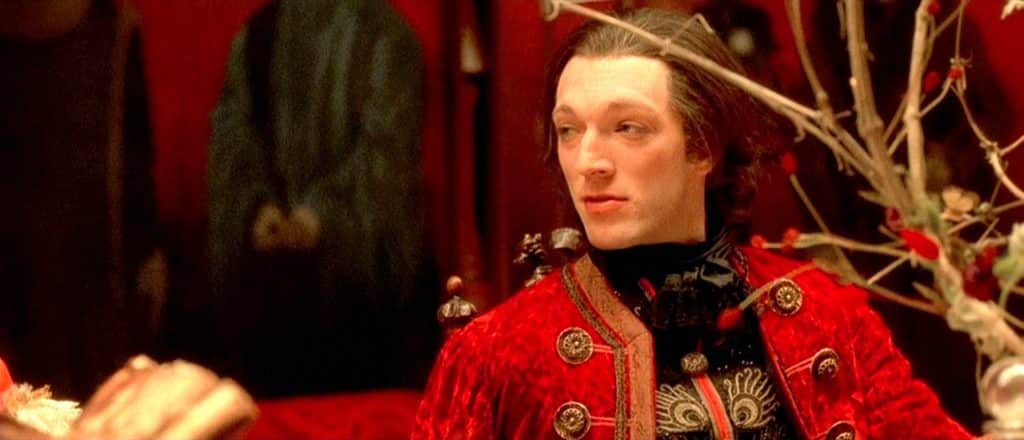
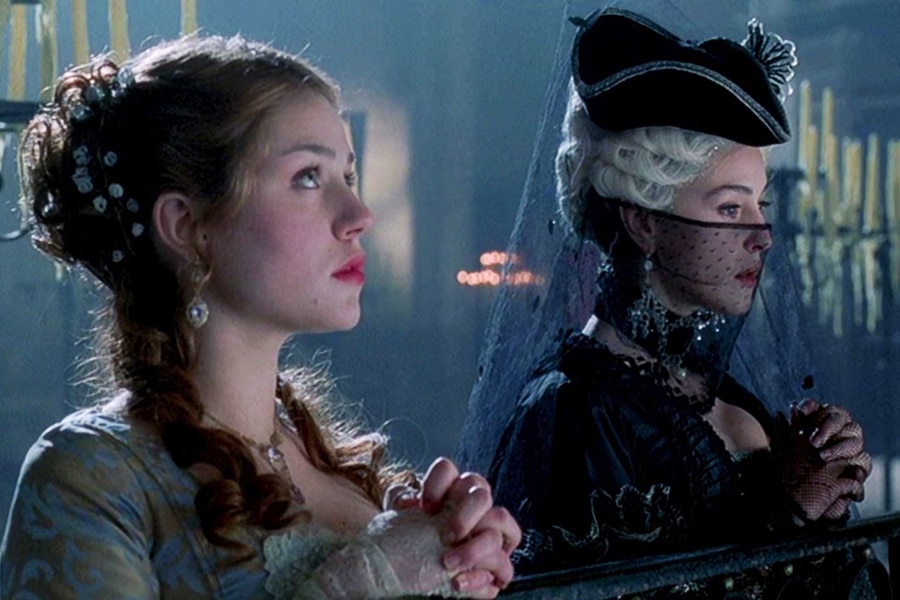
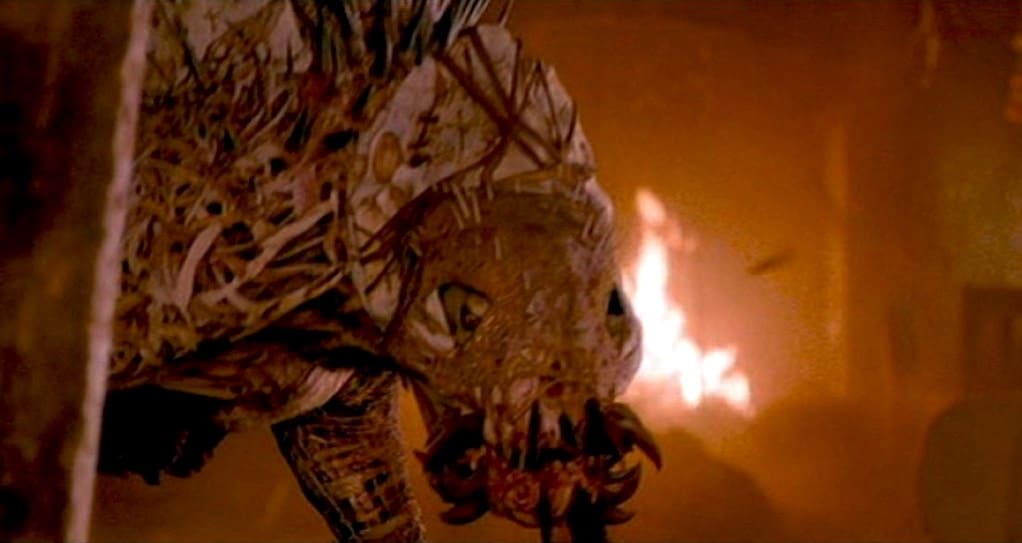
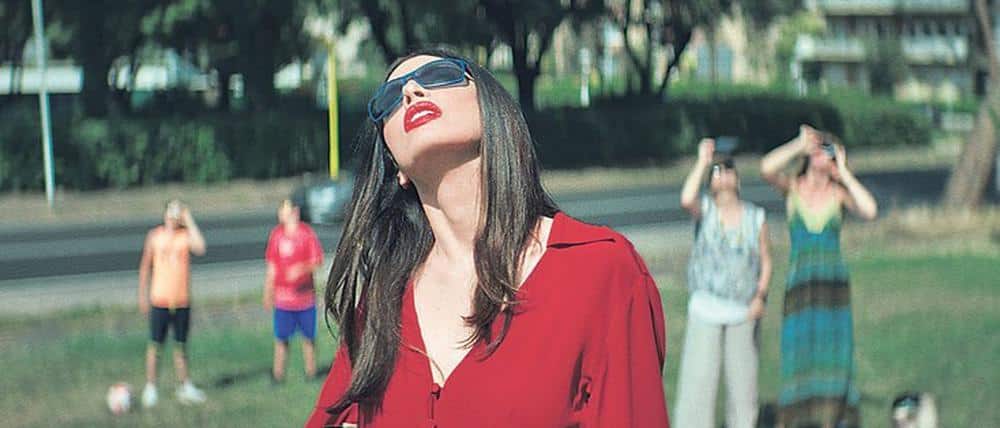
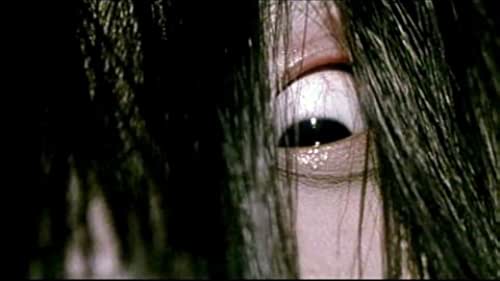
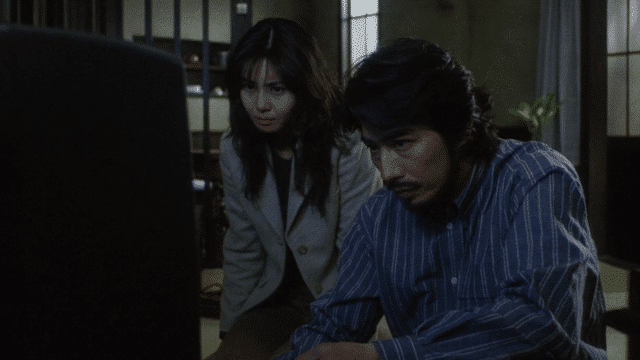
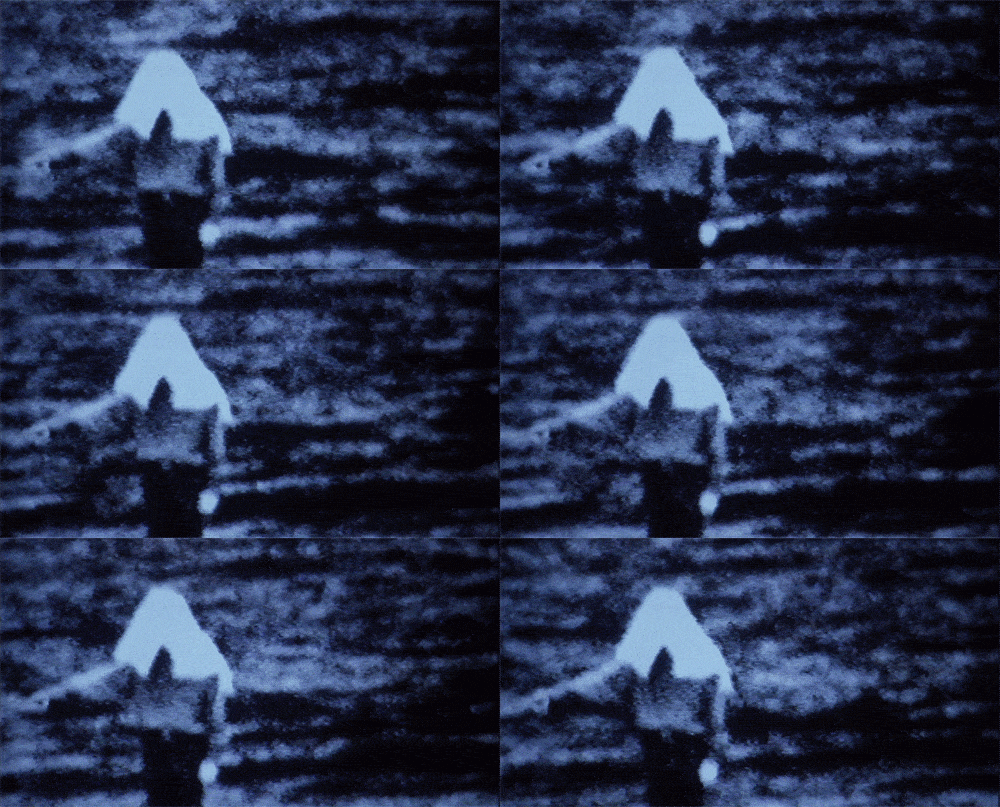
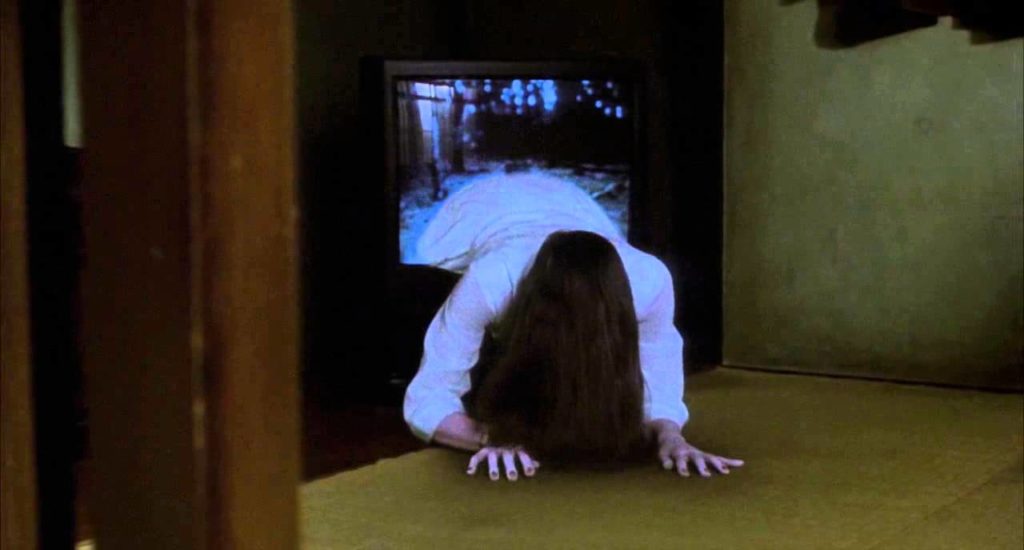
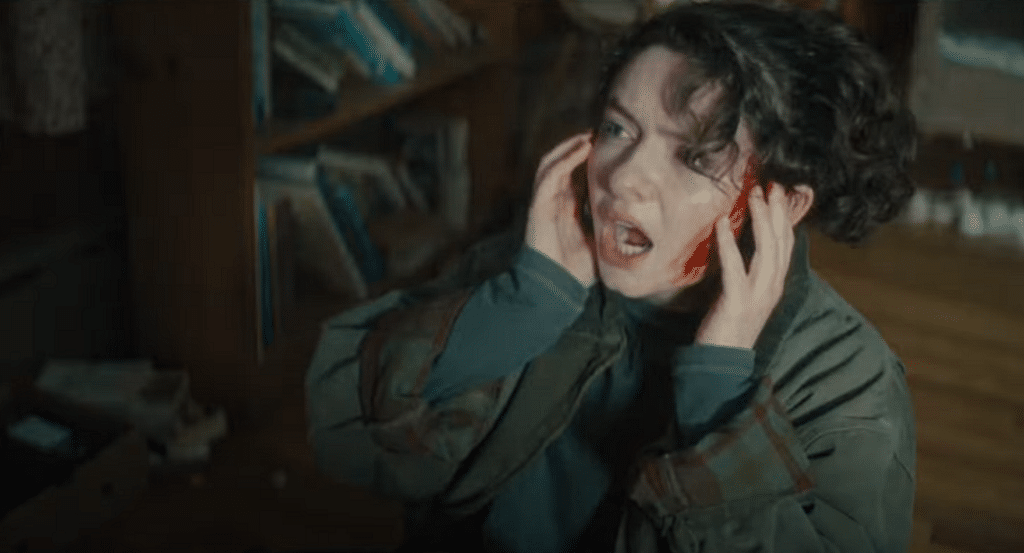
Whilst starting from a reasonably realistic, grounded place, Surrogate (2022) is soon racing along with a raft of recognisable supernatural plot elements, sacrificing its chances at doing something original or innovative to do something tried-and-tested. It’s an often attractive film which does much with its limited budget in terms of its framing, lighting and limited SFX scenes, but these scenes are dependent on ideas easy to follow straight back to The Changeling (1980), Ring (1998) or perhaps most of all, to Dark Water (2005).

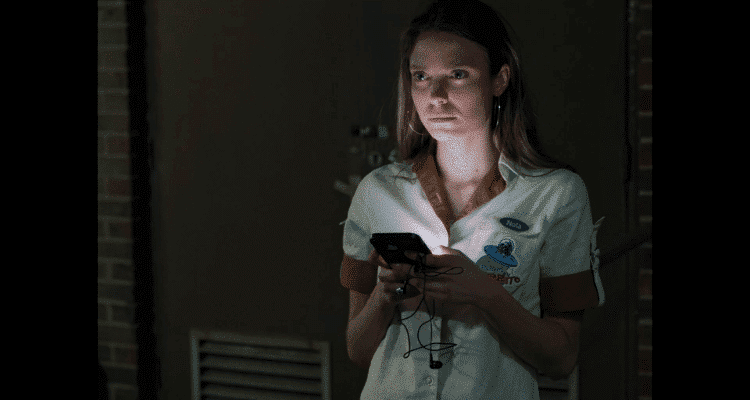
We begin with a small family group celebrating the youngest member’s ninth birthday. We know that Rose has just turned nine, because she’s so keen to ask how grown-up she’ll be by the time she’s ten. This is a single-parent family, albeit with an uncle and a grandparent to offer support. Rose’s mother, Natalie (Kestie Morassie, Wolf Creek) works as a nurse and has just been working a shift at a small-town clinic on a night not long after the party, when she’s approached by a disturbed woman, seeking medical help. The woman follows Natalie to a garage, where she drinks something toxic and – well, a couple of Fulci-esque moments later, it’s clear she’s past helping. Natalie tries to revive her, but can’t. However, Natalie immediately begins vomiting, just like the woman was: her symptoms quickly worsen.

That night, she begins bleeding heavily (when you’re not told where a woman is bleeding from, you automatically know) and needs to be rushed into hospital. Tests turn up irregularities; the team assigned to her declare that she has recently given birth, something which is news to her. She begins to recuperate at home, but her physical and now psychological symptoms persist, soon reaching out to affect other people in her orbit, including Rose (Taysha Farrugia). A lot of new phenomena – and some new characters – all begin to tumble together, as the film settles into its ‘woman vs. malign mystery’ mode.

The set-ups here are easy to read, and presumably intended to be so; you know when a jump scare is coming; you know that a camera fixing its eye on a wobbly chair leg, just as someone steps up on said chair, can mean only one thing. When a random psychic presents his card in the park, we know this’ll lead to a bit of exposition on what is happening. Assuming that the director and writer know what the audience know, then, we can assume that the film is a kind of tribute to supernatural horror per se, though this makes it a challenging watch – it can feel like diminishing returns. The team behind Surrogate has specifically namechecked Ring as an influence, by the way; whilst the film does not go down the route of making technology a key plot point, this influence is quite openly apparent in other aspects.

However, some budgetary and performance-based problems in Surrogate can only make it feel as though it can’t quite match up to those films which influenced it. Some echoing sound on internal shots is one thing, and this can be overlooked; sad to say, Taysha Farrugia’s performance as Rose is unnatural enough to stand out, making her scenes rather jarring. It’s her first feature, granted, but her over-pronunciation of her lines feels like another obstacle in the film’s way. Alongside her, we do have Morassie doing an essentially decent job, and it’s nice to see Jane Badler (Diana from V) doing a brief turn as a surprisingly keen social worker. By the by, the other child actor, Ellie Stewart, has some of the same issues.

Alongside the attentions of social services, the film also has an interesting point to make about the overweening attentions of the medical profession, as Natalie’s unfair treatment by the hospital is – heavily signposted, yes, but no less repellent for that, as her own explanations of her own symptoms are disregarded in favour of a non-existent baby. But then, in shining a light on the burdens placed on mothers in particular, the film is also reliant on them, and perhaps rattles through more of these burdens than is feasible in ninety minutes, even in a supernatural horror. We get through pregnancy, lactation, birth, the maternity ward, parenting and ageing, with never a father in sight, and then there’s the small matter of the title, too. Sure, that’s ‘the point’ perhaps, but the film absolutely requires our shared understanding of these assumptions, as much as it’s ever able to question any of them.

As a result, Surrogate is a visually pleasing, but familiar-feeling story where a few of the decisions and developments tend to work against the film’s overall impetus. It’s by no means without merit, but some of the film’s prickly, predictable content hampers its success at generating scares.

Surrogate (2022) is available to watch now on Tubi and other VOD platforms.

The Unheard (2023)

Please note: this review discusses some points re: the film’s structure which could potentially offer mild spoilers.

The Unheard (2023) feels like a difficult film to review as one, cogent whole. It doesn’t demarcate a number of chapters with title cards, like an awful lot of films do, but feels very much like two, distinct, different films running one after the other. This means a careful, clever premise given plenty of time and space to develop – which is then pitched against a frustrating array of tropes and pitfalls. It’s meticulous, then it’s cursory. What a tantalising, frustrating experience from the Rasmussens, who do some painstaking work here, only to set it bafflingly aside.

The film opens with some flashes of the past (via VHS cassettes, of course) which almost immediately sink into… silence. Our protagonist Chloe (the talented Lachlan Watson) lost her hearing as a child after having meningitis. When we meet her, aged twenty, she is about to take part in an experimental treatment to potentially undo this damage. We get a sense of how this feels for her via some painstaking audio work in the film; it isn’t quite silence which she’s experiencing, actually, more a kind of all-encompassing, baseline hum which locks out the frequencies of speech (The Unheard surely takes some cues from Sound of Metal (2019), which also features the perspective of a young person who loses their hearing). Having established something of what life is like for Chloe, the film reverts to more conventional audio; we revert to a hearing person’s perspective, now listening in to the conversations she has – with the help of apps on her smartphone – with her new doctor, though the film moves in and out of Chloe’s experience at certain points. But, tellingly, she explains to Dr Lynch (Shunori Ramanathan) that, despite her hearing loss, she has always felt like part of the hearing world; this revolutionary new stem cell treatment would, for her, give her back something which she has never felt was totally lost.

The first treatment goes well. Afterwards, she heads to the old family home, both to recuperate and to prepare it, finally, for sale. She texts her father – only her father – to update him on how things have gone; it’s clearly signposted for us that Chloe’s mother is not around, particularly when she begins mingling with the locals for the first time since her illness and relocation. They readily address the past: Chloe’s mother disappeared, and the family left the area as a result. There is an unpleasant sense of absence at the heart of this film.

More trips into the past ensue as Chloe comes to terms with all of this; part of this process involves the expected scenes where she scans through old photos and family videos. But, up until around the hour point, this is a seriously promising story, even if some of its elements are tried and tested. The film offers up carefully-curated loneliness in the character of Chloe, a thoughtful young woman dealing with the double blow of not-quite-bereavement, a horrible partial state of being where her mother is not there but not gone either – and the devastating aftermath of a life-threatening illness, which has taken her hearing, and isolated her still further.

It’s worth pointing out, by the by, that there’s no intimation in this film of a Deaf community which Chloe has embraced, or which has embraced her; here, hearing loss is a decided negative, and always treated as such. The film reminds us of how this might feel at key points, and the sound design here is really excellent. It’s not just the absence of sound which is difficult to bear; the (auditory) flashbacks which occur are equally unpleasant, because they are intrusive and unexpected. In effect, everything is unsettling; when Chloe places a huge knife on her bedside table, in the old family house where she feels and seems incredibly vulnerable, we can applaud her good sense. After all, aside from everything else, there’s a low-level sense that things are somehow ‘off’ in this place; the people, the memories. They’re uneasy en masse, but subtly so.

And then we get to the hour-or-so mark, and things begin to falter. One film ends; another, less successful film rolls.

Firstly, at this point, we get a significant lag: it’s a lag in pace and it’s a dip in plot cohesion (with one utterly nonsensical plot point which could potentially jar the audience out of their satisfying suspension of disbelief, even before the other issues emerge). This could potentially raise an eyebrow, but no sooner have you made your peace with this, than the film elects to pick up a couple of big old red flags, and waves them enthusiastically. The film slows, it stops, then it picks up again, only with a much more familiar-feeling direction.

Oh, no. Suddenly, this is no longer a sensitive blend of supernatural and worldly horror, with Chloe left to decipher the strange sounds and voices she begins to hear (as much as VHS video is overused in modern horror, here it at least forms part of the storyline in some believable way). That gets swept aside, and suddenly, it’s just another puzzle box to solve, with a resolution most viewers will guess as soon as that red flag flutters. The film even does the unbelievable, and more or less parks Chloe’s hearing issues, transforming her from a young woman with a carefully-observed trait into a much more recognisable, and as such more anonymous character. Soon it transpires that it’s turning into another film where that happens to a her.

From here until the two hour mark – too long, too open to misfires – the whole film feels much more anonymous, which is a real shame: The Unheard has good production values, looks great, and offers some strong performances, but its eventual resolutions do little to balance the film’s early promise. It even invites some exasperated yelling before the end credits appear. How can this be the same film? It does so much good work, which it then spends an hour taking away again, piecemeal. As such it’s not without merit – far from it – but the resounding feeling by the end credits is frustration.

The Unheard (2023) will be available on Shudder from 31st March 2023.

Boston Underground Film Festival: Mister Organ (2022)

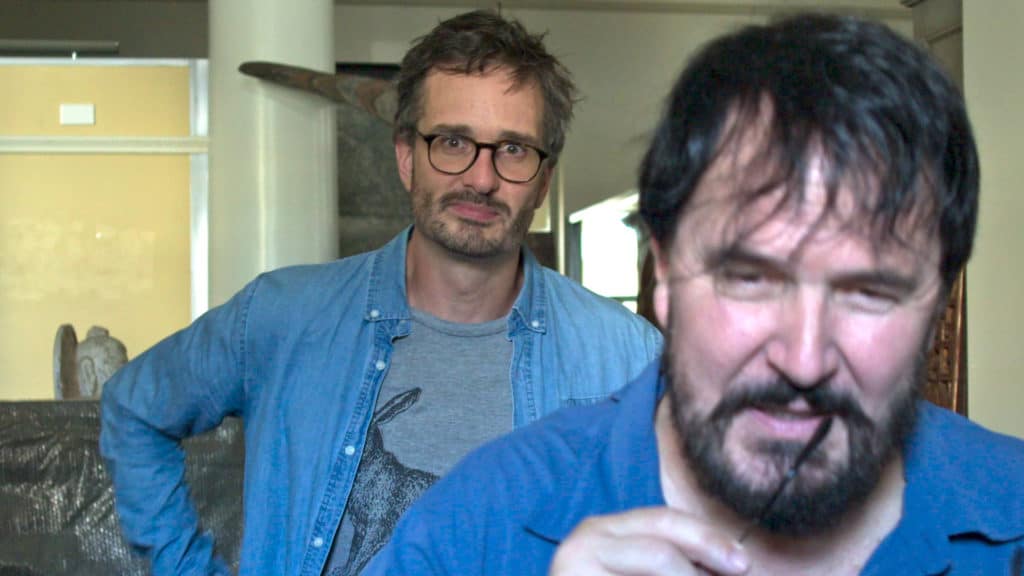
We seem to be living through something of a golden age for documentary film. With the rise and rise of Netflix and other platforms, there now seems to be endless scope to provide for people’s endless appetite for them, to queue them up; they don’t necessarily only want to see great, momentous events being explored, either. Anything odd will do. Well, Mister Organ (2022) is certainly not about momentous events. It’s focused on the individual of the title, one Michael Organ, a fairly unremarkable person in many respects, save for his propensity to deceive and manipulate. As such, this character study steers away from grand revelations and truths; it chooses a different approach altogether. Nonetheless, filmmaker David Farrier still manages to weave a reasonably diverting yarn here, albeit with a few issues and omissions.

The film is often busy with New Zealanders who have, at some point in their lives, encountered Mister Organ; we start with Farrier driving out to meet one of them at a remote ex-psychiatric hospital, now partitioned off into private apartments. Farrier says that this is an appropriate enough place to begin, given that he feels – at this point – like he’s in need of its former function. But that’s left hanging for now: back to 2016 we go, before all of this started.

As an investigative journalist, Farrier picked up on an interesting local story back then, where the proprietor of one Bashford’s Antiques, a Jillian Bashford, became embroiled in a fight with residents parking outside her shop after hours. She hired a wheel clamper – legal, on her private property – who began enforcing her rights to a very lucrative degree, charging hundreds of dollars for the removal of the clamps. The person in charge of the clamping? Michael Organ, who on even brief investigation proved to be a rather colourful character. When the story hit the press, legal letters started to fly, letters which claimed to stem from a practicing lawyer – also Mr. Organ. Clearly there was something odd going on, which proved irresistible for Farrier.

Farrier could, at this point, have begun systematically dismantling Organ’s claims. After all, it’s straightforward enough to find out who does and doesn’t have a qualification enabling them to practice law; detecting IP addresses would have provided some useful indication of whether or not someone was, as claimed, impersonating Organ when it came to the legal letters. That isn’t the film we get, though. In lieu of that, Farrier talks to a number of individuals who have known Organ in the past. Some of them lived with him; all of these rather damaged-seeming individuals willing to talk on camera paint a picture of a manipulative man who gets what he wants by essentially weaponising sheer tedium, talking them into submission and laying them low. This is an interesting phenomenon, as much as it invokes a tale of a fairly recognisable, standard-issue narcissist with some less usual add-ons (such as the delusions of nobility), a man who feeds off those less than able to withstand the onslaught. For all that, this material is all hearsay, which could have landed more effectively with some more substantiation. Some of the interviewees are a little problematic in their own right, too: one-time terrorist suspect Jamie Lockett is probably virtually unknown outside of NZ, and to be honest, came across as if this film could easily have been about him; what on earth karate move uses hair pulling to render one’s opponent a ‘zombie’? Flawed witnesses do not a compelling story tell, even if they tantalise at one.

There’s also a sense that Michael Organ himself – who has allegedly lived under a whole host of minor variants on that name – isn’t quite the terrifying, calculating monster that the film occasionally hints he is. He, and by extension the film, have intriguing content (though again, this gets accepted on its own terms rather than really investigated – the key thing, for example). But really what we have here is a man who has apparently filibustered his way through life, with intimidation being his real weapon of choice. As much as this is reprehensible, it’s only since picking up with Jillian Bashford that this seems to have granted him a materially comfortable life. Before that, we get a sense of a chain of failed shared living arrangements, of invented life stories to stand in for the truth, and a handful of hapless criminal acts. He’s a handy litigator, but other than that, Organ seems to have drifted around on life’s fringes, only really able to lord it over people with even less than he had. Establishing all of this makes for a quite loose documentary, not really driving at anything; the big questions, such as those relating to Organ’s family, stay unanswered. This can be frustrating.

Still, as much as the credits roll before all of the answers are forthcoming, Farrier is able to engender interest in this character, and in how his personal story began to overlap with his subject’s. He clearly is impacted by Organ’s behaviour, and responds on a personal level accordingly. The film is a curio as much as anything else, and beyond that, it hints at the debate about what’s best to do with a person like Organ; should their version of events be brought out to die in sunlight, or does providing that attention only entrench their levels of self-belief? Mister Organ feels like an adjunct to the real story which is still out there, but it has its moments.

Mister Organ (2022) screened as part of the Boston Underground Film Festival 2023.

Boston Underground Film Festival: Spaghetti Junction (2023)

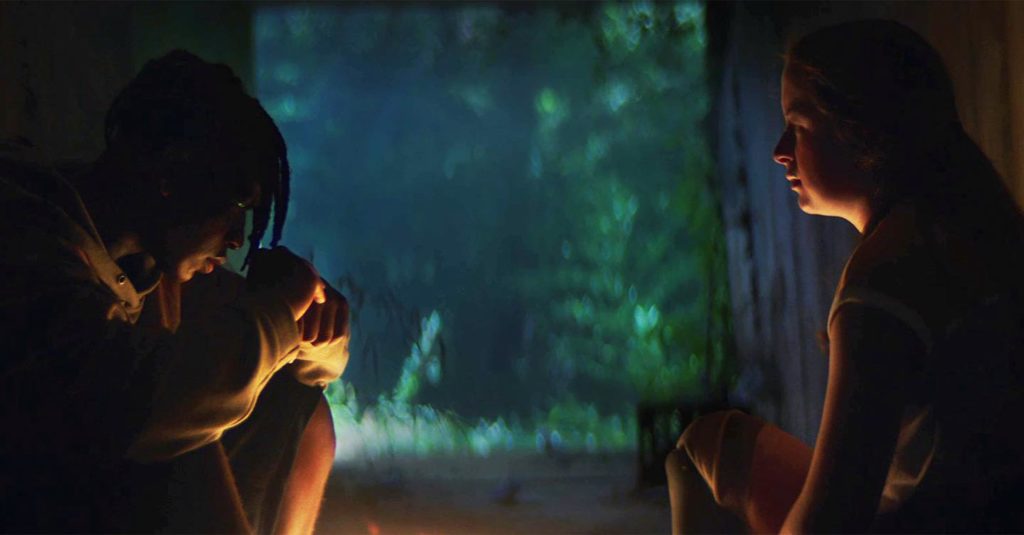
A strange, portentous story presses at the edges of reality in Spaghetti Junction (2023). We get minutely-realised everyday life, together with unusual elements of sci-fi and fantasy, but none of this follows expected patterns. Seething, indignant worry opens the film: we see a father’s anguish, as he rushes back to the family home to discover his youngest daughter, August, is missing. The film establishes early that all of this human drama is taking place on the outskirts of vast networks of roads and routes out of there: the ‘spaghetti junction’ of the title looms over the central characters, both restricting them and tantalising an escape. It’s something that August comes to consider, and it’s why she is gone.

All of this comes further down the line. Sisters Shiny (Eleanore Miechkowski) and August (Cate Hughes) are each on the cusp of adulthood, supported by a loving, if flawed dad, who isn’t quite abreast of what’s happening in their lives. They still act out dance moves together in the park; August has decorated her shoes with childish scribbles; the biggest difference between them now, though, is that Shiny has a boyfriend, Antonio (Jesse Gallegos), who is delightfully boorish with his crass car and bad neck tattoos. Little wonder that Shiny keeps the time they’re spending together on the downlow. August is left to lie for her to their father, or else taken along on dates like sibling baggage; along for the trip or not, she’s being left behind by her sister, and it hurts.

This is all compounded by a recent trauma. August has recently lost a foot in a road accident, and is only just learning how to live with the new normal, walking with a crutch and quite literally stumbling when she tries to keep up. The fact that she falls hard, early, when she tries to join in with Shiny’s little dance routine is clearly symbolic. But perhaps most of all, August is becoming morose, introspective. The shock of what has happened to her is only just beginning to land, with shock compounding regular teenage awkwardness at an already difficult point in her life. August spends a lot of time in bed – it’s easier that way – and sleep, or more properly, dreaming – is becoming her chief release.

She soon begins to find some kind of purpose in an increasingly strange blend of waking and dreaming worlds, feeling a ‘call’ from somewhere in the nearby woods, which corresponds to something she thinks she sees during a quick rest-break during one of Shiny’s godawful dates; someone’s sleeping rough out there, she discovers, someone she soon comes to realise needs her help. This progresses and takes on more and more significance, as her help is in fact gratefully received by this mysterious stranger, which all means a sizeable shift in genre and tone, as August finds herself on a kind of odyssey.

There’s a feeling throughout Spaghetti Junction of something momentous, even unpleasant or threatening, simmering away; the genuinely oppressive heat haze which hangs over the film finds echo in its early atmosphere more generally. It feels like, in every normal exchange, a revelation or an awful truth is lurking, and big decisions and changes threaten to come into view, long before anything actually happens. Much of this stems from August’s struggles, but Shiny feels displaced by trauma, too, and through all of this their father – a lone parent – can only do his best to keep up with two girls, each displaying their grief differently. Great attention to detail, without making use of a particularly extensive script, fleshes out a plausible and likeable set of flawed characters here. All the performances are natural and engaging, with special mention for Hughes as August, whose personal journey – however much of it is or isn’t grounded in real events – feels very real, and poignant. Cate Hughes is genuinely an amputee, and a first time actor, which is extraordinary. Things edge towards magical realism, but never by following expected trammels; this remains a grounded, urban story, with its cars, roads and beyond that, routes, junctions and journeys serving as symbols for August’s own progress towards something significant. Framing all of this, the scale and scope of the film is very diverse, zipping between intimate details and a big, wide, intimidating world out there, peopled – perhaps – by mysterious, possibly dangerous individuals.

Throughout, the fantastical and the everyday are kept in an unusual, engaging balance, as much as the plot edges towards the bizarre. You can be the judge of whether or not this film is allegorical; the point is its humanity, as it hones in on the idea of belonging. August and her ‘traveller’ develop an engaging relationship and their dialogue has some charming touches of humour, too, which works well. August, at the heart of it all, absolutely blossoms as the narrative unfolds. It’s impossible not to want that for her. This is a coming of age drama which weaves together elements of tried-and-tested genres, but comes up with something which feels very innovative, deeply compassionate and intriguing.

Spaghetti Junction (2023) recently screened as part of the Boston Underground Film Festival.

Adalynn (2023)

The horrific side of motherhood has been amply explored in films recently, with varying levels of success; Adalynn (2023) takes its place amongst them, and appropriately, its own success is variable. It certainly has excellent intentions, focusing its scrutiny on a new mother for whom the walls start to close in. But it quickly becomes turgid, and lacks the budget to really give clout to its metaphorical monsters: it becomes a kind of horror-adjacent, or horror-sometimes take on a woman’s postpartum existential crisis.

We begin with a birth, and get to know Adalynn (Sydney Carvill) through a voiceover, as she explains her hopes for a bright future with husband Bill (Wade Baker) and newborn Elizabeth. But her hope comes at a cost to her sense of wellbeing: she’s exhausted, she’s just undergone the physical trauma of childbirth, and she immediately struggles with how she’ll even get close to her expected ‘new normal’. There are early hints of more to this, too – of old anxieties creeping back in, triggered by the shock of motherhood, and by pregnancy and nursing nixing the medication which kept the symptoms in check. Anyone with more than a passing knowledge of our common modern neuroses will recognise OCD in there, and the fatigue of keeping up with her mind’s insistence on straightening, counting and checking contributes to the sense of rigmarole Adalynn is beginning to feel, as she takes over on feeds and other tasks.

The coming flashpoint is clear and obvious: her husband is going away for a conference, leaving mother and baby alone. She says she’ll be fine, but no sooner is Bill out of the door than Adalynn is increasingly panicked. She’s struggling to bond with her daughter, and that’s bad enough, but then she begins to doubt her own sanity. Seeing and hearing odd things, she grows more and more paranoid, losing sight of herself – and fearing the worst outcome for the baby.

Adalynn throws trauma around like confetti, adding more and more plot details in its first thirty minutes until the list of life-shattering issues here is quite long. It seems there are many things which Adalynn has to contend with, and they are all present in varying degrees. As such, you are invited to ponder which, if any trauma is the real trauma, or the worst trauma, if we can call it that; the film starts out with certainties, but then decides to pull away from these, splintering into a world of missing time, flashbacks and – it has to be said – multiple false moments of closure, which are a huge detriment to the film overall. There’s just too much of this for it to hang together and retain any mystery, purpose or appeal. And yet, the film starts so stridently: you could say it goes from one extreme to another, opening with a chopsy voiceover – always a tricky beast – which spells out ideas and emotions which are perfectly clear from the unfolding film. Carvill is more than equal to the task of playing an exhausted, troubled new mother, by the way, and can get more of that across with her sheer, authentic-looking fatigue than any voiceover pointing out the same fatigue.

It’s a genre film – on balance – and as such, it’s not beholden to represent the objective truth about new motherhood, but still: it has its moments, and it’s bold enough to tackle the tiredness, the doubt and the moments of anger, even if it Can’t Go There with breastfeeding, or a realistic post-partum paunch (Carvill is trim in ways that no woman could ever be after growing a whole human). The film also does without an actual baby, come to think of it (though this can be partly justified by the film’s fantastical elements, as few as these are on the whole). There is a germ of honesty in here, though, which still deserves credit. We are socialised to think that childrearing is the greatest, most immense privilege in life – which I’m sure it is for many, but it’s a privilege which comes at a cost to many, so it could never hurt to represent the negative side of it – the pain, discomfort, shock and dismay. Likewise, let’s normalise women who have significant mental health issues pre-baby getting straight back on with the medication and the help they so clearly need to do a good job of parenting. What good is martyrdom?

Horror has always led the way with the most troubling aspects of parenthood, because it always leads the way in reflecting our darkest sensations and anxieties about our lives. In some respects, it’s a shame that Adalynn didn’t go further down the horror route in its own take; the promotional literature is a little misleading, perhaps, promising that the film “trades in a space between horror, fantasy, ghosts, demons, the Satanic occult and dreams.” That makes it sound more akin to Anything For Jackson than the film we actually get. The film we do get splinters into too many component parts and false endings, ultimately, to hold together as a horror, or a fully effective narrative – even if it has some interesting moments, a good lead performance, and some competent, if lo-fi scares.

Adalynn (2023) will be released on March 28th on digital and DVD.

watchAUT Austrian Film Festival 2023: Rubikon (2022)

Plot is not a primary concern in the close-at-hand speculative fiction of Rubikon (2022): that’s not to suggest it’s another of those art installation type films which evades a storyline completely, but it is a slow, quiet, morose kind of film on the whole. It could easily have been done very differently. A few things are established early on: it’s 2056; only the wealthiest can afford the purified air necessary for survival, thanks to the perilous state of Earth’s environment; it’s corporations, not governments, who say what goes – fighting wars amongst themselves, even employing their own militias. This all seems to invite some kind of action movie, but actually, whatever’s going on down on Earth is discussed or observed from a terrific distance, both physically and metaphorically.

High above the decimated planet, a vast space station orbits: the job of its crew is to try to do something, anything to help fix the atmosphere. We start with two new arrivals to the station, each coming from a different faction on Earth but forced to get on thanks to the confined quarters, etc. Hannah (Julia Franz Richter) is military, Gavin (George ‘Versailles’ Blagden) the son of a top executive; they’re the proverbial odd couple. Accordingly, each of them draws down the suspicions of the existing crew for various reasons, but there’s work to be done – an updated mission, in fact, taking them on a new path over the planet with a different objective.

To be honest, the details of this mission never became very clear to this reviewer: it took reading around after the fact to really understand it. This isn’t helped by the fact that the incidental music seems to drown out the dialogue in places, and the pan-European cast each using English as a lingua franca leads to some genuine-seeming communication lapses, but ultimately, the issue here is that this plot element is not strongly represented in the script itself. It turns out to be something like this: ship’s doctor Dmitri (everyman actor Mark Ivanir) has been researching algae, which could provide oxygen and food for the beleaguered population. Some of the astronauts are about to take a sample of this with them on their new mission; then, the key event occurs (and there’s no mistaking that, at least). Earth is very quickly obscured by a vast, rolling wall of what looks like smog, which takes out systems and communications (bad news for the crew who are currently out there, reliant on technology to fly them) but, potentially, this smog does far more. There are some brief moments of interaction which reveal that people down on the ground are fleeing for their lives; how successfully remains to be seen.

So what to do? Stay on the space station – which can be self-sufficient for the foreseeable future – or keep trying to contact Earth? A tough choice, albeit treated quite obliquely; Rubikon certainly has a set of running themes, and one of these is the decision between personal wants and the ‘greater good’. For all that, the film runs aground for a frustrating period of time around the hour mark. It stops almost completely, with clipped conversations and hints at future decisions here and there, but little beyond that, save for one plot addition which is so teeth-grindingly predictable as a way of adding ‘a moral complication’ that it almost destroys the goodwill the film has built up. Still, it takes an interesting perspective by placing the potential last of humanity in orbit, and asking them to weigh up their own safety against altruism, particularly possibly fatal altruism. And then, something occurs which adds greater urgency to their decisions.

This all comes to us via an overall attractive, often innovative piece of sci-fi. Green-screen is used carefully; the module and the station look very…ordinary actually, nothing too striking or different from modernity in terms of aesthetics (a plausibly annoying tangle of wires and cables irritates the crew trying to fix things). But some of the shots used are genuinely chilling and evocative, the roiling clouds passing over the Earth look great, and we get plenty of familiar-feeling, pleasing sci-fi bits. You know the ones. The zero gravity, the spiritual-seeming beams of light from the sun, the dangerous jobs which need to be done outside the station; all are present and correct.

So: many elements look good, the film’s budget has been wrung to the max, the overall idea is sound, and it’s given an unusually languid, dream-gone-sour treatment here. Rubikon offers an interesting spin on a moral quandary, and thankfully it veers away from any simplistic proselytising about the environment; that would be a tedious, jarring add-on to all the dreaminess. It would definitely benefit from losing a good twenty minutes – it’s too loose in places – but there’s (just) enough spectacle and material here to hold interest, particularly for those who like an element of philosophy in their sci-fi, or simply appreciate the spectacle which sci-fi offers.

Rubikon (2022) will appear at the watchAUT Austrian Film Festival taking place in London between 23rd-26th March 2023. For more details, please click here.
Spoonful of Sugar (2022)

Meet Millicent. She’s a twenty-one year old student working on a thesis about children with severe allergies, which means that a prospective babysitting job could double up as useful research. This is because the child needing a sitter, Johnny (Danilo Crovetti) has a seemingly endless list of issues: he has the mother lode of severe allergies, a strict regime, a raft of medications and he’s non verbal, too. But Millicent (Morgan Saylor) really wants the job, and manages to talk her way past his hawkishly-concerned mother Rebecca (Kat Foster), who has a tough schedule of her own and really needs the help. Rebecca’s a self-help author of the ‘sexual awakening’ variety, you know the type: game face, high heels, famine-thin authority. Besides, Millicent quickly forms a rapport with Johnny, so this is enough to get her in. Her relationship with the household thus begins.

Here’s a nicely twisted, twisting tale about families, motherhood, sexuality and identity. Nothing here is exactly as it seems, but even if it were, there’d be more than enough fascinated consternation to go around. Millicent’s enthralled, appalled reaction to Johnny’s father Jacob (Myko Olivier) walking around with his shirt off sounds one early alarm; this family evidently has a lot going on, with husband and wife playing a game of queasy, thwarted encounters against protestations of duty (motherhood and sex are not compatible here, at least in the ways mother Rebecca wants). The presence of a new, naïve girl catches Jacob’s eye, too; there’s a sense that any man readily walking around half-naked when he could be seen by the hired help knows exactly what he’s doing.

But what quickly becomes apparent is that Millicent has her own problems. When she’s with Johnny, she comes across as a playmate, not a sitter. They each seem mutually at some stage of arrested development, but nonetheless, the ways that they bond feel authentically sweet, with some good outcomes along the way for this troubled, isolated little boy. This is a horror, though: it’s not here to resolve all of these issues and make no mistake, everyone has issues here, not just the key players. Millicent has a kind of morbid fascination with family life, but her perspective is that of an outsider, as she has had an abnormal experience of family during her own life to date. She sees the family unit as something to break into, then to do better than everyone else.

Her take on this is dispassionate at first, but she becomes increasingly inveigled into Johnny’s family, something facilitated in all the weirdest ways by her medicinal doses of LSD, part of a treatment for anxiety and depression. Along the way, sexuality looms over her, unwanted but wanted, and Millicent seems in many ways like a new version of May. There are the same abortive efforts to understand the opposite sex, the same unseemly behaviour, the errors, the kooky but failed attempts to grasp a normal life. There’s maybe a little Lola Stone, too. The unpalatable message here is that these troubled girls don’t have a grounding in values and morals, so how can they truly have what they want? Spoonful of Sugar is as sad as it’s sickly and disturbing. That goes for Rebecca, too: via her, motherhood gets a solid drubbing, standing as a list of unpleasant obligations which come between Rebecca and everything she wants. If there’s any hopeful message here, it’s – get thee to a nunnery. That would be easier for every woman concerned in this narrative.

That’s a tale as old as time, of course, or at least as old as nunneries. But Spoonful of Sugar feels very modern, and not just through its slick, appealing aesthetic style (Shudder Originals usually look the part). The career woman and all her attendant guilt, the experimental treatments for anxiety, roles within modern academia, up-to-date, if flawed social care, and even the discourse on choking during sex, which is apparently very now: all of these things position the film on the outskirts of a recognisable world, our own. Things steadily ramp up, and Spoonful of Sugar is more than able to shock; it’s a film peppered with fetid rabbits, after all. That’s got to be some kind of sign.

Even if you may hazard a guess as to where it is all going (and hey, you may be wrong) this is a stylish nightmare with a surprising amount taking place, on and off screen, across a thankfully modest run time. Not everyone will like all of the elements used, but any film which can dig into the idea of ‘victim’ and have so much of interesting substance to say is just fine with me.

Spoonful of Sugar (2022) is available now on Shudder.

Sound of Silence (2023)

An at times odd, somewhat experimental piece of supernatural horror, Sound of Silence perhaps struggles because it tries to do so much. In its efforts, it at times spins wildly between being hectic and being flat, between being an homage and striking out alone. But there are good elements in here, and these deserve credit. We begin with a domestic setting, and a man in a suspiciously Amityville-eyed attic, working on an old-fashioned radio. He tinkers past the point of danger, in a warning to all inveterate tinkerers: first, hearing something strange – an odd, alarmed voice. Then, the radio itself seems to conjure an apparition, a none-too-pleased female ghost, who grabs at him. And then it gets even worse.

Given the guest spot which the radio enjoys as the opening credits roll, it seems that the item has had the potential for mischief for generations: there it is, in a bunch of photos taken in different historical periods, the people sitting near it all looking oddly blank-eyed. That being established, we move back to the present day: in the US (the location is equally heavily signposted for us), a struggling singer, Emma, is called away from flunking auditions by a phonecall from her native Italy. It seems that the man who tinkered with the radio is her father, and for his efforts he has ended up in hospital – in the ICU, in fact. She and her boyfriend Seba fly home, and get filled in on the details by her mother, who was also injured during the event: Emma’s father has not been acting like himself to say the least. Mama also warns against them going to the house, but Emma (Penelope Sangiorgi) ignores this advice wholeheartedly.

After doing some immediate laundry (this is surely record mileage for taking apparently dirty washing to one’s parents), and having sent the utterly feckless Seba out to get some food and supplies, Emma starts to play around with some old recording equipment in the house. Her parents always fostered her talent for singing, so there’s quite a lot of kit still around, including a small, soundproofed studio. But as she listens to some old tapes, she, too, hears something strange. Whatever the radio did, its influences are still present, and to escape its influences, she has to understand its story.

The ‘haunted/cursed object’ is a comfortable and much-beloved horror trope, and presumably anyone reading reviews at this website can think of a few examples they like. Oculus (2013) is a personal favourite, by the by, and clearly referenced here. Sound of Silence clearly has a sense of where it fits in to this slew of malign bric-a-brac, and actually, using a radio is not a bad idea at all. Tuning into different frequencies always was a little creepy, after all, with all those half-heard and recognised voices mid-conversation, or distant snippets of alien songs, never to be heard again. One of the things about this new wave of indie horror which fixates on analogue technology is that, often, there’s little sense of what that technology actually did which differentiates it from digital; the main takeaway is often simply, ‘it looks funny and retro’. At least here there’s more to it, and there are some genuinely creepy scenes where audio recordings are used – it calls to mind EVP, which may well be nonsense but, again, is unnerving. Sound itself is the enemy here. More visual scares are somewhat less effective, with a lot of reliance on flickering jump scares in particular, but this does at least mirror the ways radios can quickly tune in and out, gaining and losing signal – assuming this was the intention. The film is evocatively lit, though, which cuts across the often crowded frames to call to mind Italian horror of the 80s, with an unreal, dreamy aesthetic.

Of course, to end the ordeal, Emma has to somehow understand what is causing the phenomena: this kind of resolution is the key to getting out. It’s a tale as old as time, or at least as old as the horror genre. The film feels a little strained and uncomfortable where it shifts modes from mystery to exposition to accommodate this, and some of the ways it handles some rather uncomfortable, hefty subject matter along the way will draw sharp sighs from some viewers. It is one of those moments where Sound of Silence overstretches itself, making weirdly light work of sensitive, unwieldy themes. But at least it has the gumption to try and follow a narrative, and to generate atmosphere through more than aesthetics alone. You can forgive a lot as a result, so a few uneven performances, a desire to reference a long list of cinematic influences, or a grim determination to hang on for ten minutes past the perfect place to roll the end credits are just minor concerns. When all’s said and done, it’s better to attempt too much than to attempt too little, and Sound of Silence draws together some effective moments from its grab-bag of ideas and atmospherics.

Sound of Silence (2023) will be available on VOD from March 9th, 2023.

They Wait in the Dark (2022)

There’s a common theme throughout They Wait in the Dark, clear from the opening seconds, and it relates to the cycle of abuse: how damaged children become damaged adults, making choices which perpetrate further harm – to themselves and others. There’s some room for debate on how convincingly this is done overall in the film, but despite some misfires, it remains a worthwhile project.

As the film opens, we see a little girl standing over the body of a murdered woman – a flashback, we gather, but as it’s made clear to us that we have followed the little girl into adulthood, things don’t exactly seem to be on an even keel now, either. When we pick up her story, she seems to be camped out on the floor of a convenience store with a little boy, her son; this is strange behaviour which soon gets them noticed. They have to move on, heading to a nearby motel for the night (paying cash, which is itself cast as a little suspect). As the woman – Amy (Sarah McGuire) – examines herself in the bathroom mirror, we see that she has a stab wound in her side. They’re fleeing from someone then, and they need to get to the next town quickly.

Amy has just inherited the old family home on the death of her father, and on their way there – where they plan on going to ground for a while – they meet an old friend of Amy’s, Jenny (Paige Maria), who is working as a waitress in a local diner. They used to be close; Jenny is therefore insistent on helping the pair, and drops them at the old house herself, cautioning Amy that the place has become a magnet for local teens, who are aware that it has a history. Kids have been hanging out there, doing drugs, doing seances even; there is some evidence of this inside, but Amy and young Adrian (Patrick McGee) have little choice, and clean up as best they can. They evidently don’t want to be found. But have they already been found, by someone or something? There may be more at stake here than just Amy’s pursuant partner.

The part of Amy was written for actor Sarah McGuire, and she is, by and large, very effective in this role. She is very slight physically, which lends an extra menace to the physical risks and harms she undergoes in the film. Added to that, she is clearly strained, tired, but defiant and fiercely protective. Having established this, the film takes a risk by adding in elements of her own unpleasant behaviour, because having made us sympathise with Amy, we are then invited to call what we think we know into question; certainly, McGuire has much to do here, as do the audience. Added to that, the film is ambitious in the possible directions it could go; it feels a little contested in places as a result, first seemingly a clear-cut horror about a realistic situation, and then potentially an occult horror. It builds in new reveals, using catch-up conversations with Jenny to backfill the story, but keeping the legacy of trauma in view. There are lots of individual plot elements to balance.

Some elements inevitably slip out of view as the film drives towards its conclusion. Similarly, the character of Judith (Laurie Catherine Winkel) is fraught with unlikely lines and developments, which pull away from the more realistic dialogue and performances given by McGuire and McKee primarily: the ways Judith is written to be a ‘nasty piece of work’ seems to involve perpetual smoking (people look increasingly unfamiliar with how cigarettes work the more they recede from use, by the way) and listening to metal with vengeful lyrics as she makes her way to her destination, a destination she finds easily enough. Not needed, arguably: in some respects, you could argue that her physical presence in the moment is not needed at all, particularly when linked with some minor continuity errors late in the film – these are unfortunate. But despite some of these moments, They Wait in the Dark does rally for a provocative finale, endeavouring to give an engaging point and purpose to what comes before. There’s ambition here which is largely successful, and the film does make an attempt to tackle uncomfortable topics head-on, approaching them in potentially unpleasant, but ultimately interesting ways, with a few thought-provoking about-face moments.

They Wait in the Dark is available now.

Jane (2022)

Who’d want to be a teenager today? Sure, for many teens living in the West there’s an immensity of privileges, but these come at a cost: more pressure, more scrutiny than ever. The Jane of this film departs the narrative in its very earliest scenes by committing suicide (off-camera, but clear). Scroll forward in time, and we meet her best friend, Olivia (Madelaine Petsch), who has swapped handling her grief for a punishing relationship with personal ambition. Everything is about college applications now. She follows a strict routine, imposed via her smartwatch, which is all gearing up to get her into Stanford: the extracurricular pastimes she takes part in are all engineered to improve her chances.

This would all be taxing enough, but the transfer of a new student, Camille (Nina Bloomgarden) rattles her immediately. Camille is a gifted debater; Olivia is currently head of the school debating society. When your sense of self is this brittle, then any shifts can feel like a disaster; add to that Olivia’s Stanford application getting deferred, and things feel even more desperate. But at least this crisis gets her talking to Isabelle again. Isabelle (Chloe Bailey) was a close friend of both Olivia and Jane, but had moved away from Olivia in the aftermath. They re-bond over an option which Izzy offers: to use the internet, do some digging, and find out if there’s anything in Camille’s past which could be used as leverage. In today’s climate, no one can ever – truly – leave their pasts behind, after all. But success in their scheme precipitates more scheming: by some happy fluke, it seems that Jane had left herself logged in on Izzy’s old laptop before she died. Who better than a dead girl to mix things up a little?

Olivia is an interesting character here. Never mind the fact that actor Madeleine Petsch is pushing thirty – though this feels like a noble cinematic and televisual tradition at this point – because she doesn’t look out of place in a high school setting, and she’s every bit as ambiguous as you’d hope she would be for a role like this. She’s immensely driven, sensitive to any slights or disadvantages, and this makes her – at least initially – reasonably sympathetic, but by the same token she is fractious, determined, scarily selfish. Izzy is more pragmatic, though the film begs the question of how accurate this impression is. She has her own secrets, and her own agenda. In many respects, she has more at stake than Liv; she enjoys many of the successes that Liv wants for herself. Embedded in all of this is commentary on the insanely competitive college entry system in the US, a mercenary and punishing process which would drive even the most benevolent student past their limits. Our key characters have to negotiate this, as well as their grief, which is clearly unresolved. It hangs over everything.

What’s interesting is how this grief is rendered into opportunity; it affords the girls various options, from teasing to bullying to far worse things. Jane appears as a kind of cipher for what’s really going on, particularly with Olivia, but what hits home even more successfully than this is the use of social media as a means of transgressing old, formerly inviolable boundaries. If you can be anyone, then you can say anything: the troll’s charter. Here, social media becomes a kind of devil’s bargain: when it’s being manipulated to provide certain opportunities and victories, you just know that the payback is coming. The media has changed, but the narrative arc has not. The film plays somewhat fast and loose with the logistics of social media – the log-ins, tracing IP addresses – but it still hangs together pretty well, driving at the central message that remodelling someone’s memory as you see fit will inevitably come crashing down. And many of the old rites-of-teen-passage scenes are there: the classroom, the high school party, the principal’s office. That hasn’t changed. Similarly, the world these girls inhabit is wealthier and more modern in many ways, but the milestones remain.

Jane (2022) has a bafflingly low audience rating on IMDb; sometimes there seems to be no rhyme or reason to this. From this reviewer’s perspective, this is a decent, well-observed drama, and another entrant in the burgeoning genre of social media horror: as a continuing factor in the lives of so many, it’s no wonder we’re seeing more and more of them, with more and more disastrous and/or damning messages. Jane is psychological rather than visceral, but this is no discredit to the film. In fact, in its overarching message – one which only hoves into view at the end – it has plenty to say about success, and those who succeed. That’s most galling of all.

Jane (2022) is available to view now.

Solid Rock Trust (2022)

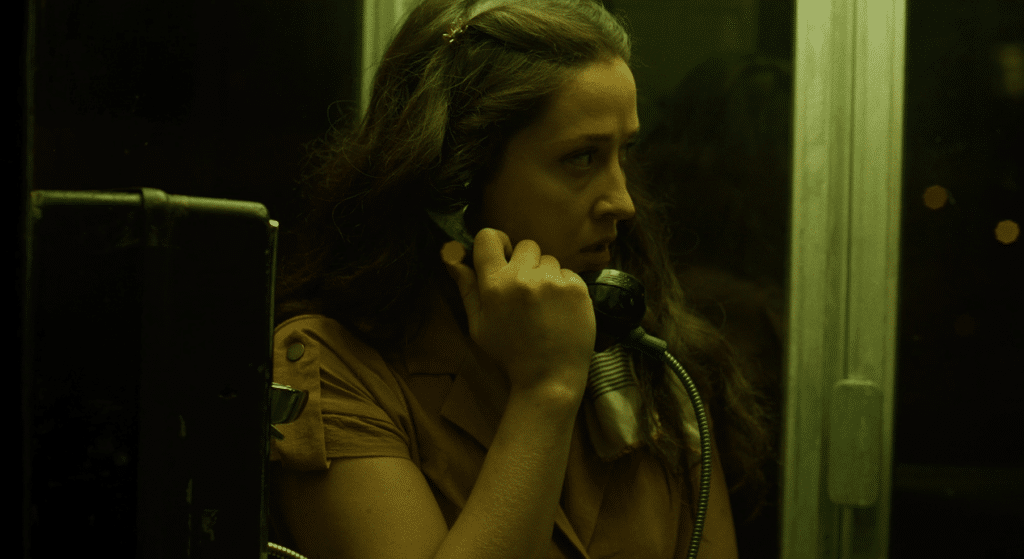
Solid Rock Trust starts with purpose and forward momentum: this in itself marks it out from a lot of rather more nebulous fare doing the rounds these days. We start a few minutes out from a significant bank heist, and we start as we mean to go on. Something big is happening, and it’s being coordinated by Maddie (Koko Marshall) who, whilst not physically present at the site of the heist, is running the show at a distance. She speaks to the key players by phone: there’s Rowan, with whom she has some history; Carmen, who is none too impressed at the hierarchy of this thing; Nills, an Aussie with a much more relaxed attitude, and then a guy called Boomer – who is new to this, and nervous. And here’s a thing: Maddie is using a different accent to speak to each of them. A cautious approach is clearly necessary.

Maddie has access to the bank’s CCTV system, its security doors and other core systems besides, but she needs the group members to perform their roles so that she can extend her reach even further: this isn’t your standard job. There is a genuine sense of immediacy here, and this is an interesting approach, not to mention a brave one: establishing that the main thrust of the action is taking place elsewhere, off screen, then leaving the lead actor to sustain the tension is novel, or at least unusual. Other heist movies have displaced its actors to a different location (Reservoir Dogs comes to mind, at least in this respect) and similarly, lead actors have delivered a lot of the plot developments via phone conversations (again, you could name Run Lola Run, in this key respect) but Solid Rock Trust marries these two elements, and does so very well, making something all its own.

As the cracks begin to show, and then as the plan begins to fracture entirely, there’s a moment – at around the thirty minute mark – where you may find yourself asking: what is going to sustain us for another hour or more? Well, as it turns out, the time flies by, and it does so with no significant lulls or misfires. Here’s how.

Solid Rock Trust has a snappy, consistent script which is perfectly suited to the film’s running time and its tone, carefully and steadily building the plot, with all of its incipient power struggles, character flaws and themes. But it maintains a light touch, with only a few moments of strained credibility which, on balance, harm the film none. There’s humour in here, too, which successfully shifts things away, momentarily, from building tension. Kudos to writer and director Rick Ives for a great about-face, too, cutting straight through an expected outcome with a rather different one; that scene alone displays all the hallmarks of confident writing, the kind that retains a sense of fun about building a narrative. Varied, engaging camerawork also helps enormously.

But the film really belongs to Koko Marshall, who first establishes, and then holds our interest as the only actor on screen: it’s a big ask, and the whole film would have gracelessly collapsed, had the casting been wrong or the performance not up to muster. She’s superb though, plausible and likeable with a back story which subtly filters through the tense, changeable, spiralling situation. There are other performers here, in a ‘play for the radio’ sense, but it works: they too, both respond to, and drive the rapidly unfolding situations.

Crime dramas and heist movies are not the standard sorts of projects reviewed on this site, but it’s good to take a gamble, and my word, this particular film is a breath of fresh air – a much-appreciated one, at that. It’s a film which makes an artform of its bold approaches and decisions and it comes together productively, getting the key elements just right. In essence, there’s a great deal to appreciate in this clever, pithy and well-handled drama. It doesn’t take a fortune, it takes talent and enthusiasm, and this film is full of both.

Solid Rock Trust (2022) is available now. For more information on how to watch the film, please click here.