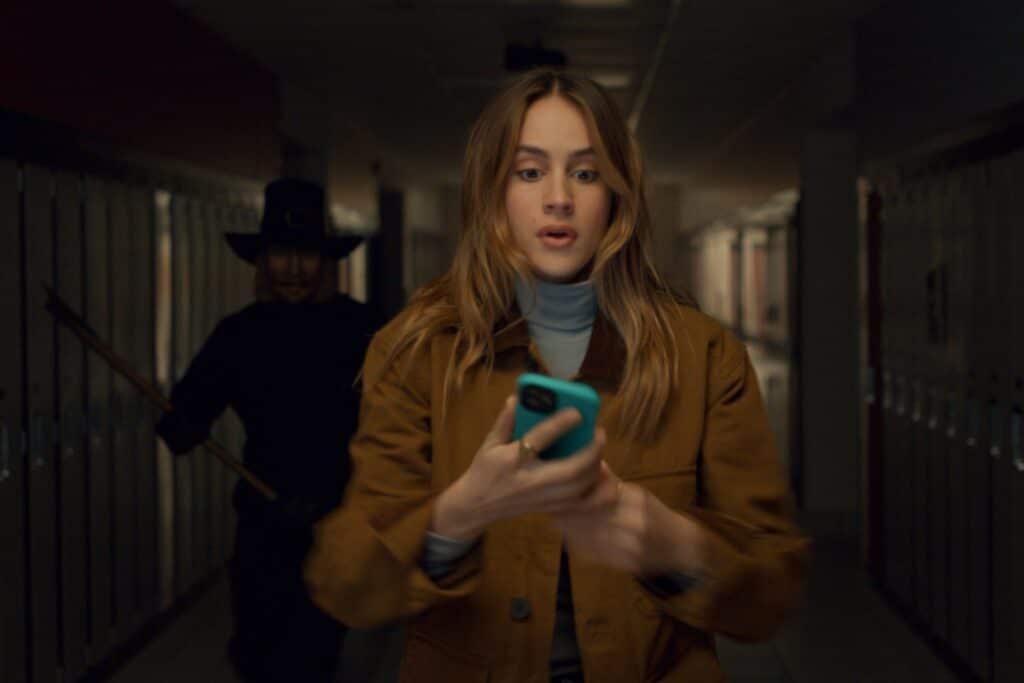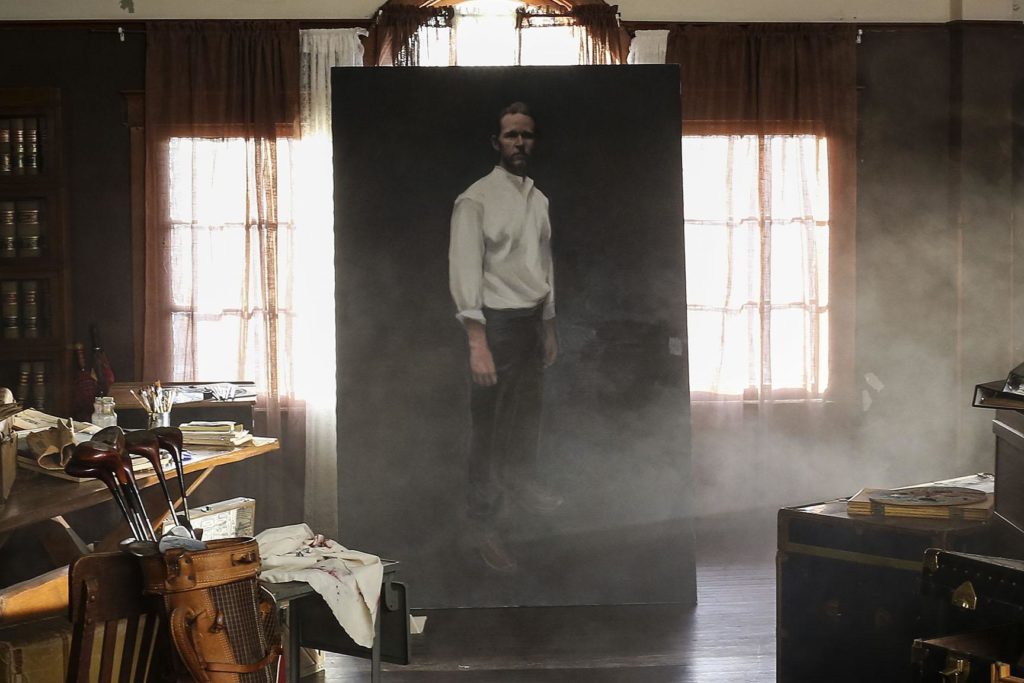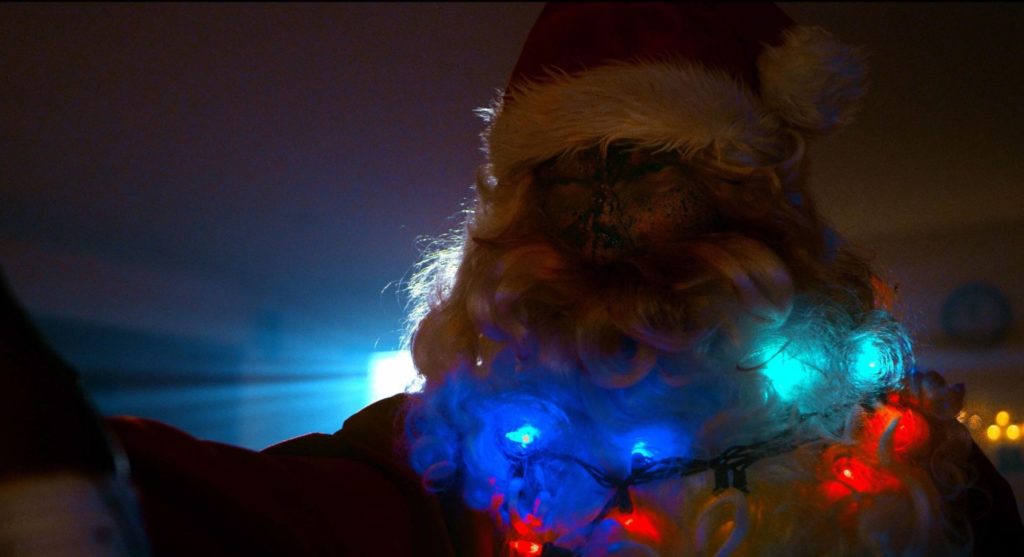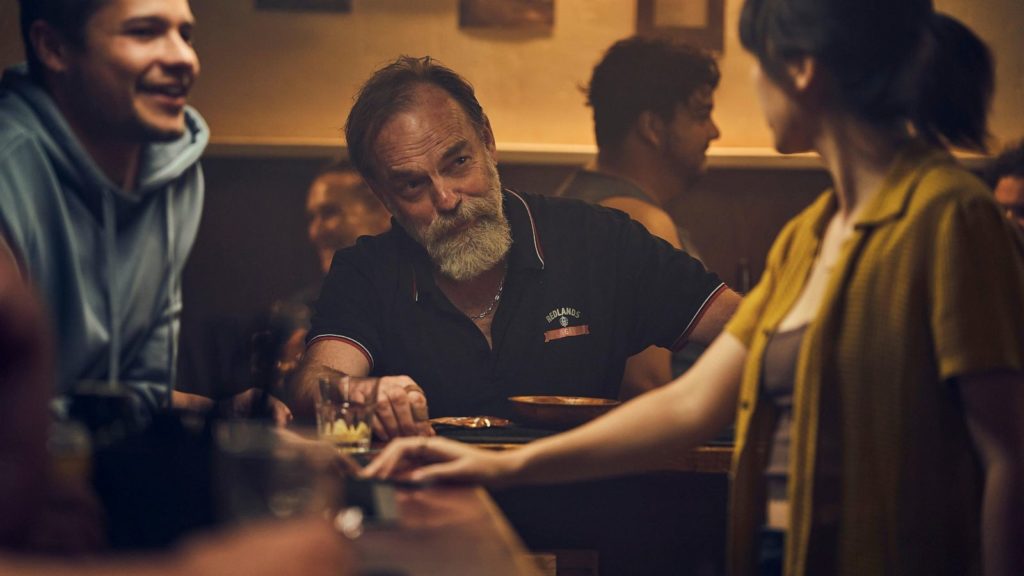
Saltburn (2023)

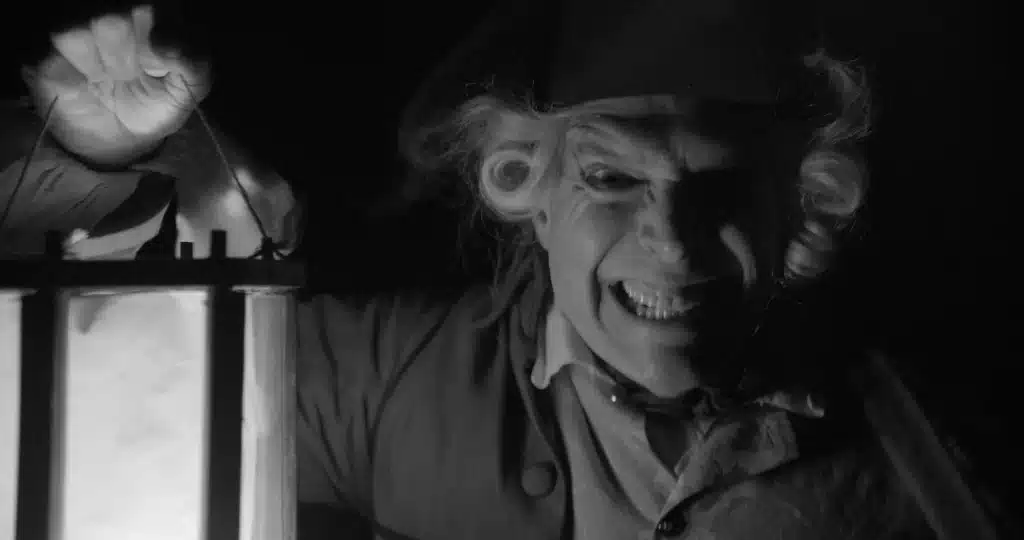
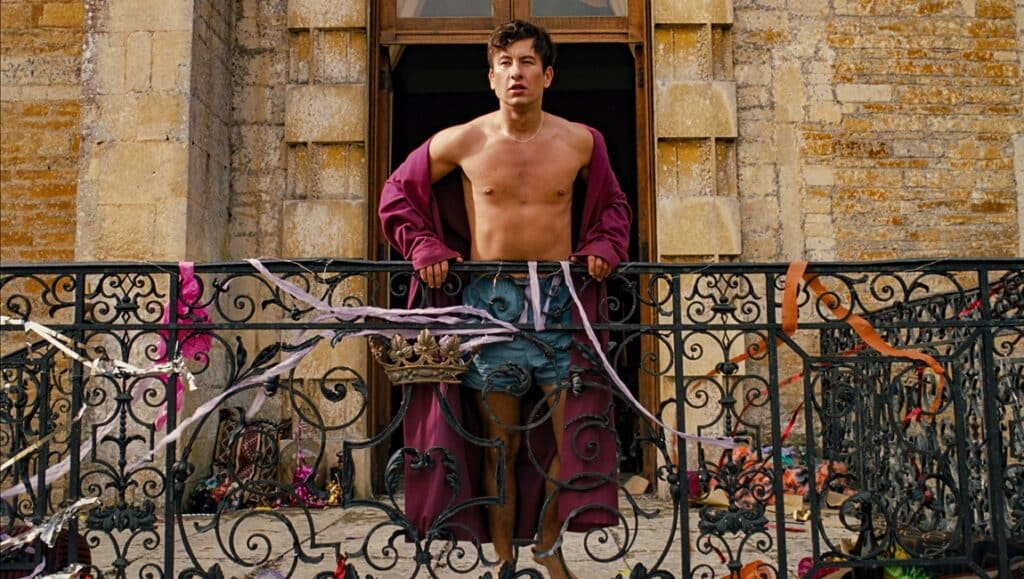
There’s a strong sense of finality from the very earliest moments of Saltburn (2023) – but how so? The film opens with a monologue – either a confession, or a survivor’s statement – and whilst it feels fairly clear it’s going to be one of those things, it holds off for the lion’s share of its runtime: nonetheless, we are introduced to someone called Felix by proxy, via a young man called Oliver (Barry Keoghan in his first proper lead role – and what a role). This is their history, or it’s an admission of Oliver’s love – and the voyeurism which always accompanies love in the film. It’s all queasy obsession and/or earnest admiration, and it brings us up to the opening credits (impressive cast and all).

But then we duck out of the framing narrative and back to 2006 – for no particular reason really, other than perhaps placing the film at the rough time that director and writer Emerald Fennell was herself at Oxford University. For it’s to Oxford Uni we go, a camera following the arrival of a lone new student, Oliver. He is an outsider here, and he brings a certain amount of outsider awkwardness to what would in any circumstances be a testing time and place, but Oliver is sharp, ready to assert his knowledge. I half expected him to tell Professor Ware (Reece Shearsmith) to ‘do it on the radio’. He soon begins to pick up what it means to be an Oxford student, even whilst bristling at its many discomforts. The film does sterling work – neither labouring the point, nor ignoring it – albeit establishing what many people already know, that the barriers to belonging at Oxbridge are not academic; people from the unknown provinces, even in the North, can read and think well enough; what they struggle with are the unspoken cues, the confidence of just being in that environment or, as one of the film’s most acerbic bystanders, Farleigh, asserts later, ‘passing’.

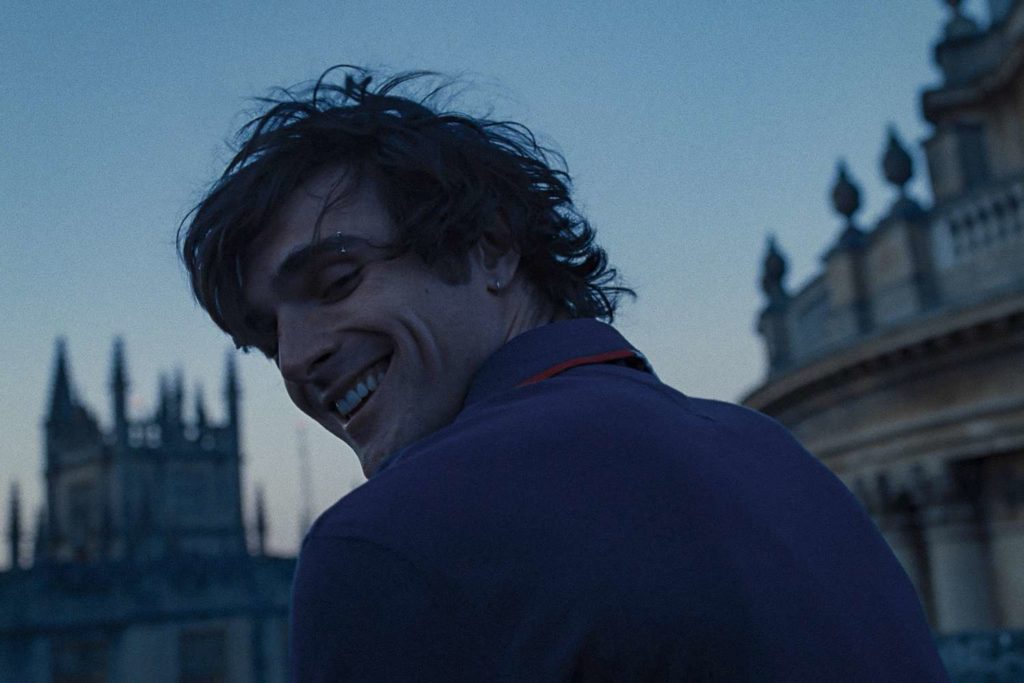
Oliver doesn’t have that shared culture, and might have passed his four years at Oxford on the sidelines, but a chance meeting with the beautiful, aristocratic Felix (Jacob Elordi) gets him an ‘in’. Felix, for all his swagger, is equipped to be kind to Ollie, and takes him under his wing, protecting him from the irritated or dismissive carping of his wealthier, more easeful peers. A friendship forms. Ollie begins to blossom from a poor kid made good into a young man with clear complexities, many of which stem from his troubled past, one which he does not want to discuss (the film chooses its narrative gaps carefully, and recasts them later). But Felix persists, and feels compelled to invite Ollie to stay with him at his family home – Saltburn – after the summer exams.

The film could have been a compelling, often charming look at university life, and happily stayed put: it manages a great balance between representing the dreamy fun of first independence with all the sour notes, the loneliness, the awkwardness, the all-consuming fatigue of negotiating new social groups and identities. But it turns out that Oxford is simply a prologue to the film proper, the time spent at Saltburn itself. In moving to this location which, by the by, Fennell feels able to do without announcing that This is a New Chapter, we suddenly find ourselves with a new cast of characters: the Cattons are old money, with a perhaps cliché eccentric father, Sir James, who remains excellent fun (Richard E. Grant), a beautiful, ex-model mother, Elspeth, who delivers the film’s funniest lines (Rosamund Pike) and a disenchanted younger sister, Venetia (Alison Oliver). Venetia: now there’s a name you encounter but rarely in the Wirral. Oh, and there’s a glamorous hanger-on, ‘dear’ Pamela (Carey Mulligan), who has camped out at the house while she gets over a disastrous breakup, but it’s clear that outsiders have a limited period of tolerance, and she has almost reached hers. Likewise, Felix and Oliver’s ‘friend’ Farleigh (Archie Madekewe) is here too, delivering the barbs.

Oliver is, perhaps rightly and fairly, mesmerised by Saltburn: as we accompany Oliver through that long take of Felix showing him around for the first time, we might feel a little dazzled, too. And perhaps something shifts in him here; or is it elsewhere, earlier? It’s a question which could be asked, and one which has run through and through my mind since watching the film. His already obsessive interest in Felix begins to curdle, to darken: not for the first time – as Ollie’s odd, watchful behaviour reaches new excesses – he seems to be channelling the Shakespearean character of Iago: the reticence, the status angst, the gnawing envy over people he sees as better than him (speaking of the gentleman soldier Cassio, Iago admits, ‘he hath a daily beauty in his life which makes me ugly’. That line could fit well in Saltburn.) So Saltburn itself prompts a change, and the house and grounds are filmed like a painterly, abundant oasis. Only certain obsessive, shocking acts here could ever snap you out of your dreamlike admiration for the languid, eternal summer at Saltburn. Parties, sunbathing, swimming – here, everything is colour, comfort and easy splendour. But the film is punctuated by symbols – spirals, mazes, mists – which hint at artifice, secrecy and disorientation. And so it comes to pass.

Keoghan is enthralling. At first Oliver is vulnerable and sympathetic, but straight away displays hints of something simmering, something kindled by his youthful affection for Felix. Mesmerising to watch, Keoghan holds all of his character’s mixed feelings together: the worship, the envy, the disbelief, the glut of emotions triggered by Felix’s perfect-seeming existence. It’s not the first time Keoghan has taken on a role like this – his performance in The Killing of a Sacred Deer feels preparatory – but here it’s much more his own, and a much more well-formed role, too. Elordi is also perfect casting here, all charm and confidence. Does he have layers? Maybe, maybe not: his deepest impulses genuinely seem to be to support his loved ones, even if Ollie is probably, for him, a passing phase. Throughout all of this, there’s a witty script with droll humour to cleanse the palate, though this never completely dispels the nagging suspicion that for the Cattons, Ollie is seen as a curio, little more: it’s in how he deals with this that the narrative is propelled forward. And how!

As things move from Shakespeare to sensation novel, Saltburn may lose the goodwill of some audiences, who may feel that an often subtle character study has moved from the sublime to the ridiculous; personally, I though it worked incredibly well. I also understand some of the criticisms which frame it as, ultimately, all rather reactionary, but as the film detaches from its verisimilitude into its nightmarish aspects – sometimes, admittedly, a little unevenly – this felt less and less serious to me, becoming more of a Grand Guignol performance than social realism. It depends how thick your skin is, I guess, but there is so much to admire and to love and to gawp at in this film. The golden summer, the life-changing friendship, the fantasy location: they are all put under fantastical, acutely-realised pressure here. It’s an astonishing cinematic experience, both oddly light and viscerally nasty.

Saltburn (2023) is on general release now.

Share? (2023)

A man awakes in a mysterious room…

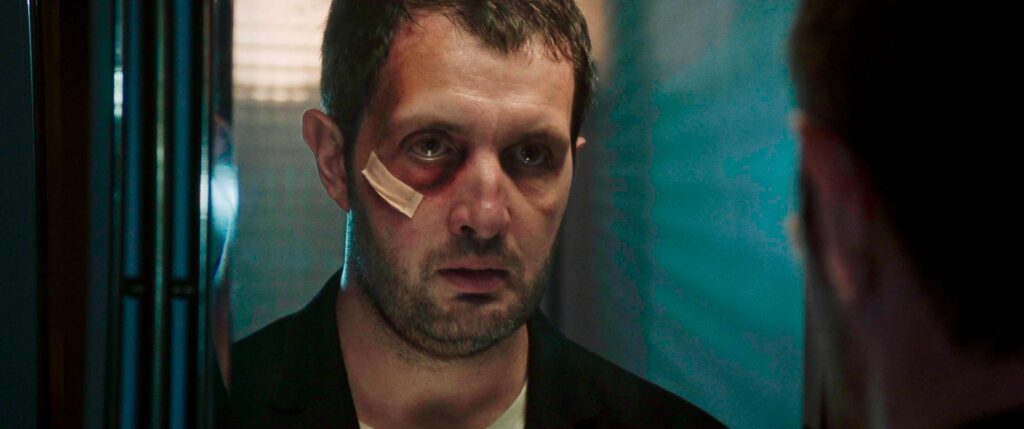
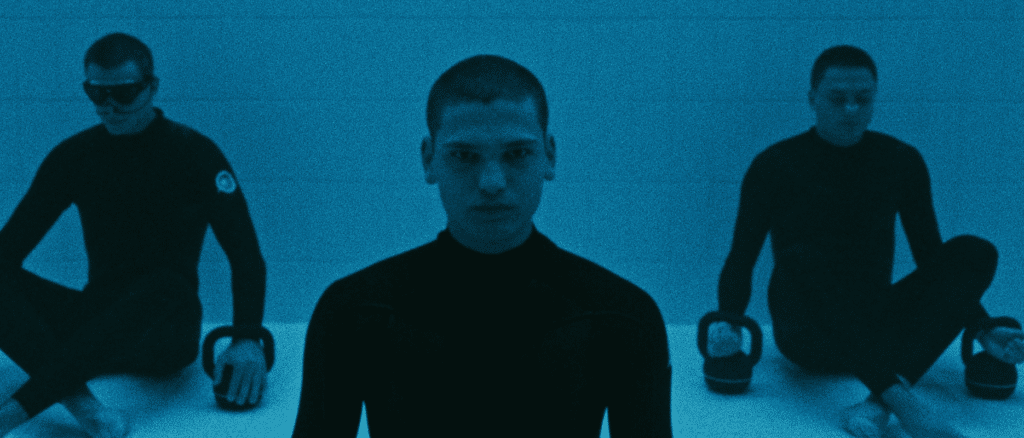
Okay, so the very opening scene of Share? (2023) will sound eminently familiar to a lot of audiences. Men wake up in mysterious rooms a lot in cinema, and it’s probably no spoiler to add that, when they do, things don’t tend to go well for them, often as expressed across ninety minutes or more. But it would be a terrible mistake to brush off this particular example: Share? brings us an incredibly minimalist, but still expansive, challenging and unsettling vision. This is sci-fi, but only just: sci-fi is now at a perishingly small remove from everyday life, and the best films dealing with similar subject matter are aware of that, exploiting it to interrogate us, to make us feel suitably uncomfortable.

So back we go: a man awakes in a mysterious room – stark, locked, and a place he has no memory of ever entering. But what he does notice is that there’s a computer interface on one of the walls (and we, as the audience, are on the opposite side of that interface; we see the text-only computer commands, mirrored). The man (Melvin Gregg) has little choice but to try and communicate with the interface. It’s not straightforward; we see a lot of ‘invalid command’ rejections of his attempts to ‘speak’ to the computer. All it offers for him is the option to ‘share’. Share? Share what?

The man suddenly hits on something: it seems that, if he puts on some sort of a performance (which he discovers accidentally – the computer seems to like him making a fool of himself) then he gains credits, which he can then request to be exchanged for his basic needs – water, food, clothes. This is the net result of whatever he ‘shares’, if it seems popular enough. So it’s like a game, or a show, albeit one where the impressed or unimpressed audience is hidden. Only the upsurge in credits indicates whether some unknown ‘they’ like what they see. The man understands this, and begins, slowly, to learn the rules to his advantage. We get to know him – though he’s ever nameless – and, to some extent, it’s hard not to anthropomorphise whatever is in control of the console, probably because we still expect some kind of someone to be out there, doing things, monitoring things. (It’s an expectation we are probably soon to lose, given the increasing role of AI, but that’s by the by.) As the man experiments with the console, things expand somewhat; what ‘it’ is or ‘they’ are, they have not confined their interests to him alone. There are others.

First things first: this film is all about the brave decisions. Not only does it limit itself to an incredibly small set, but it omits even something as usual as a range of camera angles to explore it. We get one fixed camera throughout; the film’s promotional blurb says that this is the first feature film to ever be shot in such a way, which may indeed be the case – but for our purposes, here and now, it’s enough to say that this is a very bold choice, relying as a result entirely on the actors and the script to ‘fill’ the space, to generate the tension, to hold the interest. Therefore it’s a good thing that Melvin Gregg does such a good job here: he initially reacts to the sheer ridiculousness of the situation with a plausible blend of anger, hostility and gallows humour, but not without equally plausible moments of giving up, shrinking into himself. He’s also a very physical actor, who uses his physicality to try and please the audience which he gleans must be out there; putting us in line with the other, imagined audience, it gives us something to work with, too. But the film also uses clever, sharp editing, a simple but effective use of colour and light, and an equally effective accompanying score to bring everything together. It’s a well-constructed package and, when the film expands its universe, which it does and does well, it tantalises more about some hidden knowledge and power out there behind the walls somewhere: what could be more appealing to any audience, than the prospect of discovering and understanding something currently mysterious? People love a puzzle. Will we get a solution?

More than that, Share? does a great job of representing something unpalatable about the world we now live in, using the microcosm idea in a very literal way to raise pertinent questions. The overall feeling this brings ain’t a nice one. Sure, the world of credits and channels and so on in the film feels like a facet of the online world specifically, but what is all this except a sharp, distilled version of the kinds of transactions most people have to make on a daily basis in modern society? Playing by the rules, prostrating ourselves, earning credits which need to be spent on basic amenities, and getting punished for kicking back: this happens beyond the walls and the world of the film, this kind of brutal barter economy blended with a popularity contest. The best films on this subject matter recognise the comedy along with the tragedy: to echo a line spoken in Share?, ‘Rage and humour, it’s all we’ve got left’.

There are of course some echoes of other films and series here – Panic Button, Circle, Squid Game – but only in the sense that they interrogate the idea of audience and spectacle, and do it in a much, much more high-action way, whereas Share? is pared back, with only the briefest (though no less devastating) moments of overt brutality. No, things are done differently here, with careful, subtle reveals amounting to a kind of philosophical moral lesson. It has real heft, this process, and it hits hard, saving its hardest impact for last. Share? is a brave and powerful film, an unexpected gem which leaves something of itself with you. In a cinemascape now congested with an array of social media-type horrors, that’s the biggest compliment of all. This is a clever, clever film.

Share? (2023) is available to watch on VOD now.

Birth/Rebirth (2023)

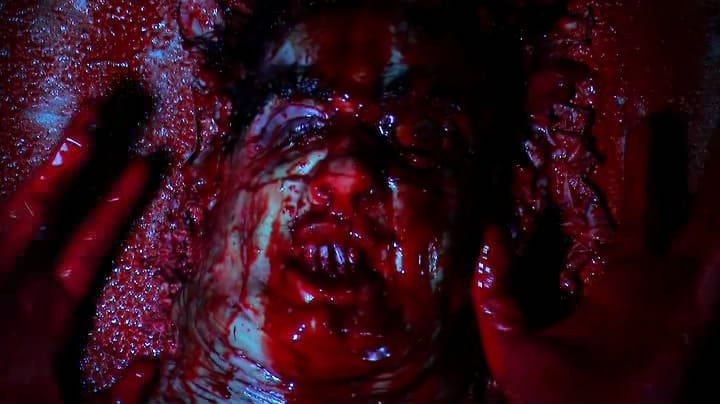
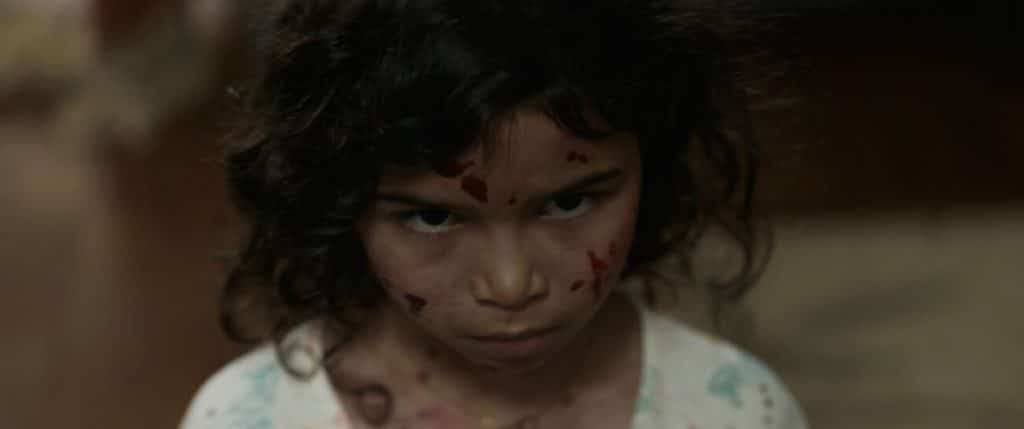
Wherever we go when we die – if we go anywhere at all – it seems to be an increasingly anonymous, formless kind of a place, if horror is anything to go by. Those strict old religious ideas about Heaven, Hell, and even Limbo and Purgatory seem to have muddied. Now, if you go ‘over there’ and come back, it seems you’re coming back from a mysterious, if malign somewhere (Talk To Me, I’m thinking about you here, but only because I saw the film recently: see also Pet Sematary, Flatliners, Return of the Living Dead III, Wake Wood, all of which play with the same ideas.) I’d made the assumption that Birth/Rebirth would be something along the same lines; the much-shared image above suggests it is; and in some respects, it is, but aside from a few significant, upsetting and grisly moments, its own riff on the idea of coming back from death is rather quieter. It’s a film about the ramifications of life after death for the living, and it often draws its horror from its ethical questions, rather than extraordinary (in terms of supernatural) plot points.

With a few echoes of Inside (2007), a serious injury or illness opens Birth/Rebirth; it’s an arresting start, capturing the blurry chaos of a medical emergency from the perspective of the sufferer. It transpires that this crash team are desperately trying to save the life of an unborn baby as well as its mother, but the unsettling ‘lights out’ sequence that follows makes it clear that only one person makes it. The juxtaposition of new life with an ensuing autopsy is one of the film’s most unpleasant moments; everything here, from the demeanour of the staff overseeing each procedure to the at-times nightmarish lighting, reminds us that life is a delicate balance.

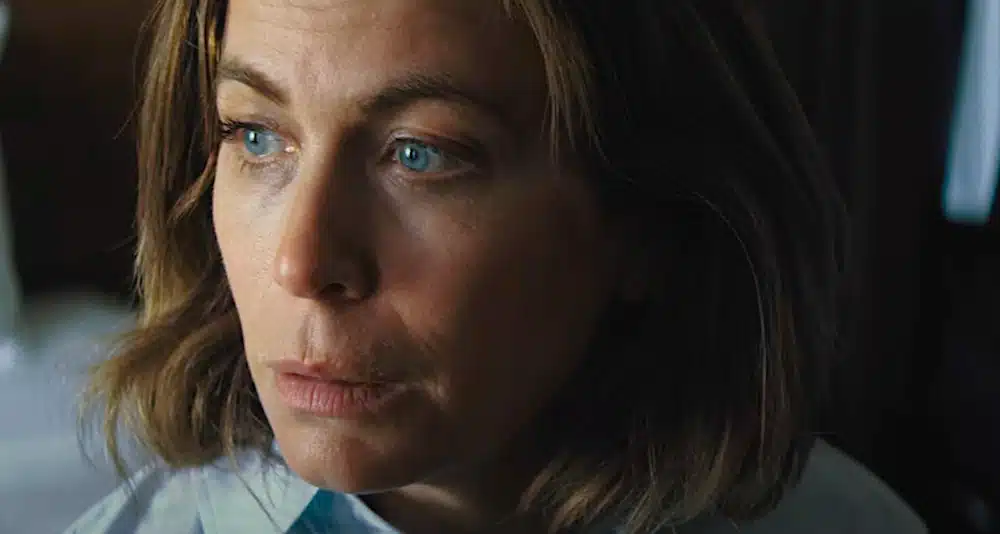
This life/death dichotomy extends out of the hospital as we follow our life-preserving obstetrician Celie (Judy Reyes), leaving work to pick up her little girl, Lila (A. J. Lister). Meanwhile the pathologist, Rose (Marin Ireland) seems to be a strained and troubled woman – a bit of a stereotype which I’m sure any watching pathologists will just love, horror film or not. She treats people, living or dead, like an assemblage of body parts and functions (a little implausibly, in one early scene; the interplay between human biology and human behaviour as explored in the film can be hard to accept.) Before very long, this neat division between life and death, as encapsulated apiece by Celie and Rose, begins to blend. Lila falls ill; Celie leaves her with a neighbour that morning, but underestimates the extent of her illness, which turns out to be devastating bacterial meningitis. As she is at work, and as she damages her phone when she’s there, she knows nothing about her daughter until it is too late.

Step forward Rose, who – for the first time yet – takes a warm interest in her newest specimen. Is it her humanity, finding an outlet? Or something more? It’s at this point that things move from being broadly, plausibly horrendous with a dash of hideous, to more what we could class as a low-key science fiction film. It’s also here that the film is at its most strained, plot wise; it’s funny, as a horror fan, that supernatural explanations often get a pass whilst science-leaning stories get more scrutiny; I guess what Mary Shelley could get away with doesn’t fly today, now that we have ever increasing understanding of how bodies actually work. But anyway: we are told that Rose has been working on an experimental serum which could, and has, reversed physical death. She’s interested in Lila as a means to advance her experiments to the next step, a fact which soon draws in Lila’s bewildered mother, who discovers her daughter under Rose’s care, seemingly – alive.

There are plenty of commendable, engrossing aspects to Birth/Rebirth and actually, a lot of its best moments come early. The film’s ability to relay just how quickly a normal day can go indelibly wrong is excellent. A few subtle reveals, a few throwaway lines, and then – bam – everything is changed forever. Perhaps it’s because it starts so bloodily, but the film really has a queasy, nervous sort of feel to it, right from the opening scenes. Segueing into a ‘Bad Science’ vibe strains the film to its utmost as it asks and ignores a lot of questions and it almost breaks into pieces as it shifts from one mode to another but, if you can weather the storm, it does work pretty well as an ethics-based horror, taking an extraordinary circumstance, sodden with grief and unpalatable choices, and forcing us to see it through. Lila’s condition almost isn’t the point; it’s the sadness and desperation of her loving mother which is our focus. If Lila has seen anything, remembers anything, remains opaque.

Are there issues here? Yes, absolutely – a few. There are some hard lulls in the narrative (if a film finds the time to show its characters moseying around rooms picking things up and putting them down again, that’s usually a lull, and it usually suggests unnecessarily padding the runtime.) But perhaps the biggest question mark hangs over Rose as a character. Not only is she the source of most of the unanswered questions here, but she’s also the source of some uncomfortably dark moments of humour which are an ill fit overall; whilst Marin Ireland gives to the part what I’m sure she was meant to give to the part, flashes of almost-funny bits only underline the slightly clumsy aspects of Rose’s characterisation. She’s essentially Saga Norén from The Bridge, ripped up and re-potted in a path lab instead of a police station. Some of the scenes are even mirror images from the TV series, but these sit a little uneasily with the horror subject matter, which is a step darker and more demanding than even a police procedural. There’s also a bit of a question hovering over some of the uses made of female biology, which doesn’t usually work on command like that, and, by the by, the film is certainly not going to help reverse the current population crash.

That all being said, Birth/Rebirth is still very much worth a look. It’s a well made, often bold film which dares to do something quite unusual with its subject matter, even whilst still leaving us with the more established idea that death should remain a one-way destination. Most of the true horror here stems from people who disagree with that verdict, and whose grief or grief-defying curiosity urges them to challenge it. As such, it’s in its moral questions that the film really thrives.

Birth/Rebirth, a Shudder Original, is now available to stream on the platform.

A Forgotten Man (2022)

We’re perhaps used to certain kinds of war movies. Boots on the ground, violence and trauma, the experiences and perspectives of those who fought; many superb, deeply moving films have followed this path. However, this is only a part of the picture, and other approaches are out there still, waiting to be explored.

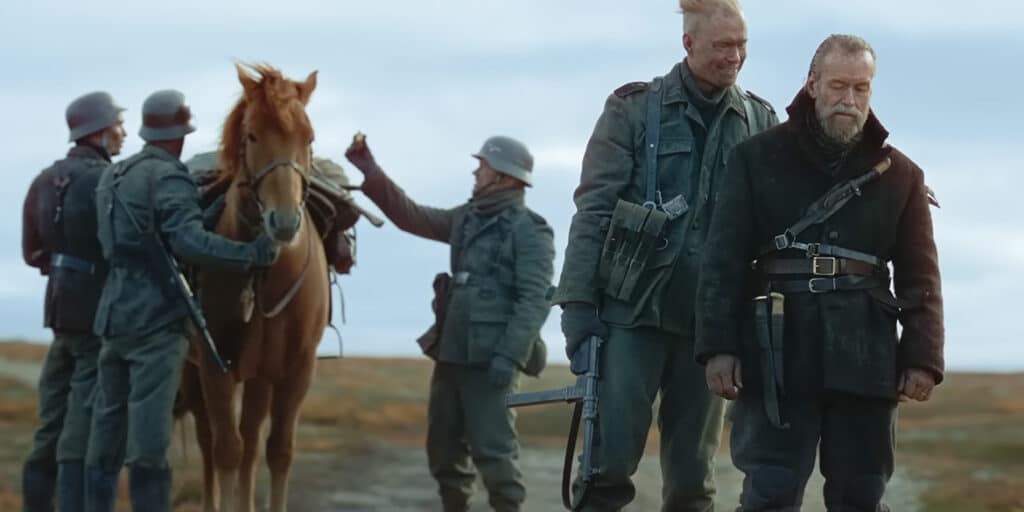
This brings us to A Forgotten Man (2022), a film where arguably, the title itself suggests one of those as-yet unexplored approaches. The film begins where World War Two ends, though it’s important to accept that wars never end neatly. This is key to what follows here. It is 1945; Berlin burns; Hitler is dead, and the victorious Allies must now pick over the bones of Europe as they try to establish peace. After seven years in Nazi Germany, Swiss ambassador Heinrich Zwygart (Michael Neuenschwander) decides to get back to his native Switzerland as quickly as possible. By May, he is home, with news of the changing situation in the country he left behind filtering through to him still, via the radio. Switzerland is, by comparison, ineffably calm, but Zwygart is nonetheless sick with nerves to be making the switch from his old role back to family man and, if he can play it right, someone whose professional past can still usefully protect him and his loved ones. It is a happy, if sometimes difficult reunion with those he hasn’t seen in the best part of a decade.

Nonetheless, Switzerland’s neutral stance didn’t come about by accident; it was the result of challenging, personally compromising diplomacy, in which Zwygart, as chief ambassador, figured significantly. Switzerland’s unique peace, enjoyed while the rest of Europe (and beyond) suffered through the second catastrophic war in thirty years, had been neither uncomplicated nor accidental. It’s soon clear that, within the remit of his home, Zwygart disagrees hugely with his elderly father on the role of diplomacy vs the military; Zwygart’s daughter’s new boyfriend (Yann Philipona) is an unfamiliar, unwelcome, watchful presence too. There is also a lot of sympathy for the Nazis in Zwygart’s social circle, given Switzerland’s pro-Germany stance. Clearly, the situation here is a tightrope of reputation management, sharing out the spoils of war, and a certain necessary level of subterfuge. Zwygart’s new role will be on the Federal Council – a position of influence in its own right – but it doesn’t change the fact that money and cronyism will likely impact on his conduct. A full German surrender, we glean, would be deemed disastrous by many of his wealthy associates. It’s another issue to navigate.

Similarly, the sudden new uptick in Zwygart’s fortunes – as much as it seems likely to cause him all manner of difficulties – also belies the fact that he’s a man haunted by his past. One face in particular repeatedly comes back to him, and as an important diplomatic ball approaches, we steadily come to understand what this person represents.

A Forgotten Man is not a flashy, broad-in-scale examination of WWII, or of its immediate aftermath Instead, it’s a subtle and solemn film, paying meticulous attention to a small corner of history (Zwygart is not a real historical figure, but his character is closely based on that of Hans Frölicher, the real Swiss diplomat to Germany at the time). It’s an intimate story, which keeps the knottier, more turbulent details at its edges; the film’s true drama is in its minutiae, though it never feels exactly detached from the bigger picture all the same. There are some similarities to Arthur Miller’s All My Sons here; it’s a similar story of a man desperate to keep the horrors of his war experience buried, in order to prioritise his immediate world, even where this means a certain level of ‘not seeing’ what war entails.

Shot in black and white with lots of striking chiaroscuro, A Forgotten Man is a very stylish film, rich too with symbol and hint. Not everything is expounded, and it doesn’t need to be. Sombre, humane performances underpin the film throughout, with especial mention to Neuenschwander. Via his performance, Zwygart remains a plausibly contested, ambiguous character; there’s space for guarded empathy here, as a picture develops of someone in a horrendous situation, now desperate to resume some sort of normality whilst powerful forces roil around him.

The film’s approach may be subtle, but it is still emotionally brutal. Fans of understated historical drama, or indeed anyone interested in an underexplored kind of war story, will be impressed by A Forgotten Man. It is quietly devastating.

A Forgotten Man (2022) will be released in UK cinemas on 10th November 2023.

Screwdriver (2023)

What is going on here?

This is a question which Screwdriver (2023) poses early, but cannot answer in a meaningful way throughout its ninety-minute (or so) runtime. Lost in a maze of hard-to-follow, harder-to-engage dialogue, with a limited cast, set and – most detrimentally to the film overall – characterisation, it feels far longer than it is.

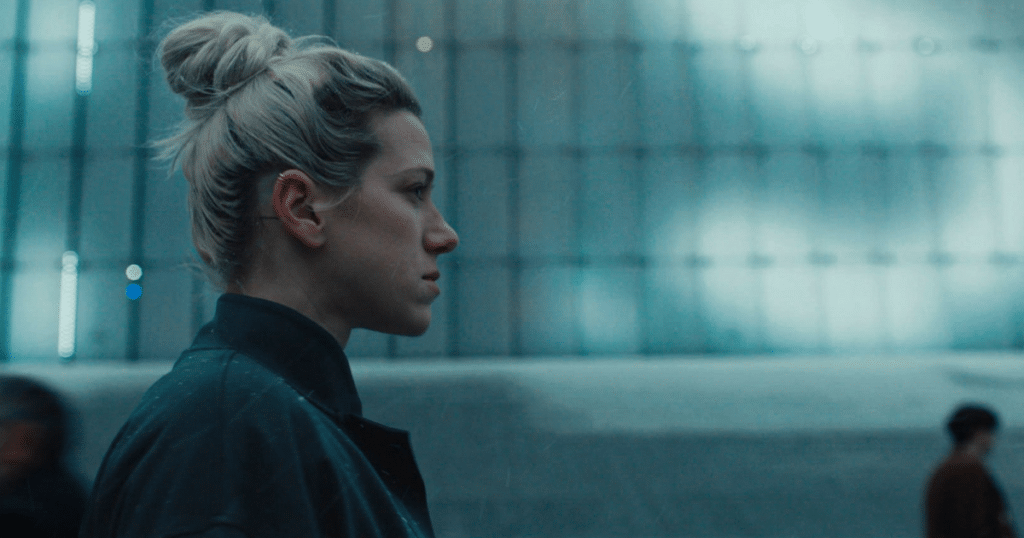
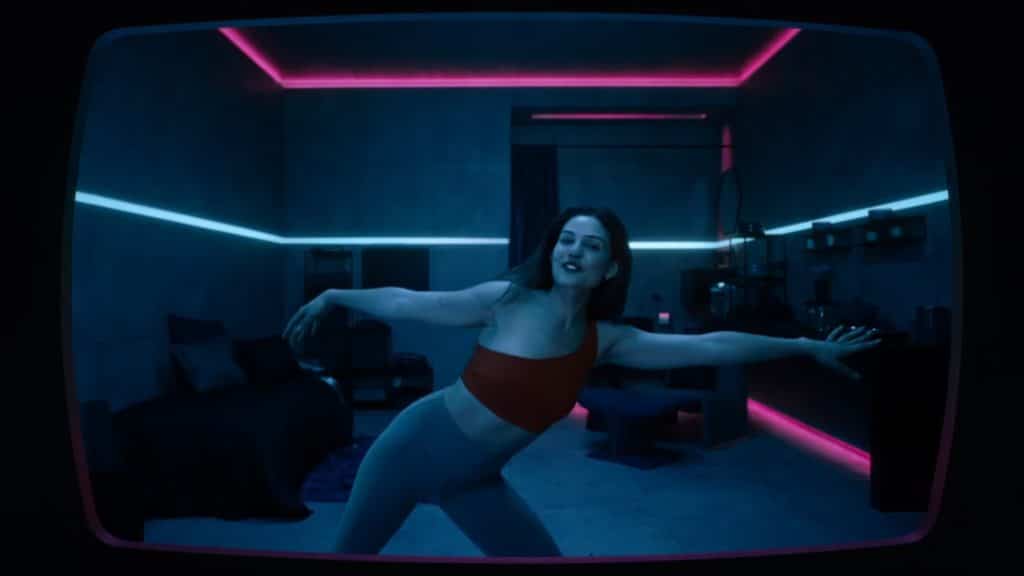
We start where we stay, in one of those affluent houses which are all slate and chrome, with a young woman called Emily (AnnaClare Hicks) sitting on the sofa. She has a bag to one side of her; it’s unclear whether this is a regular friendly catch-up (though it doesn’t seem to be) or an interview for a home position of some sort (which isn’t too far off), but this is a nervous exchange regardless, with the man of the house, Robert, already promising Emily that she can smoke indoors, so long as she doesn’t tell his wife. It feels like a ‘my wife doesn’t understand me’ conversation is about to hove into view, but it doesn’t: the problem here, really, is that no one understands him, but he presses on.

Emily, it seems, knows Robert (Charlie Farrell) of old; she is going to be staying at the house for a while after being blindsided by a relationship breakdown. Robert’s wife, Melissa (Milly Sanders) is ostensibly okay with this deal, but as a career-driven businesswoman she’s painted as terminally chilly. Things are tense, to say the least. And here’s another question, one which is answered far too late in the day to justify the run-up: why doesn’t Emily just leave? Even if Robert is an old friend, there’s more at play here. The guy knows nothing or cares less about personal space and smirks his way through every uneasy chat. Mind you, the way Emily suddenly segues into sharing details in front of Melissa about their alleged shared, cosy youth made me warm to Melissa for a while; presumably, to look at the house again, she’d get great alimony.

More questions: why, when left alone briefly, does Emily suddenly go from cleaning the house to sitting inertly in it – why is she here? Is she really a normal guest? Most hosts would take it amiss if someone started doing light polishing and dusting a day into their visit. Some sort of reply to this comes via Robert as he gets into his next mode as relentless psychobabbler. It took this reviewer some time to realise that he is a therapist by trade; come to think of it, this is only really addressed obliquely, but given his dedication to interminable ersatz psychiatric sessions which discuss things like talking cats, cigarettes and pedestals, you could say he’s keen on his job. Safeguarding concerns are not for here, by the by, which raises an eyebrow. This is, however, a common feature in modern screenwriting, as much as always disrupts the plausibility of any therapeutic set-up, when you consider that ethics are being hurled out of the window to get the take. More worryingly, how do you sack a therapist who seems to be doing it as a hobby?

Under the weight of all these metaphorical situations, Emily begins to break. She’s not sleeping, she’s confused, and she’s not in a good place. Little wonder: Screwdriver is incredibly dialogue-heavy, and lives and dies by its talking; most of the talking is being done to Emily. AnnaClare Hicks, to her credit, does a decent job as an essentially decent, if fragile young woman pitched from one awful situation into another. She has some kind of a character arc, at least, where her opposites do not: she is also exasperatingly easy to push around, just as Melissa is exasperatingly brittle and driven. There isn’t much depth, which impacts upon how all of this is perceived, and the dynamic always feels off, too implausible to generate real tension or engagement. Subtexts are hinted (religion, science, childlessness, even cults) but lost in the riddle.

Screwdriver has decent production values, an attractive set and a lead performance which does all it can with the script, but ultimately the film needed to be and to do so much more. A series of awkward meals and tense exchanges isn’t enough to justify this set-up or the denouement. But, hey, director and writer Cairo Smith is only twenty-six years old and this is his first feature, as well as his first work of this kind: I’m sure there’s a lot more to come from him.

Screwdriver (2023) will be released on VOD on 10th November 2023.

The Killer (2023)

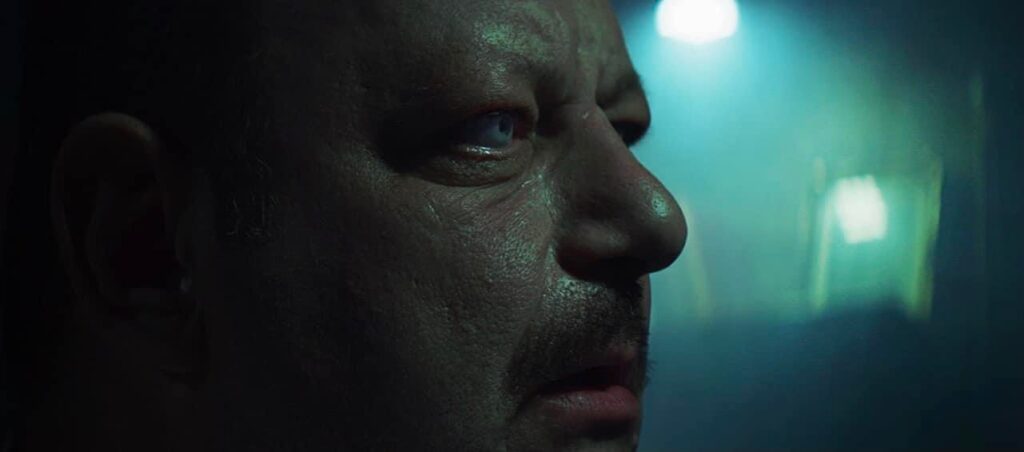
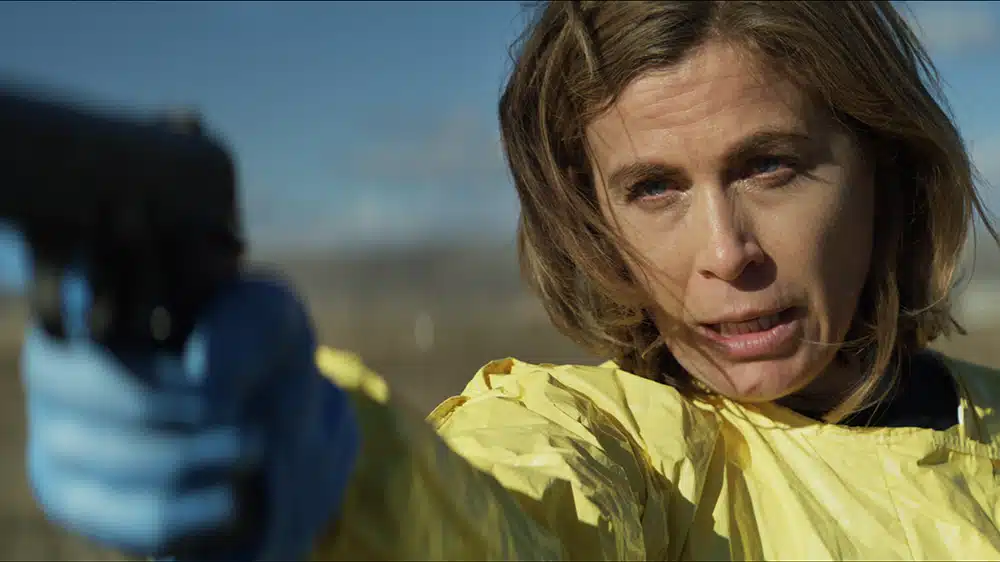
Whilst the rolling montage of deaths and planned deaths running over the opening credits of The Killer (2023) might promise a piece of ultraviolence to follow, this is instead an often quiet – unbearably quiet – and introspective film, which is utterly carried by Michael Fassbender’s magnetic, if ice-cold performance. As Fassbender’s many-named but ultimately nameless character insists, early, and throughout his voiceover (a stylistic choice which could have become grating, in any other hands), most of the job of hitman involves waiting. Waiting, alone, in the dark, for the moment to arrive. It smacks of Mike in Breaking Bad, pointing out that most of his job involves driving around and digging holes in the earth, whether to retrieve cash and firearms or – for other purposes. Perhaps it’s high time we consider such occupations as being dominated by the mundane, or at least balanced by the mundane. It makes sense, after all, and allows us time to get to know people.

We first focus in on our Killer holed up in a Paris apartment. He’s waiting for the arrival of a target to a grand suite directly opposite. But he must wait, and he waits for days: his time unfolds, aimless but regimented, dictated to some extent by his fitness watch which parcels up the hours and monitors his heart-rate – information which is pertinent to his job, rather than just background info on his wellbeing. When he isn’t waiting around, or popping out in the most anodyne clothes possible to pick up something to eat (apparently the ‘German tourist’ look practically guarantees being left alone by Parisians), then he’s watching the apartment opposite, his voiceover acting as his sole company. Then, finally, a party of people arrive. The moment is coming: he takes up his weapon and trains his sights on his intended victim, and waits for an opportune moment.

The narrative so far has assured us of the Killer’s monstrous competence, but it should come as no surprise that, in the narrative trajectory we’re actually going to get, something goes wrong. And, just as there are huge rewards for success, there are also punishing consequences for missing your shot. It’s here here we find our first and really only chink in the armour; the higher-ups elect to punish the Killer, but instead attack someone who is close to him, in an unfolding situation which is a surprise to assailants and victim both. Now would be a good time to go to ground, but the Killer knows on a logical footing that he can’t, and also, given he does seem to have some emotional attachment to the person involved (a situation he knows well enough to deplore, even if he can’t help) it prompts him to undertake a mission of his own – to restore balance, and to dole out a meticulously-planned revenge.

Whilst the outline above sounds tried-and-tested, this is a hitman movie like no other, really. Elements are noir-ish, at least in terms of the cynicism and worldview on display. It’s also often cruel, but not to the levels we’ve seen from director David Fincher in previous outings. And yet, it’s often awfully silent, still, character-focused, but with a character who dodges nearly all markers of backstory, right down to his name. In the wrong hands, this could all have felt a little thin, but Fassbender’s unblinking, stony and self-curtailed character is mesmerising; it’s just as well, given Fassbender is on screen for virtually the entire running time. This is an unpleasant person by most measures, with a despicable trade to boot, but one who demands our attention and a queasy sort of audience support; it’s hard not to root for him, this mysterious, calculating man, which again is testament to Fassbender’s performance – including, and let’s address it, the voiceover. These can be divisive, but the film does such interesting things with its rolling monologue: for example, snipping it short where the Killer is surprised suddenly and can no longer ‘speak’; using it for moments of self-deprecation; even giving us a few darkly humorous comments. It’s used for repetition, too, where he repeats mantras or lessons which sometimes work, and sometimes don’t. Clearly Fincher’s experiences of directing films like Gone Girl (2014) have helped to show him what’s possible with this particular stylistic feature. It should elevate elements of the plot, not explain them away or worse, drown them out, and whilst it can take some getting used to, the voiceover in The Killer elevates the film as a whole.

There were a few moments in the first chapter (yes, there are chapters) where I wondered how this could possibly move from such a careful study of inertia into any sort of action; however, once things begin to unfold, they ratchet slowly and carefully, turning the film into a tense and dynamic story which also feels very grounded in its various locations; presumably a hitman has to feel at home anywhere, or look like they do. The film is also very precise about introducing other characters, with a superb supporting cast (Tilda Swinton seems to be in her element, but special mention goes to Kelly O’Malley as Dolores, playing a woman who probably believed – or hoped – she was just peripheral enough to stay safe.)

Moments of extraordinary brutality are to be found here, but its greatest success is in its quiet self-assurance. The Killer nudges us to remind us that cruel and calculating people like these could be anywhere, either hiding or blending back into society. Maybe we’ve been made aware of that before, and maybe we’ve seen similar stories play out, but this is a precise, well-realised and very interesting example of a crime thriller. (Interesting and thorough use of The Smiths, too.)

The Killer (2023) is in cinemas now.

Mancunian Man: the Legendary Life of Cliff Twemlow (2023)

Cliff Twemlow’s life, even if you happen to be as-yet unfamiliar with him, is definitely a life worth examining. Even if you haven’t yet availed yourself of any of his films (and I hadn’t until comparatively recently) then Mancunian Man will almost certainly grant you curiosity about his acting career. But, there’s a lot more going on here too: it’s a story of huge highs and lows, or “boom and bust”, as it’s described during the documentary. These highs and lows happen to be linked to the film industry in this particular case, but it’s as much a story about what could happen and what occasionally did happen between the end of WWII through to the permissive Seventies and opportunistic 80s, as mapped out by the post-war generation who took full advantage of the possibilities opening up to them. This is a snapshot of interesting, innovative and industrious people working together during an extraordinary time.

Mancunian Man moves in a linear fashion, starting with Twemlow’s lowly Manchester roots, where he was born just prior to WWII (but always claiming to be just a touch younger). We find out about his family’s vaudeville links, and that he was an evacuee during the War, sent out of Manchester to Glossop in Derbyshire, something which proved to be a traumatic formative experience for Cliff. On returning home, as he grew up, he evinced an interest in boxing and the new kind of ‘body beautiful’ aesthetics most famously being sold by Charles Atlas; Twemlow’s appetite for physical training stayed with him throughout his life, for good and ill. Alongside, he undertook a wide range of jobs, some of which began to touch upon the arts: he did some extras work, and Twemlow had a music career prior to getting into films in a fuller sense.

Twemlow’s music career also hints at the pattern of rags-to-riches-to-rags which would trouble him throughout his working life. However, he was successful enough to make a name for himself (one of his songs features on the Dawn of the Dead OST) and this helped him gain a tentative foothold in acting – acting which was very firmly rooted locally, and overlapped with Twemlow’s occasional but longstanding work as a nightclub bouncer. Manchester was, at the time, a bustling centre for nightlife in the North (i.e. in the not-London bit of the country) with plenty of prestigious clubs and available work. They say ‘write about what you know’; Cliff, a formidable personality, did so, and his story Tuxedo Warrior was optioned before he got his own acting career off the blocks (albeit that some baffling changes were made to his original story).

It was probably the rise of video around this time which really proved invaluable to Twemlow; one of the reasons the authorities panicked and overreacted to VHS was largely down to the sudden new prospects and possibilities it offered to people who weren’t always, let us say, operating from within the old trammels of established practice. It really was the Wild West. Fittingly, one of Twemlow’s early starring roles, G.B.H. (1983), was swept up in the ‘video nasties’ debacle; it was one of the strange outliers, one of the non-horror films which nonetheless had a lot of violence in it, and was deemed harmful. Still, the real focus of this section of the documentary is really its focus on the spontaneity and devil-may-care attitude which prevailed at this time (and which feels lost, or ten times more difficult now).

Again, there were ups and downs here: sometimes projects went great, sometimes they were dangerous, expensive and profoundly ill-advised. This section of the film does feel most like it’s for the enjoyment of the team/s involved, as the level of anecdotal detail does start to slow proceedings down a little here. That said, glimpses at improvised projects, unfinished projects and this great variety of ideas do provide entertainment. I couldn’t help but wonder if your friend and mine, Polish exploitation director Patryk Vega, hasn’t at some point watched Twemlow’s films and drawn inspiration from them; I really bloody hope he has; it would feel very fitting. Twemlow certainly didn’t decide to stick to just one genre, either, with a few forays into horror and sci-fi for good measure, even if that meant the additional outlay for make-up SFX and animatronics. The guy didn’t think small.

Happily, the film doesn’t linger unduly on Twemlow’s eventual decline; it doesn’t ignore it, either, but it’s not the focus, and for good reason. This is Twemlow’s film, but it’s clearly not intended as any kind of narrow eulogy. By the end of the film, this is a love letter to exploitation cinema as much as it is a personal tribute to Cliff Twemlow, and that seems perfectly appropriate. There’s a great range of interviewees, from Cliff’s own family and friends, collaborators, authors and co-actors. We also get a lot of visual variety and depth, with a grand array of footage from TV, cinema and music, and impeccable editing which makes every snippet of conversation and every addition of footage flow together seamlessly; director Jake West has the knack of making his documentary work look effortless, when clearly collating all of this material together and making it into a coherent whole is anything but. This is an engaging look at a larger-than-life figure who, as several of his old friends pointed out, would really have enjoyed all of this, but in lieu of that, if this affectionate, informative documentary encourages more people to check out Twemlow’s films and/or to delve into this record of a unique point in time, then that can be no bad thing.

Mancunian Man: the Legendary Life of Cliff Twemlow (2023) will receive its Manchester Premiere on 12th November 2023 at Cultplex.

Raindance 2023: Pett Kata Shaw

Bangladeshi horror cinema is all but unknown to me, so the chance to see a Bangladeshi anthology film was too good to pass up. Pett Kata Shaw (2023) contains four distinct stories – in fact, these are compiled together here after a four-part TV series, meaning there isn’t really an overarching framing narrative, and as such the stories are united only by their shared topic: the presence of folklore in modern urban life and the urbanites who encounter that folklore. The result is a rather disparate, but still engaging bundle of tales, always beautifully shot, lit and colourised, and able to bring something fresh to a foreign viewer like myself (even whilst making clear that folk stories around the world have a lot more elements in common than wholly different).

The first story perhaps feels the most familiar, for the simple fact that Islamic beliefs overlap to a large extent with Christian ones; they’re both monotheistic faiths, and both share large swathes of their origin stories. A sweet shop owner is sweeping his premises after hours, when he hears a mysterious knock on the shutters outside. He looks, but there’s nothing there; he must’ve mentioned this to his wife when getting home, as she makes the link between sweet shops and djinn (spirits, or sometimes demons in Islamic and Arabic tradition – perhaps best known to Westerners in the Anglicised form of ‘genie’). Mischievous spirits with a liking for sugar? As strange as that sounds, the next night, the unexplained phenomena happen again, this time heralding the arrival of a strange, lame man, asking for sweets. The shopkeeper (Chanchal Chowdhury) obliges: how could he not? And by the way – there’s no ambiguity here about whether or not this is just a normal, if opening hours-averse old man, and his supernatural abilities are evident from the off.

Transaction done, the djinn – let’s just call him that – offers payment. Here’s where the djnn is most recognisable to us (assuming you’re reading in Europe, Australia or America) as a deal-doer, trading something remarkable, like magic wishes, but doing so in a very strings-attached way. It’s soon clear what our shopkeeper has asked as payment – this forgetful, careless man suddenly develops a new, incredibly sharp persona – but, as usual, it comes at a steep price. As much as he dabbles with Islamic prayers of protection and the whole segment is pinned around Arabic folkloric beliefs, it’s a recognisable devil’s bargain of sorts and as such, a cautionary tale soon comes into view. It’s a simple enough story as all of the takes in Pett Kata Shaw are, but it is reasonably paced and well acted.

Next up (and you’ll have to excuse the lack of chapter titles, as these weren’t translated on my screener) a young man tells the story of a bizarre trip to the local fish market – yes, a fish market – and what happens to him next. He, as one of two bachelors living together in an apartment, has some strict rules to live by when it comes to female guests – but nonetheless, someone or something seemingly female follows him home, determined to get a good meal out of him, it seems. There’s some humour and some self-deprecation here, though to make these moments land depends on a lot of exposition being readily offered in the lead character’s monologue; a lot hinges on his proffered family memories, particularly of his mother, and how she raised him to be able to deal with a crisis. Well, this is a crisis, as the fish-loving entity now in his sitting room is a dangerous and irrational presence. A little thin story-wise, there are still some enjoyable ‘ick’ moments.

The third chapter is the one I personally find the strongest, coming as it does with the most layering and symbolism of all the stories; as it unfolds, it’s able to raise some tantalising, visually-rich ideas about the role of storytelling, its origins, and its relationship to the often brutal, unpleasant facts which give rise to its currents of escapism and lesson-learning. A miserable couple are hiking in a rural part of the country (and they were, we glean, miserable before; the hike itself isn’t the problem). When the girlfriend spots a suspicious text message coming in on her boyfriend’s phone, it’s the culmination of a long-brewing argument. But they’re lost, and they have to stop off at a nearby village for help.

The residents there are friendly enough, though you’d surely get a sinking feeling from their revelation that ‘no tourists ever visit here, only lost travellers’. It gets heavier, as some of the elderly folk there explain that this village is the source for all of the country’s folklore. All of it. All of its sayings, its folk wisdom? From right here. It seems incredible, but they begin unfolding stories which they can link to well-known Bangladeshi sayings, except their versions always cling harder to violence, weirdness and trauma; it’s just that these darker elements have eventually given way to easily-remembered, if unaccountable aphorisms. This chapter in the film adds a further level of the uncanny by introducing a series of puppets to enact some moments of their tales; it starts off a little queasily weird, but given some time, the puppet show really works – it captures something of that real-unreal nature of folk tales. Furthermore, this chapter holds back a deeply unsettling finale which brings us full circle, maybe to another folk tale for the future. Stories, after all, keep on emerging.

The final chapter – and I can’t help but think that three chapters would have been better, if only in terms of genre expectations (it’s just so often three tales!) and the film’s overall runtime, which gets to 110 minutes off the back of this last, thirty-minute story – does more layering of tale within tale which – if this film has a uniting motif – is this type of Russian doll narrative structure. This time, we are introduced to the folklore of the sea and the ‘Nishi Daak’ – a spirit which impersonates people known to its victims, trying to drown them (and it seems every culture with a coastline has something similar to this). But not only does this entity speak to the most vulnerable, such as the street children whose piecemeal existence leads them to crave the representations of lost parents who call to them, but to adults, too. Rabab is a successful young filmmaker who has moved away from his place of origin, but a visit back to an old haunt is overshadowed by a recent loss: his former girlfriend, ominously named Lamia, who took her own life.

He begins with a professional curiosity about the fates of so many missing children on this beach, but Rabab is torn between his guilt at moving on with his life perhaps rather too readily, and the folklore of the region which now also seems to be enticing him to leave his new, successful, urbanite life behind for good. The chapter feels like the most obviously horror-influenced, Western-influenced part, despite the presence of a distinctly regional supernatural element, simply through its use of technology, YouTube, social media – and code switching, with Americanised English creeping in here and there. However, for all that (or perhaps because of that) it can feel derivative, even though some of the scenes here are very effective indeed.

Whilst one proffered link between all the chapters at the end really isn’t enough to provide a sense that these tales are related to one another, they still nonetheless capture the imagination pretty effectively, and they’re intriguing on the whole. The horror in each chapter comes from quite basic, everyday situations – a day at work, a trip to the market, a walk in the country – but successfully blend in uncanny elements which both showcase Bangladeshi folk belief and echo many commonly-held Western beliefs, because after all (and as the point is made in the third chapter) stories often start life as cautionary, associating entities with dangerous locations or foolhardy actions because people seem so hardwired to respond to anecdotes, rather than facts and statistics. Each chapter is also effective at presenting stories-within-stories, which is the way stories are, so rarely ending neatly or with an agreed-upon resolution. It would seem likely that many of the supernatural beliefs explored in Pett Kata Shaw would be as unfamiliar to younger Bangladeshi audiences as to foreign audiences, for the very reason that urban myths have often updated and replaced older stories as we’ve moved to, or been born in cities, but certainly the series and now, the film, would be an agreeable and stylish introduction, or reminder. The horror itself isn’t always necessarily highly original or unsettling – there are flaws in tone and length – but these are overall engaging tales with enough dashes of anxieties over class, gender, wealth and character to give them a wider appeal.

Pett Kata Shaw will receive its UK premiere at the Raindance Film Festival 2023 on 31st October.

Raindance 2023: Palimpsest

“Why don’t people learn from their mistakes?” An elderly woman speaks those words at the beginning of Palimpsest (2022), and it’s a question which shapes the film which follows as we unfold a gentle, sometimes whimsical and sometimes moving story all about the ‘What ifs?’ Back to the lady who opens proceedings: she’s busy pondering the modern world in all its vainglorious wonder, cataloguing some of the strangest quirks of the 2020s (and it seems that ‘naked dating shows’ are all the rage in Finland, too). But she’s talking to herself in what seems to be a high-dependency nursing home, and while the staff are busy in their work – too busy to pay her any mind – it seems that her nearest bed-mate isn’t listening to her either, on account of being stone dead.

Elsewhere in the ward, a man called Juhani (Antti Virmavirta) is visiting his wife, Matilda, and they’re discussing some new treatment. But it’s not for her; it’s for him, and she’s very keen that he goes through with what seems to be an experimental procedure, effects as-yet unknown. We then follow him as he begins down this path, his clear terror at what’s to come made clear by how blindly he progresses (or is progressed) through the preparations for this. However, soon enough he arrives at what seems to be quite a plush blend between an apartment and a ward – even if it’s shared with another new patient – and the programme of treatment, intended to undo the effects of ageing, begins.

He begins to get to known his roommate, Tellu (Riitta Havukainen), whose own reasons for undertaking this course are kept more guarded, but Tellu seems more straightforwardly up for the process. Some of the film’s warmest, and occasionally funny moments come from Tellu rediscovering the basic pleasures of a fully functioning body: the ability to overhear music without the use of hearing aids; suddenly having the headspace to care about TV shows which had passed her by. She gets her libido back, too, and we can really believe in her unabashed surprise and delight about this. For Juhani, things are more complex: he has a wife, a daughter, a grandson. His wife may have been all for the treatment, believing that this would keep him around for longer and in the lives of the younger family members, but it doesn’t change the fact that she is unwell, getting closer to death herself. Overall, Juhani’s enjoyment at the success of the treatment is modified by guilt and concern, something which doesn’t seem to trouble Tellu, who relishes the chance to overwrite the mistakes and griefs of her past. These two new friends begin to diverge, with different decisions over how best to use the time now re-gifted to them.

We have seen this kind of thing in cinema before, with different films dwelling differently on the miraculous means by which people can arrest the progress of their lifespans. Hard though it can be to remember that Palimpsest is, really speaking, a science fiction film, it’s as such not a million miles away from the likes of Cocoon (1985) (though the newer film keeps its plot-specific cards closer to its chest) and there’s some overlap with The Curious Case of Benjamin Button (2008). But, ultimately, the decision to participate in the de-ageing treatment is taken by the key characters themselves, rather than some happy or unhappy accident which befalls them. The film offers a tender and often wistful set of character studies, which gets where it’s going by staying light on the science and close to its two protagonists. There is a range of actors to bring each life stage of each person to the screen, and these are well-chosen, even if it can be a little difficult to believe – given the importance of believing in the characters’ initial frailty – that the eldest version of Juhani is all that frail, as Antti Virmavirta is a very healthy-looking man – though perhaps the point is more about his decreased mobility, which we are shown, and also his wife’s wishes.

Along the way, we start with quite a low-key and teasing look at the generation gap, from the lady at the beginning through to the calm but baffled assessments of new music, TV and technology via other characters – though, more gallingly, the tendency of younger people to almost completely overlook the elderly, not even making eye contact with them (and thinking it’s fine to wedge a male and a female into the same treatment room) lands a harder blow than some of the more quirky observations. It’s also interesting, and often sad and affecting, witnessing how the characters begin to re-learn about themselves and their relationship with a world which had been busily forgetting them. The topic of memory, particularly shared memory, is also very important to the film: would you keep your memories, or shed them, too? The term ‘palimpsest’ refers to a canvas or parchment which is overwritten and overwritten, and sticking with its title’s meaning, the film allows itself the luxury of being very detailed; perhaps it stretches towards being too detailed, a little too long overall (a forgivable minor sin from writer and director Hanna Marjo Västinsalo, with her first narrative feature-length here).

But for the most part, this film asks enough questions and provides enough resonant answers to justify the means. It’s a steady, thoughtful and philosophical story, able to lead the audience through an interesting and well-realised fictional world, and one which doesn’t often take the directions you might expect.

Palimpsest (2022) will receive its UK premiere at the Raindance Film Festival on Sunday 29th October. For more details, please click here.

When Evil Lurks (2023)

Ooh, this is a bleak film. I mean, really, really bleak. Once you think you’ve got through all the different layers of bleakness, there’s more down there to enjoy. When Evil Lurks (2023) certainly doesn’t misrepresent itself with that title; it’s chock-full of lurking evil. And dirty, bloody, grotty evil, too – none of this threatening, but ultimately ‘cleared up by personal redemption or true grit’ nonsense. Nope, this is a properly nasty story, a reinvigoration of some horror tropes and a reinvention in other respects. In its mix of supernatural horror and gore, there’s something for everyone – as long as you like it bleak, obviously. However, one aspect is less bleak: judging by the sheer number of film companies or filmmaking concerns listed in the opening credits, there’s obviously a lot of belief as well as financial heft behind director Demián Rugna, which is probably the most uplifting thing about this project from beginning to end.

The film starts tense. We’re given no introduction to brothers Jimmy and Pedro Yazurlo; we first find ourselves peering at them as they peer out of the windows of their tiny rural property, listening to gunfire coming from somewhere out in the darkness. Poachers? Their unpredictable landlord, Ruiz? Both of these possibilities are only faint possibilities. The two men decide to arm up and head out, waiting for first light to go and see what’s what. Remember, neither they, nor we, have any idea what they’re looking for exactly: nonetheless, they’re left in little doubt when they find a dismembered body, one they’re understandably keen to attribute to a puma, or – again – a person they dislike enough, a person savage enough to fit the bill.

But, nah. The Yazurlo brothers find other things scattered around the remains which suggest otherwise: strange equipment, and a map – pointing straight to the home of a local woman, who lives with her two sons. They head there, finding who – or what – was the target of the person who never made it there. Her son, Uriel, looks to be in a bad way: he’s a dead ringer for a certain New York-based Fulci zombie, actually, but less active than his American lookalike; lying supine, emitting various fluids, he looks close to death. Then it turns out to be worse than that; Uriel’s mother was anxiously awaiting the now-remains in the woods to turn up to kill Uriel. Uriel is possessed, and has to be dealt with carefully.

If this film has one overarching theme, it’s watching, with fascination, as a group of men mess things up whilst a small number of older women watch equally transfixed from the sidelines, occasionally trying to quell the flow of Bad Decisions, but never quite managing it. Jimmy and Pedro, repulsed by what they see lying cataleptic in the back bedroom, rush off to seek help. To be clear – whatever is happening here, the men at least notionally accept that it’s of supernatural origin, but seek very worldly means to sort it out. Oh, actually wait – there’s another overarching theme, and one which you often see elsewhere in horror cinema: the dangers of unfamiliarity with folk wisdom which is the only barrier to malign supernatural events (Christianity is conspicuously absent here). As such, when the brothers track down Ruiz and tell him what’s going on, and then try their luck with a useless local police force, they trigger an outbreak of possession which quickly escapes the bounds of a single, unfortunate household. Now nothing is out of bounds.

This oozy, ugly, equal-opportunities possession offers up a really interesting idea, and I can’t quite think of anything exactly like it (though perhaps the 2016-17 TV series, Outcast, comes closest). It’s a little like a zombie outbreak here, only …sly. It tricks its way around. Possession usually confines itself to one or two flexible girls in nightdresses. Here, it’s a minor plague, and it spreads according to rules which almost no one knows, so the audience also has to make educated guesses about these rules (so that when we do get some exposition later in the film, we don’t really need it). There are one or two moments of very dark humour in the film, though these mostly tend to underline the well-meaning, but hopeless efforts of Pedro in particular, and they don’t detract from the general forward thrust of paranoia, irrationality and fear. Nor do they take away from the film’s shock moments of gore: whilst these look a little too obviously CGI-embellished earlier on in the film, they’re still grim and surprising. And we’re definitely shown things or told things in Argentinian horror cinema which we’d never get in Western cinema; there are some inclusions here which will surprise many of you, and your thoughts will probably run a little like this: “Oh my god, they’re not going to…oh, oh yes they are.” Yes, it turns out they are. Every time.

All of this unfolds between hopeless protagonists who have no patience or skill to fix things, in an isolated corner of Argentina devoid of infrastructure or support, overshadowed by corruption and indifference long before the possessed start to rock up. In fact, it transpires very, very early in the narrative that Uriel’s family had been awaiting help for a year, but no one had much troubled themselves about that. Like I said, bleak – but also physical, noisy, bloody, exciting and fresh. When Evil Lurks shows that Rugna is on devastating, queasy good form and definitely a horror director to watch.

When Evil Lurks (2023) hits Shudder on 27th October 2023.

Take The Left Hand Path

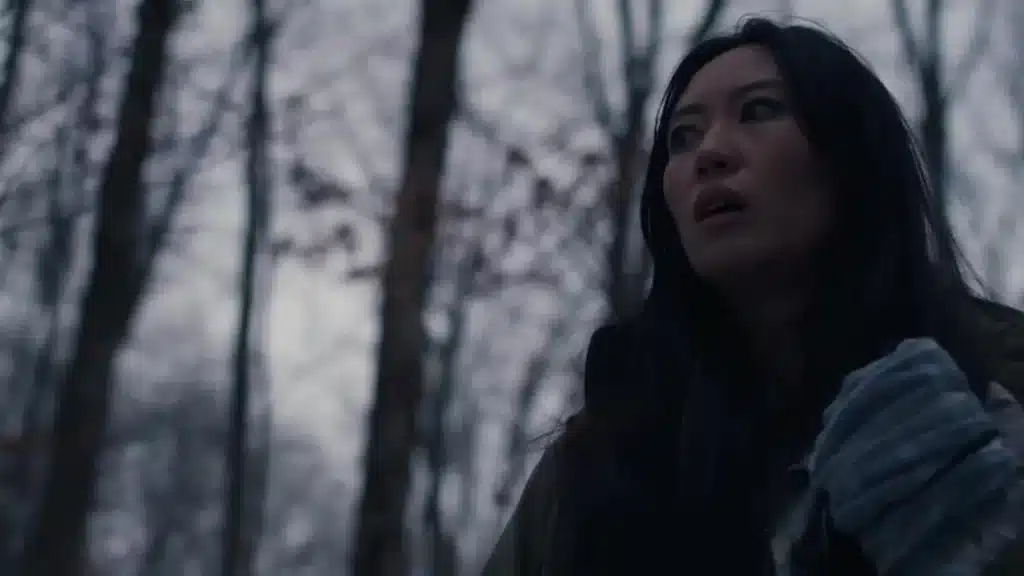
As Halloween approaches, we might find ourselves wondering how a Celtic winter festival with all its attendant beliefs in the ‘thinning veil’ and the temporary proximity of the dead has managed to hang on through thousands of years of Christianity, but hey – it’s a moveable feast. Depending on where you stand, it’s anywhere from: harmless entertainment for kids; a fondly-held Goth Xmas for horror fans, or deplorably commercial, but so long as you don’t count yourselves in the last category, you should find something to like about October 31st. Take The Left Hand Path is a short film which splices the whole modern incarnation of Halloween (e.g. the Halloween party) with older beliefs in the unquiet dead, coming up with a funny horror-comedy skit which has good performances and lines which really work, together with a more sinister note running through it, too. If I wasn’t told by the press info that it was put together by Eulogy Media – who have mostly specialised in metal promo videos – and directed by Hal Sinden of the band talanas – then I wouldn’t have much trouble joining the dots, and that’s meant as a compliment. The film wears its heart on its sleeve.

In the film, two girls are on their way to a Halloween party but opt to take a short cut through Leaveslow Woods – a move which one of them openly accepts is a strange one on an evening like this, especially with only some glow-in-the-dark deely boppers to light the way. But as they make their way onwards, they are surprised to run into a girl they know, Nicola, who asks them for a light. It’d be odd enough, given they’re in the middle of nowhere, but it’s stranger still because Nicola is apparently dead. In fact, one of them went to her funeral. So what on earth is the…spectre of Nicola? Or a reanimated Nicola – doing out here in the dark?

They chat – Nicola is still Nicola, only on the wrong side of an autopsy – and they discuss what her version of the afterlife is like. Well, for one, she wishes she’d died with a lighter on her (which may be a nod to the same idea introduced in the afterlife in Beetlejuice – ‘If I knew then what I know now’…) But it turns out that the rumours which were flying around about her demise weren’t quite accurate. In fact, being dead is quite different to how it’s usually expected to be.

It’s a darkly comedic idea which riffs on commonly-held ideas about things like ouija boards, the afterlife, even God (apparently that’s not clear-cut, either) and in a few easy moves, delivered in a suitable and plausible kind of low-key British way, the film is able to build quite a lot of universe in its six-odd minute running time. It unfolds its details well and it’s punctuated with a lot of one-liners, some of which would perhaps make more obvious sense to metal or at least music fans (considering the impact of a hi-hat to the temple, for instance) but the film definitely makes you laugh, and it’s imbued with enough easy-going comedy about the whole Halloween thing to work for anyone. It makes good use of darkness and low light, too, as well as low-key performances which make the whole premise funnier through contrast. And then, it manages its far darker conclusion to bring us full circle.

Take The Left Hand Path is a light touch, dryly humorous short film which handles its pace perfectly for a short film format – it understands just how much characterisation and plot to balance against a good punchline. You could do far worse than queue it up for Halloween viewing or, if you fancy, watch it a little before the big day comes around. It will be available to watch from 19:30 (GMT) on Saturday, 28th October at this YouTube link, so set a reminder – and enjoy. Just don’t stand up too quickly, particularly if you’re anywhere near a drum kit. You never know what could ensue, though on the plus side, we might get a sequel.