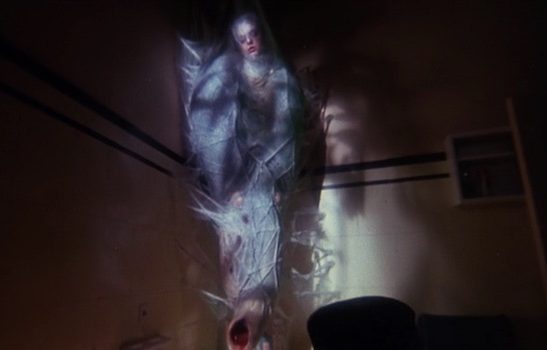
 We might say that the lasting legacy of all the great horror movies can be measured by the number of imitators they spawn. However, while the likes of The Texas Chain Saw Massacre, Halloween and The Blair Witch Project presented a format that opportunistic filmmakers could easily duplicate on a limited budget, one influential horror title which presents the cash-strapped with a rather more significant challenge is Ridley Scott’s Alien. The success of the 1979 space shocker naturally left others eager to cash in on audience appetite for evil extra-terrestrials, but this was of course a rather trickier proposition than just dumping some kids in a house with a guy in a mask, and required a bit more imagination. As a result, the first Alien imitators tend to be among the strangest films you’ll find from the early 1980s, such as Luigi Cozzi’s Contamination, and this film, Xtro, from second-time director Harry Bromley Davenport.
This low budget 1982 UK production is one of those select titles of the era whose name has been tarnished – or, dependent on your point of view, immortalised – by association with the notorious Video Nasty panic; although, unlike Contamination, Xtro was never officially blacklisted by the Video Recordings Act. It did, however, wind up an unexpectedly big hit in the US, thanks largely to the involvement of New Line Cinema and executive producer Robert Shaye, who were just a couple of years shy of really hitting the big time with the Nightmare on Elm Street movies. Looking at the film today (it’s one I personally hadn’t seen until now), I find it fascinating that Xtro enjoyed such commercial success stateside, as quite apart from it having a pointedly British personality, it really is one of the oddest films of its sort that I’ve ever seen, drifting from standard B-movie banality to jaw-dropping weirdness and perversity in what proves to be a quite hypnotic manner.
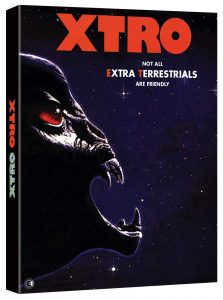 It all starts out simply enough, as doting dad Sam Philips (Philip Sayer, who died seven years after the film’s release) plays in the garden with his young son Tony (Simon Nash), only to mysteriously vanish when the sky suddenly goes black and an otherworldly light comes flashing over them. Three years later, Tony’s mum Rachel (Bernice Stegers) has moved them both to a city apartment where they live with her new boyfriend Joe (Danny Brainin) and their French au pair Analise (future Bond girl Maryam D’Abo), all of whom assure Tony that his father simply up and left them, and any other ideas are just in his head. However, Sam is about to return to their world, as the alien vessel returns, dropping off an ugly little monster in the backwoods not far from the old Philips homestead. Some grisly encounters with a couple of locals ensue, until Sam re-emerges by means that I’m not about to spoil (if you don’t know what’s coming, as I didn’t, you’re very likely to be taken by surprise). Disoriented but seemingly well-meaning, Sam manages to locate his family, telling them he has no memory of what happened or where he’s been the past three years. Naturally, this leads to major suspicions and tensions, but Tony seems delighted to be reunited with his father – and his father seems a little too pleased to be reunited with his son, as it slowly becomes apparent that he has returned for a reason.
It may all seem like pretty standard alien abduction movie stuff, but the real ace up Xtro’s sleeve is how absolutely batshit insane it gets as things progress. In the accompanying documentary produced specifically for this Blu-ray by Nucleus Films, Alan Jones remarks that New Line’s Shaye, inspired by the success of Phantasm, felt the way to go with Xtro was to amp up the weirdness at every opportunity. As a result of Shaye’s input, what starts out looking like a fairly generic creature feature soon branches out into utterly nonsensical surrealism, with children’s toys coming to life, random cameos from wild animals, and more besides; again, I’m loathe to go into specifics for the benefit of first-time viewers. It’s also easy enough to see how the film almost fell afoul of the censors, as it does get very bloody at points, as well as piling on the sex appeal, with first time actress D’Abo sportingly baring all in scenes which naturally do bugger all to advance the plot. What makes the whole thing all the more compelling is that, in the midst of all this trashy grindhouse excess, there are elements of a serious family drama in here, with Sayer, Stegers and Brainin treating the relationship-based storyline more seriously than we might think the film really warrants.
Given that the 1980s is historically regarded as the decade in which the British film industry died, films like this (and other recent Blu-ray release Rawhead Rex) serve as an agreeable reminder that some weird and wonderful movies still managed to get made. It’s also nice to see the film get such an affectionate treatment as this limited edition from Second Sight, which on top of the aforementioned documentary also boasts an eye-opening four different viewing options for the film, incorporating an alternate ending and a new director’s cut, plus a number of extra featurettes about the film and its legacy. While the two Xtro sequels (which, by the director’s own admission, took almost nothing but the title) are not gone into in much detail, we get rather more on the plans for a fourth film, with some rough test footage revealed.
Xtro is available now on limited edition Blu-ray from Second Sight.
 Donnie Yen may have been a relatively obscure figure to the wider western audience until his role in Star Wars: Rogue One, but he’s long been revered among Kung Fu movie aficionados as one of the best in the business; and while 1993’s Iron Monkey wasn’t necessarily where it all began, it was without a doubt a high point of Yen’s early career. It’s also notable as a career highlight of its director, the esteemed fight choreographer Yuen Woo-Ping, who went on to have a major impact on how Hollywood staged its action sequences in the years ahead.
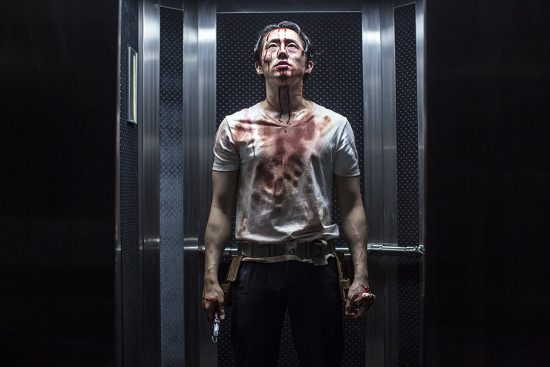 I daresay that anyone who’s ever worked in an office building – certainly any horror fan, at least – has idly fantasised about what might happen if, somehow, shit went south in that environment. It’s something I myself have imagined in years gone by, in my short story Paperwork (plug time: you can read that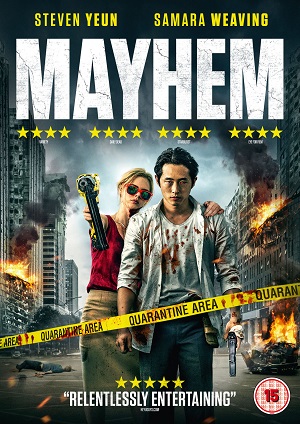
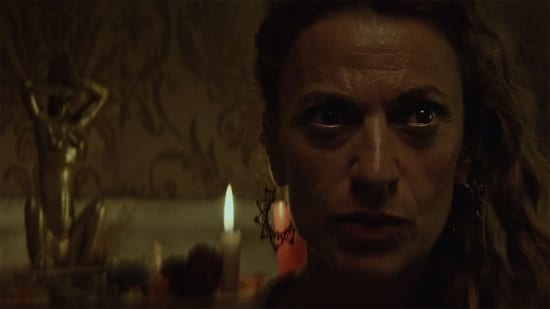 Midnight movie horror often strikes a similar chord to the sex comedy genre – bawdy humour and titillation, deliberate distastefulness – and yet, I struggle to think of any movies which have combined the two formats in quite the same way as Night of the Virgin (AKA La Noche Del Virgen). The first feature from director Roberto San Sebastián, screenwriter Guillermo Guerrero and producer Kevin I. Rodríguez, the film could almost be a full-length play on how the dalliance between Finch and Stifler’s Mom in American Pie could have played out, had it transpired that the fabled MILF was in fact a worshipper of an obscure eastern deity seeking a male virgin for use in a black magic sex rite. As might be expected, this set-up leads to an abundance of gross-out gags and humiliation-based humour with all manner of bodily fluids involved; yet it also gets a lot darker and, at points, more genuinely disturbing than you might initially expect.
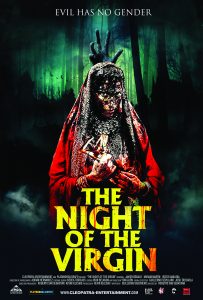 Given how frequently young men in film are presented as irrepressible horn dogs whose brains are in their bell-ends, Night of the Virgin makes for a refreshing change, as it addresses the very real anxiety that many (dare I say most?) male adolescents face about losing their virginity. The sexual urge is of course very real and impossible to ignore, yet the act itself remains daunting, in part as it’s still shrouded in mystery, but also because – let’s face it – it’s all a bit gross when you really think about it. Bodily fluids; organs and orifices not generally known for their cleanliness; not to mention the risk of unwanted pregnancy or, possibly even worse, sexually transmitted diseases. Night of the Virgin explores these fears in a really interesting manner, Medea’s alluring ways and physical attractiveness presented in stark contrast with the repulsiveness of her surroundings. As events progress, we go more into areas of body horror with at least a dash of Cronenberg and Henenlotter about them, although in many respects – not least because the action is, for the most part, restricted to a single location and centred on two characters – the later scenes wind up being most reminiscent of Maury and Bustillo’s Inside. (Hell, it’s even set in the holiday season.)
 Scott Adkins holds a pretty unique status among 21st century action heroes. Since breaking through with a small part in 2001 Jackie Chan movie The Accidental Spy, the British martial artist and actor has been widely acclaimed as one of the best in the business, clocking up an impressive body of work with over 40 film roles to his name thus far. Yet while Adkins’ CV includes a number of major theatrical releases (among them The Bourne Ultimatum, Zero Dark Thirty and Doctor Strange), the bulk of his signature work has been in the low budget, direct to DVD market, where so much old school action seems trapped these days. The words ‘direct to DVD; might not always inspire confidence, but thanks to his undeniable skill and screen presence, and some strong collaborators on both sides of the camera, Adkins has proved that it’s still possible for an action star to make a serious impact even if their work largely bypasses cinemas.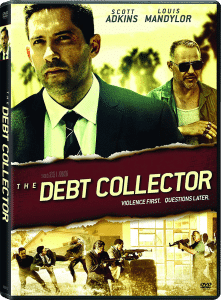
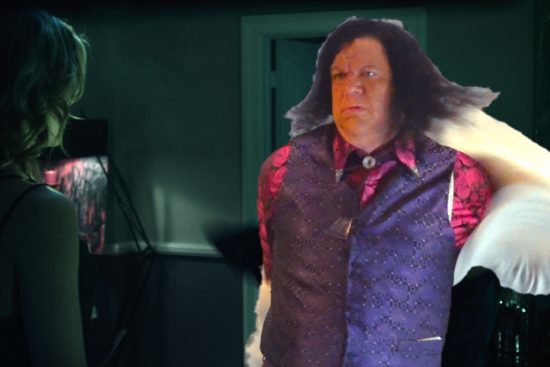 Horror has always been a heavily self-referential genre. It’s often suggested that Scream started this trend, but that’s patently untrue; go back decades and you can find no shortage of horror movies which openly point out and play with genre conventions, as well as directly addressing the audience in a fourth-wall breaking manner. The digital age has pushed this ever further, with the over-abundance of camcorder and or/phone-shot found footage movies – but (outside of Inside No. 9’s 2016 Christmas Special) we haven’t seen much horror that plays with the uniquely modern motif of the director’s commentary track, the reinsertion of previously deleted footage, or in some instances the addition of all-new footage shot specifically for a new edition of the movie.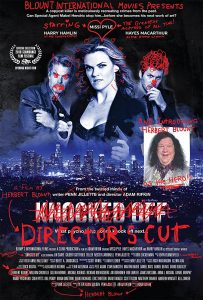
 It’s a curious twist of fate/scheduling that writer-director Graham Skipper’s arcade game-themed horror should land on streaming platform Shudder in the same week that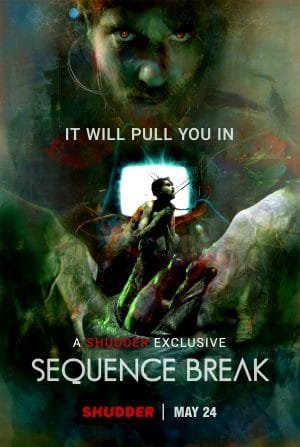
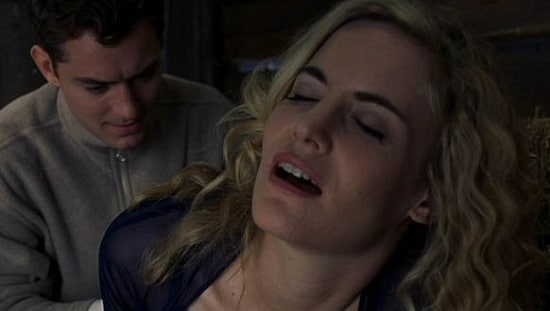 It’s odd to think that there was a time in which an abstract take on video game culture which features people entering a virtual reality by plugging an umbilical cord into a portal at the base of their spine might be considered a fairly safe, mainstream-friendly work of cinema. This, however, was pretty much the case for David Cronenberg in 1999. Of all the major directors to have emerged from the horror scene of the 1970s, Cronenberg had fared better in the 90s than most, mainly as he had moved beyond the splattery body horror films on which he made his name into a more high brow, critically approved arena – but crucially, without significantly altering his established directorial identity – via the likes of Dead Ringers and The Naked Lunch. Then in 1996, Cronenberg produced what proved to be one of the most controversial (i.e. tabloid-baiting) films of the decade in Crash, and all at once the Canadian filmmaker was hotter in his 50s than he’d even been.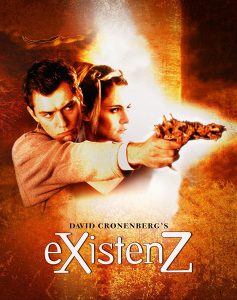
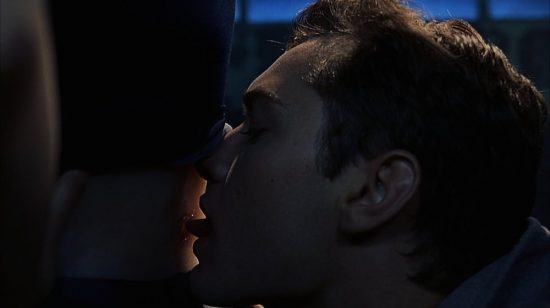 That having been said, this being Cronenberg, the film rests heavily on a sexual overtone to the gamer-game pod relationship; while it’s milder than the sexual elements of his early body horror films (and certainly much less provocative than Crash), there’s a thick streak of eroticism running through the film, with its many lingering close-ups of cords being inserted into welcoming orifices. The sex appeal of the two lead actors is clearly a big factor there: Jude Law is at the peak of his Cool Britannia pin-up boy good looks, and while Jennifer Jason Leigh doesn’t seem too widely celebrated as a sex symbol, she is extremely sexy here, though that may at least in part be my weakness for 90s indie girl hair and dress sense speaking.
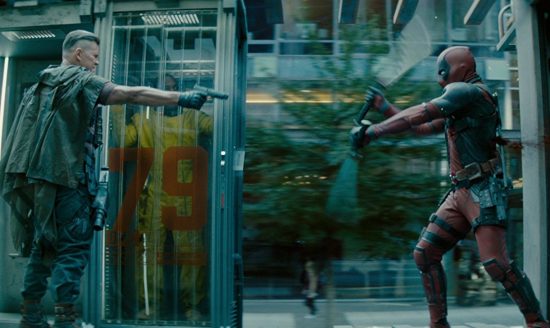 It feels a bit weird and inherently dishonest to discuss any studio-backed superhero movie in terms of being a ‘surprise hit,’ yet this is how 2016’s Deadpool is generally regarded. Though being officially part of the X-Men franchise and sporting a whopping budget ($58 million may be low by modern blockbuster standards, but it’s still a fuck-ton of money), the big screen take on one of the most idiosyncratic and non-family friendly Marvel Comics characters had endured an uphill struggle to the screen, and was thought to be a bit of a risk for 20th Century Fox. In addition, it was something of a make-or-break moment for leading man Ryan Reynolds, who – in the wake of many high profile misfires, which he himself is usually the first to take pot-shots at (and does again in Deadpool 2) – surely wouldn’t have survived professionally with yet another box office bomb. Of course, this wasn’t how things turned out, and after going down a storm with audiences and critics alike, Deadpool exceeded all expectations by becoming the highest-earning film in the entire X-Men franchise to date; an even more eye-opening feat given that it’s R/15-rated, which by studio logic typically means lower box office returns.
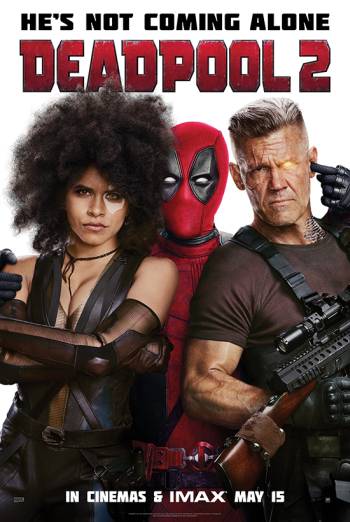 Happily, Deadpool 2 proves to be a more than worthy successor. It may slip ever so slightly into the Iron Man 2 trap of concentrating too much of its energy into setting up further films – nor is this the only standard sequel pitfall it stumbles into (which we’ll touch on later in the spoilery final paragraphs) – but it also does what all the best sequels do: that which ain’t broken doesn’t get fixed, and everything else gets cranked up a few notches. It won’t convert anyone who didn’t like the first film, but somehow I doubt that was ever too great a concern.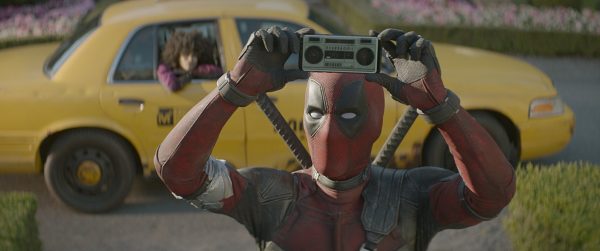
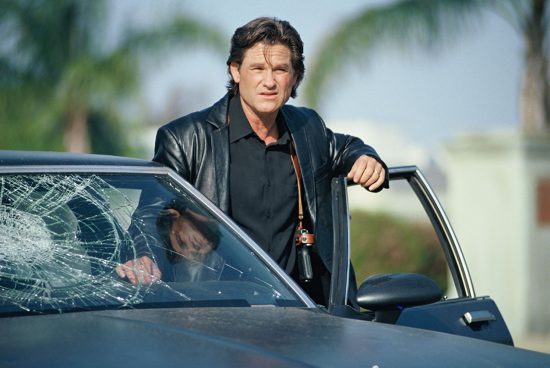 For many of us, Kurt Russell will always be associated first and foremost with his run of cult classics in cahoots with director John Carpenter. Even so, in 2018 he remains an equally familiar face for contemporary audiences thanks to his high profile roles in Guardians of the Galaxy Vol 2, the last two Fast & Furious movies, and his collaborations with Quentin Tarantino (of which there’s another on the way, as Russell was recently reported to be in talks for Tarantino’s upcoming Once Upon A Time In Hollywood). However, Russell – truly a lifelong professional, having started out as a child actor in the 60s, with almost 100 screen credits to his name – has done a slew of other largely overlooked roles in the interim between his 80s/90s heyday and his recent elder statesman resurgence. Some of these, admittedly, might be best forgotten (i.e. Soldier), but some of them might be well worth dusting off and giving another chance – and 2002’s Dark Blue definitely ranks among the latter.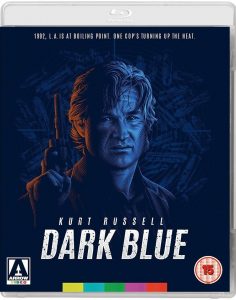
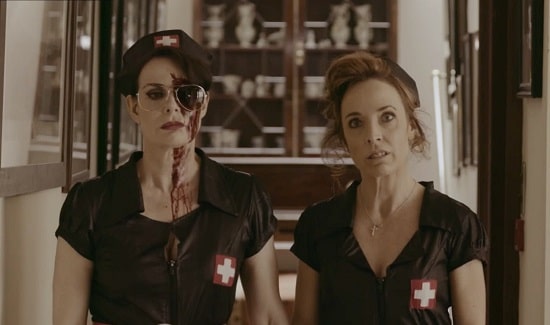 There are times when you sit down with a low budget indie horror film knowing exactly what you’re going to get from the moment it begins, with no real surprises along the way to the end of the tedious hour and a half. Then, on the other hand, there are times when you sit down to a film like Attack of the Adult Babies. Actually, I should retract that last statement: I’m not sure I’ve ever seen a film quite like Attack of the Adult Babies. Imagine Brian Yuzna’s Society as a 1970s British sex comedy, and you may get some vague sense of the gleeful weirdness director Dominic Brunt and company have in store here. While it hits on various familiar tropes from low-brow horror and exploitation, it all adds up to something surprisingly unique, and unmistakably British – and, in the tradition of the best low culture these fair isles have ever produced, it’s all done in the worst possible taste.
 It scarcely needs underlining at this point, but Attack of the Adult Babies is of course a very, very silly film indeed. By extension, it should be screamingly obvious that it won’t be everyone’s cup of tea; many viewers will doubtless find it too puerile, too random, too lacking in traditional neat & tidy, logical plot-driven storytelling. Yet it is of course this very puerility, randomness and messiness that gives the film its charm. Almost nothing about it makes sense, and at every turn there’s some new oddity to keep things from getting dull, be it theatrical Eastern European gangsters, a quasi-incestuous subplot, or a surplus of toilet humour at its most joyfully crass. Again, no doubt it will leave many viewers bemused, but I’m hard pressed to see anyone being bored.