Drew Barrymore's Bad Girl Years: A 40th Birthday Tribute


By Ben Bussey

I can think of almost nothing more certain to make every reader aged over 30 wince in agonising realisation of their own increasing years than the fact that Drew Barrymore has just turned 40. How could it be that the cute little moppet who melted the hearts of the world in ET is now on the precipice of middle age – older than either Steven Spielberg or Dee Wallace were when that time-honoured classic was made? If ever we needed a stark reminder of how long ago the 1980s were, this is it; oh, how fast the years slip by.

Of course, ‘old before her time’ is kind of recurring theme in both the life and career of Drew Barrymore. As well as being the most notable child star of her generation – notching up appearances in a few minor genre hits like the Stephen King movies Cat’s Eye and Firestarter (as well as having made her debut in Ken Russell’s Altered States) – she also became one of the most extreme embodiments of all the worst child star cliches: booze, drugs and attempted suicide all before she was even 15. No doubt going through such troubles as Hollywood royalty makes the road to recovery that bit less treacherous, but even so, a cursory glance at the fates of any number of other former child actors underlines that things could easily have turned out a whole lot worse for Ms Barrymore. As it stands, she turned it all around beautifully, carving a prolific career as an actress and producer, and showing potential for a bright future in directing too based on her distinctly above-average coming of age chick flick Whip It.

And yet, between her years as an early teen trainwreck and a rom-com queen, there was that intermediate phase that all former child stars – or at least, former child actresses – inevitably go through; that time when they have to brush off the remnants of the cutesy image of days gone by, and declare in no uncertain terms that they’re all grown up now. We know the drill: nude photo shoots, high profile significant others, and a series of darker, edgier, overtly sexual roles. This period would be a rite of passage for the actress and the audience alike, in particular those viewers who came of age around the same time these films emerged – and revisiting these films in later years may well prompt somewhat complex reactions.

Ask any thirtysomething in 2015 (and yes, the current writer fits that category), and they will surely agree that Drew Barrymore pretty much wrote the book on being a big screen bad girl in the 1990s. Of course plenty of other actresses had made a similar transition before and since; notably, Linda Blair had embraced exploitation in the early 80s, resulting in such enduring cult classics as Chained Heat and Savage Streets; and in the immediate wake of Barrymore, Alyssa Milano would follow in her footsteps to more unabashedly sleazy effect with both Embrace of the Vampire and, notably, a sequel to the film which is the cornerstone of Drew Barrymore’s early 90s bad girl legacy: Poison Ivy. Made when Barrymore was still only 17, the now-familiar tale of a teen tearaway who worms her way into an affluent household via manipulation and seduction is a curious reflection of how such themes were handled in the early 90s, for while the concept is pure B-movie sleaze, it strives to treat its subject matter rather more seriously than we might have expected.

From the opening moments, Poison Ivy knowingly plays on the audience’s familiarity with Barrymore’s own troubled history. Memorably introduced on a rope swing over a gaping ravine, grunged-up to the nines with unruly blonde hair, battered biker jacket, cowboy boots and practically non-existent skirt, Barrymore’s anonymous loner – christened Ivy by the film’s real protagonist, Sara Gilbert’s Sylvie (who it seems safe to assume is so named in reference to Sylvia Plath) – is dished up to us as romantic nihilism personified. Gilbert’s teenage angst narration and subsequent conversations with Ivy are heavy with would-be intellectual ruminations on sexuality, class, life, death and suicide, all seemingly designed to hammer home that these are deep, intelligent, sensitive adolescents; all quite impressive at the time, but all rather grating now. Baggy tie-dye T-shirts, torn denim and big boots abound, rigidly tying the film to the era, and up to a point it does feel like a pretty decent encapsulation of the Generation X vibe that prevailed at the time – and the open hostility inspired by Ivy’s tattoo and nose ring (all fairly commonplace now) underline that, by and large, we’ve made some advances in the years since.

However, the early 90s was also the era of a somewhat different cultural movement; the rise of the erotic thriller. Poison Ivy attempts to mesh grounded young adult drama with a Red Shoe Diaries brand of glossy sexploitation, all soft focus and droning saxophones, and the two prove awkward bedfellows. While melodrama is never far from the surface – particularly in the thunderstruck, hanging from the balcony finale – Poison Ivy never seems to stop playing it straight. As a result, the film quickly lapses into inadvertent camp, and may well leave one wishing they’d just said to hell with it and fully embraced the inherent trashiness of it all, as would be the case in the increasingly porn-ish follow-ups with Alyssa Milano and Jaime Pressly.

Guncrazy_(1992_film)_posterProceedings would be played even straighter in Barrymore’s other 1992 bad girl film, Guncrazy. Based on the 1949 movie of the same name (I gather it’s a loose remake, though I haven’t seen the original), the film again sees the actress take on a damaged goods white trash role as a trailer-bound teen who shoots dead her abusive stepfather and hooks up with a paroled convict (James LeGros), the two of them bonding over a shared passion for guns – and inevitably they’re on the run soon enough. This film again seems to capture the 90s zeitgeist pretty well: from the premise alone there’s a very True Romance/Natural Born Killers-esque vibe to it, but Guncrazy actually hit screens before either of those. Alas, it’s nowhere near as good, despite its fairly charismatic leads and above-average support from Billy Drago, Michael Ironside and a rather squandered Ione Skye. Like Poison Ivy before it, Guncrazy is a little too preoccupied with its own seriousness to wind up being much fun, but in this case it’s bordering on dour. Again, one can’t help wishing they could have gone just a little more Linda Blair with it.

It seems incumbent to mention that both Poison Ivy and Guncrazy are the work of female writer-directors, Katt Shea (previously responsible for Stripped To Kill and its sequel, subsequently responsible for The Rage: Carrie 2) and Tamra Davis (whose CV also includes Adam Sandler’s Billy Madison and Britney Spears’ Crossroads). This may well reflect how this era of Barrymore’s career saw her repeatedly cast as the strong young woman; while her characters were far from heroic, they were all in their own way battling adversity, standing up for themselves, and embracing their own sexuality. There would seem to be steps taken away from standard male gaze territory toward a greater emphasis on the female perspective, with at least a soupcon of male subservience. Barrymore is the object not only of desire, but of obsession, devotion, worship; the men in these movies are quite literally falling at her feet. Note that most of the love scenes she has in these films – Poison Ivy, The Amy Fisher Story (true life-based TV movie covering very similar thematic territory), Doppelganger – show her receiving oral sex. Yes, 90s men know that a woman’s pleasure comes first. It’s also curious to note that her nudity in these films also tends to be limited to the side angle; I don’t recall sideboob really being a thing in the 90s, but perhaps this is another place she was ahead of the curve. Hmm… trying to find a way to tie that in feminism, but I’m drawing a blank. Full frontal shots more male-gazey, sideboob less so…? Yeah, that’s not the strongest argument I suppose. Never mind. We all love sideboob, don’t we?

DrewBarrymore@Doppelganger-2 Anyway, now that we’ve mentioned both sideboob and Doppelganger… if Poison Ivy, Guncrazy and The Amy Fisher Story seemed a little too eager to suck the joy out of it all, Doppelganger sure does redress that balance. One of Barrymore’s few horror roles as an adult, writer-director Avi Nesher’s gleefully ridiculous 1993 movie sees her take on yet another troubled young woman role (this time a rich brunette, just to mix it up), but happily throws logic, restraint and any pretence of good taste out the window early on, as Barrymore’s New York heiress hides out in LA to escape her own phantom double. So is she just insane, or is she genuinely haunted? The film itself doesn’t seem to know most of the time; indeed, the finale goes from assuring us that it’s all in her head, to showing us that it isn’t in a very gooey, Hellraiser-esque fashion. Yes, it’s delirious to the point of complete incoherence, but given what a tepid period the early 90s was for horror, Doppelganger surely deserves points for enthusiasm.

The early 90s would see Barrymore continue to play the bad girl sex object with brief cameos in Waxwork 2, Wayne’s World 2 and Batman Forever, a couple more dramatic roles in Mad Love and Boys on the Side, and a more mainstream turn in that cowgirl flick called – funnily enough – Bad Girls. However, by the time she surprised cinemagoers everywhere by dying in the first scene of Scream (and I assure you, it was a big surprise at the time), she had pretty much left that phase behind her. For those of us with a deep appreciation of trash, it’s hard not to look back on those early 90s movies without being just a little disappointed; the opportunity was there for her to out-Linda Blair Linda Blair, but Barrymore took the more dramatic path. But that would seem to be a good reflection of how these things were in the 90s; all a little too anxious to be taken seriously.


Thank goodness, then, for the Charlie’s Angels movies. Yes, I said it. I know, they were overpriced blockbusters responsible for unleashing one the blandest Hollywood hacks of our time in McG – but damn it all, they’re so much fun. Attractive women in eye-catching outfits having spectacular wire-fu fights (when wire-fu still felt fresh) in the midst of utterly absurd plots? Really, who can’t find some enjoyment in that? They do once again see Barrymore a little too eager to play the dramatic card at times – in both films, the few solemn moments invariably centre on her character – but this is easier to accept when all other areas so readily venture into the guilty pleasure territory that her earlier films sometimes seemed anxious to avoid. I mean, if you can’t appreciate her in the Evel Knievel jumpsuit pictured above, then you have my sympathies.

It would be easy to be snide about the bulk of the work she’s done in the years since, given that – producing and co-starring in Donnie Darko aside – it tends to be nothing but rom-coms, and anyone who’s into horror and exploitation is generally expected to hate such films. Well – I for one am happy to declare that I don’t automatically hate all rom-coms, particularly not when they’re delivered with the warmth, sincerity and charm that Barrymore invariably brings. Somehow I find it unlikely we’ll ever see her return to full-on psychotic sexpot mode again, but whatever Drew Barrymore may do, she’ll always have at least a hint of that bad girl twinkle in her eye, and I daresay that’s enough.

WIHM 2015: Putting on a Show – Arranging a Grass Roots Film Event

By Nia Edwards-Behi

Back in 2010, I put on an event to mark the first Women in Horror Recognition Month, the painfully punny Ghouls on Film. I’ve always wanted to do another, but that scarce modern commodity of ‘time’ always seems just a little bit too far out of my grasp. I mean, I was busy when I put Ghouls on Film together, but somehow since then it’s always been much harder to get something together, not least of all because a year on from Ghouls on Film I was helping out with the equally as punny Abertoir.

I’ve been tearing my hair out a bit trying to come up with something to mark this year’s Women in Horror Recognition Month. Boss Ben suggested a reflection upon that event, almost as something of a guide to organising a film event, particularly as I have amassed, in the time since, a little bit more expertise thanks to my work with Abertoir. I’m usually quite loathe to think of myself as an expert in anything, but when you’ve been doing something for five years it’d be difficult for anyone not to pick up at least a little bit of know-how. I won’t call this article a how-to, and it’s certainly not exhaustive, but hopefully I can write something that people thinking about putting on their own film event might find helpful. Here is some broad advice then, from this woman in horror, to anyone who’s thinking about putting on a film event.

– Don’t be afraid to be amateur. I should note this is not advice on how to put on a super-professional film festival with huge name stars and big release films. That is a lot more difficult, expensive and time-consuming than what I did with Ghouls on Film. This is about just doing something because you want to make it happen. That’s not to say that you can’t get a big film or a big guest or be extremely professional with your low-budget grassroots event, but please don’t look at my advice and expect that to happen without either a lot of extra work or a stroke of good luck.

Bearing that in mind, remember also, there is nothing wrong with an ‘amateur’ event. As long as you have not mis-sold your event, people are not going to criticise you for, say, not starting exactly on time (as happened with Ghouls on Film), or if your venue was not entirely ideal (as happened with Ghouls on Film). As much as I am generally cynical about people, for the most part, if people are coming to a small film event, they are there because they are enthusiasts, and aren’t going to seek absolute perfection from an independent event. That being said, imperfection is only excusable if you’ve made the utmost effort to make your event the best you can. If you’ve just been lazy, then it will show in other ways too, and people will notice and they will be rightly unhappy about it.

– What do you want to do? Before you dive headlong into planning the intricacies of your event make sure you know exactly what it is you want to do. An event to tie in with something like WIHM makes that quite easy, so in my case, I wanted to put on an event celebrating women in horror. In a bit more detail, I didn’t just want a day of films, so I broke it down: a showcase of short films, a discussion with guests, and two feature films. Your event can be as simple or as complicated as you want, and by all means be ambitious, but make sure it’s something you’ll realistically be able to do.

Birmingham Custard Factory

– Find a venue. This is important. I held my event in Birmingham, even though it would have been much easier to do it where I actually live. My reasoning for this was simple: would many people come to my event if I hosted it on the far coast of rural mid-Wales? Well, no, they wouldn’t. It’s naturally tempting to take an easy route to something like this, but you have to bear in mind your audience. If your event’s focus is on something local, then of course keep it local – if my event was about Welsh films, for example, I wouldn’t have taken it to Birmingham (obviously). If you’re lucky, you might already live in or near a big town or city where people can easily get to your event.

To find a venue, I simply searched online for places that could be hired, and sent around some emails, asked about some prices, and made a rough decision based on that information. However, I did also visit the venue, even though it involved 6 hours of train travel there and back again, because you don’t want to show up on the day of your event and be confronted with something completely unexpected. That effort will pay off.

You want to make sure your venue is suitable. That doesn’t necessarily mean hiring out a cinema, if it’s out of range of your budget. It might be a multi-purpose auditorium (that’s what I went for), or a function room with a projector, or the back room of a pub, or a lecture theatre. While budget is naturally an extremely important consideration, please do not under-value the films you’ll be showing. If you find a venue within budget but the sound system is sub-par, or the screen is decrepit, or whatever, keep looking. You might find somewhere else. If you don’t, so be it, but chances are you will. You need to respect the films you’re screening, and you need to respect your audience, who have made the effort to be there.

– Reach out, and make the most of social media. Without the internet, Ghouls on Film would have fallen flat on its face. Even before I’d secured a venue or finalised plans, I was able to gauge interest, and ask for advice and feedback. You might think that an 8-hour marathon of nothing but you and your mates’ films is the best thing ever, but other people might not.

Once you’ve got your venue/time/date sorted, social media is a wealth of free publicity. You will almost certainly rely on friends, and indeed with WIHM there was, and is, of course, a network of people who will happily spread the word for you. It sounds obvious, but don’t just make an event page on Facebook and let it sit there. Invite people, ask them to invite people, post the link to groups and pages, spread the word on Twitter…you might want to judge for yourself the fine line between promotion and spamming, but you will have to do that work yourself.

Do not be afraid to reach out to people. Don’t just rely on blogs and websites within your niche, either – find local newspapers, blogs, or groups who might promote your event. Even if you send out 20 emails and only have one blog post anything, that might get 5 more people through your door. There will always be people willing to help, in whatever way they can – for example, my poster was designed by someone I followed on Twitter, who was willing to do that for me in exchange for a bit of mutual promotion.

Indeed, this isn’t just for the purpose of promotion, either. Ghouls on Film wouldn’t have had any content if not for making contact with people via social media. While I was lucky enough to be put in touch with one or two short filmmakers through my links with Abertoir, the majority of what I screened was picked from films sent to me, or through sending messages and asking to see people’s work. This goes for guests too!

ghouls1

– Be prepared to lose money. This is the biggie. If you are setting out to put on a one-off event for the purpose of making money, you are a) doing it for the wrong reasons and b) going to be extremely disappointed. I’m not saying money is the root of all evil, or anything – money is nice, and obviously if you are planning on making a career out of putting on film events then actually making money might start to be more important. However, if you’re putting on an event for the first time, please let me tell you in all seriousness that doing it for the love of it is extremely important.

Why are you going to lose money? To break down where my money went: venue hire, guest travel, printing costs, my own travel, and my own accommodation. If you’re putting on a bigger event, you might also be dealing with appearance fees and screening fees too. Some of these costs might not be huge (I reeled off my posters at the uni library, and made the cheaper black and white versions more interesting with my own ‘bloody’ handprints), and some of them might not even apply to you, but it’s a sensible to approach an event with the expectation that will cost more than you first think.

Costs are one thing, but what about income? I did charge an entry fee: £6, for the day. I don’t think you should be afraid of that, and by all means be upfront, I was. I explained that I was charging a fee to cover the costs of the event. Was I expecting to cover the full costs? No, but it certainly reduced the loss that was made. 40 people came to my event, if you want an idea of what sort of income did not cover the costs. Of course, had 100 people attended, I probably would have covered the costs (I can’t honestly remember what it all cost me, in the end), but I didn’t set out expecting even 40 to come along. Expect to lose money, and any financial outcome will be satisfying.

EmilyBooth1

To close, I feel it’s important to note that I think I was extremely lucky with my event. My content was good, I had a recognisably-named guest in Emily Booth, and people supported me, both in promoting the event and in attending. Was it easy? No. Did it leave me out of pocket? Yes. Was it a great experience and would I do it again? Of course I bloody would. It’s worth adding, even if just for trivia’s sake, that some of the fine sorts of people who came out to support the event were our very own Ben, Keri and Steph, and look where we all ended up. Putting on an event like this is something I’d genuinely encourage people to do, moreso if it’s in conjunction with a broader movement or theme you’re particularly passionate about, women in horror or otherwise. Even if all you’re doing is hiring out the back room of a pub and screening an independent film you really believe in, doing so is an incredibly rewarding and worthwhile experience.

Editor’s note: here’s Ben’s coverage of Ghouls on Film from February 2010 – reviews of Slaughtered and the world premiere screening of Dead Hooker in a Trunk (who knew…)


One More Story Before Twelve – 35 years of The Fog

By Tristan Bishop

At the dawn of the 1980s John Carpenter was riding high on the success of Halloween, which had been released in 1978, and had, after many months and much word of mouth, become an enormous success, making upwards of $65,000,000 on a budget of just over $300,000. Nowadays of course the major studios would have immediately secured him to direct the latest mega-budget release, but back then things obviously played a little differently, as Carpenter’s next project was the 3 hour long 1979 made-for-TV Elvis: The Movie, starring Kurt Russell as the titular bequiffed hip-swiveller. Next up Carpenter signed a two picture deal with AVCO Embassy which resulted in 1981’s $6 million budgeted Escape From New York, and 1980’s considerably more modest $1 million production The Fog.

Despite pretty much defining the genre cinema of the late 70’s/early 80’s, Carpenter was looking back as much as he was looking forward – for a man that changed the face of horror films with Halloween and its fully-formed slasher template (although he took inspiration from 1974’s Black Christmas and the giallo films of Dario Argento), Carpenter’s love for the cinema of the 40’s and 50’s shines through in his earlier work, especially the films of Howard Hawks, whose work Carpenter remade twice – once unofficially (Assault On Precinct 13 being an urban update of Hawk’s western Rio Bravo) and once officially (The Thing is based on Hawk’s 1951 The Thing From Another World). The Fog was intended as another exercise in mining the favourite films of Carpenter’s youth, this time the creepy black & white ghost stories of the 1940s; presumably Carpenter had the eerie, low-budget films of Val Lewton (Ghost Ship, Cat People) in mind, which would have been a world apart from the gore-splattered celluloid making waves with horror audiences back in 1980.

Apparently inspired by seeing a rolling bank of fog whilst visiting Stonehenge in the UK, Carpenter and his producer (and ex-girlfriend) Debra Hill took this visual image and welded it to the plot of the 1958 British sci-fi movie The Trollenberg Terror (known in the US as The Crawling Eye), a superior sci-fi offering which featured alien creatures hiding in the mist at the top of a mountain. Carpenter and Hill then co-scripted a story about the sleepy Californian coastal town of Antonio Bay, which comes under attack from murderous ghostly pirates hunting for their long-lost gold, during the towns 100th anniversary celebrations. The basic idea was pretty straightforward, but featured a nice twist (SPOILER ALERT!) whereby it transpires that the founders of Antonio Bay deliberately caused the shipwreck which originally killed the aforementioned pirates, and used their ill-gotten gains to build the town and church, which works a ‘sins of our fathers’ angle into the plot, and asks questions about personal responsibility, the moral status of organised religion, and possibly even comments on the birth of America itself.

Anyone familiar with Carpenter’s work in his peak period will be aware of his knack of putting together a great cast, and The Fog is up there with his best, pulling together people he had previously worked with in Charles Cyphers as a weather man, and Jamie Lee Curtis as a spunky hitch-hiker, quite apart from the virginal college girl that made her name in Halloween; established but culty actors in Hal Holbrook and George ‘Buck’ Flower; Carpenter’s then-wife Adrienne Barbeau taking the lead role as Stevie Wayne, the owner/sole DJ of a jazz radio station based in a lighthouse; her friend Tom Atkins stealing the show with an unrepentant masculine charm as a beer-swilling driver who literally picks up Jamie Lee Curtis; and even a bona fide old-time Hollywood star – and, in what is probably nowhere near a coincidence, Curtis’ real-life mother – in Janet Leigh as the town mayor. With such a large cast for what is basically a quick, low-key horror picture, you might think that you might have a bit of a mess on your hands, but here it really serves to make the town of Antonio Bay feel real and alive, especially in the way that the characters interconnect at various points – Stevie Wayne’s voice drifting over the airwaves in scenes where she is otherwise not present brings a solid sense of place and community.

Unfortunately, on his first viewing of a rough cut of The Fog, Carpenter was deflated – “I had a movie that didn’t work, and I knew it my heart.” As previously mentioned, audiences in 1980 expected more visceral scares (Cronenberg’s Scanners had just hit the box office by this point), and Carpenter went back and added more footage with the ghostly pirates (on the original attack on the Seagrass, the pirates were not seen at all!), more gore (although The Fog is hardly a gorefest), and, perhaps most iconic of all, the opening scene with John Houseman as Mr Machen (one of a great many in-jokey names referencing horror films, books and Carpenter’s buddies that appear in the film!) reading ghost stories on a deserted beach to a group of children at midnight. The reshoots apparently make up half an hour of the film itself.

Yet despite these production problems, and an initial dismissal by critics of the time (which is common to nearly all of Carpenter’s best work) the film works as well now as it did in 1980, as a limp and easily-dismissed 2005 remake helped to highlight. I’ll make a personal confession here – I LOVE The Fog. I probably watch it on average once every six months. I can quote along with the dialogue word for word. I was even inspired to start a radio station by Stevie Wayne’s character in the film (sadly I still don’t get paid for that OR live in a lighthouse yet). If I wasn’t quite so wary of stating ‘favourite films’ I’d call it my favourite film. But why? It doesn’t have the scares of The Haunting (1963) or the visceral buzz of The Texas Chain saw Massacre (1974), nor the layered intelligence of Don’t Look Now (1973), and it’s certainly not a perfect film – see the rather perfunctory script, one or two great lines excepted.

Well, I think it’s a combination of factors. Firstly, it’s concise at 89 minutes – a remarkable achievement in editing considering the large cast and amount of event in the film. Secondly, it looks and sounds amazing – Director Of Photography Dean Cundey worked with Carpenter again (after first collaborating on Halloween) and brings a similar crisp widescreen vision to the sleepy coastal town locations (one of which is Bodgea Bay, which was famously used in Hitchcock’s The Birds), and Carpenter’s own soundtrack, whilst not as iconic as his scores for Halloween or Assault On Precinct 13, is just as effective, with sparse synth work and tumbling piano lines. Thirdly, it’s just damned creepy at times – the sequence at the start of the film at the dead of night with lights mysteriously coming on, car alarms going off and the contents of a local shop shaking and shuddering is one of Carpenter’s most effective sequences, and the ghostly pirates, shown in silhouette with demonic glowing eyes are an impressive threat (their leader Blake, incidentally, is played by FX whizz Rob Bottin, who would become a household name to horror fans for his work on Carpenter’s The Thing). Or it could just be that Carpenter’s love of folky ghost stories, comics and Italian horror combined here to make something appealing to fans of all three.

So 35 years on, like all of Carpenter’s work from his golden era, The Fog stands up better than it ever has, and if it’s been a while since your last viewing, or if you’ve never before visited Antonio Bay, now might be the best time to look for The Fog.

Childhood Terrors: Growing up in the Golden Age of the Kiddie Horror Movie

Monster Squad screamBy Ben Bussey

You don’t need me to tell you what a distinct period the 1980s were when it came to horror movies. Coming off the back of arguably the most revolutionary era in the genre’s history (if not cinema overall) the previous decade, the artistic and intellectual advances of the 70s gave way to a generally more lurid and cartoonish approach, larger than life visions bursting with practical special effects creations and – as Keri reminisced recently – lit up in bold, unnatural colours. And yet at the same time that mainstream and independent filmmakers alike were churning out successions of horror hits to impressive returns both at the box office and on the exciting new medium of home video, along came the moral crusaders condemning it all, crying out for a return to proper Christian family values and – inevitably – demanding that we think of the children.

I would have been four years old around the time that two very significant though seemingly unrelated events occurred for the film industry on opposite sides of the Atlantic, both of them apparently rooted in thinking of the children. On my home soil of Britain, the Video Recordings Act was passed (or technically it wasn’t, but let’s not get into that here); whilst over in the US of A, the PG-13 certificate was introduced. I’ve often pondered how curious it is that these events came to pass almost simultaneously, for where the VRA seemingly sought to ensure that no child would ever come into contact with that which was deemed inappropriate for young eyes, the PG-13 – in its earliest days, at least – seemed to open up a whole new realm of possibility for the kind of things you could get away with in what were ostensibly family films. Small wonder, then, that the certificate’s introduction brought with it the somewhat short-lived and often-overlooked subgenre of Kiddie Horror, which had a major impact on scores of fledgling horror fans at the time – this writer very much included.

Maybe ‘Kiddie Horror’ isn’t the preferred term for everyone; I really don’t know. I first recall picking up on that phrase in Amazon UK’s official review of The Gate, and it just stuck. It seems to fit. I like that ‘kiddie’ sounds even more juvenile than ‘kid;’ it emphasises the contrast between the two modes (not unlike the current Japanese musical trend ‘Kawaii Metal’). Another phrase we might use, which is perhaps is just a little too cutesy for my liking, is ‘Terror for Tots;’ this was how David McGillivray phrased it in a 1988 article for Films and Filming, lamenting in a somewhat curmudgeonly fashion how the horror of the day seemed primarily geared towards young whippersnappers “who prefer their heroes and a good percentage of their villains to be below school leaving age.” Not that McGillivray coined the phrase ‘terror for tots;’ within that same article (full title: ‘Does Terror for Tots Make Sense?’) he explains this question was originally posed by British magazine Picturegoer way back in the 50s. Clearly, then, the idea that horror movies were implicitly aimed at children was nothing new – yet the 80s took it to a whole new level, and were a bit less shy about admitting it.

Talking Freddy KruegerLooking back now as an adult (and, for what it’s worth, a parent), I can certainly understand why there were concerns. These were, after all, the days when film studios thought nothing of licencing talking Freddy Krueger dolls, or making children’s cartoon shows based on Rambo and Robocop (with Conan and The Toxic Avenger following suit in the early 90s). Even so, whilst there’s surely no argument that marketing R-rated film properties toward a pre-teen audience is in pretty poor taste, it’s rather more debatable that such measures were in any way truly harmful to the young. It’s not like the content of the Robocop cartoons reflected that of the movies – and in any case, there was plenty of rather startling content making its presence felt in kid-friendly films of the time.

I believe I would have been around about six or seven years old – and, I might emphasise, not a horror fan in any way, shape or form at the time – when I first saw what promptly became a personal favourite: Indiana Jones and the Temple of Doom. Years later I would be rather baffled reading complaints that the film was far too dark, nasty and scary for its young audience, as I never recalled being frightened by it at all; hugely thrilled and entertained, yes, but not in any way disturbed, and I say that as someone who was very easily frightened by anything remotely horrific at the time, from the obvious (the Jaws movies, Michael Jackson’s Thriller video) to the more oblique (Worzel Gummidge).

Then again, the version I saw – the only version released in the UK until the uncut Blu-ray in 2013 – was missing about forty-five seconds from the clip you can see below (with most of the footage between 0.38-0.50 and 1.41-2.12 excised):

We might debate whether Temple of Doom’s human sacrifice is necessarily any more gruesome than the Nazi-melting finale of Raiders of the Lost Ark (though it’s certainly a lot more drawn out, and subsequently feels rather more sadistic), but either way it’s largely accepted today that controversy surrounding this scene, hand in hand with the kitchen sequence from the same year’s Gremlins, was directly responsible for the PG-13’s inception, reportedly at the suggestion of Spielberg himself. Given that it has long since become the dominant cinema rating, more often than not slapped automatically on films which would have earned a PG without breaking a sweat twenty years ago, it’s fascinating to look back at the first films to be released as PG-13: Red Dawn, declared to contain the most acts of violence of any film at the time; Dreamscape, whose nightmarish content reproduced two key terrors of Temple of Doom – a heart removal, and Kate Capshaw (who briefly appears topless); and The Woman in Red, which boasted full nudity from Kelly LeBrock in what is very much a sexual context. Red Dawn’s largely bloodless gunplay aside, it’s doubtful much of this would fly in a PG-13 now, but it was all uncharted territory at the time. The impression I get is that neither the censors nor the filmmakers were quite sure where the boundaries lay just yet, and as such were largely making it up as they went along. I daresay a great many film fans are pleased that they did, as those of us who were kids at the time sure did get some great entertainment out of it.

CRITTERS UK vhsFor me as a pre-teen just finding my taste for the macabre, there were three key PG-13 Kiddie Horror films that defined this era – and the first of these to hit screens (though not the first I personally saw) was 1986’s Critters. Yes, this film is perpetually dismissed as an obvious Gremlins rip-off, and that’s not entirely unfair – but even so, as much as Billy, Kate and Gizmo were afraid of the Gremlins, most of the harm they did (maybe two actual murders notwithstanding?) seemed to comprise of petty vandalism, flashing and being drunk and disorderly. With the Krites, on the other hand, there was no misunderstanding. These were carnivorous alien lifeforms who touch down in middle America with one specific purpose: to eat. We get our first clear evidence of this early on when farmer Jay and his son Brad – Scott Grimes’ young male protagonist providing a clear point of identification for boys like me – find a heavily mutilated cow in the field, though somehow manage to miss the alien spacecraft parked nearby. It’s not too long before the sharp-toothed little buggers also devour big sister April’s boyfriend (an early Billy Zane speaking part) in the barn, and bite off a couple of Jay’s fingers in the basement. No, it ain’t exactly Captain Rhodes in Day of the Dead, but as a child who hadn’t seen much horror at the time it was pretty full-on stuff – and boy, did it give me a taste for more gore. They even ticked another of the key taboo boxes by throwing in the one “fuck” that you can typically get away with under PG-13 rules. (We’d have to wait until Critters 2 for a gratuitous tit shot, but those weren’t of quite so much interest back in those prepubescent days.)

The GateThe next of the big three Kiddie Horror movies to reach the screen – and the darkest by a long shot – was the aforementioned 1987 Canadian production The Gate. This was the only one of them that genuinely scared me as a kid, and in many respects it find it more disturbing now than I did then. From the outlandish premise, it might sound harmless enough, centring as it does on two little lads (one of them a young Stephen Dorff) who find themselves under attack from mini-demons after inadvertently opening a portal to a hell dimension in their back yard. But it’s this one above all that blurs the line between horror film for kids, and horror film which happens to feature kids in the lead roles (and there is of course a distinction – see Argento’s Phenomena, Del Toro’s Pan’s Labyrinth, or Let the Right One In). The comedic overtones of Gremlins and Critters are almost entirely absent here, as the physical and psychological torment the young heroes face is for the most part played utterly straight, often to genuinely sinister effect, and there are a few moments which make me wince to this day (fancy getting stabbed in the eyeball with Barbie doll legs, anyone?) Perhaps the most troubling aspect of it – again, more from an adult perspective – is that the kids are literally on their own, all this occurring while Mum and Dad are away for the weekend, leaving the 15 year old big sister in charge. Watching it as a child, this again just made me feel closer to the story, as though I too could hold my own in a battle with monsters; watching it now, I find myself anxious for the parents to come back.

But when it comes to Kiddie Horror, one title stands head and shoulders above the rest, both in terms of contemporary cult status, and what it means to me personally. It reached screens after Critters and The Gate, but it entered my life first – and, no exaggeration, changed it forever.

THE-MONSTER-SQUADThe Monster Squad was the movie that made me fall in love with horror movies. When I sat down to watch it for the first time aged 9, I was resolutely anti-horror, utterly perplexed as to why anyone would choose to watch something with the expressed intention of getting scared. 79-odd minutes later, I understood. I was captivated by these monsters, somehow immediately recognising their iconic power; and to see kids more or less my own age doing battle with them made it seem all the more tangible. No, it isn’t really all that scary, and (however Fred Dekker may protest to this point) it is in a very similar vein to The Goonies, but it was enough to really fire my imagination and leave me with a thirst to learn more about this strange, dark underbelly of film and literature that I had hitherto done my utmost to steer clear of. That thirst, as might be obvious, has never gone away, and I will always hold The Monster Squad dear because of this, but even more so than that I truly think it holds up as a near-perfect popcorn movie custom designed for repeat viewing; and I speak from experience, as – while I can’t offer an exact number – I believe I’ve watched it somewhere in the region of 200 times over the part 25 years. It is, I can say with absolute sincerity, my single favourite film of all time.

And I’ll also say this without hesitation: The Monster Squad holds up better than The Lost Boys. Yes, I said it. Joel Schumacher’s teen vampire romp, also a product of 1987 (there was definitely something in the psychosphere), holds a similar place in the hearts of a great many horror fans as The Monster Squad does in my own; there can of course be no question that Schumacher’s film reached a far wider audience. As I recall I saw it not too long after The Monster Squad, and loved it just as much at the time – but while it’s still a film I very much enjoy, I can’t help but feel The Lost Boys is the weaker of the two for the simple reason that it seems to be in denial about who it’s really for. Though R-rated, it just barely qualifies for that higher rating thanks to the vampire action getting a wee bit too gruesome, but it definitely feels like they were going for PG-13; sex scenes and F-bombs are notable by their absence (I know I’m not the only one who watched it in early adolescence and cursed the director for suddenly cutting away to the clouds just as Jami Gertz was getting naked).

lost boys

It was only in recent years that I learned The Lost Boys had originally been conceived as a children’s movie, something for Richard Donner to do as a sort-of follow up to The Goonies, but was rewritten as a teen movie when Schumacher came on board. This surely explains its somewhat schizophrenic feel. Up to the midway point, when it’s all about Jason Patric’s angst-ridden initiation into the vampire ranks, it all feels very adolescent; but then the focus shifts, the two Coreys (and that other guy) take centre stage and tool up to battle the undead, and suddenly it all feels – well – rather like The Monster Squad. The problem is, whilst taking this somewhat more juvenile direction in the final act, it’s still trying to play up the hyper-cool teenage angle, and as a result it just comes off a bit pompous and absurd – as indeed so many of us do when trying to be cool as teenagers. The Monster Squad, by contrast, wholeheartedly embraces its childishness, never making any bones about being aimed first and foremost at little kids, and it comes off all the more pure and timeless for it. (On which note: Rudy’s leather jacket, white tee, blue jeans and shades = timeless. Everything worn by everyone in The Lost Boys with the possible exception of Jason Patric = so 80s it hurts.) Still, don’t get me wrong: The Lost Boys remains a hugely entertaining film which I’m sure I’ll always enjoy revisiting as much as all the other films I’ve discussed here… just not quite as much as The Monster Squad.

1987 was a golden year, no doubt about it; and yet in subsequent years – the Critters sequels notwithstanding (but not The Gate II, which was an R) – you have to look hard to find many films that really fit the PG-13 Kiddie Horror paradigm. Many would say the Ghoulies series, but aside from the 1984 original (which did not centre on child characters) these were all R-rated; likewise, 1988’s Killer Klowns from Outer Space is arguably more teen-oriented despite being PG-13. There’s the 1989 Fred Savage/Howie Mandel movie Little Monsters, but all in all that’s more kiddie than horror (it was a plain old PG, after all); then we have little Michael Stephenson battling to save his family from those diabolical vegetarian goblins in 1990’s legendary Troll 2, but of course that one’s all in a world of its own (and, bizarrely, went from a PG-13 in the US to an 18 in Britain). PG-13 horror continues to this day, of course, but more often than not in the form of movies which were always geared toward more adult sensibilities; movies which by all rights should have been made for the R rating, but declawed the material just enough to fit the certificate which allows for the largest possible audience. As the sage-like Jerry Maguire told us, we live in a cynical world.

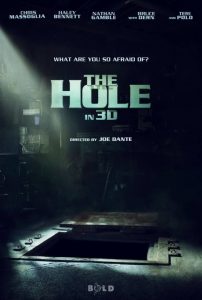
Still, we have had a few great Kiddie Horrors in the past decade. While 2006’s Monster House and 2012’s ParaNorman were both PG-rated animated movies, they did wonders at evoking that 80s spirit for the new generation, albeit in an ever-so-slightly sanitised manner; and while its gore and swearing was clearly too much for PG-13, Attack The Block captured a similar vibe very effectively. But perhaps the best and most sadly overlooked example of Kiddie Horror in recent years came from one of the filmmakers who started it all: Gremlins director Joe Dante, who got back in the let’s-scare-the-young-‘uns-shitless game with 2009’s The Hole. True story: I was working in a London cinema when The Hole came out, and it didn’t wind up doing great business, at least in part because we had a lot of walk-outs asking for their money back. The young teens complained it was too scary, and that they didn’t realise it was a horror movie; meanwhile, the adults were complaining that they didn’t realise it was a kid’s movie. It was very much this line of thinking which Fred Dekker has long claimed scuppered The Monster Squad at the box office; such a shame that audiences still seem unable to accept that a film can be both kid-friendly and frightening, even with the success of the Harry Potter movies. Nor is it just the audiences that have lost touch with that idea; witness the R and 15 ratings slapped on 2010’s Don’t Be Afraid of the Dark, prime PG-13 Kiddie Horror material if ever I saw it, yet somehow deemed that bit too intense.

In his recent, quite beautiful essay on the value of horror for kids, Greg Rucka argues that “horror provides a playground in which kids can dance with their fears in a safe way that can teach them how to survive monsters and be powerful, too. Horror for kids lets them not only read or see these terrible beasts, but also see themselves in the stories’ protagonists. The hero’s victory is their victory. The beast is whomever they find beastly in their own lives. A kid finishing a scary book, or movie can walk away having met the monster and survived, ready and better armed against the next villain that will be coming.” That’s certainly how I recall feeling watching these movies at that age, and that’s the key thing to be taken from all the aforementioned Kiddie Horror movies: the children face their fears, and while they may not go through the ordeal unscathed, they ultimately emerge victorious. For young viewers who will not too long thereafter find themselves unwittingly thrust into battle with that hideous gargantuan terror we all must face – puberty – that thin ray of hope might just go a long way.

There remains a school of thought that PG-13 horror cannot possibly be ‘real’ horror, and I can appreciate where some of this comes from: again, too many horror movies which really belong in the R-category have toned themselves down to fit the lower rating this past decade or so. But the suggestion that ‘family-friendly horror’ is a contradiction in terms just doesn’t ring true to me. The old Universal classics still hold up, and the bulk of them can be shown to little kids; so too most of the creature features of the 50s and 60s, and many of the earlier Hammers. Kids remain fascinated by horror, so why shouldn’t there be horror movies which are accessible to kids? I for one am hugely grateful to have had the Kiddie Horror movies growing up, partly as going direct to more adult-oriented horror without this intermediary step might well have been a greater shock to the system. More so than this though, it was just so great at that age to have horror movies I could directly connect to, protagonists I could easily envisage myself being, the idea of incredible otherworldly forces at play in a world I recognised as my own – and yes, young people standing firm in the face of adversity and living to talk about it. These movies were there for me when I needed them then, and they’re a window through which I can gaze wistfully back at that former state of being now.

Yes, I’m a sentimental 80s cinema nostalgist, and I am not ashamed. If you don’t like it, I’ve got a sneakered foot for your nards.

Monster Squad sunset

Childhood Terrors: Fear, Anxiety and Family

woman in black 2By Quin

I must admit, when it was decided that we would be doing a series of special features dedicated to our own childhood terrors, I felt a bit perplexed and the anxiety came flooding in. Not because I didn’t want to revisit all of the things that scared me as a kid. I’m perfectly fine with delving into my dark side and looking around; I also don’t mind sharing personal stories. The thing that made me nervous was the fact that I have included stories about my introduction to horror in almost every retrospective I’ve done here at Brutal As Hell. I talked about how I lost sleep after watching Pet Sematary because every time I closed my eyes I saw Zelda. I mentioned that I saw An American Werewolf in London at a very young age, thanks to a clueless babysitter. I talked about how important seeing A Nightmare on Elm Street was for me – in fact it felt like a rite of passage. It’s pretty clear to me that personal stories are my angle. It’s my main goal as a critic to explain the best I can, what my experience is like with any given film, and I guess giving some personal history helps all of that happen. Later this year, I’ll be writing a 40 year retrospective on Jaws. I’ve never even been in the ocean and I’ve always lived within walking distance of it. But, Jaws freaked me out probably more than anything else I’ve ever seen. I’ll tell you why this summer.

So, hopefully you can see my dilemma. I’ve already written this essay and I don’t think I should repeat myself too much. There are other films I could talk about. I remember being scared to death of the 1983 Disney film Something Wicked This Way Comes based on the Ray Bradbury book. This one’s kind of strange, but I was also frightened of the 1976 version of The Blue Bird directed by George Cukor. I think that was the first thing that scared me, but I watched it anyway. My family had a VHS copy of it and I watched it way too many times. I saw it again recently and I can’t figure out why I was so scared or why I was so drawn to it as a kid.

In all of my anxiety over what to write, I almost didn’t write anything. The voice in my head told me to just sit this one out – no one will notice anyway – and then a few days ago something amazing happened. My nephew who is 3 walked up to me, looked right at me and said, “Quin, do you like horror movies?” Holy crap, was my mind blown. It was exactly the last thing I expected to ever hear out of that kid’s mouth. My eyes widened and I felt sort of dizzy. I smiled and said, “Yeah!” I said it the way you might when someone you haven’t seen in ten years asks, “Hey are you, so-and-so?” Like I said, he’s 3, so that was about the extent of the conversation. But my eyes immediately shifted to his mother – my sister. She was grinning just like she did when we were kids. It was that I know something you don’t know grin. I’ve seen that grin a lot. She told me that for about the past month, there has been a billboard by their house advertising The Woman in Black 2: Angel of Death. She said that my nephew looks right at it every day and seems drawn to it, but she thinks it also makes him a little uncomfortable too. She’s a great parent, so they’ve had conversations about it and apparently this is where she told him to ask me about it. Am I glad that he did. Even knowing how his question came about, I’m still amazed and more than a little touched.

So there you have it – my contribution to the childhood terrors series. As much as I enjoyed the first Woman in Black film, I had no intention of seeing the sequel. But now I feel like I have to. I’m still going to wait until I can rent it from Netflix. I mean, I’m not paying to see that. But I think it’s unavoidable – that film is always going to be important because it’s the first time I ever heard my nephew talk about horror. It certainly made my fricken millennium. I’ll let you know when he sees his first scary movie, but I won’t be the one to show it to him.


A little late, but what the hell – Tristan's top 10 films of 2014

By Tristan Bishop

I admit it – I’m slightly late on my end of year list, but then I’ve never been one to keep up with the latest trends, so, like a middle-aged man desperately trying to cling onto his youth by pumping the latest deep house sounds out of his iPhone on the back seat of the bus, I bring you my Top Ten of 2014 whilst everyone else is getting on with living in the present.

To be honest, 2014 is a bit of a strange year to evaluate – in fact the only trend I’ve really spotted is that the traditional horror film seems to have been in a recession, and genre film in general has been twisting into new and interesting shapes. Scanning my list there is actually only one film here which I would consider a traditional ‘horror’ film – and even that could be deemed a social realist drama in disguise. Nonetheless this blending of styles has resulted in an end of year list which can stand happily against any other year in the past couple of decades. Here’s to an equally interesting 2015!

  1. Cold In July

cold_in_julyJim Mickle is turning out to be one of the most interesting directors working in American cinema. 2010’s Stake Land announced his arrival as a horror talent worth paying attention to, and 2013’s We Are What We Are managed the impossible and proved to be an English-language remake of a foreign film that was easily the equal of the original (and possibly even surpassing it). This year he branched out from straight horror with Cold In July, an adaptation of Joe R Lansdale’s novel, which manages to knock even Mickle’s previous films out of the park. A thriller which confounds the expectations constantly – by turns chilling, moving and utterly hilarious, and blessed with a trio of excellent central performances. (Keri’s review.)

  1. Gun Woman

Gun WomanRegular BAH readers will know we have a big thing for the queen of modern Japanese cult cinema Asami, so this film was like a gift from the heavens. A lean, grim exploitation film about a former drug addict (Asami) who has been trained as an assassin. In order to bump off the VIP she is after, she has gun parts implanted in her body and has to pretend to be a corpse (don’t ask). Cue most of the film featuring a naked Asami as an angel of death, her wounds (from where she has to retrieve the gun parts) a ticking clock as she races to complete the task in hand before she bleeds to death. Woozy, violent, nasty and stylish, this harks back to the heyday of 70’s Japanese ‘pinky violence’ cinema, and proves the queen is very much here to stay. (Ben’s review.)

  1. The Editor

The EditorI’ll admit I was expecting not to like this. My previous experiences of the Aston 6 crew had been varied; I pretty much hated Manborg, although I had enjoyed some of their short features, but their tribute to the golden age of Italian cult film is in a different league. Spot-on in look and feel, the jokes range from very silly slapstick to some surprisingly obscure references (Hitch Hike, anyone?) Add a couple of excellent bit parts from the legendary Udo Kier (who gets to deliver the best line) and Human Centipede 2’s Laurence Harvey, and you’ve got a great deal of fun on your hands, although it probably helps to have at least a vague grounding in the source material. (Nia’s review.)

  1. Tusk

TuskNow here’s a film that a great many claimed was one of the worst they have ever seen. I would put to those people that they really need to watch more bad films. Yes, Tusk is flawed, and it’s fundamentally weird as hell (it’s also ~extremely~ talky), but it manages a lot of laughs, some unexpectedly powerful scenes, and at least one moment of genuine horror which blows everything else this year out of the water. Add to this two show-stealing performances from Michael Parks and a certain Hollywood A-lister who will remain nameless (no spoilers here), and you have something worthy of attention. You’ll believe a walrus can talk!

  1. The Forgotten

theforgotten-clemI’ve covered The Forgotten in full here recently, but suffice to say this slow-burning urban British ghost story is a film which blends a great setting (an abandoned council estate) with genuine affection for the abandoned characters it features, and the low-key chills it generates will linger in your memory long after the latest Hollywood slice of spooky bombast has faded. (My review.)

  1. Captain America : The Winter Soldier

captain americaNot quite your average BAH material, I’ll admit, but as a huge fan of Marvel’s cinematic output this one managed to surpass all expectations. The first Captain America film was an enjoyable enough superhero origin story which hit a slightly sour note by casting aside the expected epic action scenes in favour of human drama. The Winter Soldier manages to keep the soap opera to a minimum (despite containing one scene – incidentally originally intended for the first Avengers film – which might bring a tear to the eye) in favour of a frankly brilliant (and very timely) meditation on the issues of surveillance in society, which just happens to beat The Avengers for spectacle, laughs and thrills. The only film I went to see three times in 2014.

  1. Only Lovers Left Alive

Only Lovers Left Alive - Tilda Swinton, Tom HiddlestonA vampire romance for grown-ups! And waaaaay better than that might sound. Jim Jarmusch’s undead love story eschewed sparkly emo cliché and told a story of two ageless vampires who live oceans apart yet cannot live without each other. Pop culture references from through the 20th century (and beyond!) weave throughout the script, it looks utterly gorgeous, and there’s a fantastic soundtrack of gloomy drones and old-school soul, but the beating, engorged heart of the film is the chemistry between lead actors Tilda Swinton and Tom Hiddleston. (My reviewNia’s review.)

  1. Godzilla

GodzillaFor a film which divided much opinion, it’s appeared on a lot of end of year lists on this here site! The reason for this is pretty simple – we love our giant monsters, and they’ve probably never been done better than they have in Gareth Edwards’ reboot. Yes, there’s lacklustre human story going on here but who cares – we all know it’s filler for the main event, and when it gets going fans of the Big G will be leaping from their seats with delight – old-school monster mayhem with cutting edge digital effects. And you can skip the bits with the people when watching it at home. (Ben’s review.)

  1. Housebound

Housebound-2014-movie-pic2Here’s one which has united film festival audiences in praise wherever it has been shown. I caught this at Abertoir without knowing a single thing about it, and it as an absolute joy to experience cold. Therefore in the spirit of this I will give away nothing except that Housebound is one of the least predictable genre pieces I have ever seen, flitting from thrilling to spooky to gruesome to laugh-out-loud funny at regular intervals. Do yourself a favour and catch it soon. (Nia’s review.)

  1. The World Of Kanako

kanako1A quick read of the plot synopsis makes this sound like a Japanese variant on Taken, but what we have instead is an ultra-violent, hallucinogenic trip to hell with a main character who we alternately find ourselves hating and cheering on at various points throughout the film. Tetsuya Nakashima (Kamikaze Girls/Memories of Matsuko) here unleashes his best stylistic flourishes around a compelling, sweaty lead performance by Koji Yakusho. Kanako’s world might contain some places you would rather not visit, but the trip itself is the key here. (My review.)


AS SENTIENT MEAT… a perspective on 2014

By Matt Harries

I’ll begin my preamble by holding my hands up and admitting that I lag somewhat behind my cohorts on BAH when it comes to the latest horror – especially the independent variety. Perhaps because I spend so much time digging around in the musical underground, I tend to arrive upon the lesser known films rather later – usually after recommendations from sites such as this one. So in this list I’m offering a slightly different perspective, incorporating small screen as well as cinematic high points from 2014. Mark me down on kvlt points if you will, but there was some great stuff right under our noses that definitely deserves a mention to fans of dark, thoughtful and hard-hitting storytelling.

1. True Detective


That (for me) the best moments from the moving image this year generally came not from cinema but from ‘long form’ television is testament to the ever increasing quality and depth of small screen entertainment in recent years, rather than a comment on the relative struggles of mainstream horror/genre film – indeed, 2014 has by all accounts been a strong year for indie horror. In the end though, TD’s pairing of those up-and-coming young bucks McConaughey and Harrelson proved utterly inspired, and showed the powerful allure of television for some big names in the acting world. Taking full advantage of the extra time and space of an 8 episode series to develop character and storyline, TD’s ingenious use of converging timelines and superb performances by the leading men resulted in some of the richest and most immersive viewing on offer in all formats. The ‘long shot’ episode showcased arguably one of the finest heist/shoot-out sequences I’ve ever witnessed on film, and Matthew McConaughey’s portrayal of Detective Rustin Spencer ‘Rust’ Cohle realised a truly memorable amalgam of Roky Eriksson’s psychedelic paranoia and Thomas Ligotti’s black hole existentialism. Completely recommended to fans of Lovecraft, Lynch, the Coen Brothers and the Hannibal Lecter mythology.

2. Gone Girl


One of the dwindling pleasures in modern cinema seems to be the tension arising from the viewer not knowing exactly where the film will end. Gone Girl was a film I knew virtually nothing about when I went to see it, and as the central premise arose and evolved – Rosamund Pike’s Amy Dunne disappearing from her home in suspicious circumstances – I was kept guessing right until the end. The twisting of the plot was in itself a real pleasure but there is a lot more to it than mere cleverness; an excellent cast sees Ben Affleck’s star continue to rise, as he is perfectly cast as Amy’s husband Nick. Pike is similarly excellent as the complex and conniving Amy, while Carrie Coon as Nick’s sister and Deadwood’s Kim Dickens as the leading detective assigned to the case offer fine support. A film that works as a confusional whodunnit and internecine thriller as well as offering a sharp comment upon relationships and the media, Gone Girl displays a hugely impressive depth of scope.

3. Fargo


Back to t’telly, and another sign of how far it has come in recent years with the Coen brothers Joel and Ethan (who of course directed the 1996 film of the same name) now lending their talents to the first season of this FX anthology as executive producers. As with True Detective’s Matthew McConaughey we have a leading man who is very much at the forefront of some of the biggest movies currently laying waste to multiplexes across the globe, Martin Freeman. The Hobbit star plays everyman with an edge Lester Nygaard, and it is a real pleasure to see him take the character William H. Macy so excelled in portraying (as Jerry Lundegaard) in a new direction while retaining much of his underdog qualities. In terms of his morality and motivation Nygaard sits somewhere in the middle between opposite forces personified by the vulpine Billy Bob Thornton as killer Lorne Malvo and Alison Tolman as Deputy Molly Solverson, very much a force for light and as similarly excellent as 1996 Academy award winner Frances McDormand. For anyone who enjoyed the original film, Fargo the series showcases the classic quirky small town characters you expect from the Coens, whilst retaining the black-comedy element that helped make the original such a success. However, it is Thornton’s turn as the malevolent and seemingly omnipotent Malvo that really drives the story forward.

4. Hannibal


Now in its second season, Hannibal continues to provide some of the most mind-altering entertainment out there as Hugh Dancy’s Will Graham and Mads Mikkelsen’s Hannibal Lecter continue their deadly dance. The show fluctuates between stark, meathook reality and a hallucinogenic visual style seemingly gleaned from PCP induced psychosis, while featuring some of the most elaborate deaths imaginable and a deliciously murderous take on haute cuisine (or should that be a haute cuisine take on murder?). Mikkelsen’s Lecter draws upon the familiar combination of predatory social Darwinism and cultural superiority, but his brooding presence and more youthful physicality allows him to make this incarnation of the character all his own. Witness the brilliant beginning of the second series; Lecter clashing with Lawrence Fishburne’s Jack Crawford in an epic battle that plummets us into a future in which Crawford takes refuge in Lecter’s pantry, bleeding profusely from a wound to the neck. Then the clock is rewound to 12 weeks earlier, and the tale begins to unfurl again. The cast is uniformly excellent, with Dancy, Mikkelsen and Fishburne supported by a powerful female presence, with Caroline Dhavernas, Gillian Anderson, Lara Jean Chorostecki and newcomer Katherine Isabelle all excelling in important roles. Besides, what’s not to love about a show of which Bryan Fuller, the man who developed it for NBC, said “When I sat down to do the script, I was very consciously saying ‘what would David Lynch do with a Hannibal Lecter character? What sort of strange, unexpected places would he take this world?’”

5. Under The Skin


Surprise! Okay, perhaps not. The film that truly, er, got under people’s skins this year, Under the Skin has been discussed by greater minds than mine already on this site in some depth. A wonderful example of the enduring fascination afforded to something mysterious and unexplained, something that defies easy classification. Unsettling and thought provoking.

6. The Babadook


A powerful study of the life shattering effects of grief, The Babadook is a resolutely grim depiction of one woman’s struggle to raise her young son following the tragic death of his father. As she battles to hold on to the vestiges of normality, Amelia ( the excellent Essie Davies) initially invokes our deepest sympathy as she is beset by the seeming tyranny of her difficult son Samuel (Noah Wiseman). The discovery of a mysterious book heralds the coming of a darkness that threatens to claim Amelia’s sanity and as she begins to unravel, the life of Samuel as well. Finally it is young Samuel who surprisingly proves his strength, as we learn that some things have to be endured – you can’t get rid of the Babadook…

Honorary mentions (all genres); Starred Up, ’71, Oculus, Coyote, Wolf Of Wall Street, Housebound, Dead Snow 2: Red vs Dead, The Rover, Edge Of Tomorrow.

Man of the Year – Matthew McConaughey for ‘Rust’ Cohle (True Detective).
Woman of the Year – Rosamund Pike for Amy Dunne (Gone Girl).
Best Soundtrack – True Detective, closely followed by Only Lovers Left Alive.
Two to Watch – Trevor Juenger (Director/Writer, Coyote), Cary Joji Fukunaga (Director, True Detective).
Best Comic Turn – Jonah Hill (Wolf Of Wall Street).
Best Use of Cheese Grater – Housebound.
Winner of the ‘Please No Sequels’ Award – Dracula Untold.

Quin's Top 10 of 2014

By Quin

I realize that last year I proclaimed just how much I love lists, but I must echo something that was always said by Roger Ebert, especially in the last few years of his life. When making his end of the year favorites lists he insisted that the best are the best – ordering them is silly. This makes a lot of sense. I would also add that that lists are fluid and always changing. Even my favorite films of all time go up and down on the list depending on my mood. Keep in mind that Penny Marshall’s Big is in my top ten and it always will be no matter what. So without further ado, here are my top ten for 2014 – a list of 10 films that are all great and all made me feel something. I hope they make you feel something too.

10. The Town that Dreaded Sundown – A remake of a film that desperately needed to be remade and it was done with charm and the most beautiful swirling cinematography I’ve seen in a while.


9. Life After Beth – The best zombie film of the year, and let’s face it, there’s going to be a lot of these for years to come. Aubrey Plaza is a comedic genius.


8. The Sacrament – I have no problem admitting that I’m a huge Ti West fan. I’ve liked everything he’s ever done and House of the Devil and The Innkeepers have both made my top ten lists in their respective years. The Sacrament takes a narrative that so many of us know about and makes it real. The whole Jim Jones thing is pretty terrifying. The documentaries are great, but this film really makes you feel like you’re there.

Willow Creek movie poster
7. Willow Creek – I’ve been a huge fan of Bobcat Goldthwait’s comedy for over 20 years. When he started making movies, I was right there with him. Shakes the Clown, Sleeping Dogs Lie, World’s Greatest Dad and God Bless America are all amazing. But Bobcat has managed to take the Patterson-Gimlin film from 1967 and add this story surrounding the investigation and make it scary as hell.

Summer of Blood

6. Summer of Blood – Onur Tukel has made a hipster vampire film and for that I say thank the Lord. It’s smart and funny and my Brutal As Hell review will appear soon.

soulmate-axelle-carolyn-poster

5. Soulmate – Being in the US, hulu.com has made this film available in its entirety. There has been a huge fuss over the opening scene and the meaning behind it. My opinion is that this film does not suffer without the opening scene. There are still many clues that fill the viewer in on what’s going on. The rest of the story is beautiful. The best ghost story of the year.

Only Lovers Left Alive

4. Only Lovers Left Alive – Jim Jarmusch is a genius and add vampirism and you have nothing short of brilliance.

housebound1

3. Housebound – A funny, creepy and original film. The best acting, direction and twist.

under-the-skin

2. Under the Skin – A beautifully disturbing film that manages to combine Eraserhead, Henry: Portrait of a Serial Killer, Koyaanisquatsi and 2001: A Space Odyssey.

Babadook

1. The Babadook – Like going through the Haunted Mansion at Disneyland on acid. Yes, it’s as great as that sounds.

A few of my least favorites of the year are The Pact 2, Alien Abduction, Afflicted and Tusk. Kevin Smith makes me want to die (Comes the Krampus better be amazing, but I won’t hold my breath.) Two movies that were just okay are Found and See No Evil 2. Found had major problems, but was entertaining and brutal. See No Evil 2 was pretty bad, but entertaining and the Soska twins have proven that they know what they’re doing.

I missed The Green Inferno due to the release of that film and I fully expect A Girl Walks Home Alone At Night to be one of my favorites of the new year.


Steph on the Good, Bad and Ugly in 2014 Horror

By Stephanie Scaife

Overall I think that 2014 has been a strong year for film, and genre film in particular. In a time when we see endless remakes, reboots and sequels it has been refreshing to see a number of high profile original and independent films being released. As always there have been a few standout films, for both good and not so good reasons, and here are my picks of the films I’ve seen in 2014.

The Good…

under-the-skin1Love it or hate it, you can’t deny the unique vision and cinematic accomplishment that is Jonathan Glazer’s Under the Skin. Scarlett Johansson is the last person you’d expect to see driving around Glasgow in a white van, and this was utilized exceptionally well by the director who filmed a lot of her interactions with the public on the sly with hidden cameras. On the streets of Govan, in the shopping centres and dreary nightclubs this ethereal Hollywood film star really is an alien, and this sense of otherness takes the film to a whole new level, along with the fantastic score by Mica Levi and the flawless direction from Glazer, making this a film quite unlike anything I’ve seen before. Having read Michael Faber’s book, which is far more of a straight up horror narrative, I wasn’t sure what to expect from the film, but by stripping the story down to its barest of bones Glazer managed to create something that, whilst capturing the essence of the novel, has created something completely different and fresh for the big screen.

I saw Under the Skin three times in theatres when it was released which says something in itself as to what it is that I love about film… the ability to create a sense of awe and wonder. Interestingly, two of the people I saw it with took away completely different and sometimes contradictory things away from seeing the film – a film to be experienced and admired more than it is to be enjoyed, but undeniably a triumph.

The Babadook2014 has been a fantastic year for female filmmakers with Jennifer Kent’s incredibly successful Aussie creepfest The Babadook, which features a powerhouse central performance from Essie Davis as the embodiment of every mother’s worst fear – driven to madness and violence through the grief of losing her husband and subsequently not being able to unconditionally love her child in the way we’re led to believe every mother should. The manifestation of this mother/son relationship comes in the form of the sinister Mr. Babadook, a children’s storybook bogeyman that is one of the most genuinely frightening horror movie creations in recent years. The ending is also my favourite of the year by far!

Leigh Janiak’s Honeymoon also impressed with that very rare of feats – the creation of a believable onscreen couple. As a viewer you come to care about and invest in these characters and the actors (Rose Leslie and Harry Treadaway) have genuine onscreen chemistry – so when things take a turn for the worse I was genuinely devastated. To have two exceptionally good films, made by first time female filmmakers that come from original material is really great and absolutely something we should be seeing more of in future! Both come highly recommended.

Housebound-2014-movie-pic2Comedy horror is usually neither, so it was great to see both Housebound and Life After Beth this year, both of which surprised me by being extremely funny as well as effective horror films. Housebound is a kiwi film that harks back to the likes of Braindead in the screwball stakes with petty criminal Kylie being sentenced to eight months under house arrest with her mother in the spooky family home (an interesting way to get over the problem of why she doesn’t just leave the house, which is a complaint often made of the haunted house film). What elevates Housebound above bring merely just a competent horror comedy (a feat in itself) is the performances from Morgana O’Reilly as Kylie and Rima Te Wiata as her mother, both of whom manage to bring some real human drama and emotion into characters that could so easily have been stock performances.

With Life After Beth I’d read some not quite favourable reviews beforehand so was pleasantly surprised to find that it was actually quite good and that it managed to do something slightly different with the zombie subgenre, which has been feeling a little stale in recent years. Aubrey Plaza is hilarious as the titular Beth and clearly a star in the making; again it’s very exciting to see original fimmaking with strong female characters. Speaking of which, although far more serious in tone Starry Eyes features the standout performance of the year by Alex Essoe as an aspiring actress who makes a Faustian deal in exchange for fame, which goes about as well as you’d expect. With echoes of Isabelle Adjani in Possession, Essoe really needs to be seen to be believed. I’d also like to give a shout out to Jake Gyllenhaal whose performance as Lou Bloom in Nightcrawler is genuinely terrifying, a Patrick Bateman for the internet generation.

The Bad…

Among the Living

One of the biggest disappointments for me this year was Julien Maury and Alexandre Bustillo’s Among the Living as I’d been a huge fan of Inside and the coming-of-age premise sounded intriguing. To begin with I thought it might’ve held out on its promise as we follow a group of three friends who skip the last day of school before the summer vacation and whilst investigating an abandoned fairground they witness something terrible. However, things quickly go downhill, characters you are invested in are killed quickly and off screen, everyone behaves in a completely ridiculous and unrealistic fashion and the film morphs into a substandard slasher before the ludicrous ending. A real disappointment and one that has left me very dubious about the directors’ upcoming Leatherface project.

The Green Inferno

The Green Inferno was another that I was eagerly anticipating. Although I’m not a huge fan of Eli Roth’s work I always found his films to be entertaining and good fun, and as this was his return to the director’s chair after Hostel 2 in 2007 I was keen to see what he’d do. Turns out it was pretty darn awful, and there’s a good reason the cannibal tribe subgenre has (mostly) remained a thing of the past – it’s actually a bit racist. To add insult to injury the group of student activists who travel to the Amazon to save the rainforest all look like American Apparel models and are so annoying that you are relieved when they are killed. So not only is The Green Inferno saying that all environmental activists are stupid, egotistical or both, but also that the savage tribes really do want to eat people, with a few added penis and poop jokes thrown in for good measure. I see a lot of films that I don’t like, but rarely do I see any that make me this angry.

Horns

Another major disappointment for me was Alexandre Aja’s adaptation of Joe Hill’s Horns. It had a great cast, good source material and a capable director… so where did it go wrong? Tonally it was all over the place; one minute a crime thriller, the next a fairytale, the next a black comedy… the separate elements work on their own, and the cast is great, but as a joined up piece of filmmaking it just didn’t come together in a way that made any sort of sense to me. A shame really, because as with a lot of the films I’ve loved this year it was trying to do something unique, so I respect it for that but I can’t recommend it either.

The Ugly…

Zombeavers-1

I’m really not sure why, but I was looking forward to seeing Zombeavers… I should’ve really learned my lesson by now when it comes to these high concept movies where the entire sell is reliant on a ridiculous title. This was basically an exercise in why sometimes having a solid script is important and that just because the cast think they can improvise doesn’t mean they should. It’s not in the least bit funny, in fact the humour is so repetitive and low brow that it isn’t even offensive, it’s just plain dull. Not to mention the irritating, schlubby male leads who happen to have found themselves girlfriends that look like porn stars. A vanity exercise on behalf of the filmmakers and actors who clearly think they’ve created something a lot funnier and subversive than it actually is.

My Top Ten of 2014…

  1. Under the Skin
  2. Honeymoon
  3. The Babadook
  4. Nightcrawler
  5. Starry Eyes
  6. The Guest
  7. Housebound
  8. Life After Beth
  9. The Rover
  10. Nymphomaniac


Special Awards…

TheGuest-1

Most Fun Had in the Cinema in 2014: The Guest
Best TV Show: Hannibal
Scariest Non-horror Movie: Nightcrawler
Best Non-horror Movie(s): Frank, Pride, Paddington.
Biggest Disappointment: Godzilla
Most Overrated: The Sacrament
Why the Hell Hasn’t This Been Released (because it’s awesome) Award: Snowpiercer
The I’m-Sorry-but-I-Fell-Asleep Award: Only Lovers Left Alive
Best Beard Award: Macon Blair in Blue Ruin
Surprisingly Good for a Sequel: Wolf Creek 2
Most Anticipated of 2015: It Follows


Ben's Top 10 Movies (and a couple left-over) of 2014

By Ben Bussey

Good grief, Brutal As Hell is two days shy of its sixth birthday. You’d think these end of year review things would have gotten easier by now, but I’m not sure they ever will. There will always be some notable movies that the writer didn’t see (this year, I’ve missed Only Lovers Left Alive, The Babadook, In Fear and The Guest, to name but a few); and there will always be films listed which, in years ahead, the writer will question having once held in such high regard (revisiting my first end of year review from 2010, there are only a few titles I’ve had any desire to watch again*).  But hey, enough of this obligatory disclaimer. For better or worse, these are – in roughly preferential order, but let’s not get too strict about that – the films I’ve been most impressed with, or at least most enjoyed, and above all the ones I suspect will most likely stay with me from 2014.

10. Tusk

tusk-movie

I ummed and ahhed so much over this one, I started to sound like Wallace’s ringtone (sorry, you probably need to see the movie to get that one – or watch this video at least). Kevin Smith’s attempt at bizarro horror is not a great film by any means; indeed, I’m not sure whether I’d even say I like it as such. But if we’re talking memorable horror movies of 2014, there’s not a doubt in my mind that this will be one of the films that always comes up. For better or worse, it does get under your skin, and manages to blend horror and humour to surprisingly unsettling affect at times. Keri and I debated its merits after its screening at Abertoir 2014 – read that here.

9. Wakey Wakey

Wakey Wakey - Laura WildeFrom one of the most discussed movies of 2014 to one of the least discussed… and worse yet, it’s not even a 2014 production, nor did it get widespread distribution this year.  Nonetheless, Australian writer-director Adrian Goodman’s microbudget debut feature was another of the most unique and memorable movies I’ve seen this year, strikingly surreal and surprisingly sexy. Still popping up at film festivals around the world, Wakey Wakey isn’t the easiest film to find just yet, but I can only hope it becomes more widely accessible in 2015. Check out my review.

8. Starry Eyes

starry-eyes-official-still-1

Surrealism and sexiness are also brought to the table in Kevin Kolsch and Dennis Widmyer’s festival hit – but there’s a lot more old school horror thrown into the mix on this one. While I still feel it loses its way in the final act, there’s no denying the power of its nightmarish atmosphere and stellar performances, lead actress Alex Essoe in particular, and the film’s core theme – the desire for fame and glory, and the price that must be paid for them –  resonates deeply in these often shallow, celebrity-obsessed times we live in. Here’s my review from Celluloid Screams 2014.

7. Faults

FaultsThere would seem to be a bit of a pattern emerging here: it’s another unconventional genre-bender with surreal overtones, and perhaps the single sexiest line of dialogue uttered on screen in 2014. Riley Stearns’ debut feature takes an unexpected approach with the intriguing subject matter of religious cultism and ‘deprogramming,’ but lingers in the memory thanks to the tremendous performances of Mary Elizabeth Winstead and Leland Orser. My review from Abertoir 2014.

6. Godzilla

GodzillaOkay, now we’re mixing things up a bit. Much as Keri said when listing this in her 2014 top 10, I’m rather taken aback by how much Gareth Edwards’ revival of the King of the Monsters has divided opinion, as to my mind it beautifully captures the spirit of the Toho movies whilst making it just Hollywood enough to please western cinemagoers. Okay, so perhaps it leaves us waiting a bit for the monster-on-monster action, but a) name a Toho movie in which that isn’t the case, and b) you can’t tell me those monster fights aren’t worth the wait. Here’s my review.

5. Murderdrome

MurderDrome - Cherry Sky

I haven’t seen Australian writer-director Daniel Armstrong’s roller derby slasher movie pop up in any other end-of-year lists just yet, and I can’t pretend I’m too surprised by that; it’s a cheap-looking, intellectually-challenged B-movie and no mistake. But what can I say? It’s great fun. While it may seem most likely to appeal to those already into roller derby, Murderdrome still has plenty to offer to a wider audience with its infectious energy and loud, colourful aesthetic. Here’s my review (in conjunction with York Minxters Roller Derby), and subsequent interview with Daniel Armstrong.

4. Oculus

oculusA late entry for me as, I didn’t get to catch it on its cinema release – where it was sadly sold as just another Paranormal Activity type. Sure, Mike Flanagan’s mainstream breakthrough is based in large part around a paranormal investigation, exploring the science and the arguments for and against such phenomena in a really compelling manner – but at heart it’s an intensely personal and emotional account of two traumatised siblings trying to find peace with the very real horrors of their past. A great step forward for the Absentia director, and I look forward to his next movie Somnia in 2015. Here’s Steph’s review.

3. Gun Woman

Gun WomanStraight back to the other side of the spectrum we go, with Kurando Mitsutake’s outrageously excessive and nasty old school action thriller which just might have given J-sploitation queen Asami her most iconic role yet (and, fingers crossed, may well launch a series). Drenched in splatter and nudity and morally questionable at pretty much every turn, Gun Woman is a glorious throwback to the days of bona fide exploitation, and refreshingly low on the ironic trappings that so often bog down contemporary grindhouse. Here’s my review.

2. Under the Skin

Under the Skin nude sceneWhere to begin on this one? On first viewing, I walked out unsure as to whether or not I had actually enjoyed it, and all these months later I find myself doubting it’s one I’ll be revisiting all that often – but even so, I’d be remiss not to give Jonathan Glazer’s film the credit it deserves for being one of the boldest films of 2014. It’s easy to focus on the sensationalist elements – the nudity of Scarlett Johansson, and the uncensored sight of multiple erect penises – but Under the Skin really stays with you for its striking blend of fly-on-the-wall naturalism and dreamlike surrealism, giving us one of the most captivating representations of an outsider that we’ve seen on film for some time. Another one which Keri and I debated on release, which you can read here.

1. The Demon’s Rook

The Demon's RookYes, in a line-up mostly consisting of films which do their utmost to avoid genre classification (many of which could quite reasonably be argued are not really horror at all), it’s the film which most wholeheartedly embraces the classic tropes of supernatural horror that winds up my absolute favourite of the year. Indeed, I knew almost immediately that The Demon’s Rook was going to be my top pick of 2014 (though it was actually in made in 2013, just making it to VOD in the US this year). There can certainly be nits picked about the story and the structure, but James Sizemore’s film easily circumvents such anxieties through its verve, style, and above all its glorious practical make-up creations – and happily, February 2015 will see the film released to DVD at last. Here’s my review, and interview with James Sizemore.

Honorable mentions: Spring, All Cheerleaders Die, Escape From Tomorrow, Dawn of the Planet of the Apes, Stalled, and Video Nasties: Draconian Days. And given that Nia was happy to break with site convention and list Captain America: the Winter Soldier in her top 10, I should have no qualms about mentioning how much I adored The Lego Movie and Guardians of the Galaxy.

Now to be just a little bit more controversial…

Most Overrated – The Raid 2

the-raid-2-berandalWas it really just me? Did no-one else find the sequel to Gareth Evans’ breathtaking 2012 breakthrough to be stodgy, overlong, self-important, implausible, a betrayal of the original film, and above all downright tedious? It’s rare that I find myself so thoroughly flying in the face of popular opinion, but while most reviews were hailing The Raid 2 as an instant classic, I was scratching my head wondering what the hell I was missing. Torn awkwardly between being a follow-up to an indisputable action masterpiece and an Infernal Affairs/Donnie Brasco-esque undercover cop crime drama, and it wound up utterly unsatisfactory in both regards, and bogged down with a smug sense of its own worth throughout. Sure, the action scenes were brilliantly realised, but they weren’t in any way natural to the story, which could never be said of the first film. A monumental disappointment, even if only to me.

Also overrated: Almost Human, Wolfcop

Here’s where I’d usually name and shame the crappiest film of the year, but scrolling back over 2014’s DVD releases, I struggle to name any one particular film that clearly belongs at the bottom of the pile – though there are clear contenders in Varsity Blood, Bloody Homecoming, Frost, and others I’ve been fortunate enough to miss (Keri speaks so highly of Muirhouse, for instance…)

However – it does strike me that one particular person has had a notably naff year work-wise…

Crappiest 2014 – Danielle Harris

danielle harrisPlease don’t misunderstand me; I have nothing against the well-loved Ms Harris whatsoever. She’s pretty much horror royalty now, and I respect that. She also seems to do the classic horror actor thing of happily taking on just about anything she gets offered without discriminating, and I can certainly respect that too. But damn it all, look at what she was in which made it to DVD this year: See No Evil 2, the hugely disappointing and generic third film from Jen and Sylvia Soska; Hatchet 3, the predictably bland, repetitive and painfully unfunny continuation of a series that just needs to end; and Camp Dread, one of the most instantly forgettable bargain basement slashers to spill out into the direct-to-DVD market all year. No, I don’t think any of this will hurt Harris’ career at all; she’s established enough to plough on through regardless. But she deserves better – and frankly, we deserve better from her. I really hope 2015 will see her take on a role or two that actually stretches her a bit and lifts her up to a higher level, which we can safely say none of the aforementioned films came close to doing.

So, I think that’s enough of my blathering on for now. I do hope you’ll join us once again for a great deal more horror/cult movie-related blatherings in 2015 here at Brutal As Hell.

* And just in case you’re interested, here are my end of year reviews from 2011, 2012 and 2013 for reference.


The Black Cauldron: Disney's Forgotten Stepchild

By Svetlana Fedotov

Disney has always been a solid go-to for feel-good times and sing-a-longs about ice and snow and love or some junk. Bright-eyed princesses solving all the world’s problems with equally bright-eyed forest creatures skipping around their toes like the black plague of happiness has made the animation giant its own world power, with theme parks and merchandise stores dotting the global landscape as far as the eye can see. But despite its overwhelming success, even the Magic Kingdom has more than a couple of movies that disappeared into obscurity as soon as they hit the market, of which the most famous (or infamous) is The Black Cauldron. Squished between the super bummer of Fox and the Hound and the high-spirited adventures of The Great Mouse Detective, the 1985 movie was considered a box office flop thanks to its dark-hearted nature and a down-right terrifying villain, netting it a PG rating to the horror of parents everywhere. Yet now, almost thirty years later, perhaps it’s time to revisit this forgotten classic and see why a whole generation of kids have repressed ever experiencing it.

For those who haven’t seen it, the movie revolves around the rare male lead named Taran, a young assistant pig keeper who lives with a wizard and dreams of being a knight. Unbeknownst to him, the pig he has been watching is a very special creature, one capable of seeing the future – and she has seen a future most grim. The Horned King has risen once again and is searching the land for the Black Cauldron, a magical item that can create an unlimited army of soldiers, also known as the Cauldron Born. Entrusted with the pig’s safety, Taran is forced to flee his cottage and embarks on a hero’s journey full of strange creatures, beautiful and headstrong princesses, and the most devious of witches. Along the way, Taran must truly examine his worth as a soldier and how much he is willing to sacrifice for those worth saving.


As stated, one of the most glaring differences between the Black Cauldron and other Disney films is the overall dark and mostly serious atmosphere of the movie. There are no musical numbers, no bright color palate, but a high fantasy look popular for the Dungeons and Dragons-type audience that was so abundant in the 1980’s. In fact, it’s no surprise that it movie ran as risqué as it did considering Disney was aiming to attract to teenagers following United Artist Studio’s success with The Secret of NIMH in 1982. Along with the dark tone, there is also a very noticeable shift in animation styles, most notably the first use of CGI in Disney animation. Blending real world effects such as bubbles and steam into the animation, the movie managed to create an otherworldly feeling that worked beautifully with the larger theme. Though a bit dated in terms of what we’re seeing today, it was a landmark accomplishment for a studio looking for a fresh start almost two decades after Walt Disney’s death.

Unfortunately, it might be the animation that was the main plus side to this movie (and I’m including the choppy editing and the slow deterioration of character animation quality after a series of animator strikes). Don’t get me wrong, the story itself is fantastic. With its menacing villain and unique secondary princess character, along with the smart fantasy take, the film managed to break away from the childlike atmosphere of its predecessors. Also, if you’re a soundtrack buff, the music is top notch! That being said, not all the characters got the special treatment of being treated like adults. The fuzzy, cuddly character dubbed Gurgi was perhaps the most annoying character to ever tread proper animation. A failed attempt at comedy relief, he came off as the Jar-Jar Binks of the movie and though he is a regular staple in the The Chronicles of Prydain, the book series that the movie is based off, I hate him and he can go die. Also, there is a group of fairy characters (adorably voiced by actual children) who I’m pretty sure were made to sell fictional merchandise as their design lacks any semblance of originality. Imagine floating smurfs and you get the gist.

But for all its flaws, we can’t put the blame on the shoulders of sloppy book adaption or poor cuts. In reality, there was a series of last minute changes and underlying tensions inside the Disney company itself that unraveled onto the Black Cauldron. Frequent animator, over-seer, and management changes bogged down the animation process, leaving the movie to basically survive on its own. In hindsight, it wasn’t a bad idea, it just came at the wrong time, like a giggle at a funeral. It marked a time of high tension in the studio and its incomplete look was a glaring reminder that Disney didn’t quite have everything figured out. Honestly, give Black Cauldron a watch and determine for yourself. Perhaps a new audience, powered by the internet and nostalgia, is all this movie classic really needs.