Unpleasant Dreams – 25 Years of Elvira, Mistress of the Dark

By Ben Bussey

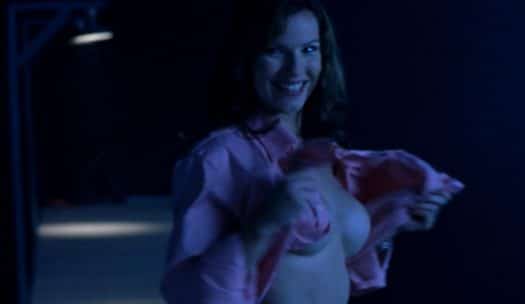
September 30th 1988, and US cinemas found themselves hosting two of the biggest blockbusters they’d ever seen… that’s right, I’m talking about Elvira, Mistress of the Dark. And if that opener puts you off then I’d stop reading right now, because in this little retrospective I’ll be doing my utmost to lay on enough innuendo to do the great lady proud.

I mean, I couldn’t even begin to recall the sheer number of double entendres in this movie. Elvira takes a blow to the crown and the big muscly dude asks her how her head is, to which she replies, “I haven’t had any complaints yet.” Big muscly dude says he doesn’t want to bore Elvira with local politics; she murmurs, “go ahead, bore me.” Bunch of teenage boys show up at Elvira’s house to help with redecorating; she’s on all fours looking over her shoulder at them, and tells them to “grab a tool and start banging!”

It seems entirely fitting that a fair percentage of Elvira, Mistress of the Dark is devoted to teenage boys gawping over the leading lady. After all, seeing her was formative experience for a great many of us who were on the cusp of coming… ahem, I mean coming of age in the late 80s. As a young kid in Britain at the time, I didn’t see this movie until many years later, nor had I ever seen Elvira’s TV shows; as far as I know they were never broadcast in the UK (I could be wrong). Still, everyone knew who Elvira was. In a decade when the images of Michael Myers, Jason Voorhees and Freddy Krueger were embedded in the popular consciousness as the embodiment of the horror genre, Elvira was, I suppose, the nearest we had to a female equivalent of that. But, like every Halloween costume marketed toward women in the intervening 25 years (if not before), she couldn’t be sold on spookiness alone. She had herself a couple of pretty sizeable selling points to capitalise on, after all…

Yeah, I told you I wasn’t going to stop. Just get used to it. Trust me, if this is too much, there’s no way you could handle the low humour in this movie.

And yet… Elvira, Mistress of the Dark is a product of a long-lost era, a time so far away that it almost seems like a myth. A time before Friedberg and Seltzer, and the Wayans Brothers. A time when parody movies were… get this… actually good. They had the absurdity, the cartoonish non-realism and the gutter-level humour, but they also remembered little things like telling a story that was fully rounded (not unlike… ah, you get the point. Heheh, I said “get the point”… oh god, it never ends. As your mama said to me once! Must… stop…)

Now, this movie certainly isn’t on a par with Airplane!, The Naked Gun and the like, but it takes a pretty good stab at it. Much as I did at your ma- okay I’ll stop now.

So, that whole story thing we were talking about: the hostess with the mostest is all geared up for starting her own show in Vegas, but lacks the financing to get it up (heheh!) and running. Cue convenient plot device: the death of a great aunt that Elvira never knew she had (hell, she didn’t even know she had a good one), and an inheritance with her name all over it. So off she goes to some little town in Massachusetts, only to find herself the heir to a seemingly worthless old house whose only notable extras are a poodle and an old recipe book. And to make matters worse, this is a highly buttoned-down, stiff upper lip, conservative community, whose adult population don’t look too favourably upon their outspoken, outlandish-looking new arrival.

While it’s obviously a bit of a stretch to call Elvira, Mistress of the Dark a horror movie, it does very much fit in with the classics insofar as it’s your classic outsider story, in which a judgemental society reacts with suspicion, spite and ultimately aggression to an individual who doesn’t follow their rules. Sure, the movie is obviously played for laughs from start to finish, even in its amusingly OTT supernatural climax (heheh, I said climax… yeah, I knew I couldn’t hold back for too long, as I told your ma-MUST STOP), but there is a serious message of sorts underlying it all about facing the slings and arrows of adversity, remaining true to oneself – and above all, doing it with a smile on your face, with a “fuck ’em if they can’t take a joke” attitude.

Indeed, it’s rather disheartening to note just how much of this still applies a quarter of a century on, given most of the adversity Elvira faces is good ol’ fashioned sexism, constantly fending off the contempt of other women with one hand, and unwanted sexual attention from men with the other. Sadly, a great many (including but not limited to those of my gender) still don’t understand that simply because a woman may proudly display her goodies, it’s not an open invitation to go in hands-first. Of course, this is a movie that is positively bulging (heh- no, too easy) with voyeuristic moments, though no actual nudity – and it’s interesting to note that, while all the grabby guys get the full brunt of Elvira’s wrath, the teenage boys who peep through her window remain her friends afterwards. Not sure that’s entirely the best message, but hey – the overall point of “look, don’t touch” does come across. Heheh, I just said “come across,” in relation to Elvira’s tits…

(Oh, and one of those teenage boys is the D&D kid from Nightmare on Elm Street 3. As distinctive as his dialogue here is, with his near constant references to Elvira’s “gazoongas,” I still struggle not to shout “I am the Wizard Master!” every time he appears.)

Okay, so it’s hardly one of the greatest comedies ever made, but it’s not trying to be. It’s a simple, schlocky movie intended to keep you smiling for 90 minutes, and in that it’s entirely successful. And like so many unfairly maligned movies of the 1980s like Howard the Duck, it understands there’s nothing more badass than a ridiculous fantasy finale in which the bad guy turns into a monster and shoots magic light beams out of his hands. That really doesn’t happen enough these days.


One of the nicest things about it is, voyeuristic camerawork and swathes of sexual connotation notwithstanding, it’s a curiously innocent, almost family-friendly film (PG-13 in the US, 15 in the UK – the BBFC are a bit stricter about sexual references). This in some ways reflects how Elvira sought to embody a somewhat gentler time than the tits and gore-loving 80s into which she was born. I gather that even in her heyday, Elvira refused to host anything too grisly, preferring the camp and corny creature features of the 50s and 60s – and indeed, the movie opens with her hosting Corman’s notoriously crap-tastic It Conquered the World (it’s little surprise that E:MOTD is itself a production of Corman’s New World Pictures), and later sees her delight the local kids with Attack of the Killer Tomatoes. It brings to mind Roddy McDowall’s Peter Vincent in the original (and best, obviously) Fright Night, complaining how the youth of the day had renounced the classic monsters in favour of maniacs in ski masks hacking up young virgins. Of course, almost three decades on those of us who were young whippersnappers in the 80s are in our own way every bit as sentimental about the horror of the era as the thirtysomethings of the day were about black and white creature features, so of course there’s no problem with having an affection for both brands; but movies like Elvira, Mistress of the Dark do remind us of the joys of a type of movie that perhaps doesn’t exist in the same way anymore.

So here’s to twenty five years of Elvira, Mistress of the Dark: a heartfelt love letter to the joys of trash cinema, personal freedom, and big boobies. Many happy returns, Elvira: thanks for the mammar – ahem, I mean memories. And, you know, thanks for the other things too.

FrightFest 2013: Round up, Part 2

By Stephanie Scaife

Read part 1 of Steph’s FrightFest round up here.

Day three of FrightFest started with The Hypnotist, a Swedish crime thriller directed by Lasse Hallström (Safe Haven, Dear John) and based on the bestselling novel of the same name by Lars Kepler (husband and wife duo Alexander Ahndoril and Alexandra Coelho Ahndoril). A horror film festival may seem like an odd place to find Hallström on the line-up, better known for his saccharine romantic dramas, but The Hypnotist provided an adequate dose of Nordic noir even if it was overly long and may have suited better to being converted into a two-part television drama. The story centres around Stockholm police detective Joona Linna (Tobias Zilliacus) who enlists the help of famous hypnotist Erik Bark (Mikael Persbrandt) to aid him in the investigation of the murder of a family, where the only survivor is the now comatose teenage son. A lot of the twists and turns are well signposted and I was left with a few questions regarding some rather poorly explained plot devices, but the performances were strong, particularly from Lena Olin as Bark’s long suffering wife; and the cinematography was suitably frosty, making the most of the Swedish landscapes. Overall though, I found it to be fairly derivative and quickly forgettable.

Next up was Bobcat Goldthwait’s bigfoot found-footage movie Willow Creek, which I really enjoyed and you can read my full review here.

Following on from that was Hammer of the Gods, which for me was by far the worst film I saw all weekend, and it now has the dubious honour of being the first film that I have ever walked out on in the cinema (and I’ve sat through some tripe in my time). When you’re spending fifteen hours straight in the cinema sometimes the desire for food and daylight wins out over a dire Viking romp that wouldn’t look terribly out of place on the Syfy Channel. Any semblance of historical accuracy was thrown out of the window and the actors seemed to be making up dialogue in a bid to out-swear each other, not to mention that the budget had been stretched to within an inch of its life, and half a dozen actors on a cliff in Wales does not an epic battle make.

Thankfully, the next film I saw was Christoph Behl’s fantastic post-apocalyptic love story The Desert which proved to be a definite highlight and you can read my full review here.

Saturday proved to be one of the strongest days of the festival and in a bid to avoid R.I.P.D. I decided to check out The Borderlands instead, and although apprehensive of yet another found-footage film I was pleasantly surprised by this low-budget British offering that does that very rare thing of managing to balance humour with genuine scares. Some weird shit has been going down at a local parish church in the West Country and Vatican inspectors Deacon (Gordon Kennedy) and Mark (Aidan McArdle), along with their AV technician Gray (Robin Hill), have been sent in to investigate. Kennedy and Hill have a great rapport together and provided the requisite number of laughs for The Borderlands to be a successful comedy whilst the creepy goings on create a palpable sense of dread (a prank played by local kids in particular sent chills down my spine). Although perhaps let down in the closing ten minutes or so, The Borderlands is a fantastic British horror film and I’m looking forward to seeing it again.

Saturday came to a close with E.L. Katz’s brilliant Cheap Thrills which proved to be the real audience pleaser of the weekend, and you can read by somewhat gushing review here.

Sunday proved to be perhaps the most frustrating day with a mixed bag of films that either didn’t particularly deliver or were disappointing in one way or another. The day started with Missionary, directed by Anthony Di Blasi whose first film Dread I’d always found to be slightly underrated; however here we have a pretty straightforward stalker movie, very much in the vein of Fatal Attraction or the likes, where as the audience you are increasingly frustrated by the actions of the main protagonists, where between them nobody really manages to do anything sensible and increasingly worrying behaviours are overlooked until it’s too late for all involved. In this instance we have single mother Katherine (Dawn Oliveri) falling for Kevin Brock (Mitch Ryan), a Mormon missionary ten years her junior, only to discover he’s actually a crazy sociopath with mommy issues hellbent on ensuring their happily ever after, no matter what it takes. After the first twenty minutes of the film I could have told you exactly what was going to happen for the remainder, which only added to the frustration and boredom.

In Fear is a fantastically taught no-budget British thriller that sees Tom (Iain De Caestecker) and Lucy (Alice Englert) get waylaid in the English countryside en-route to a music festival. This is the first feature from television director Jeremy Lovering and it’s an effective exercise in creating tension; even the actors didn’t know what was going on and the dialogue is largely improvised, so to say too much would really be to spoil this film. In Fear works best with knowing as little as possible going in, and even though it loses its way slightly towards the end as it falls foul of one too many genre tropes it is well worth a watch and one of the strongest, most unexpected British indie films of the year.

The winner for most walk-outs of the weekend goes to Dark Tourist (or The Grief Tourist as it was known up until very recently), a slow burning psychological thriller that follows Jim Tahana (Michael Cudlitz), a night security guard who spends his vacations visiting the sites of famous crimes and murders. His most recent trip sees him travelling to a small town in California to visit the crime scenes of Carl Marznap (Pruitt Taylor Vince), an arsonist and mass murderer. On his trip he is befriended by local and long-suffering waitress Betsy (a welcome return to the big screen from Melanie Griffith) and becomes motel room neighbours with prostitute Iris (Suzanne Quast). Dark Tourist is a real slow burner, which unfortunately serves only to create boredom rather than any palpable sense of tension, and when the final pay off comes it will leave a nasty taste in your mouth. Jim it would transpire is more than just your casual grief tourist and his own childhood traumas and quickly deteriorating psyche come into play in an explosive, not to mention exploitative, manner. I can’t really talk too much about what really bothered me about the film as it is a major spoiler, albeit one clearly sign-posted throughout, but I will say that this depressing, dull and ultimately nasty film really has very little going for it besides the central performances all being very strong. It’s a shame because for a while I thought it showed some real potential to do something interesting with its transgressions, but instead it proved itself to be deeply unpleasant.

The Conspiracy provided yet another found-footage film, and one that I really struggled with. Perhaps it just sent me over the edge of my already waning tolerance for the subgenre, or perhaps I had just spent far too long in the cinema by this point, but I ain’t gonna lie… I dosed off during this one. It’s a relief then that I am able to point you in the direction of Eric’s review from its screening at Fantastic Fest last year, which you can find here.

The Last Days then provided me with perhaps one of the most frustrating film watching experiences that I can recently recall. From sibling writer-directors David Pastor and Àlex Pastor (Carriers) comes this intriguing Barcelona-set apocalyptic melodrama. The premise is fairly simple, if not a little farfetched, whereby the world’s population is inflicted with a sudden and crippling dose of agoraphobia meaning that everyone ends up trapped in the building where they are after the onset of the condition. Marc Delgado (Quim Guttiérez), who is stuck in his office where he had worked as a computer programmer, embarks on a mission with his onetime boss Enrique (José Coronado), travelling underground and through buildings in a bid to track down Marc’s pregnant girlfriend Julia (Marta Etura) and Enrique’s sick and elderly father. It’s an interesting premise and our travelling companions strike up a reluctant friendship that I found myself sufficiently invested in; there are also some nice touches such as a fight in a church with a bear that has escaped from a local zoo, and warring Mad Max style gangs occupying a shopping mall. Where The Last Days falls flat though is with its ending, something so saccharine and overtly sentimental that it’s like wading knee deep through syrup. We were warned beforehand that the ending would divide people, those who love it and those who hate it, and I was firmly in the latter camp. I like my post-apocalyptic movies to be unapologetic misery-fests (think The Road, The Mist or if I really want to suffer Threads), and the unbelievably and unrealistically happy ending to The Last Days left me feeling cheated by one of my favourite sub-genres.

The final day of FrightFest started with Dark Touch, an Irish set psychological horror from French writer-director Marina de Van (Under My Skin). I found Dark Touch to be intriguing initially, but the more it reveals the more ham-fisted it becomes, ultimately ending on a rather silly note which didn’t sit particularly comfortably with me considering the child abuse narrative. Niamh (Missy Keating) is a young girl with a dark secret and after her parents and baby brother are killed during a mysterious accident she is taken in by long standing family friends Nat (Marcella Plunkett) and Lucas (Padraic Delaney) who are so wilfully blind to the obvious signs of trauma and abuse that she has suffered that it’s almost laughable. I think what I struggle with when it comes to films like these is creating a symbiosis between serious subject matter and the trappings of working within the realms of the supernatural, which so often can unintentionally come across as a bit daft. Carrie is a fine example of how this can work, but Dark Touch elicited more than snickers from the audience during scenes that weren’t intended to be funny, and overall I found it to be disappointingly mediocre.

The final found-footage film of the festival came in the form of the World Premiere of Banshee Chapter 3D which proved very popular with the audience, although I myself struggled to sit though yet another pseudo-documentary offering that was also in 3D (two of my least favourite things), and any genuine scares that there may have been were overshadowed by my inability to stop fidgeting. Banshee Chapter actually doesn’t have anything to do with Banshees, but it does have a lot to do with writer James Hirsch (Michael McMillian) going missing after ingesting DMT-19 (a variant of Dimethyltryptamine that is supposedly impossible to come by) whilst researching a novel. Soon James’ old pal turned journalist Anne Rowland (Katia Winter) has teamed up with a counter culture aficionado and novelist Thomas Blackburn (Ted Levine doing a regrettable impersonation of Hunter S. Thompson) to try and figure out exactly what happened to her friend. Cue much ruckus, noise and the inevitable headache caused by the combination of 3D and shaky camerawork. I wish that filmmakers would realise that simply injecting a VERY LOUD NOISE every ten minutes isn’t an instant recipe for making something scary.

Thank goodness then for Snap which proved to be the first genuinely interesting film of the day for me and if you can believe it, a psychological horror set in the world of underground dub-step music and social work. From directors Youssef Delara and Victor Teran, Snap focuses on painfully shy and introverted Jim (Jake Hoffman) who spends most of this time hauled up in his apartment creating music to drown out the sounds of his constant companion Jake (Thomas Dekker), who is quickly established as the vitriolic and downright offensive manifestation of the voice in Jim’s head. One day Jim meets Wendy (Nikki Reed), an intern working for Kevin (Scott Bakula), a social worker and an old friend of Jim’s. He is instantly smitten and the pair form a short-lived and awkward romance. Things predictably turn sour as Wendy’s rejection of Jim brings out repressed childhood memories and triggers a serious schizophrenic episode, turning him from sweet and shy into a crazy stalker. Snap is a smart and edgy thriller that is only slightly let down by its shock ending that feels a little tacked on, but otherwise I whole heartedly recommend seeking this out.

I chose to skip Odd Thomas on the basis that I’d already seen it, and although it’s a cute and quirky little film that I quite liked I wasn’t sure exactly how it fit into the FrightFest line-up, as although it has it’s darker moments I see it to be more of a family-friendly movie and conversely not something you’d generally read about on the pages of Brutal As Hell.

The penultimate film of the festival was Jim Mickle’s awesome re-imagining of We Are What We Are which I liked very much and you can read my full length review here.

The final FrightFest film of 2013, and also the last film ever to be screened in the Empire Leicester Square screen 1 (before it undergoes a massive refurbishment), was Israeli crowd-pleaser Big Bad Wolves from Aharon Keshales and Navot Papushado (Rabies). A violent and twisting revenge thriller with lashings of pitch black humour, Big Bad Wolves is full of surprises and it never quite ends up exactly where you expect it to. Miki (Lior Ashkenazi), a disgraced cop and Gidi (Tzahi Grad), the father of a murdered girl take revenge on mild mannered school teacher Dror (Rotem Keinan) whom they suspect to be the killer. Perhaps one of the smartest and most suspenseful films I’ve seen in recent years, it is only a matter of time before Big Bad Wolves falls foul to an American remake as is the likelihood with anything faintly original that isn’t in the English language. The universal acclaim that the film has received speaks wonders for its widespread appeal and hopefully it will be picked up and secure an international release because I for one can’t wait to see it again, largely because as it was the twenty-third film I’d seen in the space of four and half days and my concentration was waning, but also because it’s always so refreshing to see something so unexpected that lives up to the hype.

As sad as I was for FrightFest to be over for yet another year, I was also slightly relieved to be able to get more than four hours of sleep a night and to eat a meal that didn’t consist of junk food and an energy drink. Then again August Bank Holiday weekend wouldn’t be quite the same without the constant hangover, sensitivity to daylight and lower back pain caused by one too many hours spent in a cinema seat. Current trends of year proved to be *yawn* the found-footage film and a plethora of dead animals – I counted 4 dead dogs, 1 dead cat, 1 dead bear, 1 dead goat and a flaming sheep.

My top 5 of FrightFest 2013:
1. Cheap Thrills
2. We Are What We Are
3. 100 Bloody Acres
4. The Desert
5. Willow Creek

Until next time…

Plumbing the Depths #2: The Last House On Dead End Street


By Tristan Bishop

Are you old enough (let’s say, 35 or above) to remember the days before DVD and the internet? Back in the pre-digital era, being a horror junkie could be tough work – we didn’t have scores of companies releasing pristine prints of obscurities on VHS tape (Redemption being the exception to the rule), and researching rarities took more effort than typing titles into Google; most of our knowledge came from fanzines, video trading lists and good old word-of-mouth. Back then, we would obsess over whether the Dutch subtitled print of Nightmares In a Damaged Brain was fully uncut, and we all knew one guy who claimed to have the full version of Cannibal Holocaust which included the piranha bait scene (but had a rule of never lending out his tapes).*

It was during this era I became aware of Last House On Dead End Street, a mysterious film credited to suspected pseudonyms, which I could never locate a print of, but which was whispered about as if it was something truly dangerous, in the same breath as the similarly-titled Last House On The Left (which in itself was plenty shocking enough back in the days when the only way to view it was on a bootleg cassette). The film was apparently made in 1972, but shelved for 5 years before a small cinema release. Possibly my favourite mention of the film was in the sadly-missed Psychotronic Magazine, where Michael J Weldon signed off his review with the line “have you ever heard anyone actually admit that they saw it?”

Then the internet and DVD boom happened, and the floodgates opened for so many long unavailable (and even unheard of) genre films, and, for me, LHODES (as it shall henceforth be known) got buried under hundreds of Italian, Spanish and Asian horror flicks. Then, in 2000, something interesting happened. A director of porn films named Roger Watkins popped up on an internet message board claiming to be the director of LHODES (the film is credited to Victor Janos). This lead to Barrel Entertainment putting out a DVD a couple of years later, which finally got this film seen by some of those who had previously only heard rumours about it. However, I shamefully never got around to actually seeing it….

…Until this week, as it happens, when I found myself awake in the early hours of the morning with an urge to watch something scuzzy and low budget. Perfect, I thought, expecting a rough-edged but somewhat boring 70’s shocker to send me off to sleep again. 78 minutes or so later I was awake and transfixed by this strange, dark movie.

Here is the plot the film – a man called Terry Hawkins (played by director Roger Watkins), gets let out of jail, and plans to take his revenge on society. It appears Hawkins previously dabbled in porn, so, trying to go a little harder, hooking up with two girls and a couple of guys, he starts making snuff films, eventually killing his old porn industry cohorts. The end.

It doesn’t sound like much plot to fill nearly 80 minutes of film, and, truth be told, it really isn’t – so whether Watkins’ claims that the original cut was nearly 3 hours (!) are true or not, the film would have been a real slog to get through at that length! As it is, this film is not well made: the editing is awful and hard-to-follow, the script is barely there, and the dubbing is some of the worst I have ever seen, with the characters words very rarely following their mouth movements. The film feels like a student project for most of the length, with pretentious dialogue balanced against technical incompetence, but…well….it has something.

A little background certainly helps in appreciating this film. Like the main character of Hawkins, Roger Watkins was involved in porn, and used drugs heavily (in fact he claimed most of the budget of this film was actually spent on amphetamines). After LHOTDES (Originally under the title The Cuckoo Clocks Of Hell, and then The Funhouse) was picked up, cut, re-edited, and finally sat on a shelf for 5 years before release, Watkins never made another ‘proper’ film, so it’s entirely appropriate to view LHOTDES as one man’s drug-crazed catharsis, a real middle-finger-up to those who might have mistreated him. With these parallels in mind, Watkins’ crazed, maniacal performance starts to have real power, and the increasingly more outrageous scenes in the film start to become more disturbing.

In fact, the earlier killings in the film are bloodless and amateurish, which makes a later sequence where a woman is repeatedly slashed in the face, before her limbs are removed and she is eventually disembowelled a real shocker. This goes far, far beyond anything glimpsed in Last House On The Left or Texas Chainsaw Massacre, and reminded me of an HG Lewis gorefest without the colourful slapstick approach, and finally I understood why this film had the reputation it did – the amateurish approach only serves to underline the extremity of this sequence, and this is when viewing it on a laptop HD screen. Can you imagine seeing this on a blurry, choppy nth-generation VHS? It would have felt truly dangerous and transgressive, I would imagine.

Of course, there have been more extreme films since, and infinitely better made ones, but LHOTDES feels like a one-off, made around the same time as Last House On The Left (and later marketed as a rip-off, even using the ‘Keep Repeating’ tagline), it’s just as grim, but feels more like a dark spell cast onto celluloid than an actual professionally-made film. Maybe it wasn’t just a movie after all?

*IT DOES NOT EXIST. No, not even on the Venezuelan VHS. Now sit down and be quiet.

Click here for Plumbing the Depths #1: Raw Force.


Plumbing the Depths: Raw Force (1982)


By Tristan Bishop

Welcome to the first of a new series in which yours truly will be sifting through the dregs of cinematic endeavour in the vague hope of finding gold (or at the very least something mildly amusing). I’ll be covering mostly horror, but also action, exploitation, sci-fi and some of the stranger genre hybrids I come across.

Speaking of hybrids, I’m starting off with Raw Force, an American/Filipino co-production from 1982. Your interest may be piqued by the alternative title, Kung Fu Cannibals, an alternate title it shares with Tsui Hark’s nearly as mental 1980 We Are Going To Eat You. In fact, whilst it may not have been directly inspired by Hark’s aforementioned film, it does appear to be a spin on the horror kung fu comedies that were coming out of Hong Kong in its wake, notably Sammo Hung’s excellent Encounters Of The Spooky kind, although, as you may expect, it is somewhat lacking in the technical finesse and tightly choreographed action of those golden age HK films.

I’m not entirely certain where the film is set – ‘The Orient’ seems to be the closest I can get. However we are introduced to a small army of characters, members of, believe it or not, The Burbank Karate Club – a bunch of moustachioed idiots on a cruise around, well, somewhere, along with some foxy ladies (at least one of whom, going by the name of Cookie, is a secret member of the LAPD SWAT team). They are joined by a kung-fu master cook who dreams of opening a Chinese restaurant, and the grizzled ship captain, played by Cameron Mitchell (bad movie buffs know they are in for a treat when old Cam’s name appears in the credits for any film made after 1964). The film then spends a living age with these characters getting drunk at nightclubs, fighting amongst themselves, and bedding each other (there is a LOT of nudity in this), until they plot course for Warrior Island, a place that the guidebook describes as the home of disgraced fighters. Unfortunately Warrior Island is a very odd place, populated by crazed monks who exchange vast quantities of jade for trafficked girls who they use to feed the zombie martial artists who roam the beaches. In addition to this, the gangsters who control the jade/girl trade, who appear to have Hitler as their leader, aren’t too keen on having a shipload of visitors to Warrior Island, and so the scene is set for a stand-off between the holiday-makers, the gangsters, the monks and the zombie warriors.

Sounds great doesn’t it? Well…It is. Sort of. Nothing about Raw Force could actually be called ‘good’, but it is at least consistently entertaining. The acting is awful, the script frequently ludicrous, the action occasionally impressive but nowhere near the level of the Hong Kong flicks it is trying to ape, there’s hardly any gore at all, and the zombie make-up mostly consists of white paint. However Raw Force has that irresistible forward thrust that the best bad films have – you genuinely have no idea what level of weirdness to expect next, and it keeps you glued to the screen. I constantly found myself asking whether director Edward Murphy (no, not THAT one) intended the film to be quite as ludicrous as it is (at one point, when the villains board the ship, an announcement over the tannoy exclaims “please remain in your cabins, the ship has been boarded by maniacs”) – there’s an obvious intended comedic element, but the execution is so bizarre it’s impossible to tell how much of this was down to intention and how much to incompetence.

Some things to note – Director Murphy (who sadly only directed one more film) played 12 different characters (!) over the course of ten years on the TV show Law & Order, and yes, that is Filipino trash movie veteran Vic Diaz, given sod all to do as a hilarious grinning, clapping monk, straight out of a Monty Python sketch.

Raw Force is currently missing in action on DVD – Code Red were planning to release it a couple of years back (they even had commentaries recorded) but the rumour is that the producer was in jail and they could not secure a negative! There are numerous grey market DVDR releases available in the States however (mastered from VHS I believe), and at the time of writing, some kindly soul has uploaded it onto YouTube, complete with dodgy video tracking for that complete 1982 experience. Whichever way you can get to see it, Raw Force should be required viewing for all fans of z-grade cinema.

The best & worst of FrightFest over the years

By Stephanie Scaife

Oftentimes when people ask me what I’m doing for the August bank holiday weekend and I say that I’m going to FrightFest, I get a puzzled look; then when I actually explain what it is, the look of bafflement is replaced with one of disdain. Essentially this is because most people would not want to sit in a cinema for five days straight watching film after film, especially when what they are seeing is a line-up solely made up of genre films – which in the eyes of the mainstream are oft-considered little more than the bottom of the veritable barrel, there to be scraped by the socially awkward and unwashed.

To the casual observer it may be easy to overlook the fact that FrightFest has been privy to some of the best films released over the past fourteen years. Of course, that is not to say that through attending the festival I’ve also been exposed to some of the most diabolically awful genre offerings over the years too! But that’s actually part of what I enjoy so much about the festival; you never know what you’re going to get when you walk into that auditorium, and more often than not the surprises come when you least expect them.

I think one of the best things about seeing films at a festival is that your reaction is, for the most part, completely fresh and unhindered by reviews and prior expectations; you are part of an audience seeing something for the first time. You also have no idea what will become of the films; something you saw through bleary eyes at an afternoon screening may go on to become a massive success (The Girl with the Dragon Tattoo), or something that came out all guns blaring in a prime time slot may go down like a knackered lift (League of Extraordinary Gentlemen). Obviously I haven’t seen everything ever screened as there were times I was only able to see a handful of films, but hopefully for the uninitiated this will give an insight into why exactly I spend my main summer vacation holed up in a dark room, fuelling my lack of sleep with an excessive caffeine intake, and emerge the other side much like one of the many zombies I’ve born witness to over the years up on that big screen.

So, in preparation for tomorrow which sees the start of the fourteenth year of FrightFest, here is my run down of the ten best and five worst films that I have seen there over the years.

Editor’s note: look out for Steph’s coverage of FrightFest 2013 in the week ahead.

The Best:

1. Let the Right One In (2008)

2. Oldboy (2003)

http://www.youtube.com/watch?v=1Gex2NXTuL4

3. Pan’s Labyrinth (2006)

4. Audition (1999)

5. Donnie Darko (2001)

6. Martyrs (2008)

http://www.youtube.com/watch?v=Jbct9qWBSME

7. Ginger Snaps (2000)

8. Battle Royale (2000)

9. Wolf Creek (2005)

10. Red, White & Blue (2010)

http://www.youtube.com/watch?v=3Pu7mvo0rZ0

And the Worst…

1. House of the Dead (2003)

http://www.youtube.com/watch?v=mJarPzwlOOA

2. Inbred (2011)

3. The Tortured (2010)

4. WAZ (2007)

5. The Tesseract (2003)

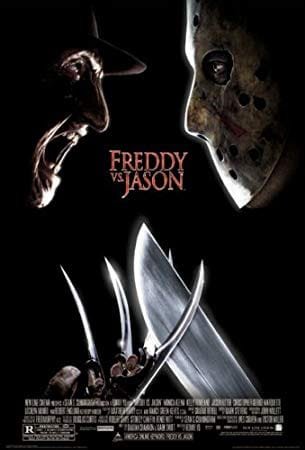
Slash of the Titans – Freddy vs. Jason 10 years on

By Ben Bussey

How many billions of conversations in playgrounds/pubs/online forums and so forth have been spawned by the timeless question, “if x and y got in a fight, who would win?” How many scenarios have been played out in the imaginations of fans all over the world, picturing their favourite characters co-existing in the same story world, whether beating the living crap out of one another, doing battle side by side, or getting down to business…? Well, okay, slash fiction may not have quite made the transition to the big screen just yet, but the utterly ridiculous box office takings of The Avengers would seem to indicate that the public taste for spectacular crossover movies is at an all-time high, hence we can look forward to more Avengers, Batman vs. Superman, and almost certainly more besides in the near future.

Is it fair to say it all began a decade ago, when two of the biggest names in 80s horror crossed blades in the same movie for the first, and to date last time…?

I have to tell you, I’m really feeling the years with this one. Writing some of these retrospectives, it’s not hard to accept how long it’s been since the film in question was released. But Freddy vs. Jason… it really does seem like only yesterday. How clearly I recall that weekend in August 2003; visiting a dear old friend (my future best man) in Sheffield, and dragging him (somewhat unwillingly, I suspect) to every nearby cinema in order to see it, only to find it was sold out everywhere; thereafter, getting back to my then-home of Liverpool that Sunday evening, and proceeding to drag my (even less willing) bride-to-be to a late show at what was then the UGC on Edge Lane.

The screen was packed, the crowd was rowdy, and there was barely a moment’s quiet during the movie; under normal circumstances this would almost certainly have pissed me off royally, but in this instance it all felt perfectly in tune with proceedings. From the beginning, it was clear this was not a horror movie inviting the audience to sit back, stroke their chins and get all contemplative. This was a scream, shout, cheer, throw your popcorn in the air kind of movie, and that was very much how the crowd at the UGC reacted that night; everyone seemed to be on the same page, enjoying it in just the same way. I look back on it as being truly one of the best cinema experiences of my life.

This being the case, it wasn’t until I saw the movie again a few days later, in a mid-afternoon show with a much smaller audience, that I came to fully realise just what a deeply flawed movie Freddy vs. Jason really is. And yet these are all flaws I’m still able to overlook a decade on, such is my affection for this movie.

Spoilers ahead, naturally…

A Friday the 13th/Nightmare on Elm Street crossover movie is one of those ideas that seems to have been floating around forever, one which any number of people want to take credit for. There’s no real mystery as to why it took so long to materialise: Paramount Pictures owned Jason Voorhees, New Line Cinema owned Freddy Krueger, and neither kid was willing to let the other borrow their best toy. The ball didn’t really get rolling until New Line acquired the rights to Jason, and made Jason Goes To Hell: the Final Friday in 1993. Yeah, never quite understood why the first thing New Line did after acquiring the character was ostensibly kill him off. Of course, that movie did end with a fan-pleasing shot of Jason’s vacant hockey mask being dragged underground by Freddy’s gauntlet, leaving audiences in no doubt as to what was to come – even if it didn’t come until a full decade later. (There was also Jason X in 2001, but given the future setting, it’s in no way referenced in FvJ; nor, unsurprisingly, is the meta-tastic Wes Craven’s New Nightmare.)

Once the legal red tape was out of the way, there was the not insignificant issue of coming up with a narrative that would bring the characters together in a way that didn’t seem too utterly ridiculous. There were a shitload of different treatments and scripts floating around, some of which can be found if you’re inclined to do so, but I think the premise they settled on was probably as good a hook as they could have found: our old frenemy Freddy Krueger (Robert Englund, playing his signature role for what promises to be the last time) is trapped in movie villain limbo, having been long since forgotten by the children of his old slashing ground, Springwood. In a somewhat Jungian twist, it turns out the source of Freddy’s power is his legend; as a scary story the local kids would tell one another around campfires or at sleepovers, Freddy reigned supreme in the collective unconscious. Their fear gave him his strength, and that kept him alive. Nifty, eh? Wait until they get to all that primal symbolism jazz about Freddy dying by fire and Jason by water. But don’t worry, if Jung’s not your bag there’s plenty of considerably less intellectual stuff around the corner.

In another smart move which acknowledges the sizeable gap between movies, it transpires that the elders of Springwood have long since gotten wise to the nature of Krueger’s power; they’ve supressed his legend through strong-armed censorship, plus the strategic ferreting out of undesirables who are then reprogrammed via illegal pharmaceutical means. (Yep, authority figures infringing on civil liberties, for the people’s own good… and this was only 2003.) The illegal drug in question is Hypnocil; yes, Freddy fans, that’s the dream suppressant prescribed to the kids in Part 3. The ‘crazy’ kids of FvJ are even in the same institution – Westin Hills. (References to widely acknowledged best sequel = instant fan credibility.) So, trapped on the other side, how can Freddy get back in the game? By spreading the fear once again – and who better to do that than the mindless, machete-swinging meathead of the apparently-nearby rural community Crystal Lake. Working his dream mojo on the slumbering indestructible hulk, Freddy sends Jason off to Springwood to wreak havoc.

Of course, there may have been trouble in paradise for some fans already, for – as that synopsis alone indicates – there would seem to be a definite narrative bias in favour of Freddy. Is this because it’s a New Line production, and Freddy was their baby, whilst Jason was merely their disadvantaged foster child? Perhaps. Or it might just be because, comparatively speaking, there isn’t really all that much you can do with Jason. As iconic as the two characters are, and as much as they do compliment one another, they’re pretty far removed in their overall approach, what with Jason being a silent, plodding, mindless killer, and Freddy being the scheming, wisecracking supervillain. Having Freddy manipulate Jason via his dreams was an entirely sensible move; more curious is how this approach tends to promote Jason as a figure of sympathy. Sure, it makes sense that we might feel sorry for him, given the hand he was dealt; disfigurement, social rejection, drowning, domineering mother who wound up getting decapitated. The fact that he died a child whilst Freddy is a child killer provides yet another parallel between the characters; in fact, if I’ve read correctly an earlier script had Freddy actually being one of the camp counsellors who let him drown, and may also have molested him. Still, Jason’s victim card can’t be played too heavily, given this movie sees him rack up one of his highest body counts: at least twenty-two, including Freddy at the climax (though, of course, neither of them can really be said to have died), and Odessa Munroe’s skinny dipper, who turns out to be a part of Jason’s own dream.

Ah yes, the opening scene skinny dip… okay, technically it’s not the first scene in the movie, given the Freddy-centric prologue, but for the moment that kick-starts the narrative to give us nudity almost automatically; if ever there was a clear declaration of intent made in a horror movie, it’s that. Tawdry and obvious? Absolutely, and that’s exactly the point. One thing we have to bear in mind is, when Freddy vs. Jason arrived in 2003, horror was in a rather strange place. Indeed, I’d go so far as to say it was facing a potentially greater threat than the Hays Code, the Video Recordings Act and the PMRC put together. Yes, horror was in grave danger of becoming… whisper it… respectable. The huge success of The Blair Witch Project and The Sixth Sense, along with awards nods aplenty for the latter, resulted in both a mainstream popularity and a highbrow acceptance that the genre arguably hadn’t known for some time, with the ‘less is more’ sensibility catching on like wildfire; the rise of J-horror also played no small part in that.

The real joy of Freddy vs Jason, then, is how it cast all that aside and went back to the time-honoured 80s approach of showing everything, and often. I daresay it was almost certainly the goriest mainstream studio movie ever released at the time (though Final Destination 2 made a good stab at it earlier that year, and Kill Bill Vol. 1 probably outdid it two months later). Bodies folded in half, heads splattered, chest cavities gushing like hosepipes, chunks of flesh flying left and right – is it any wonder audiences whooped and cheered? Furthermore, is it any wonder how receptive the studios were toward graphic gore in the years that followed (coughtorturepornahem)?

The movie’s really alive when the arterial spray hits the screen. And in the two scenes when Freddy and Jason finally do battle – the last twenty minutes in particular… my face still aches just remembering how hard I smiled on first viewing. The Hong Kong style that director Ronny Yu brings fits the action like a knife-laden glove; the way it all builds from a high energy wrestling-esque spectacle, into almost a live-action Tom and Jerry as they swing on chains and pelt one another with lethal implements from on high. Then how it finally devolves into a relentlessly bloody blade-augmented no holds barred brawl, the two slasher icons gradually taking each other apart piece by piece, literally… all that’s missing is Freddy saying “you didn’t get me down, Jason.” Truly, it’s the stuff of every 80s horror child’s dreams.

But that’s when the movie is on form. Now for the rest of it, starting with… the teen ensemble. Oh, sweet lord, the teen ensemble.

Now, allow me to say in opening on this – I do not by any means hate any of these actors. Some of them, indeed, I actively admire: Katharine Isabelle, obviously (more on whom later); Monica Keena I quite enjoyed in the Night of the Demons remake (yes, I do mean for her acting, not just her torso); I dug Christopher Marquette in Fanboys; and Brendan Fletcher actually gives a really pretty good performance here, being blessed with one of the better roles as the sardonic Westin Hills inmate Mark. However, put them all together, give them that script, and throw in a few very, very weak links, and you wind up with – no word of exaggeration – the single most annoying bunch of teens in the history of both the Friday the 13th and Nightmare on Elm Street franchises. Yes, I’m well aware that’s saying a hell of a lot. This gang really is that bad. And the lion’s share of the blame has to fall on writers Damien Shannon and Mark Swift (with a side order of shame for uncredited script doctor David Goyer). The script emphasises this unengaging, largely unsympathetic pack of fucktards, fleshing out tedious subplot after tedious subplot, filling their mouths with horrendously overwritten dialogue – and all at the expense of the title characters, who wind up supporting players in their own damn film.

Like I say, I don’t hold all the actors entirely at fault; the ones I mentioned beforehand are doing what they can to make it work. But seriously, what were they thinking with Kyle Labine (incidentally, brother of Tyler Labine from Tucker and Dale versus Evil)? If they wanted Jason Mewes, why not just get Jason Mewes? And Jason Ritter… just no. He’s just too feeble, he doesn’t remotely convince as would-be romantic hero Will. But those guys are Sir Laurence Fucking Olivier by comparison with the worst, most annoying performer in the ensemble, giving almost certainly the single least likeable performance in the history of the Freddy and Jason movies… Kelly Fucking Rowland. Jesus Tittyfucking Christ, it’s like nails on a chalkboard every time she opens her mouth. Maybe they thought making her alternately utter “fuck” and “y’all” every other word would make her seem – I dunno – real. All it succeeds in doing is making her really, really, unbelievably annoying and impossible to care about. And yes, that is a problem. Sure, some characters in slashers are deliberately annoying so we’ll get some joy out of seeing them killed, but that isn’t how they play it here. We’re supposed to care who makes it out of there alive in the final reel, when in fact all we want to do is see them get the fuck out of the way so we can concentrate on messrs. Voorhees and Krueger battering the bejesus out of one another. Subsequently, when Rowland meets her inevitable demise, it just feels like an afterthought.

All this being the case, Katharine Isabelle kind of lucked out by getting killed off early…

And this is where it gets a bit ugly, as while I may look back on Freddy vs. Jason with much fondness, it’s hard to imagine Katharine Isabelle does, and it’s hard not to remark that the film probably didn’t do her career any big favours. When I got to meet Ms Isabelle in Sheffield on the American Mary UK tour early this year, I opted not to broach the subject of Freddy vs. Jason as much for expediency as anything else, but one remark she made in the post-screening Q&A did stand out to me. Asked whether she feared typecasting in bad girl roles, she replied (and I’m going from memory here, so I apologise if I’m paraphrasing) “good girls are boring twats.” If we’re in an unforgiving mood, that would seem a fairly apt description of Lori, Freddy vs. Jason’s final girl played by Monica Keena – and, up until quite late in the day, the role Katharine Isabelle was supposed to be playing.

In the wake of Ginger Snaps, Isabelle was shit-hot, hence New Line wanted her heading up their horror flagship. However, somewhere down the line it was decided she would be a better fit for the bad girl Gibb, and so that was the part she wound up playing, without any real choice in the matter. This also meant she was suddenly expected to do a nude scene; something she remains unwilling to do to this day, and why the hell not. Naturally she refused, hence a body double appears from a weird bird’s-eye view angle in the obligatory gratuitous (not a contradiction in terms here) shower scene. But her refusal to bend to the will of her superiors surely didn’t go unnoticed, not to mention how openly she spoke about her treatment and her overall disappointment with the film not long thereafter. Keeping in mind it was so soon after Ginger Snaps, in which Isabelle did such fantastic work with such a meaty role, it’s hard not to feel a bit pained watching her go through the motions in a fairly thankless slasher victim part. Even so, her comedic gifts do shine through here and there; take her wonderfully OTT reaction to the first bed-folding murder.

Nor was that the only casting controversy, given long-running Jason actor Kane Hodder was dumped for Ken Kirzinger, and the original Mrs. Voorhees Betsy Palmer declined to return after New Line refused to pay her above basic SAG minimum; not the best deal for someone who played a major role in launching the Friday the 13th franchise. If I’m not mistaken, Jason Ritter was also a late substitution for Brad Renfro, owing surely to the drug problems which would sadly end the young actor’s life not long thereafter.

Put all these problems to one side, though, and Freddy vs. Jason remains a very enjoyable film; I’d rank it in my personal top five of both the Friday and Nightmare franchises. I’d also argue that it’s a pivotal movie in modern horror – for better or worse. First off, along with Alien vs. Predator the next year, it brought back crossover movies – and you just know someone at Marvel was sitting up and taking notice. On top of which, it brought back tits and gore in a big way, demonstrating that explicit was the way to go, and thereby paving the way for the torture movies. Also, it closed the book on the two behemoth 80s horror franchises (both of which were rebooted in the years ahead). Yet in doing so – and making big money in the process, more than recouping its $30 million budget almost overnight – it also demonstrated, hand in hand with that fucking Platinum Dunes Texas Chainsaw remake, how easily new takes on the horror movies of yesteryear could be sold to a modern audience. Freddy vs. Jason might have been, in its own way, bold, risky, and even experimental for a mainstream movie, but it played a part in ushering in the nauseatingly risk-averse, lowest common denominator-friendly horror remake boom, from which we’re still struggling to escape the fallout a decade on. And that’s just from one movie; imagine what might have happened had Sam Raimi let them make Freddy vs. Jason vs. Ash next, and/or if Dimension had managed to get their hastily-planned Pinhead vs. Michael Myers movie off the ground…

But once again, while there’s plenty we can criticise Freddy vs. Jason for, there can’t be many horror fans who lived through the 1980s that don’t still get just a little bit of a buzz from the mere idea of the two greatest killers of the era having a fight. It may be childish, it may be dumb, and maybe we should know better than to enjoy it; but we can say that about of a hell of a lot of horror, can’t we? And would we really want it any other way…?

There Are No Experts: 40 Years of The Exorcist

By Tristan Bishop

Picture the scene – a cinema in a seaside town. The year is 1998, and you are in the audience for a midnight showing of a film which has been virtually unavailable for the best part of 20 years. You’ve heard about this film, of course – the entire audience has. Most of what you have heard is hearsay, rumour, but that doesn’t matter – this is the stuff of legend. You’ve perhaps heard that the film was banned in the UK, forbidden by the Catholic Church. Perhaps you’ve heard reports of the hysteria that accompanied the original screenings – fainting, vomiting, people being rushed to hospital. Of course you want to see this – the film’s reputation as forbidden fruit precedes it. This is a midnight showing, and it’s sold-out, the audience visibly and audibly excited, ready to be scared within an inch of their lives.

But something unexpected happens. The audience quickly realise they are watching a film that is 25 years old. A film from the 70s – this audience is young, mostly in their early twenties, this isn’t for them – they laugh at the fashions, the hairstyles, the dialogue, and the effects. They came expecting shrieking terror, instead they got history.

It’s understandable, of course. Your average cinema-goer isn’t all that interested in film history, or placing a work in context, and there’s no reason that they should – they go for entertainment. But in the case of The Exorcist (as with most films from 20 or more years ago) a bit of background can really help.

We can really start in 1967, the Summer of Love. Hippie counter-culture was making waves across the globe, a whole generation was turning on, tuning in and dropping out, celebrating peace and love and togetherness. Of course, it didn’t last long – by the early days of 1970 the dream was over, killed off by Altamont, Vietnam and hard drugs, but the seeds of destruction had always been there – at the height of the hippie bloom an increased interest in occult and hermetic knowledge had resulted in a public which was more terrified than ever by the perceived threat of evil. The devil was waiting outside the door, and perhaps people were interested in inviting him in.

It was then that, alongside the incredibly prolific Dennis Wheatley, that a book by Ira Levine, entitled Rosemary’s Baby, became a massive success (selling over 4 million copies that year alone). As usual with a successful work of fiction, it was brought to the screen – the ever-canny William Castle purchasing the rights even before publication, and with his courting of Roman Polanski (at that time the darling of the arthouse crowd) as director, the film had a massive impact, a thrilling injection of real darkness at a time when horror films, still perceived as kiddie material, were still trying to claw themselves out of the 1950s. It’s no accident that Night Of The Living Dead was also released in 1968, a year zero for the ‘modern’ horror film.


Flash forward to 1971 now, and writer William Peter Blatty, already with 12 years of published writing under his belt, penned The Exorcist – based on a ‘real life’ case from 1949. Blatty changed the sex of the possessed child as the real case was a young boy, and amongst the expected artistic embellishments he added a prologue with Father Merrin, one of the main characters, uncovering a statue of the demon Pazuzu himself in Iraq. Interestingly enough, Merrin was based on General Lankaster Harding (Merrin’s first name is Lankaster), an archaeologist involved in the discovery of the Dead Sea Scrolls, who was an acquaintance of Blatty’s.

The book was a huge hit, and of course was immediately optioned for a major film, with Blatty adapting it from his own novel. Unfortunately the production was not an easy one – and the producers approached Arthur Penn, Peter Bogdanovich, Mike Nichols, Mark Rydell, John Boorman, and even Stanley Kubrick to direct – all of whom turned it down because of the material or the challenge of working on a film hinging on the performance of a child. Boorman even went so far as to accuse the script of ‘cruelty to children’, although one wonders if he may have regretted this decision, as he went on to direct Exorcist II: The Heretic.

Eventually the job went to William Friedkin. Blatty had been a big fan of The French Connection (1971), citing the energy of that film as the reason he pushed for Friedkin to be onboard. Casting was equally difficult, with both Jack Nicholson and Stacy Keach considered for the role of Father Karras before the role eventually went to Jason Miller, after Friedkin spotted him in a play. The director also vetoed Marlon Brando for the role of Merrin, fearing his star power too great, and instead cast Max Von Sydow, best known then for his roles in Bergman dramas. The casting of the young girl Regan was equally fraught, but eventually went to the relatively unknown Linda Blair. With the cast and crew finally assembled, work began in earnest. The production was originally scheduled to last for 85 days, but, due mostly to Friedkin’s perfectionism and ‘unusual’ methods, ended up as 224.

The stories around the making of the film are legendary, from on-set fires causing the main sets to be rebuilt, to Linda Blair and Ellen Burstyn both being injured after being pulled too hard in harnesses. Burstyn’s real screams of pain are left in the film (the scene where she is slapped by Regan), but Friedkin went even further to maximise his cast’s discomfort – he slapped Reverend Williiam O’Malley across the face before an emotional scene, let off a gun on set to unnerve Jason Miller, and even built the bedroom set inside a giant freezer so that the actor’s breath could be seen onscreen (an effect much easier to produce in these days of CGI!). The uneasy atmosphere caused by these occurrences lead many of the crew to believe the film itself was cursed, and indeed Jack MacGowran, who played Burke Dennings, died before the film was completed. Legend has it that the set was blessed by priests several times during production.

These were not the only techniques that Friedkin used. He hired veteran radio actor Mercedes McCambridge (previously seen in Jess Franco’s women-in-prison ‘classic’ 99 Women) to voice Pazuzu, his original technique of manipulating Linda Blair’s voice deemed not dramatic enough; this was a masterstroke, as the voice sounds genderless but powerful and threatening. He also pioneered the use of mixing layers of sound (apparently including slaughterhouse footage) to create unease, and, most controversially, the use of ‘subliminal’ images, such as the now-famous ‘face of Pazuzu’ scattered throughout the film.

Fittingly for a film so steeped in Christian lore, the film was released on Boxing Day 1973, and drew some extremely mixed criticism from the mainstream press. Stanley Kauffmann, Gene Siskel and Variety magazine all heaped praise upon it, whilst The New York Times called it ‘practically impossible to sit through’. My favourite piece of negative criticism comes from Jon Landau in Rolling Stone however – “nothing more than a religious porn film – The gaudiest piece of schlock this side of Cecil B DeMille”.

The mixed notices did little to harm the film however, with $66 million dollars in revenue for the original domestic release making it the second biggest grossing box office that year, next to The Sting (which, ironically, has become increasingly forgotten over the years). This was helped of course by reports of people fainting during the film, and ambulances being on standby outside theatres, although how much of this is truth and how much clever publicity has been difficult to gauge over the years.

With that success came, of course, came the imitators. The devil was out in force, and, as always, the Italians were first to jump on the bandwagon, releasing Beyond The Door in 1974, followed by a figurative projectile-vomit of Exorcist clones, such as The Antichrist, Eerie Midnight Horror Show and The House Of Exorcism (actually a hatchet-job on Mario Bava’s surreal and creepy Lisa And The Devil, re-edited and with added ‘Exorcism’ scenes). Blaxploitation take-off Abby also turned up in 1974, and was quickly buried under litigation from Warner Bros, although it’s worth watching for the only ‘disco exorcism’ on film. Even the Turkish got on board with Seytan (also 1974), an oddly Islamic slant on a very Christian idea. The Exorcist even paved the way for the equally successful devil movie the Omen (1976) and attendant sequels.


There were official sequels too, although each appeared only after long gaps of time. First came Exorcist II: The Heretic in 1979, directed by the aforementioned John Boorman, which is an unholy, occasionally hilarious mess of a film, and not recommended unless you want to watch Richard Burton hitting rock bottom. The Exorcist 3 (1990) was much better – Blatty took the directorial reigns on this one and proved himself the right man for the job, using brave cinematic techniques such as uninterrupted long shots to heighten the sense of unease. Unfortunately in 2004 the usually excellent Paul Schrader made a prequel entitled Dominion, which studio execs hated. Though completed, his project was shelved, and Renny Harlin (of all people!) was brought in to make a more commercial prospect entitled Exorcist: the Beginning, which, predictably, was universally panned. The studio eventually gave in to public pressure and released Schrader’s version of the film. Unfortunately this also went down like a lead balloon, despite having the slight artistic edge.

Contrary to popular misconception The Exorcist was never banned in the UK. There were protests by the Christian group The Festival Of Light, who also objected to such enduring works as The Devils and Straw Dogs, but it was released – surprisingly uncut – with an X certificate by the BBFC. Stephen Murphy of the BBFC was quoted at the time as saying “It is a powerful horror movie. Some people may dislike it, but that is not a sufficient reason for refusing certification” (a rare example of the pre-2000 BBFC making an informed, balanced decision there!)

Much of the film’s ‘banned’ legend status instead came with the advent of home video and the subsequent ‘video nasties’ debacle. The film was briefly available in the lawless early days of home video, but after moral panic set in Warner Bros decided not to resubmit it for video classification. It’s probably testament to the power and reception of the film on release that the general public assumed a ban had occurred. However, the UK cinema re-release at the end of the 20th century proved that there was money to be made, and then finally we could see the film in the comfort of our own homes.

So, there are few horror films with such convoluted history and production as the Exorcist. In many ways it can be seen as the victim of its own hype, success, and, for some time, unavailability, with scenes like those at the start of this article played out on its re-release across the UK. However, Friedkin’s film stands on its own merits, as a well-made, visceral shocker, and remains the benchmark against which the devil’s works are judged.

In Space, No-one Can Eat Ice Cream! Killer Klowns From Outer Space at 25

By Oliver Longden

Clowns; the number one entertainment career of choice for serial killers, potential serial killers and people who just hate children. Whether you’re afraid of clowns like many normal people or sexually attracted to them as I am, there’s no mistaking the fact that a clown in its natural environment is about as funny as a long weekend with Michael Gove whispering right wing nothings in your ear while he gently spoons you in an uncomfortably small bunk bed. When professional clown John Wayne Gacy turned out to have a nasty habit of raping and murdering children it didn’t come as a surprise so much as a confirmation of everything people always suspected about the greasepaint and confetti brigade. Clowns are and always have been fucking horrifying.

The clowns in Killer Klowns from Outer Space aren’t all that scary when compared to the Joker, the clown from IT, Patch Adams and every single real life clown you’ve ever seen. Unlike real world clowns (and Patch Adams) they are actually quite funny. The Killer Klowns of the title are aliens who have come down to Earth in a space ship shaped like a big top and go on a circus themed rampage across small town America. Along the way there are horrific parodies of all manner of traditional clown acts, from the tiny clown car to the old custard pie to the kisser. A small group of misfits struggles to fight against the clowns whilst waving their arms about and delivering performances I might charitably describe as extremely enthusiastic.

Killer Klowns is a good time movie that only occasionally tries to be a horror film. It has become a cult classic in the 25 years since it was released simply because it feels a lot like a movie about murderous space clowns ought to feel. If you spent five minutes sketching out the sort of things you might expect to find in a film about psychotic clowns from space the chances are you’d come up with at least half the things that are in Killer Klowns from Outer Space. This is a film that’s on the same wavelength as its audience. It’s a movie that wants you to relax, have a few beers, have a few more beers and finish that bottle of Pernod some weirdo abandoned at your last party. You’re here to have fun and fun will be provided. It might make you cringe on occasion but that’s all part of the raucous cacophony of hoopla that is Killer Klowns from Outer Space. It helps that the film starts out on a strong footing with a bouncy title track written by goofy LA punks The Dickies. It’s enormously infectious and really sets the tone of the film nicely.

The directors and writers of Killer Klowns, the Chiodo brothers are more famously known as special effects people being responsible for the creature design of Critters (surely about twenty minutes work with a tribble and some false teeth) as well as working on Team America: World Police with Trey Parker and Matt Stone. Their background shows; the special effects are a masterclass in doing a little with even less, pure joy to a relentless CGI hating luddite like myself. The performances range from hammy to downright ludicrous which fits the material like a glove. There’s a particularly nice turn from perennial film arsehole John Vernon (Dirty Harry, Animal House) playing the town’s ridiculously angry sheriff. It’s a character who would be wildly unbelievable were he not being played by John Vernon, a man who could have played Lassie in a way that made people want to punch her right in her stupid dog face. There aren’t too many other names you’re likely to recognise although there are some faces that might be hauntingly familiar from minor roles in the background of television shows like CSI Miami.

Killer Klowns from Outer Space is not a film that deserves to be remembered because it is particularly influential. It’s not well acted or well directed, and the special effects aren’t even particularly good. The design of the Klowns themselves aren’t all that impressive and the sets towards the end of the film are little more than cardboard shapes on a black sound stage that evoke the weird impressionist non-sets in the third series of the 1960s Batman. The film comes from a long line of light-hearted B-movie shockers like The Ape Man and Bucket of Blood that trade more on chutzpah than technical sophistication. It’s just one of those low budget films that simply works because it isn’t trying too hard. In a world where Michael Bay feels it necessary to bore the shit out an audience for more than two and half hours to tell the story of some robots who really want to punch some other robots, films like Killer Klowns from Outer Space are starting to feel like lost classics. Killer Klowns from Outer Space land on Earth, fuck shit up, the end. What’s not to like?

Daleks, Weremoths and Weird Tailors: Peter Cushing at Amicus, Tigon & Tyburn (Part 2)


By Tristan Bishop

If you missed it, click here to read Part 1 of Tristan’s history of Cushing’s horror career outside Hammer, as part of our Cushing Centenary tribute.

1971 was not a good year for Cushing. The death of his wife Helen Beck, after 28 years of marriage, affected him greatly. He had to drop out of Hammer’s Blood From the Mummy’s Tomb after her passing, but later that year threw himself into his work as a distraction. Cushing had never been a slouch, averaging 3 or 4 films a year, but in 1972 he made 8 feature films. Her death also took its toll on Cushing’s appearance; although he was written in the script for Hammer’s Dracula AD 1972 as Stephanie Beacham’s father, the studio decided that, given his appearance, the role should be changed to that of her grandfather.

The first film for Amicus that Cushing made after Helen’s death was I, Monster (1971), a retelling of Robert Louis Stevenson’s Jekyll and Hyde with Christopher Lee as the ill-fated doctor and Cushing as his lawyer who discovers the truth. First time director Steven Weeks (who later made the interesting Ghost Story) was only 23 at the time of filming, and perhaps it is his lack of experience which makes this one a bit of a slog. The film is only 80 minutes long but drags frequently, despite the star power and a decent enough script. Apparently it was originally to be filmed in 3D, but this was abandoned during filming.

In 1972 he returned to Amicus for yet another Robert Bloch compendium film, Asylum, this time directed by Roy Ward Baker, another veteran Hammer director of such films as Quatermass & The Pit and The Vampire Lovers. Another solid cast, featuring Robert Powell, Patrick Magee, Charlotte Rampling, Britt Ekland and Hebert Lom, combined to make another quality production, this time featuring a creepy and effective wraparound sequence, which, like The House That Dripped Blood, feeds back well into the stories. The stories themselves are of the usual varying quality, but mostly work well, and, in ‘Frozen Fear’ reach what may well be the ghoulish pinnacle of Amicus’ entire output (I remember me and a friend being properly freaked out by this sequence back when we were too young to be watching such things). Cushing’s segment here is ‘The Weird Tailor’, in which he enlists a tailor to make a suit from a mysterious material which, it transpires, can animate objects and even reanimate the dead. Incidentally the story (which, like all the stories in Asylum, originally appeared in print in Weird Tales magazine) was actually filmed back in 1961 for the TV series Thriller. It is of course tempting to read something of Cushing’s grief for his late wife into his performance here, which makes the segment all the more effective.


It appears Cushing was not the only one in overdrive in 1972, as Amicus wasted no time in getting a second anthology film released that year: Tales From The Crypt, based on stories originally published in EC Comics such as the titular publication. Bloch was not on script duties this time; instead Subotsky himself scripted from the original stories, but Freddie Francis was back at the helm this time, and the number of stories was back at 5, rather than 4, as had been the case since Dr Terror’s House Of Horrors. The cast was also slightly less star-studded, although Joan Collins appears in one segment (as the prey of a killer Santa Claus!), and Ralph Richardson and Patrick Magee also feature. This tinkering with the formula produced what was Amicus’ biggest success with a portmanteau film, and it was showered with critical praise on release. The wraparound segment this time, however, feels rather close to that of Torture Garden, lacking the clever tie-in to the individual stories that the previous couple of instalments had, and three of the stories are so over-familiar (perhaps due to the age of the source material) that they lack much power. The jewel in the crown here, however, is Cushing’s segment, Poetic Justice, wherein Cushing plays one of his most affecting roles as Arthur Grimsdyke, a kindly old man and friend to children and animals, who is hounded by his nasty neighbours who object to his animals. They orchestrate a hate campaign against him, accusing him of being a child-molester, but when their actions have the effect of forcing Grimsdyke into suicide, he later returns to take his revenge. Cushing here tugs at the heartstrings in a role which moves from loveable old man to vengeful zombie. The make-up used on Cushing in the later stages of the tale is remarkable – those famous razor-blade cheekbones topped off by huge hollow eye sockets – and is a standout addition to the canon of sympathetic movie monsters, however brief the appearance.


Five years after the execrable Blood Beast Terror, Cushing made a return journey to Tigon in 1973, with another period horror film which could easily be mistaken for a Hammer production – thankfully this time in terms of quality too. The Creeping Flesh puts Cushing and Lee back together with direction from (him again!) Freddie Francis. Cushing and Lee play brothers in this one, and the story is told in flashback, with Cushing residing in an asylum run by Lee, recounting the story of how he ended up there. It transpires he discovered a giant skeleton whilst on an expedition to New Guinea, which he believes may predate man and unlock the secret to curing evil. It’s an odd tale, for sure, but one that seems to be inspired by the great Nigel Kneale (specifically his masterpiece Quatermass and The Pit), and works quite well on a metaphorical level – with Cushing not only obsessing over the discovered skeleton, but also dealing with a couple of figurative skeletons in the family closet, as he keeps his daughter (a very impressive turn by Lorna Helbron) from the truth about her mother. Lee isn’t given much to do here, so Cushing effortlessly steals the show, trading on his Frankenstein roles as man driven by his work to the point of madness. Francis also pulls this one out of the bag with some striking visuals and atmosphere you could cut with an axe.


In 1973 Amicus released two of their final compendium horrors – Cushing did not appear in The Vault Of Horror, but he was back for the last instalment, From Beyond The Grave. Unlike the rest of the series, the stories here were not Robert Bloch, nor were they adapted from classic comics; instead the stories are based on the short stories of the once-popular but now mostly forgotten writer R Chetwynd-Hayes (also responsible for the work The Monster Club, later filmed as what can only be described as a crude full-stop in the annals of classic British horror). From Beyond The Grave reverts back to the middle films in the series in giving us 4 stories rather than 5. However the film mostly works quite well, and this film marks the directorial debut of Kevin Connor, who went on to make the ace Motel Hell, a bunch of fantasy films and more TV movies than one person could easily watch in a lifetime. The best of the segments is An Act Of Kindness, with turns by the great Donald Pleasance and his daughter Angela, but the real treat here is the wraparound, with Cushing at his charming-but-sinister best as the proprietor of a curiosity shop called Temptations Ltd – here the wraparound actually plays into every segment, with Cushing dispensing items which have supernatural powers and afford a grisly fate to those who attempt to cheat him. The ending even links back to earlier segments, making the film perhaps the most satisfying of the Amicus anthologies as a whole. The cast is, again, a treat for 70’s horror buffs, as Diana Dors, Ian Ogilvy and David Warner all pop up.

Although not known for their period horror, Amicus chanced their arm with And Now The Screaming Starts, also in 1973, with Roy Ward Baker back at the helm and another great cast – Lom, Magee, Ogilvy and Beacham all appear here. Sadly in this case the undisputed talent fail to make anything of a film which starts as a classic Gothic story and ends up as something rather unpleasant. This is not the fault of the actors, who do a good job (especially Ogilvy, and, naturally, Cushing, who sadly only appears an hour into the film and is then not given a great deal to do), but rather a convoluted, drawn-out story, some god-awful effects work, and a queasy ghostly-rape plotline. Also, although Beacham looks fetching and gives it her all, she is called on to holler at the top of her lungs so often that the film might be better titled ‘The Screaming Never Bloody Stops’.


Thankfully things had improved somewhat by the following year, and Amicus’ The Beast Must Die (1974) is an extremely original, if not always 100% successful, take on the werewolf film. Famous for the gimmicky ‘werewolf break’ near the end of the film (whereby the audience are given 30 seconds to guess the identity of the lycanthrope), the film brings in new blood in the shape of actors Charles Gray, Michael Gambon and black American actor Calvin Lockhart (star of such irresistible blaxploitation hits as Cotton Comes To Harlem, Melinda, and a turn as the original Biggie Smalls in Let’s Do It Again), as well as director Paul Annett, who later worked exclusively in television. These changes lead to something which feels totally unlike any other British horror film. It was critically savaged for many years but recently has emerged as something of a cult favourite. Certainly the story, with a big game hunter (Lockhart) inviting guests to his huge mansion and then informing they are on lockdown until one of them is revealed as a werewolf, is an unusual one, and, combined with the fun cast and some awesome funk on the soundtrack, makes it an intriguing prospect for those looking for something a little different. Cushing plays an expert on werewolf lore in this one, and the film was re-released under the amazing title Black Werewolf (!)


Madhouse (1974) is an Amicus/AIP production, starring AIP’s big star Vincent Price, with Cushing very much in a supporting role. Prior to prepping for this article, Madhouse was one of the handful of these films I had never seen; I have always been aware of it being considered a bit of a mess, a poor cousin to Price’s Theatre Of Blood and Dr Phibes films. Whilst it has neither the delightful camp of the former nor the jaw-dropping art direction of the latter, it surprised me by being a post-modern horror film made a full twenty years before Wes Craven clocked on to the idea with New Nightmare and Scream. Price plays Paul Toombes, a veteran horror actor who starred as ‘Dr Death’ in a series of films, whose career was halted when his fiancée was murdered shortly after their engagement was announced, and ended up in an asylum. However, Toombes is now planning a comeback… but then the murders start again! Is Price genuinely unhinged or is someone setting him up?

The film plays with Price’s reputation, with one scene showing Toombes and his old friend Herbert Flay (Cushing) watching clips from Price’s old Roger Corman films (‘ahhh, Karloff’), and is a real treat for horror hounds familiar with Price’s career. Cushing’s gentlemanly persona is also played up to here effectively, and fans of Linda Hayden will be more than satisfied with her appearance as a horror star groupie in outfits leaving very little to the imagination. Sadly, as is the curse of any art considered to be ahead of its time, Madhouse was a box office failure, enough to convince Samuel Z Arkoff of AIP that the horror cycle was well and truly over, and, aside from the forehead-slap in cinematic form that was The Monster Club, would be Amicus’ final horror film.


By 1975 the classic British horror film was firmly in decline – Hammer would release their final (until fairly recently at least) horror film, To The Devil A Daughter, to worldwide indifference the next year, but there were still those who believed there was money to be made, and thus Kevin Francis (the son of… yup, you’ve guessed it, the oft-mentioned Freddie Francis) began Tyburn studios in the mid 70’s (their first production being the obscure and slightly batty Persecution, starring Ralph Bates, Lana Turner and some cats). Their second picture, The Ghoul (1975), directed by, what a surprise! – Freddie Francis and also starring John Hurt, occupies an unenviable position as one of the most unloved of all Cushing’s films. Whilst (to my mind at least) it doesn’t quite plumb the depths of The Blood Beast Terror, it still manages to be pretty weak – Cushing here takes centre stage as a former missionary whose son was somehow corrupted (in a plot turn straight out of the 1920s) by a cannibalistic Indian sect and turned into a fat bald man painted blue with a taste for flesh (ah, those Indians, eh?). The film is really only notable for two things: the art direction on Cushing’s beautifully ornate house, and a scene where Cushing cries for his dead wife. The production uses a picture of Cushing’s own late wife Helen Beck, and it is alleged that the tears were real. Whether or not you see this as a sweet tribute or a cynical exploitation of Cushing’s real life heartbreak, it remains an eye-opening scene.

Despite all its faults, The Ghoul did excellent business at the box office, and paved the way for the father-and-son team to make Legend Of The Werewolf the same year. Now nearly impossible to track down in a watchable form (there is a horrible looking transfer of a 35mm print on YouTube), I managed to source a copy of an early eighties VHS print for the purposes of writing this article. Featuring turns from the great Ron Moody, Michael Ripper, Roy Castle and the slightly terrifying Hugh Griffiths, the film manages some good atmosphere, and, to my mind, decent werewolf make-up, but is sadly (like so many tantalisingly unavailable films) quite the let-down. The story is unconvincing, the script is dull, and the setting (supposedly Paris) looks like the back-yard of a factory. Nevertheless Cushing, ever the consummate professional, is obviously having a whale of a time, and gets a fair amount of screen time as a sort of forensic detective, deliciously eating his lunch whilst he prods at cadavers (“oh, now this one is VERY nasty”). Cushing’s performance is really the only reason to bother with this one, if you manage to find it, that is! Legend Of The Werewolf did not perform as well as The Ghoul at the box office (despite being a slightly better film), even though it was double billed with the cracking Hammer production Vampire Circus.


Cushing’s final film for Amicus was not a horror film, but At The Earth’s Core (1976), part of a series of more family-orientated adventure films based on Edgar Rice Burroughs novels, which started with 1975’s The Land That Time Forgot. Cushing starred alongside Doug McClure in his one, with support from the stunning Caroline Munro, and direction from Kevin Connor, who seemed to specialise in fantasy films in the late 70’s. The plot concerns Cushing as (surprise!) a Victorian scientist who drills down into a Welsh mountain with his invention ‘The Iron Mole’ and discovers a land filled with cavemen, prehistoric monsters and psychic flying lizard creatures! Despite, or, more accurately, because of the slightly shoddy effects (it’s almost impossible to imagine that Star Wars was just around the corner), At The Earth’s Core remains a charming waste of time, and Cushing here excels as the doddery Victorian gentleman to McClure’s more obvious all-action hero. It may not be the most fitting film to the end this article, and thus Cushing’s career at the second-tier studios, but it is, at least, not The Ghoul.

(As a post-script to this article I would like to point any interested viewers in the director of my personal favourite Cushing performance – a non-horror Hammer production from 1960 called Cash On Demand, which is a cracking little tale about bank robbery. Well worth tracking down.)


Daleks, Weremoths and Weird Tailors: Peter Cushing at Amicus, Tigon & Tyburn (Part 1)

By Tristan Bishop

Think of Peter Cushing and you think of Hammer – and vice-versa, as the studio and the actor are intrinsically linked. He appeared, alongside fellow Hammer stalwart Christopher Lee, in the breakthrough hits from the studio, The Curse Of Frankenstein (1957) and Dracula (1958), and their early successes paved the way for Cushing’s career with Hammer: he starred as Baron Frankenstein in six films and as Dracula’s arch-nemesis Van Helsing (or relatives thereof) in five. But of course Hammer’s success inspired other British studios to try their hand at the horror market, most notably Amicus, but also the lesser known Tigon and (perhaps most deservedly obscure) Tyburn. Of course in the spirit of competition these challengers to Hammer’s crown were not above pinching the talent, and so most of Hammer’s stars appeared in second-tier productions too, with both Cushing and his co-star and close friend Christopher Lee appearing in many of these films.

The first and most successful studio of the three was Amicus, founded by Max Rosenberg and Milton Subotsky, both sons of Jewish immigrants to the US who worked as producers, and relocated to the UK in the early sixties. The first two Amicus productions were teenage musicals – this being only a couple of years after the rock & roll explosion – and pretty much just showcases for British and American musical talent – where else would you see Chubby Checker sharing screen time with, er, Acker Bilk? (Ask your grandparents) – although the wonderfully titled ‘It’s Trad Dad’ (1962) did at least provide the first directing job for the soon-to-be-legendary Richard Lester. Amicus soon moved on to horror, however (incidentally Rosenberg and Subotsky had previously worked on the creepy 1960 Christopher Lee vehicle The City Of The Dead, AKA Horror Hotel, which had the distinction of being set in America but shot in England, leading to some rather dodgy accents from the British cast!), and as a result of finding a canned script for a circa-1948 TV show based on the Ealing studios classic portmanteau horror film Dead Of Night (1945), which Subotsky considered “The greatest horror film ever made”, Dr Terror’s House Of Horrors was born.

To anyone who grew up in the era of late night BBC horror double bills, Dr Terror’s House Of Horrors (1964) will need no introduction, with a cast featuring Cushing, Christopher Lee, Michael Gough and Donald Sutherland, and directed by Freddie Francis, himself a Hammer veteran. The film was a great success – rather different from the Gothic costume horror that Hammer was specialising in during the mid-sixties, in that it was set in modern times and, of course, boasted five tales of terror with a wrap-around set-up featuring Cushing as the mysterious and sinister Dr Schreck (a quick nod to German expressionism there), who entertains fellow travellers on a train by performing tarot readings for them. Naturally the readings show a gruesome supernatural demise for each of the travellers, and these make up the five shorter tales in the film. The tales themselves range from the sublime (The Disembodied Hand, with Chris Lee and Michael Gough as a warring critic and artist respectively), to the ridiculous (Voodoo, with Roy Castle – a jazz trumpeter who will be familiar to older British readers from his time presenting kids show Record Breakers – stealing melodies from voodoo ceremonies, which brings him to a predictably sticky end). But the pace is cracking throughout, and the film is never less than totally entertaining, with Cushing’s character being a standout, especially in the films closing moments. Freddie Francis (later known as a great cinematographer on David Lynch films) does an excellent job here, and his is a name that will appear again in this article.

The next Amicus film that Cushing appeared in is rather an anomaly in lots of ways – Doctor Who And The Daleks (1965) is based on the (then fairly new) TV series Doctor Who. The film, and also the Amicus sequel, Daleks Invasion Earth 2150AD (1966), are not considered part of the Doctor Who canon, primarily because some bright spark decided that the Doctor himself was no longer an alien Time Lord, but now a human scientist (real surname = Who) battling his cybernetic nemesis The Daleks. It’s a shame that such a misguided step prevents Cushing from joining the recognised list of people who have played The Doctor, as the films themselves are good, childish fun – and the Daleks here are much bigger and more imposing than on the TV show. Cushing’s performance seems to be heavily based on William Hartnell’s first doctor, minus the grouchiness, and his avuncular nature adds to the homely feel of the productions. Incidentally Bernard Cribbins has a role in the sequel, predating his regular appearances in the TV series by some 41 years! Whilst the first film did good box office business, the sequel did not, and the planned third film in the series was quietly canned.

Freddie Francis was back at the helm for 1965’s The Skull, written by Robert Bloch (Psycho) and with a frankly amazing cast featuring Cushing, Lee, Patrick Wymark, Nigel Green, Patrick Magee and Michael Gough. The Skull is actually a crackling slice of vintage British horror – although the plot, regarding ‘occult expert’ Cushing coming into possession of (and by!) the titular skull, which used to belong to none other than The Marquis De Sade himself, stretches belief more than a little! Of course the skull exerts an evil influence on Cushing, leading to some irresistible antics as Cushing hallucinates and becomes murderous (and let’s not forget that silly but kind of irresistible floating skull!). Don’t get your hopes up for too much sleazy mayhem however; this was Britain in the 1960’s, so De Sade’s seedier proclivities are understandably glossed over.

Two years later Robert Bloch and Freddie Francis were back on writing and directing duties for Torture Garden (1967), the second Amicus portmanteau film. Sadly this one doesn’t really measure up to the heights of the previous Dr Terror’s House Of Horrors, although the cast once again promises great things; Cushing here shares the screen with Jack Palance and Burgess Meredith. Cushing only features in one of the segments this time, and the wraparound story features Burgess Meredith as a carnival sideshow huckster who promises his patrons a glimpse of their darkest fears if they, er, stare at some shears (I’m not kidding). Part of the problem with The Torture Garden is the pacing – there are 4 stories rather than 5 this time, which means what are essentially one-gag tales are stretched thinner, and the quality of story is markedly less; one of the segments features what I can only assume must be the only jealous killer piano in cinema, and another features a supposedly sinister but in reality rather lovable cat. Cushing’s segment is the last, and most successful by a long way – here he goes head to head with Palance in the segment The Man Who Collected Poe, in a tale not entirely dissimilar to that of The Skull. Cushing is his usual excellent self in this one, as a Poe fanatic who befriends another fellow enthusiast and shows him the greatest piece of Poe memorabilia going. The pay-off of this one is really quite silly (in keeping with the rest of the film), but it does at the very least stick in the mind!

In 1968 Cushing worked with a third British studio which was just getting started as a horror specialist – Tony Tenser’s Tigon British Film Productions (henceforth to be referred to as ‘Tigon’ for the sake of brevity). Tigon had already made a couple of films starring the great Boris Karloff (sadly to be among the last of his films – In Curse Of The Crimson Altar he is confined to a wheelchair), and would become best known for a couple of films directed by the tragic figure of Michael Reeves (The Sorcerers and Witchfinder General), as well as the now highly-regarded Blood On Satan’s Claw. Despite such classics, the output of Tigon varied greatly in quality (you only have to sit through the likes of The Body Stealers and the mind-numbing sci-fi sexploitation pic Zeta One to know this). Sadly Cushing’s first appearance at the studio was not among their best work by a long stretch – indeed Cushing would go on record to say The Blood Beast Terror was his least favourite of all of his films. Sadly this writer would also have to agree – I’ve long regarded it as the worst golden age British horror I have seen. Cushing, to his credit, remains the consummate professional and attempts to bring gravitas to the role of a Scotland Yard detective investigating a series of mysterious murders of young men. Unlike the Amicus films, which were set almost entirely in the present day, this is a bare-faced attempt to emulate the Hammer gothics, but fails at nearly every turn, especially with regard to the monster, which turns out to be, well, a weremoth. Yes. That read ‘moth’. Despite how frankly insane this might sound, the creature looks dreadful, the film is boring, the ending ridiculously anti-climatic and the entire affair is best avoided.

Thankfully Tigon proved they were capable of an entertaining film the following year, when Scream And Scream Again (1969) appeared; a co-production from Tigon and Sam Z Arkoff’s AIP, and directed by AIP’s Gordon Hessler, who directed the final films in the AIP Poe cycle (The Oblong Box, Murders In The Rue Morgue and Cry Of The Banshee). This one is a barking mad concoction set in modern times, starring Vincent Price, Christopher Lee and Peter Cushing, although they have very little screen time, and Cushing’s appearance amounts to fairly pointless cameo. The plot involves a policeman (Alfred Marks, putting in a nicely eccentric performance) trying to track down a murderer of young women, whose bodies are found drained of blood. The film is, to say the least, rather confusing (a reveal at the end showing the villains to be aliens was cut just before release!) but it does at least move at a cracking pace and keeps the audience guessing, and the guest star turns from the Big Three make it highly watchable. Incidentally the theme song is by ace Welsh rock band The Amen Corner.

Three years after Torture Garden Cushing was back at Amicus for yet another Bloch-scripted anthology film – The House That Dripped Blood (1970), this time directed by Peter Duffell, whose name will only be familiar to those with a deep knowledge of British TV (he worked on shows such as Man In a Suitcase, Strange Report and The Adventures Of Black Beauty). This time however the formula worked well; all four tales have their merits, and the cast is once again stellar, as this time Cushing is once again joined by Lee, plus Denholm Elliott, Joss Ackland, Ingrid Pitt and Jon Pertwee – who had recently taken over the role of Doctor Who on TV, making the film a rare appearance from two Doctors! The wraparound segment this time is a bit weaker, although it plays straight into the final story, with Pertwee playing a star of vampire movies (in a role originally meant for Vincent Price) who buys the house and mysteriously goes missing. The best segment in the film is undoubtedly Christopher Lee’s segment, Sweets To The Sweet, which remains genuinely unnerving even today, but Cushing’s is nearly as good, playing alongside Ackland with both men obsessed with a waxwork model of Salome, who may or may not have a deeper significance to both men. This one comes highly recommended to fans of the macabre, as the morbid atmosphere of 70’s horror begins to take root. Incidentally, despite the title, there is no blood on display in the film (Legend has it that Subotsky was going for a PG/A certificate, but the British censors slapped on an X rating anyway).

To read about how Cushing fared outside Hammer in the 70s, click here for Part 2 of Tristan’s lengthy piece (heheheheh) as our Peter Cushing Centenary celebrations approach their conclusion…

Peter Cushing Centenary – King of the Vampire Killers


By Ben Bussey

If I were to ask who the most iconic screen Dracula was, I imagine the answers would be wide-ranging. Presumably most would be torn between Lugosi and Lee, with maybe a few shout-outs for Oldman, and one or two bending the matter slightly by arguing for Schreck. However, if I were to instead ask who the most iconic Van Helsing is, surely there’s no debate. No way is it Edward Van Sloan or Anthony Hopkins, and it most certainly ain’t Hugh Jackman.

Peter Cushing’s Van Helsing versus Christopher Lee’s Dracula: surely the yardstick by which all hero/villain dynamics in horror cinema are measured. So embedded are Cushing and Lee in the popular consciousness that many people may not realise they actually only met onscreen as Van Helsing and Dracula on three occasions, the latter two of which tend not to be counted as either man’s finest hour. But while both actors played their respective roles against other casts independent of the other, could any of us off the top of our heads name the actor who played the central vampire slain by Cushing in the Lee-free Brides of Dracula? Or, for that matter, could we name any of the other actors to drive a stake through Lee’s heart in any of the four Cushing-less Dracula films made by Hammer, or the Van Helsing from the Jess Franco version? (Oi, stop checking IMDb.)

Nor, of course, were Peter Cushing’s outings as Van Helsing the only films in which he laid vampires to their final rest. Cushing faced off against the undead in seven films overall for Hammer, and over the course of this iconic cycle he laid down the rules for being a great vampire hunter. He’s seen plenty of imitators since, but I’d say he’s never seen his equal.

(Note: I’m not counting 1970’s Incense for the Damned AKA Bloodsuckers, a subpar potboiler in which Cushing had a small supporting role and the ‘vampires’ were really a hippy cult of blood fetishists; or 1974’s Tender Dracula, an oddball French comedy in which, for once, the great vampire hunter actually played the vampire. Cushing’s usual sterling work notwithstanding, both films are pretty piss-poor, and in any case he doesn’t actually kill any vampires in either.)

Naturally, beware of spoilers ahead.


Dracula (AKA Horror of Dracula) (1958, Terence Fisher)

It isn’t until twenty-two minutes into Dracula that Peter Cushing’s Van Helsing enters the action, turning every head and silencing every conversation in the inn. Notably, the innkeeper and his customers see Van Helsing before the audience does, openly staring with that kneejerk disdain that one so often encounters venturing into a local pub for local people, whilst Van Helsing himself eyes his surroundings with an aloof curiosity. It’s an interesting introduction for a character often regarded as an establishment figure, out to persecute Dracula’s anti-establishment nonconformist (although presumably Dracula’s status as ‘Count’ might automatically undo that to some degree); here, Van Helsing is every bit as much the outsider as the vampire might be, and every bit as subject to suspicion bordering on contempt from Joe Public. This sequence of events would soon prove familiar to Van Helsing; initially deflecting the scorn of the sceptics, who soon thereafter are begging for his help once they learn he was right all along. Not for nothing was Cushing frequently cast to provide exposition; he gave a respectable face to socially unacceptable ideas, lending credence to the incredible. Regardless of where you stand on the paranormal in reality, when Cushing says there are vampires, you bloody well believe him.

Recently reclassified 12A by the BBFC, it’s easy to overlook just how unorthodox and shocking Hammer’s then X-rated Dracula must have been on release. Universal’s vampires never bared their fangs, and we certainly never saw blood. Indeed, never before had a vampire film been made in colour, Dracula following on from Hammer’s ground-breaking move of shooting The Curse of Frankenstein in colour the year before. Sure, by modern standards it’s not that harsh, but it certainly hasn’t lost the power to shock. Also, fun fact – the first thing I saw on Twitter immediately after learning Margaret Thatcher had died was a tweet from comic writer Mark Millar reading ‘Peter Cushing confirms death of Mrs Thatcher,’ accompanied by this image:

Truly, no one hammers the stake home like Cushing. There are never any of those glib witticisms or extravagant flourishes we expect today in this post-Buffy/Blade world; indeed, there is never any sense that he enjoys what he is doing. He slays vampires only because he must, and does so with a heavy heart, sincere in his hope that the vampire’s lost soul will now find peace. So many actors since have tried and failed to convey such feeling; only Cushing had that gravitas that really made you believe it, lending a genuine stir of emotion to material which might otherwise have been pretty tawdry (as, indeed, most Hammer productions really were).

Pathos wasn’t the only thing Cushing was great at stirring up, though. Again, this tends to be dismissed nowadays as Hammer productions are looked back on as being quaint and small scale, but his Van Helsing really was a hell of an action hero. The final confrontation with Dracula is a wonder to behold; Lee and Cushing throw themselves into the violent struggle with such gusto, and the climactic destruction of the Count surely remains the single greatest vampire death scene ever put to film. It was this man of action angle that was most played up in the sequel that followed – more on which momentarily.

No. of vampires killed by Cushing: two – stakes Mina, traps Dracula in sunlight.


The Brides of Dracula (1960, Terence Fisher)

Given the absence of Christopher Lee, or any character whatsoever with the name Dracula – indeed, Van Helsing’s earlier battle with the undead isn’t even referenced – it’s not hard to see how some viewers felt cheated by this film on release. Shame, because if you can accept it on its own terms it’s actually one of Hammer’s best, and arguably an ever better showcase for Cushing than its predecessor. Again, Van Helsing doesn’t appear for the first act, making his entrance at the precise moment a hero is needed by our young damsel in distress Marianne (Yvonne Monlaur), unknowingly in great danger from the vampire Baron Meinster (David Peel – see, I said you wouldn’t remember him). As you may have seen in our recent debate on Cushing, there was some disagreement over this film – Annie detected a romantic connection between Van Helsing and Marianne, whilst I feel it’s more of a father-daughter relationship. What say you, dear reader…?

Love story or no, The Brides of Dracula ups the ante in many respects, let down only by the antagonist (David Peel ain’t no Christopher Lee). The film boasts a wonderfully twisty-turny narrative, and even better art direction than the first Dracula; the Count lived like a hobo by comparison with the Meinsters. Above all it’s a far more action-packed turn, seeing Van Helsing clash with numerous vampires, and even fall victim to a vampire bite himself – only to cauterise the wound, douse it with holy water and render himself immune. Yes, Cushing’s Van Helsing really is that BADASS. And as if that wasn’t enough, watch out for how he finally defeats Meinster by jumping onto the sails of a windmill and pulling them down to trap the Baron in a massive cross-shaped shadow; perhaps the only time that a vampire would appear to have died of shock. Arch melodrama? Naturally; but again, Cushing brings it just that bit close enough to earth for it to work. He also manages to insert some genuine pathos once again, with his mercy killing of Meinster’s newly-vampirised mother; staking her while she sleeps, and respectfully covering her corpse immediately afterward.

No. of vampires killed by Cushing: again, two – stakes Baroness Meinster; scalds Baron Meinster’s face with holy water, then death by windmill shadow. We should also note the two ‘brides’ of the title are in the mill as it burns, but I’ve opted not to count them as (like Billy Joel) Van Helsing didn’t start the fire.


The Vampire Lovers (1970, Roy Ward Baker)

Ten years had passed since Cushing had slain his last vampire when Hammer drafted him in to lay to rest an altogether new breed of bloodsucker: Ingrid Pitt’s iconic lesbian vampire Mircalla Karnstein. Although this is one of my favourite Hammer films, I must confess I sometimes forget Cushing is in it at all, given he appears only in the opening and closing scenes, with the similarly inimitable Pitt dominating the interim. Cushing’s General von Spielsdorf is considerably less nuanced than Van Helsing, and more of a two-dimensional authority figure. While his rage against Mircalla is justified given the death of his niece, there’s no escaping his sense of disgust at the vampire’s very existence, which – though the word ‘lesbian’ is never uttered, nor any equivalent – cannot help but carry an overtone of homophobia. Cushing’s climactic staking of Mircalla is the closest he ever came to looking like some pleasure was taken from the act, although that same overriding mournful tone remains, even when he follows this up by decapitating her corpse. By 1970, a simple stake through the heart alone just wasn’t going to satiate audience bloodlust anymore.

No. of vampires killed by Cushing: just the one, staking and beheading Mircalla.


Twins of Evil (1971, John Hough)

Technically a prequel to The Vampire Lovers, and the default conclusion for what we now call the Karnstein Trilogy (along with 1970’s wonderfully lurid Lust for a Vampire), this has long been my personal favourite Hammer movie, and as such I’m pleased to see how its reputation has grown with time. To my mind it is this film more than any other which cements Cushing as a true legend of acting, for – as we again discussed earlier – following the death of his wife he no longer felt any passion for life at all. This being so, one can hardly blame him for not feeling especially enthusiastic about a rather cheesy vampire film conceived around the novelty casting of the first identical twin Playboy centrefold models.

Yet despite this, Twins of Evil is, I think, one of Cushing’s greatest performances. With heavy shades of Matthew Hopkins, his character Gustav Weil is, on paper, utterly unsympathetic: a fanatical puritan, he and his brotherhood routinely burn young women as witches based on little or no evidence, and we also learn he routinely beats his wife and young nieces (although this is never shown). Yet with Cushing in the role we really care for this man, believing that, as David Warbeck’s Anton puts it, “he may be misguided, but he’s a good man.” Once again, sadism is not on his agenda; his religious faith may be fanatical, but it is also 100% sincere, as is his repentance once he realises the error of his ways. Even in his laughably OTT death scene – collapsing with an axe in his back, crossing himself before his body gives out – I can’t escape at least a glimmer of genuine sorrow at the sight. We might note that this was the first of only two times that Cushing died onscreen as a vampire hunter; the second death coming in the very next film, in which he returned to the role that started it all…

No. of vampires killed by Cushing: one – beheading Frieda.


Dracula AD 1972 (1972, Alan Gibson)

Well okay, when I said a return to the role that started it all, I really meant a relative of that character. Two relatives, in fact: first, in the 1872-set prologue he’s Dr Lawrence Van Helsing, who meets his own demise in a spectacular fight with Dracula atop a horse-drawn carriage, which also sees the Count skewered on a broken wheel; and then Dr Lorrimer Van Helsing, occult expert and grandfather to Stephanie Beacham’s hippy chick Jessica in swinging London. A wonderfully goofy attempt to rejig the Hammer formula for the modern day, Dracula AD 1972 mostly relegates Van Helsing to a police procedural, assisting the bobbies in their investigation of the weird black magic murders that have brought back the Prince of Darkness. Frankly, old Lorrimer’s peers should have stripped him of his doctorate for not immediately deciphering that oh-so subtle anagram Johnny Alucard. Still, even if Christopher Lee barely conceals his contempt for the whole thing, Cushing as ever lends the film a solemnity it hardly warrants, even in the face of Beacham’s imposing bosom (another matter discussed earlier this week). And once again, in spite of all the inherent absurdity, there’s room found for a soupcon of bona fide emotion. Note the photograph on Van Helsing’s desk in the screenshot above; yes, that’s Cushing’s own dearly departed wife Helen.

No. of vampires killed by Cushing: three – Dracula staked on a broken wagon wheel in prologue; Johnny Alucard trapped and burned by the sun in his own bathroom (though strangely he doesn’t decompose – maybe you have to be a proper ancient vamp for that); finally, Dracula tripped into an open grave booby-trapped with stakes, which Van Helsing then shoves him down onto using a spade. That’s right, Cushing kills Dracula TWICE IN THE SAME FILM.


The Satanic Rites of Dracula (1973, Alan Gibson)

A direct sequel to AD 1972, this one sees Lorrimer Van Helsing called in to help investigate a Satanic cult comprised entirely of high ranking politicians and wealthy corporate types; take a wild guess who might be in charge of it all. Given the whole black magic government conspiracy angle, one suspects David Icke might have seen this back before he saw the light (and it was turquoise). Other than that, there’s only one key thing to say about The Satanic Rites of Dracula… it’s crap. Just crap. Yes, as ever Cushing’s doing his bit, but the material really is dull as dishwater, Hammer having done a far better job at the old elite Satanic cult business in The Devil Rides Out a few years earlier. Lee naturally looks bored shitless, and in the absence of Stephanie Beacham, Joanna Lumley makes for a rather less buoyant Jessica Van Helsing. It’s sad but not entirely surprising that this was the straw that broke the camel’s back for Lee; but Cushing’s Van Helsing would return, in what was to prove a most outlandish swansong…

No. of vampires killed by Cushing: just the one – Dracula trapped in hawthorn bush (which is now apparently fatal to vampires), then staked with a fence post. Oh, the indignity.


Legend of the Seven Golden Vampires (1974, Roy Ward Baker, Chang Cheh)

In a clear indication of why you should never dwell on the chronology in Hammer movies, Cushing returns as the 19th century Van Helsing, Lawrence – yet this is set in 1904, 32 years after that particular Van Helsing met his end in the prologue of Dracula AD 1972. Mind you, that same film also said Lawrence was Jessica Van Helsing’s great-grandfather, in which case Lorrimer Van Helsing would have to be over a hundred years old to have been fathered by him (a detail they missed in rewriting the part from Jessica’s father to her grandfather, reflecting Cushing’s visibly advancing years)… oh, those trifling headaches. Anyway, this is the film which saw Hammer pool resources with the Shaw Brothers and move the action to China to make the first Kung Fu horror movie, so taking it that seriously would be failing to enter the spirit of things.

Once again though, regardless of the blatant ridiculousness of the whole bloody enterprise, Cushing plays it all as beautifully straight as ever. He even gets to show us a new side to Van Helsing, this being the only entry in which he has a son, in the foppish but not entirely ineffectual Robin Stewart. Cushing also manages to overcome obvious language barrier issues to whip up some chemistry with Chinese lead David Chiang as Kung Fu master Hsi Ching. While this is of course the most action-heavy Hammer, unsurprisingly Cushing is sidelined somewhat in the fight scenes; he is looking pretty old by this point, and obviously not as lithe as his martial arts-proficient co-stars, so for the most part he’s standing in the background shouting, “Strike at their hearts!” Still, while Legend of the Seven Golden Vampires may fall into the guilty pleasure category for most of us, it’s by no means a bad send-off for Cushing’s Van Helsing, and as such I can’t help wishing Lee had agreed to come back one last time (even if they didn’t know at the time that it would be the last). No matter how much greasepaint and lipstick they slap on him, John Forbes-Robertson can’t come close to doing Dracula justice; pit him against even a frail Cushing, and he blatantly never stands a chance.

No. of vampires killed by Cushing: five, that we see at least – the biggest number yet, but then this is without doubt the largest scale Dracula movie. Van Helsing stakes one of the Golden Vampires with a flaming torch, with help from Hsi Ching who kicks the vampire onto it (still counts as Van Helsing’s kill though, dammit); at least two undead goons in the climactic battle, again with torch (although given it’s a big battle, in theory there may be many more we don’t see); he hurls a spear into the back of the last Golden Vampire, who proceeds to fall into an acid bath, Curse of Frankenstein style; then of course he stakes the big D himself, again with a spear.

Which means Cushing’s career vampire kill count is – drum roll – fifteen – five of which were the same bloody vampire over and over. Wesley Snipes has taken out more in single scenes, no doubt. But he never did it with that same natural panache. Peter Cushing – not for first nor the last time this week, we salute you.