Warped Perspective editors Keri O’Shea and Ben Bussey both went out to see Darren Aronofsky’s mother! in recent days, and given it’s a film custom designed to prompt debate they decided to chat it out – and, by contrast with many earlier discussion pieces of this nature, the two come to it from opposite points of view.
Be warned that this piece discusses mother! at length with heavy spoilers throughout. If you want a spoiler-free take on the film, see Ben’s review. Otherwise, read on…
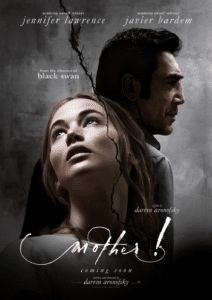 Keri: So, we both went to see the incomprehensibly-lower case mother! this weekend (though I can accept the exclamation mark), and it seems to be a rare case when we are on opposite ends of the spectrum in our feelings about it.
Ben: Guess so; I quite liked it, and I gather you really didn’t.
Keri: My first impressions, on looking around at reviews, people opining on Twitter etc. was that I was alone in my antipathy; further investigation seems to show that it’s a love or hate thing. There are, actually, a lot of people who felt like me. So I guess we represent both of those takes.
Ben: I suppose so, yeah. And it’s clear that is a film that’s going out of its way to polarise opinion.
Keri: I think I read Aronofsky stating that anyone who doesn’t feel some sort of emotional response at the end is lacking in feeling, or words to that extent. I did have an emotional response to mother! It’s just that by the end credits, that response was irritation.
Ben: That may be a slightly crass thing for a director to say; it’s not up to them how an audience reacts to their work. But I guess being profoundly pissed off is still an emotional response.
Keri: To be balanced here – I’m happy to talk about the film’s strengths. I acknowledge there are lots of them; Ed Harris and Michelle Pfieffer were great, Pfieffer especially; the film sounded good; it was ambitious.
Ben: Yes, I don’t think I gave enough credit to either of them in my review, they were both excellent.
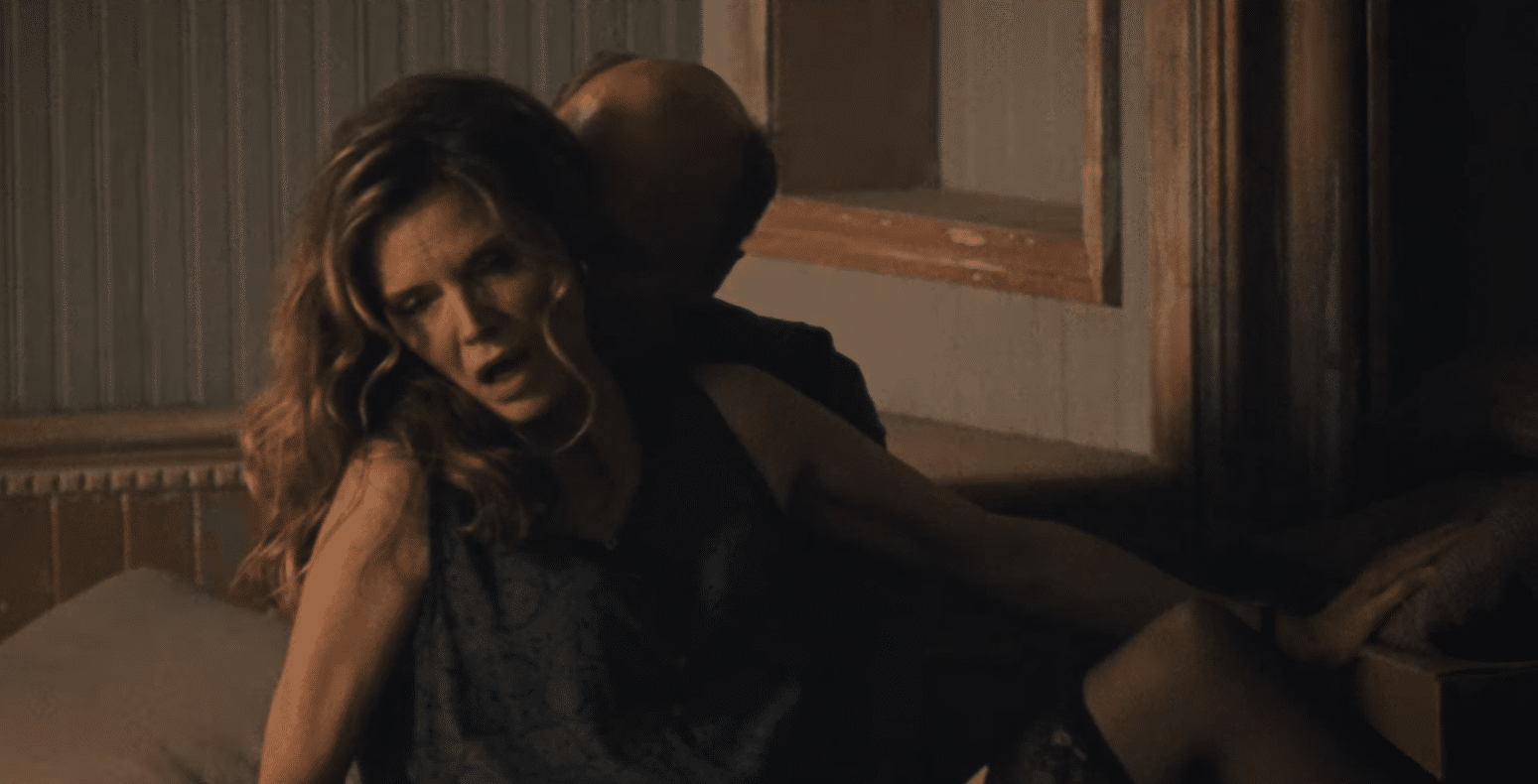 Keri: And I think I was more or less on board during the ‘first act’, to be fair. As a completely new kind of home invasion movie, I could appreciate the powerlessness of the female lead with all these incredibly oddball, entitled dickheads roaming her beloved home.
Ben: Yes, it feels like the ultimate home invasion movie at first – attack of the seemingly innocuous friends and relations who rapidly come to outnumber you. I know I’ve hosted gatherings at which we, the homeowners, wound up feeling practically kicked out of our own home.
Keri: Yeah. I’ve had houseguests who texted their food demands ahead of arriving, but perhaps that’s not for here… Point is, many people would have been drawn into that domestic aspect of mother!
Ben: Which, I guess, is why the film starts out on that note, with material more people can relate to.
Keri: Which brings me to a question: did you immediately identify the religious allegory aspect which many people are glibly announcing was ‘totally obvious’? I have to say, it wasn’t what I first took from the film at all.
Ben: This would be the whole thing about how Jennifer Lawrence is Mother Earth, Javier Bardem is God, Ed Harris and Michelle Pfieffer are Adam and Eve, his writing room is the forbidden tree of knowledge and smashing the crystal is original sin. No, I didn’t pick up on that at first, but once the sons arrived and did their Cain and Abel routine I started to make that connection. Calling it obvious would be an overstatement; as with most things that are allegorical, a slew of possible readings present themselves.
Keri: I saw it all as a comment on the creative process – with her as a muse/embodiment of the creative ability, him as a creative type who just can’t keep himself away from the darker side of adulation – as embodied first by the invasive guests, and then later with the mob rule of the second act. So the pregnancy/baby motif is the culmination of the process, but it’s dragged apart by unthinking, base fans, so that he has to sacrifice one idea to begin on another. That’s how it grabbed me, anyway. All of this stuff about religion – it seems Aronofsky said something about ‘scripture’ when he introduced the first showing of the film. Which no doubt helped people to see it as ‘obvious’.
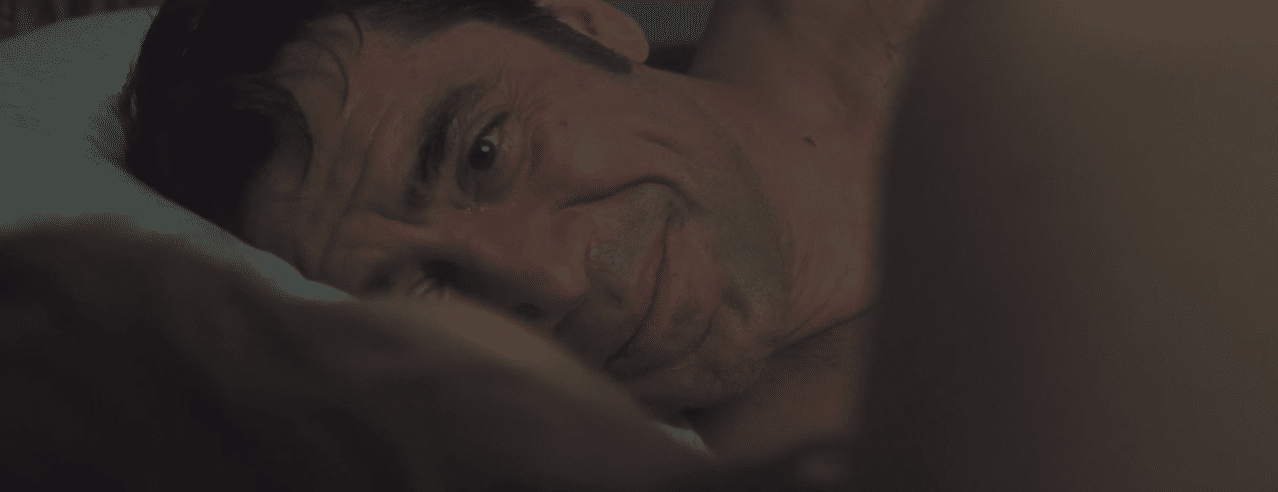 Ben: Yeah, that was very much how I took at it first, a comment on the destructive nature of the cult of celebrity. That’s clearly the most readily apparent meaning in the first half at least, as it’s made clear that Ed & Michelle are ‘fans.’ For myself, I think the religious connection may have initially come to mind as it’s something that has come up in Aronofsky’s other films, particularly the Kabbalah stuff in Pi. Plus of course he made a Biblical epic, Noah, although that’s the only one of his I haven’t seen – have you? Or, I dunno, it may be the old Joseph Campbell stuff coming back to me. Any time a story is presented in this kind of slightly abstract, clearly not-quite-real way, I’m instinctively looking out for the monomyth.
Keri: No I haven’t [seen Noah]. And I really can’t comment on Kabbalah; I’m not knowledgeable enough.
Ben: Neither am I, most of what I’ve garnered about it came from Pi. And, y’know, Madonna.
Keri: However, the whole real-not-real thing really alienates me as a viewer. This is one of the reasons I’m not a fan of allegorical cinema. Events are either unbelievable in order to accommodate the allegorical aspects, or else the allegorical aspects are rather tenuous because the story is still the most important thing. The second act in mother! – I mean, the whole realism of the first half got kicked into the weeds in favour of infanticide and people getting blown up. I also feel rather that saying “oh, it’s an allegory” is a get out of jail free card for some. How did you respond to Part 2: They’re Even Taking the Sinks?
Ben: I think from about the time when the wake turned into a raucous piss-up, I struggled to envisage where things were going, and I found that I rather enjoyed that. I also felt, from about that point on, it became more of a black comedy. It all becomes literally absurd, and I quite liked that. With the whole religious fanaticism angle, which I think becomes pretty clear by the final scenes, I found myself reminded of Life of Brian: the obsessive, utterly irrational behavior of the fanatics. But unlike Brian, smiling Javier seems to love it. Yet it’s disturbing at the same time; mother Jennifer being caught in an angry mob definitely ticked some of my boxes, as I have a real problem with crowds.
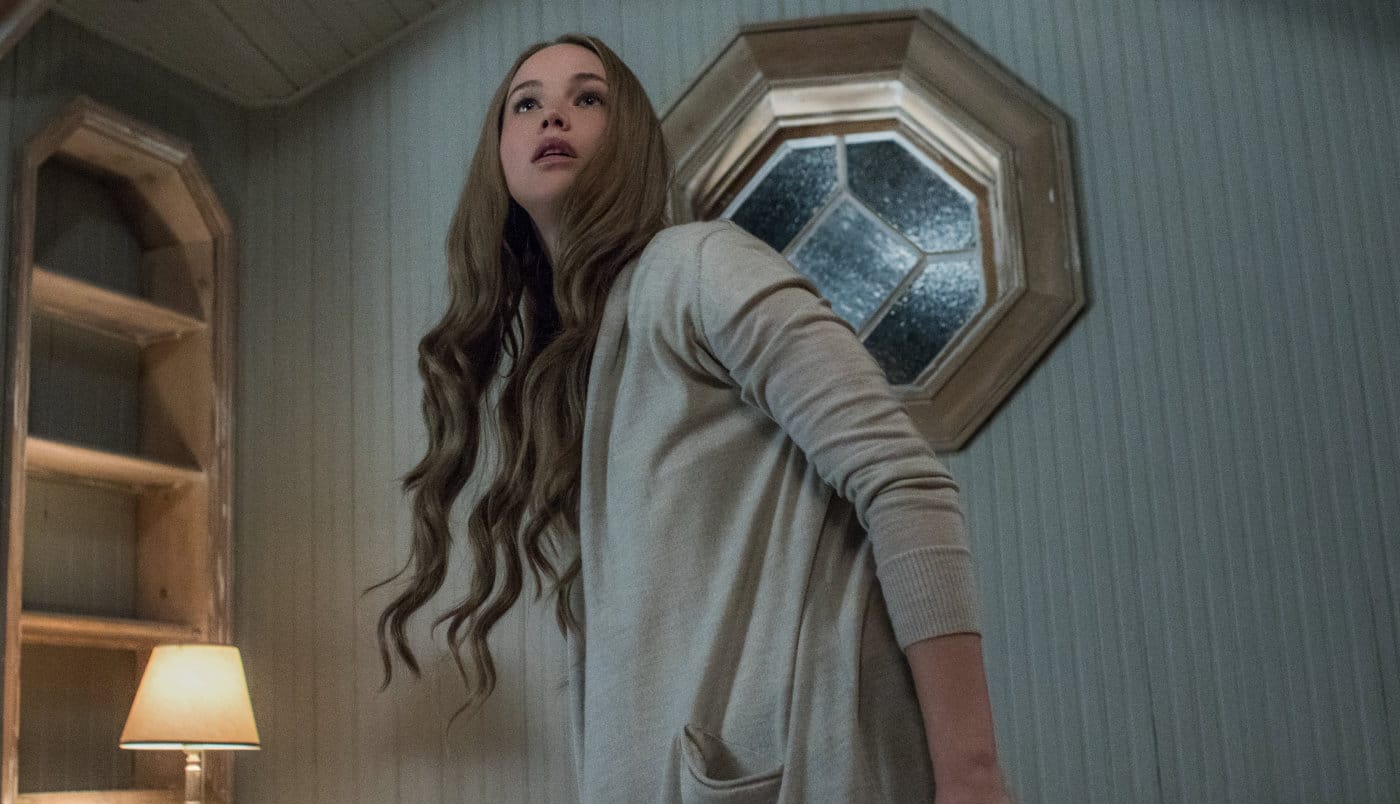 Keri: Yeah, sure, affixing loads of images of Bardem’s character, them getting anointed, and so on. I confess that I went from sympathy with the female lead – despite in my humble opinion the fact that the best-paid actress of our generation has two facial expressions, ‘bland benignity’ and ‘screaming’ – to muttering inwardly ‘just pack a bag and fuck off,’ and from there, ‘oh, it’s not real, is it? It’s not bloody real. Oh, I don’t care any more.’ Not sure about the humour aspect, again because I think I’d disengaged somewhat by then. Not liking the character who has a camera up her nose for most of the film will do that to you…
Ben: Yeah, I can appreciate that would be a huge problem; if you can’t empathise with the lead at all, virtually 2 hours of her in extreme close up isn’t going to be enjoyable. For myself, I’ve never really had strong feelings either way when it comes to Jennifer Lawrence. But I liked her performance. I could relate to her eagerness to please, her difficulty at speaking up. That said, I agree, I did wonder at various points why she didn’t just get the hell out of the house. But I suppose that’s part of the trickery, much as how when you first watch The Sixth Sense it doesn’t really register that Bruce Willis isn’t talking to anyone but the kid. So other than Jennifer Lawrence, was the main problem for you the contrast between, as you mention, the comparative naturalism of the first half by contrast with the theatrical abandon of the finale? Do you think it would have worked better had it been more clear that it was not the real world from the very beginning?
Keri: Possibly. As I say, the first half I think worked well; the allegorical elements (assuming it *was* to do with fame and creativity, not Mother Nature and God and such) could have come to the fore more organically, had this tone and pace continued. Coming back to Aronofsky, he’s also said something along the lines of ‘people might not get this film, but then people moan about boring cinema, so what do you want?’ and again, as much as I can see that he’s protective over his work and its reception, I think he has a bit of a nerve. Black Swan covered a lot of the same ground, far more effectively in my opinion. I feel that mother! was a cut-and-shut, two different films which didn’t come together, and the final act was unnecessarily disjointed and OTT, which unpicked all of the things which had come before. You can want innovative cinema without accepting anything weird which then comes along.
Ben: I see where you’re coming from, and under different circumstances I’ve no doubt I’d agree. The early scenes do feel like an entirely different film from the one we’re left with, even with the finale bringing things full circle perhaps a little too neatly. But in this instance, for whatever reason it worked for me. I enjoyed its weirdness. Still, it’s not like I’d make any claims for it being a masterpiece; I agree that Black Swan is the better film. In a weird way I’m almost more reminded of Tusk; I admire it for its audacity more than anything else, even if not everything entirely works. End of the day, I liked it, though I doubt I’ll have any great desire to see it again.
Keri: Well, it’s certainly a film which invites analysis – rather as we’ve been doing. In fact, it seems to ask for analysis before anything else. Clearly it’s dividing audiences, so if it does nothing else, then it’s certainly generating strong responses from people like us.
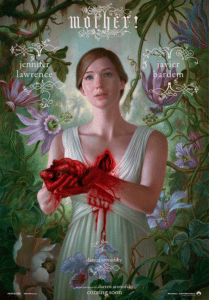 Jennifer Lawrence is the unnamed wife of Javier Bardem’s unnamed older man, a poet struggling to produce his latest work. The two live alone, childless and neighbourless, in his childhood home, a remote, idyllic country house in the middle of a forest; and while he has sought inspiration to no avail, she has rebuilt the house from the ground up, following a fire sometime in the past. It may be a quiet, even lonely life, but she seems content just to be with her husband; but then the equilibrium is broken with the unexpected arrival of a stranger (Ed Harris). The husband warms to this enigmatic visitor, even inviting him to stay in their home; the wife, though clearly taken aback, does not object. The next thing she knows, the stranger’s wife (Michelle Pfeiffer) has shown up, and is also accepted into the house without question. While the wife is clearly unhappy, the husband enjoys having the guests around, feeling that it may give him the inspiration he has been in need of. She begrudgingly accepts this, because she loves him – and really, who can blame her, Javier Bardem is pretty damn lovable. But of course, yet more strangers arrive soon enough, and tensions soon reach boiling point. Still, this surge of activity in their usually quiet space does seem to have the desired effect for her husband’s creativity – but these new creative acts lead to developments which make what came before look like a walk in the proverbial park.
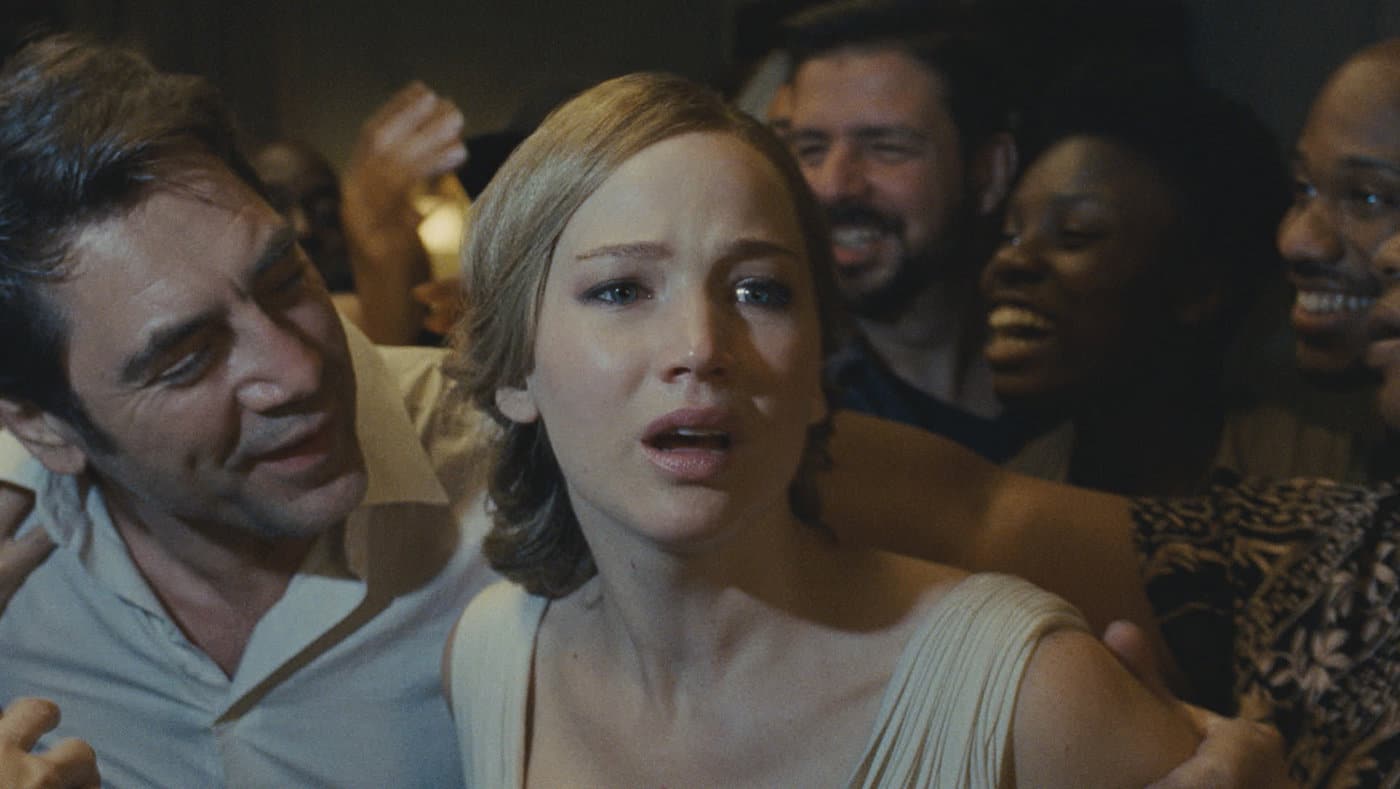 Now, if you’re thinking to yourself, “what the hell, Ben? You’ve spent the last two paragraphs rabbiting on about Aronofky’s old films just to avoid telling us anything about the new one”… well, then, you’re pretty much correct there. I’m reluctant to go into much more detail on mother! for fear of giving too much away. I’m also aware that it can be a bit reductive to discuss a filmmaker’s latest work purely with regard to how it relates to their existing filmography. That having been said… if you take the feminist leanings of Black Swan, the overwhelming intensity and bleakness of Requiem for a Dream, and the religious overtones of more-or-less everything Aronofsky’s ever done, you may get some sense of what mother! is all about. You might also want to slap a massive dollop of jet-black humour on top as well.
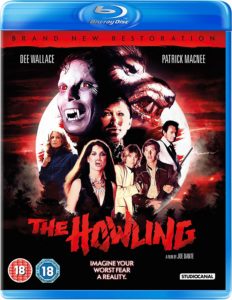 As every horror fan under the sun (or silvery moon) will bore you to death explaining if you let them, the 1980s were the greatest decade for practical creature FX work in the movies; indeed, it was the era in which the term ‘special make-up effects’ really entered the vernacular. Small wonder, then, that the decade also saw a boom in werewolf movies. We tend not to see werewolves as the central monster quite so often as vampires or zombies, and the most likely reason for this is that they’re a lot harder to get right; so often they just wind up looking like vintage Toho man-in-suit monsters, as opposed to the truly terrifying beasts the filmmakers would doubtless prefer. But with the technical advances of the 80s, genuinely lifelike and scary wolfmen suddenly seemed in reach – and, notoriously, a whole bunch of filmmakers got that same idea at the same time, as 1981 kick-started a new wave of werewolf horror with the release of three key films: John Landis’ An American Werewolf in London, Michael Wadleigh’s Wolfen – and, of course, the film we’re here to talk about, Joe Dante’s The Howling, getting a brand spanking new home entertainment release from Studiocanal just in time for Halloween. While I should expect the bulk of us will agree that Landis’ film had the greatest impact, it was Dante’s which spawned a lengthy, albeit tenuously-linked franchise, as well as launching its director into the big leagues. So, how does it hold up 36 years later?
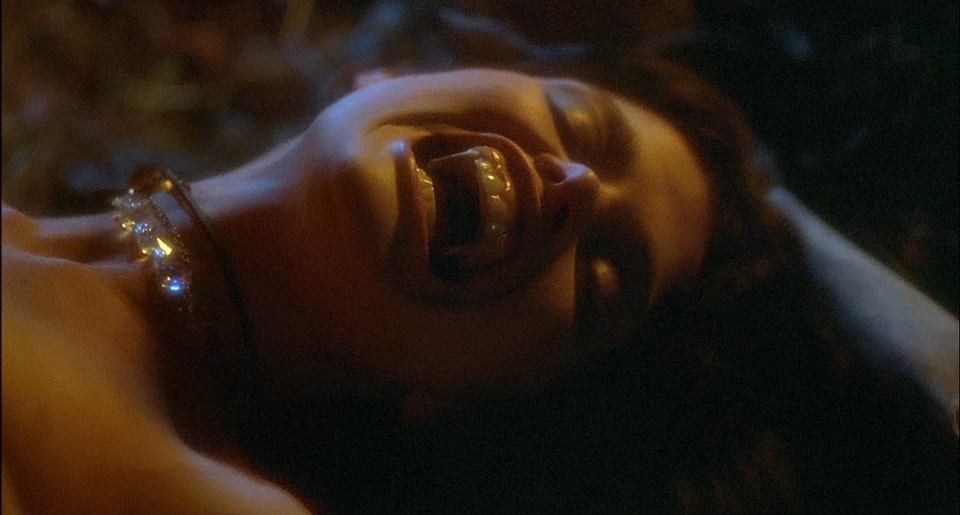 Given that The Howling largely hinges on the notion of the beast as the embodiment of our underlying carnal nature, it would be easy to class it is a conservative-leaning film, which literally demonises those that break the sanctity of marriage; but watching the film, there’s really no question which group the director really sympathises with. Look no further than the femme fatale role, brought so brilliantly to life by the late Elisabeth Brooks, one of The Howling’s greatest strengths. Oozing dark humour as much as sex appeal, the sadly short-lived actress will always be remembered for this role, and in particular for what has to be one of the most memorable sex scenes in horror.
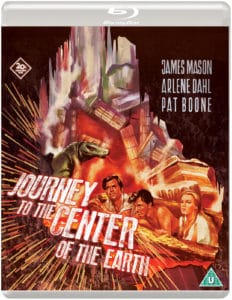 So, it’s Journey to the Centre of the Earth, and as such we all know James Mason will be embarking on said journey, and that’s certainly enough to warrant audience interest. Unfortunately, we’re the better part of an hour in before the journey really gets underway, and in the meantime things are stretched out with a lot of inconsequential waffle that takes no time to get tedious. As the student Alec McEwan, Pat Boone – whose attempt at a Scottish accent makes Richard Attenborough in Jurassic Park look like Rab C Nesbitt – sings a few songs, as that’s what he was famous for at the time, and in that oh-so-chaste old Hollywood manner woos Miss Jenny (Diane Baker), niece of his esteemed teacher Professor Lindenbrook (Mason, who unsurprisingly makes for a more credible Scotsman, although I’m one of those who can never hear his voice without thinking of Eddie Izzard). After Alec’s chance gift to his teacher of an unusual-looking rock from an old curiosity shop turns out to be the most unique geological find of the century (admittedly, I don’t recall how they made the discovery in Verne’s novel, but was that really the best they could come up with?!), a race to be the first to the earth’s core begins, and so the film embellishes Verne further with rival scientists trying to capitalise on Lindenbrook’s discovery, resulting in a murder plot that eventually saddles Lindenbrook and Alec with a third party, Arlene Dahl’s widow
 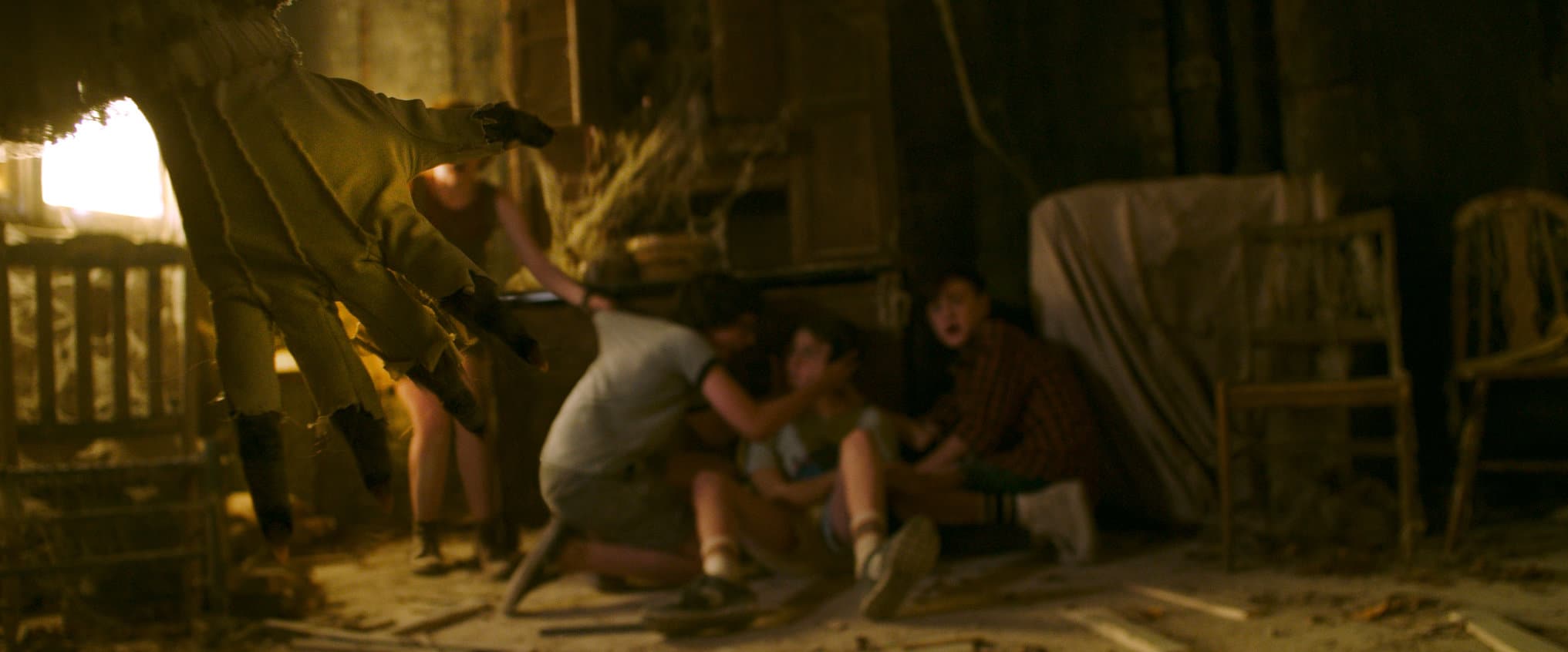 Ben: So, to paraphrase In The Mouth of Madness (or rather, say what they meant to say anyway) – do you read Stephen King?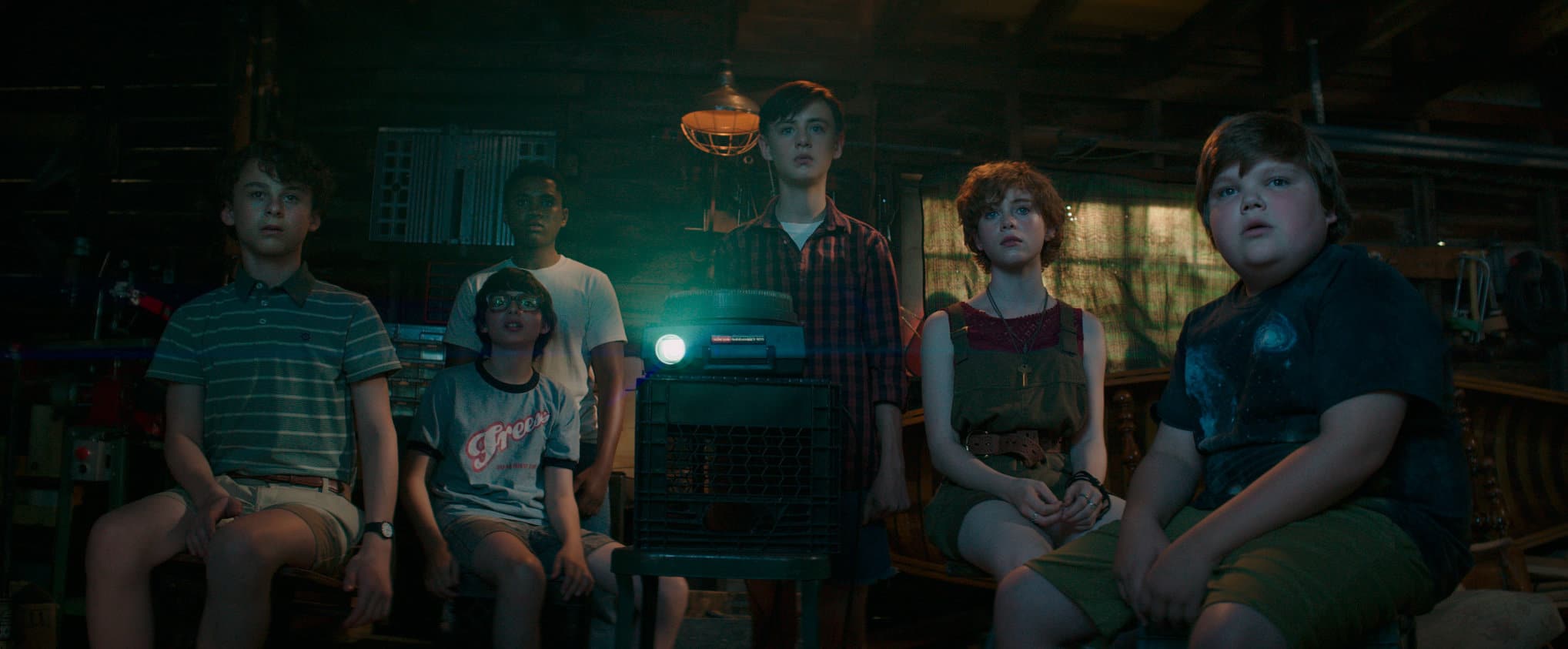
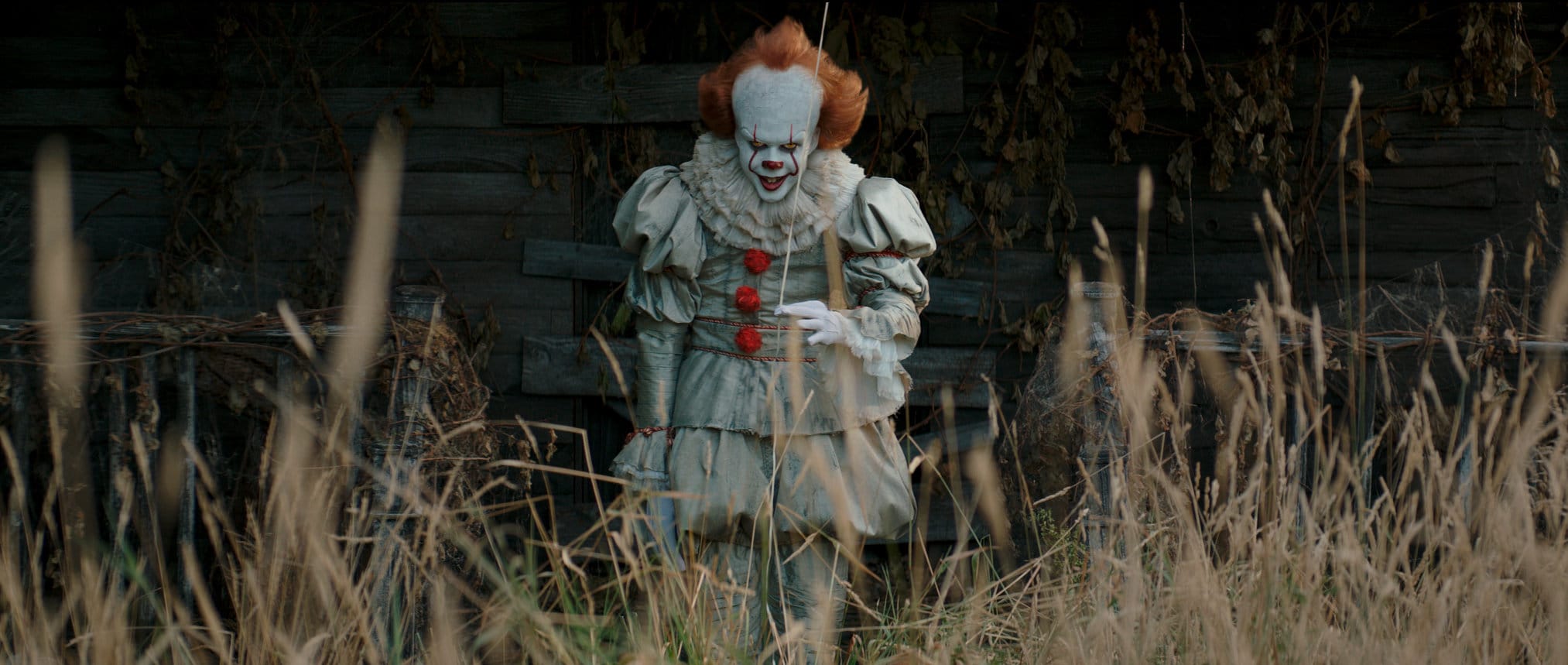 Keri: I’d like to talk about the reception of IT, if I may…
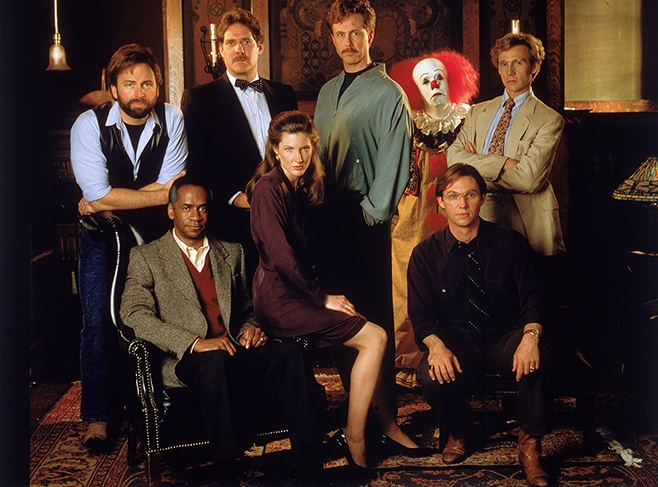 Keri: So did you feel that the reframing of the film as just the childhood sequences worked? And what do you hope for in Chapter 2?
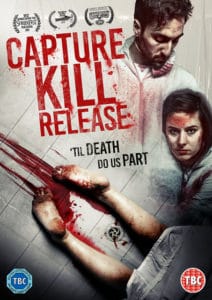 Capture Kill Release centres on a young married couple played by Jennifer Fraser and Farhang Ghajar, both of whom use their own first names in the film, and are also credited as screenwriters alongside McAnulty (it seems safe to assume the dialogue is largely improvised). They seem to be a happy, normal, well-adjusted, well to-do couple, settled down comfortably in the suburbs, living the dream. We meet them as Jennifer presses record on her brand new video camera, bought specifically for some personal project the two of them are working on, the nature of which is initially unclear, but from the early scenes you’d assume it’s a simple video diary, perhaps with a little amateur porn thrown in. However, it’s only once they film themselves visiting a local hardware store, loading up on rope, hammers, saws, axes – many of which Jennifer picks up and mimes testing in mid-air – that we realise they are in fact documenting their plan of a perfect murder. Their reasons for doing this are never made entirely clear; while they’d prefer to kill someone who would seem to have it coming, ultimately Jennifer and Farhang just want to do it for the sake of doing it. They know their victim can’t be anyone that could be linked to them, and they know that when it comes down to it, the murder itself will probably be the easiest part, with the real work going into disposing of the corpse afterwards. Ah, the crazy shit young couples will do, eh? Of course, once they reach the point of actually going through with it, their relationship dynamic takes a perhaps inevitable turn for the worse.
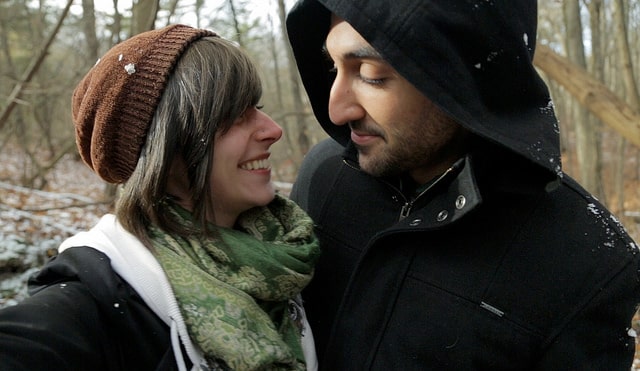 Even so, complaints can still be made. While it would seem the lack of any real motive for their murderous scheme is entirely the point, it does rather defy logic that the couple choose to record absolutely everything, particularly given that so much of their plan centres on getting rid of the evidence afterwards. There are also a fair few of those inevitable moments when you have to wonder why they would continue recording under the circumstances, and more than a few of those dead air scenes which add nothing beyond some vague sense of verisimilitude; indeed, one such moment sees them even remarking that the boring conversation they’re having won’t wind up in their final movie. Yet there it is; and yes, their plan also included editing the footage down into a feature length film… and quite what they intended to do with that film is another head-scratcher. On top of which, it’s a mite unconvincing that, once the plan starts getting serious, one half of the couple starts to get cold feet, given that in the early scenes both appeared to be entirely on the same page about it all. Common sense also goes out the window somewhat by the final scenes, with a number of developments that strain credibility and a climax that feels a little too easy and unsatisfying.
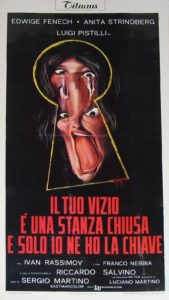 “Sergio Martino will join us afterwards for an in-depth discussion about his incredible body of work, particularly his career as the man responsible for some of cinema’s most iconic gialli, including
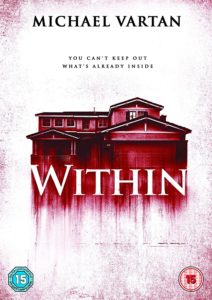 Again, to give Within some credit, the precise nature of the threat does remain enigmatic for some time, leaving the audience unsure as to whether we’re watching a home invasion movie, a haunted house movie, or something a little different. However, this all winds up something of a moot point as it quite quickly becomes clear that, whatever’s meant to be going on, Within is ultimately a very by-the-numbers exercise in voyeurism. A writer who’s more well-versed than I am in feminist film theory and Laura Mulvey’s ‘male gaze’ would doubtless find plenty to say about the film, but you don’t have to be an academic to recognise the unpleasantly leering nature of the whole endeavour, all particularly icky as it hinges on the objectification of a character who, although her age is never directly specified, would seem to be only on the cusp of the age of consent.
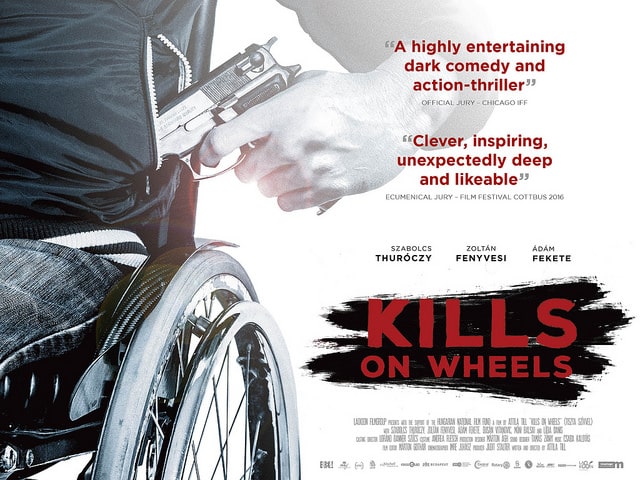 Ostensibly, Kills on Wheels would seem to merge issue-based kitchen sink drama with the low budget gangster movie; two genres which, as a general rule of thumb, I tend not to be particularly interested in. However, I was won over by its frankness and lack of sentimentality.
 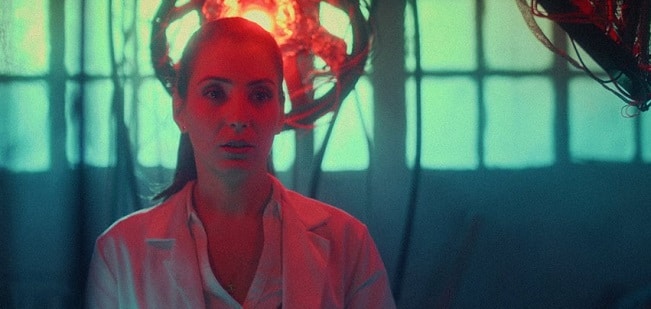 As much as microbudget filmmaking is always a risky proposition, science fiction can be a particularly tricky one given how often the genre hinges on special effects. Anti Matter, thankfully, is more driven more by ideas than visuals, and builds the drama through keeping you guessing; although, as microbudget goes, it’s still a handsomely shot affair, making effective use of the picturesque Oxford University setting. Plot-wise, the film’s PR likens it to Darren Aronofsky’s Pi, and while it’s not quite such a success Anti Matter does indeed work to similar effect, building in intrigue, suspense and paranoia as the running time progresses. After her teleportation experience, Ana knows things aren’t quite the same; she finds herself unable to recall events that have occurred since the experiment, and feels strangers watching her everywhere. The question is, how much of it is just in her head?