By contributing writer Adam Page
Every now and then, a piece of art is created that the machinery simply hasn’t been designed to process. It isn’t banned, exactly, as banning at least implies someone in a position of authority looked at the thing and made a decision. What happened here was worse. This was a movie that fell into the gap between the categories then sat there, for four years, while men in offices tried to work out which drawer to file it in, and eventually just shut the drawer altogether.
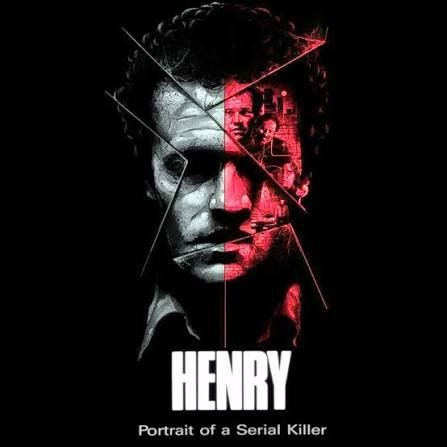
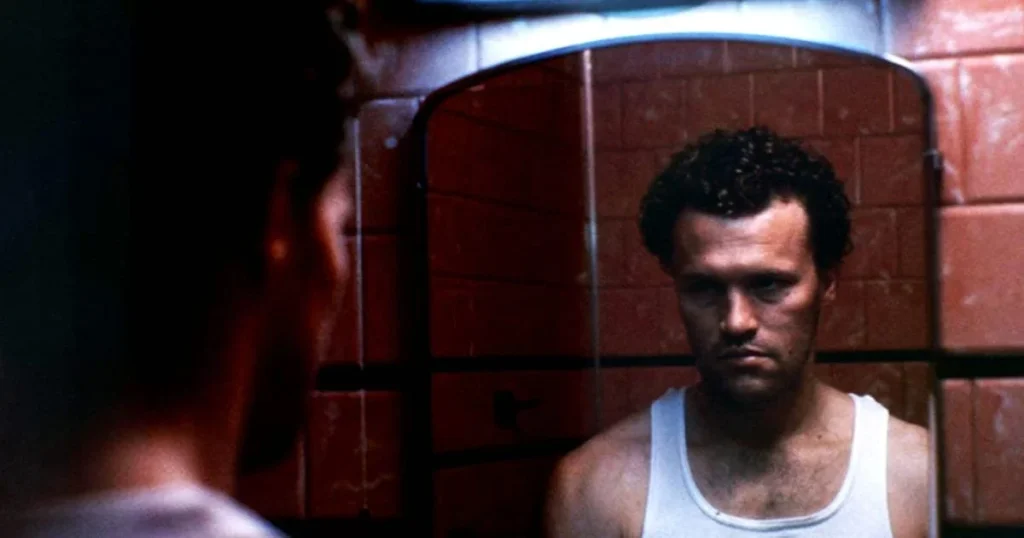
Among his multitude of different jobs, John McNaughton was a documentary maker from Chicago who had never made a narrative movie. In 1985, two brothers named Malik and Waleed Ali, who ran a modest home-video outfit called Maljack Productions (MPI), handed him about $100,000 and told him to go and make them a horror movie. They wanted something with a hook, something they could get on the shelves next to the werewolves and guys in hockey masks holding big knives. What McNaughton then delivered, shot on 16mm over 28 days and with a cast largely pulled from Chicago’s Organic Theatre company, was a psychological horror movie about the random crime spree of a serial killer who seems to operate with impunity. It starred a totally unknown actor named Michael Rooker as Henry, who was loosely sketched from the real, horrific, and largely made up legend of Henry Lee Lucas, a man who who had confessed to hundreds of murders he almost certainly didn’t commit and was believed anyway because the confessing is so much easier than the checking.
The Ali brothers were not happy. They wanted a drive-in monster flick and had gotten something closer to cinéma vérité; it was flat and patient, interested in the texture or boredom that surrounds violence, rather than the violence itself as spectacle. There were no jump scares, instead it delivered dread as a permanent atmosphere, the way some cities deliver humidity. And notably, there was almost no music in it beyond a spare, droning score, because McNaughton knew something that a lot of more expensive moviemakers never quite work out: silence makes the audience lean forward and pay attention, not look away.
MPI didn’t know what to do with this movie. So they did what companies with an expensive mistake in the vault often do. They premiered it quietly at the Chicago International Film Festival in September 1986 and waited to see if anyone with some distribution muscle would take it off their hands. Atlantic Releasing sniffed around. New Line, not exactly strangers to horror themselves, had a look. Then the movie went to the Motion Picture Association of America to be rated, and the MPAA did something to it that was, in its own way, more brutal than what Henry does on screen. They gave it an X.
It’s here where this story stops being about a movie and starts being about the weird psychology of institutional gatekeeping. The way a body ostensibly made to inform consumers can, with total sincerity, functionally suppress a work without ever technically banning it. By 1986, the X rating in America had been hijacked by the pornography industry, which had adopted it like a badge instead of a warning, which meant that any studio-adjacent distributor who touched an X-rated movie was volunteering to have it treated by cinema chains, newspapers, and the video rental clerks of America, as basically smut. No major chain would book it, no newspaper would run ads for it. The rating was pretty much a coffin lid instead of a classification.
What makes the MPAA’s handling of Henry interesting, and I’d argue a small case study in how censorship bodies really think, is that when the moviemakers asked what specifically needed to be cut to earn an R rating, the board didn’t offer a list. The MPAA replied that nothing could be removed and the X was for Henry’s “overall moral tone.” Just pause with that phrase for a second. It wasn’t a scene or a shot. It was a tone. This was a ratings board admitting on the record that its objection wasn’t to the depicted violence; a genre in which other mainstream slashers of the same era were a lot more graphic and sailed to an R with no incident, but to the movie’s refusal to punish its killer and its refusal to let the audience off the hook with a satisfying comeuppance. Roger Ebert was one of the movie’s earliest and loudest defenders and noted in his review that the MPAA denied an R rating, saying that no possible cuts could qualify it for an R. So this was not a content problem; it was a values problem dressed in the language of a content problem. It seems the ratings system has no box on the form for “we are uncomfortable with your worldview.”
So Henry sat there, for four years, a movie with no home, too expensive to have been made for free and too honest to be sold as product. In a move that tells you a lot about the desperation of independent distribution in the pre-internet era, McNaughton started mailing VHS copies straight to movie critics in the hope that enough positive ink might just shame a distributor into action. And it worked, slowly, in the way these things do. Elliot Stein at the Village Voice called it one of the best movies of the year. Ebert put his considerable influence behind it in 1989. Errol Morris, fresh off The Thin Blue Line and serving as guest programmer at Telluride, invited it to the festival and that’s a small irony itself. One true-crime adjacent movie about the unreliability of confession giving a leg up to another. Midnight screenings started popping up in Chicago and New York, the last refuge of any movie too odd for a normal release calendar, and the movie built the sort of word-of-mouth reputation that money literally can’t buy, as it had no money behind it at all.
By the time a small company named Greycat Films finally picked it up for a real theatrical run it was January 1990; four years after that first festival screening and five years after the cameras rolled. It opened unrated rather than saddled with the X, in a limited run of about twenty cinemas. It made a few hundred thousand dollars in its opening weeks and eventually crossed the half-million mark against a production budget of $100,000 which, by the unforgiving arithmetic of independent movies is a genuine hit, even if it looked on paper like a curiosity that merely made a mark on multiplex America. MPI, in a fit of righteous indignation that really made me smile when I read about it, sued the MPAA for $50,000, arguing that the rating had been applied in a discriminatory way and had crippled the movie’s ability to find an audience through no fault of its actual content. The suit may not have reshaped the ratings system, but the argument under it, that the X had become an instrument of suppression instead of information and that a genuinely serious adult movie had nowhere to live in the American classification system, was loud enough and made by enough serious people that it became one of the pressures that pushed the MPAA towards creating the NC-17 rating later that same year. Henry didn’t single-handedly cause that reform, but it’s one of the handful of movies people point to when they explain why the reform happened, and that’s a strange sort of legacy: you can shape the regulatory architecture of a whole industry by being the corpse nobody could figure out how to bury.
“It’s always the same and it’s always different”
And here’s a detail that should make you laugh, if institutional absurdity amuses you the way it amuses me: in 2016, thirty years after its original submission, Dark Sky Films resubmitted Henry to the ratings board for a theatrical rerelease. It got NC-17. Thirty years, one dead moral panic and a whole genre’s worth of gorier and grislier successors; Saw, Hostel, the torture-porn decade, had come and gone in the meantime, with all of them collecting R ratings on the way to the multiplex. Henry, by comparison sedate and nearly bloodless, was still deemed a bit much. That’s a hell of a comment on what the ratings system was actually built to protect people from, and it was never really about the blood.
If the American story is one of a movie falling through the institutional cracks, then the British story is one of a movie being actively and repeatedly reshaped by an institute that knew just what it wanted and kept changing its mind about how much of the movie it was willing to allow you to see.
To understand the BBFC’s handling of Henry, it’s worth taking a minute to understand the room it was standing in. The mid-1980s in Britain had just been through the “video nasties” panic; an honestly remarkable episode of moral hysteria in which the newly deregulated home-video market, unpoliced by the same classification system that governed cinema, filled up fast with cheap horror imports and the tabloid press, a few members of Parliament, and a coalition of concerned moral entrepreneurs decided this represented a civilisational emergency. The result was the Video Recordings Act 1984 which brought home video under the same statutory classification regime as theatrical releases and effectively deputised the BBFC as the permanent border guard of the VCRs (please see Darren’s ongoing study of the video nasties for more details). Henry, an American movie that had nothing to do with the DPPs original list of nasties, arrived in Britain at the tail end of this fever, and inherited all of the institutional paranoia.
Electric Pictures, the movie’s British distributor, smelled trouble before the board had even looked at it, pre-emptively cutting thirty-eight seconds themselves; near the beginning, where a pan across a hotel room reveals a half-naked murdered woman with a broken bottle in her mouth, hoping to spare the whole submission from being poisoned by that opening image. It didn’t fully work, as when the board classified the movie 18 for cinema release in 1991, it wanted a further twenty-four seconds be cut from the movie’s other set-piece; the murder of a family in their home, and specifically trimming the shots of Otis groping the mother’s body before and after her death. Sixty-two seconds gone, and that was only the cinema cut.
The video submission the following year is where the story turns seriously strange, because it’s less a story about censorship and more a story about one man’s personal aesthetic authority over a whole nation’s home viewing. The board’s own examiners were ready to largely reinstate the previously cut material for the video release. Then James Ferman, director of the BBFC at the time and by reputation an incredibly hands-on and idiosyncratic gatekeeper, overruled his own staff. Not only did he insist on trimming the family murder scene down to almost nothing (seventy-one seconds cut, more than ever before), he went a step further and physically restructured the sequence. As McNaughton shot it, the scene plays out as an unbroken piece of horror and at the end reveals that we’ve been watching Henry and Otis’s own home-video recording of the crime, being played back on their television. It works as an absolute gut-punch that indicts the audience for having watched at all, something that would go on to influence movies like Man Bites Dog and the found-footage strain of horror that followed. Ferman moved that reveal to the middle of the scene instead, which diffused exactly the effect the sequence was built to produce. It’s worth pausing on this because it’s a whole different category of censorship than mere deletion. This was an unelected civil servant deciding not just how much of a movie British adults were allowed to see, but rearranging its narrative grammar, so that its meaning was changed. In a hundred and thirteen seconds of total cuts for that video release, as well as shortening the runtime, the BBFC rewrote its argument.
The movie limped along in differing neutered states through the 1990s; a version with the reordered climax, another round of resubmission in 20001 that reinstated some material and cut other bits, a slow negotiation conducted almost completely through stopwatch increments, until February 2003 when the board finally passed the movie completely uncut, seventeen years after it was made. Examiners noted that the effect of the scenes in question was to horrify and not arouse, that any erotic elements were minimal and practically incidental and that the scenes served “important narrative and thematic significance within a carefully constructed and acclaimed feature.” They also noted, with what I hope included at least a flicker of institutional self-awareness, that the cuts made in 2001 had been “relatively arbitrary, given that some of the reinstated material was arguably stronger than what had been cut.” Translation for those keeping score: we spent over a decade drawing a line, and even now we’re not quite sure where we drew it or even why.
Looking back over this whole grinding transatlantic saga, what really strikes me is just how little any of this had to do with protecting anyone. The MPAA’s objection was to a mood. The BBFC’s objection, filtered through one man’s personal editorial hand, ran to the level of shot order. Neither of these institutions were defending the public from graphic content so much as they were defending a set of narrative conventions: the idea that violence in cinema should come with a moral chaperone, that killers should be punished, and that cause and effect should resolve into something audiences could file away safely as fiction. Henry didn’t provide a chaperone and both of those regulatory systems, independently, identified the refusal as the dangerous part.
Of course, there’s a delicious irony in that every single one of these obstructions did the opposite of what it was designed to do. Four years in American limbo turned a cheap regional horror movie into a cause célèbre that Roger Ebert and the Village Voice were writing thinkpieces about before it ever reached a regular audience. Two decades of BBFC chopping turned a British home-video release into something like an academic industry, a staple of media studies syllabi, and a movie people sought out specifically because they’d heard it was too intense for the state to permit. Every attempt to manage the movie’s exposure ended up manufacturing its mythology. That was the great, recurring, and apparently unlearnable lesson of movie censorship in the 20th century: gatekeeping doesn’t suppress cult status, it manufactures it. You just can’t build a better argument for a movie’s seriousness than an institution’s frightened insistence that ordinary people can’t be trusted to watch it whole.
Henry: Portrait of a Serial Killer eventually got its clean, complete, boring theatrical rerelease. It now sits in respectable company with other Criterion-adjacent special editions, its at-the-time radical flatness having become a house style of an entire generation of grounded and unglamorous crime cinema; Silence of the Lambs, Zodiac, the whole lineage of movies that treat murder as banal, rather than operatic. But the movie’s real second text, the one running under the credits, is the paper trail: the ratings appeals, the lawsuit, stopwatch negotiations over seconds of footage, and the board director who changed a movie’s meaning without changing a single line of dialogue.
That’s the story that tells you what the era’s gatekeepers really feared and it sure wasn’t the blood. It was a movie that refused to tell them how to feel about it.