Dead By Dawn 2013 Review: Mon Ami (2012)

By Keri O’Shea

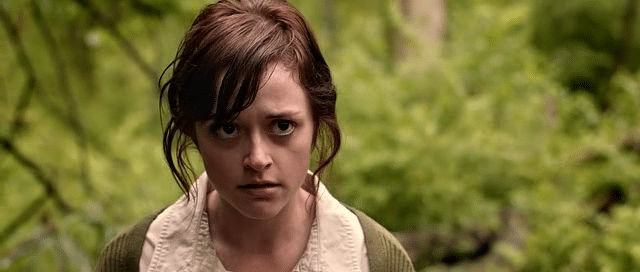
By sheer coincidence, two of the films which I most enjoyed at this year’s Dead By Dawn festival are all about the subject of friendship, and how that friendship endures under, shall we say, a series of unfortunate events. The first of these is of course The Battery, which uses a zombie outbreak to frame its narrative and to drive hell into its two protagonists, with impressive results. There’s nothing so monstrous driving the action in the second buddy-movie-with-a-twist Mon Ami, however; what we have in this instance is the engine of pure human stupidity. We see the machinations of two best friends – Cal (Scott Wallis) and Teddy (Mike Kovac) seeking to improve their lot – and failing, in spectacular, bloody, blackly comedic style. The twist in this buddy movie is pure horror movie, and this comedy of errors wrings its laughs out of some pretty bleak subject matter; I was surprised at just what director Rob Grant was capable of rendering funny at several points during this film and I think this, in and of itself, is something to be applauded.

Mon Ami takes for its central premise the incontestable fact that although humanity is capable of the odd flourish, the odd game-changing spark of innovation, more often than not people’s great ideas are deeply fucking stupid. Cal and Teddy, lifelong friends who work a humdrum job selling hardware at the local store, are probably not best-placed to think up revolutionary ways to improve their lives tenfold, but it doesn’t stop them from having a go anyway, and therein lies their first mistake. To be fair, when not being ground into the dirt at work, Cal has very little else going for him, while his pal Teddy spends his down time being hen-pecked by his wife Liz, who keeps up her constant barrage of checking-up on him via mobile phone (and only appears in the movie during the final act, but boy, does she make up for lost time!) Still, all of Liz’s surveillance has missed its target, as it has failed to stop Cal and Teddy dreaming up the following: if they can kidnap Crystal, their boss’s lovely daughter and also their co-worker, then they can hold her to ransom. Their boss adores his daughter – of course he’ll be all too keen to pay up – and they won’t do anything to hurt her. Why has no one thought of this before? Hallelujah! They get everything ready – they know where to get her, where to keep her, and how to get their cash. They even invest in some masks. They’re good to go.

It essentially all goes wrong from that point where the abstract ‘What if we could?’ turns into a ‘What do we do now?’ – and not in the ways you might be expecting. The farce here is overblown, frequently grisly, and paced absolutely perfectly; Grant does such a good job of layering joke onto joke that, even allowing for the fact that I may have been slightly stir-crazy by this point in the festival thanks to a liquid diet/little sleep/even less daylight, I was helpless with laughter throughout. The barrage is made so effective by the genuine-seeming cluelessness of our lead guys as bad goes to worse. Cal and Teddy are completely unbelievable master-criminals and therefore brilliant as they gape, panic and bicker about their burgeoning situation, just as your average idiot would. And guess what? They’re not the only idiots at work here. As the story progresses they encounter adversaries who are just as dumb as they are. Just the right number of acts form the bedrock of this film; it knows when to move from the sublime to the ridiculous but equally, it knows when to stop.

One of my absolute bug-bears in modern horror movie-making is the over-reliance on torture porn tropes; these have established themselves rapidly and recognisably, they’ve spread like a virus through low-budget, low-brow filmmaking and boy, are they boring. All of that being said, torture tropes now have the potential to serve as a useful benchmark. Essentially, if I can watch a film which features someone being tied to a chair and I still enjoy it, then we have something rather rare to behold. Not only does Mon Ami fit this bill, but it does another thing: it derives a lot of its humour from playing with these tropes. So much of what goes wrong during Cal and Teddy’s escapades relates in some way to using the wrong hardware, shoddy appliances or the untimely arrivals of neighbours. Rather than depicting a regular domestic space which has been turned into a place of inescapable cruelty, Mon Ami has a regular domestic space which just can’t function properly as the den of iniquity Cal and Teddy need it to be, even if just for the short term. It doesn’t work, and if anything they come off worse for even daring to try. We come close to torture porn slapstick at times here – if you can forgive me for using that expression – and it’s absolutely hilarious.

Masses of action, just the right ratio of humorous to gory moments and no significant plot lines left dangling, Mon Ami is a pleasure. It’s a black comedy where one stupid decision is allowed to blossom into a catalogue of chaos, and as a crowd-pleaser it’s difficult to imagine a better movie. Again, here’s a film which will no doubt make it into my top 10 films of this year. Now, no one go getting any stupid ideas…

Dead By Dawn 2013 Review: The Battery (2012)

By Keri O’Shea

It isn’t so unusual in cinema which deals with post-apocalyptic scenarios – whether the world has been destroyed by war, or zombies, or war which leads to zombies, or something else entirely – to see human friendships put under extraordinary pressure. As life goes to hell, relationships crumble, lifelong bonds are torn asunder, and cinema is there to explore what this must be like. You know what’s less common, though? A scenario where the world as we know it has come to an end, and the only survivors on screen…basically exasperate each other. They’re not at each other’s throats, they make do with the situation they’re in and they stick together, but boy, is it with gritted teeth. However, in any set-up like this, there’s space for development, and this is a film which delivers that in spades. Ladies and gentlemen, welcome to The Battery – one of the most achingly-funny riffs on the zombie theme that I have ever had the pleasure to see.

Ben (director/writer Jeremy Gardner) and Mickey (Adam Cronheim) didn’t really know each other all that well before the walking dead put a dampener on things; sure, they played baseball together (hence ‘the battery’ – the pitcher and catcher – of the title) but they ‘didn’t really move in the same circles’. All of that has had to change, of course, and now they’re sorta stuck together. Just the two of them, they stay on the road, meandering their way through (refreshingly) rural spaces and never staying put for long. The funny thing is, Benny seems to be enjoying himself. Life has turned into one long summer vacation of camping, fishing and practising his catch. There’s the odd ghoul to dispatch, but out in the boonies it’s no where near as bad as you’d expect to get in a city. Yep, he can handle things as they are pretty well.

Mickey, though, isn’t taking it so well. He wants more out of life, and blocking out what’s going on around him with his headphones (including Benny’s relentless teasing) is only helping so much. So, when he picks up the voices of other survivors on a walkie-talkie he finds, he sees the chance to reach out and he can’t let it go. His wish for human contact sets the two guys on a certain path which puts an end to their long, hot summer vibe.

Let’s get one thing straight: a poorly-written version of this set-up would have sucked. No nice way to say it; it would have sucked. For the most part we have two characters doing all of the talking and occupying pretty much all of the screen time; this is no gore-fest either, with the zombies themselves usually acting as an underlying threat rather than a constant presence (and they certainly don’t fucking run). Without good writing, this would have been incredibly dull; as it stands, some of the best, funniest writing I’ve had the pleasure to experience renders this a truly engaging film. You’re instantly drawn into the world of the lead characters, feeling every atom of their frustrations and amusements as if you’re on the ground with them; this is surely helped by the fact that the two lead actors are also old friends in real life, so the chemistry is already there. This believable relationship allows the film to move into something else it does incredibly well, and that is to make the audience roar with laughter.

Humour in The Battery is sublime – the timing’s impeccable, the jokes all land, it’s subtle (well, mostly, apart from one scene so outrageous that the whole auditorium was in absolute pieces) and observational, having a lot more in common with pre-wanker Kevin Smith movies than (because the reference is always bound to come up somehow) Simon Pegg in terms of the style of the comedy here. That said, this isn’t just a straightforward comedy either, and again because it’s strongly-written, The Battery manages to do other things entirely come the time the credits roll. For one thing, the film makes some bold decisions. There’s a static sequence towards the end of the film where the cameras roll, if I’m remembering right, for eleven minutes; it reminded me of Night of the Living Dead in its claustrophobia, though of course that wasn’t a film where anyone described the groaning of the zombies as ‘soothing…like rain on a tin roof’. Still, I think it works because it adds a sense of ‘this is that people would do in a messed-up situation’, at least until they are absolutely compelled to do something else. And, after the wide open spaces of the rest of the film, this shows the guys coming full circle. I think it works.

So, it’s smart, funny and well-observed, but The Battery is also an unorthodox movie – not just an unorthodox zombie movie, but an unorthodox buddy movie too. It effectively merges the one to make the other; the zombie situation is almost contextual, but it’s the pressure cooker which creates a friendship. These two guys aren’t torn apart, they’re brought together; going from laugh out loud funny to poignant is a rare thing, but The Battery does it. On a shoestring budget ($6000) with a cast and crew of about five people, we find there’s still scope and perspective on the fringes of the zombie genre for brilliant storytelling. It’s not flashy and it’s not especially grisly, but The Battery is beautifully realised and innovative, and it will definitely be on my list of top films for 2013. If you don’t see it, I’m afraid we can’t be friends.

Dead By Dawn 2013 Review: Modus Anomali (2012)

By Keri O’Shea

It’s a strange phenomenon when you think of it, but in recent years we have had such a glut of ordeal movies that we now require stronger, more numerous shocks in order that we may maintain interest in the proceedings. Otherwise, all we have is someone being tormented or tortured with very little scope for redress, or redress that, when it comes, doesn’t feel equivalent to all of the outrages perpetrated against the victim. Where is all this going, I wonder? Well, Modus Anomali goes at least part of the way towards developing an interesting overarching structure, providing a more sophisticated than usual justification for the events on screen. The only issue with this is that in some ways, that justification is a little hard to understand.

A man awakens, buried, somewhere in the Indonesian jungle. As if that wasn’t enough to ruin anyone’s day, he also finds himself amnesiac – he can’t remember who he is. Disorientated, frightened, he makes his way to the first dwelling-place he can find, and suddenly things go from bad to worse as he discovers a video camera rigged up and ready to go. The video shows him a woman being murdered, in the house where he now stands. It seems as though someone out there is playing with him, and he has to find out whom. His mobile phone contacts have all been deleted – though impressively and unlike most horror films, he can get a signal! – but he finds a wallet in his pocket and, slowly, he remembers his life. It seems that his children are out there somewhere and he has to find them before his pursuer does.

So far so familiar? We’re not short on people being terrorized in unfamiliar surroundings by apparently omnipotent aggressors, and writer/director Joko Anwar is surely aware of this, so perhaps this is why there’s no preamble and any characterisation we get is as a result of the largely non-verbal performance of Rio Dewanto, who communicates his panic and confusion well. The film kicks into high gear straight away, although in many respects it seems to be a quintessential ordeal horror (do we have quintessential ordeal horrors now? I would say we do). By that, I mean that the plot seems to exist only to maim, torment and antagonise the lead character – although it is considerably more unusual to have a lone male lead, and perhaps there’s something of a cultural difference in the way Anwar is happy to direct Dewanto running away in terror so often – it seems unlikely somehow that a male Western counterpart would be written to behave this way, although it’s the only reasonable reaction. In this, too, Modus Anomali goes that extra way towards striking out on its own and that is commendable.

However, just when you think you have settled into a comfortable viewing mode, the film turns on its head, moving into a second act which calls the first act and all of its events into question. I’ll say this for it – it’s an unexpected series of twists. Now, I do like a movie which makes me think. That is to be welcomed. It’s a fine line to walk though, this temptation to pull the rug from under the audience’s feet; in my case I still feel I want to know that the writer has a very clear and cogent idea of what the fuck just happened, even if I don’t. In Modus Anomali, it seems it all could hinge, after all, on a get out clause which is actually a rather overused trope in horror cinema (and no, thankfully I’m not talking about the ‘it was all a dream’ cop-out.) I said ‘seems’, though. I’m still not exactly sure. Do I feel that all would become clear on a second viewing? Hmm. I’m not exactly sure there either, and that breaks the spell of the achingly-tense build up to an extent.

There is much to applaud in Modus Anomali: I’ve mentioned the central performance, and that when brought into juxtaposition with some gorgeous framing and locations, it works very well. Dewanto is frequently the only thing on screen which is in clear focus, meaning that just as our lead finds his eyes start to play tricks on him, with inanimate objects momentarily looking like human figures, the audience is prey to the same thing. When this has happened to you several times in a few short moments, it goes a long way towards generating the fear and paranoia needed to fully participate in the lead character’s fate.

The lead character…Dewanto…why am I playing coy with naming our lead guy? Quite honestly, because it just doesn’t work. It’s part of the second major issue with Modus Anomali – electing to film it in bloody English. Do you know what the lead character’s name is – an Indonesian actor, mind you? John Evans. Okay, fine, so perhaps he has a Western name, you think. Yet he’s speaking in heavily-accented English, whilst other characters – all supposed to belong to the same family, mind you – variously speak very Americanised English or even seem to have been dubbed into English. It makes it very difficult to believe in the family unit on offer and it took me out of the film’s proceedings at times. I know that Anwar may have had his hand forced on this issue, finding that it’s still difficult to sell the rights to an Indonesian language movie, but frankly, this would have been so much better in the native language. People who shy away from films because of subtitles deserve to be horse-whipped for making things like this happen, seriously.

So, it’s a film with some stylistic and thematic issues, but Modus Anomali does deserve credit for trying to exceed the old torment – more torment – hidden reserves of strength – redemption formula so common to ordeal films of this kind. A movie which falls into two distinct parts, it supplies some food for thought as well as grisly violence; if you like either or both of these features, then you may well enjoy this one.

Dead By Dawn 2013 Review: Jug Face (2013)

By Keri O’Shea

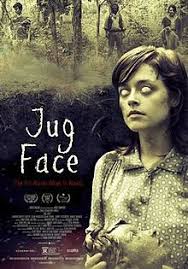
The idea of destiny – the inescapability of some event or course of action, come what may – is an ambiguous one at best, and on one distinct level, it is downright terrifying. If any way in which you try to exercise your personal volition is pointless, or worse still, messes with the order of things to the detriment of those around you, then perhaps you are damned to follow a path, rather than destined, and the very idea of agency itself becomes fraught with risk. When you meld this idea with a powerful tale of an isolated community, intrigue and the supernatural then you have all the elements in place for a compelling piece of storytelling – and so, we have Jug Face, a heat-hazed horror which draws you in from the get-go; the film’s plot is unafraid to be as ambiguous as the very ideas at its core and, more so, it is unafraid to be delightfully downbeat.

Through the simple, though ingenious animated opening credits we are introduced to a community which has long lived in the boonies of America’s Deep South (the film was actually shot in and around Tennessee). We garner hints of some arcane, genuinely Lovecraftian presence which has long made certain demands of the people living in its midst, as we see that the original settlers – originally pious and worshipful – have had their faith rocked by the arrival of smallpox, and the inability of Christianity to do a thing about it. A desperate citizen, his daughter now dying of the illness, walks into the woods to pray for guidance, kneeling at the side of a naturally-occurring pit in the earth; he feels driven to cast something in clay, and creates a face jug (an actual tradition in America’s Southern states) which bears a striking resemblance to the local minister. Desperate times call for desperate measures; the townspeople, believing they have received a sign, ritually kill the minister, allowing his blood to pour into the pit. Once they have done so, the smallpox clears up. Thus is signed a blood pact: the pit will protect them always – that is, just so long as they bring it the victim it chooses when it chooses. It does this by inspiring a seer amongst the community to cast a face jug of the intended sacrifice. How’s that for a creative premise?

This brings us right up to the present day and we meet our main character, Ada (Lauren Ashley Carter, also of The Woman). Ada lives under the domineering presence of her mother Loriss (the brilliant, menacing Sean Young) and father Sustin (Larry Fessenden) but even with them keeping an eye on her to stop her ‘transgressing’ before she can be joined to the local boy of their choosing, Ada has been fooling around – and this could land her in enough trouble, especially considering the boy in question, but it gets far worse when Ada visits her friend and the current seer Dawai (Sean Bridgers) and finds a new face jug bearing her image, which he made in a recent trance, although he hasn’t yet seen it himself. Does she feel like meekly submitting to her fate? Nope, so, panicked, she takes the jug, burying it in the woods. Has she been chosen because she has transgressed the codes of the community, or was her number going to be up anyway? This isn’t made clear – you may form your own opinions on that score – but what is certain is that she does not want to die, and decides to fight for her life. Her decision to rebel against a centuries-old system has bitter consequences.

Because let’s get one thing clear here: what this isn’t is a film about some deluded bunch of hillbillies living in the back of beyond and nursing deranged beliefs about some entity out in them there woods. Jug Face isn’t playing around and it doesn’t utilise any of the expected cop-outs; in some respects like Stuart Gordon’s Dagon in thematics, the supernatural being which is to be found in the pit is very, very real, and there are consequences in trying to thwart it. You might not see it (creature FX were mistakenly made ahead of the shoot but aren’t really visible in the movie, and the film is stronger for it) but it is there, and it knows. As for the community which has always kept its pact with this presence, they do live under brutal rules and their ways are strange, but it’s refreshing when a filmmaker can depict such often stereotyped people in a humane way, without feeling the need to make us think that they drink Coors and shop at Gap in order to get us to relate. They’re different, they’re inflexible and they’re frequently cruel, but writer/director Chad Crawford Kinkle has tempered their brutality with sympathy. Yes, the rules of their existence are harsh, but they’re necessary. The consequences to doing or being otherwise are just too great to be risked. I also liked the notion of the Something existing in a place as ostensibly mundane as a pit in the ground – although that idea, like the face jug motif itself, has its roots in history; many native peoples have worshipped caves, pools or other natural features as in some way divine, so it’s an idea ripe still ripe for use in a horror setting.

Ada, however, does risk those consequences: in keeping with the rest of the film’s cleverly-crafted characters, her decision to fight for her life is both eminently understandable and, as the film progresses and the pit fights for what it’s due, utterly mercenary. She’s no straightforward victim whatsoever, although at first it seems as though she’s lining up to be just that. I found myself moving through lots of different shades of feeling towards her character, vacillating between consideration and exasperation. Carter plays her role well, a doe-eyed innocent one minute, a shrewd manipulator the next. But ultimately, no matter how your empathy waxes and wanes, you of course understand why she wants to resist the pit’s claim on her. I guess what Jug Face does so very well is to show how human behaviour can be understandable and deeply flawed all at once, utilising its superb cast to really drive that lesson home. Sean Young is captivating as the matriarch who embodies the tough living and strict codes which hold her community together, and Fessenden, a gifted character actor, is a man who can add a few touches of humour to his hard-line presence on-screen. However, for me the strongest member of the cast has to be Bridgers as Dawai. If you were repulsed by his character in The Woman, then his role here couldn’t be more different. Only clever writing and acting could ever prevent a mentally-challenged, rural Southern character from becoming an insult; Tony Elwood managed to avert this in his criminally-underrated movie Cold Storage in 2009 with the character of Clive, and Chad Crawford Kinkle has definitely avoided any insult here. I was surprised by just how many moments of often much-needed levity Bridgers was able to achieve – maybe the film needs this pressure valve. In any case, Dawai is charming, likeable and very, very real.

Throughout, this is a gripping piece of story-telling, and the ending of this story is, as I reflect on it now, absolutely note-perfect, stopping the audience from getting into a cosy comfort zone to the last. When you consider that a film of this calibre was made on a shoestring budget in seventeen days, you could be forgiven for feeling that Hollywood today is a spent force when it comes to all the important things like vision, honesty and integrity. Jug Face plays around with some elements from familiar horror tales but updates them; it takes some real-life phenomena but creates with them. Look out for this title and look out for this director. Incredibly, this is Kinkle’s first feature film, and it promises great things yet to come.

Festival Report: Dead By Dawn Edinburgh 2013

By Keri O’Shea

Well, let’s see: my body aches, I am having to wean myself back onto solid food after giving this up completely by early on Saturday and the sunlight hurts my eyes. Yep, it can only have been a horror movie festival which has wreaked such havoc upon my mortal frame. Horror fests are the new endurance tests (or at least, they are the way I do them) so I hope you’ll forgive me if this festival report is refracted through the aftermath of three days of excess…

Any festival which has been going for two decades must be doing something very right and in Dead By Dawn’s case – although I haven’t been attending for much of that time – one of the things that stands out is that you don’t tend to see the ‘big horrors’ of the year screening there. On occasion a film, indie or otherwise, will hit the scene and play every horror festival within a short period of time. Dead By Dawn doesn’t do that, so the films you see there are likely to be unusual choices. As for this year, the programming was absolutely stellar, easily the best I’ve seen there, and struck a good balance between classics like The Brood and a Frank Henenlotter double bill (more on this anon!) and strongly-written independents. Reviews of some of these will follow hot on the heels of this post, but it’s interesting that two of the very best of the films on offer – The Battery and Mon Ami – took the concept of the buddy movie and spliced it with horror elements so that in both of these films, we have male friendship being put through the wringer, but the end results – though both hysterically funny – are very different. It just goes to show how much variety and depth is still possible around ostensibly tried-and-tested themes and that organiser Adele is bloody good at spotting it.

Short films are, of course, also an important part of the picture. Amongst my favourites this year were La Ricetta (‘The Recipe’), where a little boy’s ‘lesson’ in food preparation turns into a nightmare where human and animal flesh become interchangeable. I also loved Graveyard Feeder, another pitch-perfect horror comedy starring one of the best working character actors today, Sean Bridgers, who is trying with limited success to stop a necromancer feastin’ on the inmates of the local cemetery – oh, and he’s working alongside his deceased pop, whose soul he has to save too. In execution, a sharp script and great acting push this into a different league, and it would be nice if this was the first excursion of many in this fictional universe. It was also superb to see Fist of Jesus – which we featured here at Brutal As Hell a few weeks ago – on the big screen, in an auditorium full of people who were in just the right frame of mind to receive the Good Word, and also to see zombies being dispatched with fish. This film also led to some creative thinking in the bar later on; why not other religious figures/body parts movies? We came up with a few…but you don’t want to hear about that. Moving on!

This year’s guest of honour was none other than Frank Henenlotter, king of body horror comedy. What a thoroughly lovely man, and a true old-school raconteur too: it was a lot of fun hearing him speak about the making of Basket Case and Brain Damage, which screened together on Friday night. Before we got to the films themselves, though, Frank was keen to get us in the right frame of mind to appreciate two films about sentient warped parasitic beings – this was achieved through the judicious application of a friend of Frank’s, a sideshow magician by the name of Albert Cadabra, who got us all in the mood by swallowing a lot of latex and hammering a fork into his face (which worked a treat) and via Dead By Dawn’s ‘dead pics’ competition. For anyone who isn’t aware, Mr. Henenlotter makes a habit and a hobby of photographing himself being, well, dead in a lot of different places, and the idea was that festival attendees could submit their own dead pics, with the prize for the winner being to have a dead pic taken with Frank himself. The winner, a man who appeared as a corpse in a photo with his kids happily playing around him, utterly deserved to win, though all the entries were good (being dead on stairwells seemed to be something of a theme – not sure why that was!). Then, the whole auditorium appeared in an en masse dead pic. Good, wholesome fun for all the family.

The festival also featured a presentation by House of Psychotic Women author Kier-La Janisse, a short story reading by author and filmmaker Frazer Lee, and the now-legendary Shit Films Amnesty, each film replete with notes giving lots of back story and excuses as to how the films ended up in people’s possession in the first place…

Sadly, real-world commitments meant I couldn’t hang around until the end of the festival, and so I missed out on seeing Evil Dead II on the big screen, which is an especial shame as I could have used a palate cleanser after seeing the remake recently – but, ahem, I think we’ve said our piece on that front already. Dead by Dawn’s 20th anniversary played out with style, the festival is a massive credit to Adele and her team and I hope there will be many more to come. I will need the next year to recover, though.

But as I’m doing that, let’s talk about some of the films I saw…

DEAD BY DAWN 20TH ANNIVERSARY FESTIVAL TRAILER from Sketchbook Pictures on Vimeo.

DVD Review: The Lords of Salem

By Keri O’Shea

When the trailer for Lords of Salem premièred a few months back, I couldn’t help but be quietly optimistic. Oh, sure, Rob Zombie has made mistakes – and a lot of them. As much as House of 1,000 Corpses has its share of charms, the tapestry it weaves out of its many horror referents is just too obvious, too crude, too easy to unpick; I liked Devil’s Rejects a lot more, but it still has the capacity to make a girl wince with some of its odd oversights. (We’ll say nothing of Halloween here, okay?) Regardless, Lords of Salem was on its way and it promised tantalising hints of modern-day witchcraft; none of that love and light Christianity-with-garlands nonsense, but black magic. I was prepared to give the film a whirl simply for giving Ol’ Scratch his dues, getting him back into the limelight and on our screens by some other means than the boring possession of some confused kid with a limber spine and a potty mouth…

And actually, contrary to my usual style, this is not some wordy preamble which allows me to then launch into a lengthy sneer at the expense of the film I’m reviewing. I actually really liked Lords of Salem, a movie which indisputably has problems, but makes up for this with that rarest of commodities in modern horror – ideas.

The plot synopsis is thus: recovering heroin addict Heidi (of course played, albeit well, by Sheri Moon Zombie) is a DJ at a local Salem rock radio show. (Sadly this job doesn’t seem to pay very well – the poor woman can’t afford a functional pair of underpants, as we see in the very first scenes.) One day at work, a parcel arrives. It’s addressed to her personally, and it contains a vinyl record, a gift ‘from The Lords’. No other information is given. Assuming it’s another wannabe rock band, Heidi gives the record a spin after work. The recording – atonal, but somehow disturbing, evocative – has an odd effect on her, although her friend/co-worker Whitey gets no ill-effects. Assuming then it’s something to do with her rather than the record, she decides to enter it into the regular ‘Smash or Trash’ competition they’re due to run on the show the next day.

They duly do this – but the effect which the record has on the women of Salem is subtle, yet profound. As they listen, it’s as if they’ve been hypnotised. And as for Heidi, she is now unable to extricate herself from a sinister chain of events which soon begins to tighten around her…

First things first: as I mentioned above, it’s about time we went back to giving the Devil a bit of respect for such long-term involvement with the medium of cinema. Despite a long pedigree of silver screen appearances, things for Satan have gone into sharp decline, and he has to be worth a lot more than a vomiting schoolgirl here, an Al Pacino there. I’m also a big fan of what I like to think I first coined as Satansploitation, and to be fair to Rob Zombie, here he manages to make his own brand of occult goings-on both evocative and innovative. Sure, you can see the influences of other films in here (perhaps most surprising of all, I saw a few elements which reminded me strongly of the late Michael Winner’s massively-underrated movie The Sentinel) but the brand of devil-worship brought to the screen here has its own strengths in spades.

Make no mistake, the opening scenes of Lords of Salem had me gripped. Most coven scenes have traditionally been an excuse to show nubile young flesh; perhaps aware that he is unveiling his wife’s buttocks on a semi-regular basis throughout the film and thus catering for nubile flesh in this respect, Mr. Zombie really doesn’t feel the need to stick to that protocol when shooting his own coven scenes. The film is all the more bold for it. We as a culture are terrified of unorthodox female flesh, and unorthodox ageing female flesh is even more shocking. We trust in cinema to protect us from it, but Rob Zombie’s witches – cruel, aged, deformed – want to harm, not heal, and they don’t care if we are looking at them. This is also why the seduction scene in The Shining is so repellent; we simply do not see women who look like this, let alone ascribe any agency to them, malevolent or otherwise. (Neither is this the only time that The Shining sprang to mind as I watched Lords of Salem, come to mention another obvious influence.) Meg Foster as the maniacal head witch Margaret Morgan delivers a chilling performance here and speaks her lines with malignant conviction, whilst Zombie toys with age-old religious ideas about women being conduits of evil, drawing upon this notion throughout.

The use of the occult as a theme is then, for the most part, continued interestingly and thought-provokingly throughout the film. It’s evident that Rob Zombie knows his stuff in this respect, and he manages to weave together an altogether more sophisticated mesh of heavy metal music and horror (from the title’s font to the occupation of his leading lady, this is a film infused with heavy metal) than he has previously. Key to this balance between themes is the phenomenon of the record itself.

As a metal fan of some twenty years’ standing, I’m aware that the relationship between Satan and my musical genre of choice has been long and complex, but in using the mysterious record in the way he does Zombie is bringing a hell of a lot more to bear on the plot. Of course, he’s toying with the idea of metal as ‘the Devil’s music’, and with the frenetic idiocy, reaching its apex in the 1980s, which asserted that heavy metal records contained hidden or ‘backwards-masked’ Satanic messages believed to control or alter people’s behaviour. But I’d say there’s more to it even than that. The music on the record itself isn’t a song in any conventional sense – it brings to mind moral panics of centuries gone by, such as that surrounding the so-called ‘devil’s interval’, a chord banned by the Catholic Church, but the film also features the use use of sabbat music; this is an additional, rarely-explored aspect of the relationship between music and evil which I almost never see used on screen, so the way in which Zombie combines all of these ideas in his film via one, simple device is really something special. Again, the theme of the music itself lends the film some of its most engaging content, and these scenes furthermore did something which none of Zombie’s earlier work has ever done for me: they unnerved me. There’s some evidence of a new style of direction tucked away in The Lords of Salem; when he’s not going for scenes of excess, as he’s wont to do, it seems Rob Zombie knows how to do creepy, which is something I’d never have guessed. Some of the strongest scenes in the film are actually the quietest, and take place in quiet, chic urban spaces. He’s even toned down his colour palate in this film, and it works beautifully.

So much for the good points…

In all of his films to date, Rob Zombie has had a tendency to follow a promising set-up with a bewildering decision or two. (Again, we’re saying nothing of Halloween, which bucks this trend by being a bewildering decision in and of itself.) In Lords of Salem, there is far less of this, but nonetheless, I found myself forcibly taken out of the film on a few occasions by some excruciating lines of dialogue. I can only assume Zombie’s script editor is a) shy or b) Zombie himself, but let me explain my problem. I’ll be euphemistic; the use of the ‘c’ word is a fine art and, in the wrong hands, this still-powerful li’l noun can make someone seem like a kid who doesn’t know how to swear but wants to anyway. Back at the end of the 90s I went to see the re-release of The Exorcist: you know that bit where Regan asks, ‘Do you know what she did, your c***ing daughter?’ Well, if that shocked in the 70s, by the time the 90s had rolled around, people were rolling on the floor in helpless laughter. The same awkward c-word handling derails The Lords of Salem on occasion. it sounds weak because it doesn’t fit, and when you consider the enhanced subtlety of the film as a whole, it’s not helped by such jarring, silly lines, however droll their delivery. Is Rob Zombie teasing us? Maybe, but a bad script can more than finish off a film; it can make it ridiculous, and that goes for several lines with or without the ‘c’ word, and the scenes they’re in.

Another issue I have with The Lords of Salem relates to the ending of the movie. Far be it for me to spoiler what happens, but without saying what happens I can still discuss how it is presented – and again, it’s one of those odd directorial choices, a sudden reversion to type for Zombie which breaks through the atmosphere he has otherwise carefully developed. Why he decides to duck out of the film and into…well, into a Rob Zombie music video is unclear, but it does not fit in with the rest of the film and adds confusion, rather than colour. I’d have taken some more exposition – only a little would have done – and dropped the ephemeral guff with the goat.

All of these issues are significant, sure, but when it comes to the film overall I’d still say this: The Lords of Salem has its baffling moments, and it has its plain silly moments. Much of the best of the Satansploitation genre shares in these flaws. This does not change the fact that, for me, The Lords of Salem is in many places brutally effective, gripping and – in the true sense of the word – sinister. With a touch less of the dialogue and a tad more tale, I’d go so far as to say this would be a cult classic. As it stands, it’s certainly solid, has a great cast, and has enough imagination and atmosphere to make me genuinely curious to see what Rob Zombie will do with his next film. And, now, as opposed to how I felt in the dark times of the post-Halloween remakes, I again feel that he can achieve.

The Lords of Salem will be released to select UK cinemas on 22nd April 2013, then to Region 2 DVD on 29th April, from Momentum Pictures.

Interview: Adele Hartley of the Dead By Dawn Horror Film Festival, Edinburgh

By Keri O’Shea

You’re never going to be short of horror festivals to attend in the UK these days, but when it comes to longevity then Edinburgh’s Dead By Dawn Festival is in a league of its own. As the festival prepares to celebrate its twentieth year of operation – with none other than special guest Frank Henenlotter in attendance! – I was fortunate enough to nab the festival’s organiser, Adele Hartley, to pick her brains about her fest’s past, present and future…

BAH: Thankyou for taking the time to talk to us! First things first then, how did you get started with running your own horror movie festival?

Adele: It’s not really an obvious career choice, is it? I used to go to another fest but when it finished I spent way too much time moaning about not being able to spend whole weekends watching horror films any more. Someone I knew in Edinburgh at the time dared me to do something about it (more in a futile attempt to shut me up than to kick-start a career, I guess) and that was that. I figured it was a fun thing to do once, but someone (as they were leaving) asked me what I’d be showing the next time and I distinctly remember thinking ‘you mean I can get away with this more than once?’ That was that, really.

BAH: Since your first Dead By Dawn back in 1993, lots has changed within the horror scene, both in the UK and elsewhere. What of significance have you noticed, and what’s your take on the current state of play of horror?

Adele: Since we’re talking about a period of 20 years, that’s kind of hard to answer! Also, as I’m now 20 years older and gone a bit Victor Meldrew in my world view, it’s even harder. I find the assumption that any movie which makes any money deserves to have endless sequels and a prequel to be utterly depressing, but I’m not sure it used to be any different. Also, that’s not something that’s restricted to horror. I find it near-impossible to be excited about most mainstream horror, but maybe that’s because I’ve seen so much that it’s hard to be surprised or energised by anything so formulaic. Even the directors claiming to be redefining the genre are delusional. It’s all so much hype for so little reward.

I think it’s a shame that there’s so much money available to make third-rate remakes of films when surely there’s not that much resistance to subtitles? Pretty sure that money could be better spent. But independent film is healthier than ever and producing some absolutely gorgeous movies. Now, if only we can convince people that Part IV of anything isn’t the best place for their hard-earned pennies…

BAH: What have been some of your favourite moments from past Dead By Dawn fests?

Adele: Every fest is different. My favourite moment is always when the lights go down at the start of a movie, cos I know how much of a treat the audience is in for! I’ve loved getting to hang out with amazing, dedicated film-makers and of course some of my idols. Robert Englund made me squeal like a girl (from 10 feet away), that was kinda fun. Herschell Gordon Lewis reciting me poetry in the back of a cab on a gorgeous Spring day, that was surprisingly romantic and lovely. The roast chicken incident was bizarre. (Ed: you’ll have to attend the festival if you want to hear more about that one!) The hard work is always, always worth it when you hear the first laugh or gasp of a movie…it’s a total joy!

BAH: These days there are a hell of a lot of horror festivals out there – many of which have emerged in the last five years or so. For those who haven’t yet paid a visit to DbD, what is it that makes Dead By Dawn stand out from the others out there?

Adele: Obviously I can’t speak for what drives other events but like all the best festivals, we take our programming very seriously and we spend around 15 months watching hundreds and hundreds of submissions to find the very best that’s out there. It might look odd to fans but just because a film plays elsewhere on the circuit doesn’t automatically mean it’s right for us. Also, I think our approach to the genre is broad – we understand that horror is an umbrella term, just a reference point, and that the genre is incredibly subjective. What scares one person will leave another unscathed. What we’re always interested in is material which will unsettle or disturb the audience, or sometimes just make them all laugh!

Also around 20% of our audience every year are there for the first time, and one of the great joys of my job is when people come up to me each year and admit they didn’t used to think of themselves as horror fans, but now, because they love the films we’ve shown them, they have no choice but to redefine themselves! We’re all scared of something, I just try really hard to present a wide variety of what that might be. Our audience is friendly and lovely, happy to chat away to the person next to them, thrilled to talk about movies, delighted to find people who care about cinema, about the experience of it, about sharing it. The bar at Filmhouse is mobbed between screenings, and our guests are in there too. It really is all about the fantastic pleasure of discovering the film-makers who are breathing new life into the genre.

BAH: What are you most looking forward to showing this year?

Adele: Super-excited about showing MODUS ANOMALI which is one of those gorgeous, mind-melt movies that demands an extra pint in the bar afterwards, just to figure out what the hell went on! Nail-biting, breath-taking, clever film-making. Also, we have a clutch of amazing feature debuts this year – JUG FACE, DEAD SHADOWS, THE BATTERY, THE LAST WILL AND TESTAMENT OF ROSALIND LEIGH – which shows the genre to be in fine hands and it feels like a proper privilege to be part of those film-makers’ careers. Each of those films attempts to do something new in its sub-genre and it’s a joy to celebrate that. We live in an age of prequel, sequel, franchise and remake so it has become incredibly important to me to revel in the excitement of film-makers who try to tell original stories, or at least seemingly familiar stories from an original perspective.

BAH: Finally, for those not yet in the know, tell us about the now-legendary Dead By Dawn Shit Films Amnesty…

Adele: It is an unrivalled opportunity to (try to) offload the very worst dreck from your DVD shelves. All you have to do is pop a wee note in the box telling us either how you came to own this terrible film or why it’s just the worst film ever made. Or both. We’ll throw it open to audience vote and the “lucky” winner gets to take all the entries away with them. We recommend walking home past a skip. The only catch is that none of the entries can ever be re-submitted in a subsequent year…

If you have some films you long to part with at the Shit Film Amnesty, or indeed if you want to concentrate on the good stuff, Dead By Dawn takes place between Thursday 25th April and Sunday 28th April. At the time of writing, weekend passes are still available and individual tickets are also available. Check out the festival’s website for more information.

Many thanks to Adele Hartley.

RIP Jess Franco (1930 – 2013)

By Keri O’Shea

For a while there, it looked as though director Jesús ‘Jess’ Franco was invincible; despite losing the love of his life and his muse Lina Romay just over a year ago, despite increasing ill-health culminating in a serious stroke last week, Jess was still with us. Hell, he was still working up until very recently. He seemed to be unstoppable. So, regardless of the fact that Jess was an elderly man – approaching his eighty-third birthday – the news that he has passed away comes as a shock. Without him, the world is instantly a less interesting place to be.

It’s hard to put into words the sheer amount of joy I’ve had over the years with Jess Franco’s films, it really is. As with my experiences of Franco contemporary Jean Rollin, I can credit Redemption Films for my earliest introduction to his work: for an education in an array of films, actors and plots the likes of which I had never seen anywhere else, it was unsurpassed. And, as my education progressed, I began to notice a certain Mr. Franco’s work, a style and outlook becoming ever more recognisable; although Rollin and Franco were interested in similar themes throughout their careers – even collaborating on certain projects – their overall style was rather different. Franco’s cinema could go from sensual to zany and all the way back again within twenty minutes. Watching a Jess Franco film is like being treated to a smorgasbord of visuals, music and atmosphere; perhaps you wouldn’t imagine they’d work together, but they do, they absolutely do, and it is impossible to be bored by the end result.

That Jess maintained such a phenomenal output for so many years is nothing short of incredible. His films weren’t always perfect, of course not (though some of them were – Venus in Furs leaps to mind) but when you consider that for the bulk of his career he was trying to accomplish great things on minuscule budgets, often shooting projects back to back (or overlapping altogether) in the space of mere weeks and dealing with everything else which came with it, he definitely achieved great things. Jess had to learn to be creative and resourceful with what little he had, and even if we accept that in some cases he’d felt he had been made to compromise on his initial vision, we were never made to forego the elements he got so right. Jess had a real eye for locations and sets, utilising them to the full – such as, for instance, that house in Countess Perverse, to name but one. He knew just how to generate a peculiarly heady atmosphere in all his work; he also worked with some damn fine actors over the years, directing the only version of Dracula to meet with the Sir Christopher Lee seal of approval. Nor should we forget his leading ladies (often in a state of undress which Jess made it his business to feature for as often and as long as possible, and there’s nothing wrong with that) now themselves iconic figures, forever associated with the best of Eurohorror; Christina von Blanc, the lovely Soledad Miranda and of course, the Female Vampire, Lina Romay herself.

At the time of his death, Jess Franco had worked on over 180 films of his own: his very last movie, Al Pereira vs the Alligator Women, screened in Barcelona just last week. Incredibly prolific and hard-working, Jess simply needed film. The notion of just retiring didn’t exist: since he first started making movies and taking a delight in baiting the censors all of those years ago, Franco never toned it down, never gave up and never ever thought about quitting. That sense of mischief that would find expression and that work ethic mean I still have a hell of a lot of his films yet to see; the ones I already have in my collection will always keep their place there.

Rebellious, dedicated and irrepressible, Jess Franco was a true original. Thanks for everything, Uncle Jess, and may you be sitting with Lina somewhere, laughing, chain-smoking and setting the world to rights.

Select Filmography:
The Awful Doctor Orloff (1961)
Venus in Furs (1968)
Count Dracula (1969)
Eugenie De Sade (1970)
Vampyros Lesbos (1970)
A Virgin Among The Living Dead (1971)
Countess Perverse (1973)
Lorna The Exorcist (1974)
Jack The Ripper (1976)
Love Letters of a Portuguese Nun (1976)
Mansion of the Living Dead (1982)

DVD Review: The Awakening (2012)

By Annie Riordan

Let’s go back to 1995 for a second. Admittedly, it wasn’t the best era for horror. The days of video store rental gems were waning, the internet was brand new, the economy was reasonably well adjusted; there just wasn’t much demand for horror, and certainly not of the DTV variety. Blockbuster was slim pickings. I mean, seriously – look at this list. Pretty pathetic, right? About halfway down that anaemic little list, you’ll see a listing for a film called “Haunted” starring Aidan Quinn and a then-mostly-unknown Kate Beckinsale. It’s a late Edwardian tale of ghosts, set in a grand English manor house, where a paranormal sceptic is sent to investigate (disprove) tales of haunty happenings. It was a “meh” little movie, easily overshadowed by the ghost movies to come in the next decade – The Others, The Orphanage, The Devil’s Backbone, etc. But it is to this forgettable little ghost story of nearly twenty years past that 2012’s The Awakening owes its greatest debt.

The Awakening is a late Edwardian tale of ghosts, set in a grand English manor house, where a paranormal sceptic is sent to investigate (disprove) tales of haunty happenings. The only difference between the first ten minutes of Haunted and the first ten minutes of The Awakening is the fact that the star this time around is a female girl of the woman sex. Other than that, the similarities are uncanny to the point of being plagaristic.

Florence Cathcart is a strong willed, slightly arrogant budding feminist in post WWI England. She’s written a book, exposing the fraudulence at work behind the seances and spirit photography so popular in the tea parlor society of the times. Now she makes a living, crashing occult gatherings and catching false mediums in the act. She’s not a very popular girl, but dammit, she has her reasons. Her boyfriend was killed in the war and somehow she deals with her guilt by busting ghosts.

So it’s surprising that she initially refuses to investigate a large school for boys out in the English countryside. One boy is dead, supposedly at the hands of the ghost. The ghost himself – a young boy – has been caught in several photographs, spanning years during which he never ages. All of the students are frightened by footsteps, whispers, apparitions in the dark hallways. Flo finally agrees. After all, the timing is perfect – the school is closing for a weeks holiday and the teacher sent to fetch her is reasonably handsome, so off she goes with her cameras, her guilt and her lucky cigarette case.

Flo solves the case of the recently murdered boy pretty quickly, and is already packing for her return to London when a series of freaky occurrences persuade her to stay. A spooky dollhouse, a hidden room in the wall and a frightened little boy named Tom all figure into the plot…but is the old school really haunted, or is Florence finally losing her mind?

The answer, as it turns out, is not one I was anticipating. But just because I didn’t see the twist coming doesn’t necessarily mean it was worth waiting for. It was overly convoluted, to say the least, and the resulting revelation PLUS an almost immediate double climax is so bogged down by melodrama that it’s like trying to choke down a deep fried candy bar that’s been marinated in molasses, topped with treacle and sprinkled with pure sugar crystals. It’s simply too much, and capped as it is with an ending that can only be called “ambiguous”, it’s also frustrating as all hell. I wanted answers and an ending, but I only got a little of both.

The Awakening has quite a few things in its favor: lovely atmosphere, solid cast, nice period touches. But it borrows too heavily from its predecessors and never really repays its debts either to them or its audience. It’s also not scary at all, in any way shape or form. It markets itself as a ghost story, but it’s really a psych drama. Which is fine, but when I rent a ghost story I want a ghost story, goddammit. I want to be spooked and startled, not bored and confused.

The Awakening, despite its lofty ambitions, is just slightly less “meh” than Haunted was.

“It’s Showtime!” 25 Years of Beetlejuice, Beetlejuice, Beetlejuice

By Keri O’Shea

Everyone seems to remember the first time they saw Beetlejuice.

I’d say it’s just one of those films which sticks with you, through its zany plot, its manic energy and wit; Beetlejuice is a rite of passage almost, something to recommend to your friends. I remember someone being allowed to get the film out of the long-gone Palace Video in my home town, making them the first in our class at school: said kid became instantly cool, especially when they’d watched the film enough times to be able to parrot its catchphrases. (If I remember rightly, they later got a detention for shouting “Nice fucking model!” in the playground.) Beetlejuice was definitely the film to see: I watched it with friends after class one evening, and I had never seen anything like it. I’d go so far as to say it warped my sense of humour forever: come on, how could you watch a film where characters humorously pull their faces off, pop their eyes out, get possessed by the spirit of the Banana Boat song, visit undead hookers, and of course there’s the dead guy who wants to marry a teenager – and not end up a little weird? Naturally, thankfully, I laughed all the way through. Perhaps the best tribute I can pay to it is to say that, even as an adult some twenty-plus years later, I still grin all the way through, every time I watch it, and I have seen this film many, many times. It appeals to a younger audience, but it works brilliantly for older audiences too.

Maybe you have to be a little older to appreciate one of the things it does so well, though, and it is this: Beetlejuice completely decimates received wisdom on death. And we have a hell of a lot of received wisdom on death: even if you grow up only tangentially aware of religion, then you will have somewhere in your mind the notion that when we die, we continue existing in some form, either in Heaven, or in Hell. If you get to the point where you reject this idea, you are still aware of the archetypes, and you can trot them out if need be.

Burton not only ditches these archetypes, but gives us an entirely new afterlife mythos. It’s smart, it’s bold and it’s unique. When the unfortunate newlyweds Adam and Barbara go to their watery graves, they slowly, but surely come to realise that the afterlife isn’t what they thought it would be. “Are we halfway to Heaven or halfway to Hell?” asks Barbara; well, neither, actually. The afterlife is in fact a bureaucracy, with a user’s manual, paperwork, case workers and very definite rules. This isn’t some serene, aspirational place where you instantaneously unite with your loved ones and enjoy eternity together. Far from it. One thing’s for sure in all of this: “Being dead really doesn’t make things any easier”.

Adam and Barbara come to appreciate this truism sooner rather than later, when they’re forced to share their home – the home they can’t leave, for fear of those damn sand worms – with the Deetz family, a bunch of renegade yuppies up from New York for some ‘peace and quiet’. As ‘artist’ Delia spraypaints her way through the house with her guru Otho in tow, the Maitlands start to get desperate. They can’t share eternity with these people. They do their best to scare ’em off, but as the living don’t generally see the dead, all of their (highly) creative efforts are in vain. Still, in the highly-organised afterlife they find themselves in, there are freelancers who might be able to help. Against the advice given to them by their case worker, they decide to employ a bio-exorcist – to get rid of the living. All you have to do is call his name three times…

Casting Michael Keaton as ‘the ghost with the most’ was an absolutely inspired choice: can you seriously, seriously imagine anyone else playing the character of Betelgeuse, or ‘Beetlejuice’, with as much glee? Beetlejuice is a true original, unsurpassed and a joy to watch as he sleazes it up. It’s no coincidence that a lot of his hijinks are accompanied by circus music, or resemble circus acts – he’s as much a demented clown as he is a ghost in any conventional sense, though of course, it’s not as if this film really holds much truck with convention at the best of times. It’s notable that the film really belongs to Keaton, even though he’s not actually on screen for that much of the film. Less is more maybe, because when he is around, he’s a paragon of demented, chaotic energy. If one word could sum up this movie it would be ‘mischief’. Keaton is key to that mischief. The whole film is filled with playfulness, though, which may be one more reason it made such a big impact on me, and others, as kids. It has the jokes, the pratfalls, the daft physical humour, but it also has something of that childlike ‘Wouldn’t it be cool if you could…’ as it flouts physical rules, from doors which magically open when they’re drawn on a wall, to the ability to lop off your head but still walk around.

So, Keaton steals the show, but all the casting in this film is spot on: Geena Davis and Alec Baldwin are sweet and likeable as the straight-laced Maitlands and Catherine O’Hara and Jeffrey Jones as the Deetzes are easy to poke fun at without just being stooges. I can’t go any further without talking about Winona Ryder as Lydia Deetz, though, can I?

With the exception of a redemptive performance in Black Swan, it feels like we don’t see that much of Ms. Ryder these days – or at least she’s not routinely in the types of films I end up seeing – and she’s no doubt had her share of problems, but back in the late eighties and early nineties, she appeared in some superb films in some superb roles, Beetlejuice being one of them (and who doesn’t love Heathers?) Her portrayal of Lydia Deetz is pitched perfectly, has a great balance of vulnerability and dark humour, and I wouldn’t mind betting that Lydia is one of the most famous goth girls in existence. When I was a kid I didn’t just like Lydia, I wanted to be Lydia, and I bet a lot of you ladies reading felt just the same. She meant it could be cool to be weird. Hard as it is to believe now that, for my sins, I have to go to work in smart/casual dress and long since gave up dyeing my hair unnatural shades of red or black, but Lydia was a big influence on my preferred aesthetic, back in the day. And I have to admit, I still go a bundle on the pale skin, dark hair and sardonic one liners. In Lydia, Burton created a classic character, and again, chose exactly the right actress to play her.

Beetlejuice came right at the start of Tim Burton’s career: a Pee Wee Herman movie (?) and his short films aside, this was the first proper cinematic foray into the world of his imagination, and being so early on, Beetlejuice came to be before Burton’s quirks became tropes. As much as I love Tim Burton, always will, his visual style and subject matter have become a tad…stale to me in recent years, and I’ve found myself questioning some of the directorial choices he’s made. So, it’s been refreshing to revisit an early movie like this one to get the benefit of his distinctive creativity, when it felt like just that. The Tim Burton aesthetic was in development in Beetlejuice, but it wasn’t as set in stone: there’s a bit more variety at play here, so you get the recognisable visual tics (like that love of black and white stripes) but there’s lots of colour and experimentation with the appearance of characters on screen. The Burton obsession with outsiders is here, but it’s understated. The fascination with morbidity is here of course, but plays out in a novel, unexpected way.

For me, everything here just works. It’s lively, it’s funny, it’s well-written and it’s aged pretty damn well, right down to the special effects: I’d say that this is Burton’s finest moment, and it’s stood the test of time for good reason. This is one film which definitely deserves the cult status it has garnered over the past twenty-five years; it’s one of the most original, enjoyable pieces of storytelling ever to be committed to celluloid. Thank-you, Tim Burton and thank-you, Beetlejuice: trust me, there’s absolutely no more fun way to be sent strange…

DVD Review: Cannibal Women in the Avocado Jungle of Death

By Keri O’Shea

Naming films is a tricky matter. Of course, you want your title to appeal to its right audience, of course you want to generate anticipation, but by the same token, you run the risk of false advertising if you put too much in there. It’s like the perils of advertising a film with something like, ooh, I don’t know, ‘the most terrifying movie you will ever experience’. It sets the film up for a fall; the chances of it living up to that sort of hype are slim to none. This is very much the case with Cannibal Women in the Avocado Jungle of Death: okay, yes, there are women in it, there’s even a suggestion of cannibalism, and there is at least one avocado. But does it deserve such an overblown title? No it bloody well does not, and once I’d seen the Full Moon Productions logo appear on my screen, I began to feel a little bit like I’d been cheated. Don’t get me wrong: I’m as much a fan of Charles Band’s insane little monster movies as the next person, but I’m not sure I’d trust him to put together what at least ostensibly sounds like an exploitation flick, or at least a pastiche of same. Knowing absolutely nothing about this film before viewing it, I was hoping for something grim and Ferox-y. What I got instead was Cannibal Capers. More or less minus the cannibalism.

It seems at first that director J. F. Lawton – a man who bizarrely went from directing this to writing the feelgood prostitution rom-com Pretty Woman – is indeed making an exploitation film, though. The thing is, the film puts nearly all of its nudity and violence into the first five minutes, as two explorers stumble upon a group of bathing so-called Piranha Women (in the heart of the Californian avocado jungle?) who don’t take kindly to the interruption. They attack the men and, it is suggested, turn them into jerky. And that’s pretty much your lot; the rest of the film is decidedly exploitation-lite. If I was a cynic, I’d suggest that the director front-loaded the film with nudity to get the rights sold, but ours not to reason why…

The plot is as follows: this Californian avocado jungle is the only source of avocados in the free world, and as such is of great political significance. The thing is, there’s this remote tribe of cannibal women in there who keep killing all the men who get anywhere near them. To solve this problem the government approaches Feminist Studies specialist Dr. Margo Hunt (played by soft-core doyenne Shannon Tweed) and tells her she has to go and make peace with those damn radical feminists. Dr. Hunt does so, accompanied by a bimbo student called Bunny (Karen Mistal) and…Bill Maher, who apparently enacted being a feminist-hating macho man long before being reincarnated as a political polemicist. Have I said feminist too much? Believe me, the term is used far more in the film. Take a drink every time you hear it, and you’ll be flat on your back by thirty minutes in. Oh, and Dr Hunt and her followers also have to retrieve a feminist academic who was sent into the jungle to negotiate with the Piranha Women, but went native instead. The missing academic is one Dr. Kurtz (Adrienne Barbeau). Do you see what they did there?

It all sounds diverting, I recognise that, and the cast features some interesting faces; sadly, it’s so much better in writing than in actual fact. The film veers from obvious parody to plain awfulness as it desperately tries to crack jokes at the expense of feminism, shoehorning masses of dialogue in there because evidently someone couldn’t bear any of their research to go to waste. There’s ever a suspicion that underneath all the bad jokes, someone has a genuine chip on their shoulder about gender relations, but that’s by-the-by. Never knowing if it wants to be sly or goofy, this film throws pratfalls and silly physical humour into the mix but in so doing, never manages to feel consistent. You’d think it would be hard to get things so wrong when your basic premise is dropping a Women’s Studies professor behind enemy lines for the sake of avocados, but the jokes don’t land or they’re hammered into the ground like tent-pegs until all semblance of humour is extinct. The key to good comedy is knowing when to STFU; alright, a handful of the jokes here land, but most do not. This doesn’t stop them taking up masses of screen-time anyway.

Lacking humour, the film could have played up the Piranha Women themselves, but after the misleading boob deluge of the first five minutes you have to wait nearly an hour to see the women again. There’s not so much as a drop of blood either, not really, let alone any attempt at showing us The Other White Meat. The closest you get is someone tied to a sacrificial slab, and he sodding escapes. New rule: you can’t use the word ‘cannibal’ in a movie title if you’re only going to hint at it. Although some of the closing scenes were amusing enough, by that point I was totally disengaged and, although the film isn’t particularly long, it had blotted its copy-book long before then.

Intriguing people on board it may have, and an oddball 80s vibe to it too, but Cannibal Women in the Avocado Jungle of Death fails to live up to its name. Hey, it was always going to be a risk. Whilst this may fare better as a beer movie with a group of friends, it didn’t work very well for a solo viewing. Bring back the endless stock footage of animals killing each other, the 70s synth soundtracks and the hungry natives: I just prefer my cannibal movies that way. Even Adrienne Barbeau couldn’t save this one.

Cannibal Women in the Avocado Jungle of Death is out now on Region 2 DVD from 88 Films.