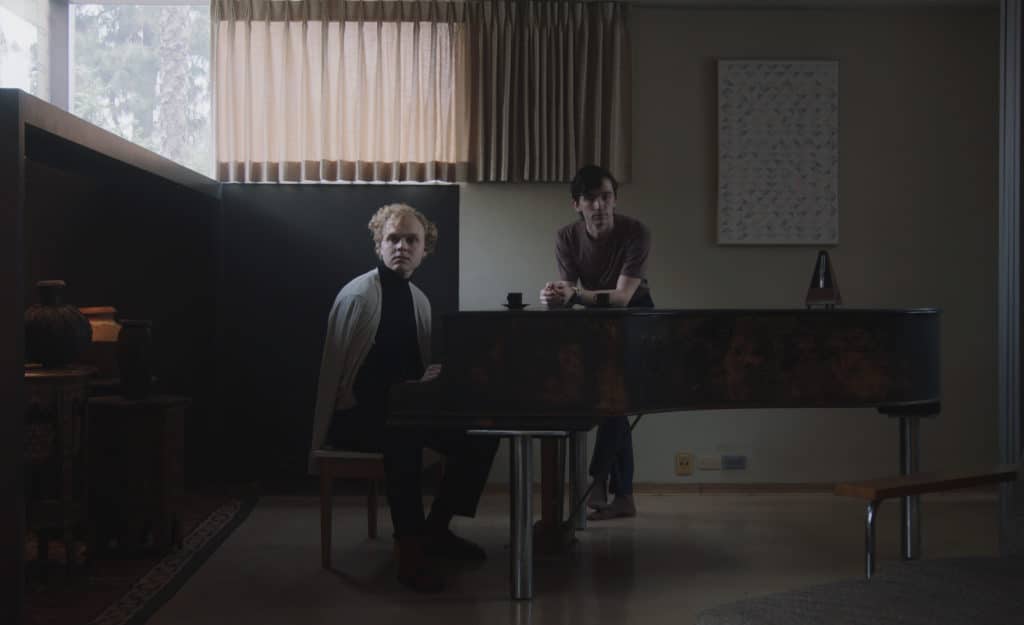
The Neolith (2020)

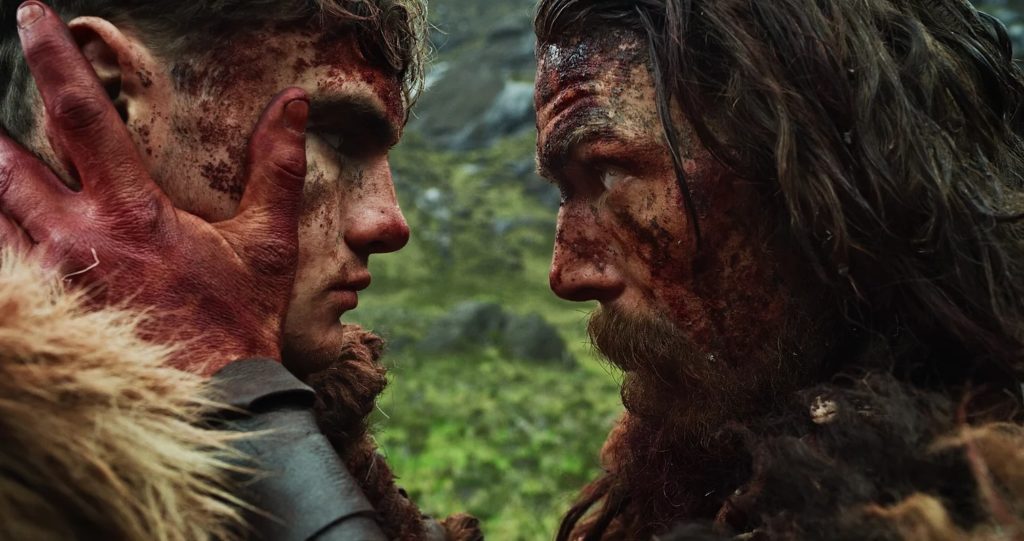
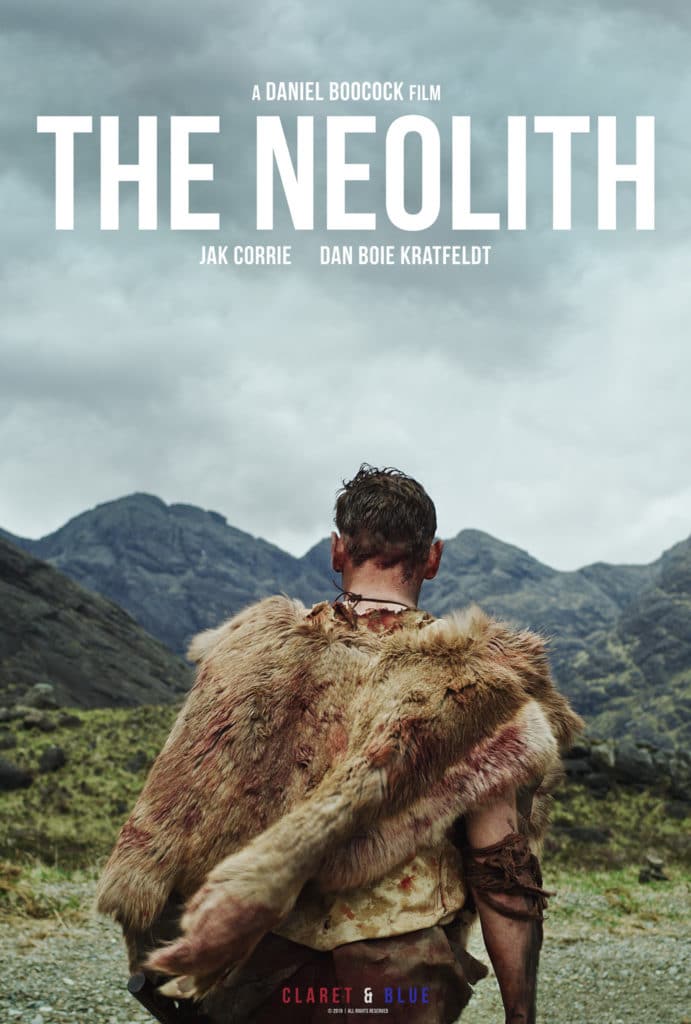
The Neolith is not a conventional piece of storytelling. Largely non-verbal, certainly not linear and difficult to place in terms of a time frame, it evades easy categorisation. Perhaps it works more as an allegory than it does as a yarn – and it’s a strangely-captivating experience, wonderful to look at and very immersive.

To the extent that we can talk about a narrative, the film follows four men arriving in a remote place, inhabited only by a handful of people. It looks very early medieval, perhaps, or it could be earlier – the film has some visual clues but by and large, this is a moment out of time. These men are dangerous: they have clearly come through some kind of battle or violence, so ingrained with blood and filth are they. Aggression is in their natures, and they seem unable to behave any differently, inflicting their dominance on those they encounter. However, a lone man is willing to fight back.

Director and writer Daniel Boocock namechecks Jungian symbolism in the film’s blurb; this is a fairly lofty aim for a thirty-minute film, true, but you do get something of those masculine archetypes in here. The incoming men’s motivations are not always clear, but their brutality is, and their lack of speech (the script is only a handful of lines long) helps the film underline that symbolism. This is also a staggeringly beautiful film, making superb use of landscape (I believe the film was made in Denmark) with careful composition in every shot. Lots of shots are done via drone, but this works and doesn’t feel like overkill, as it shows people being dwarfed by their stark surroundings – something important for the film as a whole. The use of colour and the use of natural light is incredibly evocative, too. The Neolith is reminiscent of Valhalla Rising (2009) in several respects, sharing with that film an emphasis on internal states and people almost mute against a backdrop of remote, savage terrain. That’s a compliment: Winding Refn’s vision is an impressive one and there’s certainly space for more of these kinds of atmospheric, allusive films. As an indicator of things to come, this really is something special.

The Neolith (2020) is available to watch for free, incredibly: you can check it out and find a link to the Vimeo here.

Raindance 2020: The Woman With Leopard Shoes

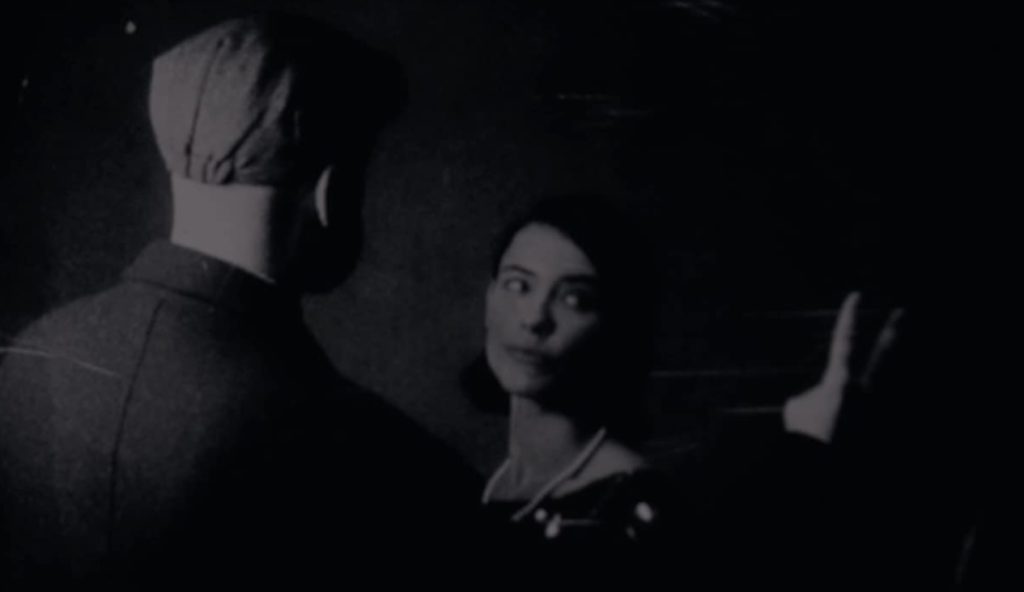
Now this is a first feature. The Woman With Leopard Shoes is a striking and economical piece of film, taking some elements of noir (though not as many as I was expecting, frankly) and skirting close to gothic horror in places, but all in all, offering up a crime thriller which makes good use of its running time. The film starts in total darkness, with a would-be burglar (Paul Bruchon) taking a job from a mysterious female, who instructs him on where to find a specific object – a box – in a remote house. His task is to retrieve it, and bring it to her. He agrees to the job, and arrives at the house as agreed. It’s all going well until, shortly after he breaks in, a whole crowd of people arrive at the property, a property which he understood to be empty; he has to quickly conceal himself in a simple enough, but genuinely tense sequence of events.

Our nameless burglar now has to try and navigate his way through this situation without being detected. There is no high action here, rather the film becomes an innovative little problem-solver, with the man having to use whatever information he can – letters, memos, postcards – to work out who is responsible for his predicament. No one is who they seem to be here; he begins to send and receive text messages, ostensibly with the person who hired him, but he needs to shift the power balance somehow as he is reliant on their better natures – whilst not being sure they even have one. However, a chance discovery alerts him to the fact that there is apparently far more to this situation that simply retrieving a box. It’s more important now that he does what he can to get out of this situation.

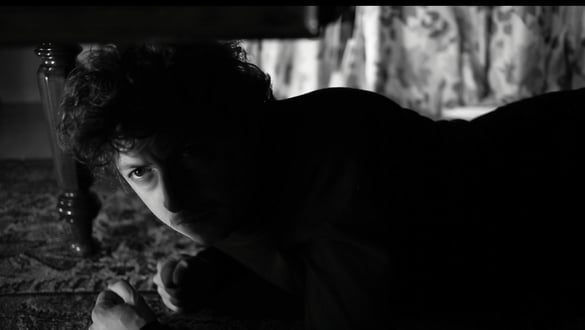
The struggle for information and knowledge underpins this film and keeps it nicely interesting, doling out its plot developments very effectively. Whilst this is a black and white film, and it does make use of some film noir visual touches, it emphasises the importance of technology in a way which marks it apart from noir, as much of the film’s developments come via text messages. There is almost no dialogue here whatsoever, and we spend the bulk of the film with our lone protagonist: other people are more often than not reduced to what the protagonist sees of them from whichever piece of furniture he’s currently hiding under – usually, it’s their feet only. All of this is a big gamble – refracting a storyline through a succession of body parts could have come across as terribly alienating – but it works very well. The back story comes together neatly, and we are not patronised. The use of English (all the texts are written in English) is somewhat more expedient than fully plausible, granted, but it’s a minor quibble overall.

With an incredibly small set and a voiceless central character with whom we spend nearly every available second, The Woman With Leopard Shoes achieves a great deal; it could all have floundered but it holds together very well. My heart often sinks when I see the same name down as director, writer, editor and so on, but it’s a baseless concern here: Alexis Bruchon has put together a well-paced, engaging and clever film.

Raindance 2020: Short Films

A selection of short films of potential interest to Warped Perspective readers…

We have always tried to champion the world of short film: these interesting calling cards often appear at film festivals and then rarely again, which is a shame – and unfair. A festival like Raindance won’t automatically be curated for horror tastes – not that this is necessarily a bad thing, either – but here are some of the shorts which I’ve liked so far this year.

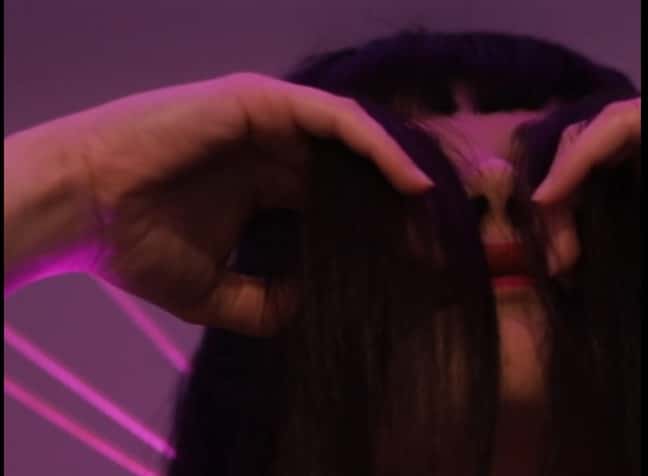
Into the Silver Ether (d. Vito A. Rowlands) is a suitably murky, ominous film about a young woman posing for a professional photograph at a studio. The as-yet unseen photographer scrabbling through existing photographs gives a clue that all is not as it seems here; the camera and photography become something monstrous, blending old anxieties about photos ‘taking your soul’ and other beliefs about what photos could reveal. This is a decent attempt at contemporary-looking film stock with a simple, but creepy atmosphere. Also a very atmospheric film, Enfer (d. Duilio Scalici) is more a triumph of creating something stylish against sizable odds, shot during lockdown with only those materials readily available to the director. It’s an artistic titbit, but very artistic at that, with beautifully-lurid colour and some nice shots of symbolic objects intended to point to the relationship between the devil and the world.

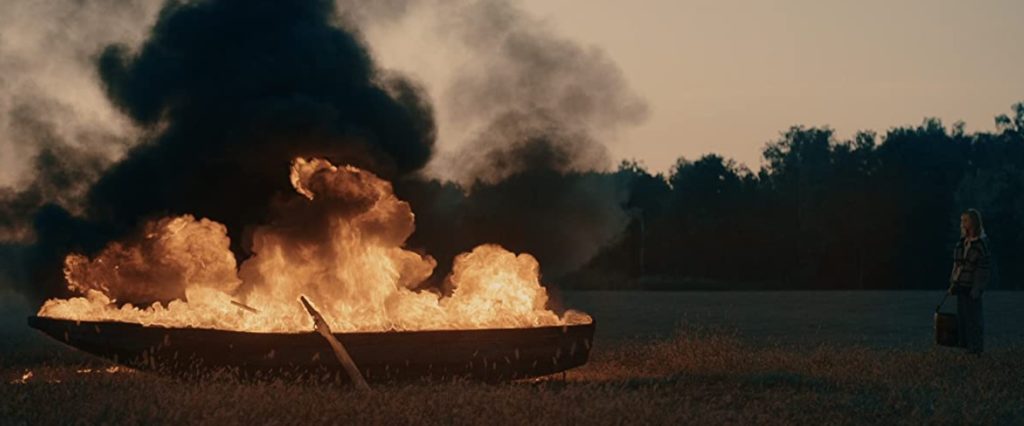
Were the last few minutes not such an unwelcome disruption of what came before, I’d be nominating Graindelavoix: St Anthony’s Fire (d. Sebastian Pancyzk) as one of my favourite short films of the year. This has a wonderful, folk horror feel – which was always going to appeal to me – based on the hallucinogenic effects of ergot, a wheat mould which has been linked to visions, witchcraft and the darker art of the medieval period. Whilst this is eventually revealed to have a 20th Century setting, it feels older than that because of its links to earlier time periods (and the visions themselves could just as easily be from an earlier century). The sea as a field of grain – or vice versa – looks incredible. Not a narrative as such, this is nonetheless very stark and beautiful.

Ghost Eye (d. Wouter Sel and Thijs De Cloedt) is an unusual animated short which successfully channels the Charles Bukowski style of commenting on the lowest ebb of urban life. Its narrator first recalls bullying a little girl called ‘Ghost Eye’, but coming unstuck, humiliating himself in front of others. This seems to have set the tone for the rest of his life, as a deadbeat taxi driver, sharing his home with various other outsiders and narrating their stories – which all happen to include plenty of ultraviolence and hallucination (it can’t be a coincidence that so many of the films I’ve been watching of late seem to have people in various altered states: 2020, mate). Ghost Eye seems to include a gag from The League of Gentlemen, but that’s no bad thing. This is a decently dour little film. Just a Guy (d. Shoko Hara), another animation, is a brief glimpse into the lives of three women who were all penpals with serial killer Richard Ramirez – with one of them (Eva O of Christian Death) rather more seriously involved than that, regularly visiting Ramirez at one time. The animated style here isn’t really to my tastes, but the inclusion of the letters themselves are fascinating, and there’s some insight as to what drew these women to him in their own words. I feel like I’ve spied into an uncomfortable personal history, albeit that the women involved are very frank and – at this point in time – equipped to reflect on their experiences.

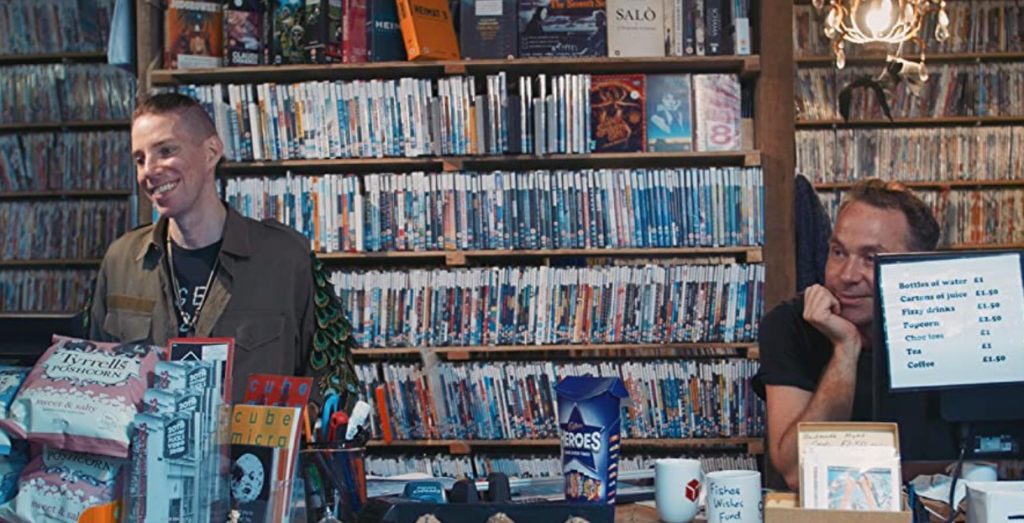
As a palate-cleanser from all of that, The Last Video Store (d. Arthur Cauty) is a heart-warming note to end on. This short documentary looks at the now-legendary 20th Century Flicks, now the world’s longest-running video store. I used to live in Bristol, UK – where the shop is based – and I remember it well. What I didn’t know is that Flicks houses around 20,000 films, beating even Netflix’s current total, and this film makes some great points about the ways in which the streaming sites have changed the ways we watch and enjoy cinema and TV. For its pains, Flicks once made a grand profit of £24 in a whole year. But it’s clear that the owners take their elected roles as custodians very seriously, and this is not something they plan to give up. Their survival is remarkable, their importance is vital, and long may they continue. I would happily watch a feature-length about this place!

Celluloid Screams 2020: The Stylist

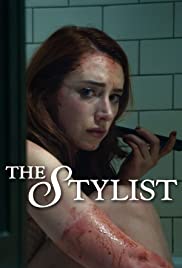
Using elements of fantasy or horror seem to allow a filmmaker to approach many subjects which may not come to light by more conventional means. One of these subjects is loneliness. On first consideration this may seem strange, but it’s in the realms of horror and fantasy that human loneliness is often brought into closest focus. The means may be bizarre, but unpicking an often warped tale to find authentic humanity underneath is often all the more rewarding and meaningful – as if it’s brought into sharper relief by this process. This is definitely the case with The Stylist (2020), a film which can trace something of its lineage back through a number of other horror films, but stands on its own as a study of painful isolation and alienation. The basic plot reads like something from the Grand Guignol, but in the telling, we find a genuine example of pathos.

Claire (Najarra Townsend) is the hair stylist of the title: she works in a small salon, she’s good at what she does, and she has an array of regular clients with whom she’s on good terms. So far, so good, but any meaningful connections to people beyond this seem to be lost to her. Left to her own devices, Claire turns the day job into an opportunity to hurt people; seemingly wanting to ‘claim’ something of her clients’ lives, she takes this literally, drugging them and taking their scalps, which she uses to pretend to be them for a few moments before retreating into a self she clearly doesn’t care too much for. We’re shown very early on that this is something she’s been doing for a while; there’s plenty of evidence, stashed in a small room of her house. The evident pain – rather than jubilance – this causes her helps us, as the audience, to scoot over the finer details of how she’s gotten away with this for so long, but this is a key way in which the horror/fantasy elements are held in check by a sensitive, often understated central performance.

It all feels like things are already heading for chaos; the film excels at a kind of impending doom which hangs over even the tamer, humdrum moments: buying a chai latte, doing the day job. However, things are brought into sharper relief when regular client Olivia (Brea Grant) gets in touch unexpectedly: she’s getting married, and as she’s been let down by the stylist she originally hired, could Claire please stand in? Claire is at first evasive, but when she agrees she gets quickly drawn into Olivia’s world by the simple fact that Olivia is a friendly, open sort of person. This leads Claire to become fixated on Olivia, both wanting to reach out and make a friend, and feeling desperate to retreat from a situation she has no skills set to deal with. Her brief moments of flattery and pleasure at being included quickly segue into self-loathing and anger; she is hyper-sensitive to rejection, and as she struggles to navigate, her emotional state grows worse and worse. From Olivia’s perspective, the road to hell is paved with good intentions.

With different handling, this basic premise could have looked drastically different on screen: it has enough recognisable elements that could have been played out as a straightforward, gory skit with dem crazy women caught up in the middle. However, it never feels like that. Claire’s pain, as she tries to navigate her interactions with Olivia, is incredibly moving. She captures that note of angst which surely everyone has felt during their lives and makes her personal sadness deeply involving; actress Najarra Townsend does much of this with looks and gestures, rather than lines of dialogue. Claire actually says very little overall, struggling to get most of her words out when in Olivia’s presence and doing her damnedest to make the conversation flow. She’s happier emulating other people than speaking for herself, and she would rather sneak into people’s lives than be openly invited, as if this strips her of the limited agency she has.

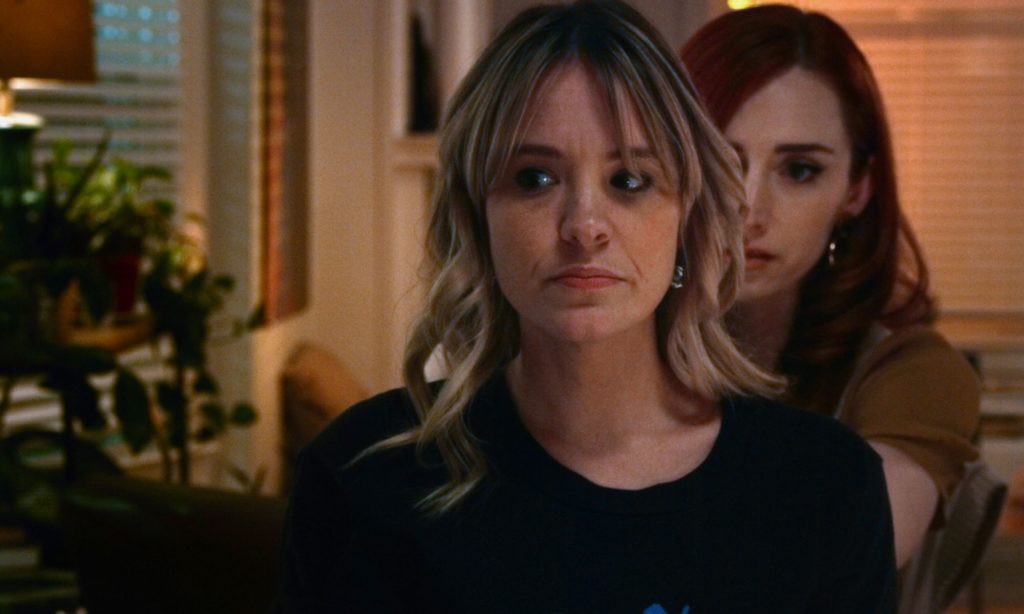
As for Olivia, she comes across as the sort of person Claire could have been, had she the sorts of connections and support which have helped Olivia get to where she is in her life. That we’re so often presented with both women at the same points in time via a split-screen underlines this, as well as affirming the feeling of a collision course being set. On the surface, they don’t appear so different: each is young, attractive and career-driven. Claire’s presentation as a stylish, well-dressed woman could give the lie to the idea that she could ever be wracked with self-doubt and unhappiness, but it’s only moments before we see what her very real unhappiness causes her to lash out and do. Claire is continuously humanised by being so often the only person in shot, too. To some extent, the film reminds me of May (2002), another sensitive story about an isolated, flawed young woman trying to find her way through an often unfeeling world, but if The Stylist has any clear precedent, to me it feels like Maniac (2012). Not only is the modus operandi the same – there’s the same sense of a sympathetic, withdrawn loner being pushed over the edge by a person intending kindness, rather than harm. In both films, this feels genuinely tragic.

The Stylist is a thoughtfully-composed horror story, as compassionate as it is grisly, with careful, plausible characters and an ending which feels both incredibly OTT and somehow inevitable. Short films don’t always necessarily work when expanded to feature-length, but it works very well here: it’s definitely recommended.

The Stylist (2020) screened at the Celluloid Screams Horror Festival in Sheffield, England.

Celluloid Screams 2020: Boys From County Hell

The provenance of Bram Stoker’s novel Dracula has very nearly led to warfare down through the years: every researcher and author with an axe to grind has shown themselves willing to fight over their take on Stoker’s inspiration, and to what extent he drew upon Transylvanian history and folklore. Well, it may complicate matters, but what if he drew some inspiration from a lot closer to home? Irish folklore has its own bloodthirsty revenants, and in Boys From County Hell (2020) this is used to great effect, generating a fresh-feeling vampire mythos which works very well as a horror comedy.

So it seems that Stoker may have picked up some pointers from visiting the Six Mile Hill area, which boasts a rumoured vampire grave – a cairn which locals claim contains the body of Abhartach, a nobleman who came back from the dead to demand blood from the locals. Only pinioning him underneath heavy stones stopped him from returning over and over. Or at least that’s the legend: locals Eugene (Jack Rowan), Claire (Louisa Harland), SP (Michael Hough) and William (Fra Fee) couldn’t care less, other than their local is a hokey place called The Stoker, and they get to wind up tourists who are in town to visit the grave. Perhaps it’s fair to say they’d have liked Stoker to have given their kip of a town a bit more credit, but there we go.

Life would no doubt have ticked along the same, but Eugene – who’s a little averse to hard graft, shall we say – is asked (really ‘told’) by his father Francie (Nigel O’Neill) to work with him in a big upcoming construction job, completing the local by-pass. This new road is a controversial one, already hated by the locals, as it’s scheduled to cut straight across the cairn, devastating what little tourist trade they have and putting William’s family off their land too. Eugene is none too pleased either, but he wants to prove himself, so he’s the one who takes it upon himself to knock over the ancient cairn.

You don’t need me to tell you that Bad Things Happen as a result. You can work out the basic premise of Boys From County Hell, but what remains to be seen is how the next part of the journey gets handled. Well, it all starts with a nightwatchman who disappears from the site, the mysterious replacement of the cairn, and then a tragic post-pub accident sends an already bizarre situation into freefall. The group of friends have to put all their effort into working out the strange rules and codes of the phenomena they encounter; refreshingly, it doesn’t just emulate the vampire lore we know from elsewhere, and making the most of this is one of the film’s strongest points. In common with last year’s Extra Ordinary (2019), Boys From County Hell is very good at natural, perfectly-pitched dialogue. It’s less about the overt jokes and more just the way these old friends generally speak to one another – irreverent and painfully honest, all whilst trying to make sense of what’s going on. The interaction between the characters makes the unfolding madness a lot more plausible than it might have been, as their respond in understandable ways, all whilst delivering some very, very funny lines. It also helps the dial the action up and down as needed, too.

The pace throughout the film is about right, never rushed or forced, despite the film giving itself a lot of work to do plot-wise. If anything, I was expecting a bigger, showier pay-off before the credits rolled, but all in all, I still enjoyed what was given and felt that it worked. Launching into new on-screen myth-building is no mean feat, but Boys From County Hell does enough to distinguish its own rules of the game here, with good excuses for gore and well-handled SFX.

Ultimately though, this is a film with heart, and its friendships and family ties come across very naturally throughout. With no sentimental excursions, you still get your character arcs and there’s plenty of human interest to get to grips with here. It’s just not waved under your nose in such a way which would detract from the madcap creature feature unfolding. As I’ve said many times, horror comedies are a risky business as it’s so easy to lose either the horror, or the comedy, but Boys From County Hell is a great laugh throughout, and a solid piece of entertainment.

Boys From County Hell screened at the Celluloid Screams Horror Festival 2020.

Celluloid Screams 2020: My Heart Can’t Beat Unless You Tell It To

My Heart Can’t Beat Unless You Tell It To (2020) was quite rightly described to the waiting festival audience as ‘sombre’. This is a tale of a family unit isolated by extraordinary circumstances, in several ways reminiscent of We Are What We Are (2013), with the same carefully-considered gaps in the narrative, never handing the audience a full, perfect explanation of events. And, just like that earlier film, it’s all incredibly involving and engrossing. However, as sombre as it is, My Heart…isn’t a colourless, or emotionally flat film. It has its moments of happiness and vindication, as well as moments of high action. It’s a carefully-realised piece of work altogether, one which makes you care deeply about its characters and their fates.

Siblings Dwight (Patrick Fugit), Jessie (Ingrid Sophie Schram) and Thomas (Owen Campbell) are all at various stages of adulthood, with Dwight the apparent de facto head of the household, and Thomas – as the youngest – still very much being looked after by his big brother and sister. But there’s far more to it: on a regular basis, Dwight has to go out, dupe and then deliver people – the kinds of people whom no one would miss – back to the threadbare homestead. There, Dwight and Jessie collaborate to drain them of their blood, blood which is used to feed their ‘sick’ younger brother.

Why? This is one of the compelling omissions in the narrative. It isn’t made clear if there’s a supernatural, or some kind of physiological explanation for Thomas’s ailment. The illness, as it’s referred to, simply is what it is, and the older two have to deal with it. Dwight, however, clearly finds the whole process repellent. Jessie rationalises it in a phenomenally cold manner, but she’s not without warmth outside of this extraordinary circumstance, often demonstrating love and devotion for her family which – almost – balances her utilitarian cruelty. This intense pressure upon both of the older siblings is storing up future conflict, though, with each of them having ideas about a life beyond the confines of the family in some way, shape or form. When Dwight is found to be making vague plans to go somewhere, do something with an outsider, Jessie is quick to take steps. From her perspective, she cannot cope with Thomas and his needs on her own, and relies on Dwight. Yet her behaviour is deliberately malevolent, and the domestic situation soon deteriorates. Thomas, too, wants a life outside his four walls, and fantasises about friendships.

The thing about these three is that they prove the old adage, ‘you can’t choose your family’, only they take it to a grotesque extreme – though without shedding the very real, very poignant emotional responses to their predicament. Each of them is in their own way lonely, feeling the effects of isolation. Jessie, perhaps most of all, seems resigned to her lot – but then, her emotional state manifests itself in other ways, and her behaviour becomes more desperate and erratic as she senses the jeopardy she is in. The most tragic thing about this film is in how each of them attempt to get to know other people, and it’s an urge which has to be abandoned. Their behaviour is monstrous: by deliberately targeting the most vulnerable, they are simply rationalising the irrational. But are they monsters? I would argue not. Their sadness and introspection indicates that there’s more to them, and that they have become used to such a horrific way of life out of sheer necessity, even if events are by this point conspiring to enforce a change. A sense of impending doom hangs over the entire plot, but the worse it gets, the more humanised the characters become.

It’s quite fitting that this film has appeared during a time of such complete isolation for many people out in the real world, and no doubt some aspects of it will chime differently for people who have had to spend their own enforced time at home, but it would work as effectively at any time. My Heart Can’t Beat Unless You Tell It To is an unflinching look at the lengths people will go to for family ties, but it’s also a story about loneliness, a story which you know is going to collapse in on itself at some point. The presence of some minor glimpses of light are a surprise, but certainly deserved – though without changing the fundamentally dour dynamics here. Superb, subtle performances underpin the whole, with a special nod to Patrick Fugit as Dwight – your heart could break for him, honestly. This is an accomplished first feature from Jonathan Cuartas, and another of this year’s great examples of the emotional depths genre cinema can reach.

My Heart Can’t Beat Unless You Tell It To (2020) screened at the Celluloid Screams Horror Festival in Sheffield, England.

Celluloid Screams 2020: Honeydew

Honeydew is a film which represents certain challenges for a reviewer: this is because to describe anything of its plot – in a linear kind of way – would very likely be to misrepresent the vibe and style of the film. On paper, it fits quite neatly in the category of ‘backwoods horror’ which reminds us that, off the beaten path, things can go hideously awry for outsiders. So far, so familiar. However, the journey taken by the film along the way is anything but straightforward. One of its singular successes is in how ‘off’ the narrative feels, right from the beginning. This is a compliment, considering this was clearly the intention; the unsettling, unsettled feel is well sustained, too, and it’s the factor which really distinguishes the film from others in the subgenre with – let’s face it – largely similar plot trajectories.

We begin with a couple which seems anything but happy, rather like the marrieds in Koko-di Koko-da (2019). Rylie (Malin Barr) and boyfriend Sam (Sawyer Spielberg and yes, he’s a relation) are headed out into farm country for the purposes of research; Rylie is not – as her first scene suggests – just someone given to watching very unusual YouTube clips, she’s a doctorate student specialising in botany. More specifically, she is researching the impact of Sorghum, a fungal wheat infection which can cause damage to crops and toxicity in the crops themselves, harmful if consumed by livestock or humans. Sam is along for the ride as her assistant, but as a wannabe actor, he spends more time practicing his lines than he does speaking to his girlfriend. Already at this point, the rather obtuse relationship between them feels rather unnerving; a relationship breakdown feels like it’s hovering in the air. Spielberg does a good job in making Sam come across as hideously self-involved; the atmosphere is very strained, and Rylie isn’t a hell of a lot better. Matters don’t improve when they decide to camp overnight, and the farmer whose land they’re on tells them they need to find somewhere else. Feeling that they don’t have a lot of choice, they pack up.

Things veer a little into trope as we then run through the whole car trouble/phone trouble shtick, but the pair decide to enquire at a nearby house whether they can use their phone. The lady, called Karen (Barbara Kingsley), who eventually answers the door is pleasant enough but a little – distracted somehow. She invites them in and immediately sets about making them something to eat, and she introduces them to her non-verbal adult son Gunni too. Normal conversation is not a feature here. It’s interesting that Barbara Kingsley had a role in David Lynch’s most linear and accessible film The Straight Story (1999), as here’s a film which seems to be trying to out-Lynch Lynch in terms of aesthetics and tone. Everything feels wrong somehow, the house trapped in an earlier decade and so rammed with analogue tech, that this begins to feel like a character in its own right, something to placate the inmates of the house with its sheer archaic weirdness. Popeye keeps up a continual hum in the background of this film – you may never think of old cartoons in the same way. But, more specifically, the food and drink Sam and Rylie are offered seems to affect them somehow. Sam in particular – perhaps understandable given his low-cholesterol diet of recent weeks – can’t get enough of it, and seems to adapt quite readily to Karen’s warped hospitality, even sneaking around the house to eat some more. I hope I’m not spoilering to affirm that things go from odd to odder for these unwitting guests, though with food as a kind of weird intermediary, for reasons which become (somewhat) clearer.

Honeydew shows us some of its cards very early on by mentioning the impact of ergot poisoning on the psyche; it maintains this uneasy, queasy atmosphere throughout, doing a good job of crafting something hallucinatory – something which isn’t easy, and is aimed at and missed by many indie filmmakers. By using very rapid cuts, giving the feeling that we are only granted a few tantalising seconds with our characters before being thrown into a new scene, the film makes the audience feel as out of the loop as the characters must feel. There are other aspects which contribute to this: the limited dialogue, the sound-layering, that overwhelming soundtrack which combines choral elements with the ominous sound of metal being drawn across metal, like blades being sharpened. This, wrapping around a disjointed story about two dubiously-connected characters, enables us to immerse ourselves in this world, and the pay-off, whilst not hyper-gory, is a suitably unseemly way to draw things to a close. If the denouement isn’t a million miles away from the likes of American Gothic (1987) with its own, crazed, isolated family unit (and of course there are many, many others) then we can still certainly say that Honeydew’s crowning glory is in its atmosphere. It crowds the senses, in a compelling, unsavoury and very sinister way.

Honeydew (2020) screened at the Celluloid Screams Horror Festival in Sheffield, England.

Blood in the Snow 2020: Hall

I’ll be honest; I’ve been dreading the inevitable ‘lockdown horror’ boom, and it’s something which is already happening: bored folks with cameras riffing on ideas about coronavirus is unlikely to bring us too many in the way of classics. Happily, Hall (2020) is not of this stripe. It’s born of coincidence rather than opportunism, a film which happens to ponder the implications of a widely-spreading virus, via the microcosm of a handful of well-drawn characters. One or two puzzling moments aside, this is a successful and tense affair which achieves a great deal with a tiny cast and limited set. It may well benefit, in some respects, by getting its release midway through a real pandemic, but it would just as easily stand on its own had it appeared a year earlier.

We start in a hotel corridor, the camera shot fixing on a young woman fighting for breath, evidently suffering from some kind of illness; an arresting, oh-so-slow pan across the rest of the hall reveals other sufferers. It seems, given that life seems to have ceased to be normal very rapidly, that this outbreak happens fast and very violently. The action skips back in time by a mere four hours: a young family, father Branden (Mark Gibson), mother Val (Carolina Bartczak) and eight year old daughter Kelly (Bailey Thain) are listening to news on the radio of a fast-spreading new strain of flu. Deep in conversation, they almost hit a woman crossing the road: and here’s our first link-up; it’s one of the sufferers from the hotel corridor. Val’s efforts to apologise to this woman prompt her to help the heavily-pregnant woman up to her room, as they’re checking in to the same place. A quick faux pas on Val’s part reveals that the woman, Naomi (Yumiko Shaku) has left her partner; it’s a situation Val can identify with, as Branden soon reveals his passive-aggression. Did I say passive-aggression? Add aggression-aggression to that. Unsurprisingly, Val has escape plans of her own – and so a horrendous situation, for two individual women, is about to be placed under the additional, extraordinary pressure of a particularly virulent outbreak of disease.

There really is a lot to commend here. This is a visually-attractive film which blends its contrasts: the soft light of the hotel rooms shifts to close-ups on worried, pained, lined faces; in its meanings, too, the hotel shifts from a sanctuary to a gaol, and not always necessarily under the sway of the virus. Comfort begets confinement. And misery is layered on misery here; as much as I tire of the ‘pregnant woman’ motif as a shortcut to generating concern about female characters, Naomi has enough about her to make her sympathetic. Likewise, Carolina Bartczak does an extraordinary amount with what she’s given, and in both of these cases, troubling backstories are interwoven with the horrific, unflinching present. Men in this film – both present and absent – are the worst of their kind, all ego, narcissism and the steady drip, drip, drip of control. Without a virus, this is still unsettling stuff. The disappearance of Val and Kelly from the present moment in the film is surprisingly affecting; the writing and direction of the film does enough to make us care. Perhaps the little girl’s ebullience is a little hard to believe given everything taking place between her parents, but then kids are as capable of masking their feelings as adults.

The virus itself is, for the most part, surprisingly ambiguous: although it looks nasty, it never segues into World War Z and it keeps things sober and sombre, by and large. (Where the action does take up a smattering of gorier, flashier moments, the film is the weaker for it, as it feels like tweaking a style of horror which needs no tweaking). Likewise, the underdeveloped character who appears and departs about midway through may add a layer to the plot, but I felt it was unnecessary. In the case of Hall, its psychological horrors are its key strengths.

Horrors about outbreaks are nothing new; perhaps we can appreciate them on a different level at the moment, but a good film of this kind will always stand on its own. Clearly, director Francesco Giannini, despite this being his first foray into the genre, has made the most of his extensive experience in film and created something definitely worthwhile for fans of slow-burn, subdued horror.

Hall (2020) will appear at the Blood in the Snow Film Festival at the end of October. For more information, please click here.

Blood in the Snow 2020: Bloodthirsty

Amelia Moses’s work ethic is certainly to be admired. I’ve not long since reviewed her feature Bleed With Me, and yet it seems that she’s released a second feature this year – Bloodthirsty, another worthwhile film which doesn’t quite match Bleed With Me in terms of warped interpersonal dynamics, but still has much to recommend it. True to the film’s title, we commence with a bloody scene where musician and songwriter Grey (Lauren Beatty) licks blood and gore from her hands; okay, it’s a dream, but it seems she’s been suffering from these kinds of dreams for a while, seeking medical intervention to hold her dreams and hallucinations at bay. In the midst of all this, she’s on the verge of recording her second album and panic-stricken that it isn’t going to be a hit. Luckily for her, she gets contacted by the legendary – or should that be notorious – producer Vaughn (Greg Bryk), who wants to work with her. She’s willing to overlook rumours of his involvement in the death of a singer-songwriter back in the Nineties in order to make a great record. Alongside her partner Charlie (Katharine King So) she heads out into the boonies to find his home and studio.

Vaughn’s first concern is to get Grey past her writer’s block, something which she is really struggling with. He has some unorthodox methods, and he insists that she ditches the pills – using her state of mind, rather than fighting against it. This quickly brings Vaughn and Charlie into opposition, as she’s seriously concerned about how the creative process is impacting upon Grey, but Vaughn is at least helping progress occur. He and Grey develop a working relationship of sorts, underpinned on both sides by revelations of past traumas, but key to all of this is Vaughn’s revelation that he knows there’s a hidden, primal side to her that she needs to learn how to use. Under his influence, Grey begins to change, her visions growing ever more visceral.

Bloodthirsty is another phenomenally-attractive film, with clever use of colour and light throughout. Often using a muted colour palette, with lots of warm light and firelight, glimpses of bright reds take on a symbolic significance, though without this being overpowering or overplayed. The music itself plays a big part in the film, which won’t be for everyone of course, but of its kind – soulful female solo singing, a little like Fiona Apple’s kind of style – it’s pretty good. Perhaps it’s too soon to spot themes in Moses’s work, but there are some similarities to Bleed With Me that I can see: the use of dreams, the wintry wilderness setting, the damaging menage-a-trois and the very sparing use of blood. Although the film opens with a hallucinatory and bloody sequence, there is not much gore here: a little goes a very long way. (Small, fluffy mammals don’t come off so well here, either.)

By and large, Bloodthirsty offers a slick and subtle take on a classic horror theme, bringing its own ideas and own style to bear upon it. The impact of ambition, and the voraciousness of the creative process are given a fantastical examination here: at first, the unwitting neophyte who arrives in a remote house presided over by a mysterious stranger, who first wrote to the visitor, resembles the Dracula story, but it is never straightforward after this point, disrupting both the ‘hapless victim’ and the ‘muse’ ideas. The film is at its absolute best when downplaying (or avoiding) SFX; I’d take even less than the film uses quite happily, as it’s when it begins to show more that it suffers its only weak moments and begins to head down the same trammels as many other pre-existing films, whereas outside of these scenes, it really does feel like a fresh take on the mythos. But overall, Bloodthirsty does its own thing in its own way, with Amelia Moses again showing herself to be one to watch. Bloodthirsty is an aesthetically- and tonally-pleasing horror film with many worthwhile aspects, and there’s much to admire here.

Bloodthirsty (2020) will screen as part of the Blood in the Snow Horror Festival.

Blood in the Snow 2020: The Return

Many supernatural horror tales make the audience wait for any sort of ‘big reveal’, opting to use sound design, blink-and-miss-it visuals and false starts, tantalising the viewers before offering up the big scares. This is not the case with The Return (2020), a film in which the opening scene plunges straight into a nightmarish childhood…dream? Recollection? In any case, it’s something finding its way into college student Rodger’s present, ahead of a trip back home; his father has lately died, and it’s down to Rodger, as the last living member of the immediate family, to tidy up his affairs. Alongside girlfriend Beth (Sara Thompson) and old friend/third wheel fit for a Penny Farthing, Jordan (Echo Porisky), Rodger (Richard Harmon) and the others head back to the old family home. Childhood trauma has been signposted strongly and early; it only remains to see how this will all play out.

Upon arriving at the old abode, a solicitor confirms with Rodger that his father has left him everything – the house is now his. To his great surprise, in the process of sifting through the house, Rodger uncovers a psychiatric evaluation from his childhood; he has no recollection of this, but it seems to have taken place around the time that his little sister Amelia died. The house has plenty of other oddities. Strange shadows, shadowy figures, and other phenomena which would have most people running for the hills – yet Rodger and co. are now more interested in filling in a backstory he never realised he had. At the funeral, Rodger realises that one of the attendees is the child psychiatrist named on his psych evaluation: he makes it his business to speak to this Dr. Roberta Cox (Marina Stephenson Kerr) in the hopes that she can help him to unravel a childhood which seems to have been littered with bereavement – his mother, too – and disappearances. It gets worse; it turns out that he had an imaginary friend at a young age – of whom he was absolutely terrified. All of this is unfolding as the ‘haunting’ (let’s call it that) grows increasingly intense and malignant.

The Return moves along at a largely steady pace for its first hour or so; realising, no doubt, that it has frontloaded its scares, it never bothers to try and hold back on them after this point: the manifestations are pretty full on, albeit that the figure which appears typically looks very…typical, all long black hair, long limbs and glowing eyes. This manifestation does shift its form at a later point, for reasons a little unclear, but it does at least add to the range of effects and scares on offer. By and large, the film dispenses with the kind of denouement which viewers may expect from a film seemingly choosing to take its aesthetics from other ghostly yarns. It shifts more into the mode of a mystery to solve, using a range of flashbacks, dreams, hypnosis and found footage (if hacking a computer file can really be classed as ‘found footage’). It is strange, though, just how well Rodger and his friends seem to take some pretty full-on phenomena; the old ‘thing glimpsed in the mirror’, for example, hardly raises an eyebrow, even when this is one loud, overt spectre. Even at its worst, Rodger seems to find it all more of a mild annoyance than a terrifying experience, even when it reaches its absolutely most serious.

There are some other decisions here which I found baffling; the whole girlfriend-plus-best friend trio feels like it goes easily awry, Rodger’s relationship with his girlfriend soon rendered down to a hastily-treated plot device. But it’s the presence of Jordan which both baffled me most and stretched the script to its absolute thinnest; I’ll not blame actress Echo Porisky for this, whom I’m sure is acting the part as written, but Jordan is a very strange character indeed. At first she seems extraneous, presumably meant to be light relief in some fashion as Beth and Rodger go their own way in their relationship. But her growing role in events as they unfold shifts her significance without making her more plausible, and urges more and more unlikely or unfathomable dialogue from her; when she makes Rodger promise not to leave her alone to face the house’s phenomena by herself, she does so by telling him, ‘if I take a dump, you’re coming to stinktown’. This, and other lines like it are a bizarre fit, to say the least.

So the film – batty dialogue and all – ticks over the hour mark, unfolding its mysteries in a timely way up to this point. We know there’s something terrifying and malign in the house; how the film attempts to distinguish itself from the old ‘unquiet spirit’ shtick is, to give it its due, ambitious. However, it necessitates a rapid increase in the exposition which both moves away from what has come before and yet matches it in just such an overblown style. The last thirty or so minutes of The Return might add a new dimension to the meaning behind the film’s title, but it all happens very fast and sacrifices clarity, veering wholesale into Bad Science in an effort to depart from Generic Ghosts. How you will feel about all of this will depend entirely on your reserves of patience for surprise endings and how busy you can take your last acts, though there is at least a nice, low-key last scene.

The Return seems to offer us a weighing-scales of sorts, with the heavy use of supernatural tropes at the beginning of the film eventually balanced against the film’s unexpected finale. There are issues here, but seeing out an about-face in the plot which at least shows ideas and drive is no bad thing I guess, seeing as this is a first feature by director and co-writer Bj Verot; some script edits and some reining-in of the sheer amount going on in any next venture would no doubt make his wealth of ideas read just a little clearer.

The Return (2020) will feature at the Blood in the Snow Festival. For more information, please click here.

Eraserhead 4K

Eraserhead is a film which has been around for over four decades now: its influences can be traced down through all of those decades, in projects by creatives as disparate as Frank Henenlotter and Peter Gabriel (I’d argue, anyway). So it’s difficult to know how to introduce the film, assuming anyone reading this feature hasn’t already seen it. I’ll try, but no promises. It’s a definite oddity, born out of film school and art school ‘let’s try it’ mentalities, experimental to the point of more or less ditching dialogue in favour of prioritising fantastic photography and aesthetics (its script was a mere 22 pages long). As such, a film like this is never going to be for everyone. Looking back, it feels like as much of an anomaly now as it must have then. In an era of gaudy exploitation cinema and lurid colour, it opted for black and white; in an era of extremes where extreme cinema was balanced by box office schmaltz, it eschews both approaches. If it has anything in common with anything, then I guess it’s Godard at his most surreal, but again – that hardly comes close either. How is this going so far?

So much as Erasherhead has a plot, it follows the everyday existence of one Henry (Jack Nance), a printer at a factory, though he’s ‘on vacation’ when we meet him. Some vacation: he knocks around on the outskirts of an industrial sprawl, the only flora sprouting haphazardly out of parts of his apartment. He’s dating a sweet girl called Mary (Charlotte Stewart) but a meal round at her and the folks’ goes badly awry when it transpires she’s recently given birth to a…well, she’s given birth to something, and poor Henry is apparently the father. This hastens their union, and they both begin doing their best to look after the little critter, its continual mewling soon driving a wedge between them. Still, at least there’s some escapism for Henry, in the form of a lady who lives behind the radiator and performs songs. Is this heaven? Possibly. Up against the other settings here, it’s as good as it gets.

That such a humdrum yarn – albeit one with absurd twists to it – should still be so engaging is testament to the film’s strangely-involving feel. It moves quite languidly through whatever action it offers, but then pauses to ponder over some meticulous, if inexplicable little detail. We end up pondering over same. In this film, you can chart the development of Lynch’s intense, fever-dream kind of emphasis on internal states; things always feel about to lurch into the ugly or incomprehensible, a dream which starts one way but spins off in another. Then, a moment of ebullient insanity will pop up, and the mood lightens, temporarily. All of this takes place against a backdrop of soulless urban misery, literally overshadowing the chintzy remnants of a 1950s lifestyle. Whilst all of this is going on, Henry looks as confused and nervous as we are, a kind of everyman in a mad world. The theme of male anxiety, particularly with regards to child-rearing, is written all over this film and it’s almost touching, even where the film veers into body horror. Lynch’s daughter Jennifer has suggested that her own difficult babyhood (she was born with club feet which needed surgical correction) fed into the Eraserhead vision, and its wide-eyed protagonist’s struggles with the baby’s needs. It’s possible, but then again, the ratio of real life to film will probably never be known decisively.

This Criterion Collection restoration has been done with the director’s blessing: it looks great, with sharp definition, rich blacks and heavy shadows. Nothing is washed out, everything is punched in. However, in those scenes where there is some film grain, this hasn’t been destroyed and all in all, this transfer is good quality. It sounds great, too, albeit that its proto-industrial soundscape is almost unbearable in places. (Good. It should dwarf everything.) Alongside the feature, there are a number of Lunch short films included on the release. These date from the 1960s, some not much more than fragments, and some more fleshed-out. We get: Six Men Getting Sick; The Alphabet; The Grandmother; The Amputee, and Premonitions Following an Evil Deed. There is also a section containing ‘supplements’, archive features which include an 85-minute ‘Making Of Eraserhead’ feature, narrated by Lynch himself. The package looks great, the film is timeless, and if you’ve put off purchasing Eraserhead so far, then this would be the definitive buy.

Eraserhead 4K will be released by The Criterion Collection on October 19th, 2020. For more information and to pre-order (UK) please click here. For US orders, please click here.