Frightfest Glasgow: Out of the World (2020)

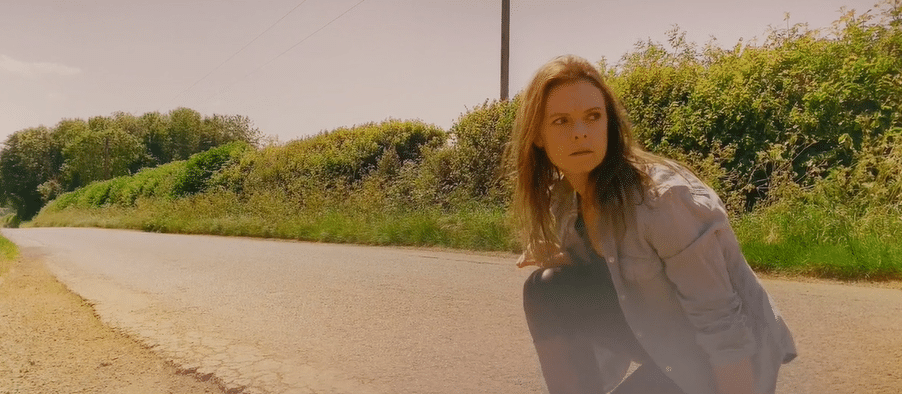
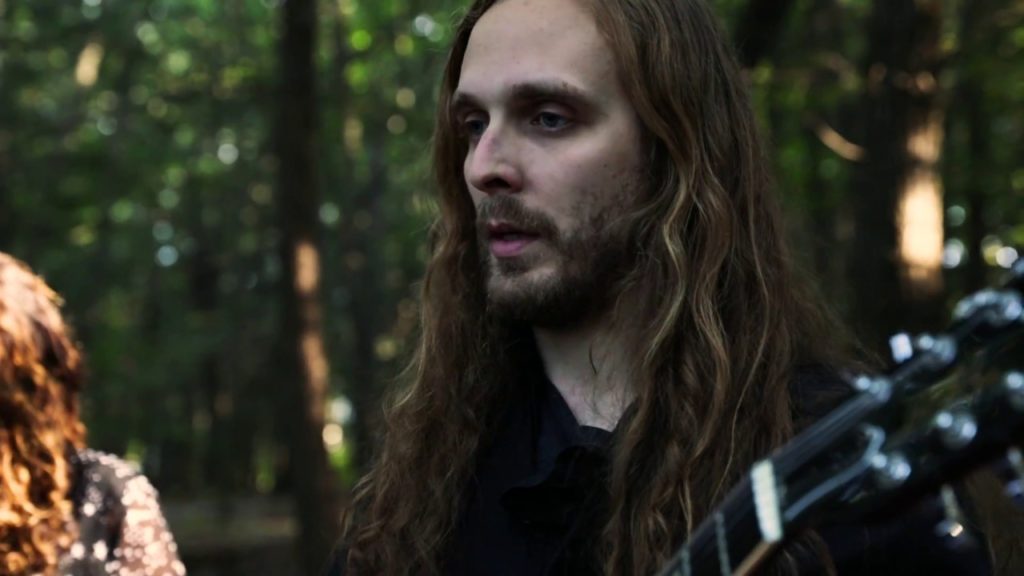
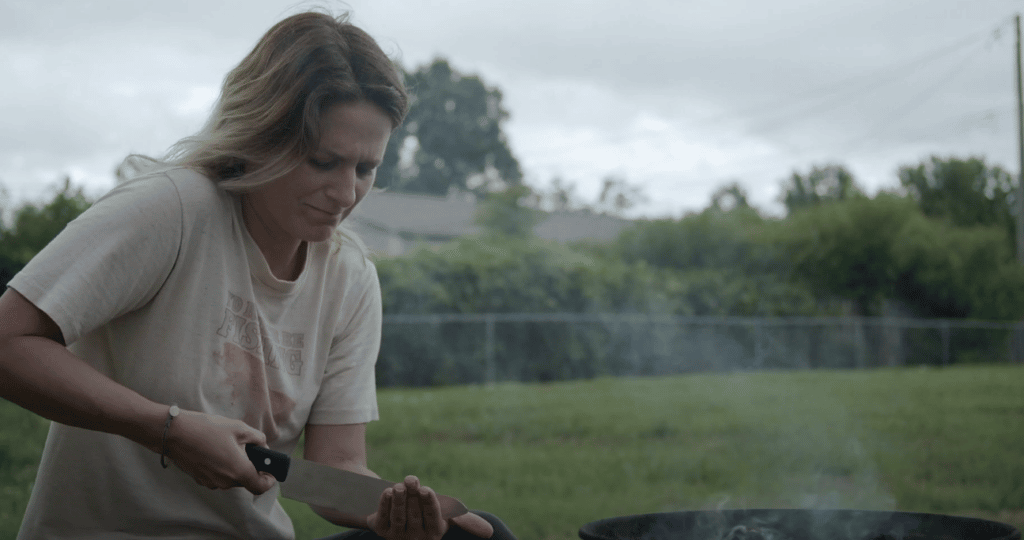
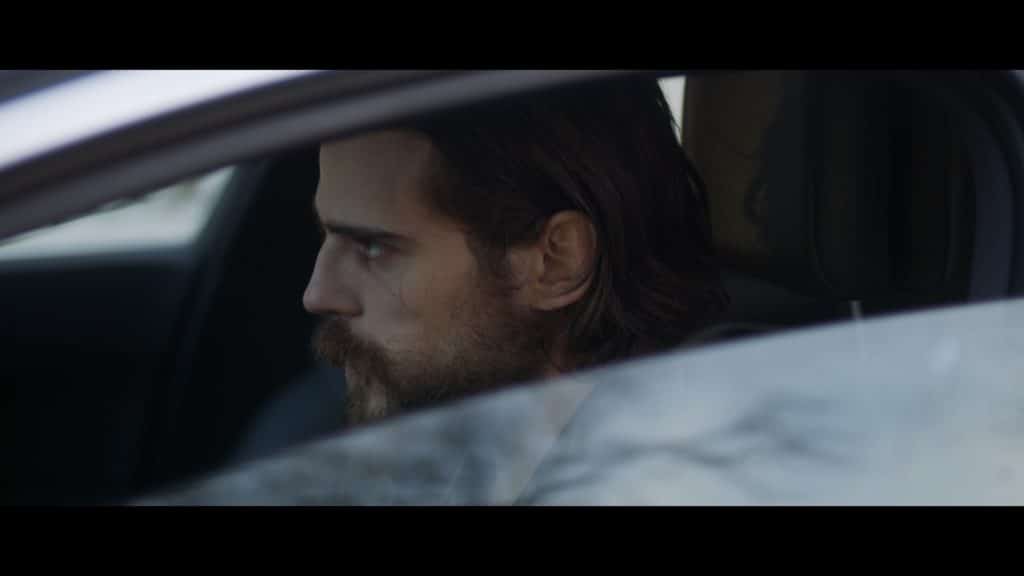
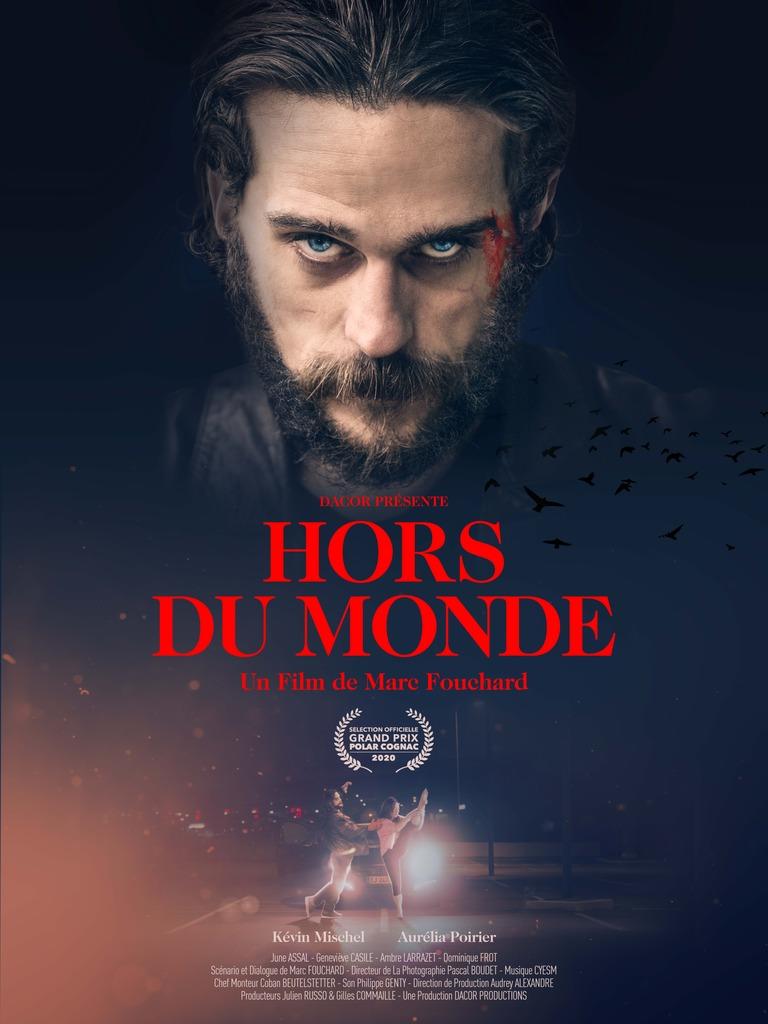
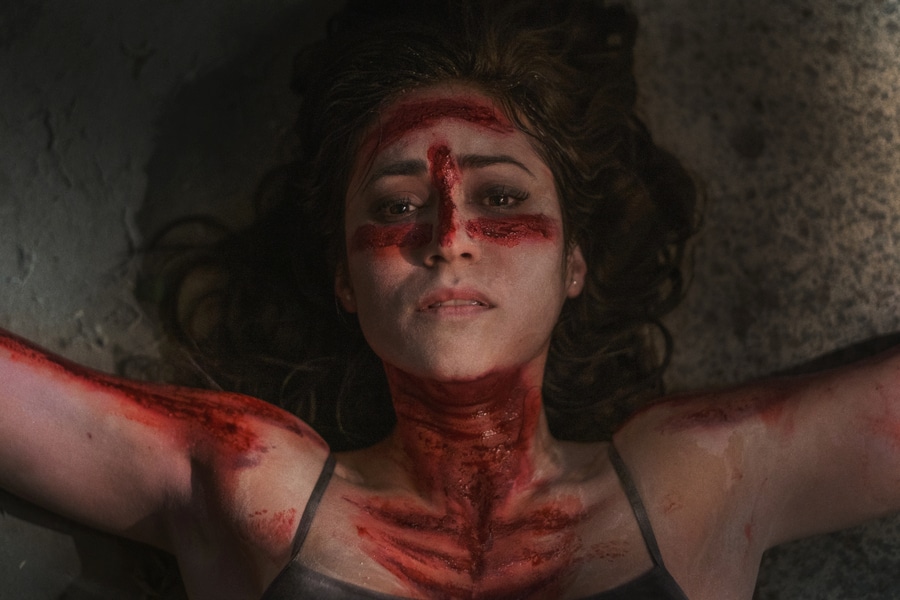
Out of the World (2020) was the second film of the weekend to open on a man carefully cleaning a knife; however, tonally, this film couldn’t be more different to Vicious Fun. It’s immediately made clear that this is not to be a standard-issue villain, but even though director Marc Fouchard humanises his lead character in a series of slow, deliberate ways, he’s no less fearsome, no less repellent, ultimately. It appears that this young man (unnamed until almost the film’s close) is living out of his cab; he spends his spare time making music; he has a succession of regular customers, who seem to like him. This is a brooding character who manages to look aloof and distant, even from the people he has in the back of the cab – despite their physical proximity. That is, until he picks up a young woman named Amélie (Aurélia Poirier). Something about the way she places her head against the car’s door to ‘feel’ the music playing (she’s Deaf) draws him to her. Here, beyond the grim clue of the knife, is the the first real indicator that all is not well with this man: he follows her into the dance academy where he drops her off, watching her. One thing is clear: whatever darkness is crowding him out is going to find an outlet. It is finding an outlet. Through no fault of her own, Amélie acts as a catalyst, becoming the focus of his fantasies and propelling his misogyny for every other woman found lacking into bitter, brutal violence.

So there’s a sense, in watching Out of the World, that you’ve just dropped in on someone already in a downward spiral, but it’s engrossing – even if, and I say this as a woman, it was unsettling to the point of being barely palatable. In presenting this guy as someone with certain vulnerabilities, are we meant to empathise with him in any way? I would say we are. The sombre, even in some regards tender performance of Kevin Mischel at least partly suggests so but the slow and gruelling set pieces featuring female terror are very difficult to excuse. Weighing the close, intimate shots of Leo’s hands, his eyes, against the palpable terror of those he assaults is a big ask, particularly given the style of the horror. This isn’t cartoonish, OTT gore, or splatter; we’re not expected to fantasise all of this away. It’s deliberate, unflinching. In effect, it’s every worst nightmare, and what’s more, the suggestion that Leo does all of these things because he needs to ‘purge’ himself, as if female flesh offers catharsis for the tormented artiste, is – and let’s be honest here – vile. This kind of super-charged incel content is patently not for everyone; I certainly had my moments with it, and found it a big ask in several respects.

Yet for all that, this is a skilfully-directed film; it uses long stretches of silence very artfully, with Mischel communicating a great deal whilst saying very little, in keeping perhaps with There Will Be Blood; other similarities came to mind with, and it’s perhaps obvious, Taxi Driver (1976), although De Niro is positively garrulous (and virtuous) in comparison. Picking up on one of Taxi Driver’s key influences, Out of the World shares some of the traits of Dostoevsky’s tormented souls, such as seen in The Dream of a Ridiculous Man or Notes from Underground. There’s the same dishevelled, disdainful anti-hero, on the verge of mental collapse. Amélie is a wonderfully well-wrought character in her own right, albeit – via her Deafness, and via the fact that Leo prefers her as an abstract concept than as a real person – she gets little means to assert herself or speak up for herself, and that makes her into a rather tragic figure, who certainly doesn’t deserve this man blundering into her life with a set of murderous hang-ups. Whilst there is something of a lull as the film lingers on the attempted courtship, there’s only a little kindness to offset the misery before things are once again heading for their shocking, sad and seemingly inevitable conclusion. Once it’s locked in, the film escalates steadily; one thing I’ll say for this is, by the end, you have quite happily dispensed with any grain of the empathy which we seemed to be encouraged to feel at the very start.

This is not an easy watch and what’s more, it refuses the sort of neat resolution which would answer some important questions about all of this: I could perfectly well understand criticism of the unmitigated, seemingly baseless cruelty on display. But for all that, this is a masterclass in unsettling, upsetting cinema.

Out of the World (Hors du Monde) screened as part of the Glasgow Frightfest weekend (online version) in March 2021.

Frightfest Glasgow: Vicious Fun (2020)

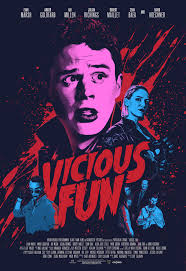
Knowing how to balance the horror and the comedy in a horror comedy is a fine art, and one which eludes many filmmakers; it’s not so with Vicious Fun, a film which gets it absolutely right. This is a dark, very funny battle of wills, with a sharp script and a great cast, revelling both in its humour and its violence.

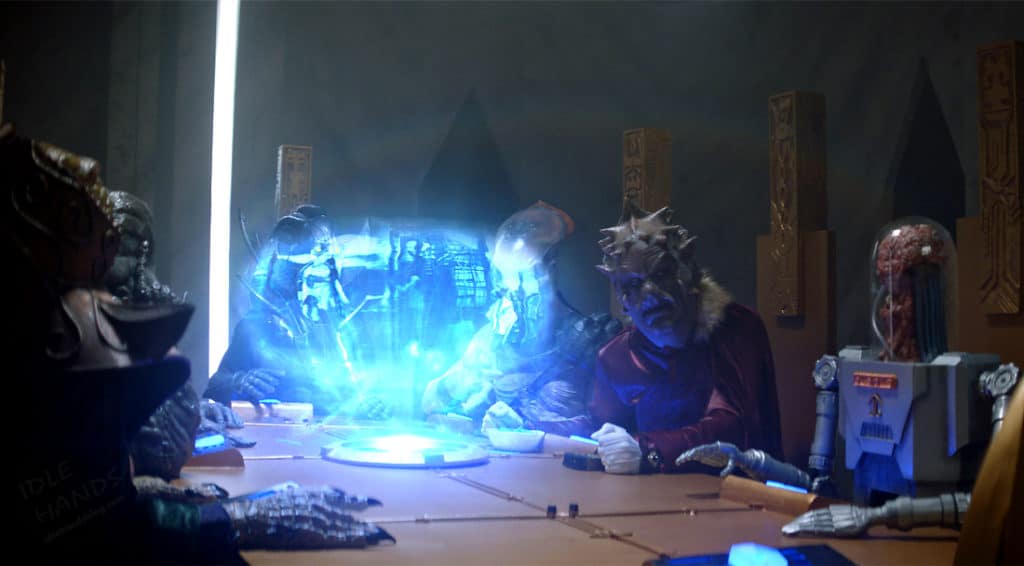
The year is 1983: after spending some time lovingly sharpening an array of knives, Mr Red Flag is heading out for a drive, when he spies a lone young woman in need of a ride. Things…don’t pan out as you might expect, given that summary of the situation; more on this anon. We meet Joel (Evan Marsh), a film writer (egad) who is very fussy about the horror genre he specialises in. Outside of horror, though, he’s a bit of a loner, and he’s unlucky in love, having a huge crush on his housemate Sarah (Alexa Rose Steele) which is going nowhere. One night, on a whim, he decides to trail the guy with the good car who has just taken Sarah out on a date, suspecting him of being married, but really just hoping to get some dirt on him which would mean Sarah sees him as the hero of the hour and therefore, boyfriend material. He follows the guy to a Chinese restaurant, and gets him talking – finding Bob (Ari Millen) fairly receptive to a conversation, although he hears a few things he’d rather not know about – and so Joel gets completely obliterated accordingly, running briefly into the lone female from earlier in the film, before blundering into a store cupboard and passing out.

When he wakes up, he gets back out into the restaurant again but it seems there’s some kind of meeting taking place after hours: Joel has to quite quickly try to work out what’s going on, so he can bluff his way back out the door. It transpires, though, that this is a group meeting of serial killers – one of whom, though fashionably late back to the restaurant, is Bob, and one of whom is Carrie – the woman from earlier. He’s going to have to use all of his wit and persuasion to navigate this situation, especially when Bob kindly decimates his cover story.

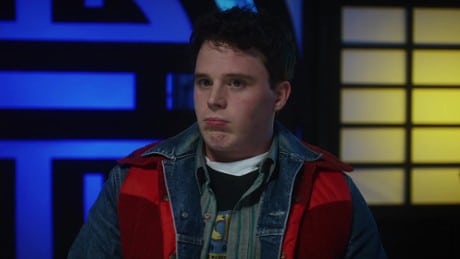
The success of this film hinges significantly on Joel as a character, but Marsh’s performance is more than up to it: Joel is very likeable, fallible and very funny. He has a very expressive face and watching the different shades of realisation washing over him – especially given his killer hangover – is hilarious. But as the film expands its focus and we get more from the other characters, they all work terrifically well too. Carrie (Amber Goldfarb) is a good foil to the other members of the group, and you have to appreciate Ari Millen’s turn as Bob – there’s a little Patrick Bateman in there maybe, but he manages to be a very charming psychopath, and more than distinguishes himself. It’s great to see Julian Richings, too, who seems to enjoy his role as Fritz. The whole set-up of circle time for killers is a fun one, and allows a neat integration of the horror and comedy elements as they swap stories and plan more victims.

I’ve commented recently about the surfeit of 80s nostalgia in genre film and how it always tends to do similar things, and Vicious Fun can be counted in with that: it seems almost a rite of passage now to have a shot linger lovingly on, say, a clunky old answering machine, but so far as the 80s setting goes it’s done well enough, with a good soundtrack too. There’s no real reason for the 80s thing, but it’s a fond homage, and a lot is done with this film’s run time: we get references to slashers, to true crime and to horror fandom itself, with a few barbs here and there for film writers, which did make me laugh; touché to director and writer Cody Calahan on that one. The film has a good pace and plenty of plot twists, none of which feel needless or underdeveloped. Vicious Fun is a grisly, often caustic comedy of errors which doesn’t let up or slow down at any point.

Vicious Fun screened as part of Glasgow Frightfest (online) in March 2021.

Frightfest Glasgow: The Old Ways (2020)

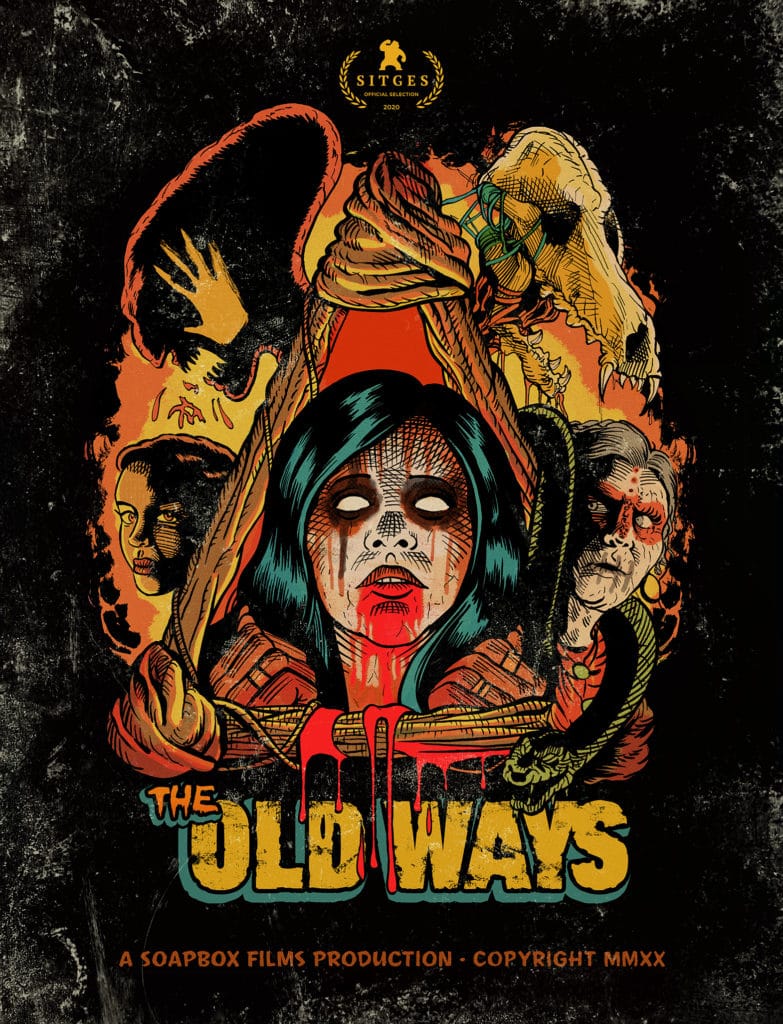
Possession horrors are almost always based around Catholic lore, and demons are dispensed with via Catholic means. But this, surely, isn’t the whole picture: other traditions and cultures must have their own spin on this kind of horror. Well, The Old Ways at least initially purports to provide a different spin on the genre; however whilst it does some things very well, ultimately it doesn’t really break away from rather more staid, tried-and-tested elements.

We start with a little girl witnessing a possession scene (woman in nightgown – demons don’t like day clothes – rituals being read over her prostrate form) and then – cut to present day, where this is the same girl, all grown up. Cristina (Brigitte Kali Canales) is of Mexican descent but lives and works in the US; she’s back in Mexico, however, to do a report on local rituals and traditions, visiting a cave in a place called La Boca. Or she was; she’s since been confined in a room by two strangers; the elderly woman of the pair examines her, and confirms that she has ‘it’ inside her; the ‘it’, it seems, is a demonic force, something which attached itself to her at La Boca, and they can’t let her go until this is dealt with. The arrival of cousin Miranda (Andrea Cortés) provides a friendly face but it seems that Miranda, too, believes that this phenomenon is real. Time passes, rituals occur, and it seems that they might just be on to something: even Cristina begins to see it their way.

This is certainly an attractive film: it looks great, sounds great, and it pulls off some neat tricks – such as the way in which Cristina is lit to look quite otherworldly, so that you could easily believe that all is not well with her, and the claims about her could be true. For the first half of the film she seems strangely impassive, which again, fits the bill and contributes to the suspense. The Old Ways is at its strongest in the way it’s structured, knitting together different moments in time towards a whole – this does create a few issues with depth, as the first ritual is up and going way before we find out the back story, but as events come together, it fits together fairly well.

There are elements of a ‘stranger in a strange land’ here, too, as although Cristina is Mexican by birth, she has not spent time there since childhood, has forgotten how to speak the language and regards the traditional beliefs unfolding around her as completely alien. However, for all that, the rituals performed by the bruja aren’t a million miles away from what we would recognise; the language is different, but the grimoires (accessible enough with a Spanish-English dictionary) look like all grimoires in horror films. In fact, the horror tropes have followed Cristina to Mexico in abundance; it’s a shame that we didn’t get more specific lore explored, it really is, as that would have really distinguished the horror on offer from a number of other films. The Exorcist (TV series) is clearly a big influence here, right down to some minor details, so if you’ve seen that series, then there will be few surprises here. A few pacing issues creep in, too – understandable, given most of the film occurs in a single room – and (minor spoiler) animal killing always feels like a cheap shot to me, but events pick up as the film progresses, and The Old Ways can boast some well-developed scenes, even if you wait for them.

The Old Ways is by no means a bad film, and it’s a decent enough horror film: coming from a director who has tried his hand at a Muppets movie more recently than he’s worked on a horror project, I suppose it’s fairly extraordinary that it’s emerged at all. For all that, if you’re a fan of the genre then you will pretty much know what’s coming, and once the timeline slots into place, there are no really remarkable resolutions or lessons. It hasn’t taken possession-style horror in a new direction, not really, but it’s a decently entertaining hour and a half.

The Old Ways screened at Glasgow FrightFest (online) on the weekend of 5th March 2021.

PG: Psycho Goreman (2020)

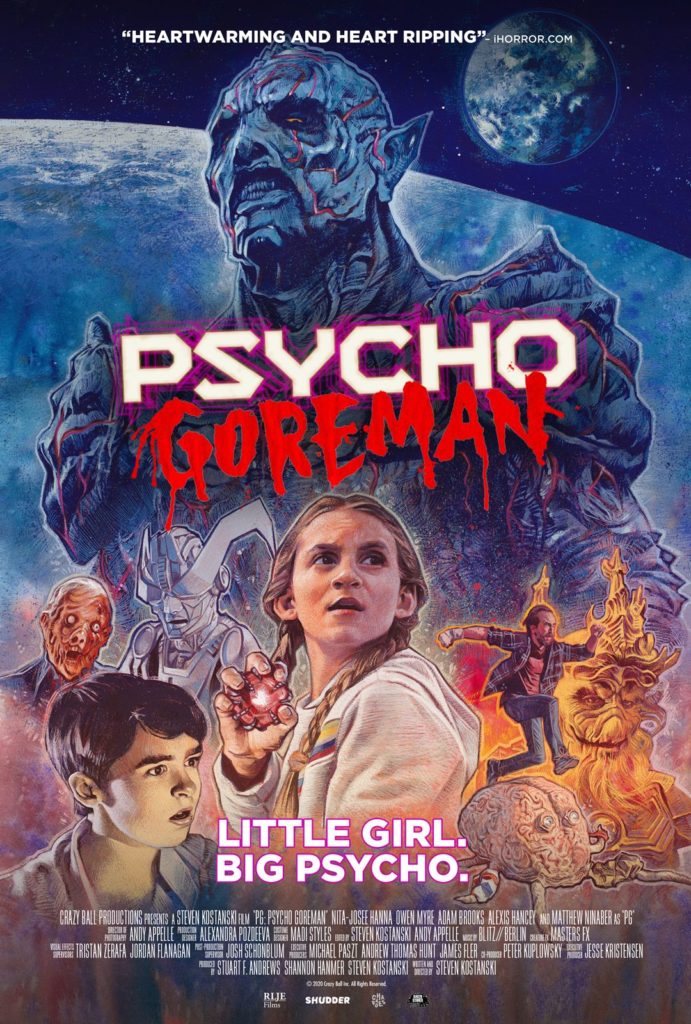
PG: Psycho Goreman is a film which pays homage all over the place. Whilst watching, I found myself thinking of all of the following: Jase and the Wheeled Warriors, Mac and Me, Power Rangers, Tokyo Gore Police and Bad Taste. It’s clear that director Steven Kostanski is both an ardent nostalgist and an SFX fiend; PG Psycho Goreman is, however, a very straightforward story really, which has its own mythology but yet (with some handy on-screen text) tells us a tale of good vs. evil where Earth has become a prison for a very bad entity who tried to take over the universe. This is a fun film, though I really regret not catching it at a festival screening because it feels tailor-made for that kind of – few-beers-in, not too much heavy plot to deal with, entertainment which is amplified by the presence of other film fans -vibe.

After we’ve established that the very bad entity is still imprisoned on earth somewhere, we cut to two kids at play. Older brother Luke (Owen Myre) fails to win at a ball game which him and his sister Mimi (Nita Josee-Hanna) have clearly invented, and his forfeit is – for reasons not entirely clear – to dig a ruddy big hole in the garden. In so doing he disturbs an intergalactic prison box and a mysterious jewel. The kids decide it’s probably best all round to just fill in the hole again, which doesn’t work, and after a few strange lights are seen, the hole mysteriously re-opens again, freeing the entity. The kids track the entity down.

This alien doesn’t have an awful lot of time for humans, but thanks to the gem, he can’t harm them. It seems that this gem is even more phenomenally powerful than that; not only does it prevent the entity from harming them, it also means that he/she/they, soon renamed Psycho Goreman by Mimi, has to obey the children. Great: just what a tyrannical ten year wants, eh? Thing is, this grand reawakening has come to the attention of some more equally-matched forces in a galaxy far, far away – and they might just have to intervene.

PG: Psycho Goreman is indeed another one of those films – to be cynical, yet another one of those films which has opted for a distinctly 80s look and feel, showcasing this in the now canonical ways: you have to make analogue tech part of your screenplay, for example, and the SFX you use should not only be practical (no arguments here), it also needs a certain kind of straight-to-video aesthetic to qualify, but – as these effects are probably fairly cost-effective, whilst having a decent, OTT look, it does mean that a film can add layer upon later of zany, improbable, bloody sequences. Psycho Goreman certainly does. Whilst for practical reasons you could probably say that PG himself is the most derivative monster (a dash of the Gill-man and a dab of the generic husky-voiced demon), there are some really beauts in here, with some great fight scenes and some worthily-excessive feats of design. So there’s a cheap and cheerful aspect, but enough of it to build a fun whole. I found the gore FX far more palatable than Mimi, to be honest: the actor does a great job playing what we could politely call a gregarious child, and it fits in with the generally cartoonish aspect of the film, but my word: Mimi is Very Much, and your ability to gel with this character will probably have a large impact on how you take the film overall.

What I will say, though, is that it’s refreshing to have a film which is as straightforward as this: with the exception of some guff about love, it has no vast and ponderous subtext, no serious points and instead, a proliferation of special effects and spectacle. PG: Psycho Goreman is deliberately daft and, even shorn of a sympathetic festival crowd, it’s a good laugh. If you ever wondered what would happen if you spliced E.T. with Meatball Machine, then here, you might just find your answer.

PG: Psycho Goreman is available on DVD and Blu-ray on March 16th 2021.

I Care a Lot (2020)

I Care a Lot is a story of utterly dismal, conscience-free people doing spectacularly well for themselves; on several occasions, it mentions the old adage (or variants thereof) that, in life, you take or you are taken. It’s a light-touch but often galling examination of the ‘American Dream’ which, when it comes down to it, rewards enterprise and hard wealth gotten by any means. The film is described in many of the usual places as a comedy, but – as entertaining as it is – it’s no comedy, not to my mind. It’s eminently watchable, and yet it’s far too appalling to laugh at, and certainly too appalling to laugh with. It’s not a satire, either, because despite its fantastical (even horror movie) turns, the backbone of its plot is not just plausible, it’s a going concern.

It tells the story of Marla Grayson, a kind of everywoman figure for a system engendered to care for the elderly and vulnerable, but, as the US legal guardianship model is almost inevitably ripe for exploitation, guardians have unprecedented power and access to people’s lives which is not always in the ward’s best interests whatsoever. Marla Grayson is a court-appointed legal warden, whose job is to take over and ‘care’ for people no longer able to care for themselves. The revulsion is almost instant. From the second you see Marla’s sharp, blonde bob and designer clothes (she’s often filmed from behind) then hear her assured, jargon-rich language and calm, confident tone, it’s absolutely easy to hate her, a feeling which Rosamund Pike maintains with some panache throughout.

Marla is simply doing what she does; it’s all in a day’s work. She’s ticking away nicely: preventing children from visiting their elderly parents because it’s not ‘in their best interests’, seizing and selling a lifetime of savings and real estate and paying herself out of the proceeds. Then, she is presented with what the stooges and know-alls in the trade refer to as a ‘cherry’. This simply means an older person with significant means, but no trace of an inconvenient family to prevent them getting misrepresented to the court as incapacitated (crooked doctors are, of course, integral in all of this). Perfect! Marla and her equally dreadful partner Fran (Eiza González) begin scoping out the unsuspecting woman, Jennifer Peterson (a phenomenal Dianne Wiest, even if it would have been even more phenomenal to see more of her). Miss Peterson looks like a ‘cherry’, alright. No husband. No kids. Nice house. Nice assets. Marla and Fran, enthused, discuss their next steps: in short, this means getting a medical report to assert that she is in the early stages of dementia, then locking her up in a home. When Marla finds out that Jennifer has a safety security box with even more of a haul inside, she begins to hope and pray that this is her ticket to the kinds of money she has always felt she deserves. In a genuinely unpleasant scene, the older lady is bamboozled by official documents and taken to a retirement village; they always come quietly when they see the paperwork, Marla smiles.

Everything seems to be going perfectly, but – when Fran is at the house choosing swatches ready for the house sale – a taxi arrives for Miss Peterson. Fran explains that she has moved, but the driver seems perplexed. It seems that Miss Peterson was expected at a rendezvous with…hang on, does she have family? It seems that she does. It also seems that the secret family have the kind of cash, connections and clout to cause some significant problems for Ms Grayson and her until-now very successful grift.

When Roman (Peter Dinklage) and his associates enter the fray, the film becomes less of a rather strangely bright and breezy sack-beating about how we as a culture have allowed our eldest to be treated, and more of a battle of rather well-matched adversaries. There are no moral winners here; although Roman is genuinely concerned about ‘Miss Peterson’, he couldn’t care less about the other people of her age who are getting turned over, a point which is reiterated throughout the film and more so at the film’s end. Likewise, Marla’s devotion to Fran is her own Achilles Heel, but it hardly makes her into a good person – although, at some points, the film seems to be trying to get us to applaud Marla’s undoubted ingenuity, which was a bridge too far for me. I was less than enthused by Marla’s feminist speech after she deals with the hot-headed lawyer, too: as a tale of ‘sisters doing it for themselves’, it barely works, because it’s just too hard to applaud this. However, a good balance between characters and plot developments means that we trot past any major writing concerns in almost no time, and a few more high-tension interludes command the interest too (even if this doesn’t engender any positive feelings for anyone involved).

The last act, perhaps, asks a great deal, pushing proceedings as far as they could feasibly go; this, too, is a big ask in terms of character arcs. But the finale, I feel, is a superb way of bringing the focus back to the nub of the whole plot, re-introducing an aspect which has been almost forgotten and offering something which felt quite cathartic and – dare I say it – right. I would maybe stretch things too far myself if I mentioned Les Liaisons Dangereuses here, but there is something of that; there’s a sense of one’s smartness and sins coming back to you in the end. A saddening, maddening film, I Care a Lot perhaps makes light of misery in some respects, but then if you see past the entertainment, it does have its own grim points to make.

I Care a Lot (2020) is available now on VOD such as Amazon Prime and Netflix.

Gatecrash (2020)

Gatecrash (2020) has an interesting pedigree; based on a play, and directed by Lawrence Gough – who has spent far more of his time working on television than cinema over the past decade – it’s a film which contains aspects of both the stage and the small screen. That being said, there are some similarities with Gough’s earlier film, Salvage (2009): remember Salvage? Gatecrash is by far the superior project, showing the benefits of directorial experience over the intervening decade or so; it’s an often jarring, discomfiting film which, like Salvage, unfolds almost entirely in a narrow domestic setting with just a handful of characters. Unfolding some neat tricks along the way, it is able to overcome its few odd omissions or oversights.

The film begins as a car arrives, late at night, back to a rather plush house and grounds. The driver, Steve (Ben Cura) and his partner Nicole are already in conflict because it seems that their vehicle has been involved in a hit and run incident and, in a panic, they have headed straight for home. Recriminations soon begin to fly: Steve had been drinking, the man they struck came out of nowhere, and – most damning – Nicole suggests that it was no accident, that Steve drove into the pedestrian deliberately. Seems plausible, to be honest; he is presented as a Bad Man pretty early on. The initial whirlwind subsides as they discuss what to do, but when the house landline is rung by Steve’s missing mobile phone, it’s clear more is going on here. Oh, and then there’s the small issue of another car pulling up on the drive…

The film starts strong, with Gough clearly knowing how to show tension: the quick edits, the way in which things open mid-conversation and the close, claustrophobic focus all give a sense of things being blurry, disjointed – and veering ever towards hostile. Nicole and Steve are either within inches of one another, or shown momentarily alone in different areas of the house – there’s no sense of a united front here, something which grows increasingly important. If anything, the successful disorientation of the first fifteen minutes or so works against characterisation initially, but them’s the breaks with this kind of approach. Some of the dialogue, similarly, feels a little thin at first – sacrificing the plausible to amplify the odd – but, when Gatecrash settles into a pace and a mode, or perhaps at the point when I settled into the film’s pace and mode, it does hold the interest very well.

Nicole rises to the fore as the film moves on, and the use of long, continuous takes as she runs from room to room helps to keep the audience on her level; our viewpoints emulate hers, and it creates empathy. She’s not your usual ‘final girl’ sort of character, thankfully, but when the film makes a sizable shift and shifts forward in time (like a play, the film falls broadly into two ‘acts’) it’s Nicole’s fate we are engaged by, and Olivia Bonamy does well with her role, balancing a kind of strained, terrorised civility with moments of plausible horror; Nicole is a woman clearly shattered by her treatment. Also, Bonamy may be French, but she gets the required British ‘squirm’ very well; this film, in several ways, represents a peculiarly British type of home invasion. Gatecrash manages its latter shifts in direction nicely, albeit it generates plenty of questions on how – or if – this situation could ever be resolved. And, whilst it’s a shame that one actor disappears, it’s equally a real treat when another appears.

Much more about the threat of violence and exposure than it is overtly violent, Gatecrash is a decent, well-wrought film which, although it doesn’t answer every question you may have, does more than enough to stay engaging across its ninety minutes. It certainly moves away from the predictable, and for that alone it deserves credit in a genre which has tried every trick in the book. Nice to have you back, Mr. Gough.

Gatecrash will be available on digital download 22nd February.

Shook (2021)

More and more, anxieties about what we’re sharing online and who is watching are making their way into cinema. Scouting for clicks and ‘likes’ is a new version of the Satanic pact, it seems; surely, a horror unfolding on a TikTok timeline cannot be far away. And the appearance of ‘influencers’ was simply bound to show up in horror, because it’s such a new, recognisable and widely-reviled phenomenon. Influencers are the epitome of do-nothing celebrity, with people growing unaccountably wealthy by selling aspirational lifestyles from their own bedrooms; no longer is there the necessity to even get on TV. I thought Pop Idol and similar were bad enough; having worked in education and run the gamut of students who cared little for literacy because they were going to get discovered as singers, it now seems a lot less exasperating, because at least they were hoping to be good at singing. Now singing seems secondary – unnecessary, even. All you need is batwing eyeliner and good luck.

I digress.

Shook is a stylish, grisly piece of entertainment which clearly knows its chosen terrain: it keeps social media in its sights throughout, even whilst the style and content of the horror moves elsewhere. It’s bleak, it’s often funny and it is scathing – more a cry of despair and a seized opportunity than a satire, but it all feels pretty cathartic. After the fitting murder of cosmetics influencer Jenelle (offed, a little like Drew Barrymore in Scream, sooner than you’d expect) another influencer, Mia (Daisye Tutor) is keen to say the right things to camera about her grief – even cancelling a live stream she had planned. Off-camera, though, it’s clear that Mia couldn’t really care less. This would all be more palatable were Mia not also neglecting her family commitments; it seems that her mother recently passed away, and her sister Nicole is heading to San Francisco for a medical appointment, as she suffers from the same progressive genetic condition as their mother did: it was Nicole who nursed mom through her final illness. Nicole talks Mia into house/dog-sitting whilst she’s away, and she reluctantly agrees. The house being incredibly well-served by webcams is explained by their mother’s illness, as Nicole needed to keep an eye on her and to know if she was awake. It’s something by way of giving just reason, at least: this is one hyper-connected home.

Mia isn’t much of a dog-sitter, and busies herself accepting friends requests (the oddball over the road, natch) and watching what her dreadful friends are getting up to online without her. So the set up and the lingo are very up to date, but what we have here is familiar: a girl, alone, watching strange goings-on unfolding around her, events she has to unpick in order to save herself.

Shook does several things very well: one of these is to show the fallibility of our mod cons, and how powerless people are when they fail, or play up, or get commandeered. It’s a well-observed backdrop to the film’s more familiar elements: together with the horrors of the online age, we also get lots of traditional slasher elements, as well as Noughties endurance fests, like the Saw franchise. It’s interesting that Mia appears genuinely unable to put her phone down, even before the unfortunate turn of events; everyone is constantly on-grid, though, and all the more vulnerable for it. Tech itself takes on a kind of supernatural role, too, with static-heavy voicemails and withheld numbers played for scares. I did find the friend group a tad difficult to differentiate, but we see their names and photos enough by about halfway in – so, again, it’s a plausible fix.

Alongside several of the titles which streaming service Shudder have released as originals recently, there is no lull at any point in Shook and the film busies itself with a number of plot shifts, which keep on coming until the credits roll. This may be a little excessive for some viewers, especially given the nature of the final ‘reveal’, but for me, I feel that it all hangs together pretty well: the tone of the film works to its advantage, and it successfully skates the line between enough depth and enough pace. I mean absolutely no disrespect with this comment, but Shook probably isn’t a film which is going to change your life: it does, however, offer a snapshot of where we are now and crafts an entertaining horror yarn out of that. It’s refreshingly unpretentious, and it calls to other films in the horror canon in a way which suggests a real fondness for the genre. Sometimes, that’s all you want.

Shook (2021) lands on Shudder on Thursday, 18th February 2021.

Sator (2019)

The back story of Sator (2019) is a deeply interesting one. It’s a film seven years in the making, with director Jordan Graham doing far more than even most first-timer indie directors find themselves doing (right down to building a cabin used for one of the sets). Not only this, but the film has a deep resonance with Graham, as it not only features footage of his family (with his late grandmother June Peterson also acting in the film) but also hinges upon an entity given the name of ‘Sator’ by Peterson herself; her belief in this being, and her certainty that it had a mysterious hold over the events of her life, led her to be committed to a psychiatric ward in the Sixties. Recordings of ‘Nani’ Peterson open the film; she explains that Sator is somehow ‘in charge of everything’. This real-life footage segues into the world of the film, which overlaps with the family story throughout; however, for all of the tantalising elements suggested by Nani’s tales, the film never quite rises to the framework offered, opting to front mood and aesthetics over dramatic and narrative payoff. This is fine on many levels, though I’d argue that, to truly generate scares, you need something of a cogent narrative – you need to have characters, in order to truly take note of whatever happens to them.

After a scene featuring an old, dark house full of candlelight and inhabitants in period dress to suggest, at a guess, that the being in the woods has claimed many scalps down through the centuries, we meet our main protagonist – nameless and almost wordless for the largest share of the film. His connections to others are not made clear immediately, but it seems he belongs to a rural family for whom the spectre of Sator hangs heavy – alongside a shared history of bereavements. He spends his evenings at his shack, listening to audio describing Sator’s characteristics; when another man arrives – apparently his brother – they head over to the family home, where grandma still lives. Nani still clings to folders full of automatic writing which she claims was generated by Sator and certain other beings with a mysterious, insistent interest in her and those she holds dear.

And what is this Sator, exactly? The audio files and the – now expected – analogue tapes uncovered at the house, together with Peterson’s early testimony, conspire only to …keep it all rather confusing, actually. At different times, Sator is described as a guardian, a source of surveillance, a confessor, a bane, a demon and a guide; the only thing which seems certain is that Sator has a vested interest in this isolated rural clan. There’s a suggestion that it has had some hand in the bereavements which afflicted the family, too. Then it seems that Adam, for ’tis his name (Gabriel Nicholson) is himself in Sator’s sights. Strange encounters by candle- and torchlight ensue.

Be aware: the last couple of paragraphs reads like a fairly standard brief plot synopsis, but it also feels like an ill fit, as it doesn’t really represent the tone and style of the film at all. You have to work to glean as much as this; it’s not made readily available to an audience. Dialogue typically takes the form of short, rare flourishes of conversation, and then there’s some use of monologue in the form of the excerpts of recorded voices. (I struggled with much of this, too, simply in terms of being able to make it out. Perhaps muffled voices were intended, but I don’t think the atmosphere would have been compromised by better audio clarity.) Outside of the dialogue, silence is key.

So much for how it sounds. Sator is very much a film of well-composed set pieces, folk horror leitmotifs and stunning landscapes, all bathed in the kind of natural light or candlelight which is often associated with The Witch (2015): unlucky, perhaps, as Sator was already being shot before Robert Eggers got in there. Sator certainly looks fantastic, its national park shooting location offering great examples of the inhospitable picturesque. It generates atmosphere, too, which is eminently possible, even without much story. Great Romantic paintings can be atmospheric and can convey mood; they’re not tales, though, and this roots them in a moment or a fantasy.

With regards Sator, I’d argue that waiting until after the hour mark to quickly get through some exposition is just too little and far too late. Waiting until two thirds of the way through a film makes it difficult to then invest in that character, or characters – it misses the critical period. You can appreciate the beauty, the style and the bold decision-making which turns the film away from being a re-tread of The Blair Witch Project (1999), without necessarily investing anything in Sator‘s key players. That all being said, Jordan Graham clearly has great strengths and a ferocious attachment to his peculiar vision: I’d certainly still be intrigued by anything else he may work on in future, whatever my feelings about the lack of pay-off here.

Sator will be available on Digital Download from 15th February & DVD from 22nd February and can be pre-ordered on iTunes here.

A Glitch in the Matrix (2021)

I’ve made my feelings about the contributors to director Rodney Ascher’s documentary about The Shining – Room 237 (2012) – quite clear elsewhere; I’m still far from clear on some of the ideas held by its interviewees, nor indeed how there is any link between skiing and the Minotaur, much less how it’s related to Kubrick’s film. Well, upon seeing A Glitch in the Matrix, it’s clear that Ascher has once more found a lesser-heard minority with unorthodox ideas, and I suppose we shouldn’t shoot the messenger: it’s clearly something he’s rather good at. A Glitch in the Matrix examines ‘simulation theory’, the idea probably most-famously mooted in The Matrix in 1999 that we are, in fact, living in a simulation controlled by higher forces. Ascher’s approach here, as in Room 237, is to allow the participants to extoll their views without question; it’s…interesting to hear, but giving free rein to these people misses a trick, as far as I’m concerned. They’re crying out to be challenged.

The film starts as it means to go on, with an interviewee appearing in an avatar disguise; documentaries are choc-full of talking heads, but I suppose they aren’t often huge cyborg Anubis heads or vaping spacemen. Most of the main participants use these CGI guises, which look the part thematically whilst being presumably pointless; their views are outlandish but not illegal, and our simulation-creating overlords probably already know who they are, for reasons which become clear later. We’re coaxed into the worldview with an early consideration of how man has always sought analogy for his higher powers in whatever technology was available at any given point in time; once, this was aqueducts; now we see the brain as ‘a computer’, cos that’s what we have. The point here, apparently, is that one day in the future people may look down on us for our simplistic understanding of mind; therefore, we should appreciate that we know comparatively little.

This sounds fine to me, without being a step on the ladder to agreeing that we’re definitely subject to greater external forces which encompass everything we know – but for our documentary subjects, it’s practically a given. However, their journey to this acceptance is both the film’s most intriguing aspect and its biggest waste. Via a potted history of the growth of simulation theory, with time given to author Philip K. Dick’s late-life assertions that he had experienced ‘recovered memories’, via The Matrix (natch) through to Elon Musk’s high-profile support of the theory, we consider the likelihood that we exist in a complex programme which monitors us, dupes us and responds to us, doubling down if we get too close.

And here’s the rub: simulation theory, when it comes down to it, differs barely at all to the vast majority of conspiracy theories out there. To decipher them, it seems that we need a few good men: intelligent, but rootless, aimless characters, probably honed by gaming, who are primed to ‘spot the signs’, crack the code. Here, it’s with things like spotting alleged synchronicities and patterns, abilities which show off one’s open-eyed readiness to engage with the world on a higher level. One interviewee describes a long car journey with his father – the road was quiet, almost no people were around. From this, he extrapolated a scenario where ‘his’ simulation was being amended and rolled out to encompass his impromptu car journey; he fantasises that a small army of higher beings were all hands on deck at this moment, running additional footage and tweaking their software to keep him happy in his simulation. Not only does this kind of thinking emulate other, similar modern egotistical conspiracy theories, such as fantasising that a billionaire would care enough about your inconsequential movements to microchip you, but it allows the clearly socially-awkward, even socially-maladaptive to shift emphasis from their impaired ability to read other people, by creating a narrative which says these aren’t really people at all. The film does at least make clear, albeit indirectly, why this line of thinking is so appealing. It has the self-importance of every conspiracy which feels like a pat on the back for the clever person who finally saw things for what they are; it has the ‘I saw the light’ mentality of born-again Christianity, the existential angst which attempts to answer the question, ‘is this really it?’ and at its furthest, most pathological reaches, it’s schizophrenia with a tech manual, a paranoid fantasy of needing to protect oneself against malign others, people who look human, but can’t be.

So much for the content. This is all communicated fairly clearly – or, as much as it can be – with light-touch involvement from the filmmaking team. I do wish documentary films would dispense with that irritating trend of showing people getting seated and waiting for their take to start, but all in all, A Glitch in the Matrix is well edited together, with film clips, animated inserts, vintage TV footage, photographs and other efforts to give us something interesting to look at as we listen. It’s such a shame that there’s no opportunity to interrogate any of these ideas, though. I know, I know Ascher’s usual style is to give his participants the benefit of the doubt, but I think things could really have got interesting with even a few well-chosen questions. The film is one you almost can’t help talking over, so hard is it to resist picking faults with the logic at hand. Aside from anything else, no one gets to ask what is surely the most burning question: what on earth would be the purpose to such a simulation – in operating a coherent, consistent, continual system to dupe us all? What’s the bloody point? Give me billions of years of cold, hard chance and the chance evolutionary systems which gave rise to us humans any day – us flawed, unprecedented, pointless, pointlessly brilliant humans, as we are; oddities without answers, floating momentarily through space with no masters. A Glitch in the Matrix is an interesting, infuriating peep at a small number of representatives of a narrative very much of its time, though it’s a film which floats a few tantalising issues without address.

Magnolia Pictures released A GLITCH IN THE MATRIX in cinemas and on demand on February 5th, 2021.

A Nightmare Wakes (2020)

It’s no great surprise that the early relationship between Mary Shelley (née Godwin) and Percy Bysshe Shelley has proven irresistible to filmmakers, given its importance to the development of horror. Perhaps my favourite version of the events at the Villa Diodati comes via Ken Russell’s Gothic (1986), which presents a colourful, but nightmarish spin on those long rainy summer nights. There is something of Gothic in A Nightmare Wakes, at least in terms of its characters, setting and topic, and in how it encompasses imagined sequences alongside verifiable facts. However, it takes this same premise and explores it in quite a subtle, understated manner, with a carefully-constructed female perspective. It’s muted, very picturesque and uses low-key period details effectively, alongside the sparing use of chiaroscuro bad dreams. Mary is the focus, and as her situation feels ever more precarious and vulnerable, the film presents writing as her escape.

I suspect that this was, to an extent, true – though early 19th Century folk probably didn’t see the creative arts as a kind of self-help in the way which is current for us. We see the early days of the gathering at the Villa, with a small role for Byron and Polidori – but really the film follows Mary, Shelley, and – somewhat surprisingly given Byron’s small role, Claire Clairmont, Mary’s stepsister. We see Mary go through a gamut of miscarriage, cot death and romantic difficulties. True enough, Mary was less open to Shelley’s much-vaunted ideals of ‘free love’ and saw clearly enough how ill-supported she would be were she never to marry, a point the film makes, but the main thing to take away here is the sense of distance between the men and the women. Mary’s quiet agonies (she screams and rages mainly in her hallucinations) are presented alongside the playful, immediately-resilient behaviour of Shelley and his male friends, with Shelley getting over Mary’s late-term miscarriage almost immediately. Obviously, this is one of the film’s uses of artistic license, and it’d be wrong to suggest that Shelley was completely unaffected by all of this; Mary did say in her journals, though, that she found the impact of pregnancy and miscarriage absolutely draining, and therefore this emphasis does chime with the focus which the screenplay has chosen.

We do get something of the writing competition which helped to produce Polidori’s novella The Vampyre and Mary Shelley’s first novel, but it soon becomes clear that only Mary is really making any progress – and always against the backdrop of a philandering partner and a thirsty stepsister, one of whom envies her writing prowess and one of whom envies her family dynamic – patchy as it seemingly is. As Mary begins to struggle with her feelings of abandonment, some of the symbolism in some of the sequences is pretty straightforward; that said, the film does a good job generally at playing on the content of Mary’s journals and the descriptions of her nightmares, bringing them to bear on her attempts to hold her home life together as she writes her novel.

Unusually, Shelley is presented here as a deliberately stymying influence on Mary and her writing; that’s a new development, but it takes the narrative in some interesting places, even if the divide between dream and real life isn’t always fully clear. The way in which Mary’s imagination begins to link Shelley with Victor Frankenstein is inspired; there isn’t a mass of script in this film, but what is there is a good fit, economical, without simply leaving a void. The performances are very good too: one quibble is that the actress playing Mary is rather older than Mary would have been (Mary was eighteen when she started the book; actor Alix Wilton Regan is thirty-five) but, look, it would be tough to find an eighteen year old to pull off this role, and Wilton Regan is very compelling and sympathetic here, easily carrying the largest share of the screen time. Giullian Yao Gioello as Shelley, and Claire Glassford as Claire Clairmont are themselves excellent in their roles.

Ultimately, this is a film for people who already have some interest in the origins of Frankenstein, and by the same token, people who do have that interest may have a few misgivings with some of the artistic license taken by director and writer Nora Unkel. All in all, though, this is a worthwhile snapshot of that period, a visually-appealing film which is both sensitive and ambitious enough to present something engaging. It’s a thoughtful historical drama which successfully sees its own perspective through to the end.

A Nightmare Wakes comes to Shudder on Thursday, February 4th 2021.

The Reckoning (2020)

It’s not something I’d normally do but, prior to writing up my own review of the new Neil Marshall film The Reckoning, I took a peek at a few other reviews of the film. Almost without exception, other critics prefaced their review by mentioning how much they loved his work, how The Descent (2005) and Centurion (2010) were amongst their favourite films, and so on and so forth. Well, having seen The Reckoning, I’ve decided against that approach. I’ll say only this: how can a director go from the sublime to the ridiculous to this extreme? ‘Studio interference’ was mooted as the reason that Hellboy (2019) bombed so badly; given that this newer film presumably had none of that, we can only wonder what has happened here. I really wanted to like The Reckoning. A historical horror set during the 17th Century witch trials? Sign me up. Sadly, the end result is an appalling, unworthy mess.

The film starts, as we’re told with some on-screen text, in the year 1665: the plague is running rampant in England, and in their terror the people have become prone to blaming the Devil. By the 1660s witch trials were dwindling in Europe but quite honestly, given the thundering anachronisms which follow, this is more than acceptable artistic licence. So in the film, people’s fears have given rise to the opportunism of witchfinders, who enjoy power and influence as they move throughout England, summarily trying and punishing suspected witches.

Grace (Charlotte Kirk) is a happily-married young woman whose husband leaves her unprotected when, finding himself displaying symptoms of ‘the sickness’, decides to take his own life. Early scenes – where Grace has to cut down and bury her afflicted husband – provide brief hope that this perhaps isn’t going to be half bad. The landscapes and the cottage look appealing; the score, by Christopher Drake, is very good too. Still, bucolic England or not, life for a lone female is tough in the 17th Century and Grace struggles to raise money to pay rent on the farm. This is apparently all part of the plan by dastardly squire Pendleton (Steven Waddington) who wants his wicked way with her. When she refuses his advances…hang on, why does he accept her refusing anything, when he has all the physical clout and, as the script clumsily informs us more than once, a higher social position? No matter. On with the plot. When she refuses his advances and, erm, kicks his ass, he starts rumours in town that she’s a witch, so that she can be arrested and tried.

This means that she must then reside in the local dungeon, where she has the odd inscrutable sexy hallucination, until such time as witchfinder Moorcroft (Sean Pertwee) can get to her. When he does, almost two hours of boring, boring tortures ensue – tortures which we are meant to read as incredibly severe, except Grace emerges from each bout looking no worse for wear than if she’d been caught in a light shower of rain. This unbelievability is cemented by the fact that Charlotte Kirk is woefully miscast here in a lead role, or perhaps in any role; she has one, mouth-slightly-agape pout-scowl which she uses for nearly every circumstance, heinous torture or otherwise. The use of on-screen chapters – a current obsession with filmmakers – to tell us helpfully how many days of ‘torture’ have passed only emphasises how long all of this is taking. It doesn’t matter how many times she gets her arse out – this is dull.

There was a point around forty minutes into this film when I began to wonder if I was reading it all wrong. Was this actually a camp masterpiece, intended as such? I’m yet convinced that this wasn’t the intention. It’s all too pouty, too scowly, too much in earnest. On reflection, as much as this would be a decided move away from Marshall’s past body of work, camp really was the only way to go with The Reckoning – making it more akin to Season of the Witch (2011) rather than aiming for – and missing – Witchfinder General (1968). It would have made the nudity more understandable; it would have disposed with the questions over the Satanic visions which ultimately go nowhere. And, given the juddery, laughable lunacy of the ‘Restoration final girl’ act, much could have been forgiven there, too. The Reckoning’s biggest issue is of its own doing: when you bookend your film with reminders of the real, horrific treatments of women accused of witchcraft, then this invites an eye seeking accuracy, and accuracy there is none. The script has elected not to try and use Early Modern English – fine. But the use of the word ‘okay’, which didn’t appear for around two centuries? The leading lady’s Estuary twang? Plague doctors in top hats (not invented for over another century)? Nuns i.e. illegal dissidents, being used as court officials in Protestant England? Who researched this stuff? Anyone?

The Reckoning is an embarrassing, clumsy film which displays a complete lack of plausibility, plot lulls, plot lurches, dreadful casting (or a misuse of its few good actors) and an array of errors in almost every technical aspect. Neil Marshall no doubt has significant strengths as a director, but this film makes his best work feel very, very far away indeed. By the way, that ain’t how wells work. Avoid, avoid, avoid.

RLJE Films and Shudder will release THE RECKONING in theatres, On Demand and digital on February 5, 2021.