The Exorcist Untold (2023)

On seeing the title of this, you’d be forgiven for having the initial thought of “Not another film about the making of The Exorcist, but Robin Bextor’s documentary is certainly not just another film about the making of The Exorcist, choosing to focus much of its runtime on the lead up to the production and how the dream (nightmare?) team of William Friedkin and Peter Blatty came to collaborate on a movie which has become the subject to so much debate in the fifty years since its release.

Of course, there’s a fun vox pop segment early on in which often shell-shocked cinemagoers try to make sense of what they’ve just seen on screen – one particularly bewildered soul says they’re not going back in there (I’ve a feeling they did) and a dubious defender of 70s female virtue proclaims he wouldn’t take his wife to see it – but the main thrust of the piece soon settles into the backgrounds of those two iconic driving forces. There’s also a liberal sprinkling throughout of academic takes on the William Castle-esque origins of the marketing machine behind the phenomenon, plus the change on the sociopolitical landscape of the time, when the freewheeling, free-loving attitudes of the 1960s gave way to something darker as New Hollywood showed the American Dream to be just a mere reverie for the impossibly idealistic.

As to “Untold,” that’s open to question. Stories of Friedkin firing guns on set and punching actors are ten a penny but the less sensational details of his fledging career in the business are seldom covered, regardless of their importance to Blatty realising that there was clearly only one man for the directing job. Similarly, Blatty’s pre-Exorcist days are generally downplayed, almost to the point of irrelevance at the side of the monster he created, and Bextor redresses the balance with some fascinating and often amusing detail, demonstrating his create smarts via a fine appearance on You Bet Your Life and a serendipitous, last minute guest slot on The Dick Cavett Show.

As an unauthorised view of a horror juggernaut, the footage used tends towards the low budget and the lack of big names involved in front of the camera may be jarring to some, but this opens up the piece to contributions from those who would have otherwise fallen by the wayside in a glossier production’s haste to cram in as much Blair and Burstyn as possible while telling you about the “curse” hanging over the shoot. Yeah yeah, we know.

A roster of potential, big name directors – all initially preferred to Friedkin – is detailed, as well as initial casting choices which are ripe for post-doc discussion. If you want to ponder a version of The Exorcist with different actors filling out the lead roles (save for Blair, who seemed pretty much a shoo-in to play Regan from the get-go), here’s your chance. And as for the editing process, it’s arguably in line with Friedkin himself – possibly insane, but ultimately perfect.

I’ve left it until now in the review to out myself properly as a huge fan of The Exorcist, but you may have guessed that already. I’ve seen the film more times than I would dare admit and, yes, when I took a holiday in Washington, the temptation to wander over to Georgetown to walk down those steps was too great. A passer-by asked me “Do these steps mean anything?” and my initial response was a short but definitive one: “Oh yes.”

That particular piece of architecture is allotted its own segment in The Exorcist Untold, showing the dedication ceremony as a recognised monument and the added poignancy of the event being the final occasion on which Blatty and Friedkin would be together. That a stairway, albeit one as lethal in appearance as the those on the corner of Prospect Street and 36th Street NW, should be burned into the conscience of generations of movie watchers, says all you need to know about Blatty’s writing and Friedkin’s visual flair, combining in a truly unforgettable few seconds of celluloid.

The resolutely unsensational approach The Exorcist Untold may drive away those seeking more lurid accounts of the movie’s development. Equally, rabid completists of the project may not be told anything they don’t already know. However, if you’re looking for a different angle on a classic horror film that was never conceived as a horror film at all (that’s an argument for another time) then this is well worth seventy-one minutes of your time, even if it is simply to view evangelist Billy Graham getting all hot and bothered about the Devil lurking in the prints or to chuckle at the inevitable shade thrown on Exorcist II: The Heretic.

The Exorcist Untold is available on VOD now.
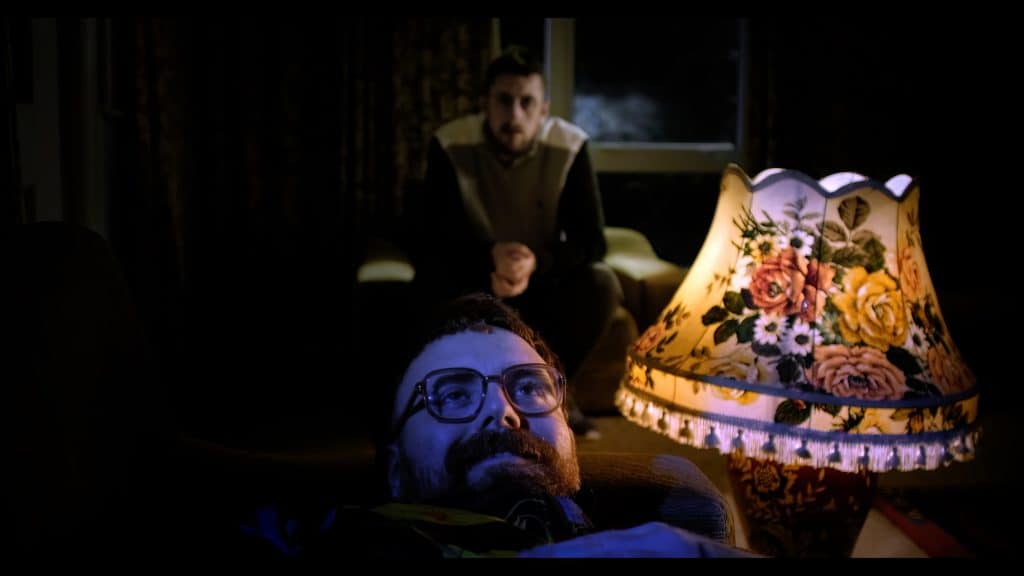
Wickedly Evil (2023)

In the aftermath of a heist, Frankie (Joseph McGucken) and partners in crime Dancer (James Farrelly) and Gaz (Darryl Carter) head to an isolated spot in the Irish countryside to lay low and wait for instructions from their chief, er, The Chief (Owen Roe). Will their plans to make their eventual escape be thwarted by spiky captive Clare (Louise Bourke), friendly, lasagne making neighbour Sadie (Cat L. Walsh) or local ‘tec Murphy (Andrea Kelly)?

With its post-robbery set-up, injured gang member to deal with and extra issues courtesy of a kidnapping victim in the boot of the getaway car, the opening act of Wickedly Evil bears more than a passing resemblance to Reservoir Dogs, albeit with a smaller criminal team, an absence of colour coding and no opening discussion relating to the politics of tipping. There’s distrust between the thieves, an insistence that everyone remain in the central location until the mastermind behind the op shows up and, just in case you hadn’t cottoned on, Tarantino’s debut is even name checked at the point of the hostage reveal alongside a similar, trunk based POV.

Enough with the homage, though. There’s a hint that something isn’t quite right in this rural setting, with mentions of a couple having disappeared a week previously and a surfeit of shadows for who knows what to lurk within. As Frankie attempts to control the increasingly erratic behaviour of an increasingly coked-up Dancer, while providing a convincing cover story to Sadie as to why he’s renting a place in the back of beyond, the whole web of deception is constantly on the verge of breaking.

Unfortunately, the tension and the potentially dark humour of such a nightmare scenario don’t come to fruition as they should. The bickering between Frankie and Dancer is sporadically fun but there’s an overload of it, missing the opportunity to mine the heightened emotions of the situation for big laughs. Similarly, the role of Clare as a smart, manipulative hostage isn’t built upon, her mental game playing with Dancer boiling down to the setting of a fairly obvious psychological trap and him being, as the piece reminds you regularly, an eejit.

Disappointingly, the slide into horror comes far too late in the proceedings. There’s some genre-friendly, if unnecessary, creeping around in the first two acts and a feeling that something awful is going on, but it’s well over eighty minutes into a ninety-six minute movie before the tale even begins to show its hand. Granted, the step from chuckler to chiller is carried off by means of an effectively creepy sequence but there’s a huge imbalance between build up and pay off, leading to a final ten minutes that delivers on efficient, low-budget carnage but also feels blunt and rushed.

Wickedly Evil is an exercise in what could have been. The performances are all solid, with McGucken and Walsh standing out as exasperated thief and resourceful local. Some of the jokes work well, such as one involving the rapid removal of tape from over a prisoner’s mouth, and on occasion the script suggests how snappy it could have been, including a line comparing cocaine consumption to the antics of a certain Argentinian footballer which is hardly the epitome of subtlety, but had me giggling nonetheless.
As it stands, this feels like the opening hour could have lost fifteen minutes and the climax could have gained those. The “wham, bam, we’re done” ending makes drastic reductions to the cast list in a time frame so short it may make your head spin. The reveal is one of Wickedly Evil’s strongest points so allowing its audience extra time to take in its ramifications, coupled with a longer battle involving the protagonists, may have landed more dramatically. Rather than revelling in the unveiling of the saga’s secret and letting that soak in, it’s a trigger for a bloody race to the end credits which feels like the twist is a source of slight embarrassment. It’s not, by the way, and I wanted more of it.

Wickedly Evil deserves credit for its readiness to genre hop, but the caper and comedy elements don’t always sit easily with each other, resulting in a tonally unsure experience that seems unwilling to cut loose until the finale. Director Garry Walsh clearly has talent when it comes to staging suspenseful scenes but he’s not ideally served by a screenplay which throws too much focus on chit chat and, most frustratingly, treads water when it should be amping up the thrills ahead of a big finish. Sadly, it’s not quite wicked enough.

Wickedly Evil (a.k.a Bad Things in ihe Middle of Nowhere) will be released onto VOD on 13th November 2023.

Celluloid Screams 2023: Where The Devil Roams

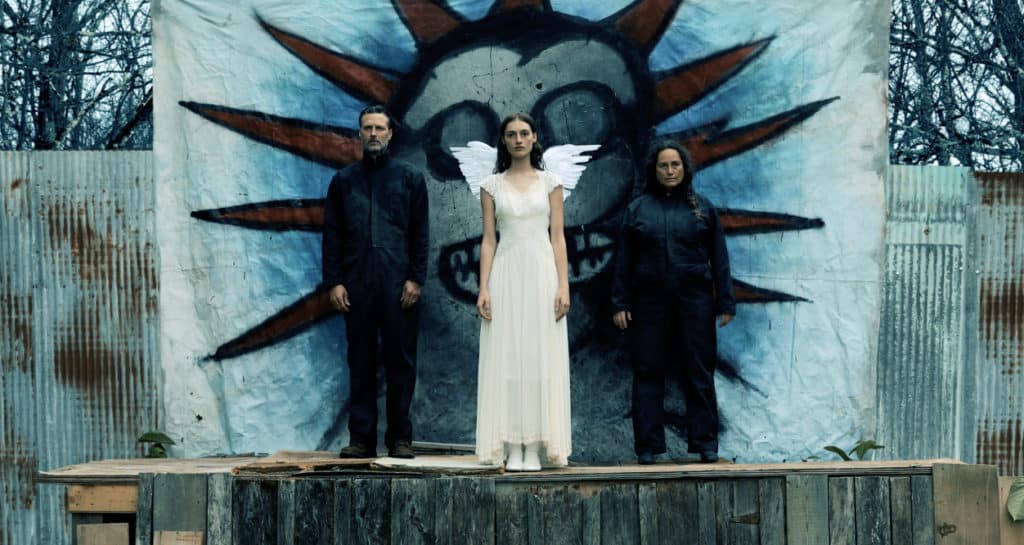
Sideshow performers Maggie (Toby Poser), Eve (Zelda Adams) and Seven (John Adams) travel around Depression-era America with a carnival which has lost most of its sparkle. As the crowds dwindle, there’s one particular attraction which continues to hold a grim fascination for those gathered – Mr. Tibbs, who cuts off his fingers with scissors. As Eve discovers, this isn’t sleight of hand. Tibbs has made a pact with the devil and a specific artefact is used to facilitate his regenerative powers.

Moving around the country, Eve, Maggie and Seven become entangled in the satanic world which has claimed Tibbs as its own and find there’s no going back as they leave a trail of bodies in their wake, committing heinous acts of violence in order to stay together as a family unit. Their ultimate goal? The Buffalo Horror Show, where they intend to wow the judges with something memorably gruesome…

After The Deeper You Dig and Hellbender, The Adams Family return for more confrontational carnage in a gory period piece which benefits, as those previous movies did, from careful, skilful world building, laying the bedrock of vital details but leaving more than enough space for the audience to extrapolate. The carnival scenes, in particular, are wonderfully scuzzy, depicting a hand to mouth existence which is so vivid you can feel the grime oozing from the screen.

From a filmmaking team who clearly cares about telling the stories that matter to them, regardless of their commercial potential, their usual micro-budgeted adventures would seem more at odds with this latest tale than ever, given the historical nature of the piece. However, the trappings of the decade are all present and correct, the ragged rural settings looking rather beautiful when they’re not being sprayed red as a result of Maggie’s penchant for hitting folks repeatedly with a hammer.

Yes, it’s violent, often shockingly so, but the sequences of marrow-freezing murder are often underscored with a sly, dark sense of humour, which allows the viewer to take an initial breath of relief but then hits even harder as another unfortunate falls victim to the family’s ever-growing, ever more desperate blood lust. This series of episodic side quests, serving their mission to reach the carny version of the America’s Got Talent final, sets up a final act in which our trio of travellers are changed – in all ways – beyond measure.

Gore hounds will lap up the grisly mayhem, of course, but character development and the atmosphere of the time is more the order of the day. The screenplay takes the time to give solid backstories to its protagonists, specifically the wartime flashbacks involving Seven, how the genesis of his PTSD continues to echo through the years and how Maggie’s protective instincts lurch into their most extreme manifestation. Poser switches between tender and terrifying and her queasily amusing, paradoxically sympathetic performance is backed up by sterling work from the Adams duo.

Fans of the Hellbender soundtrack (yes, I’m one) will be delighted to learn that the score here is another cracker, breaking out an incongruous, fuzzy, stoner rock kick to the 1930s odyssey depicted here. It shouldn’t work but it does, and beautifully so. As matters turn ever bleaker, a wall of distorted guitar noise is the perfect accompaniment to the accelerated degeneration of our antiheroes, matched by the literal degradation of the visuals themselves before bursting into vibrant colour as…well, you’ll have to see for yourselves.

A thoroughly satisfying, memorably twisted collision of arthouse sensibility and crowd pleasing horror havoc, Where The Devil Roams sees The Adams Family smashing the boundaries of the genre like few others out there. It’s often nihilistic and brutal, but it also has much to say about unconditional love and the unbreakable bonds of family. We see the quieter moments as Maggie, Eve and Seven go about their daily chores, sit down to eat or curl up together to sleep, all of which imbue those eruptions of savage violence with a greater resonance.

Never pandering to its audience, the innate strangeness of Where The Devil Roams makes it all the more rewarding to those who can tap into that and the bizarre, macabre final shot is one that will be difficult to shift from the minds of many. This is a beguiling, bloody quilt of tattered Americana from a ridiculously talented film family whose work just gets better and better.

Where The Devil Roams (2023) featured at this year’s Celluloid Screams Horror Festival.

Celluloid Screams 2023: Lady Terminator

Are we sitting comfortably? Then I’ll begin.

Lady Terminator opens with The Queen Of The South Sea, an all-powerful sex goddess, luring some poor unfortunate into her boudoir and devouring the bloke’s penis with her vagina dwelling serpent – just out of shot – in a slice of horror erotica that’s neither horrific nor erotic. Next up, a savvier guy enters the soft-focus bedroom of death and manages to grab the serpent in a surprise pre-coitus move. The serpent transforms into a dagger and the Queen retreats to the sea, vowing to curse the man’s descendants.

Okay so far? No? I’m going to continue anyway. Apologies.

Fast forward to the late 1980s where we meet Tania (Barbara Anne Constable), a helium-voiced anthropologist who is studying the Queen Of The South Sea. Following a visit to a library, complete with dusty reference book discovery, Tania takes a boat to the resting place of the Queen, where she is attacked and possessed by the vengeful aquatic spirit, showing up on a nearby beach with no clothing on her person and murder on her mind. The target is aspiring pop princess Erica (Claudia Angelique Rademaker) who is the descendant of aforementioned savvy, pre-coitus move bloke. Can square jawed, hard of thinking police officer Max McNeil (Christopher J. Hart) save her?

From the above description, it won’t come as much of a surprise to learn that, by the normal standards employed when judging a movie’s quality, Lady Terminator is not good. However, for connoisseurs of this kind of clag, it’s an absolute riot, chock full of hilariously clunky dialogue, terrible acting and entire sequences lifted almost shot for shot from James Cameron’s breakthrough sci-fi flick. What was the title of that again?

To be fair, there’s the odd positive which can be taken. As the world’s least convincing academic, Constable’s performance in the opening act is shaky, to say the least. However, once she’s called upon to be a silent assassin, she’s actually far more impressive than those around her and proves to be a capable action star, clearly doing the bulk of her own stunts as she blows away all and sundry after typing in the infinite ammo cheat for her guns offscreen.

After establishing the mythology of its central villain, Lady Terminator all but junks that in favour of piling up the action set-pieces and the bodies, sporadically remembering that there is some supernatural business to be deal with by the inclusion of Erica’s uncle, a mystical type whom we know is in touch with the spiritual world because he meditates on a cliff side and spouts dialogue about how his niece should believe in the dagger above all else. If only she’d believed in it before the kill count reached astronomical levels.

In the midst of such chaos, the police investigation is nothing short of astonishing, for example: Max and a mate heading to the pub instead of looking into the murders of the three dickless guys they’ve just seen in the morgue. Well, it is midnight, they do have a more conscientious colleague who will happily work well into the early hours while his team knock back the bevvies, take in a musical number from Erica and stumble on a killing machine while they’re enjoying themselves in a club which is categorically not Tech Noir, honest.

Lovers of, ahem, proper cinema are going to weep for the artform after about ten minutes of this, but for exploitation aficionados there’s enough to satisfy, be it the plentiful car chases, endless supply of folks for target practice and the introduction of Max’s very own A-Team knock off, manned by walking 80s action clichés including one member (in all senses of the word) called Snake. Our hero even has a tragic backstory involving his murdered wife, although that subplot is so clumsily handled that it’s a while before it’s actually made clear and I initially suspected that she’d just left him because of him being a dick.

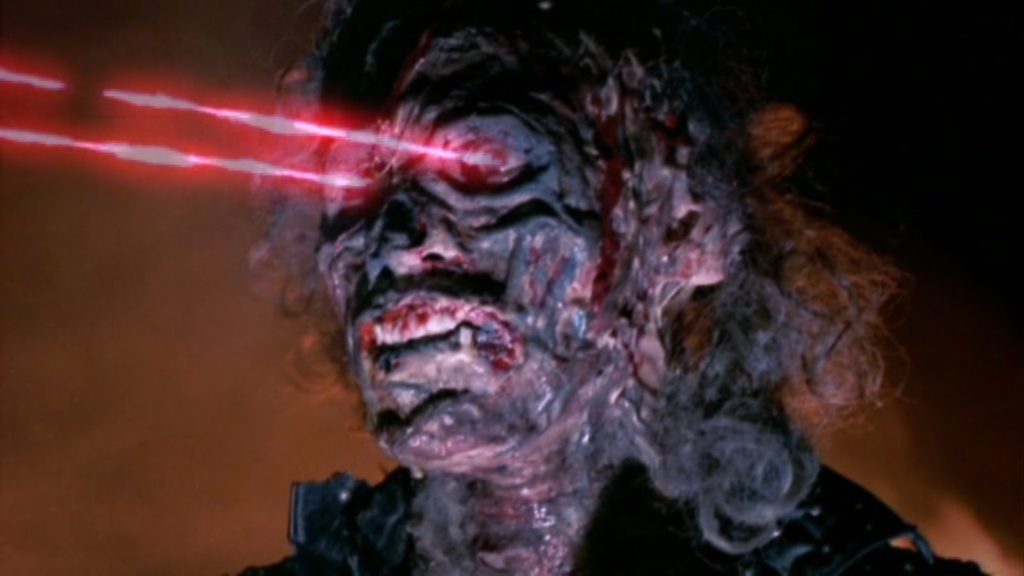
It all builds to Max and the Ay-Ay-Ay-Team luring Tania to a kill zone and the ensuing showdown consists of more vehicular mayhem, thousands of expended rounds, the de rigeur exploding helicopter, eyes which shoot laser beams, lots of things on fire and absolutely no nods at all – sorry, absolutely loads of nods – to the “it’s dead now, oh no it isn’t” flip flopping of the Arnie classic. The post-battle, pre-credits wind down redefines the word ‘perfunctory’ but it’s worth seeing just to play a game of “Who is that bloke and why the hell is he there?”

The rational, critical, reviewing side of me can not recommend this film in good faith. The screenplay is rubbish, the acting leaves a tremendous amount to be desired and the movie doesn’t so much pay homage to The Terminator as re-film large chunks of it with the film crew keeping their fingers crossed that the lawsuits don’t fly in. It even restages the eye removal sequence, complete with the sudden appearance of a handy scalpel. Why? As with a lot of stuff that happens in Lady Terminator I think I know, but I’m not sure.

Anyway, enough about what the rational, critical, reviewing side of me thinks. The side of me that loves bad films was revelling in straight to video nirvana for eighty-odd minutes. Except this was on a cinema screen. In 35mm. With an audience of like-minded folks. It’s an experience I urge you all to try, if you ever get the chance.

Lady Terminator (1989) was the Secret Grindhouse Screening as part of the Celluloid Screams Film Festival 2023.

Celluloid Screams 2023: We Are Zombies

Welcome to a world in which zombies roam. What, another one? Yes, but this time there’s a major difference. These folks are not driven by the desire to chow down on human flesh. In fact, uttering the z-word has become something of a societal taboo, with campaigners pushing hard for the rights of the country’s “living impaired” citizens. At the forefront of research is The Coleman Corporation, an organisation which collects those recently, existentially challenged folks and houses them in a facility which aims to study their condition.

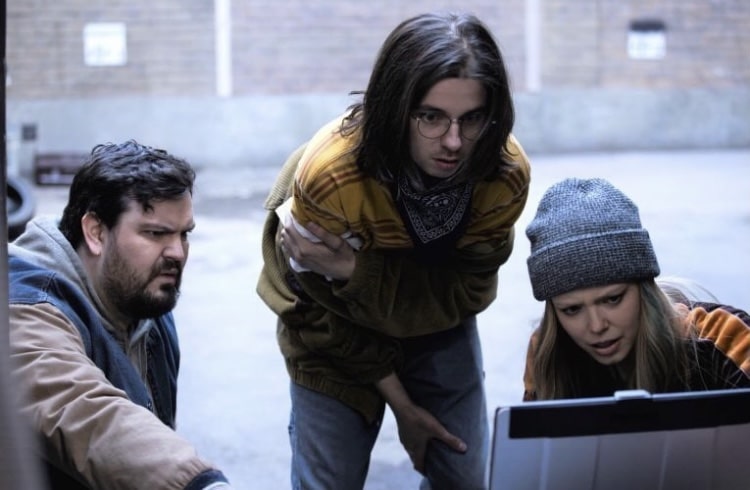
Making a dishonest buck from this collection service is the slacker trio of Karl (Alexandre Nachi), Freddy (Derek Johns) and Maggie (Megan Peta Hill), who have tracked the movements of a certain pair of Coleman employees in order to jack their route and sell on the undead, sorry, living impaired through non-legal channels. It’s not long before their little scheme attracts official interest and the three are forced into a situation where they need to score a big payday – and quick.

The third movie from Canadian filmmaking collective RKSS (François Simard, Anouk Whissell and Yoann-Karl Whissell), We Are Zombies taps more into the anything-goes style of fun that permeated their debut Turbo Kid, rather than the chilly undercurrents of sophomore effort Summer Of ’84, but it still has something to say about corporate culture and class. They just want you to enjoy the gory slapstick first and foremost.

In an oversaturated subgenre, RKSS manage to pull off the trick of bringing something fresh to the entrail-strewn table of undead flicks while still delivering on audience-pleasing splatter. Amusing news reports and interview clips build the world quickly and never get in the way of the misadventures of our loveable trio of losers, bickering and fumbling their way through a situation in which they find themselves increasingly out of their depth.

Nachi and Johns work well as a double act which could easily get irritating if overplayed, but their nerdy banter is light, sweet and fun, with Hill providing the eye rolls and pithy responses as the capable, underrated Maggie. Elsewhere, Stéphane Demers is a hoot as Oscar Maddox, a glitter dispensing, Damien Hirst-alike of the undead art installation world and Rosemarie Sabor is a double-dealing delight as the star of a zombie cam girl website (and object of Karl’s desire).

The satirical elements are sketched broadly, but this approach fits nicely in a world inhabited by characters whose traits have a touch of exaggeration about them. Bogging down the plot with too many OCP-style boardroom machinations would have otherwise disrupted the main thrust of the story and We Are Zombies is agreeably swift in how it introduces its business bad guys, with Hannity (Benz Antoine), its chief dealer in nefarious activity, keeping the metaphorical moustache twirling to an admirable minimum, yet still delivering the necessary exposition in terms of his dastardly scheme.

The final act is satisfyingly chaotic as the paths of most of the interested parties cross at a red carpet event organised by Maddox, where the celebrities of both the living and living impaired world meet to be seen. The celebrity zombies idea is a stroke of genius, with one particular iconic figure being given a treatment that could raise the hackles of those of a particular spiritual bent. Hey, this movie is not aimed at those people and I found the running gag absolutely hilarious.

It all ends in a welter of wrestling moves, gunfire and guts, Karl and Freddy taking the fight to their enemies in their own ridiculous style, parodying an endless number of those ultimate zombie showdowns but still holding up as well marshalled, fun action sequences. The final scene is perfectly in keeping with the rest of the piece, playing with the audience’s expectations as to how they believe society as a whole will have benefitted from the deeds of a few unwitting heroes. Do you believe RKSS are going to miss the opportunity to throw in some kind of amusing kicker here? What do you think?

We Are Zombies may prove a little too flippant for those who like their zombie action dark and doomy, but its beguiling mix of indie humour, social commentary and gooey practical effects will win it a lot of fans.

We Are Zombies (2023) screened at the Celluloid Screams Film Festival in Sheffield, UK.

Spirit of Independence 2023: Deadland

US Border Patrol Agent Angel Waters (Roberto Urbina) heads to the scene of what looks like a crossing gone tragically wrong, discovering what he believes to be the watery Rio Grande grave of a mystery man. Almost immediately, things go south as the corpse suddenly turns out to be very much alive, then very much dead in the custody of Waters and fellow officers Veracruz (Julieth Restrepo) and Hitchcock (McCaul Lombardi).

Finding their normally quiet station house slap bang in the middle of an Internal Affairs investigation, the colleagues’ trust of each other is tested to the limit as they attempt to provide a consistent, coherent narrative of the incident under pressure from elements both natural and supernatural, with strange visions and events forcing themselves into the lives of those who follow the physical evidence to draw their conclusions.

An intriguing meld of slow-burn character drama, paranoia-soaked thriller and low-key ghost story, director Lance Larson demonstrates a willingness to blend genres and carries off the mix with some skill. Tense interrogation sequences sit side by side with creepy vignettes, tender scenes of Waters’ home life co-existing with jarring jump scares.

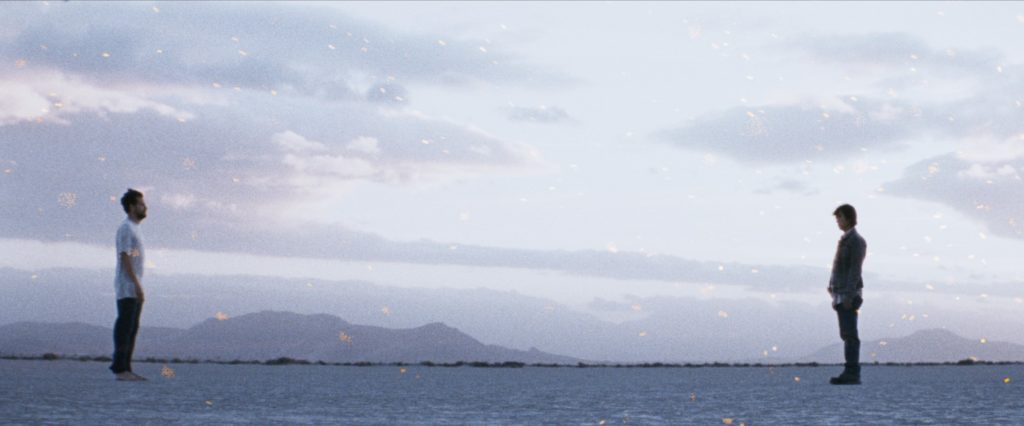
The Texas setting is an atmospheric one, showcasing landscapes of both stunning beauty and lurking danger. Even in the daylight, those wide open spaces generate their own fear, exacerbated by the motivations of an enigmatic, seemingly omnipresent stranger whose single-minded aim of reaching El Paso may hold the key to a mystery which has echoes down the decades.

Throw in a couple of curious IA officers played by Chris Mulkey and Julio Cesar Cedillo, and you have a classic case of the walls closing in on small town cops, trying to cover their tracks in the wake of snap decisions that turn out to be unbelievably bad. Urbina proves to be a solid, dependable presence in terms of performance, his character’s stoicism both a blessing and curse to those around him, especially the twitchy Lombardi, who essays an impressive line in increasingly erratic behaviour, adding an extra layer of tension as the shaky alliance between the three officers comes under increasing stress.

Restrepo, thankfully, isn’t saddled with either the token female law enforcement type or the overly kick-ass cypher that litters the genre when the script calls for a memorable woman. Capable, flawed, full of suspicion, the film is at its most interesting when she’s around. Mulkey, in a smaller but nonetheless important role, is at his unnerving best, his questions loaded with traps.

There are so many threads to the tale that its resolution may seem overly neat but in many ways, this is a story which demands explanation, especially in its handling of its otherworldly elements. The fate of certain characters might conveniently materialise out of nowhere – literally at one point – and the predicted bleakness of those final moments does not quite come to pass but, in a genre which often falls over itself to deliver downbeat denouements, it’s refreshing to reach an end credit roll which is accompanied by a feeling of hope.

Deadland is pleasingly understated in the way it goes about its business, its brooding atmosphere left to simmer, punctuated by sporadic bursts of violence which are all the more impactful for their brutal banality. Eschewing blazing action for a more thoughtful treatment of a charged political situation, its focus on the unknown – in both the tangible world around us and its uncanny fringes – makes for an experience which frequently leaves the viewer’s nerves as frayed as those of its main protagonists.
Yes, many familiar thriller tropes are deployed, but Larson uses those as a stepping off point into something intriguingly different, maximising the effectiveness of its premise, managing its plot detours with assurance and inviting post-movie discussion of its big themes. What can be wrong with that?

Deadland (2023) appeared at this year’s Spirit of Independence Festival in Sheffield, UK.