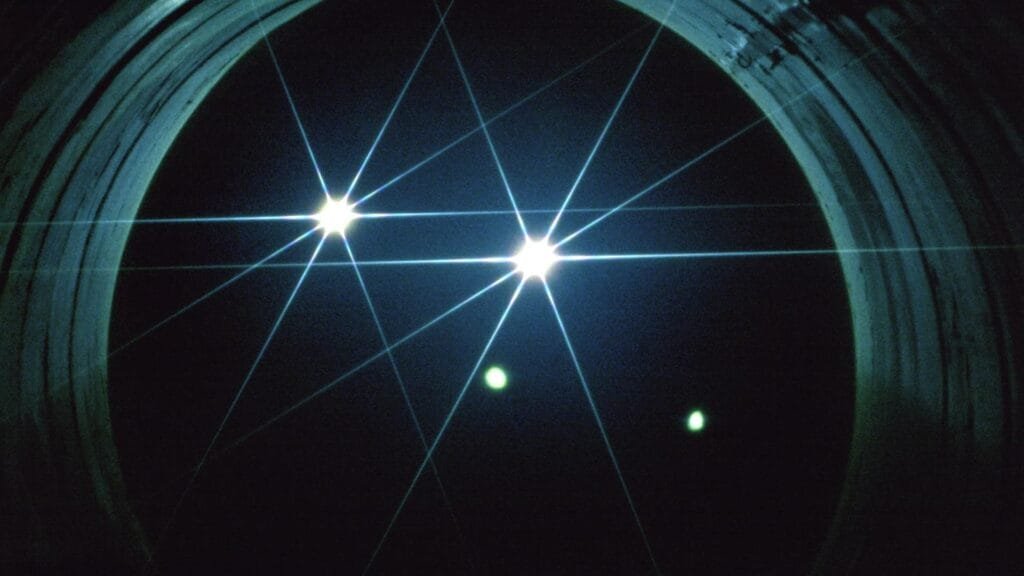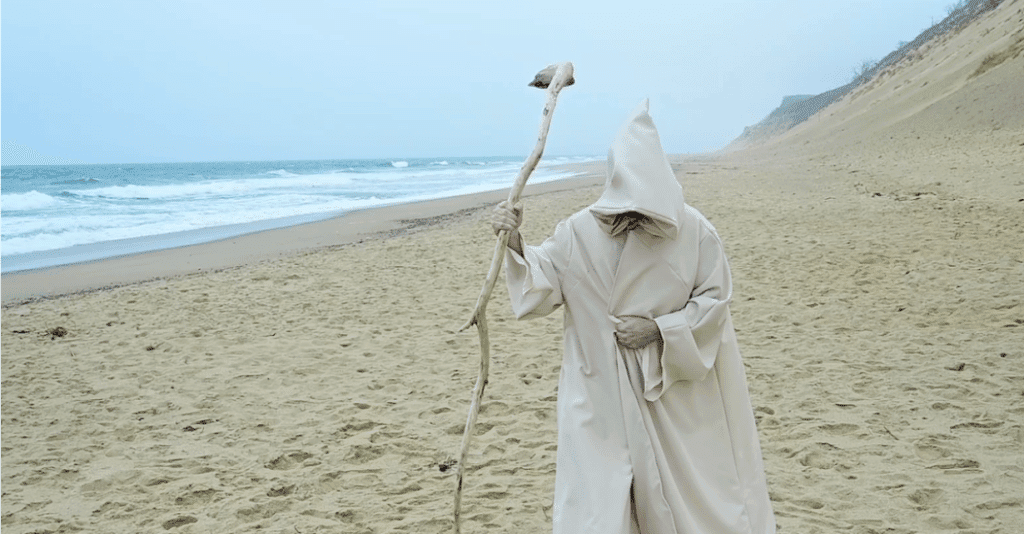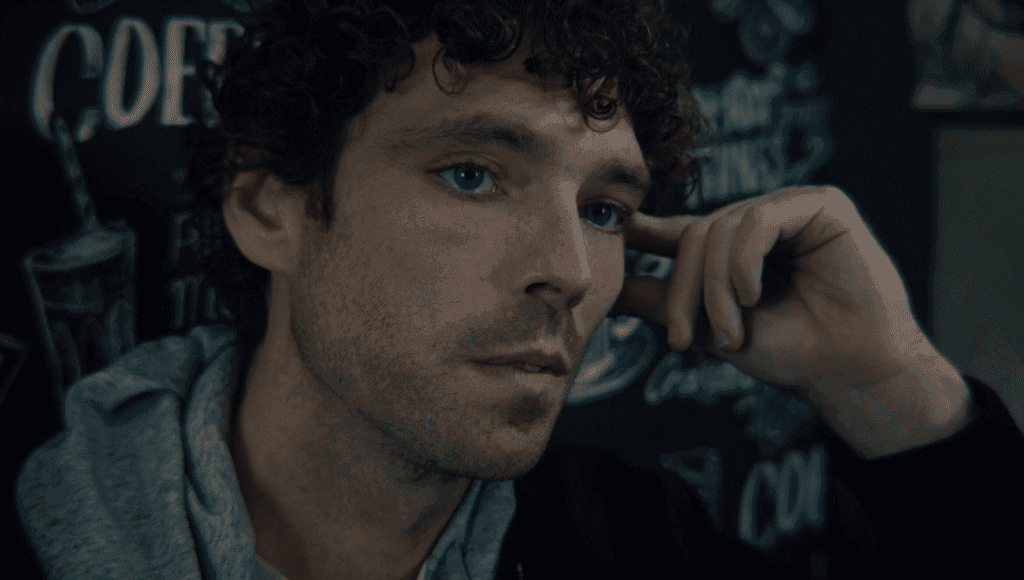
Spirit of Independence 2024: Reputation

Small-time drug dealer Wes (James Nelson-Joyce) has a good thing going in his hometown of Dennings, with a growing stream of punters getting hooked on a form of ecstasy called “Clown.” He’s in a stable relationship with Zoe (Olivia Frances Brown), they’ve recently welcomed a son into the world and, longer term, they’re looking to make the move to their ideal location. All of that is jeopardised when Wes’ partner Tommy (Kyle Rowe) is released from prison and targets bigger and better things for their operation. To say Tommy is a loose cannon is an understatement and his increasingly erratic behaviour threatens to end in disaster for everyone in his orbit.

In development for over ten years, director (and co-writer with Dean Gregson and Jordan Derbyshire) Martin Law’s unflinching slice of life in a northern town rings with authenticity, from the grimy surroundings to the expletive-laden screenplay and sudden, vicious bursts of violence, mostly kept off-screen but shot in a way that feels up close and personal, forcing the viewer into becoming an uneasy onlooker.

We’ve been in the company of an unstable, criminal presence many times before and Tommy may initially seem to be a one-dimensional character, heading off to see – and giving a seeing to – local girl Tasha (Robyn Sass) in an encounter which doesn’t even avoid a pre-climax slap because the woman dared to see some humour in the situation. Tommy has learned nothing from his time inside, except perhaps a new perspective on refining his illegal activities in a place where a police presence seems to be absent much of the time.

However, as the story progresses, it’s clear that there’s no redemption for Tommy and that what you see is what you get – he’s a fragile, boorish thug who resorts to spiking the whisky of the town’s resident drunk for shits and giggles or breaking a guy’s nose because the bloke went to University and obviously, to Tommy at least, thought he was in some way better than everyone else. Wes has always seen this side to Tommy, but their time apart brings Tommy’s cavalier disregard for everyone but himself into sharp focus.

This is an unashamedly down and dirty British view of the “small time crim trying to make good” subgenre and where its American counterparts would often throw in an action set piece too flashy for its own good, Reputation keeps things admirably low key, dragging the supporting characters into a scenario where the tension simmers, even in the scenes without Tommy crashing the proceedings. A subplot involving an unsolved child murder in the area gives the tale extra momentum and throws the spotlight on Tasha’s sister Becky (Sass again) who still can’t get past her grief.

Of course, things start to go wrong, not helped in the slightest by Tommy’s incompetent sidekick Grayson (Ross Thompson) and, as Wes sees a growing threat to both his family and friends Aidan (Andrew Purcell) and Lips (Stephen Rostron), a confrontation seems inevitable. The final act throws in a couple of shocking developments, given extra punch because we’ve been allowed into the lives of those threatened to the point that, even though their law breaking can’t be ignored totally, there’s a sympathetic side to them.

The very end of Reputation may jar with some because it potentially leaves space for the viewer to work out what happens next, but I was absolutely fine, even happy, with some of the plot threads hanging as the credits rolled. Life is messy. Punchy without falling into the trap of going so big that the denouement undermines the preceding hour and twenty, the last shot resonates more keenly than a melodramatic closer would.

Bringing familiar elements to the thriller genre but having some tricks of its own, this is an impressive calling card for both Martin Law and his talented cast. Nelson-Joyce is thoroughly engaging, adding depth to an already well-written protagonist; Rowe is consistently, realistically unhinged and Sass is fantastic in her dual role to such an extent that I had no idea she was playing both parts until I read the end credits. If you’re in the mood for a moody, tense thriller and don’t flinch when you hear the c-word (if you do, prepare to flinch a lot), Reputation will fit the bill and then some.

Reputation featured at this year’s Spirit of Independence Film Festival at Sheffield, UK.
Daddy’s Head (2024)

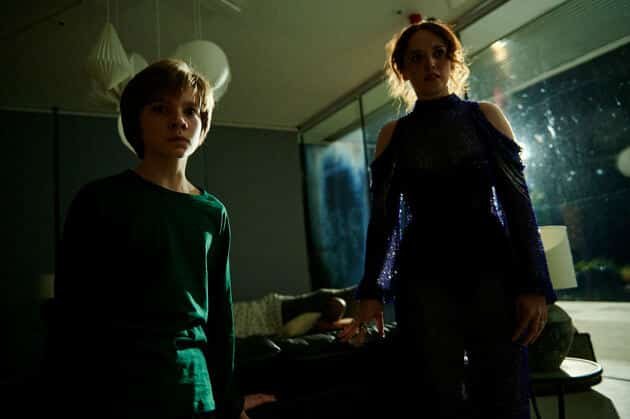
Isaac (Rupert Turnbull) has already had to come to terms with the death of his mother, but he now has to deal with the loss of his architect father James (Charles Aitken) in a car accident, leaving him, stepmother Laura (Julia Brown) and their dog to rattle around their grandly-designed house in the middle of rural nowhere. The local reps from Social Services present Laura with the options of taking guardianship of Isaac, or giving him up to the care system. Laura isn’t keen on the second choice, but matters are complicated somewhat by the fact that Isaac hates her.

As Laura attempts to build bridges with an ever more distant Isaac, her stepson experiences visions and visitations from a creature who seems all too familiar with the current situation being played out. Is Isaac unravelling psychologically, or has his father somehow returned from the other side. If so, what are his intentions for the family?

Daddy’s Head is director Benjamin Barfoot’s second feature, his first being 2017’s horror comedy Double Date, and it could hardly be more different than his debut, this time working from his own screenplay and ditching the knockabout shenanigans for a sombre, measured piece in which less is most definitely more, pushing most of its terrors into the shadows and keeping the audience on their toes with a refusal to spell out exactly what is going on.

The small cast all turn in sterling work here. Turnbull and Brown are both excellent, the former steering far away from being the archetypal brat, the latter gradually retreating into the comforts of her luxury home’s well-stocked wine cellar without resorting to that overly theatrical portrayal of being perma-sozzled as a coping mechanism.

Her increasingly forlorn attempts to connect with Isaac elicit real sympathy, but the story keeps the proceedings ambiguous enough to paint neither main protagonist as hero or villain, at one point giving Isaac a decent proportion of the emotional high ground when he spots Laura drunkenly kissing James’ longtime buddy Robert (Nathaniel Martello-White) who’s there to help out. Yeah, right, some of you may be thinking.

If the set up feels recognisable – troubled kid, fraught stepmum, family friend with possible ulterior motive – it is, but Barfoot swerves most of the clichés you’d be expecting, delivering a low-key and unnerving chiller which avoids tiresome screaming matches between Laura and Isaac, their cold, clinical exchanges often matching the trappings of the modern home in which they find themselves increasingly trapped. It also avoids tiresome screaming matches in the horror set pieces, opting to play it far creepier until the final showdown.

There may be the odd moment where the deliberate vagueness applied to almost every plot turn may frustrate but, for the viewer who doesn’t like to be spoon-fed each revelation, Daddy’s Head is a film which doesn’t go the easy route. Its slow burn vibe won’t enamour it to folks who want constant monster action, but there are effective jump scares along the way and the creature design here is the stuff of nightmares, made all the more terrifying for the brief glimpses it’s given across the runtime.

A British chiller that leans into the uncanny and mines the natural weirdness of its rustic locations rather than trying to ape the more brash tropes of family fear fests across the Atlantic, Daddy’s Head embraces its eeriness and only allows itself to break out the bloodshed when absolutely necessary. Even then, some of that is only viewed in its aftermath in order to maintain the mystery in the run up to those final moments, which are very much in keeping with the previous eighty minutes, only tying up the tale with the final shot, again leaving so many blanks to be filled.

To criticise Daddy’s Head for not being spectacular would be to miss the point. It’s contained, often subdued and has interesting things to say on the subject of how different people process grief. It may not hit the mark all of the time, but it’s a movie which sticks resolutely to its own, strange path and only comes unstuck when it reverts to time-honoured touchstones that don’t seem to belong, even if the result is further conundrums. By this I mean: What do you think is going to happen to the dog? Still, if you’re looking for something which gives you the space to do much of the potential plotting work yourself, you could do much worse.

Daddy’s Head (2024) will be available to stream on Shudder from October 11th.

Spirit of Independence 2024: Dinonauts

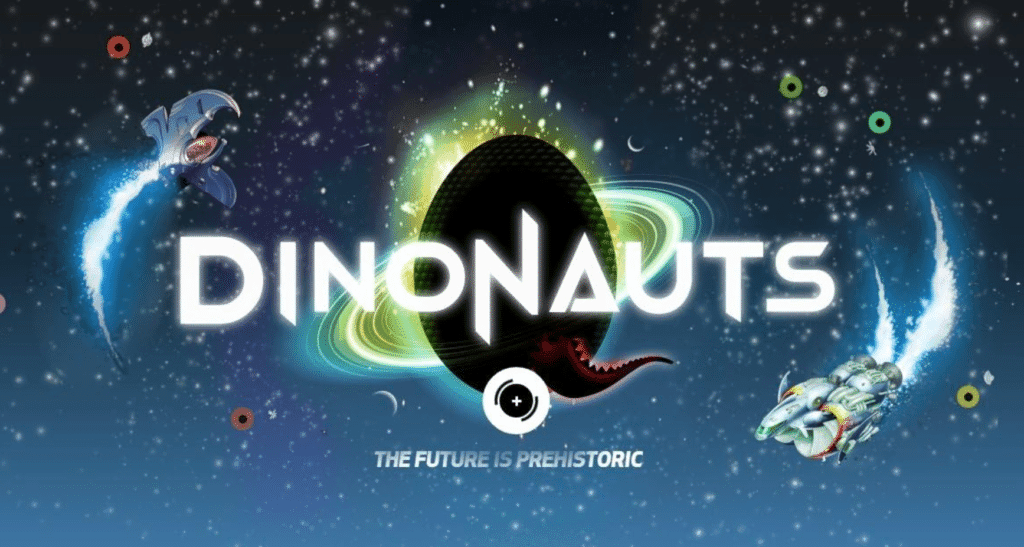
After being beamed up into an invading force’s spacecraft, a mischievous and resourceful Gigantopithecus called Rufus escapes his captors and hijacks an ongoing scientific procedure, resulting in a dinosaur receiving the brain of a long dead insurgent and becoming Trexx, a courageous T-Rex (well, obviously) who has to deal with a stream of alien thoughts and a drive to fulfil a newly-found destiny.

Trexx’s mission is not going to be easy and, if he’s to succeed, he’ll need help if he’s to defeat the hordes of evil Plutonian warriors led by the smart, conniving Ebo Kalif. Time to for Trexx and Rufus to travel space in search of the most exceptional examples of their kind in order to assemble the ultimate team of dinosaur astronauts. Dinonauts, if you will…

Made over a period of ten years in the garage of director Omar Distrakt Jones – here credited with the mononym of Distrakt – Dinonauts harks back to a period of animation which will trigger a pang of nostalgia for those of us who arrived home from school or hauled ourselves out of bed on Saturday mornings to see various weird and wonderful cartoons in which teams of creatures would battle against an all-powerful Big Bad for as many seasons as viewing figures and action figure marketing would sustain.

The sheer enthusiasm for this type of tale is evident and there’s very much a feel of a number of differing offerings from the 80s and 90s, be they Hanna-Barbera, the collaborations of Rankin/Bass with overseas production houses and even a smattering of Ralph Bakshi in the mix (don’t worry, this doesn’t veer into Fritz The Cat territory if you’re thinking about possible damage to any kids watching this). There’s less polish to the end product that any of those studio efforts, of course, but that’s all part of the charm.

Clearly a labour of love, Dinonauts does suffer slightly from the syndrome of putting everything possible on screen just in case there’s no sequel. The plot crams in origin story, team recruitment vignettes and first mission in just seventy-six minutes and there are several points along the way where there seems to be far too much going on, especially with a reasonably large cast of characters and a hefty chunk of backstory to be filled in.

In fact, it’s the moments where Dinonauts takes a breath to kick back and spoof other, popular forms of culture where it works best. The sequence in which Trexx and co show up to invite Toro, ace Triceratops navigator, to join them is a glorious mickey take of gladiatorial combat served up as a Las Vegas-style prize fight, complete with shouty announcer, sponsorship by a dreadful sounding alcoholic beverage called Crud 40 and the event being run under the auspices of the Gorfian Bludgeoning Commission. It’s also the scene in which one of the characters steals an Ivan Drago line from Rocky IV, so what’s not to like?

Elsewhere, there’s plenty of thumping in general, plus a lot of space combat and various wisecracks from Rufus which range from reasonably amusing to astonishingly irritating in time-honoured sidekick tradition. This is a film that also makes jokes at its own expense (or lack thereof), at one point bemoaning the lack of budget which apparently has rendered a planet without colour. For every instance where the action goes on a little too long and flirts with becoming wearisome, there’s a burst of welcome imagination such as the Cosmic 8-Ball or Ebo being given a metaphorical kick in the cods at a meeting of a Space Council which is exactly how those mind numbing trade talks of The Phantom Menace should have proceeded.

The voice talent on display may not have the seasoned nuance of a Kevin Conroy but hey, we were never going to be in the same ballpark here. Everyone in the cast understood their assignment and the enjoyment of delivering purposely stylised dialogue comes across often, particularly the work of Matt Steiner, bringing an educated, casually cruel air to Ebo Kalif, frustrated with the erratic success rate of his underlings and relishing the opportunity to foist a historic, Pathé-esque newsreel on a captured Trexx in a Clockwork Orange style.

The mix of animation styles in Dinonauts may prove a sticking point for those who are looking for a consistent aesthetic throughout and the screenplay occasionally skates over details in order to rush the action to the next punch-up or shootout but overall it’s an entertaining tribute to the television staples of past decades, complete with open-ended assignment and the promise of more galactic arse-kicking to come. If nothing else, stay for the cracking electronic soundtrack by 20SIX Hundred which immediately sent me to seek out their other work the moment the credits stopped rolling.

Dinonauts (2024) featured at the recent Spirit of Independence Film Festival in Sheffield, UK.

Spirit of Independence 2024: Zombie Film With Grandpas and Grandmas

“Never take for granted when someone remembers you.”

Beryl Hsu’s maternal grandmother suffers from mild dementia, diagnosed ten years previously. To keep her engaged and active, her family often pulls together to create and perform various skits in which the still formidable nonagenarian plays a starring role. Their latest project is something of a step up in terms of ambition and scale, a Power Rangers versus the undead short film, shot in and around their home village and involving its residents to fill the supporting roles and appear as zombie extras.

Coupling the trials and tribulations of making a low budget movie with the added complexity of performers with a degenerative condition, can the production overcome the many obstacles in its path to complete the shoot and treat the community to its own, unique version of a glitzy premiere?

Part “Making Of” documentary, part commentary on how creative pursuits can assist with tackling dementia, Zombie Film With Grandpas And Grandmas refuses to drift into the sentimentality and pervading darkness that the subject often invites, instead presenting a story full of hope and good humour, demonstrating just how the right engagement with those folks with the condition can give them a new, vital lease of life as opposed to being cast aside.

Those looking for behind the scenes insights are well catered for, from the generation of pre-production publicity and the initial casting call through to the reveal of a costume department like no other and the various technical issues of filming set-ups which would be quite complex in themselves without having a strong-willed performer who will quite happily wander in a different direction mid-take. As with normal day-to-day interactions outside the filmmaking process, these are dealt with in a loving and caring manner, allowing the actors the time and space to find their way and maintaining a positive atmosphere even when the time on set is rapidly running out.

As someone with experience of family members with dementia, I found both comfort in the film’s message and confirmation of how interaction and a welcoming social environment can transform those who would otherwise withdraw and slowly fade away. There’s no getting away from the fact that it’s a cruel disease, but to confront the situation head on and involve those living with the condition in pursuits which engage the mind brings unexpectedly wonderful rewards.

Be prepared to fall into love with Tsai-Zhong Chin-mei, the feisty, no-nonsense focus of the story, known as “The Beauty Of Zhongli,” due to her glam appearance throughout the years. Already something of a local celebrity, this 94-year old force of nature may not be able to remember anything in the short term but she’s no pushover, giving back as good as she gets and often supplying a cheerful thumbs up to signify that everything’s A-OK with her. As the Pink Ranger of the short film, her on-set antics are both amusing and incredibly touching. Hsu doesn’t shy away from those heartbreaking moments in which her granny can’t remember a line or seems elsewhere but balances that skilfully with her genuine, unfiltered happiness at being part of another wild and wacky collaboration with her nearest and dearest.

The supporting players are also memorable, with hidden talent emerging from a local singing club whose members can’t wait to get in front of a camera. The overwhelming vibe is of a group of people seizing an opportunity like no other, more than willing to make themselves look complete idiots in the name of art and possessing a merry air of self-deprecation throughout. There’s also a nod to the transformative power of karaoke and, as someone who’s slaughtered many a tune at the Celluloid Screams after party, who am I to disagree with that?

Hsu never trivialises the subject in any way, but shining the spotlight on the positive makes for a richer experience than leaning into any potential tragedy, which was apparently something of a sticking point in gaining financial support from the film. I’m glad the approach eventually paid off because the end product is like few others out there, leaving the viewer with both a tear in their eye and a smile on their face.

If there’s a movie released this year that’s more charming and heartwarming than Zombie Film With Grandpas And Grandmas then I want to see that movie (and then say “No, that’s not as charming or heartwarming”). Also, the version screened at Spirit Of Independence contains something that the Taiwanese release of the documentary didn’t include – the 20-minute Memory Guard short itself, which is endearing, funny and thoroughly enjoyable, while cunningly weaving in its own strategies on how to combat dementia. Taiwanese Grandpa Grandma Power Rangers, go!

Zombie Film with Grandpas and Grandmas featured at the recent Spirit of Independence festival in Sheffield, UK.

Spirit of Independence 2024: Trancers

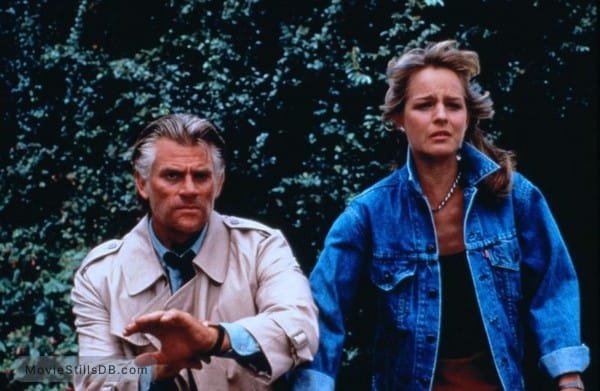
Angel City, the year 2247. Trooper Jak Deth (Tim Thomerson) is a gruff cop whose dogged, extracurricular pursuit of the last remaining members of a zombie-like cult has landed him in hot water with his superiors. Detective McNulty (Art La Fleur) warns Jak that trancer hunting is out of bounds, so Jak reacts in the way that most VHS rental era police officers did, by slinging his badge on the deck and quitting the force.

However, Jak’s self-imposed retirement doesn’t last long as his dive into the sunken ruins of Lost Angeles (nice one) is interrupted by McNulty with the unwelcome news that the cult’s leader, Martin Whistler, believed to have been previously singed by Deth, is very much alive, having gone down the timeline to 1980s Los Angeles. Whistler is inhabiting the body of an ancestor in order to kill off members of Angel City’s Security Council whose forefathers were also present two and a half centuries earlier. As Deth also has links to that particular past – a sleazy photographer called Phil – his law enforcement credentials are reinstated and he’s sent back in time to step into Phil’s shoes and stop Whistler…

If, like me, you walked out of the video shop with whatever the latest Entertainment In Video title was at a certain point in time, the trailer for Trancers would show up more regularly on those tapes than repeats on the BBC. It is one of the greatest previews ever assembled and would often be better than the feature film it preceded. I would say that it spoiled many of the film’s highlights, but that’s not strictly true as those sequences can be enjoyed over and over.

Directed by Charles Band, this possesses all of the can-do scrappiness and budget-squeezing antics of other Empire Pictures releases, but is lifted far above other mildly diverting but also slightly threadbare stablemates such as The Dungeonmaster (making its UK video bow as Ragewar) and Troll by virtue of a smart, amusing script from Danny Bilson and Paul De Meo, a smattering of inspired action set pieces and an iconic investigative duo as Deth teams up with Phil’s date Leena (Helen Hunt) to track down the last surviving Council members, who are to be found somewhere on the mean streets of L.A.

It’s interesting to note that Bilson and De Meo – whose work apparently caught the attention of a certain James Cameron – were also on script duty for the following year’s bizarre sci-fi/World War Two collision that is Zone Troopers, also starring Thomerson. Another dynamic duo well worth a mention is Phil Davies and Mark Ryder, who are responsible for the terrific score which underpins the adventures of the twenty-third century’s grumpiest sleuth.

What’s that? Helen Hunt? Yes, you read that correctly. It’s that Helen Hunt, showing bundles of star quality in her second feature film as the sparky, no-nonsense city guide for Jak, who has little problem believing that her companion is from the twenty-third century, seeing as there’s much weirder stuff happening in her home city on a daily basis. She also introduces Deth, in amusing fashion, to local punk rock culture as they lay low in her sketchy neighbourhood to avoid being discovered by the L.A.P.D. Whistler’s ancestor just happens to be a lieutenant in said organisation and has launched a city-wide hunt for Deth and Leena, who have been framed for murder.

Tim Thomerson is perfectly cast as Jak Deth, bringing his finely honed comedic skills to a role which lands halfway between Chandleresque 1930’s ‘tec and Replicant-chasing Rick Deckard, lightly taking the rise out of both. The weary voiceover of the opening scene, a regular supply of quips and the love/hate relationship with the city he’s only previously studied as an archaeological curiosity are occasionally touching, often hilarious and always entertaining. The enduring appeal of the character, in tandem with Empire Pictures’ general M.O., led to a fun, if slightly undercooked, twenty-odd minute segment in the Pulse Pounders anthology and five full-length – well, full-ish length – sequels. As far as the follow-ups go, definitely check out the second and third. As for the fourth and fifth, Deth completists need only apply and the sixth has Deth stepping into the body of his daughter for most of the runtime.

For all of Trancers’ reliance on snappy dialogue and a plot powered more by ideas than expensive visual trickery, it does deploy a number of effects which still work well in a comfortingly creaky way, with the zapped bad guys disappearing in a flash of light and leaving a body-shaped scorch mark. Deth’s only piece of future kit – the “long second” watch – comes from an era which relied less on snarky couch dwellers moaning about how it could possibly work and more on an audience just waiting to see how it’s going to get Deth out of a monumental scrape.

As for the matte work depicting the suburbs and landscapes of the future, that’s also likely going to provoke snickering from those weaned on two hundred dollar blockbusters but, as Jak says at one point, “Fuck ‘em!” I love what Band and his talented team created with just a fraction of the budget of big studio output, resulting in a film which has more heart, enthusiasm and honest to goodness joy than a dozen modern day superhero flicks.

Forty years on from its release, Trancers continues to be a delight. It’s exciting, often laugh out loud funny, relentlessly imaginative and it has the good grace to get out of your gel-slicked hair in just over an hour and a quarter. Gel-slicked? Well, you wouldn’t want your barnet in any other state because, as Jak Deth reminds us, “Dry hair’s for squids.”

The Spirit of Independence Festival returns for its sixth year to Sheffield’s Showroom Cinema from 27th-29th September. For more information, including tickets, click here.

Hell Hole (2024)

In 1814, a group of French soldiers fighting for Napoleon are lost in bleak Serbian territory. Exhausted, starving and on unfamiliar ground, matters are looking desperate for them until they encounter a local woman who offers them a tasty looking horse. The soldiers have no plans to lead it to water in order to make it drink; all they want is to make it their dinner. Unfortunately, their planned evening of alfresco Cordon Bleu cuisine is curtailed drastically when the horse unexpectedly goes kablooey.

Fast forward to the modern day, where the area is apparently free from de-atomising dressage contestants but now plays host to an exploratory fracking operation, overseen by the no-nonsense Emily (Toby Poser). In addition to fellow Americans John (John Adams) and Emily’s nephew Teddy (Max Portman), a group of locals is on hand to assist with the drilling operation and to provide security. To satisfy any ecological concerns, environmentalists/academics Nikola (Alexsandar Trmčić) and Sofija (Olivera Peruničić) are also along for the ride.

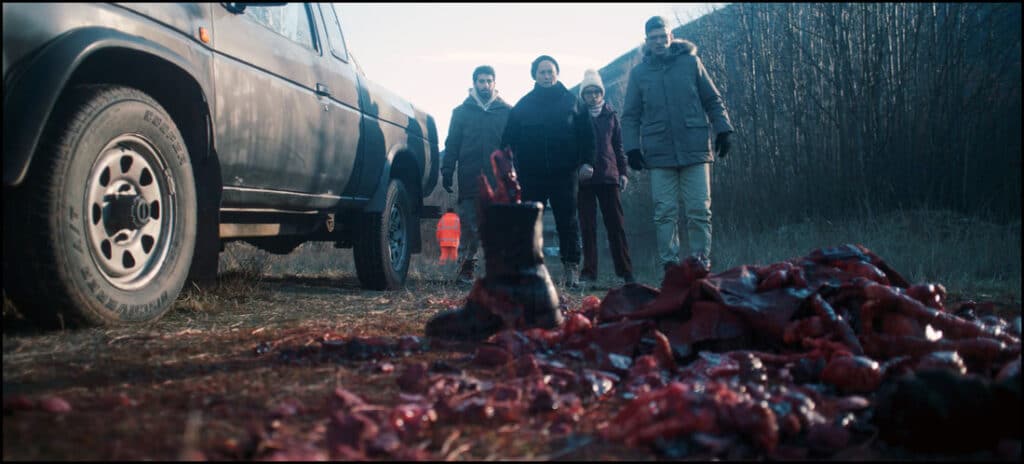
When the initial test finds something a lot weirder than a gas pocket, and with bad weather hindering the group’s escape, the ill-matched workmates find themselves in an on-site face off with a parasitic presence that is looking for the ideal host. Yes, it’s an updated version of Auf Wiedersehen Pet meets The Thing as the Adams Family turn their attention to the monster movie, and it’s every bit as wild and distinctive as I hoped it would be.

This time out, it’s less of a family affair, with no Zelda Adams to be found and Lulu Adams on co-writing duties only. Shot far, far away from their usual stomping ground, that feeling of Toby and John stepping into an unfamiliar arena in which their usual filmmaking compadres have been replaced by strangers translates fascinatingly from the production to the onscreen action, with all of the awkwardness, cultural differences and communication issues that kind of project can bring, along with an ultimate need to pull together to resolve the larger problems afoot.

For anyone who thought Where The Devil Roams was a little too oblique and grisly, I can assure you that Hell Hole has a huge amount of fun with its premise and there are plentiful laughs to be enjoyed. Yes, some of the humour is of the type marked “I’m really not sure I should be finding this amusing” and the workplace comedy is downplayed to the point that most mumblecore flicks wish they were that deadpan. However, take a couple of minutes to tap into the vibe and you’ll be chuckling at weird office banter one moment and guffawing at the most dreadful things the next.

Of course, it’s not just gross out body horror and running gags about tagine. Within the confines of an increasingly splattery creature pic, the screenplay makes sharp observations and opens up discussions about big themes: bodily autonomy; American involvement in the affairs of foreign countries; profiteering from an increasingly unstable planet; and, because we’re talking The Thing – and, by extension, Alien – the male fear of pregnancy. As is the case with previous films from the Adams stable, the subtext is not that of the finger wagging lecture variety, it’s just a little extra to chew on which you wouldn’t normally find in a film about a many-tentacled varmint causing unfortunate folks to explode in gorehound-pleasing showers of blood and guts.

Considering the limited budget, the creature work by Masters FX Inc. is impressive, with the monster’s appearance riding the line between disgusting and hilarious, especially when it’s slobbering over its next target. For me, the digital effects from regular collaborator Trey Lindsay don’t quite match up to the practical stuff, but I grew up watching 1980s horror on VHS so maybe I’m showing my bias. Having said that, there’s still something undeniably gross about seeing an animated feeler emerging from a character’s eye.

With a slightly larger set of characters on which to focus, the Serbian drilling team, each one clad in orange overalls, gets a little lost in the shuffle. Their members, although not interchangeable cast offs, are more often than not ushered in as critter fodder but there’s a sneaky through line in the story which suggests, in this particular situation, the local employees are the ones which will be chucked in front of the threat first. And they are.

Poser and Adams are on reliably good form here, the former’s reluctant den mother also coming to terms with an ethical 180 in her career after her solar power business failed, the latter’s laid back cool coming under severe – and, it has to be said, comedic – stress. Trmčić’s and Peruničić’s characters entertain in diverting supporting roles as haughty intellectual and smart/klutzy science babe respectively, which allows them – and the script – to take at least some time out from the entrail spilling to consider the moral and scientific issues. This also gives the audience a breather or two before the next poor sod finds themselves either forcefully entered by a determined, parasitic presence or blasted into bloody chunks. Or both.

The score is great, too, with Adams’ chunky, fuzzy guitar blasts sometimes acting as the heartbeat of the increasingly frazzled protagonists as they creep or blunder around, wondering what’s around the next corner, sometimes serving as an exclamation point to the latest pile of rank-looking viscera or the realisation that the ongoing plight has somehow turned even more grim. It’s the perfect accompaniment to the family’s skewed, punk rock approach to familiar subgenres.

So, given the differing production circumstances of this latest opus and taking the plot synopsis at face value, is Hell Hole a glimpse of the Adams family embracing the mainstream? Absolutely not. Even with the drastic change of scenery, the overall feel remains satisfyingly offbeat and the European settings are imbued with the same sense of foreboding as their previous American counterparts, whether it’s the shabby, towering, industrial complex or the surrounding forests, where everyone can hear you scream but finds they’re not in much shape to do anything about it.

The overriding ethos of getting maximum bang for the buck is still firmly in place. Some of the narrative decisions made along the way would only be found in an Adams Family movie. If you were worrying that this was somehow going to degenerate into something more akin to a gun for hire job, worry not. Hell Hole is different yet – in terms of style, wit and regular ventures into the oddest of territories – it’s more of the strangely comforting same. Fans will miss Lulu and Zelda, no doubt, but there’s still so much to savour. The tale may be as old as time (or it’s at least clocked up a couple of centuries in this case) but there’s an uncommon freshness to the way it’s related here. Hell Hole? Hell, yes!

Hell Hole (2024) will be released on Shudder on August 23rd.

Ganymede (2024)

High school wrestling star Lee Fletcher (Jordan Doww) is a clean living, God-fearing asset to his community, respected by his peers and adored by his churchgoing family. The world Lee thought he knew is about to change as he finds himself developing a crush on openly gay classmate Kyle (Pablo Castelblanco). Fearing that the Fletcher legacy is about to be damaged forever, his family call in local New Dawn Church’s pastor Royer (David Koechner), who suspects that Lee has been possessed by a creature which must be exorcised…

Colby Holt and Sam Probst’s damning look at the suffocating politics and prejudices of small town life is designed to make the viewer increasingly angry as Lee’s parents and Royer refuse to allow Lee to work through his own feelings, focusing instead on what they perceive to be a poison within Lee which must be purged. An initial talk between the pastor and his latest salvation project soon heads down the conversion therapy route, complete with ECT sessions.

Holt’s screenplay paints a chilling picture of a town where reputation is everything and success is gained by conforming to social norms. Those norms, inevitably, are decided upon by people for whom evangelical religion is the cornerstone of their existence. Koechner, possibly better known for being a gifted comedic performer, is terrifying here, playing a fire and brimstone preacher convincing his flock they’ll be going to Hell if they don’t live the “right” way while indulging in thoroughly reprehensible practices in the name of banishing “reprobate thoughts”.

Of course, there are skeletons in the closet of all of these supposed pillars of society, most notably Lee’s mother Floy (Robyn Lively), who still keeps a box of possessions which belonged to her dead brother Neal, who took his own life some years ago for reasons which, if not obviously apparent, will have parallels with the events of the present. Lively is very good as a conflicted soul struggling to reconcile her public persona with a tolerance which is perennially squashed by psychologically domineering spouse Big Lee, played by a chillingly restrained Joe Chrest.

Care is taken not to overdo the supernatural trappings of the story. As unnerving as they are, Lee’s visions are restricted to moments which punctuate the everyday, arguably more punishing trials of his educational and home life. Ganymede doesn’t fall into the trap of having everyone be a hateful bigot, either, giving the more sympathetic characters enough time to land, specifically Anna Schlegel as Ms. Kimpton, a school counsellor a lot of viewers would love to have had, and Sofia Yepes as Kyle’s mother Kim, fiercely protective and incredibly proud of her son.

The subplot regarding Kyle’s creation of a performance piece may, on first glance, feel the least necessary in a film which is steadily turning the screws of tension, but it provides a vital contrast between a life where an open mind is key and that of someone who is constantly told that the only way they can be shielded from the ills of the world is if they reject certain feelings and behave in a way that has been deemed by others to be decent. It certainly helps that Castelblanco is smart, amusing and loveable from the get-go.

If the final act of Ganymede resolves its weighty matters a little too swiftly and neatly, it’s also something of a relief that those resolutions are not nearly as doom-laden as they could have been. That’s not to say that there isn’t the odd, bloody surprise to be found, but the main focus is on characters looking within themselves to confront deep-seated issues which have threatened to destroy the person they once were, or should be. Viewers may not get effects-laden sequences of folks being dragged in or out of Hell, but that was never the movie’s intention and the route Holt and Probst take is much more satisfying.

Closing with a “what happened next” montage, Ganymede allows the audience a welcome couple of minutes to decompress. The message that fundamental religion and bigotry are bedfellows isn’t a new one, and nor is the suggestion that some of those people are using that bigotry to cover up their own perceived, moral transgressions, but it’s the decision to treat the material in such an unsensational way that gives the piece its power. A lot of this movie made me want to shout at the screen. Mission accomplished, I’d say.

Ganymede (2024) featured as part of the SoHome Pride Festival 2024. Interested in attending Soho Horror Fest – in person or virtually – in future? Check out their site here.

Kill Dolly Kill (2023)

Who of you out there has seen Heidi Moore’s 2016 comedy horror pic Dolly Deadly? No problem if you haven’t, because this sequel – also helmed by Moore along with Anthony David and Daniel Murphy – opens with a quick catch-up, detailing how young, trailer park dwelling Benji took revenge on those who tormented him, ultimately transforming into the lethal, titular drag queen.

Years later, and Dolly’s back! Actually, she never went away, having garnered a cult following among the citizens of Tromaville as she hacked and slashed her way to local celebrity status. Currently sitting pretty at the top of the Serial Killer Of The Year contest, competition emerges in the form of Slasherella (Amy Vodkahaus). In cahoots with corrupt Mayor Harry Cox (Tom Komisar), Slasherella’s schemes land Dolly (Donna Slash) in the insane asylum with little hope of release. Can Dolly escape and claim the title of Tromaville’s superior slayer?

If you’re not a fan of the Troma style of filmmaking, Kill Dolly Kill is unlikely to convert you. It’s packed with gonzo gore and attempts to mine as many laughs as it can from various bodily functions. With various combinations of farting, defecating or vomiting as the punchline to a number of gags, it’s safe to say that sophistication is not on the menu. If that wasn’t enough in terms of alienating a potential audience, Dolly’s adventures this time out take the form of a musical. This leads to regular pauses in the action to accommodate a slew of mostly rock- or punk-inflected numbers, written by Komisar.

In the main, the songs are fun, sporadically catchy, and fit well with the movie’s trashy aesthetic. At the same time, loading the film with tunes also points up just how little plot there is and Dolly’s extended stay in the Tromaville Psychiatric Ward has her treading water in the second act, when she should be treading on the balls of evil male nurses and breaking out. As a figure who embodies revenge, it’s a long, long time before Dolly gets back to what she does best.

The grab bag approach to the different visual styles employed by Kill Dolly Kill may indicate a project which is happy to throw what it likes at the wall and doesn’t really care if none of it sticks, but the mix and non-match approach endears just as much as it confounds. Animation, comic book panels, spoof sitcom scenes (with accompanying canned laughter) and a parody of a TV series’ opening title sequence sit alongside the plentiful nudity and splattery slaughter. Characters such as Public Defender Maxwell Weiner (a jittery Donny Gonzalez and Detective Walt Wednesday (Mark Justice) are introduced as possible main players in the ongoing mayhem and are then sidelined in quick order. Much of this feels developed on the fly with an anything goes ethos as to what might happen next. In short, prime Troma fodder.

This clearly takes its inspiration from the films of John Waters, with the featured competition possessing parallels with the “Filthiest Person Alive” crown so coveted in Pink Flamingos. It’s nice to see the homage being paid but the wit, satire and sheer bad taste of Waters’ most transgressive works is absent here. Yes, the kills are surprisingly brutal for something this daft and there’s an enthusiasm for crowbarring in unnecessary sexual content which is either admirable or repellent, depending on your viewpoint, but the whole thing lacks the verve and the skilfully effortless offense generated by Baltimore’s finest auteur.

It’s unlikely that your casual genre viewer is going to stick with Kill Dolly Kill but that could be said for any number of titles from the Troma stable. This is a micro-budgeted feature which is not looking to be the next indie breakthrough sensation. This is also a micro-budgeted feature which wants you to laugh at characters called Cox and Weiner and has someone call 911 to warn the forces of law and order of a “ho sighting”. I’m not going to lie, I laughed at that one.

Kill Dolly Kill ticks many of the boxes expected of a Troma release, including the now de rigueur Lloyd Kaufman cameo. Donna Slash’s performance is excellent and just about holds everything together, but for me the overall onslaught was too bludgeoning, too scattershot for the piece to work as a whole. If Dolly’s thinking of a trilogy, maybe next time the focus should be on murders rather than meanderings.

Kill Dolly Kill (2023) featured as part of the SoHome Horror Pride Festival 2024.

Mamántula (2023)

Detectives Lorena (Lorena Iglesias) and Marta (Marta Bassols) are called in to investigate a bizarre murder in which the remains of the victim amount to little more than a puddle of goo. This puts them hot on the trail of a serial killer (Moisés Richart) who – let me check my notes here – is a giant, alien tarantula disguised as a human with an insatiable craving for blood and semen, which is necessary for him to construct a web to return to his original dimension. He acquires this by – quick check of the notes again – fellating his unsuspecting prey to death. Yes, you did read that correctly, but feel free to go back and read it again just to be certain.

Ion De Sosa’s quite frankly head-scratching concoction may only run for forty-eight minutes, but that forty-eight minutes brims with bewildering oddness, plus so many close ups of penises that you’ll be wondering when one will have your eye out. Safe to say that, for a great many viewers, watching some bloke receiving a lethal blowjob will be the cue for them to find something else to watch but, in a twisted way, it’s their loss if they don’t see this through to the end, if only because there’s truly little out there that’s so casually batshit.

In some ways, this plays out as if it’s a cosy thriller pilot that was sucked (!) into an alternate universe where the controller of ITV just didn’t give a toss about any post-watershed rules, although the workplace relationship of Lorena and Marta heads to the bedroom in a timeframe far quicker than any “will they, won’t they” played out over several seasons. Many of the staples of your standard police procedural are present and correct here, including a panicked public and the prospect of the case being handed over to rival cops. Okay, yes, the main suspect is an arachnid from outer space, but there are still witnesses to be questioned, leads to be followed and chase sequences to be deployed at key moments.

As the body count rises, Mamántula’s thirst becomes ever greater and a potential deviation from his overall mission is noticed by worried superiors out in the galaxy somewhere, leading to the following line: “He’s swallowing a lot of spunk. He already seems different.” I bet whoever rendered the subtitles for this remembers that day at work. As the net closes in and our ‘tecs find themselves ever closer to unravelling the overall web of weirdness, action beats and ever more gooey effects await in a climax that provides some degree of unexpected closure, but still leaves the viewer wondering just what the hell was going on.

Using the word “bizarre” to describe Mamántula is like saying Nic Cage’s performance in Mandy is a tiny bit unhinged. Avant-garde to the point of having to redefine that term, its mix of fantasy horror, homoerotic set-ups and crime series trappings places De Sosa’s film on a shelf all of its own. The Berlin settings lend the tale a smear of urban grit, but that doesn’t prevent a detour out into a glittery cosmos where a gathering of space spiders ponder the proceedings down on planet Earth. Say what you like, you don’t get that during your weekly dose of Law And Order.

Packing a number of daring ideas into its maxi-short/mini-feature runtime, Mamántula may be purposely short on explanation, but it’s long on offbeat characterisation and gloopy gore scenes. It also possesses a surprising amount of heart and humour, which goes some way to offsetting its graphic, absurdist excesses. This is outlandish genre fare for people who already like outlandish genre fare. Ultimately, it may not have the time to develop everything set out in its unique vision but, if you can stay the course, you’re unlikely to forget this one in a hurry.

Mamántula (2023) featured as part of the SoHome Horror Pride Festival 2024.

Cannibal Mukbang (2023)

Socially awkward customer service rep Mark (Nate Wise) bumps into the vivacious, outgoing Ash (April Consalo) at a convenience store, before Ash bumps into Mark with her car. Waking up at her place, Mark thinks it’s the last place a guy like him should be, but Ash allays his initial panic by not freaking out at the small detail of the metal plate in Mark’s head and then reveals that she’s an Internet celebrity in the bizarre world of mukbanging, a subgenre of online videos involving consumption of vast quantities of food for a hungry audience.

As their unlikely liaison blossoms into something potentially serious, Mark finds out more about Ash, his curiosity leading him to discover just how she sources her delicious fare. Ash is luring society’s undesirables to their doom, turning them into tender morsels and Mark, as an initially unwitting accessory, is now along for the ride. As the bodies pile up and their relationship is tested, will love win the day?

Blood. Sex. Food. So goes the tagline for Cannibal Mukbang. And there’s no denying that all three of those can be found in Aimee Kuge’s fusion of romantic comedy, vigilante thriller and gore flick. Meet cute turns into meat cut as Ash transforms from manic pixie dream girl into mad as hell destroyer of predatory incels. It’s a bold narrative decision but the skill of the writing – complete with uncompromising origin story – plus an enthralling, complex performance from Consalo – works to keep the viewer gripped, if not always totally on side. In the same situation, I can’t say I wouldn’t have been helping Ash rid the streets of scum. Don’t be judgey.

Although the movie spends most of its time focused on our dubious, nervy hero and the object of his affection, the supporting turns are given space and time to land, including those of Kathryn Whistler as Mark’s online therapist Dr. Klein and My Bloody Banjo alumnus Clay Von Carlowitz honing his corporate douche routine as Mark’s boorish brother Maverick, who will ultimately prove pivotal to the plot as the mayhem escalates.

Cannibal Mukbang succeeds on an impressive number of levels, delivering on the carnage for the gorehounds but also hitting the mark time and again as an accomplished romantic comedy (okay, the most twisted romantic comedy you’re ever likely to see, but it still works beautifully). It has an acute understanding of that genre’s tropes, replacing the usual sugary montage of rictus grins and differing date locations with a succession of gleefully mounted murders, perfectly reflecting this film’s dark yet amusing vibe.

And there’s not just spoofing afoot. Dig a little deeper and Kuge’s screenplay has many things to say about toxic relationships, addiction and the struggles in breaking the cycle of dependency. Having been fed the forbidden fruit – well, forbidden meat – Mark is confronted with the shocking revelation that nothing else will truly satisfy, leading to him quitting his (admittedly rubbish) job and ignoring most other things in favour of Ash.

Taking this on its title alone, you could be wondering how quickly it will head down the Troma route. As a genuine fan of many flicks from that particular filmic stable, I’m not of the opinion that choosing that kind of style is a bad thing, but Cannibal Mukbang’s anarchic moments come from a vastly different, far more intriguing place. The shocks and the laughs are earned and the emotional stakes possess an uncommon authenticity, bolstered by the chemistry between the two leads.

Aesthetically, it’s also a cut above. Careful choices of lighting enhance the mood and the quirky costume design belies the fact that it’s also brilliantly calculated to spark our pre-conceived expectations about character. The cinematography is noteworthy too, whether it’s conveying the cosy cocoon of Ash’s home, the shabbier urban surroundings or a superb, grainy flashback sequence which economically, brutally outlines a defining event in our mukbanger’s past.

A piquant debut, Cannibal Mukbang is an unexpected delight, blending its genres with aplomb and serving up an appetising treat for the more discerning horror palate, especially one that enjoys a combination of the sweet and the savoury. Its unwillingness to compromise on its ingredients extends to a final course which may not be everyone’s cup of tea but, even as a Yorkshireman and therefore committed tea drinker, I’ll admit there are gourmet experiences which can’t be rounded off with something comforting. This is one of those experiences.

Chow down on this with gusto. Aimee Kuge has cooked up a storm.

Cannibal Mukbang (2023) featured as part of SoHome Horror Pride 2024.

Saint Drogo (2023)

Caleb (Brandon Perras-Sanchez) and Adrian (Michael J. Ahern) are a couple whose relationship is heading for the rocks, so they take a make or break trip to an off-season Provincetown in Cape Cod, where the atmosphere seems off from the start and an oddly friendly local called Eric (Matthew Pidge) assumes both the role of their guide and the hitherto missing element of a throuple.

That’s not a spoiler as such and should also act as a primer for the amount of sex between guys that takes place in this movie. You can ditch both the film and the review right now if you’re going to have conniptions about this. Also, the fact that I’ve reviewed The Girl With The Haunted Vagina, Poor Things and the forthcoming Mamantula doesn’t mean that I’m assuming the role of Warped Perspective’s sexy times correspondent [though the role is yours if you want it – Ed.]. Trust me, you do not need me in that position. Please excuse my choice of words.

As a matter of fact, it’s the sex that underpins the plot to a certain degree, acting as a pointer to the hedonism lurking just beneath the surface of this eerie, deserted destination and to the ever shakier foundations of Caleb and Adrian’s relationship, done few favours by a new, intriguing third party. This also strengthens Caleb’s resolve to investigate the disappearance of previous partner Isaac (Tradd Sanderson), about whom he has been experiencing vivid, graphic nightmares.

I should point out that Saint Drogo is from the filmmakers who brought us the micro-budgeted, gonzo, unashamedly queer, slasher riot that is Death Drop Gorgeous. I should also point out that this film is a marked progression in terms of filmmaking maturity. I’m never going to pretend I didn’t find Death Drop Gorgeous a total hoot, but I know some of you out there couldn’t get on with it. To you folks, fair play, but I’m urging you to give this one a try. This sophomore effort is a complete 180 in terms of tone and there’s a definite leap forward in the plotting, the writing and the visual aesthetic while still keeping those outlandish gore sequences firmly in place.

Overcoming a slightly shaky and occasionally stilted opening act, Saint Drogo grows in confidence and hits its stride as the mystery comes into play, with every new character a potential bad guy in surroundings which are alien even to those who should normally feel at home there. There are sharp asides as to what makes gay society tick and the forces at work which set norms and behaviours, even in groups which would initially appear to be outside of expected controls.

Coastal towns – offseason or not – always make for locations which are fertile ground for attracting the other of all types. Think Potter’s Bluff in Dead And Buried or the alternate vision of North Yorkshire seaside town Scarborough which Rose Glass provided in Saint Maud. Here, P-town is a mix of actual, modern day socioeconomic concerns, skewed further for fictional effect by a folk horror element which recalls, inevitably, The Wicker Man. The shadow Robin Hardy’s movie has cast over the subgenre is impossible to ignore but, if you thought Howie’s demise was a cruel one, just wait until you see what Saint Drogo has in store come the final act.

Whereas the violence in Death Drop Gorgeous was generally OTT enough for a good giggle, the grue here is positively chilling. Limb breaking, disembowelling and decapitation is seen in lingering, hideous detail as the viewer hopes against hope for unlikely, last minute salvation that, of course, doesn’t happen. I’ve watched the movie three times now and there are certain moments which lose none of their power to shock.

Perras-Sanchez and Ahern make for a sweet but bruised partnership and the opening stanza shows how their affinity for each other has taken a number of hits over the recent past. As much as the viewer wishes them the best, there’s a sense that the trip they take is too little, too late and the film plays upon this as Caleb becomes increasingly suspicious of their holiday haven’s residents and looks for the secret, all-powerful society he’s convinced is lurking behind the town’s deceptively shabby façade.

Examining the politics of same sex relationships with a startling side of splattery set pieces and keen observations on the transformative – but not always positive – influence of tourism, Saint Drogo is a sea change from the Death Drop Gorgeous guys. It’s the follow-up film you would have not expected and it is well worth your time to see how their craft is developing apace.

Saint Drogo featured at the SoHome Horror Pride Festival 2024.