 A fairly solid point about Rawhead Rex is made in the accompanying press release for Arrow’s new Blu-ray edition. It’s long been said that Clive Barker, who wrote the screenplay from his own short story for director George Pavlou, was so appalled with the resulting film – not to mention their earlier collaboration, Underworld (AKA Transmutations) – that he decided he would no longer put his work in the hands of another director, and opted to personally take the helm on his next film, 1987’s Hellraiser. And given what a genre-redefining classic that turned out to be, it can be argued that Rawhead Rex is indirectly responsible for changing the face of horror in the late 1980s and beyond.
Of course, it may change things a little that in the extras Pavlou dismisses this as fan gossip nonsense, and that Barker’s plans to direct Hellraiser were already in place; and the timelines would suggest Pavlou’s correct there, given Hellraiser was into production within months of Rawhead Rex’s premiere. But either way, we get the impression that Rawhead Rex ultimately boils down to nothing more than a funny footnote in the annals of 80s horror. This may well be the case; but it’s a very, very funny footnote, never ceasing to entertain throughout every woefully, wonderfully misjudged minute of it. Whether this was entirely the desired effect is another matter, but hey, an enjoyable film is an enjoyable film.
 Where Barker’s original tale from Volume 3 of the Books of Blood was set in a village near London, the movie shifts the action to rural Ireland (reportedly for tax reasons). We open on a farmer trying to shift an ancient standing stone from one of his fields. In so doing, he unwittingly releases the monster of the title, a carnivorous beast which has been buried there for untold centuries. Around the same time, American historian Howard Hallenbeck (David Dukes) is in the village with his wife Elaine (Kelly Piper) and their two children, conducting research. Hallenbeck suspects the local church was built on the site of a temple venerating something much older than Christ, something which the current clergymen would rather he didn’t find out about – and his suspicions would appear to be confirmed by the sudden emergence of a horrifying flesh-hungry giant terrorising the locals. But things are going to get a whole lot weirder and more personal before Rawhead’s reign of terror is over.
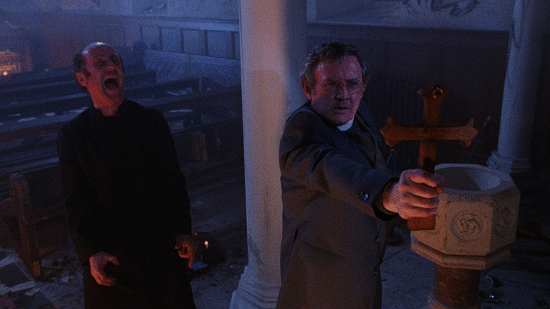
In common with most of the Books of Blood stories (of which it’s debatable how successful any of the film adaptations have been, Candyman aside), Barker’s tale was always going to be a bit of a challenge to bring to the screen. While Rawhead Rex is indeed a hulking monster with an appetite for human flesh, he’s also an ancient, sentient being once venerated as a god, whose desires and fears are dictated by primal sexual impulses. However, as we’ve seen from that other mid-80s UK literary adaptation Lifeforce (based on Colin Wilson’s The Space Vampires), translating such high-reaching literary ideas in a mass appeal horror movie may be easier said than done. Small wonder, then, that – not unlike Lifeforce – Rawhead Rex comes off as high camp B-movie horror with a bit of perversity and blasphemy thrown in just to tart things up a bit. Again, though, that doesn’t by any means render the film lifeless or dull; far from it. In the extras, actors Hugh O’Conor and Cora Venus Lunny, who played the Hallenbecks’ young children, state that even they were aware at the time that it was a somewhat ‘schlocky’ production. The mostly Irish cast reportedly features some of the most esteemed figures from the country’s theatre, and the bulk of them spend much of the film with vaguely bewildered expressions on their faces. No one seems to be having more fun than Ronan Wilmot as the deranged Verger Declan, driven mad by the influence of his new god Rawhead, joyous in his rejection of his old Christian ways. If there’s one scene in the film unlikely to be forgotten, it has be Declan’s – ahem – baptism as a devotee of Rawhead.
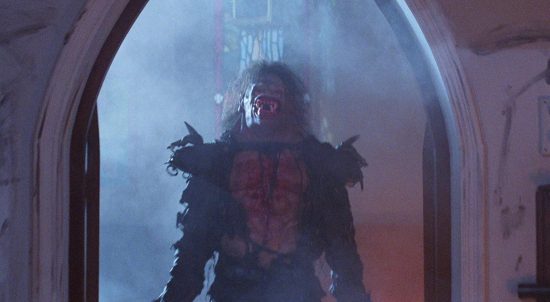 Above all else, though, it’s Rawhead himself that is the crux of the film’s appeal. Where Barker may have envisaged a ravenous, spiny, razor-toothed, nine-foot phallus (yes, he’s called ‘raw head’ for a reason – one wonders if this was one of the titles the author dreamed up whilst under the influence of special cookies), what we actually have here is actor Heinrich von Schellendorf (in his sole screen role) snugly squeezed into a rubber suit and mask with a fixed expression, swirly red LEDs for eyes, and heavy metal-influenced hair and dress sense, somewhere between a Power Rangers bad guy and a member of Gwar. Being an 80s horror movie, Rawhead Rex obviously doesn’t favour the less-is-more, keep the monster off camera approach: he’s on screen a lot from early on, and his whole presence personifies the film. He looks utterly ridiculous and clearly not real; but we all knew that as soon as we sat down anyway. Best to just embrace the absurdity and go with it. Again, this certainly seems to be what the cast are doing, and any attempts to inject some real pathos into proceedings (take David Dukes’ cries of paternal despair as he struggles valiantly with a turnstile) only serve to make the whole thing ever more ridiculous. Slap on a healthy portion of equally unconvincing gore and stunts, one of the most flagrantly gratuitous topless scenes from all 80s horror (yes, that’s saying something), and a finale which makes very little sense no matter how heavily under the influence the viewer might be, and it all adds up to some prime Friday night fun.
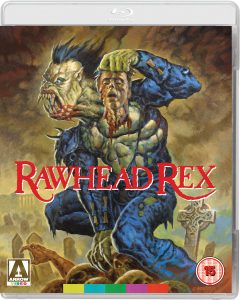
And now, to cut and paste the same line we’ve been slapping on the end of these reviews for the best part of a decade: it’s another great edition from Arrow Video. The film looks as good as you could hope, and we have a couple of commentary tracks (one featuring George Pavlou in conversation with Stephen Thrower), plus a bunch of interview featurettes with the cast and crew, comics artist Stephen R Bissette discussing an abandoned graphic novel adaptation of Barker’s story, plus the original trailer and an image gallery. The first pressing of the blu-ray will also be accompanied by a collector’s booklet written by Kat Ellinger.
Rawhead Rex is released to UK Blu-ray on 14th May from Arrow Video, and is available now on Arrow Video’s Amazon Prime channel.
 The 1990s may have been a boom period for the psychological thriller, but it’s debatable as to just how fitting a description that is to many of the films classed as such. In Hollywood, the bulk of them tended to be half-baked Silence of the Lambs knock-offs or sensationalised Hitchcock updates; in either case, the emphasis tended to be more on stylised scares and theatrics than really incisive drama that got under the skin and into the heads of both the protagonists and the audience. However, Japanese writer-director Kiyoshi Kurosawa’s 1997 film Cure – now getting its first UK home entertainment release thanks to Eureka’s Masters of Cinema imprint – is about as psychological a thriller as you’re ever likely to see.
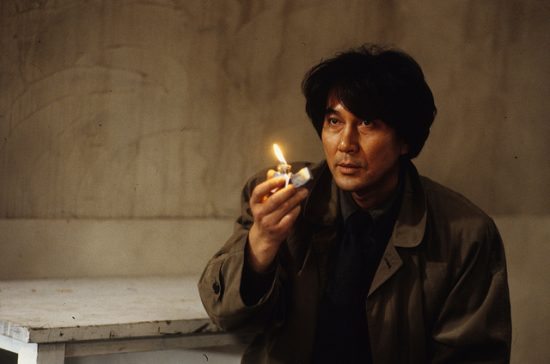
 Kôji Yakushi is Kenichi Takabe, an outwardly calm and collected police detective living under tremendous pressure. At home, his wife Fumie (Anna Nakagawa) is struggling with the onset of early dementia; at work, he has a bizarre series of murders to investigate. The victims and the perpetrators seem to have no connection to one another, yet every murder fits the exact same MO with identical wounds, and in each case the murderer immediately confesses, claiming they didn’t want to do it but had no control over their actions. Takabe’s investigations soon lead him to Mamiya (Masato Hagiwara), an emotionally distant young man who seems to be suffering from short term memory loss, but has a strange charisma that makes all those who meet him struggle to resist his manipulations. The question is, can the tough but tormented Takabe hold out against Mamiya’s mesmerism long enough to stop the killing spree?
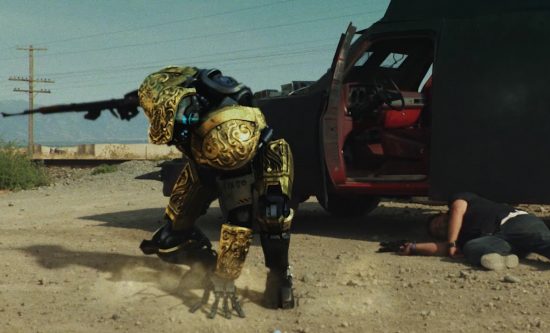 Like most of us who were born into the late days of the 20th century, I grew up convinced that by the time I was an adult there’d be robots everywhere, either serving menial jobs and/or enforcing the law, or overthrowing mankind as the dominant life form on the planet. As with so many lost childhood dreams, there’s an odd blend of relief and regret that none of this has come to pass, even if the role technology plays in our lives has changed substantially. But one thing technological advancements have ensured is that representations of robots in film and TV are more sophisticated than ever.
 Presumably it was in the interests of making it look more traditionally cinematic that the digitally-shot film was given the Grindhouse treatment; that scratchy, battered old print look that was briefly popular in the indie scene 5-10 years back. This is an odd move in some ways, as while Cartel 2045 may evoke a RoboCop/Terminator/Predator-esque tone, it doesn’t directly ape a 70s/80s aesthetic. However, this move does mean the film mostly avoids the cheap-as-chips DV look that makes so much of today’s low-budget fare off-putting.
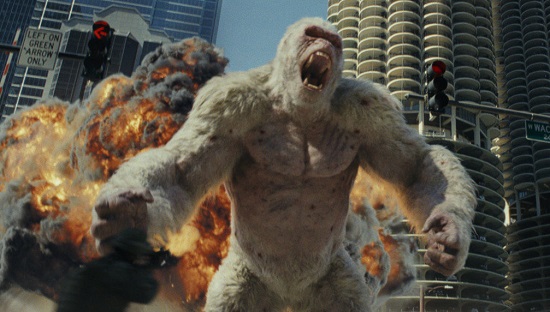 I know I’m far from the only one delighted to see that giant monsters have at last come back to the forefront of blockbuster cinema – and it’s intriguing to note how much of this is the handiwork of studio Warner Bros. They might still be finding their feet when it comes to their superhero movies, but they’re really getting the job done when it comes to big battling beasts: Pacific Rim,
 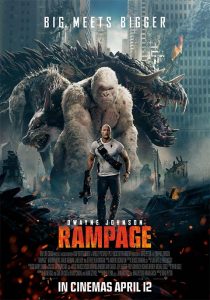 Johnson is… well, he’s Dwayne Johnson. Remember how in most old Jackie Chan movies, they just call him Jackie? It really feels like they should just do that with Johnson’s movies too by now, as every single movie he does is a minor variation on the persona that’s made him such a bankable star. But hey, for the purposes of clarity, here Johnson is Davis Okoye, a former Special Forces operative turned primatologist (regular career path? Who knows, who cares, it’s a monster movie). Naturally, he’s The Best There Is in his field, with an unusual ability to communicate with apes; but he has an especially close bond with George, an ultra-rare albino gorilla who he rescued from poachers as a baby (yes, I looked it up, baby is the official title for a baby ape), and has raised to adulthood, even teaching him sign language – but, regrettably, not linking him up to a speaker that interprets signing and speaks it out loud, like in that much-loved 1995 classic, Congo.
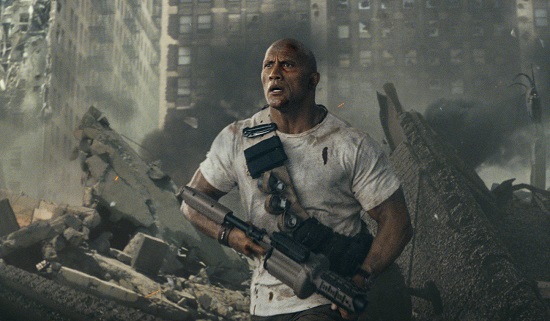 All of it adds up to a popcorny blockbuster that might easily have seemed a bit samey and forgettable amongst the many large scale cinematic spectacles of recent memory, were it not for one key element: Dwayne Johnson. If you’re not already sold on Johnson as a leading man, Rampage probably won’t do anything to change your mind, but for everyone else his presence makes all the difference. It’s been quite a while since Johnson and his sometime rival/co-star/arch nemesis Vin Diesel first rose to prominence in Hollywood, leading many to declare them the new Stallone and Schwarzenegger – although at the time, the jury was out as to which was which. When 9/11 put the old school action genre out of favour, it took a while for both actors to get back to the gung ho man’s man roles they had always coveted, but now that the dust has settled, it seems safe to say Johnson is very much the new Schwarzenegger. Not since Arnie has a leading man been at once so ridiculously superhuman, yet inherently likeable and relatable, with a knack for lending a sardonic wit to a movie that makes it clear to the audience that they’re in on the joke. (Diesel, meanwhile, clearly fits the Stallone mould, as he struggles to carry much weight outside his signature franchise and takes himself way too seriously.)
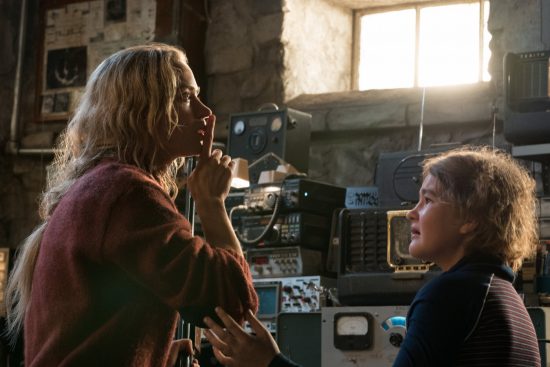 How times change. A decade ago, it might not have come as a surprise to see a horror film which opens on the Platinum Dunes logo top the box office on its opening weekend; but we certainly wouldn’t have expected it to be an all-new original work, much less – gasp – a good film. There’s been a bit of buzz this week over the Michael Bay/Brad Fuller-run production house announcing that they’re done with horror remakes for good, although many years back they had quietly declared they intended to step away from the genre en masse; I wrote a very snarky article on the subject at the time entitled There Is A God: Platinum Dunes Quit Horror (don’t look for it, it didn’t survive the move from this site’s former incarnation Brutal As Hell). However, in the years since Platinum Dunes have brought us the thoroughly enjoyable TV series Black Sails, and – in cahoots with Blumhouse, who have long since stolen their crown as kings of mainstream horror – they’ve co-produced the provocative and often-entertaining Purge series, as well as the two Ouija movies (of which, Mike Flanagan’s second film at least was good).
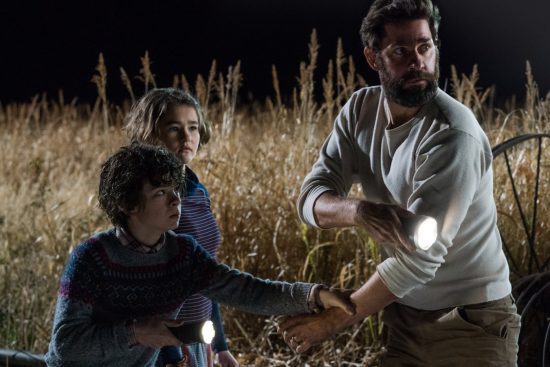 Sadly but not entirely unexpectedly, this has resulted in the film getting those same utterly bizarre “it’s not really horror” claims that plagued Get Out and It last year. Such claims are, of course, total unmitigated bollocks – and, on a related note, much the same can be said of those declarations that it can’t be real horror because it’s rated PG-13 (although, as tends to be the case with anything horrific, it’s been passed 15 in Britain). While graphic gore may be kept to a minimum, there are some remarkably well-crafted suspense sequences here; indeed, for pretty much the entire latter half of the movie it barely lets up at all, and particularly given that we have young children in peril throughout, it’s bound to cut close to the bone for many viewers. Still, even though we don’t see much blood, this isn’t one of those Lewton-esque efforts that reveals nothing: the monsters get plenty of screen time, and they’re impressively icky.
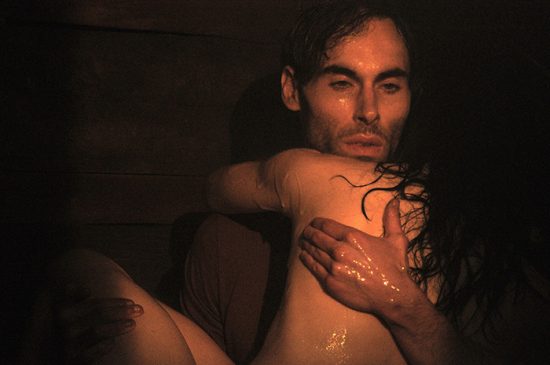 It may star an actress widely regarded as one of today’s predominant scream queens, and its central character may visit a creepy old house in the woods within the first five minutes, but don’t be fooled: Ayla is pretty far removed from your standard ultra-low budget indie horror movie. Written, produced and directed by Elias, mononymous filmmaker behind 2012’s Gut (which I haven’t personally seen, but was
 The contemporary straight to DVD action movie is a fairly odd breed. For the best part of two decades now, the ageing action superstars who previously reigned supreme at the box office have for the most part been ushered to the back of the bus, and with the exception of Schwarzenegger and Stallone, the bulk of them now seem to find most of their employment headlining cut-price punch-up flicks shot digitally in Eastern Europe, none of which ever see the inside of a cinema unless someone happens to have picked up the DVD from the supermarket before venturing out to see the latest blockbuster.
 As I’ve
  I’ll admit to having previously been unfamiliar with the word ‘charismata,’ which is not, to the best of my recollection, ever uttered in the film; I gather it’s a theological term, basically a plural of ‘charisma,’ referring to a ‘divinely conferred gift or power’ and/or a ‘spiritual power or personal quality that gives an individual influence or authority over large numbers of people.’

 The film also makes significant changes as regards Wade’s relationship with the other ‘High Five’ Gunters, most significantly Olivia Cooke’s Samantha, AKA Art3mis. Their awkward love story has been one of the most heavily criticised elements of the novel, and not without some justification; although accusations of flagrant sexism and/or misogyny are, I think, heavily overstating the case. Even so, it’s probably for the best that the film plays things very differently, bringing the characters together outside of the OASIS far earlier, and giving Samantha more vital a role to play in the final act. I expect there will be complaints that Cooke is clearly far too beautiful for a character who’s meant to be something of an ugly duckling; but then, much the same can be said of Sheridan as Wade. The most important thing is they’re both endearing actors, easy to root for. As for the remainder of the High Five: I’m loathe to say much regarding Wade’s best buddy Aech for fear of spoilers (not that the film’s marketing seems too worried about that), but I will say that Daito (Win Morasaki) and Sho (Philip Zhao – not sure why his character’s name has been shortened) remain pretty under-developed, though they do get their moments to shine.
 In some ways it’s hard to believe it’s been a full five years since Pacific Rim. A lot’s happened in the interim, though: director Guillermo del Toro returned to his signature Gothic territory with Crimson Peak, then bagged a bunch of Oscars for The Shape of Water; and giant monster epics have returned to the forefront of the blockbuster market in the wake of Jurassic World, Godzilla and Kong: Skull Island. Still, while Pacific Rim wasn’t quite the commercial flop or critical disaster it’s sometimes made out to be (personally I think it’s great fun, and have revisited it plenty of times this past half-decade), it’s certainly debatable as to just how much demand there really was for a sequel. Small wonder, then, that director Steven S DeKnight’s Pacific Rim: Uprising goes to great lengths to relaunch the franchise for a new audience – although, in so doing, it may well alienate the comparatively few devotees the original has brought back.
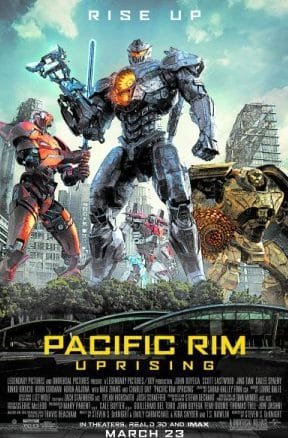 However, it seems as if the Jaegers won’t be in demand for much longer, as an all-new defence project – super-powered, remote-operated drones – is being introduced by a major Chinese tech company for whom Day’s Newton is now chief scientific officer. Naturally, not everyone in the Jaeger team is keen on this idea – but in the wake of an attack on Sydney by an unlicenced rogue Jaeger, some take this as a sign that the drones are indeed just what Earth needs. As the dust settles, Jake and company quickly realise that there’s something very fishy going on – but who’s behind it all? Could the Precursors, the alien race who created the Kaiju, somehow be responsible? If so, how, when the Breach – the wormhole at the bottom of the Pacific ocean, by which the Kaiju invaded Earth in the first place – is now sealed shut?
 All in all though, Pacific Rim: Uprising is worthwhile in that it provides firm proof that John Boyega (also a producer) has what it takes to carry a movie. Sure, many of us already believed it from Attack The Block, but given that the wider audience knows him purely as Star Wars’ Finn, his turn as Jake Pentecost may come as a surprise: he’s brash, cocky and arrogant, yet very human and sympathetic. Without someone as charismatic as Boyega heading it up, it’s entirely likely that this sequel wouldn’t have worked it all. It certainly couldn’t have been held up by Scott Eastwood, a firm contender for the single most bland and forgettable actor currently working in Hollywood who somehow seems to keep getting big roles. Still, Boyega does have some nice support from Cailee Spaeny and the other young Jaeger cadets. While some older viewers might complain of the whole teenager vibe getting a bit Power Rangers, the fact is the teen characters and their boot camp camaraderie are far more endearing and watchable than the adults and their tedious corporate subterfuge/scientific blatherings.
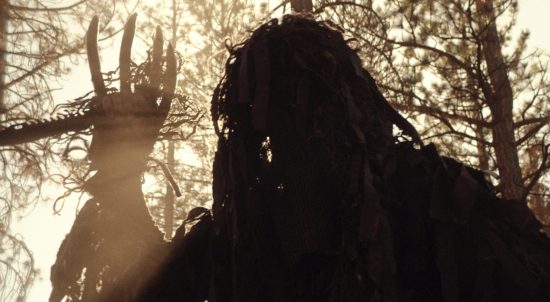 Nothing sells a slasher like a holiday association. You really don’t need me to do the list; if it’s been deemed a day of rest or celebration which is in some way marked annually, then it’s fertile ground in which to cultivate 80-odd minutes of hapless, sinful youngsters getting hacked up by a maniac. Small wonder, then, that someone thought to make such a film set on 4/20, the American stoner day of, erm, more rest than usual which has somehow become a global event in recent years (much to the bemusement of us Brits, who restrain ourselves from complaining, “surely you mean 20/4”).
 Sure, it’s a tissue-thin premise, but that’s the very nature of the slasher movie, and plenty of greats in the subgenre have come from even simpler beginnings. 4/20 Massacre, however, has no chance of ever being classed among such greats. It just doesn’t have anything like the flair or personality of even a comparatively lesser title like, say, The Burning, the Sleepaway Camp sequels, or for a more recent example even the Sorority Row remake. Such films might be formulaic and derivative, but there’s a certain mischievous joy about them which makes them fun to revisit, whereas 4/20 Massacre is unlikely to be remembered within 24 hours of viewing.