Feeling trapped in his job as a teacher in the small outback community of Tiboonda, John Grant (Gary Bond) is glad to get to the end of term, so that he can travel to Sydney to spend the festive period with his girlfriend. In order to catch a flight onwards, he must first take the train to a mining town called Bundanyabba, where he intends to stay overnight. However, John is caught up in the boozy, blokey social scene of the place and sees a chance to pay off his employment bond by means of a straightforward – not to mention illegal – gambling game called two-up, thus freeing him from his obligations as an educator. However, his initial luck deserts him and he’s left without any money in The Yabba, stuck in the middle of nowhere with no means of travelling further and at the mercy of its aggressively hospitable townsfolk…
Opening with a stunning three hundred and sixty degree tracking shot of a scorched, vast expanse of pretty much nothing other than a railway track and a schoolhouse, Wake In Fright (1971) introduces the perfect, desolate setting to be alone with one’s intrusive thoughts. Those thoughts have certainly been plaguing John, who’s counting down the minutes just as much as his pupils. He can’t get out of his work environment quickly enough, stopping only to down a beer with John Meillon a decade and a half away from Crocodile Dundee, before he’s headed to what he identifies with as civilisation, only for his plans to be upended in an unfamiliar landscape full of, to his eyes at least, unconstructed fellas who, despite John’s more cultured background, take him under his wing because he’s a “good bloke”.
Coming under some criticism for having Ted Kotcheff – A Canadian! Strewth! – direct a movie about a typically Aussie backwater, it’s that sense of detachment and curiosity which pinpoints all of rural Australia’s quirks. Having been to some of the less populated parts of that country a couple of decades ago, it’s exactly what you’d find as a stranger in a strange land. The people there are all too willing to buy you a beer and expect nothing in return but the unrelenting, almost sinister friendliness could seem suffocating to some. Coupled with the terrifying isolation of being in a place that’s surrounded by nothing for miles and miles, you’d be a better person than me to never have that nagging thought that, given a twist of fate, you might be there forever.
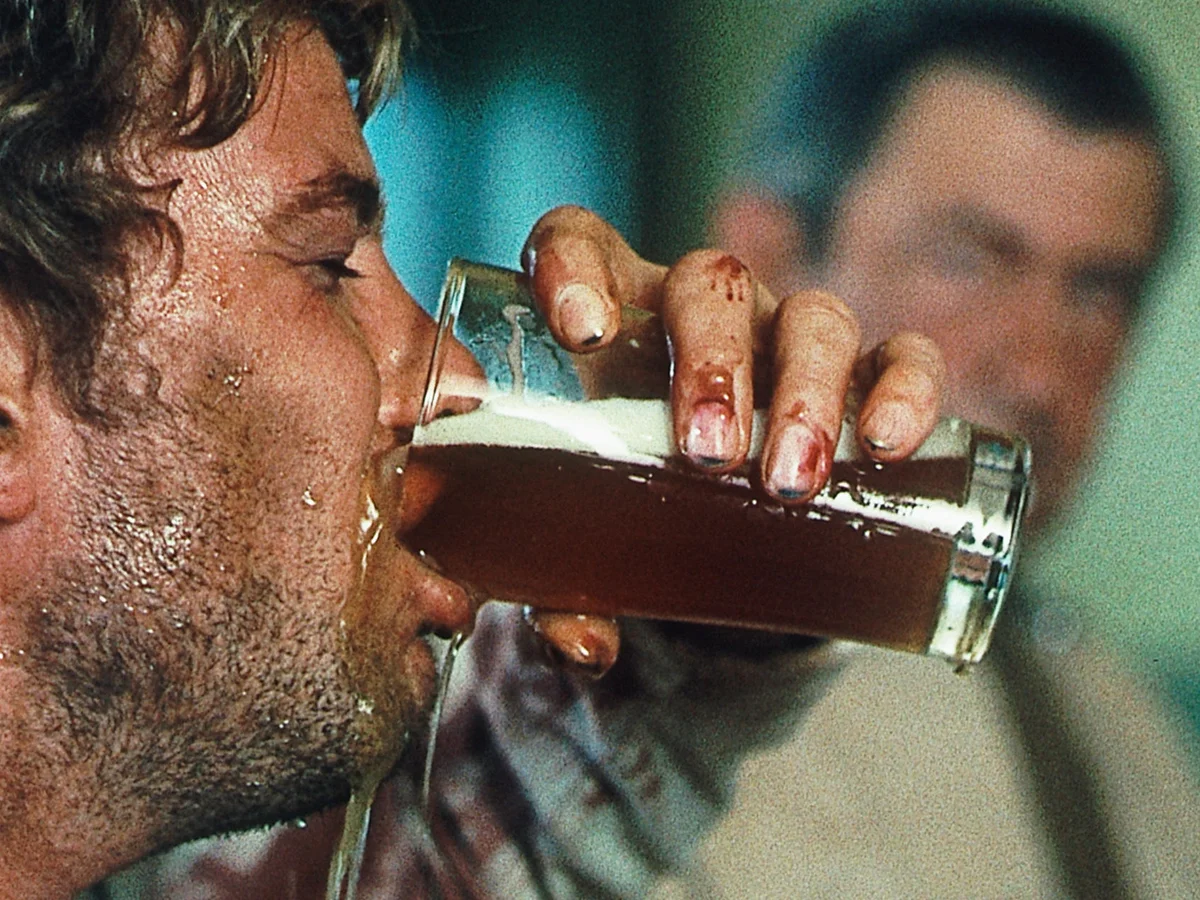
One of the tagline for Wake In Fright was “Have a drink, mate” and there are very few frames of this which do not feature the amber nectar being quaffed. In places such as Bundanyabba, that’s what you do. You drink. If someone offers to get you a drink, you accept it graciously and don’t even think of ducking out after just one beer. You are in for the duration and John’s initially sneering view of The Yabba’s populace is undone by middle class etiquette, his politeness initially forcing him to down several ales in rapid succession and from then on he’s on a rapid, uncontrolled voyage down a slippery slope.
Kotcheff’s view of Outback purgatory is superbly realised, as various folks from The Yabba try to help John get back on his feet financially and invite him to participate in their social activities. John’s journey from bookworm to brute reaches its zenith as he participates in a kangaroo hunt which culminates in a physical altercation with one of the beasts. It’s this extended sequence which finds Wake In Fright at its most confrontational and controversial, featuring actual footage of ‘roos being shot.
Apparently, Kotcheff cut this footage down to almost nothing, because most of what he captured was too horrific to be screened. Even though the violence is glimpsed here only briefly, the sheer barbarism is overwhelming and the amplified sound of gunfire on the soundtrack only serves to make those few minutes even more difficult to watch. Interestingly, both the Australian and the UK censors chose to leave this stretch of the proceedings intact as they felt it would highlight the cruelty on display and act as a potential rallying call for preservation of the country’s wildlife.
Although Wake In Fright defies instant categorisation, straddling the boundaries between drama, thriller and psychodrama, I would not hesitate in adding it to the horror genre, although the horror on display comes from the uncompromising way in which it shines a light on human behaviour and how our individual moral code will come into play when judging that behaviour. For those viewers unfamiliar with the booze-fuelled machismo of the Ocker, this world will feel alien and unchecked and yet, as the story progresses, the men of The Yabba are shown to have their own code, no matter how warped it may seem. They’re unfailingly helpful to John, even though that assistance mostly consists of supplying him with more than enough alcohol to drink himself into a stupor. Even the most educated of residents, Doc Crawford (Donald Pleasance), reveals himself to be a drunk who wouldn’t be able to practice in the big cities.
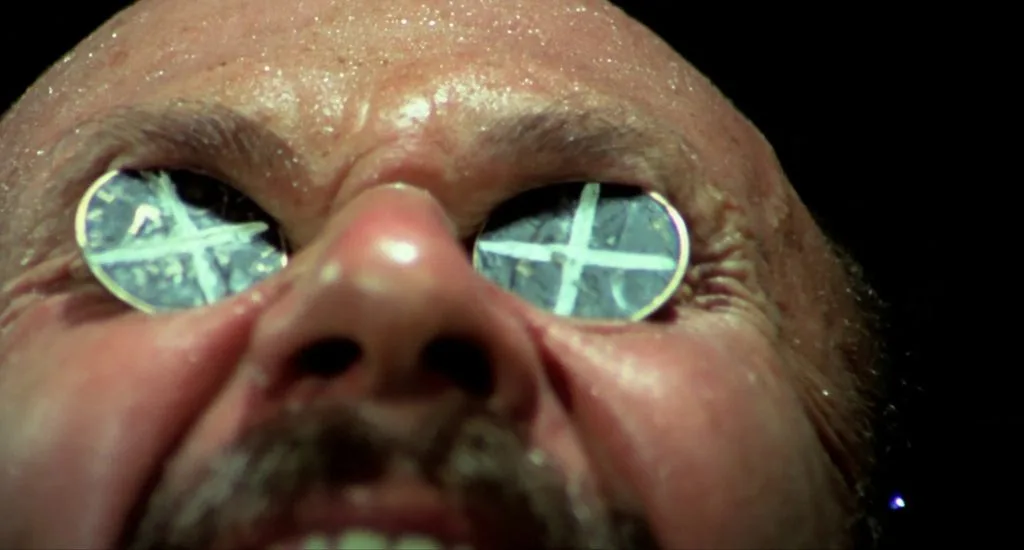
Pleasance is, as you’d expect, terrific here, delivering a performance which, like his character, lurks in the background and then explodes with unpredictability, sometimes humorous, sometimes menacing. Crawford lives in squalor, goes along with the aforementioned slaughter of kangaroos and revels in the near lawlessness of his surroundings. He sees something of a kindred spirit in the well-read John, but that pans out in an inevitably dark way and serves as the catalyst for our main protagonist’s ultimate, desperate attempt to cut himself loose.
After something of a bumpy ride on its initial release, well regarded by European and American critics but largely ignored by audiences, Wake In Fright’s cause wasn’t helped by a complicated relationship with the country it portrayed and many Australians may have thought it downright insulting. Jack Thompson, who plays Dick, attended an early showing of the movie in Australia and when a man shouted, “That’s not us!” at the screen, Thompson responded with “Sit down, mate, it is us.” That’s a measure of just how uncomfortable Kotcheff’s vision is, forcing the Aussie male – a beacon of masculinity at that time – to confront themselves.
Unsettling like few other movies out there, Wake In Fright is deserving of its reputation as one of the best Australian movies ever made. Perfectly paced, surreal and intelligent, it’s hardly a cheery experience but, like John, you’ll be swept up by The Yabba, its suffocating air of masculinity and its roster of grimly fascinating inhabitants. In the lead, Gary Bond may feel like he’s constantly about to fade into the background, but that’s also the point as the mining town looks to consume another innocent. It all ends with an enigmatic final line as we come full circle – both in terms of plotting and a return to that visual sweep – and that’s when you’ll start thinking about this towering achievement in cinema.
Wake in Fright (1971) screened as part of this year’s Spirit of Independence Festival in Sheffield, UK.