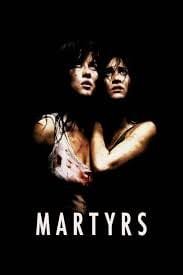
By contributing writer Adam Page
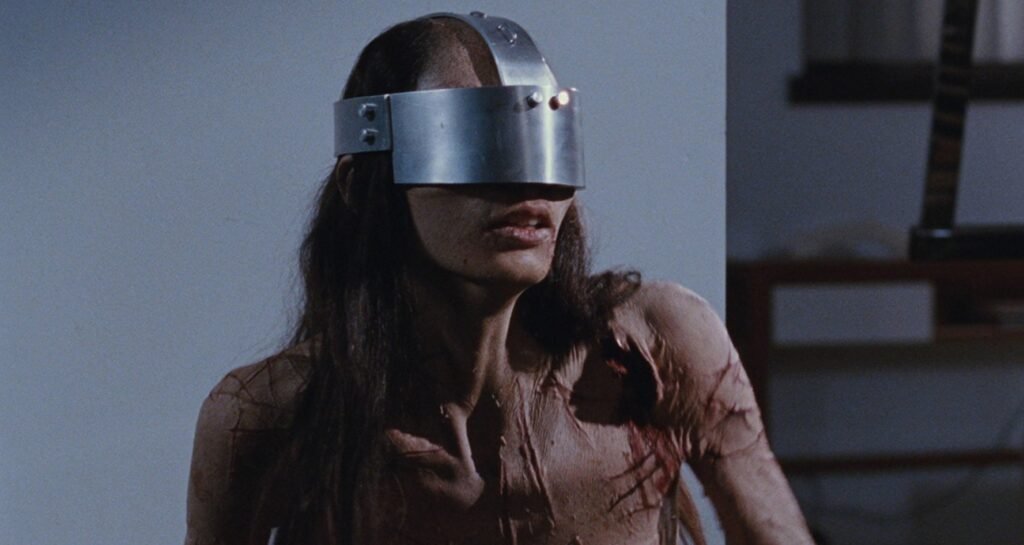
I’m going to start this with a confession, as that’s really what this movie is about; confession and the horrible possibility that confession changes nothing. I’ve seen Martyrs more times than is probably good for my, or anyone’s, mental health, and each time I left the cinema, or more often these days, peeling myself off the sofa at two in the morning, unable to sleep or really process what I just witnessed, I find myself hungrier than when I sat down. I don’t mean for food, but for meaning. For the thing the movie has spent the past 99 minutes promising me is just out of reach, if only I keep watching, if only the next scene, the next scream, the next flaying, will finally deliver the revelation. It never does, and that, I want to argue, isn’t a failure of Pascal Laugier’s magnificent and repugnant movie. The withholding is the key to the movie.
I have to talk about hunger, and talk about it properly – not in that cosy, metaphorical way critics reach for when they can’t be bothered to think about what a movie is really doing to its audience. Martyrs is a movie obsessed with appetite in the most literal and medieval sense; the hunger of the flesh for punishment, the hunger of the intellect for certainty, and the hunger of institutions for proof of the very thing that, by definition, can’t be proven. And running alongside all of that, embarrassing and compulsive, is our own hunger, sitting there in the dark with the popcorn untouched, waiting for the movie to feed us something. Laugier knows we’re hungry, and he’s counting on that fact. He then deliberately starves us, right at the point where a lesser moviemaker, let’s say a Hollywood remake director and yes I’ll get to that abomination, would have thrown the meal down onto the table and let us gorge.
I’ll get the plot mechanics out of the way, although “mechanics” feels like the wrong word for something so feverish. Lucie is tortured as a child by a mysterious cult, and grows into a woman consumed (yes, there’s that word again) by the need for revenge against her tormentors. She finds them, then kills them in one of the most sustained and horrible openings in modern horror cinema; a shotgun massacre that should really exhaust the movie’s capacity to shock in its first act. It doesn’t, it’s just the overture. Anna, her friend and carer, the movie’s moral centre if it can be said to have one, stays behind to clean up the literal and figurative mess. She discovers the cults’ real purpose in the basement under the house. And it’s here where the movie pivots from grubby revenge flick into something far stranger and more theological: we learn that the cult is not sadistic for sadism’s sake. They are epistemologists; torturing young women, flaying them systematically over months and denying them death right up until the final excruciating moment, because they believe that an extremity of suffering will produce martyrdom in the original Greek sense: martyrs, a witness. Someone who has seen beyond the veil and can testify to what’s there.
This is where the French intellectual Georges Bataille comes crashing through the floorboards, whether you invited him or not. The cult’s project is what he called l’informe made institutional policy: a deliberate and systematic destruction of form, of the coherent and bounded self, chasing some formless truth that only exists on the other side of that destruction. Bataille spent his whole brilliant and miserable career arguing that transgression doesn’t defile the sacred, but produces it, and we only know the limit by smashing through it, and that horror and ecstasy are next-door neighbours sharing a garden fence. The cult in Martyrs has taken this as an operating manual, and they have a sincere, well-funded research program. There’s a woman, the Mademoiselle, the head of the institution, sat in tasteful and expensive clothes while unimaginable things happen downstairs, whose entire life’s work is waiting for a martyr who can survive long enough, endure enough, to come back and tell her something. Not scream, or die beautifully for the camera the way horror cinema usually wants its victims to. Speak and report. Deliver content.
It’s here that I want to highlight what Laugier is really doing, because it’s sly and it’s cruel and I think the reason this movie sits so uncomfortably alongside its torture-porn cousins, the Hostels and Saws of the world it got lazily bracketed with on release. Those movies, whatever their merits (and I’d defend Hostel a bit further than fashion probably allows) are in the end economies of spectacle with clear exchange rates. Pain in, gross-out in kind, out. Martyrs sets up the economy and then refuses to pay the debt. The cult wants revelation and we, the audience mirroring them with an exactness that really should unsettle us more than it tends to, want revelation too. We’ve sat through Lucie’s psychological disintegration, through Anna’s building ordeal, through flaying, actual flaying, shot with a matter-of-fact clinical patience which makes it worse than if it had been operatic, because somewhere in the lizard-brain part of us that goes to horror in the first place, we believe suffering this vast has to be for something. It has to cash out. Susan Sontag wrote about the photographs of atrocities, and warned that repeated exposure to images of suffering doesn’t sharpen our understanding but dulls it, and replaces comprehension with a sort of exhausted numbness; we look and look and the looking then becomes the point, detached from any real increase in knowledge. Martyrs stages that exact mechanism, and then in the final scene turns around and asks us, practically dares us, to admit that we’ve been doing the same thing as the Mademoiselle. We’re waiting for the flesh to pay out in meaning.
In photography theory, there is the punctum; it’s a detail in a photo that pierces the viewer, wounds them personally outside of any culturally coded reading of the image – something that seems to jump out of the frame and dig under the skin. Critics, including me on other occasions, love reaching for the punctum to explain why one certain horror image lodges in the brain and won’t leave: the girl in the well, the twins at the end of the corridor, the blank mask over Michael Myers’s face. They’re images that wound outside their narrative context; surviving the movie that produced them and becoming freestanding cultural objects that mean something even divorced from the plot. Laugier, I think, understood this theory of the image intimately, because Martyrs is built to produce just this kind of image. Anna in the final act is flayed and luminous, and utterly unbearable. Laugier then commits an act of incredible directorial sadism against his audience by refusing to let the image speak. There’s no punctum here because there’s no photograph, just a woman with her skin cut off, whispering into the ear of the woman who ordered it, then a gunshot then nothing. We don’t get the testimony. We get its absence.
This is the crux and why I put “revelation” in the title, even as the movie denies us one. Anna survives the flaying, miraculously, far past the point any human body should endure, and achieves whatever the cult’s theology promised: she sees something. Her face in these final minutes is transformed. She isn’t screaming, she’s almost serene, the muscles of an expression the movie has spent the whole runtime training us to associate with agony now arranged into something we can’t classify, mainly because we haven’t been given a vocabulary for a face that has gone all the way through pain and out the other side. The Mademoiselle leans over her, a seeker, and the movie’s stand-in for every institution that has ever promised transcendence if you just suffer sufficiently and exactly enough. Anna leans in and whispers. And we do not hear it.
The camera lingers on the Mademoiselle’s face as she listens, and what plays over that face sure isn’t enlightenment. It’s horror, curdling almost instantly into despair, and the woman, an architect of decades of institutionalised torture, a true believer, picks up a gun and kills herself before the scene is even permitted to breathe. Her final line to her colleague, to “keep doubting” is the movie’s last spoken phrase, and then she’s gone, along with any hope we had of ever learning what Anna said.
I really want to emphasise just how aggressive a narrative choice this is, because I’ve constantly seen it misread as a cop-out, a director who couldn’t stick the landing and ran out of ideas for what the transcendent truck could be and punted instead of committing to an answer. I think this reading basically misunderstands what the movie has been building towards since its first frame. Martyrs isn’t a mystery box that forgot to supply the key; it’s a movie about the impossibility of the key. About the specific and structural fact that whatever it is lying on the other side of total suffering can’t be transmitted back across the boundary into ordinary language, and any institution promising otherwise – whether a torture cult in a French basement or a horror movie in a multiplex – is selling something it just can’t deliver. Kristeva’s abjection is instructive here, as the abject is exactly what the symbolic order can’t process, can’t fold into language without ceasing to be itself; it sits at the border and language collapses trying to cross it. Anna’s whisper is abjection that is refusing translation. It’s the corpse that won’t become a symbol. The Mademoiselle has spent her life trying to drag the abject into the realm of testimony and institutional knowledge, of evidence, and what she gets, at the last moment, is the abject looking back at her and refusing to resolve into something she can use.
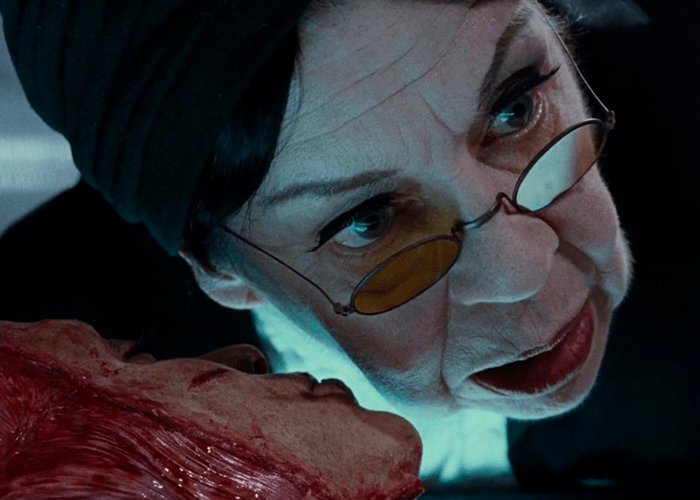
And now I’m going to implicate us, dear reader, because criticism that lets the audience off the hook isn’t criticism worth writing. We came to Martyrs – most of us anyway, those who sought it out instead of stumbling across it – because we wanted the extremity. We wanted to be able to say we had sat through the thing everyone said was unwatchable, and there’s an odd cultural capital in the extremity-tourism that horror fandom trades in more than it likes to admit. We consumed Lucie’s suffering, and Anna’s, in the hope that the accumulated weight of it would deliver at least something, catharsis or insight, or the thrill of having glimpsed a truth too dangerous for ordinary cinema to show us. Laugier gives us the suffering in full and unblinking detail and then, at the exact moment the transaction should complete, he shuts the till. The Mademoiselle is us, and her research institute, with all its decades of investment in extremity as a means to knowledge, is horror’s own promise to its most devoted consumers; if you endure this, you’ll be shown something real. Martyrs calls that promise a lie and does so by performing the withholding directly on our nervous systems.
That’s why I’d argue the movie’s silence is its true subject, rather than an evasion of one. A movie that showed us what Anna saw would be a movie with an answer, and answers can be argued about, debunked, franchised, even remade with the mystery cheapened into a twist. The 2015 American remake, God love it, tries something along these lines and demonstrates just why the original’s silence was the right choice all along: supply an answer and you’ve supplied something small enough to fit into a plot, and the whole point evaporates. Martyrs understood that the only honest ending to a movie about the limits of what suffering can communicate was a scene in which suffering fails, totally, to communicate. As the credits roll, we’re left in just the position the cult has spent generations trying to escape: we’re hungry, unanswered, and aware only that something was seen and we will never see it.
I don’t think that’s a failure of nerve. I think it’s the most honest ending horror cinema produced in the early 2000s, and I’ll die on that hill, thank you very much.