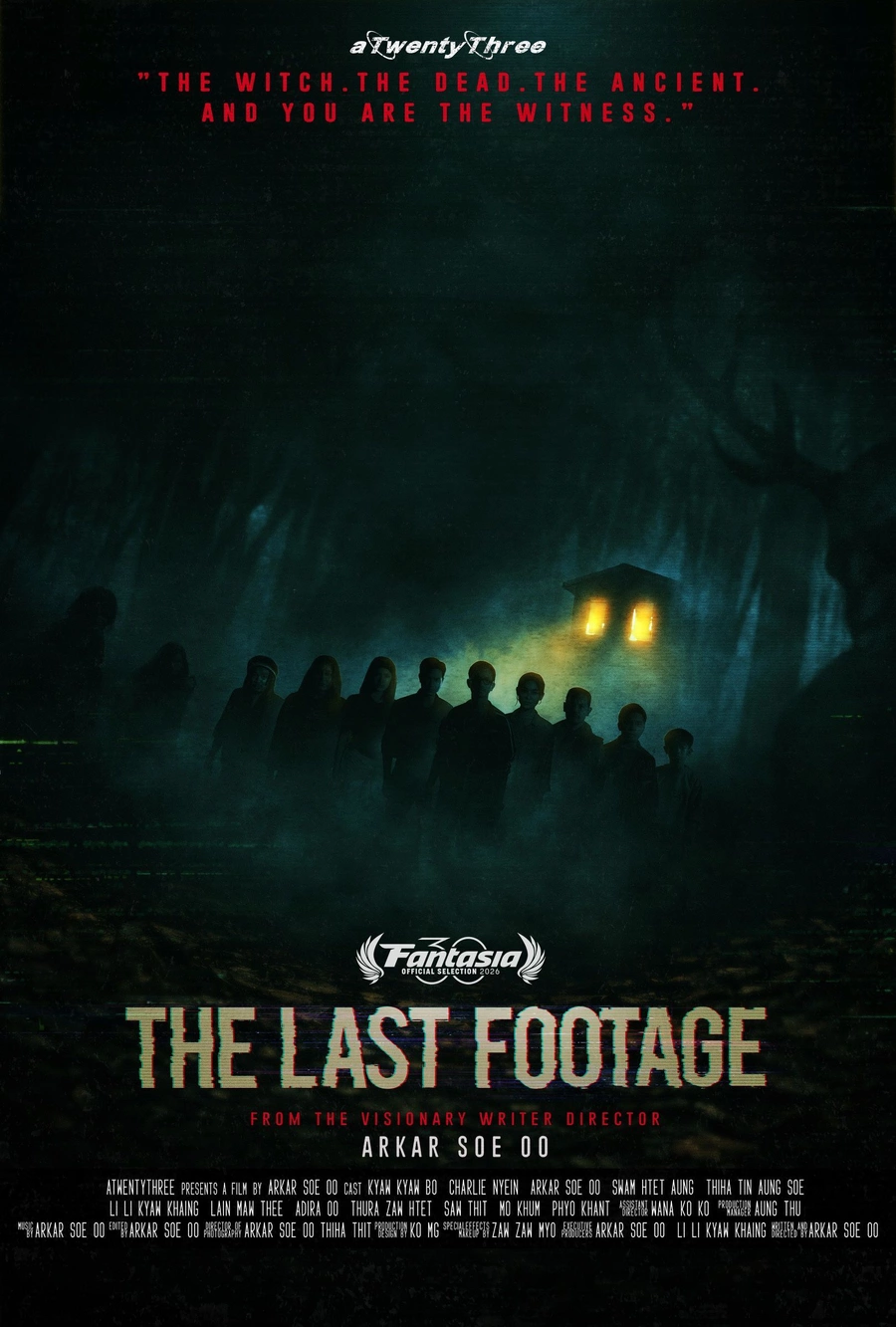
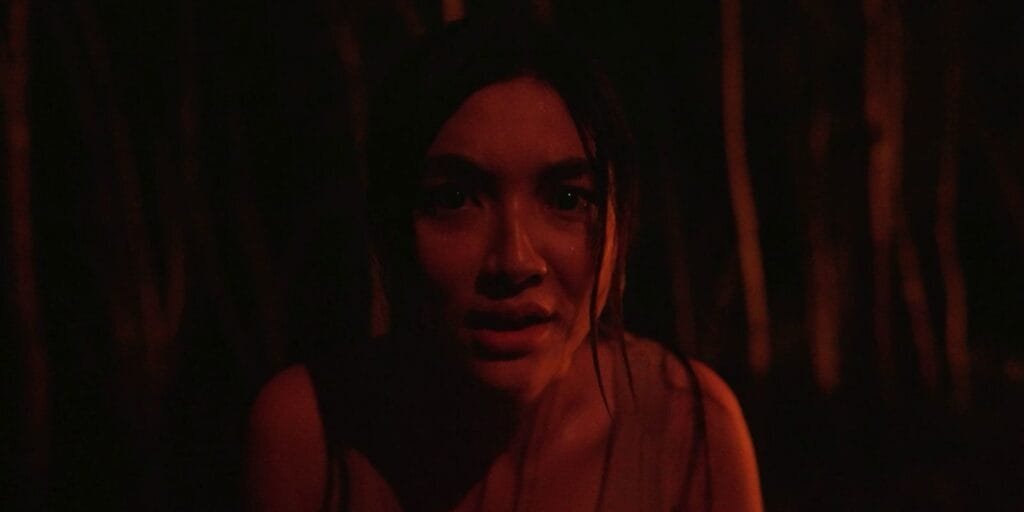
Myanmar is better-known to Westerners for its political situation than for its cinema scene – much less its genre cinema scene – but low budget horror has developed a decent foothold in the country, with The Last Footage (2026) director Arkar Soe Oo already a well-known name domestically. The Last Footage is the country’s first ever found footage title; that’s interesting timing, given that the subgenre has been in decline in the West for some time. But the film is also an opportunity to see a side of life in Myanmar which would otherwise remain hidden, and the film obliges, starting with a few snippets of everyday life for a group of young, affluent Burmese – each first displayed with a user ID. We first see them variously playing music, out for a run, riding a motorbike – and ghost-hunting, apparently for an online audience (and doing some early blurring of the lines, as this actually has nothing directly to do with the film which follows). Then, we get the standard found footage introduction: it’s the template established for modern viewers by The Blair Witch Project, which tells the audience, ‘only this footage was ever recovered’.
However, time has moved on since BWP, which was made – at the time of writing – twenty-seven years ago, so probably before some of our cast members here were born. Nowadays, the template can be cleaned up to an extent by the presence of new technology, like smart glasses, which helpfully makes the inclusion of people using mobile phones feel much more plausible, because you can easily do both at once (and it rids us of the perennial question: ‘why are you filming?’). There’s a small but effective range of media in play here. We meet the group again: if the film is a little over-the-top in identifying people by their names and perceived social roles (the hot one, the geek, etc) then let’s put that down to a little bit of naivety about how much of this is strictly necessary. The group has come together for dinner, and one of their number – Thu Ya (Charlie Nyein) – is pleased to announce that he has recently inherited part of the Wingabar Forest, specifically a rubber plantation which had belonged to his late grandfather. He wants to take his friends to the area (which has accommodation), and everyone agrees to accompany him.
They get there by bus, and the sudden appearance of a local driver who loves Bob Marley so much that he dresses as him is our first solid clue that things may not be about to pan out entirely seriously here. That could either appeal to audiences, or put them off: it depends on the tone you want from films like these. Interestingly, from a cultural perspective, one of the girls, Wa Na (Thiha Tin Aung Soe), has to unexpectedly bring along her little brother, but no one reacts with the kind of horror which the sudden addition of a child would likely cause if an adults-only excursion had been planned anywhere in the West. More pertinently, the bus is stopped before it gets to its destination by Thu Ya’s estranged uncle, who wants to warn them off, but – ends up going with them. His is a harsh warning, apparently there to be ignored, but helpfully, we now have someone on board who understands the apparent dangers. They reach their destination, warnings about respecting the forest be damned, and they do what outsiders inevitably do: they awaken some kind of malign presence.
Here, for this reviewer at least, the film starts to burn through the goodwill which it may or may not have generated up to this point. Firstly, it rattles through an array of rather generic and grating plot points in short order, first by having the little boy mysteriously disappear, then by the sudden presence of a rather caricatured witch, who has been squatting in Thu Ya’s forest accommodation for an unspecified amount of time, filling the place with candles and ritual objects (one thing you notice about this film which is, remember, ostensibly taking place in the middle of nowhere: the amount of actual darkness is incredulously low). There’s more to come. Ritual, and the understanding of ritual, movies into place as a key consideration, but we see surprisingly little of it; it’s suggested that some of the party have previously held rituals or mishandled rituals, and then the witch has a few rituals up her sleeve, but we as an audience are held apart from the finer details of these. It’s enough to know that they’ve gone wrong, and that the witch is up to no good, using the ignorance of these outsiders to endanger them.
True found footage – if we can really accept the conceit – has to be a little loose, because we have to believe no unseen hand has come along and edited whatever it is we are watching into a neater, tidier shape. The Last Footage does, to do it credit, play out in what feels like real time. However, the film also underlines the careful balancing act required of this genre; much of the film devolves into back-and-forth talking and arguing, which again feels understandable if this is pure ‘found footage’, but it’s overwhelming for the viewer, and feels like it prevents the film from generating any suspense, or a sense of place. A little more eeriness would be lovely here, whatever the tone finally chosen.
By the end, there are some entertaining, if well-worn folk horror ideas here, and no doubt some of the issues around plot explication and pace are down to a certain amount of inexperience with handling all of this, but The Last Footage does suffer for its often jumbled, sometimes busy, occasionally baffling inclusions or omissions. Whilst it’s always intriguing when hitherto-unknown (to the West) filmmaking nations join the horror canon, that in itself isn’t enough to supersede a film’s issues. Keen found footage fans can probably find enough here to love, but for those of us who may have had our sympathies eroded by countless examples from the genre which haven’t hit the mark over the years, The Last Footage unfortunately can’t do enough to refresh or rejuvenate the framework.
The Last Footage (2026) received its world premiere at the Fantasia International Film Festival. For more details, please click here.