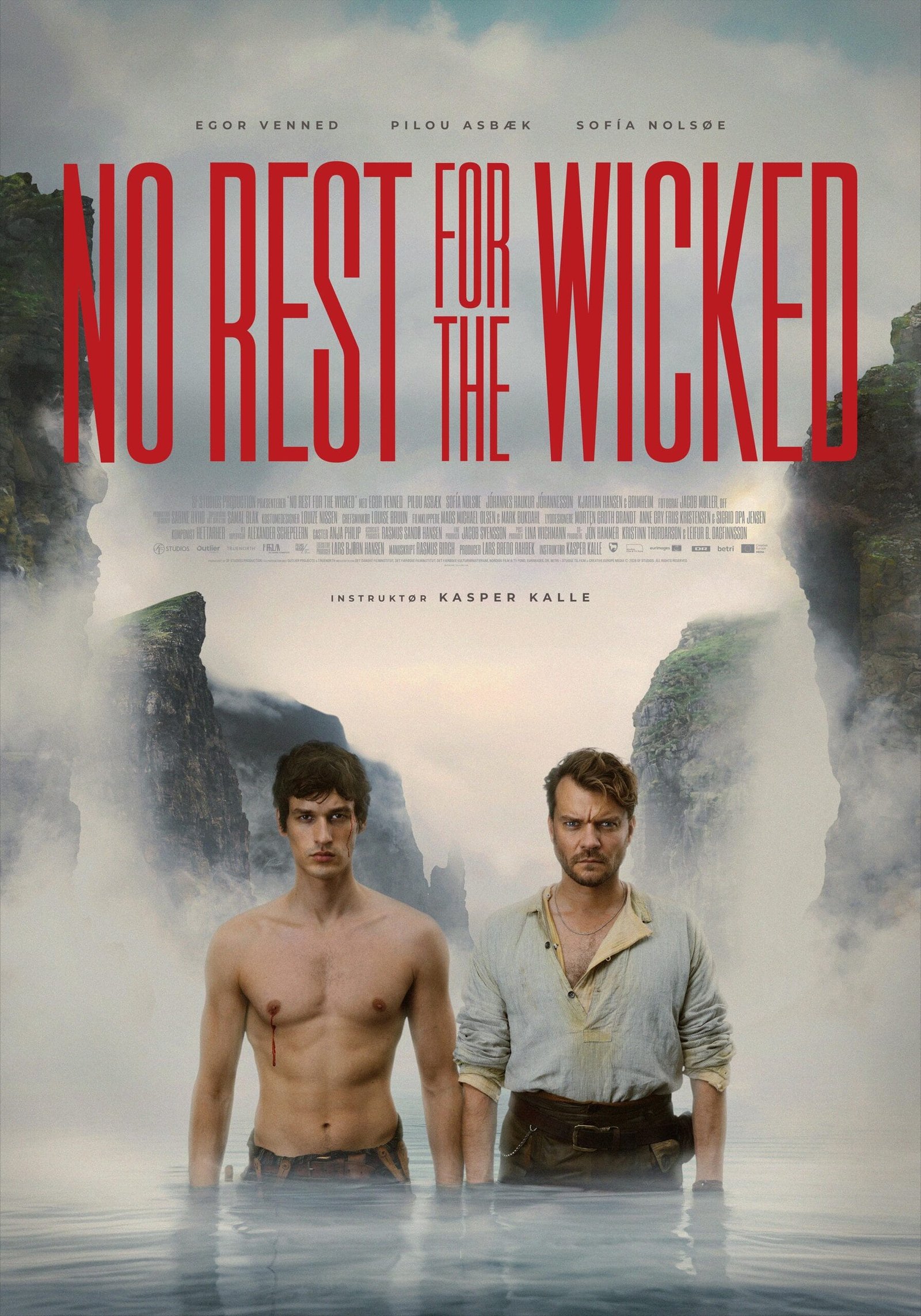
1862: the Faroe Islands, and a small, devout but insular community eking out a living in this remote place. We meet Ásla (Sofia Nolsøe) and her adult son, Baldur (Egor Venned, channelling a very young Rupert Everett). Baldur is a fisherman, who one day finds himself blanketed by an unanticipated sea-fret which disorientates him and drives him perilously close to the rocks near the shoreline. However, he sets this risk aside when he hears someone crying out for help. He tries to row towards the distressed person, but falls from his boat and hits his head. Thankfully, the stranger is by this point close enough to see it happen, and he dives into the water to save him.
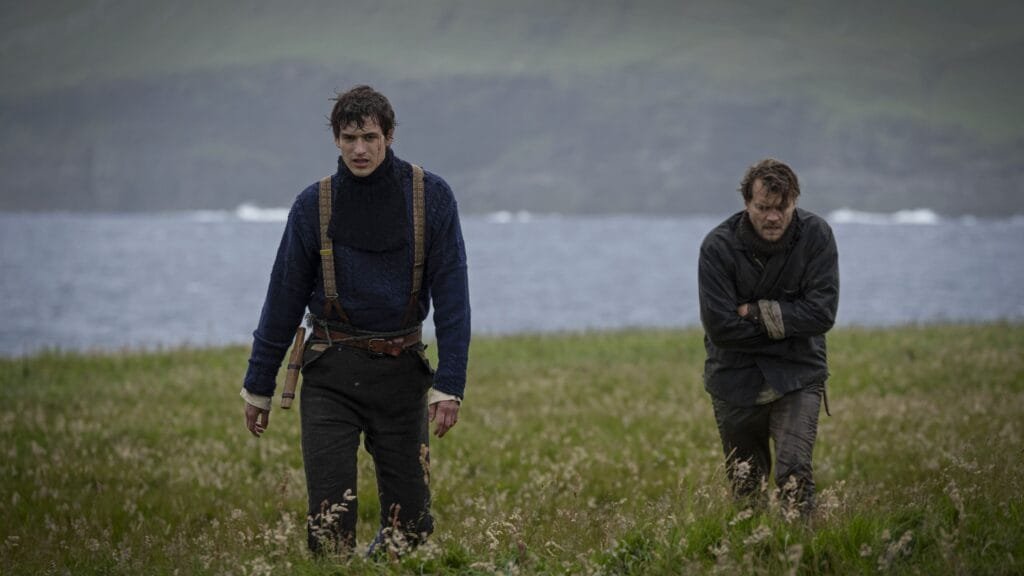
The men then walk the shore back to Baldur’s home – though bereft of the fishing boat, which puts the family at risk of going hungry (the islanders practice subsistence fishing, rather than anything more organised and commercial). Despite this, Ásla is glad and grateful to meet Helge (Game of Thrones actor Pilou Asbæk), who explains that he usually works on whaling vessels, though he’s recently been living on the other side of the island while he waits for a new berth. As a way of showing his appreciation, Helge offers to help Baldur find and repair his lost boat, which they duly go and do.
A grudging fascination on Baldur’s part soon begins to give way to a mutual attraction. The other Faroese at first enjoy Helge’s company, too – he’s confident and rambunctious – so he fits into the small community well for a brief spell, and he’s invited to stay with the widowed mother and son, even if he sometimes acts as a faintly uneasy reminder of the bigger world out there (including through his sexual proclivities and his blossoming, covert relationship with Baldur, which cannot go hidden or remain secret for long in such a place).
There’s not so much a sense of an impending catastrophe in No Rest for the Wicked (2026) as there is a broader question about which direction the catastrophe will arrive from. There’s the dread of exposure, the burden of emotional turmoil and a whole range of other pressures around this extreme, closeted environment which seem certain to find their way to the surface. And in truth, a blend of all these elements eventually come to wreak havoc, both on the village and on a newly-departing whaling vessel, which threatens to take if not one of the men away, then both of them. This it does, literally and figuratively. Baldur’s grief for what ensues leads him to wish for the impossible – and to receive it.
This film offers a subtle and very welcome update to an established, and in the wrong hands, sometimes rather hackneyed horror mythology (which I’m not naming outright, though you don’t have to look too far to find). Here, it’s beautiful, careful and evocative. Metaphors abound, but as a means of combining theme and aesthetics, the motif of fog in the film works very well, shifting us – and the characters – between clarity and secrecy, visibility and isolation. There are some similarities to another Nordic horror, The Damned (2024) – another film with a remote setting, stricken community and ambiguous supernatural elements. But if we’re talking about thematic overlap, it’s hard not to think of Wuthering Heights. It works. There’s the same remote, wild location, the same thwarted love, the same familial pressures, the same sense of lovers whose emotions surpass everything available to them, from language to lifespan.
Throughout, there’s superb cinematography from Jacob Møller, with a range of shooting styles encompassing the film’s stark landscapes, close-ups and candlelit, or naturally-lit interiors. None of it is ever overcomplicated – but it’s confident. The languid pace, too, allows the film’s solemnity to form and to persist. All of the performances are strong, though Venned is hypnotic as Baldur, his character unfolding and transforming as the film progresses. It’s also great that Ásla gets some character development of her own, and isn’t simply held within the confines of the familial role, although the restrictions of home, hearth and faith encircle everyone here.
Whilst the potentially slightly jovial note of the British English idiom used for the title doesn’t quite align itself with the tone of the film – although, word by word, its literal meaning does sum up the film rather well – this is a fantastic film for those who value mood and atmospherics over flashier effects and sequences. Its story carries an emotional weight, too. Brooding and well-realised, No Rest for the Wicked aligns lust, love, loss and grief as only the subtlest use of the supernatural can.
No Rest for the Wicked (2026) received its world premiere at this year’s Fantasia International Film Festival. For more information, please click here.