Corpus (2026) is a brooding and subtle horror film which reveals its key ideas very slowly and carefully; arguably, it never allows us to understand everything, preferring to focus on its sensual, uneasy world-building and those who finds themselves there.
We start in 1997: there’s an as-yet unseen photographer doing a shoot with a young model described as ‘green’ – in other words new, inexperienced. The girl, Wren (Nuha Jes Izman), is excited to be working with Billie (Lily Cowles), whose work has received a lot of recent acclaim. Billie uses this to immediately inflict trauma on the girl, by calling in another model – a nude male, wearing a strange, fetish-looking get-up that we don’t get to see too closely, but we see what it does to Wren, who is panic-stricken and reduced to tears by his arrival. Billie justifies it by saying this kind of work is necessary in an industry where having ‘the edge’ is everything. This fraught and uncomfortable rush-through sets us up to consider the power play inherent whenever someone is being observed, seen, recorded – and photography is a component of this, even if it only forms part of what is later offered to audiences.
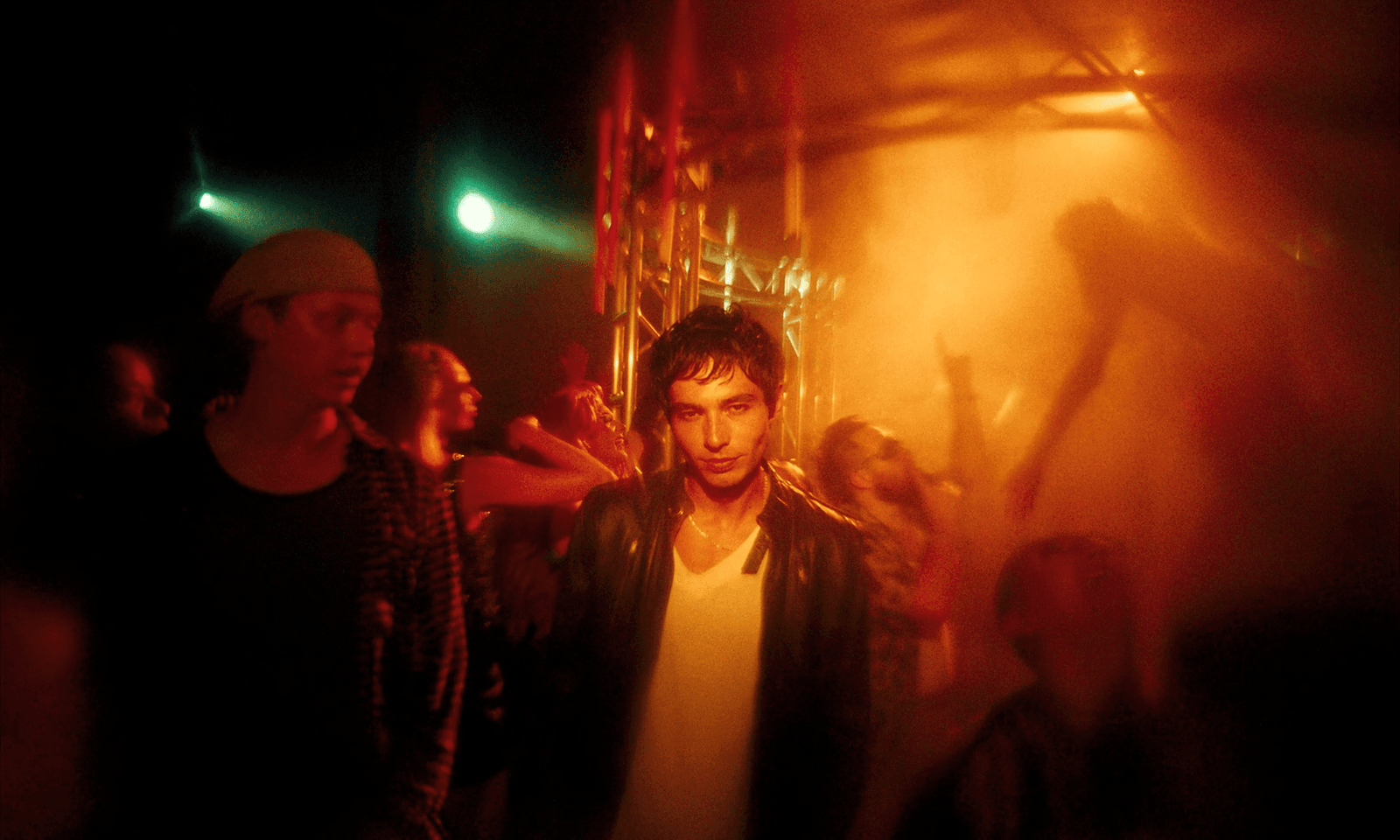
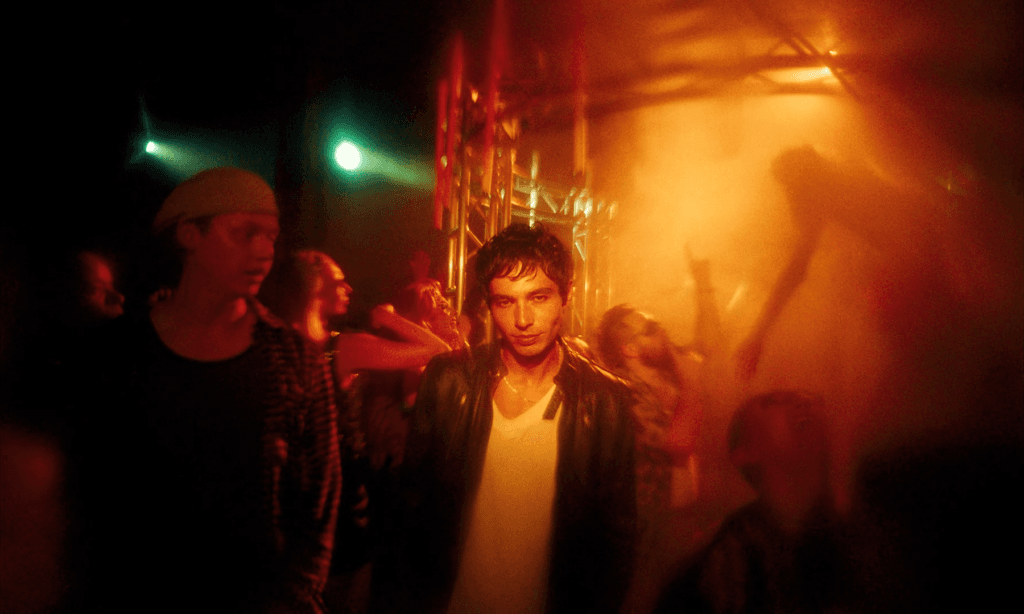
Moving forward in time by a year, we meet New York City photographer and petty coke dealer Sayo (Jeff Wahlberg), just as he’s about to arrive at a trendy nightclub to fulfil both roles. He’s a local, he knows everyone and he seems to be in his element here. However, his evening is destabilised somewhat by the arrival of local boy made good, actor and Celluloid cover star Vincent (Brodie Townsend) who has been off building his career (and not staying in touch). There’s some history here, to say the least, and it’s enough for a slightly ambiguous and super-charged reunion between these two, first at the club and later, back at Sayo’s place. But we learn one thing: the photographer responsible for Victor’s recent magazine cover is the same photographer we met previously, and she is throwing a special party at her house out in the country. Vinnie has been invited, and he wants Sam to come along: he says it’ll be great for networking.
Eventually Sayo, who is trying very hard not to just succumb to his barely-repressed feelings for Vinnie, as he still feels very angry with him, agrees. Accompanied by mutual friend, party animal and designated driver Ross (Michael Vlamis), the three men head out into the boonies early the following day, ostensibly for the party of a lifetime. However, when they arrive, it’s not quite what they were expecting.
At the sprawling country house, they are greeted by three women: Billie, Wren – who seems to be over her initial photoshoot – and Cata (Ching Valdes-Aran) who seem to be in a kind of open relationship with one another, none of which they are particularly shy about sharing with their guests. The reason for the occasion is an unusual one, too: it’s St John’s Day, one of those rarest of saints’ days where the birth of a saint, rather than their inevitably horrible death, is celebrated. Regardless, given that the three men are still recovering from the night before, the candlelight meal and the feeding-by-hand which begins to go on feels like a lot; they’re relieved when more of a conventional party finally follows on from dinner, with coke, booze and sexual tension back on the cards. Despite this, the strangeness of the set-up and the by-turns voracious, and then guarded behaviour of the three women makes it difficult to relax. Intoxication brings the problems between Vinnie and Sayo back to the surface, but it’s hazily clear that, brewing in the background, is something far stranger. The film takes on an increasingly uneasy atmosphere, but there’s a subcurrent: you know instinctively it hasn’t quite got where it’s going yet.
Corpus is a meticulously designed and realised piece of cinema with heady, absorbing aesthetics: it’s quite the experience. Its use of colour and light – especially at night, which is when this film comes alive – is consistently beautiful, but at a deeper level than this, the film’s tactile qualities really stand out. It’s a very intimate film. Skin – often seen up-close – looks dewy, or sweaty, or even sickly here. The film often centres around cinema and celluloid, photography and the clicks, whirrs and processes which analogue photography necessitated, back when this was the only means of capturing likenesses and images. There is lots of handheld camerawork, giving the film a malleable, immediate feel, especially in how it tracks faces and responses. Sayo is at the heart of this; the majority of his performance goes unspoken, and he is often doubly distanced from events around him – we see him listening or observing from afar, and you feel for him, and for the sense of isolation this engenders. He’s a sympathetic character, and you share his increasingly fraught mindset as he begins to glean that something, at least, is not what it seems. The sensual focus on male bodies from the perspective of women – or, subtly differently, from a woman’s perspective, is also an unusual addition here as the triangle of Billie, Wren and Cata never come out and explain anything about their lives, how they live or what they want – other than their determination to celebrate a saint’s day in their own inimitable, quaintly hedonistic way, with their own motivations.
Of course all of this is a gamble, this reticent approach which may challenge audiences expecting certain kinds of explication, but in common with a few other prolific horror/sci-fi titles which have also kept their secrets, it’s the more engaging for those denials. We learn enough, and having bonded with the characters we’ve accompanied from New York City, we can still see Corpus on its own terms: as a languid, unsettling piece of high weirdness, a sensual nightmare simmering with unspoken subtext. Give it the time and space that it deserves.
Corpus (2026) received its world premiere at this year’s Fantasia International Film Festival. For more information, please click here.