A vehicle races off through the Saudi desert, leaving a young woman dead in the dunes. That’s our opening to Unidentified (2025) – a film which is intriguing due to its background (directed by the first female Saudi filmmaker, Haifaa Al-Mansour), but also a nicely-paced and structured crime thriller, even if for some audiences it may feel a little domestic, or even reactionary, in some respects. For this reviewer however, that’s what really makes the film a success, for reasons discussed below.
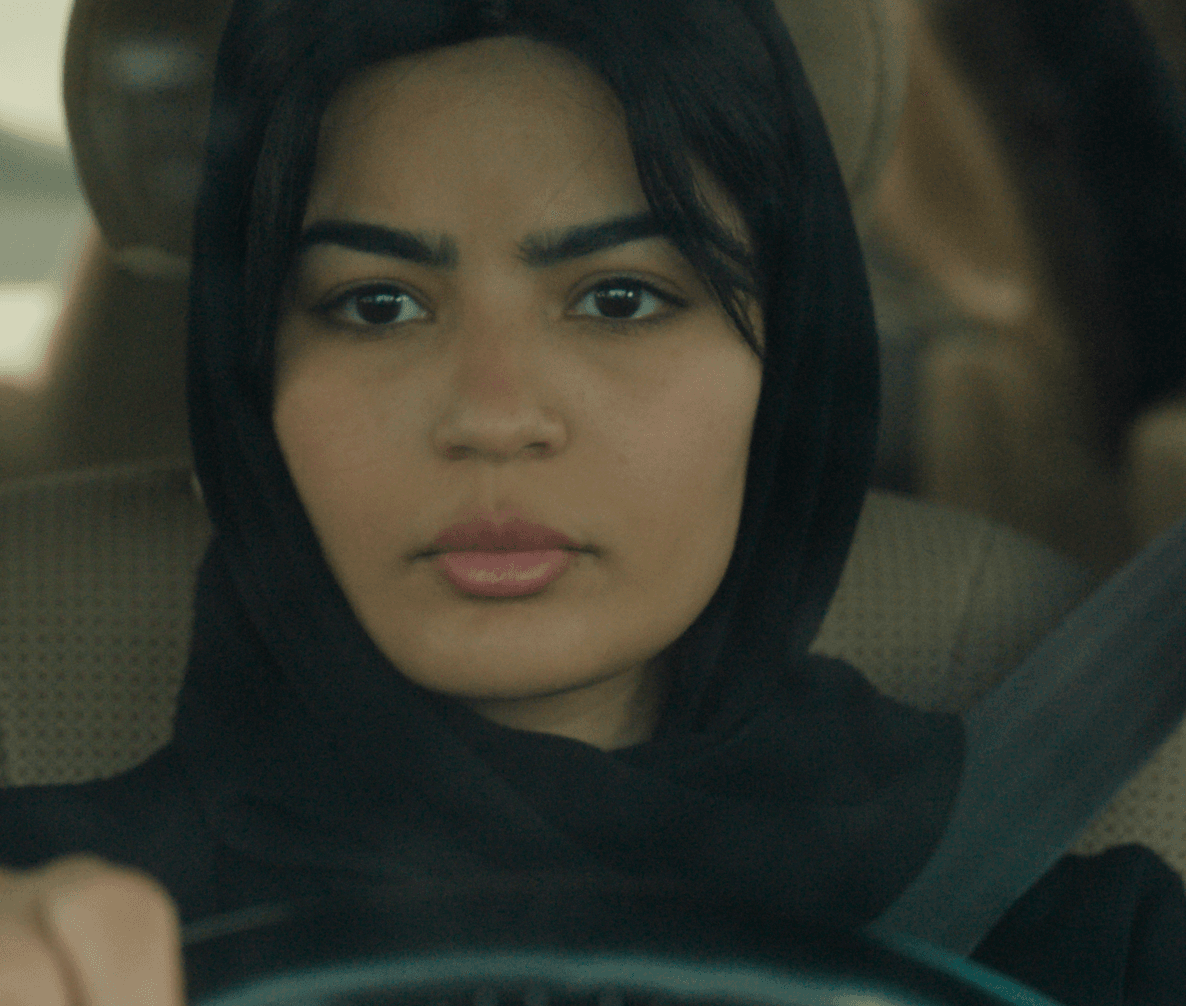
We cut to one of the film’s many contrasts with a woman called Nawal (Mila Al-Zahrani) who enjoys a strange podcast, one which blends make-up tips with true crime exposés (though to be fair, this is a pretty neat encapsulation of the interests of millions of young women worldwide). Nawal is living independently, having left her husband and home behind: she hasn’t even unpacked her belongings yet, and her brother is already knocking at the door, urging her home. But Nawal has a job with the Riyadh Police, digitising old files as ‘everything is going online’. She’s briefly taken away from the tedium of this role when the girl’s body is finally discovered and she’s drafted in as a kind of chaperone, something which is apparently necessary even for a dead woman. Nawal, given her interests, is immediately absorbed by the case: there’s almost no information to go on, and only a two-week cut-off before the girl will go into an unmarked grave. As another woman now on the fringes of society, Nawal finds this unconscionable, and begins to take an interest in the case which goes far beyond her admin role remit. Perhaps there’s a sense of ‘could have been me’ here: we glean enough about Nawal’s background to know that the breakup of her marriage was very traumatic. However, as she investigates, she seems to start being watched herself, and may even be at personal risk.
Let’s be honest here and admit that one of my key motivations behind asking to review this title was to get a glimpse of a version of Saudi life, given that Saudi Arabia is usually either very closed off from the West, or else viewed through a very specific kind of lens: Western commentary tends to focus on its religious conservatism, even if under the de facto reign of Mohammed bin Salman, things have relaxed to some extent. For example, women may now drive in Saudi Arabia, something which is key to Unidentified: Nawal makes extensive use of her vehicle throughout the film, and beyond its timeline too. The world of the film is perhaps surprisingly progressive in some respects (Riyadh has the kind of nightlife you’d expect from any big city; women can live independently, hold down careers and many of them go where they please) but it rings with Islamic cultural conservatism in others (one of the reasons mooted for the mystery girl’s death is an ‘inappropriate relationship’, which her fathers or brothers may have acted upon). Here, girls just ‘go missing’ – from home, from school – and people may not wish to claim them, even if they turn up – living or dead. And, as one girl says in response to Nawal’s questioning, “Once your family decides on something, it spells the end for you.” Challenging this can literally mean death. That’s the strange, blended reality we witness in the film.
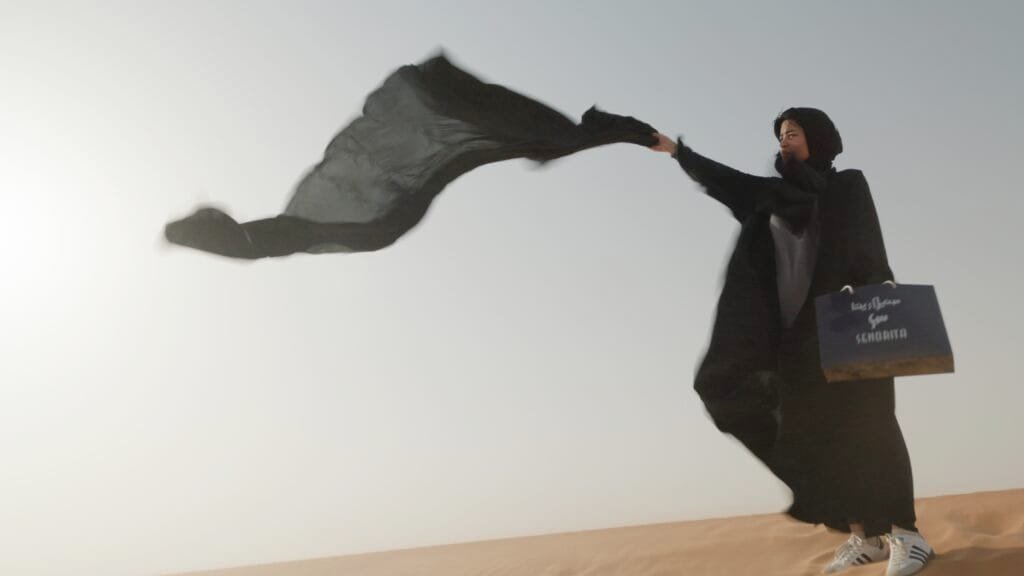
At its core, then, Unidentified is a film about the push and pull of modern life, albeit on one woman in particular, trapped between two worlds. It’s not limited to the expected divide between Nawal’s actual job and her interest in a case which goes way beyond her professional responsibilities. We have already discussed the podcast, where a girl applies lipstick as she warns against the perils of enraging men; we get a dolled-up headmistress, very much in charge of her domain, doling out arch warnings about immorality. We meet schoolgirls who have devised their own wall of silence, even as they sneak out at night to go to hookah bars and talk to men, just before they are married off. The film does successfully present a rather paranoid, secretive world which masks a lot of its worst excesses (though of course, all societies do this to a greater or lesser extent). Its violence typically happens off screen; this is never gratuitous, and in fact may feel too quiet for some crime cinema fans. It also opts for a recognisable structure and story arc, right down to the late addition of some surprises, though on the whole these work, the film is well made and well edited, with some wonderful stylistic visual flourishes, offering clever symbolism. On the whole, there’s a pervasive, uneasy religious context where religion – in lockstep with a harsh and unforgiving patriarchal culture – overshadows everything which takes place here. Nawal is a feisty character, to the upper limits that she can muster. She finds ways to push back against a world full of restrictions, and the film does grow increasingly tense as she gets closer to the truth.
Will you begin to wonder whether things have in fact all been put to bed, giving a glance to the remaining runtime, when it looks as though we’ve reached that point – The Truth? You might. And by the time you actually get to the end credits, you may feel either enlivened, or enraged, by the way things are finally wrapped up. I’d recommend taking a step back here, even getting a bit (whisper it) meta, and considering what the film’s structure and denouement has to say about Saudi life, even as a fictionalised and subjective glimpse of Saudi life. If filmmaking offers a distilled version of current social and cultural anxieties, then Unidentified has far more to say than it might at first seem to say. For this reviewer, it speaks quiet volumes of its own, adding an additional layer of ideas to consider – which prompts a look back over the whole narrative arc anew. That’s a real compliment to the film. It’s surprising to see such underwhelmed reviews already out there; there’s lots to ponder and admire here.
Unidentified (2025) will screen at this year’s Tribeca Film Festival, starting with Tuesday, June 9th at 8:30 pm (US premiere).