By guest contributor Adam Page
There are some cities in the world that get inside you. I don’t mean in the tourist-brochure sense, like Rome seducing you with its golden light and self-satisfied beauty, but in the way a wound gets inside you. Berlin in 1981 was that type of city. You didn’t visit Berlin, you survived it. It sat there in the middle of East Germany like a philosophical argument turned violent, a city split down the middle, literally, by concrete and ideology and the polite fiction that it was a permanent solution to anything. Andrzej Żuławski completely understood this. He had been thrown out of Poland by communist censors, watching as his own country built its own invisible barriers and when he got to West Berlin to make Possession, he brought the certain sensitivity of a man who knows what it feels like to be divided by forces bigger than himself.
What he made wasn’t a horror movie, although it’s still filed that way by people who need their monsters visible and their categories neat. Possession is something far more uncomfortable than a horror movie. It’s a movie about the end of a marriage, and by that, I mean a movie about the end of a shared reality. And it uses Berlin, a wounded but impossibly alive city pressed against its concrete negation, not as a backdrop but as an argument. The Wall isn’t scenery in this movie, it’s the whole thesis.
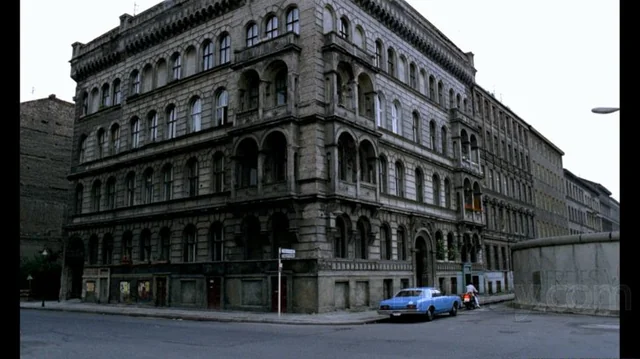
Let’s talk about what Berlin really was back in 1981, because I think we need to feel it to understand what Żuławski was working with. West Berlin was an island. I don’t mean that metaphorically, it was a literal enclave of Western capitalism floating in the middle of the Soviet-controlled East Germany. It was accessible by three narrow air corridors and a number of checkpoints, where men with uniforms and guns checked your papers with that specific dead-eyed contempt of people who had been given a little power and knew how to use it. The city seemed to have a strange psychic atmosphere, drawing artists, draft dodgers, people running from something or looking for something they couldn’t name yet. It was heavily subsidised by West Germany, which had to function as a showcase, a real-life advertisement for the Western model. This built an odd economy of creativity and desperation; cheap rent, government money pouring in and the subliminal awareness that you were living in a place existing by political will alone, and in theory could cease to exist if that will failed.
David Bowie recorded his Berlin Trilogy there. Iggy Pop was wandering the streets. Nick Cave would go later. They were not people drawn to cheerful places. They were drawn to a city wearing its damage openly. To a city bombed into powder and rebuilt with all the grace of a society working under existential threat and sat in the shadow of a wall telling them: This far and no further. Here is where freedom ends.
It was into this city that Żuławski put Mark and Anna and a marriage that was already, in the opening frames, indistinguishable from a war zone.
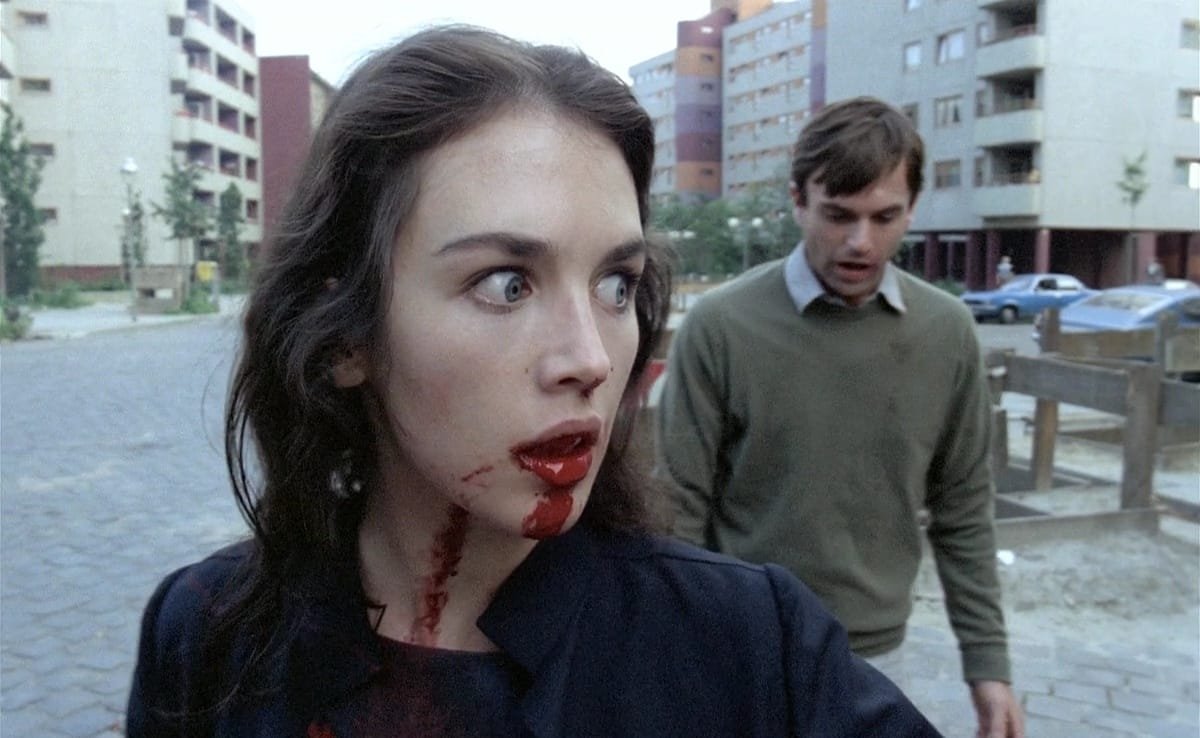
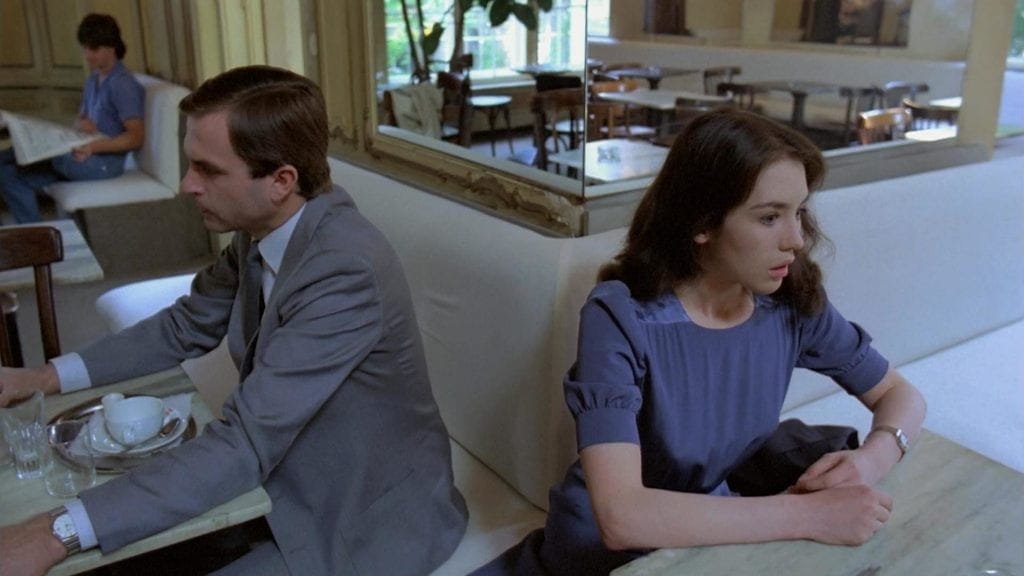
Mark comes home from an unnamed assignment; he is a spy or something spy-adjacent, the movie deliberately vague in the way intelligence work is all deniability and implication, and discovers Anna wants to leave him. She can’t really explain why. She tries, in an early scene with Isabelle Adjani’s face doing things a face doesn’t normally do, cycling through fury, and anguish, and what seems like cosmic exhaustion. She can’t give him a reason, as the reason isn’t ideological. It isn’t that she’s chosen a side, but more that she has discovered she contains multitudes that can’t co-exist. Her marriage has been the container that was forcing them to try.
It’s here where the Berlin Wall becomes something more than a choice of location. Żuławski, himself surveilled by the Polish secret police and intimately knowing the texture of living in a watched state, frames Mark and Anna’s apartment like a border zone. The apartment isn’t a refuge, it’s a checkpoint. Characters move through it with the wariness of people moving into contested territory. There are no shots that make it feel like a home; instead the camera, operated by Bruno Nuytten with an aggressive mobility, makes every room potentially hostile, and every doorway a possible confrontation.
It’s surveillance aesthetics applied to intimacy. The husband is watching the wife. The wife knows she’s being watched and performs, not deception but a kind of hyper-awareness that happens when you know your movements are being monitored. Bob, their son, moves through the apartment like a small animal navigating around territorial adults, dealing with the tension with that eerie adaptability children have when they have no choice but to adapt. The family apartment should be the most private place in the world, but here it operates like a no-man’s-land between checkpoints, where the normal rules don’t apply and violence is always near.
Think of the geography Żuławski establishes. Mark occupies the apartment; he’s returned to it and his life is organised around it. More and more, Anna’s life does not. She has another apartment, across the city, where her lover Heinrich is and eventually the thing she is creating, or the thing she has summoned or the thing she has become; that tentacled horror that the movie’s more literal-minded critics focus on as the genre element. But let’s not get distracted by the monster, it isn’t the point. The monster is what happens when a person refuses to keep their interior life walled off from the outside world, and when the suppressed self stops accepting its containment.
Anna’s other apartment is the East to Mark’s West. Not literally of course, as both are in West Berlin, but structurally. It’s the other side, a place that can’t be visited without a sort of border crossing or without confrontation. When Mark follows Anna, when he hires the private detective to watch her, he’s doing what states do: treating the unknown as a threat and responding to a mystery by gathering intelligence. He just can’t accept that he doesn’t know what’s happening. He needs a report, a file. He has to know where his asset is located.
And that word, asset, is deliberate. After all, Mark is something like a spy, and the movie suggests he has brought his professional terminology into his marriage. He treats Anna as a handler treats intelligence; a resource to be tracked, a variable to be considered and a potential defector who has to be monitored for signs of ideological drift. The tragedy is that this isn’t malice, exactly. Mark loves Anna in the only way he knows how to love, like a state loves its citizens. With possession, and the real belief that this constitutes protection.
Sam Neill, and this might be the movie’s most underappreciated achievement, plays Mark not like a villain, but as someone so colonised by the logic of his world, he can’t perceive its violence. He is earnest and in his own way, devoted. He’s also totally unable to understand that his presence is itself a kind of occupation. There is a scene where he beats Anna, and afterwards, he sits there with the specific bewildered look of a man who honestly can’t understand how he got here. He followed the rules, he came home. He wanted to be a husband. So why has this become a war?
The answer lies in that city outside his window. In 1981, West Berlin was a city that had learned to live with division, with its entire identity organised around it. For West Berliners, the Wall wasn’t an emergency. It had been there for 20 years. It was part of the infrastructure, and you arranged your life around it, incorporating it. The cold fact that this meant building your life around an obscenity, around literal concrete proof of human cruelty and political failure, well, you adapted. You had to, as the alternative was a kind of ongoing existential crisis that nobody could maintain.
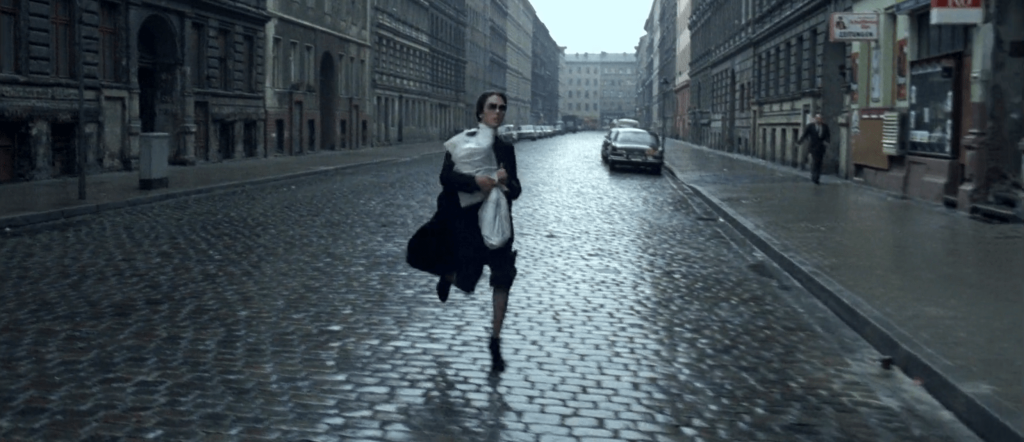
Mark and Anna have done the same thing with their marriage, learning to live with the Wall between them. They have incorporated that division and made it functional. They have built their routines around areas that still communicate and the areas that are sealed off. Then Anna does the unthinkable: she stops pretending the Wall is acceptable. She starts acting as though the division is catastrophic. And this refusal to accommodate, the insistence on feeling the full weight of what’s been walled off, is experienced by all those around her as madness.
Isabelle Adjani won the César Award for her performance in the film. She also reportedly suffered a breakdown during filming. Both things are credible. What she does in Possession isn’t acting in any conventional sense; it’s more like a controlled demolition of the self, a performance enacting the very disintegration it’s depicting. The subway scene has been written about so often that I’m reluctant to add to the pile, but it remains inexhaustible. Anna in a subway corridor, her body moving between rage and grief, and then something beyond both, her body becoming the argument the movie has been making with words, architecture and geography. The body as a border zone, and a place where two incompatible selves finally stop negotiating and start destroying.
Watch where Żuławski has his camera during this scene. There’s no cutaway, no relief of reaction shots or distance. He stays close with it, in the same way surveillance cameras stay with things. Without mercy, without interpretation, and just recording. Here, the camera isn’t empathetic, it’s gathering intelligence. And here, I think, is the movies most devastating formal choice. At the exact moment of maximum human vulnerability, Żuławski copies the aesthetic of the surveillance state.
That’s what love has become in this movie. Monitoring and watching. Gathering evidence of other people’s interiority and trying to predict their next move. Contain the damage and maintain the border.
Heinrich, Anna’s lover (played by Heinz Bennett), represents the third option which the movie’s Cold War geometry demands. He isn’t East or West. In his nauseating way, he is beyond ideology. A man so committed to his own spiritual projects, that geopolitics slide off him. He meditates. He has achieved a serenity that the movie treats with the contempt it deserves, because that serenity is built on not being in the world in any real sense, and on having walled himself off from history so totally, he can float above it in his beatific self-satisfaction.
When Mark confronts Heinrich and kills him in that bar’s toilet, it’s ugly and disproportionate. But it’s also, by the movie’s logic, totally coherent. Heinrich represents an escape from division, a man who claims to have transcended the Wall by just not acknowledging it. Mark, for all his horrific flaws, at least knows he’s on a side. He knows the Wall is there and there is something almost honourable in his refusal to pretend otherwise.
The double ending of the movie, the arrival of what seems to be the ideologically normalised version of Mark, mirrored by the destruction of Anna and the approach of what is suggested to be an apocalypse, has been read as an anti-Cold War allegory, and as Żuławski’s prediction of some final confrontation. As Marxist critique and as pure surrealism. I think it’s all of these things and resists final explanations in the way that great movies often do. But what strikes me about it is the implication about what division costs. The “good” version of Mark who arrives at that apartment is functional and clean. He has done something with himself, made some peace or reached some accommodation. In the most important sense, he is no longer divided. And this is not presented as triumph, but horror. Anna’s proxy, the creature grown from her own divided self, her doppelganger, is looking after Bob, and he recognises what the two doubles are, drowning himself in the bathtub. The price of integration, the movie seems to say, is the death of something real.
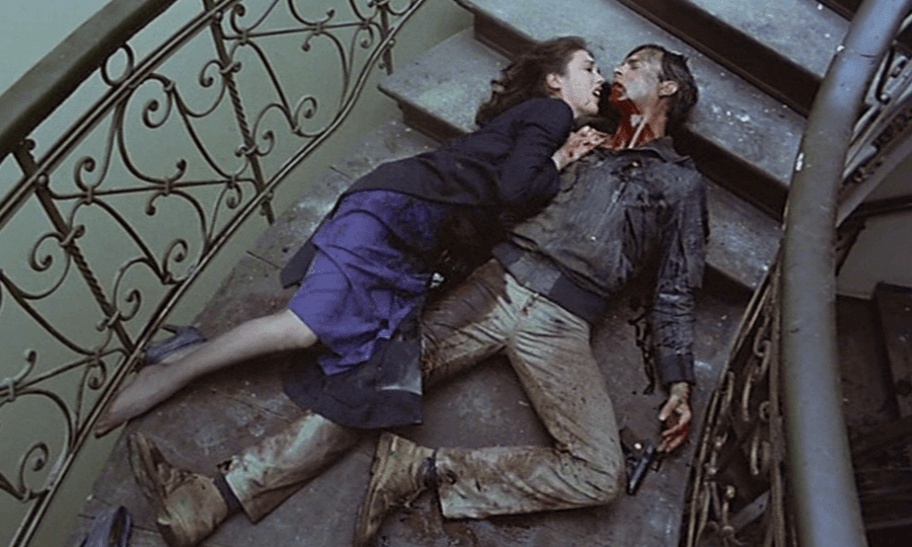
Berlin would come to understand this. The Wall would come down eight years later and the reunification of Germany would be celebrated as unambiguously good – and it was. But also, gradually, it would be revealed that the East had brought its own scars, and its own way of being in the world. The West also had its condescension and pathologies. Walls don’t just disappear when you knock them down, they become interior architecture. Ostalgie is the name given to the nostalgia you may feel for a way of life organised around oppression that was, at least, your oppression. You knew it and had learned to navigate it.
Mark and Anna’s Wall can’t be pulled down, and that’s the tragedy. It has become structural to them. Remove it and the whole thing, the selves, the marriage, the shared reality, comes crashing down.
Żuławski made Possession while exiled, in a city which was defined by exile, about a marriage in the process of internal exile. He was drawing on his own divorce, his experience of the Polish state, his readings of theology and a deep suspicion that the modern West had organised its emotional life around the exact same principals of surveillance and containment it claimed to politically oppose. And he was right. We are all, in our most intimate spaces, Cold War architectures. We have controlled zones, buffer states and our mutually assured destructions. We all have our Walls.
The thing about Berlin, and it’s something that the tourists who go now with cameras and Instagram posts about the East Side Gallery don’t always feel, is that the Wall wasn’t imposed on the city from the outside. It grew from the division of the city, which grew from the division of the country, which grew from the catastrophe of a people losing its mind, and the further catastrophe of other people arriving to administer the aftermath. The Wall was already there, the concrete just made it visible.
That’s what Żuławski understood, and what he put on screen with brilliant and monstrous clarity. The Wall within. The division there long before the marriage, expressed by the marriage and outlasting the marriage.
What he is telling us is that love is not the opposite of ideology. Love is just ideology with better lighting and more convincing special effects. We’re all divided cities and we all have our checkpoints. We all, at 3am in the apartment we share with someone we can no longer reach, put our hands against the concrete of our own interior Wall, wondering when we built if and whether we still have the key to any of its gates.
Some questions, West Berlin knew, don’t have comfortable answers.
Some walls, it turns out, are load-bearing.