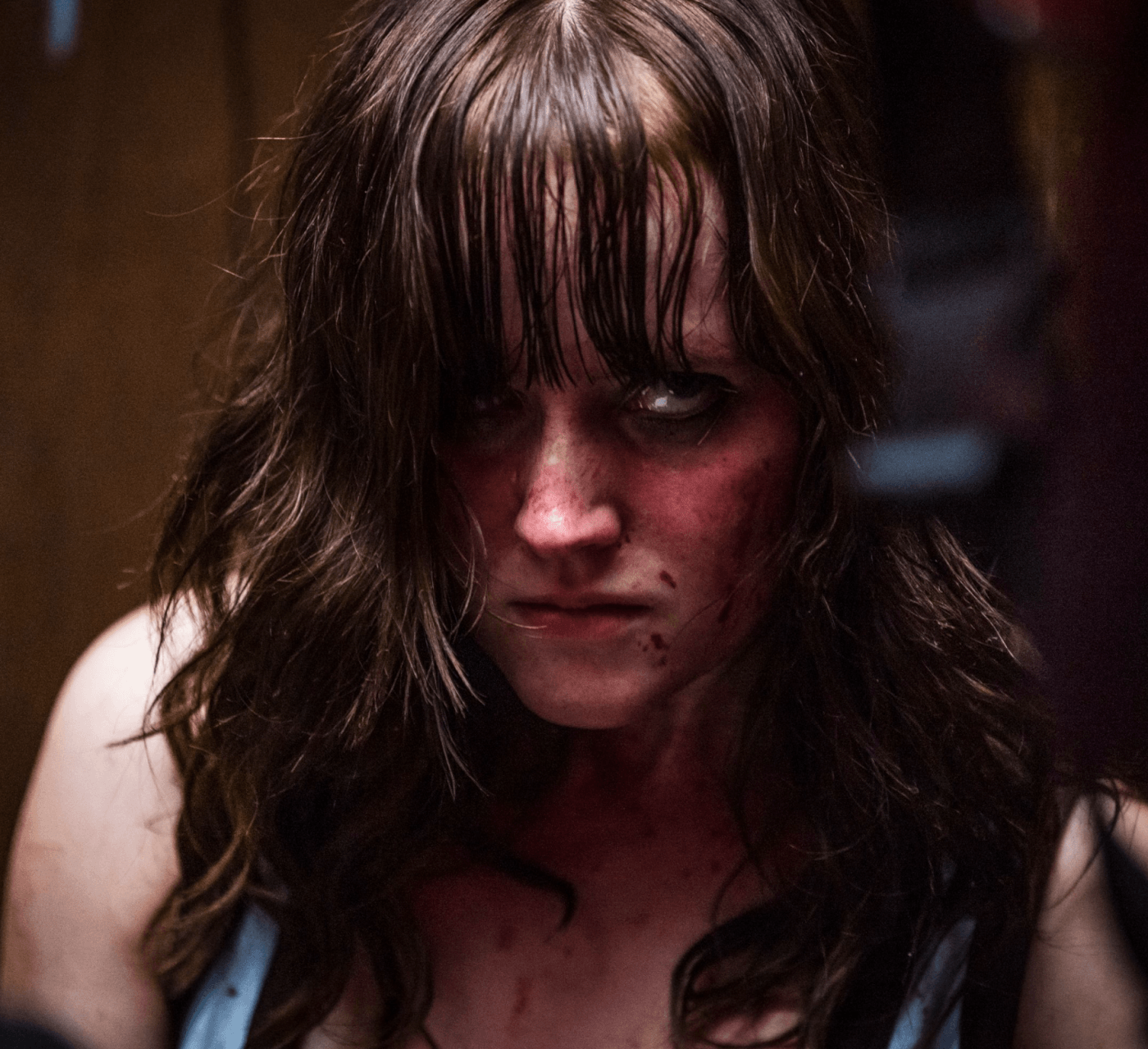

We meet a group of friends at a (genuinely loud, messy and confusing) nightclub where the time-honoured consumption of lines of coke followed by shots is cut short by a fistfight: ah, the holy triumvirate of a night out. The group retreats to a nearby takeaway to plan their next move: Zack (Nikita Chronis), who was the prime mover in the fight, is keen to make amends. His offer? To kick on, or in other words, to secure more coke and go to a different club. It’s not imaginative, but it’s accepted. It’s the group’s last night out together before Zack’s little sister Lee (Kaitlyn Boyé) heads off abroad, and although it’s less overtly addressed by the group, it’s also a good distraction for Edie (Markella Kavenagh), whose sister is terminally ill, and could only possibly be saved by an expensive experimental treatment, i.e. palliative care might be their only option. The amount of drugs Eden is getting through could be taken as an indicator of how well she’s coping with all of this.
After a few phonecalls, Zack makes good on his offer to source some more drugs, so the group just has to make one stop on their way to the next club. Great – but things soon take a turn. Firstly, the state of the decrepit high-rise where they’re making their pitstop gives them some alarm; secondly, the apartment they visit is completely out of keeping with the rest of the building. It is distinctly moneyed, if a little trashy; it also runs a no phones policy, so – regretfully – the four friends hand in their devices at the door. Then they meet their new dealer, Ray (Nikolai Nikolaeff), who is a flighty man to say the least, and soon seems likely to have a very short fuse concealed somewhere about his person.
Son of a much-feared Russian mobster, Ray is your classic loveless son – set up and financed by daddy, but very much tucked away by daddy where he can do the least damage. Challenge accepted, Ray seems to feel, as he begins smoking copious amounts of crack and erupting into various emotional states – and that’s just for starters. A tad overexcited by having new company, he proposes an experiment: his new, unwitting guinea pigs can try some of a brand new narcotic concoction he’s put together, to see if it’s going to be good for sale. Participation is as good as mandatory, but once everyone’s in on this, they begin to have a fine old time; the need to move on to a nightclub becomes pointless. They have everything they need right where they are. Possibly…
This is very clearly a brittle situation, ready to escalate into outright violence, and things are made more complicated when Edie takes a risky decision – though this doesn’t outright initiate the sudden sea change, even if you know it’ll pop up later to make everything a bit worse. Events begin to take turn after bloody turn, and the prospect of ‘just leaving’ becomes an impossibility. Ray is an imposing figure here, fascinating (if highly stressful) to watch, and a magnetic, plausibly dangerous individual from the very first moments. Hints of warmth always come with a chaser of potential psychosis; as Hunter S. Thompson said, “You can turn your back on a person, but never turn your back on a drug—especially when it’s waving a razor-sharp hunting knife in your eye.” That’s Ray – a narcotic nightmare, the likes of which we may all have met at some point (and felt that, if we got away unharmed, we’d won some sort of improbable cosmic victory). Ray may differ from your usual drug-addled individual, as his masculine bluster is shaped around his scant knowledge of historical and literary precedents: his full name, Roman, finds echoes in his occasional ruminations on the betrayal of Caesar, and his statuette of Michelangelo’s David takes on a symbolic turn later, too. But he’s still a terrifying liability, whether he can discuss the Senate or not, and he’s also a pampered manbaby, ill-equipped to handle his own fuck-ups – as we see in glorious terms here. There are other key players here too, though not as loud as Ray, sticking to the shadows and primed to enter the fray in their own, unexpected ways later on.
Whilst a few of Kick On‘s plot points feel familiar, there’s no arguing with the impressive way they come together here – it’s tense, it’s fun and there’s a new move on almost every beat. Even the presentation of the film’s occasional subtitles form a pleasing part of the film’s overall colourful, bold aesthetic, all underpinned with some fantastic special effects (or quick-fire CGI for the most outlandish sequences, which I feel unusually very obliging towards). Impressively and consistently tense, Kick On is a layered adventure through drugs logic and ultraviolence, jagged and deft with dashes of humour providing occasional relief. However, it’s brutal through and through, which lands all the more successfully once the film gets you to genuinely like its characters – normal young people up against such corrupt, seemingly unwinnable odds. This is the most fun I’ve had with a film in a while, and it makes perfect sense that BHHF chose this punchy, zingy and very bloody title to close the festival for this year.
Kick On (2026) closed this year’s Brooklyn Horror Film Festival.