It’s time to look at my favourite short films of the year – and also time to feel sorry, as usual, that so few of these films are, currently, available for wider viewing. But who knows? Maybe in future, cinemas and online channels will diversify further; the beginnings of this are already in motion, with the likes of Arrow Video now picking up and screening a few shorts. And perhaps even the likes of Netflix could reflect on the success of a series like Love, Death & Robots and consider that there is an audience-in-waiting out there.
It’s no coincidence however, for now, that I got to see all but one of these short films at a specific film festival (Celluloid Screams in Sheffield, UK). Festivals still seem to be the most reliable way of interacting with shorts, and there are film festivals (such as Aesthetica) entirely dedicated to the medium, but I can’t help but think that mainstream cinema screenings are missing a trick here. The way that it’s done at Celluloid Screams is to screen one or two short films ahead of a feature, so that you get a little extra before the full-length film runs, and you also get to see films you would in all likelihood not otherwise see. Why couldn’t the likes of Picturehouse do something similar – surely, as a cinema chain which purports to screen the more lesser-known titles, this would fit in quite well with that remit? I’m sure there are similar cinema franchises in other parts of the world, too, and it would be great to know that talented filmmakers working on short films (sometimes for a long time before ever making a feature, for many reasons) could find an audience in addition to the often rather niche world of film festival screenings. For a long time, I’ve also toyed with the idea of setting up a short film channel to boost viewer numbers and exposure to short films, but given that filmmakers understandably want to retain control over their finished products – rather than handing things over to some optimistic but otherwise clueless bozo on the internet – it’s never happened. At least, yet.
In the meantime, and I heartily hope this year, as every year, that more people are able to see these films at some point – here is my pick of the bunch in 2025. Many thanks to all of the filmmakers who brought these stories to the screen.
The Occupant of the Room

Well, here’s at least one it’ll definitely be possible to see more widely, given that it forms part of a series titled The Haunted Season which is now available on Shudder, resurrecting the ‘ghost story for Christmas’ tradition. At around thirty minutes, it’s one of the longer short films on this list, but it utilises that runtime perfectly, striking a good balance between narrative detail and atmospherics, economy and pace. Based on a short story by Algernon Blackwood, it centres its tale on a remote hotel in the wintry Alps and a traveller at first barred from the safety of this environment; when gaining entrance, our traveller, Minturn (Don McKellar) is forced to take on an already-occupied room, albeit that the resident left for a hike the day previously and has not yet returned…
The stage is set for a disquieting, introspective experience as Minturn gets plagued by eerie phenomena; he picks over clues, objects which belonged – or belong to the room’s tenant, and he suffers through anguished dreams and visions which seem to belong equally to both occupants, present and present-absent. The result is a strange and existentialist piece of film in which director Kier-La Janisse uses interesting poetic license to bring to the fore ideas which, in the story, are more minimalist. The Occupant of the Room balances its period setting and literary basis with something which feels much more up-to-date, and the overall impact is very impressive. You can read my more detailed review of this film here.
The Fairy Moon

The Fairy Moon is another film which blends something modern with something folkloric, bringing its elements together in a subtle and never-quite-explained way, but making clear to the audience – via the intertitles and other clues – that here we have an occult force, and a very recognisable one at that, pushing its way into the everyday and taking advantage of one man’s ignorance of these forces. In this, it works in a similar way to many folk horror tales, where a visitor or an outsider fails to heed rules or avoid pitfalls because they lack the prior knowledge; it’s just that here, we have an ordinary bloke who simply gets swept up in something bizarre and tragicomic through no real fault of his own.
As he goes about his day, a man called Roger (a plausibly-harassed Johnny Vivash) encounters an oddball and dapper stranger who seems to take an interest in him, popping up in different places to present him with different possible scenarios or behaviours which all seem to point to trauma and risk. Being British, Roger has little defence beyond a sharp word and a futile call to the police, but what does this man (James Swanton) actually want? The film points to ideas about fate and sacrifice, but it does it all in an understated manner, making us want to laugh as much as to understand. You can have a look at my full Fantasia review here.
Skin
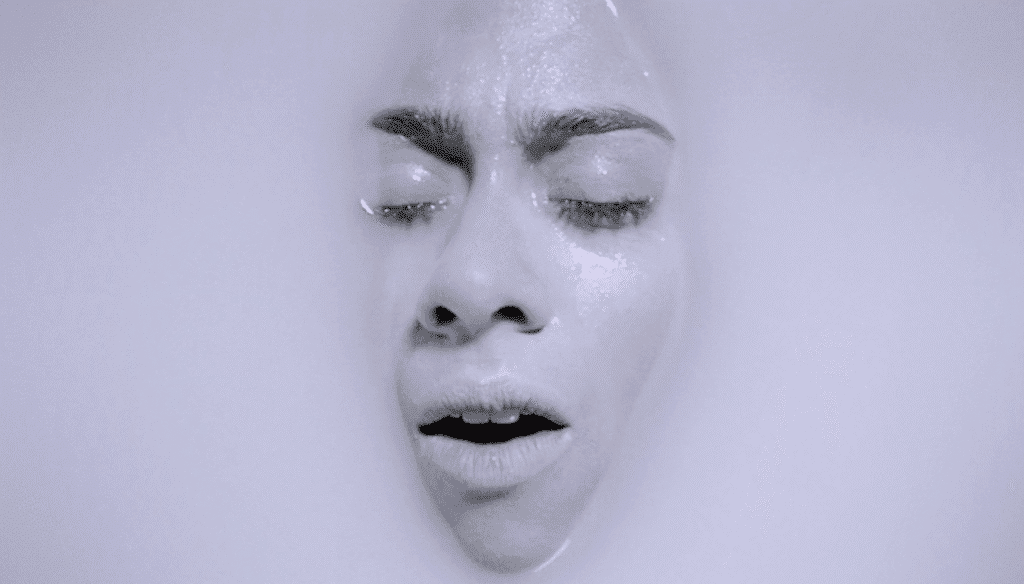
The only film which I saw via a requested review rather than at a festival, Skin is a short but impactful story about the toxicity of beauty norms, particularly as interpreted where ‘pale’ equals ‘beautiful’. Great, but what if you’re not white? In Skin, our protagonist, Kanika, decides to undergo a revolutionary new skin lightening treatment (riffing on real-life treatments which do this) despite her sister Ria’s protestations: there’s something off, something too good to be true, about this whole thing. The clinic itself looks modern and stylish, but it has a sense of the uncanny about it, and indeed as it turns out, they want more from their clients than just a little of their time. Clearly influenced by The Substance in terms of its visuals, Skin turns it around so that we’re not looking at hang-ups about ageing, but about white skin-centred values. I reviewed the film as part of the HollyShorts package and you can read about it here.
Obey!
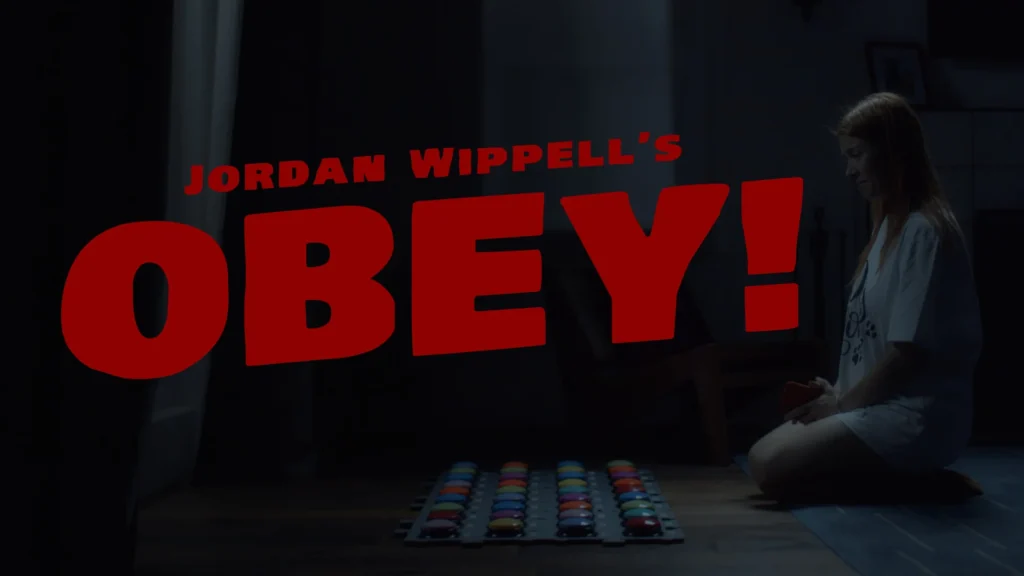
On first pass there’s nothing serious about Obey! but actually, on consideration, it uses humour and exaggeration to point to the great hypocrisies of influencer-driven animal training programmes. Very popular today, button training can be used to train cats and dogs to ‘speak’ to their owners; it can be a very sweet and charming thing to witness, but as with any complex training model, it takes time, patience and humility – traits which many influencers may lack. The film introduces us to a pet influencer and her dog, Max: Max’s tragic death leaves his owner bereft, but weirder still, it seems like his vengeful spirit is back to communicate his feelings about what happened to him and how he was treated…
Skulk
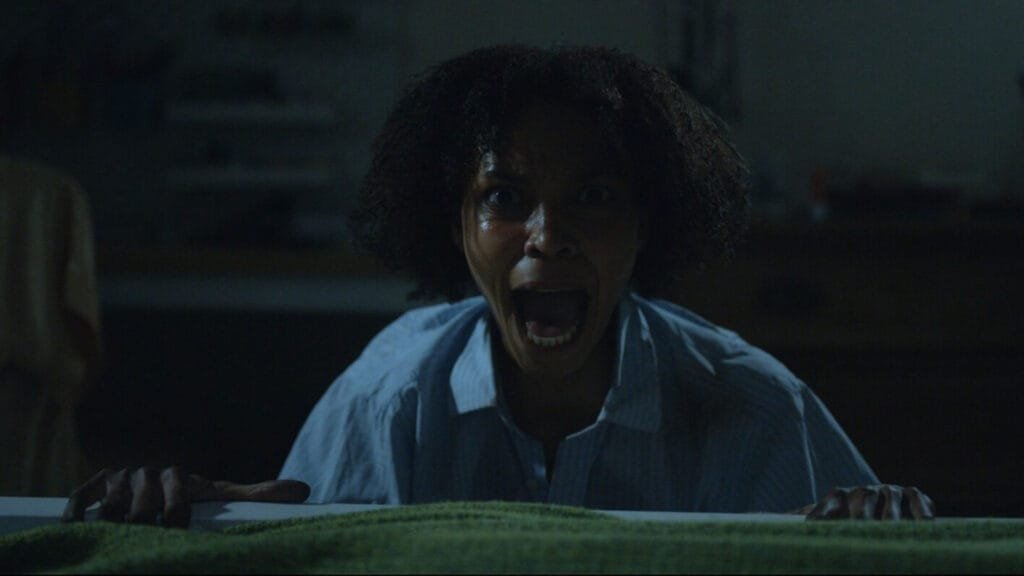
Skulk is so, so simple and yet it does just enough to spin an effective yarn, making a brief but devastating suggestion and then seeing it through. Less is more here. The film starts by suggesting that foxes bark at night to raise the alarm that some sinister entity is near; that’s it, but that idea alone is a disconcerting enough titbit to generate an effective few minutes of horror when a woman awakes, hearing the barking of foxes outside, and realises something wants to be inside her home with her. What follows is a short but sweet masterclass in economical horror, pivoting around aural scares in particular (at least for this viewer) but doing more too. Bravo to director Max Ward, who has been building a solid career in the short film artform over the past eight years or so, and clearly understands the strengths and affordances of the genre.
Grandma is Thirsty
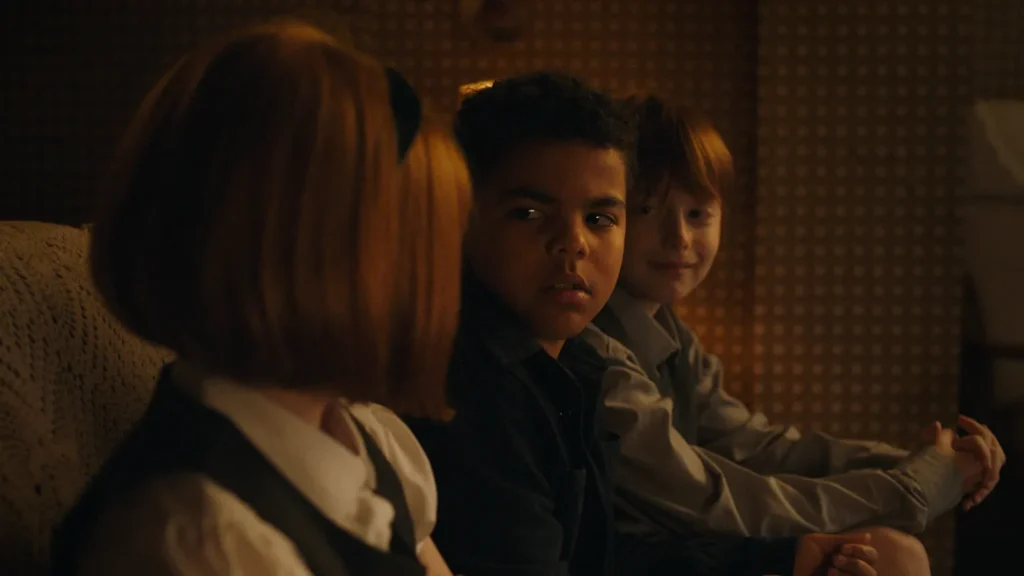
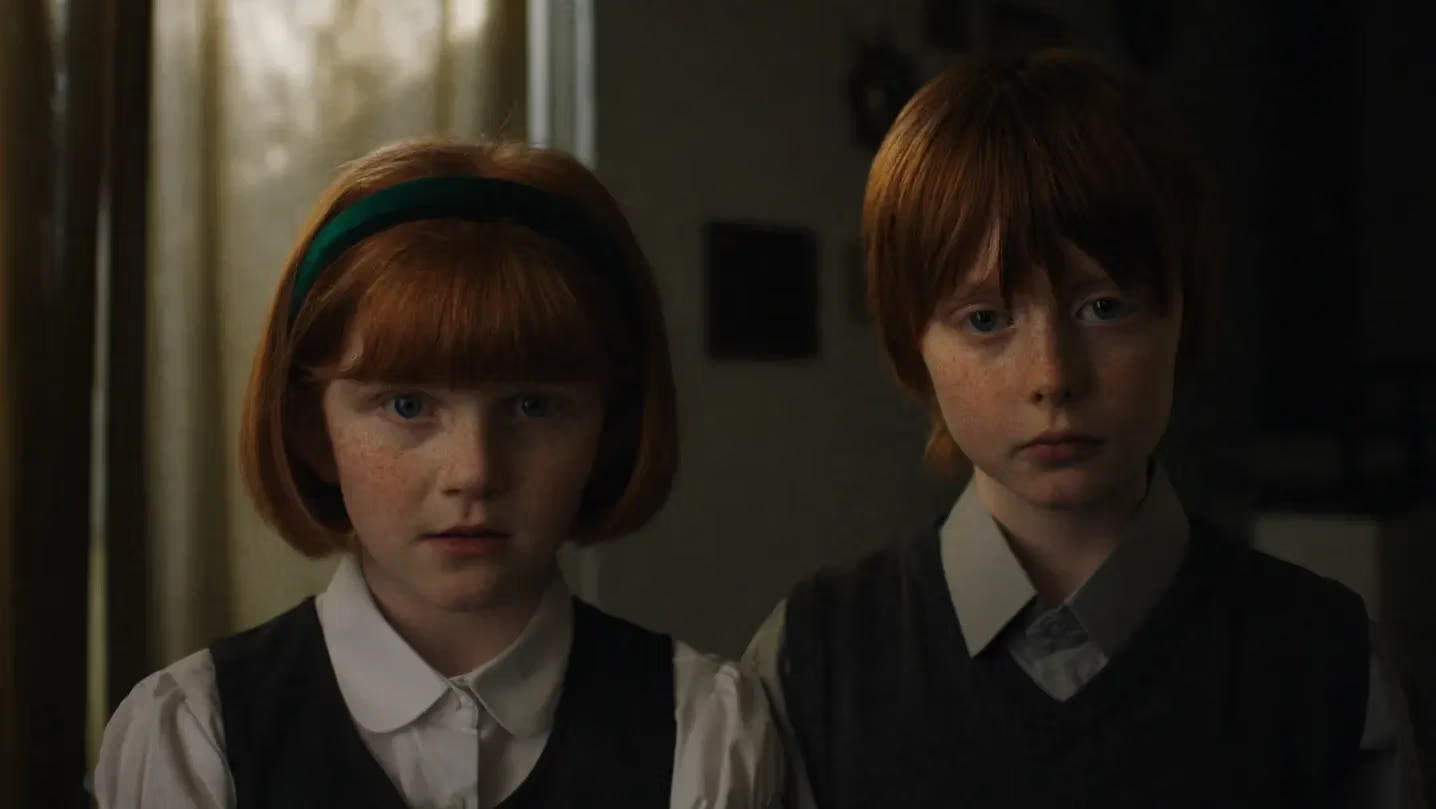
Feeling in some respects like a Seventies-era, Scarfolk-adjacent piece of world-building, Grandma is Thirsty forges something funny, bizarre and charming out of some familiar elements. Poor little George (Harris Kiiza) is getting picked on my bigger boys, and this timid kid doesn’t know what’s best to do: he just wishes he was bigger and could defend himself. Step forward, twins Benny and Bronte (Harrison Little and Jessie Johnson) who offer a solution: come with them to their place and meet Grandma. Grandma, they tell him, can help him to grow up big and strong. So, desperate, George goes off with his new friends to their house, where he is promptly locked in, because Grandma ‘only comes down at midnight’. Oh.
By turns sweet and sinister, Grandma is Thirsty has time enough to create a range of characters from plausible to peculiar, and it’s the interplay between them which drives a successful, nicely-paced story. George is a little champ, and you will find yourself sympathising with his predicament – and rooting for him as his bad day gets worse (and then a bit better, perhaps).