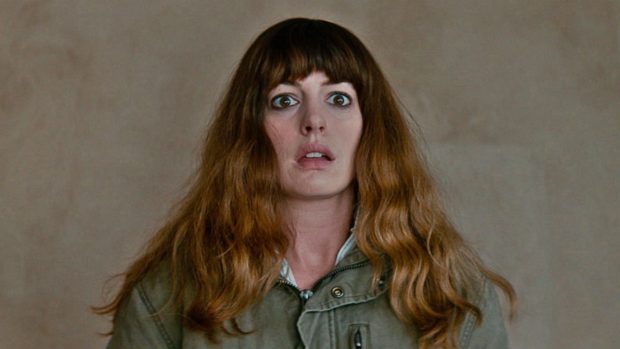
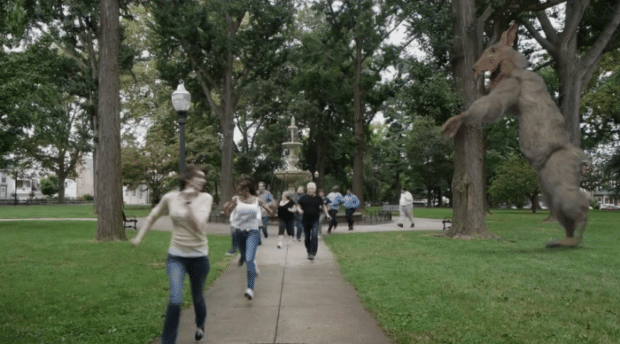
The daikaiju (or, if you’re a bit less ostentatious, giant monster movie) has always offered a handy, audience-friendly way for filmmakers to address big fears. As countless books on the subject will tell us, Godzilla served as a cathartic expression of post-Hiroshima/Nagasaki angst for Japan, and the ensuing franchise has addressed broader concerns about ecology, corporate greed, and the many various abuses of power which bring down nature’s wrath upon mankind. Since then, Cloverfield dealt with the traumas of 9/11, the Godzilla reboot evoked the Tōhoku earthquake and tsunami of 2011, and Kong: Skull Island touched on both Vietnam and, by inference, the subsequent US-led invasions made in the name of the War on Terror. All huge, large-scale horrors which had a devastating effect on large numbers of people. However, it’s rather less common that we see giant monsters used as a symbol for troubles of a more intimate, personal nature, which would seem to be what writer-director Nacho Vigalondo is aiming for with curious genre-bender Colossal.

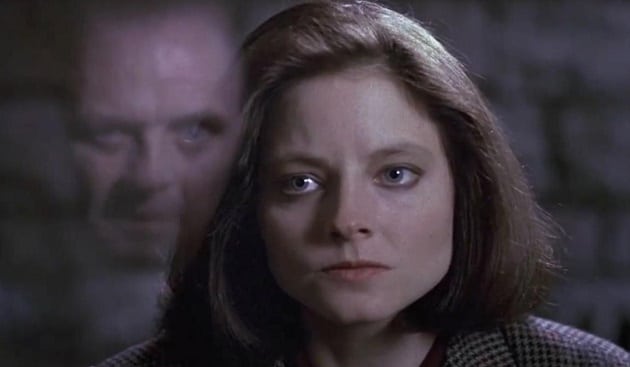 As most readers are no doubt aware by now, Jonathan Demme has died. Taken from us aged 73 from a reported combination of heart disease and cancer, the director, writer, producer and documentarian leaves behind a remarkably varied and illustrious body of work. As can often be the case on these occasions, I come to the sad realisation that I’m really not as familiar with the length and breadth of that
 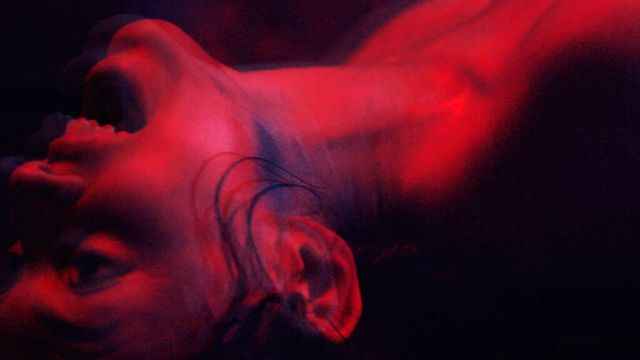 Any contemporary example of extreme cinema, loaded with shocking imagery and structured in an unconventional manner to keep the audience on their toes, has one fairly sizeable obstacle to tackle: cinema has seen more than its fair share of extreme, indecipherable, shock-heavy fare over the decades. As such, while We Are The Flesh is specifically designed
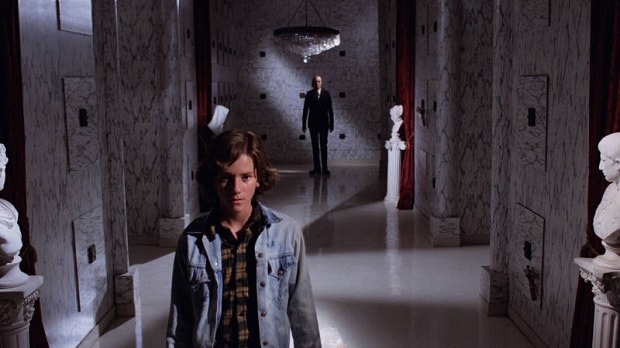 There are horror franchises, there are horror franchises with a cult following, and then there’s Phantasm. One of the few properties of its kind to remain in the hands of the same creator right up to the present day (even if the most recent film was the work of another director), Don Coscarelli’s humble 1979 oddity somehow birthed a series which has endured for the better part of four decades. As an example of independent genre filmmaking done right, it might easily be mentioned in the same breath as such other titles of its era as The Evil Dead and Friday the 13th, and yet Phantasm clearly stands apart inasmuch as it has arguably proved to be a genuine, inimitable one-off. Well, a one-off that’s spawned four sequels, but hopefully you see my point. Combining elements of simple drive-in horror movie thrills, mind-bending Argento-esque surrealism, apocalyptic science fiction, and all-American, gun-toting, muscle car machismo, there’s no mistaking a Phantasm movie, and there really isn’t anything else quite like it.
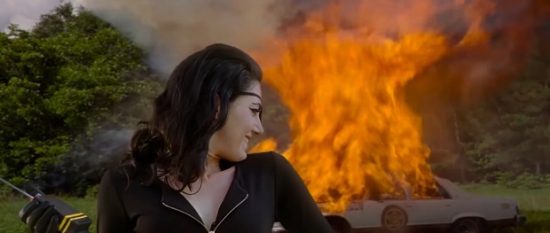 As hard as it may be for some of us to believe, it’s now been a full decade since Quentin Tarantino and Robert Rodriguez’s Grindhouse first opened, and,
  Just in case you wondering, no, this isn’t some sort of sequel to The Bunny Game which you hadn’t heard about.
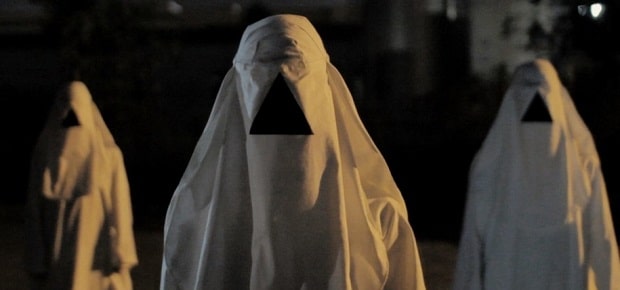 It can be tricky when you’re late to the party. Feverishly hyped in horror circles since its announcement, and one of the most talked-about films at the horror festivals in 2016, The Void has been on my radar for a good length of time, and all the signs indicated that it was something very much up my street. Publicity emphasised heavy use of old-fashioned practical SFX in favour of CGI, and a vision of otherworldly terror that drew heavily on HP Lovecraft, Clive Barker, Lucio Fulci, but at the same time reached out to do something new. Naturally, I went in with very high hopes… so when I say now that The Void is, well, just alright, it feels like a devastating blow. It really shouldn’t be at all, as this is not in any way, shape or form a bad film; it’s just nowhere near as great as I’d been hoping it would be, with far fewer surprises in store.
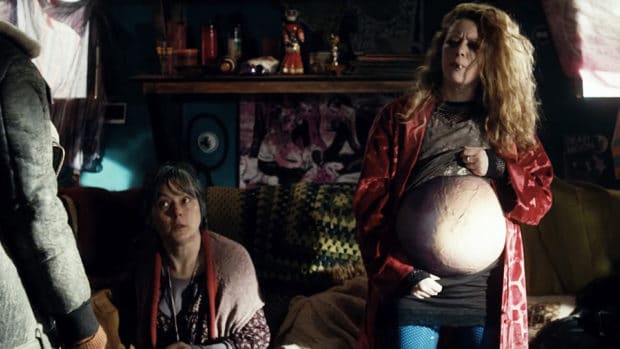 It’s entirely logical that pregnancy has been a recurring theme in so much horror, particularly at the more grotesque end of the spectrum. As much as some of us might like to herald it as a beautiful and miraculous thing, we all know that for most women it will result in nausea, pain, exhaustion, emotional and physical distress, not to mention the fact that in many instances the lucky lady in question might not have even wanted to become a mother in first place. Absolutely, a pregnant woman can see herself as engaging in the greatest act of creation she will ever undertake – but she might just as easily see herself as the host to a parasite, and it’s hard to fault that logic.
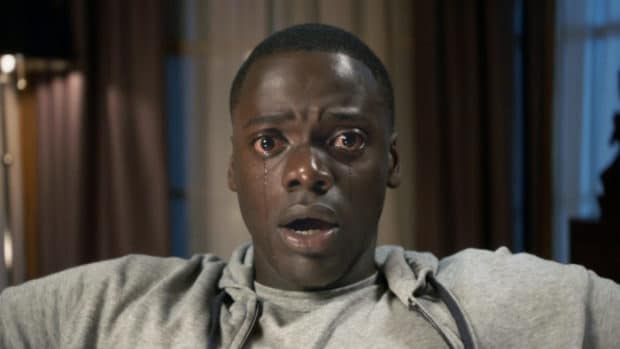 Back in our Brutal As Hell days, co-editor Keri O’Shea and myself would from time to time forego the conventional review approach in favour of a one-on-one discussion. This is an approach we’ve often favoured when the film in question was already the subject of widespread debate, which it seems fair to say has been the case with the film we’ve chosen to discuss here, in our first such conversation since relaunching as Warped Perspective. The debut feature from writer-director Jordan Peele but the latest in a very long line of mainstream genre releases from production company Blumhouse, Get Out is easily the most widely praised horror film of 2017 thus far, whilst also being the most commercially successful; two things which do not necessarily coincide most of the time. Naturally this was enough to get both of us interested – and happily, neither of us came out disappointed.