Should we ever ask, “what did we do before we had the internet?” I daresay Felicity might be as good an example as any to address the implicit underlying question. Now that footage of just about any form of sexual activity can be found at the push of button, and mainstream TV is filled with simulated rumpy-pumpy, it may be hard for younger millennials to conceive of a time when raunchy material was not so easily accessible. This inaccessibility was not purely down to technology, of course, but also differing moral stances on what was deemed acceptable viewing material. Thank goodness, then, for the lovely, liberated 1970s, which saw the (back) doors blown wide open as pornography made its way into the mainstream. The likes of Emmanuelle and The Story of O inspired scores of low-budget filmmakers to follow suit and cook up soft-focus softcore skin flicks of their own, and one such filmmaker was John D Lamond, director of 1978 Australian sex film Felicity, which Severin Films released to Blu-ray earlier this year.
Felicity (Glory Annen, who sadly died earlier this year) is a convent schoolgirl; just turned 18, we can safely assume, or bloody well hope (in any case, Annen herself was 26 at the time). Like any young lady blossoming into womanhood, surrounded only by members of her gender who spend a lot of time showering and/or sitting around the dorm rooms in very skimpy pyjamas, Felicity frequently finds her thoughts drifting toward sex. In fact, we’re given almost no indication that she ever thinks about anything else at all. Out of the blue, Felicity finds herself invited to stay with a relative in Hong Kong for the summer, and naturally she’s thrilled to go, not because she necessarily cares that much about experiencing another culture, but more because it presents ample opportunities for all manner of coming-of-age experiences. She ain’t mama’s little girl no more, as the film’s theme song tells us (many, many, many times).
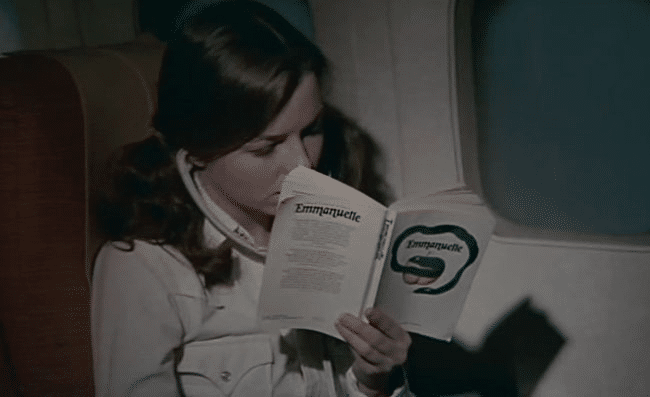 If that synopsis sounds like the half-baked fantasy of a dirty old man – well, I doubt that’s too far from the reality of the matter. The film makes no secret of its influences, directly referencing Emmanuelle and The Story of O many times, and playing out in a similar fashion. As we’ve known for time immemorial, no one watches porn for the plot, so it’s not entirely surprising that Felicity is virtually plotless, content to simply follow our heroine from one sexual encounter to the next. As per the time, Felicity barely seems to bat an eye at the blatant lechery of men young and old, taking it all with the old boys-will-be-boys attitude whether it’s a caretaker peeping on her in the shower or her greengrocer boss touching her thigh while she’s up a ladder. Once she’s on her way to the city, she seems keen to tick all the boxes: boy-girl, girl-girl, orgies, in the cinema, in the lift. And when she isn’t either having sex or thinking about sex, she seems to be perpetually on her way for a hot bath.
Along the way, there obviously isn’t much in the way of discernible character development, despite Annen’s frequent narration explaining how much of a personal revelation it all is, in a classic dirty book vernacular; lots of ‘warm tinglings in my most secret place’ and whatnot. Innuendos naturally pop up quite a bit, some more blatant than others; one doesn’t have to look too hard (teehee) to see the connotation when Felicity invites her friend for a swim with the words “let’s get wet,” but I’m a little bewildered as to how saying “let’s get into the prawns” over a Chinese meal constitutes a sexual invitation.
The choice of setting the bulk of the action in Hong Kong is a curious one. I realise the Australian and Hong Kong film industries shared fairly close ties at the time (thank goodness, or we might not have Brian Trenchard-Smith’s kung fu classic The Man From Hong Kong), and I can understand that the location may add an extra dimension of exoticism to proceedings for the domestic audience of the time. However, the setting feels rather pointless given that, by the look of things, the bulk of the interior scenes were shot in Australia with Aussie actors, and the vast majority of the characters Felicity encounters along the way – including a ridiculously flamboyant lingerie salesman, a creepy mustachioed man who rather roughly takes her virginity, and the boy toy with whom she ultimately finds happiness – are Australian. Still, there’s more than enough bare flesh on the screen to distract the viewer from any such concerns.
Severin’s cover art proudly proclaims this to be ‘unrated director’s cut of the infamous erotic sensation,’ and it’s not hard to see how it might have been a bit of an eye-opener at the time. However, beyond some rather outdated notions about what constitutes acceptable behaviour (our heroine’s first time is quite clearly rape), Felicity is for the most part pretty quaint and tame by modern standards. It doesn’t take long to get repetitive and tedious, but as old school midnight movie material goes it certainly isn’t the worst you’ll ever see, and it’s got enough of that oddball Ozploitation flavour to give it a certain charm. Indeed, Ozploitation aficionados will probably want to pick up this Blu-ray edition from Severin, as it boasts two earlier full-length films from director John D Lamond: his 1975 debut, gonzo documentary Australia After Dark, and The ABCs of Love and Sex: Australia Style, a psuedo-educational film with its tongue so far in its cheek it’s hard to imagine anyone was ever under any illusions that it was anything but bald-face smut. And why not. On top of this we have a feature commentary from Lamond, a trailer reel of his filmography, and some outtakes from the acclaimed Ozploitation documentary Not Quite Hollywood.
Felicity is available now on Blu-ray in the US and UK, from Severin Films.
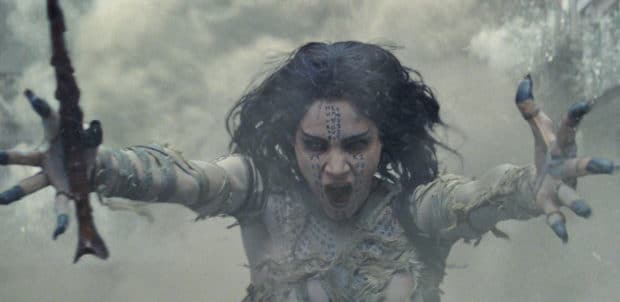 The Universal monster movies: a time-honoured brand for which there is so much love, which the studio have tried so hard and failed so miserably to resurrect time and again. 2004’s Van Helsing, 2010’s The Wolfman and 2014’s Dracula Untold had all been pitched as launchpads for a new monster movie universe, but none of them won over the crowds or the critics. This time around, Universal have gone for broke and declared their new take on The Mummy to be the first chapter in the Dark Universe (ugh, we’ll come back to that title), with promises of a Bride of Frankenstein reboot next and many more to follow. Alas, The Mummy arrives to widespread critical condemnation, and potential audience apathy in the wake of unexpected smash hit
 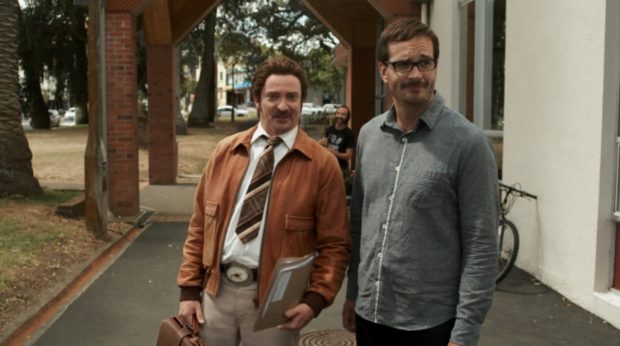 Rhys Darby is one of those comedy actors who, even if the name doesn’t automatically ring a bell, you’ve most likely seen in something. On the small screen, he’s surely best known for his supporting role in Flight of the Conchords as Murray, the inept manager who handles the band on the side of his day job at the New York branch of the New Zealand tourist office, whilst movie fans may know him for his brief but memorable cameo as leader of the werewolves (not swear-wolves) in What We Do in the Shadows. Short Poppies, an 8-part comedy series from 2014, puts him centre-stage as he plays a succession of characters living in a nondescript New Zealand coastal town, where filmmaker David Farrier (a real-life journalist, so I’m told, appearing under his own name) is putting together a documentary series. It’s a promising idea, and makes for around 3 hours of harmless fun, but all in all I’m sorry to say it left me feeling that Darby is perhaps best utilised in a supporting capacity, dealing out his distinct comedic persona in smaller doses.