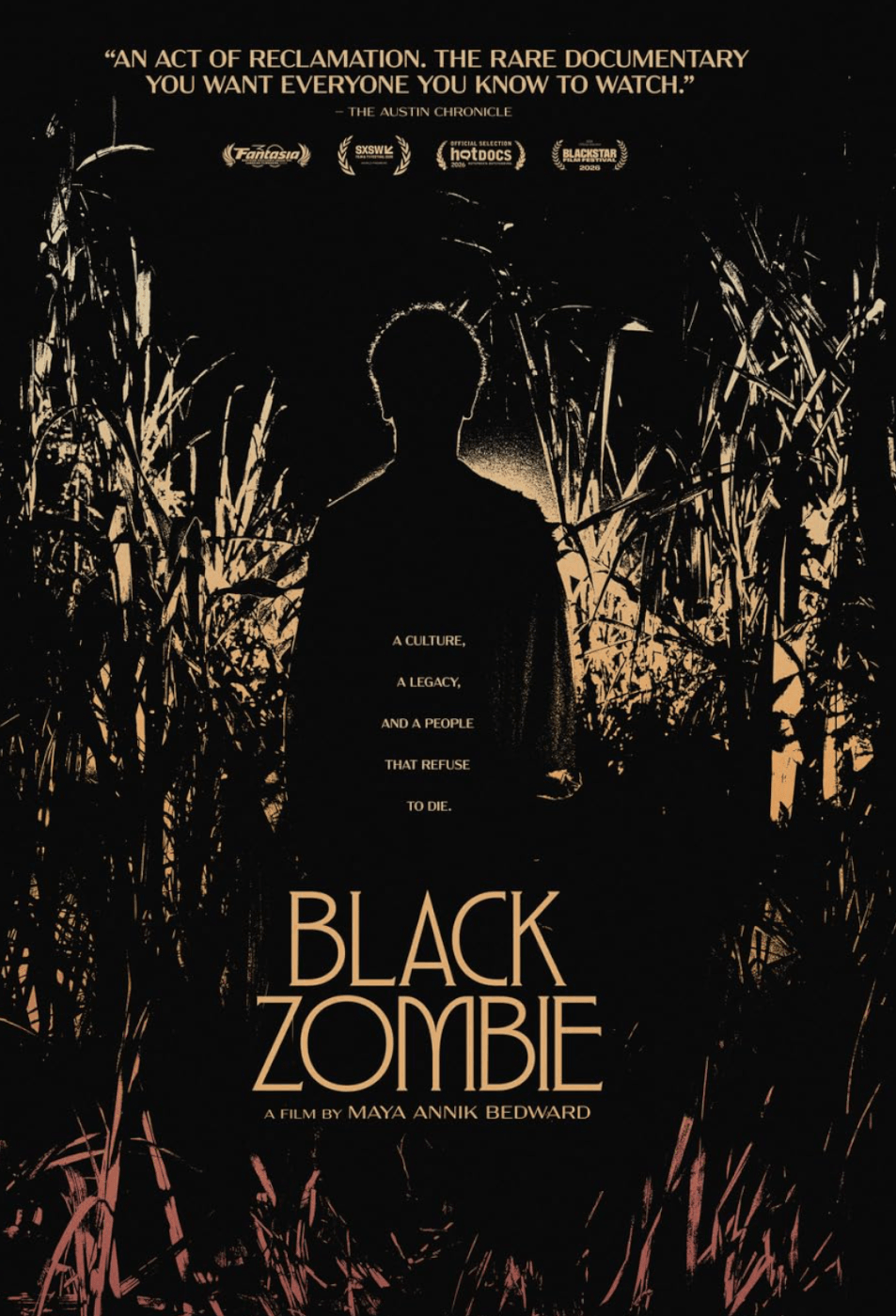

More than any other cinematic monster, the zombie – as in the flesh-biting, flesh-eating ghoul – has captured the imagination of filmmakers and filmgoers, despite a persistently strong showing from the likes of the vampire and the werewolf. Documentary film Black Zombie (2026) acknowledges this appeal, but seeks to answer broader questions about the origins of the zombie, tracing it back to the original Haitian term and the accompanying belief system which wraps around it. We turn briefly to the deep-held anxieties of these repressed and enslaved peoples in a country where belief in the ongoing spiritual presence of the deceased was sometimes accompanied by more specific unease about the possibility of never escaping indenture and slavery – of never resting. That’s the zombie. Fears over loss of autonomy – itself born of the colonisation and exploitation of Haiti – helps to foreground the rise of the zombie in Western popular culture, even if its shambling progress has seen it change considerably over the century or so in which Westerners have been aware of its existence.
The film has several key pillars, and one is that it’s keen to specifically separate the practice of voudou (to use the spelling used in the film) – a Creole belief system which blends elements of Roman Catholicism with elements of African spiritual practices and beliefs – from zombification, extoling the importance of voudou and its malleability, a belief system serving new spiritual purposes in displaced peoples. Voudou is presented as providing succour for its adherents; the idea of the zombie, however, represents anger and fear, the idea of being displaced forever from the belief systems and communities which should be able to offer support. Things began to shift more significantly once American travel writer (and keen sensationalist) William Seabrook travelled to Haiti in the 1920s, forging a lucrative writing career off the back of his time in the country and bringing the notion of ‘the zombie’ back to America with him, where its presence in successful travelogues such as The Magic Island soon attracted the attention of Hollywood. Its scope for the Othering of foreign peoples, particularly given America’s occupation of the country (and the essential re-enslavement of the Haitian workforce in service of American interests) was fertile ground for cinema, particularly for the nascent horror genre. In films like White Zombie and I Walked with a Zombie, the brand-new movie monster brought the threat of mindlessness and control to predominantly white audiences, usually offering up an unwitting white heroine to cement the bargain.
One thing which Black Zombie doesn’t quite account for in and of itself, given its argument that white-held anxieties sustained the phenomenon of the zombie across a number of notable titles in the 1940s and 1950s, is its rather sudden transformation at the hands of George A. Romero in 1968: Night of the Living Dead was a turning-point, the birth of an entirely new incarnation of what came to be referred to as zombies (though never in the film, and Romero believed he was making a film about ‘ghouls’, which is what they are called in ROTLD). Still, the floodgates had been opened, and the by-now burgeoning horror genre made full use of the new zombie to showcase its new SFX, satisfy a growing taste for gore and of course, to offer new and varied reasons for the return of the dead though, again, Black Zombie doesn’t linger on this, preferring instead to give a brief mention to the ‘horrors of consumption’ before returning to the zombie’s Haitian roots (via some renewed interest in Haiti during the 1980s, most notably in Wes Craven’s The Serpent and the Rainbow). I always feel that Hammer’s The Plague of the Zombies is an unfairly-overlooked bridge between the colonial zombie horrors and Romero’s Dead trilogy, given that it blends something of both…but this is a digression. It may well be at least partly beyond the remit of Black Zombie to offer a deeper study of the changes and shifts to the zombie as described by Seabrook, but the shift is fascinating, and it does feel somewhat like an abrupt parting with the newer, gorier, hungrier zombie – especially given that Black Zombie is surprisingly coy about discussing the Haitian zombie itself, so the version of this folklore which pre-dates The Magic Island or any of the Hollywood transformations remains fairly oblique. When did this folklore emerge? Who reanimated these unwitting workers? Why were they chosen? Do any aspects of these beliefs persist now? This is all set aside in order to stick with positive depictions of modern voudou – timely and necessary, no doubt, but a little partial in places.
Still, this is a thoughtfully-made film with a small, but meaningful array of interviewees, from Tom Savini to Slash (!) to academics like Kaiama Glover and also modern voudou practitioners. It presents some original film footage to accompany descriptions of Haitian slave life, which, with its crisp black and white shooting style looks rather reminiscent of Tourneur, and there’s some well-selected clips from a range of classic zombie cinema which shows a solid understanding of the appeal of each incarnation of the zombie, even if explanations and explorations of this phenomenon are brief. Whilst many horror fans would likely have at least a working knowledge of the zombie’s origins, there’s still plenty to learn and to consider here, and it’s good to have the perspective of modern Haitians given that – still – if Haiti is presented at all to Western audiences, it’s as some kind of ravening, lawless hellhole, when of course even accepting Haiti’s significant social issues, is a partial picture at best, and a continuation of the same-old sensationalist Othering at worst.