Prison inmate Tommy (Calem MacDonald) escapes prison via a bedbug-infested drop-off of mattresses and bedding at the local dump. Not only does this show commitment to the bit but, given the reaction of the worker who spots him, it isn’t even the first time this has happened. Tommy makes it into town, where he heads into a dollar store looking for a disguise and runs into an elderly lady, who accidentally saves him from the store detective by mistaking him for her son, Donnie. Donnie? Sure. Mrs Whynot (Clare Coulter) has dementia; she wasn’t bluffing to help him. In a fix, and needing to take advantage of this situation, Tommy/Donnie accompanies her home.
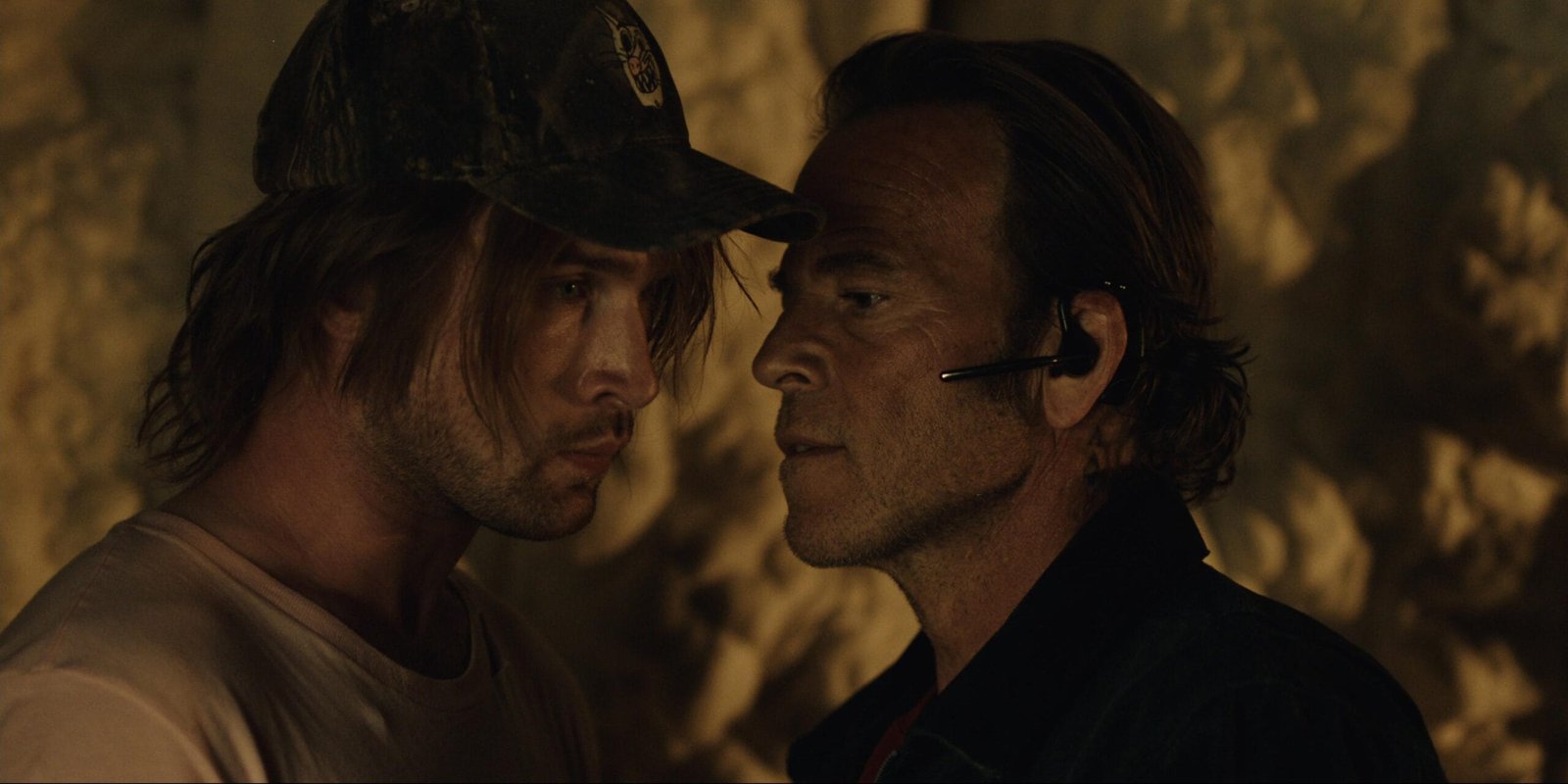
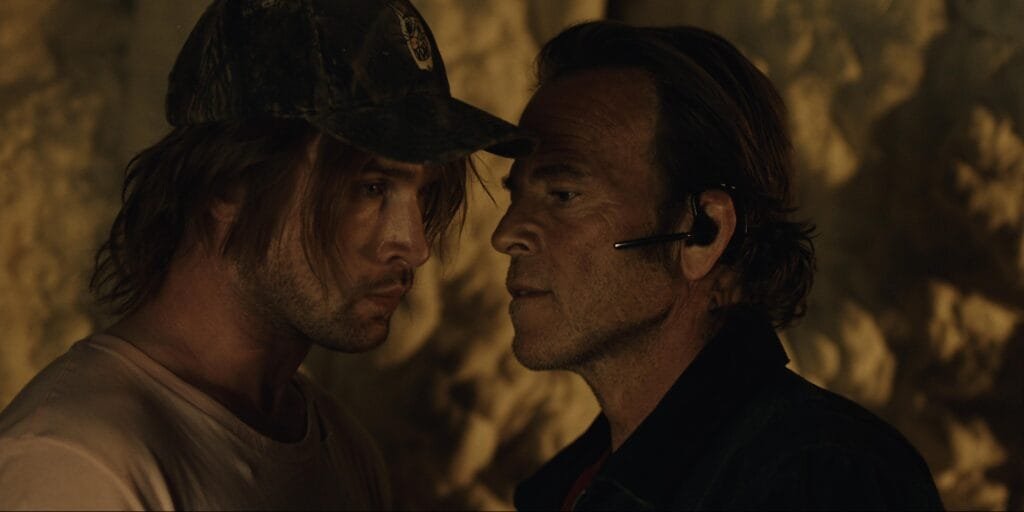
The place is in disarray. Mrs Whynot isn’t in a fit state to live alone, but she’s clearly fallen through the net somehow, and she spends her days alone, watching old home videos of her son when he was small. Touched by this, Tommy sticks around, trying to help her as best he can. As this becomes his new normal – at least for a while – he runs into some of the neighbours, including Joe (Olivia Scriven) – liberal with the drugs, heart in the right place – but more pertinently, he meets Mrs Whynot’s slum landlord, LL (an inspired performance from Stephen Dorff), who is also Joe’s uncle. Tommy finds out that Mrs Whynot was given notice for non-payment of rent three months ago, and she is being evicted. To avoid this happening to her, Tommy agrees to work off the books for LL as a handyman, helping him with his portfolio of dilapidated properties, which mainly entails cutting corners and hiding evidence from the regulators. Joe works for her uncle, too, and as they spend more time together, a romance begins to blossom.
Meanwhile, LL is full of big plans: he has what he refers to as a ‘golden goose’, which he hopes will lead to new opportunities, something different and far more lucrative than his slum empire. Although he’s wealthy compared to his tenants, he still bridles under the sense that he’s just at the top of a very small trash heap. The golden goose is his way out. But, hey, with that sort of potential, it sounds like it might just offer the same kinds of prospects to anyone who was to get hold of it…
If I was to say that Permanent Damage goes from the sublime to the ridiculous, and mean it entirely as a compliment, then that could be the whole review. Job done. This is such a rich film, and any synopsis feels like it’s stripping the life out if it somehow. It’s full of ideas and smart, if oblique ways of exploring its central themes. It’s set in a tough world, and the bones of the film feel recognisable. From the opening moments we have plenty of markers of poverty, from the casual chit-chat about bedbug infestations to the close shots of scratchcards, the boarded windows and the junk store clothing which seems to be worn by everyone, LL included. Then there’s the importance of the never-never: dream destinations like the Carolinas; game-changing possibilities, like the golden goose. In all of this, there’s a kind of fight between stasis and change, hopelessness and hope.
Yet for all that, and despite the skilled way in which all of this is established, this isn’t what you could call a realist portrayal and it never tries to be one, or else to remain one. As the film progresses, things get ever more colourful and eccentric. Tommy’s early quandary, his ‘should I stay or should I go?’ dilemma is subtle and touching, but his character wakes up to his new reality, and starts to live in the world again; MacDonald’s transformation here is impressive. The film takes its time before even hinting what his life was like before and why he found himself in the situation he did, but in this (and in the characterisation of LL as a larger-than-life villain) we get two opposing characters and perspectives. We also wind up with an array of larger-than-life supporting characters and improbable developments, which take the film through to its impressive, and oddly life-affirming final act.
This all means the increasing use of humour to offset some of the film’s tension. There are some wonderfully bizarre scenes, but somehow they all fit flawlessly with the far more hard-hitting content, even when absurdity kicks up a gear and holds sway. Maybe that’s what Permanent Damage is: a perfect marriage of touching and absurd, surrealism in the service of something deeply humane. It’s a bold piece of indie filmmaking which leaves a real impression.
Permanent Damage (2026) received its world premiere at the Fantasia International Film Festival. For more details, please click here.