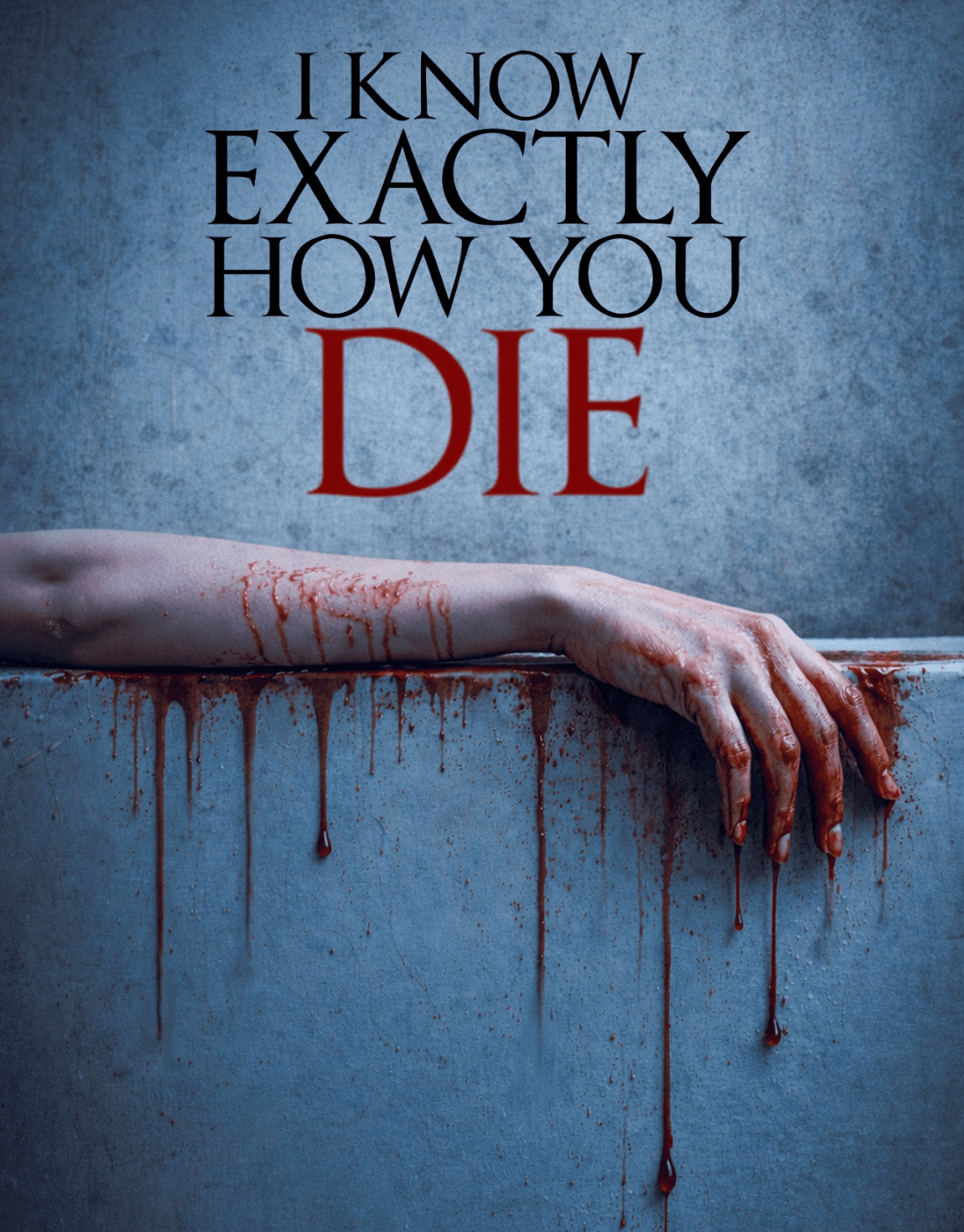
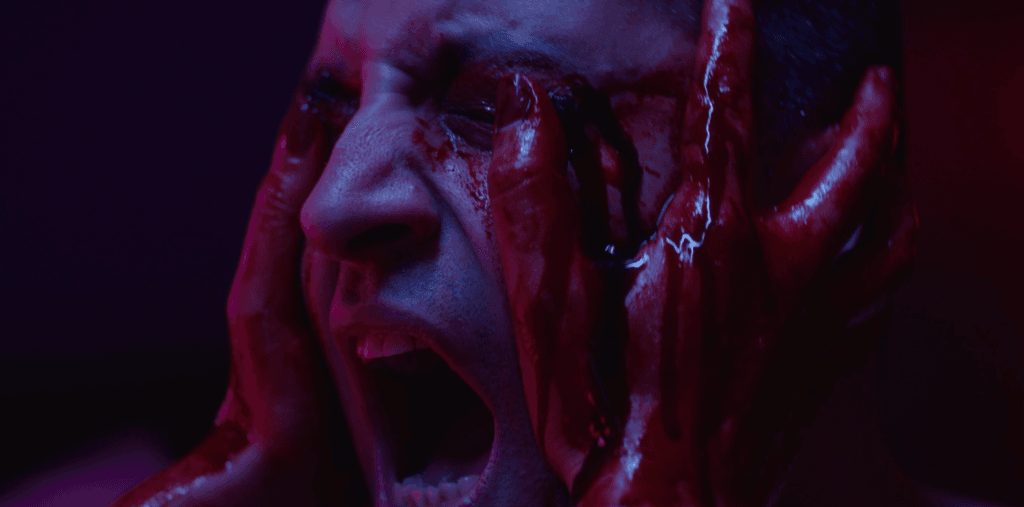
Not short on ideas but perhaps short on ways to finally unite them all, I Know Exactly How You Die (2026) finds a place in that small but dedicated subgenre of horror which takes a fantastical look at the creative process. We start with an incredibly grisly, attention-grabbing start (as is customary, as filmmakers tend to bookend their films with the enticement of blood ‘n’ guts). There’s an unprompted murder at a launderette; this shows us a serial killer on the loose, and though the as-yet unnamed killer does the job with a brick instead of a blade, this already has more than a few hallmarks of the slasher genre.
It’s not an uncomplicated slasher, however; there are other layers to consider. Our next introduction is to a penitent boyfriend named Rian (Rushabh Patel), on the road, but leaving a raft of voicemails for his uninterested girlfriend Sarah – and as she’s so clearly uninterested, the messages go unheard. He veers from temper tantrums to pleadings, mind, so perhaps Sarah is already wise to his approach (and over it). Thwarted in love, he finally checks into a motel so that he can focus on his writing. He’s a horror writer, he’s a week off an important deadline and – here’s another character trait which makes Rian a bit of a hard sell – he’s clearly treated the deadline, the agent and the contract with at best indifference, and at worst, contempt. He’s done nothing. There’s a pinboard with a beginning and an end, and literally nada in-between. When he finally checks in and opens his laptop to begin writing, he seems barely literate; again, Rian’s not winning hearts and minds here, which makes his clunky shift into sympathetic protagonist territory a little tricky…
At this point though, other guests begin to arrive at the motel. One of the guests is a woman called Katie (Stephanie Hogan), a drug counsellor going prepared with a Narcan nasal spray in her pocket, just in case. But, wait: Katie is the name of Rian’s main character in his ‘book’. And, like the Katie of the book, the real Katie also has an issue with a malicious stalker; at least, there’s a Post-It on Rian’s storyboard suggesting as much, and we might recognise the clues when it transpires that this man is, being a stalker, following Katie: in fact we’ve already met him. This is brick guy, the killer from the opening scenes. Therefore, something weird is going on here – art is bleeding into life. Ensuing events further blur the line between fiction and non-fiction, with Rian coming to understand the concept of ‘manifestation’, that he is in some way responsible for how Katie’s story will play out. He has to balance her needs against his own issues, only one of which turns out to be writer’s block.
Getting these characters and plot points in place and then blurring the line between the real and unreal takes some establishing, leading to some looseness and uncertainty around the film’s pace, particularly up to and around the first third of the runtime. This, perhaps, resembles Rian’s creative difficulties, and the fits and starts around that process (or of course, it could be entirely incidental). However, once Rian begins to take ownership over the activity, particularly when he begins to appreciate the weirdly liminal presence of the motel itself – though this plot point is also rather low in the mix overall – he and Katie join forces, each hoping to get to the end of the story unscathed. If it was as simple as Rian just writing a perfect, bloodless conclusion then it would be less engaging, so the film does try to add in different considerations – novel in places, more strained in others.
Perhaps Rian’s own backstory and personal issues could have been drawn out more strongly, given their overarching importance; another issue here is the divide between two characters suddenly striking up a romance in the midst of, and punctuated by, scenes of sporadic but graphic ultraviolence. It just feels like, despite monolithic ideas such as agency and ownership being held up here, the film struggles to reconcile the bigger ideas to the smaller details, resulting in some sense of the film running away from the writing, which, in a way, is the plot of the film all over again. But there’s clearly ambition at play in I Know Exactly How You Die, the film looks and sounds good, and the key actors do well with what they are given: it’s just that, given the proliferation of meta-horror over the past few years, many fans now expect something both original and tightly constructed in equal measure, features which this film can’t quite boast.
I Know Exactly How You Die (2026) comes to digital on April 7th.