Syria: six years previously. Journalist Jason Frey (Aneurin Barnard) and a female colleague have been captured by Isis; the woman’s refusal to fulfil their kidnappers’ demands, to read out an address on video, results in her losing her life, whilst Frey is maimed, having his hand smashed. He, however, does survive, and escapes: once back in the UK he resumes his journalistic career, doing pretty well out of it, but at great personal cost. We are already clear that our lead character is carrying around a motherlode of trauma and grief, yet part of him misses the fieldwork, and when we first catch up with him, he’s even considering returning to Syria.
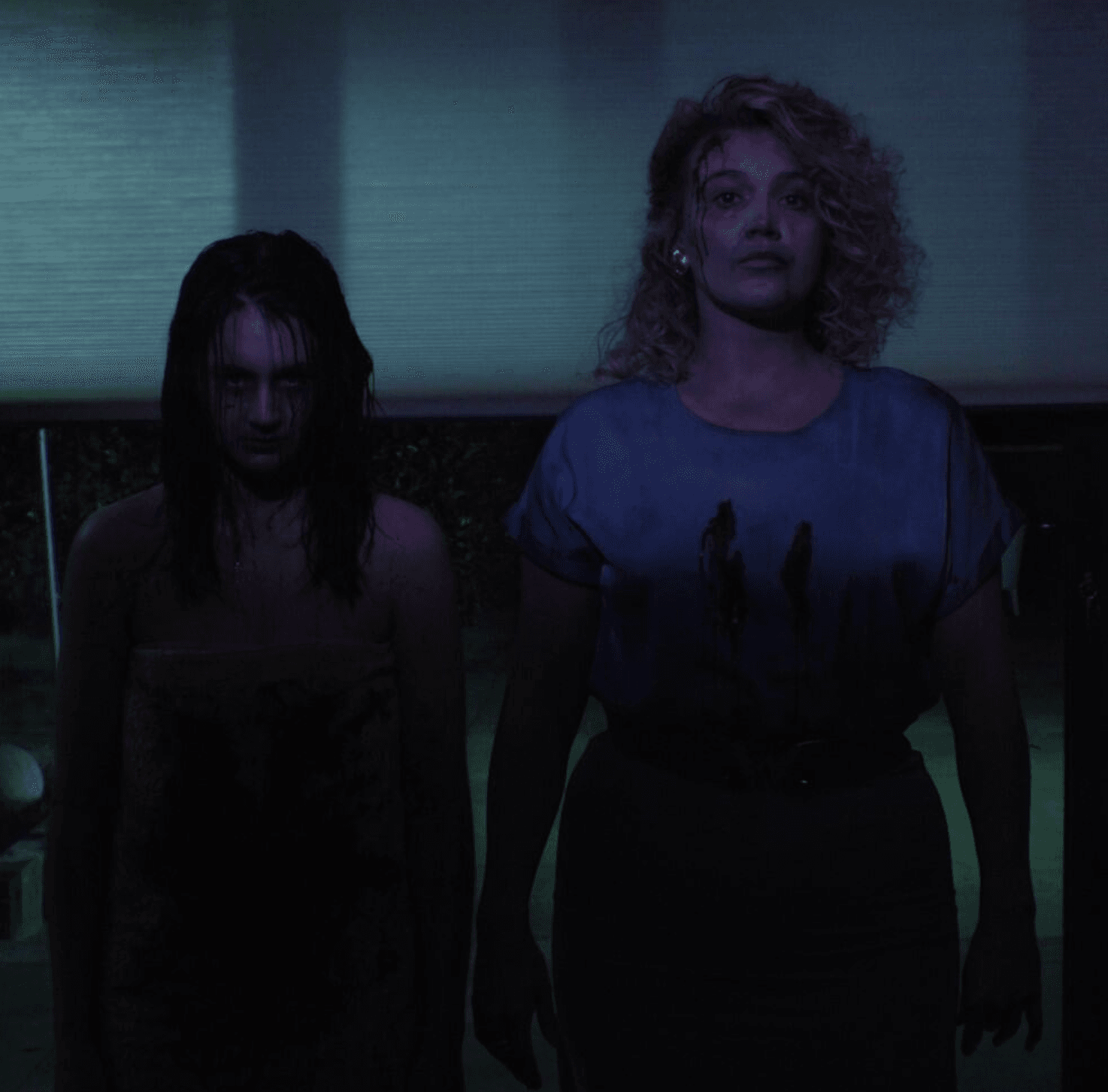
This sets the stage for some difficulties at home. Heavily pregnant wife Claira (Pixie Lott) is understandably none too keen at being left on her own at this point in her pregnancy; distraction luckily comes in the form of a night out, as they have planned to sit in the audience of a talk show hosting famed hypnotist Timothy Bevan (Jeremy Piven, here balancing our Aneurin with a Bevan). He’s there to promote a new book about his specialism: past life regression. Momentarily – and only momentarily – the film starts to feel a little bit like Late Night with the Devil (2023) as Bevan attempts to regress an audience member. Jason is nonplussed by the whole affair – so much so, that when Bevan calls for another volunteer, he puts up his hand, perhaps to disprove what he perceives to be “bollocks”. Ethics and checks be damned; suddenly, the poster boy for CPTSD is being hypnotised in front of a live studio audience, and entirely predictably, it goes horribly awry. Jason doesn’t just remember snippets from Syria; there’s someone else there, another woman, and he witnesses the woman being attacked. Soon, there seem to be more faces from a point in the past, looming up into his present.
This tumble of traumatic flashbacks and something else sticks with Jason long after he leaves the studio, and just at the point when he needs to give his answer on Syria. But all of the work he’s done in therapy seems to erode under the weight of his new visions. He needs urgent help, and the only way he can think of to get this is to finish what he started with Bevan.
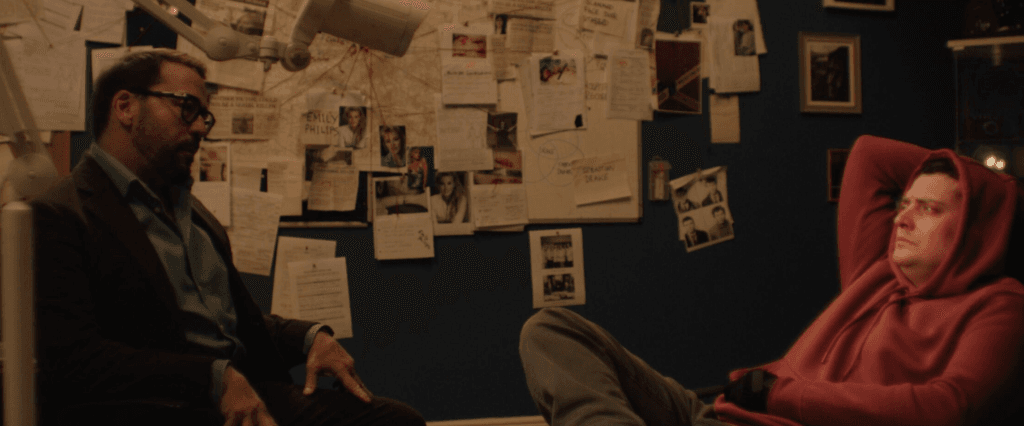
Past Life leans heavily and with relish into its horror and giallo elements, feeling reminiscent in several places to Last Night in Soho (2021): this is a mystery, a mystery which expands every time the morally-ambivalent Bevan takes Frey under. The sequences intended to show Frey under hypnosis are very cleverly handled, playing with by-now cultural expectations about this particular kind of altered state: the metronome, the corridor, the pendulum, the light. It’s all woven expertly into ‘the real’, using careful edits, linking motifs and an excellent, immersive musical score to ensure this. Back in the real, the investigative elements have been updated with very modern features. Internet searches and true crime podcasts help to punctuate the process of unfolding new information; these are nicely contrasted with very plausible flashbacks to the Eighties, when earlier events took place. The film, and its director, have a meticulous eye for detail which helps to make these sequences a formidable visual and aural experience. The casting, too, comes from an impressive roster of names. Barnard has the requisite brewing, brooding, barely-suppressed emotions which underpin the film, helping to sustain its interest and impact. There are some nice curveball casting choices in here, too.
Of course, as a supernatural-tinged giallo, Past Life is a horrific fantasy at its core, but it carries within it an intriguing premise: generations of violence against women which transcends place and time, spreading its misery outwards, in a kind of monstruous ripple effect. Here it is negotiated through the backstory and the up-to-date efforts of a decent man trying to solve a mystery, but even so, his issues in dealing with his own past and his later actions still bring down a storm (at times literally) on his marriage, risking harm and trauma to his own wife. Due to this moral weight, the resulting film often feels hefty, discomfiting and paranoid, as it almost should do, given its topics. And if some of the film’s surprise elements settle more into an expected mode – often reliant on montage and some expedient, though less realistic developments in places – then Past Life still works as a whole. It is well-handled, well-paced and offers an effective finale, one which rewards our attention. There are also shades of director Simeon Halligan’s earlier film Habit (2017) in Past Life‘s night scenes. The script studiously avoids naming Manchester, even though we later see its name on a map, but it’s Manchester alright (or Stockport, to be more specific) and again, Halligan has done great work turning the city into a fitting backdrop both for a grim, gritty plotline and supernatural, fantasy elements.
Past Life is in cinemas from 20th March and on digital from 6th April 2026 (Miracle Media)