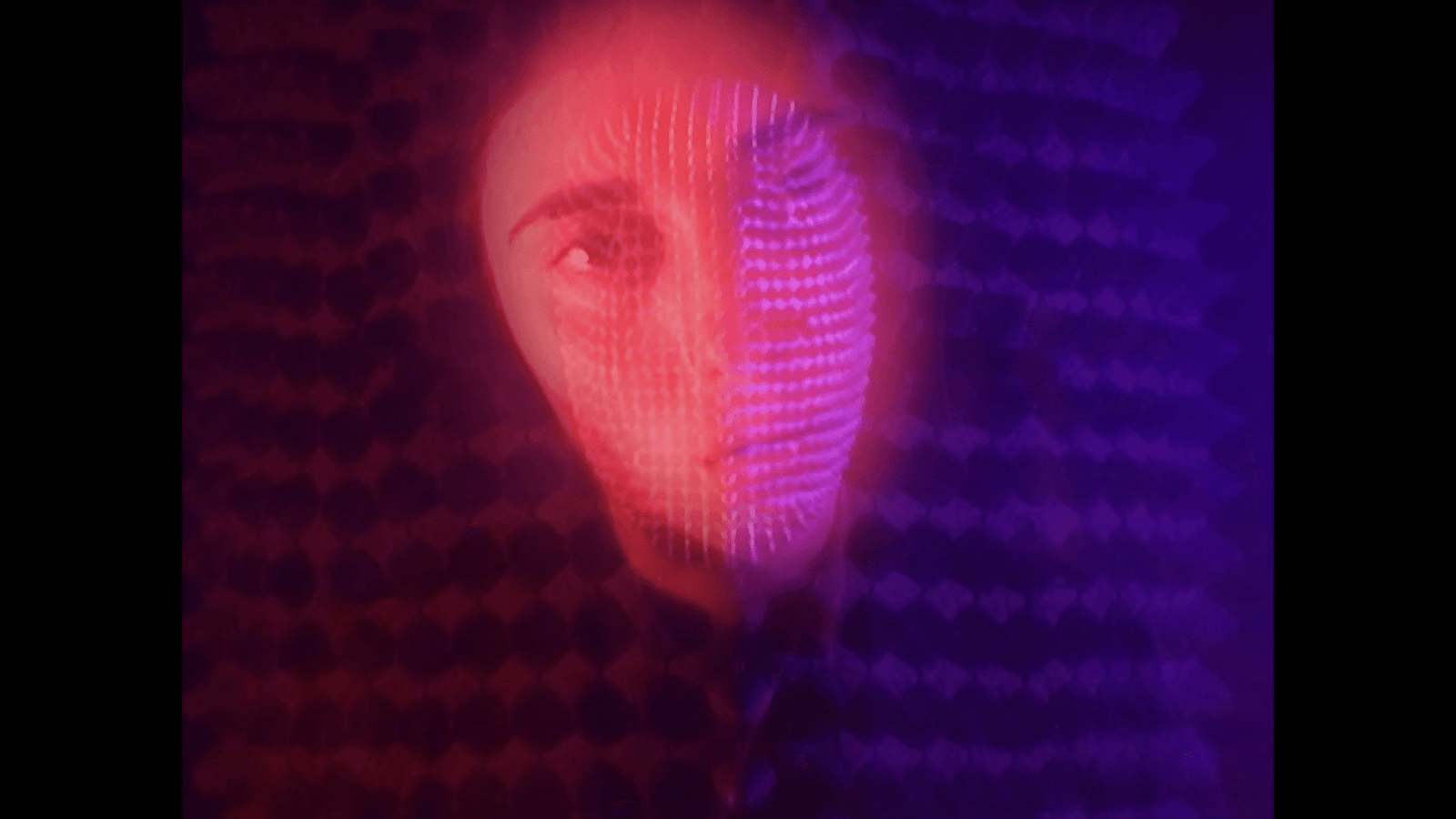
Oh, we know what’s coming as the opening scenes of City Wide Fever (2025) appear on screen, and it’s good: as soon as we start to roll, the New York cityscape blends with a nightmarish montage of masked figures and gritty set pieces, showing the audience a film which wears its neo-giallo credentials openly and proudly. That in itself will endear it to many, but there’s much more to like here than just well-realised fan service. Despite being up against a miniscule budget, City Wide Fever does a great deal with what it has and pushes the limits on what it can do, weaving together an engaging piece of independent film choc-full of love for film itself.
Here’s how things start: a young woman, Sam (Diletta Guglielmi/Nancy Kimball) is walking the streets, minding her own business – when she happens to spot a discarded USB flash drive, which she picks up and takes home. As luck would have it, it’s relevant to her interests; Sam is a film student and exploitation film cineaste, and her place is full of film memorabilia (including, oh hello, a copy of that fabulous exploitation cinema bible, Nightmare USA). As she looks through the contents of the drive, her interest is soon piqued: she finds herself looking through a series of stills and info on a whole host of tantalising-looking exploitation cinema made by a director whose name she doesn’t recognise. His name is Saturnino Barresi, and he’s the cult film maestro who never was, his work disappearing into obscurity whilst the likes of Mario Bava and Dario Argento moved into the fore. It’s a crying shame; it’s also, as Sam realises, a damn good opportunity for a film student like her to investigate and perhaps to restore Barresi’s name.
Using a still image and the title of his last, unfinished film – which shares its title with ours – Sam begins to investigate this singular mystery. Starting with her film studies professor and following a trail through a number of interesting and insalubrious film people, she seems to be getting closer to finding out something more tangible, but once she’s really on the brink of discovery, her position grows precarious. Interestingly, and in keeping with the genre of the film, she realises that whatever it is doesn’t seem to be bound by the rules of reality. This is a giallo director and a giallo project, after all. But that doesn’t mean the risks to her are any less real; her search for information on Barresi means that she, too, is being pursued. Baressi’s work seems, somehow, to want to remain unknown.
Firstly, the amount of thought, ambition and affection which goes into every frame of this film is clear, especially when we consider that it’s constrained by a small budget: City Wide Fever may have had to curtail itself somewhat when it comes to SFX – relatively costly and time-consuming – but elsewhere, it layers and re-layers influences, mood and visuals throughout, ensuring everything here counts, as well as looking and sounding good. That means that the film also acknowledges the foibles of the giallo genre, too: the script goes from being hyperreal to more-or-less comedic in places, though never lingering on this so long that it starts to unravel the overall atmosphere and impact (in fact, it’s all part of that whole). It pokes a bit of fun at film people, too, which is fine – it all comes together to suggest insider knowledge and awareness. The film is, above all else, a film fan’s film, from the sets, references, characters, dialogue and filming style to the props glimpsed in certain key scenes. It’s also interesting to see depictions of Times Square and 42nd Street, once the backdrop for a whole host of exploitation cinema classics, now part-gentrified, but not quite sleaze free: director and writer Josh Heaps also tackles the overlap between horror, exploitation and pornography – one outsells the rest – and in the world of this film, they sail very close to one another. Also of note: the fourth wall in this film is always a permeable barrier, and nothing is every quite certain.
Narrative rules are made to be broken in City Wide Fever, which stops things ever settling too much into one mode or routine. It hangs onto its identity-fracturing plot points for a long part of its runtime actually, and it’s a winning tribute to classic giallo from a modern-day perspective, shot on video with smartphones, flash drives and computers being brought to bear on archetypal giallo ideas and developments. Personally, I’d now love to see Heaps get handed some of the funding which filmmakers Cattet and Forzani always seem to get hold of, to see what he could do with it: hey, we can dream. But as it stands, the film he has made is a genuinely pleasant surprise and more evidence of what independent filmmakers can do with their own fandom and passion for genre film.
City Wide Fever (2025) receives a US theatrical release from April 15th.