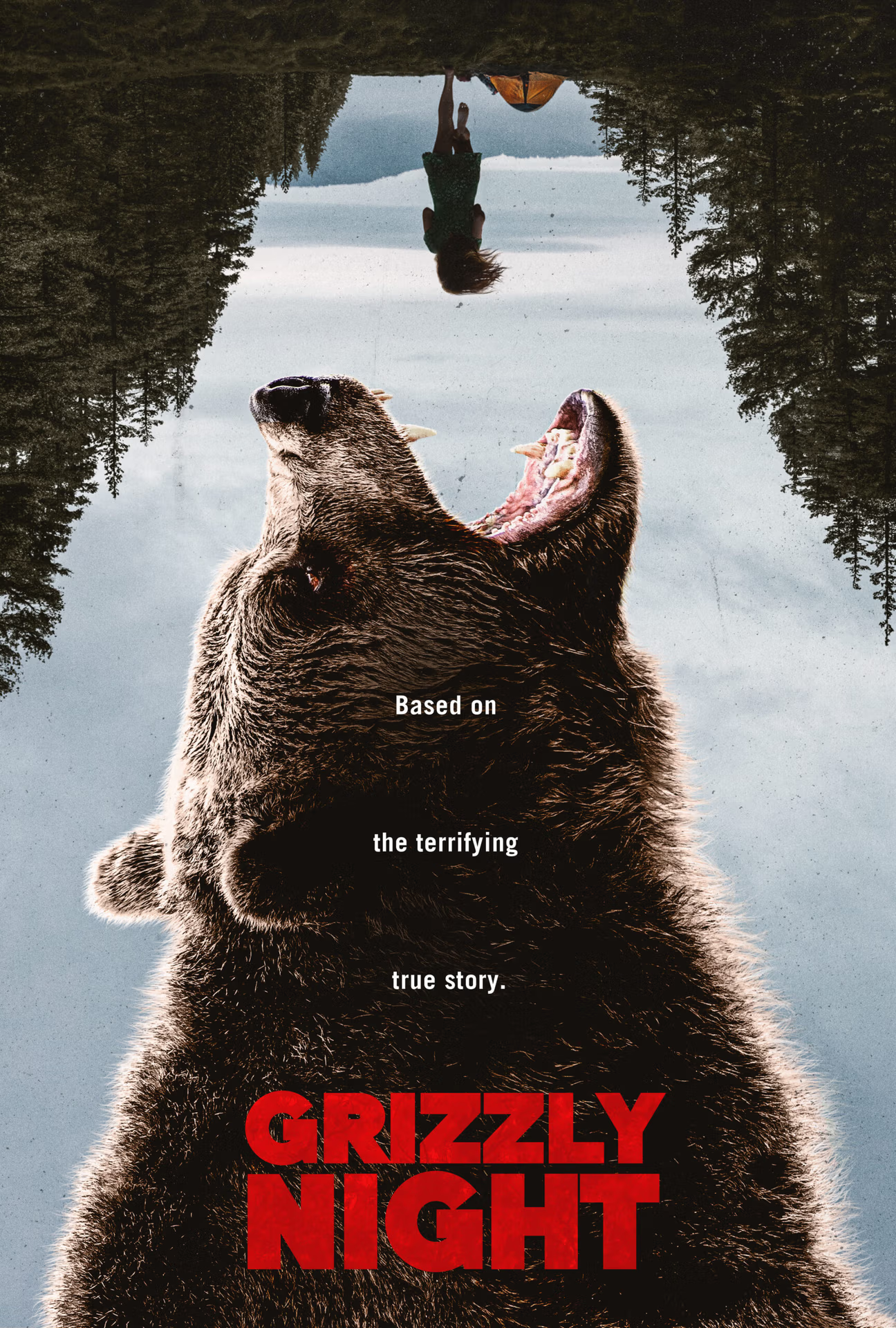
So this is Glacier National Park, Montana in the 1960s and we start with a question: why are two people open-air camping in grizzly territory? Roll opening credits – genuine retro footage of people behaving stupidly around wild brown bears and the discomfiting reminder that the incidents in the film, open-air camping and all, are ‘based on real events’. But here’s another question: how is director Burke Doeren’s debut feature film meant to be read? – Horror, exploitation, or plausible drama? The answer to that question is a while in coming, and when it’s finally clear, it comes with several issues.
Back to the park: we meet a team of rangers with other concerns than bears (namely, forest fires) which mean that sole female ranger Joan (Lauren Call) will have to be the one to lead a group of visitors on an overnight hike and camping trip combo. Then we cut to the park gift shop, where employee Julie (Brec Bassinger) and some friends are each deciding on what to do to entertain themselves, which can only mean, in rural Montana, choosing between a number of …camping options. Steadily, more and more people are heading into the back of beyond (where there is, however, a camping chalet as an impromptu hub and meeting place). Off they all go, steadfastly ignoring park rules, ignoring what clearly sounds like a bear grunting off-camera, oh and in one case actively trying to attract grizzlies to the chalet by feeding them. “How does anyone think this is okay?” asks one of the few sane persons present; you might well ask, sane person. You might well ask.
At this point, it feels as though the film is gearing up to be a fast-and-loose kind of ‘based on real events’, because the early suggestions are of a film which is altogether too quirky and casual to really wind up presenting the impending bear attacks in a wholly serious light. The negligible grounding in the 1960s, the breezy accompanying music, the uncomplicated script, the acting to match…surely, Grizzly Night is heading in the direction of Seventies exploitation cinema, a decade when animals attacked in a series of increasingly OTT ways? Bees, frogs, piranha, even rabbits were ready to get in on the action. Bears are therefore a shoe-in for a bit of nature vs man entertainment; there was also Grizzly (1976), of course, which made light work of the same real events used as a basis for Grizzly Night. Then you look at the Grizzly Night movie posters and you think – yeah. They’re definitely leaning heavily on Seventies exploitation. Fine, that could really work.
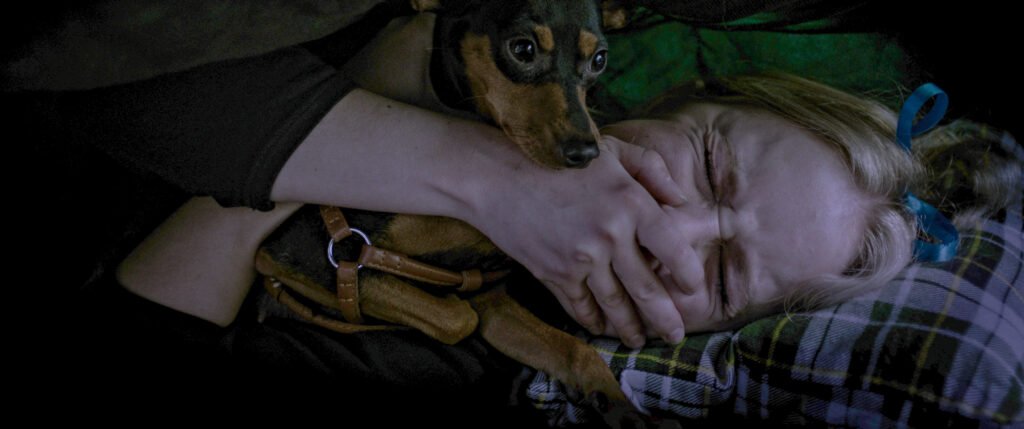
However, the more recent film shifts gear once we link back up with the opening scene, and there’s a parting of the ways as we see the same event – someone getting dragged off into the woods – with a fresh pair of eyes, now that we know some of the characters a little. From this point on, Grizzly Night is a very different film – unless this reviewer has misread the tone of the opening set-up somehow, as once the first (of the historically-accurate two) attacks takes place, the film lurches into a much more serious, sombre, and even turgid mode. Nothing is seen on-camera – in that, of course, there’s even more similarity with the cash-strapped exploitation films of decades past – but people spend a great length of time looking for it with torches here. And that’s as much as we see, too. The bear or bears, having done their work, retreat. The life-threatening injuries get negligible screentime too, perhaps because we are encouraged to care about the human stories at the heart of the off-screen action. This is now intended as hard-hitting realism, and unfortunately it doesn’t work.
What else can we say, then, about Grizzly Night? Well, the location filming looks fantastic when we see it in daylight, the bear on-set is a magnificent reminder that these animals deserve respect and space, and writers Katrina Mathewson, Bo Bean and Tanner Bean stick closely to the bestselling book about the original incident, Night of the Grizzlies by Jack Olsen, a book which correctly criticised decision-making at Glacier National Park, picking up on the issues which made a bear attack much more likely until the inevitable happened. In today’s far more (or ostensibly far more) environmentally-conscious times, the film could serve as a reminder to respect the natural environment, particularly given that the number of fatal bear attacks in the US have escalated since 1967 – largely due to habitat clashes, and human stupidity of course. All of that is perfectly valid, but a compelling piece of narrative film? Sadly not.
Grizzly Night (2026) is available on VOD and digital from 30th January 2026 (US) and 2nd February 2026 (UK).