We have an unusual and specific start point in Traumatika (2024): Egypt, 1910. A man crosses a stretch of desert, clutching something he clearly wants to bury and forget, as he’s haunted by visions of his deceased son. This death – this murder – is linked to the object he’s carrying, a statuette of a pagan entity known as Volpaazu (relative of Pazuzu, maybe).
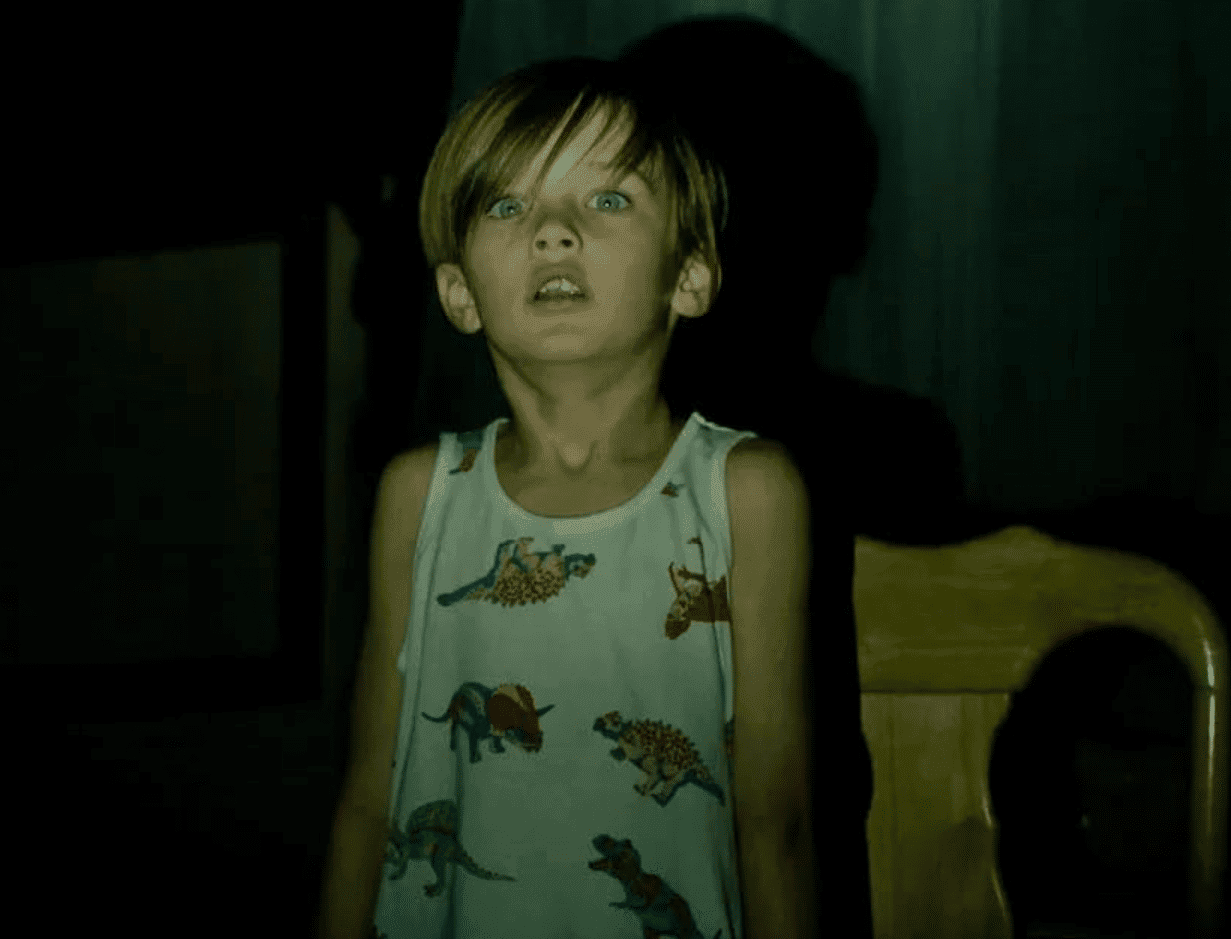
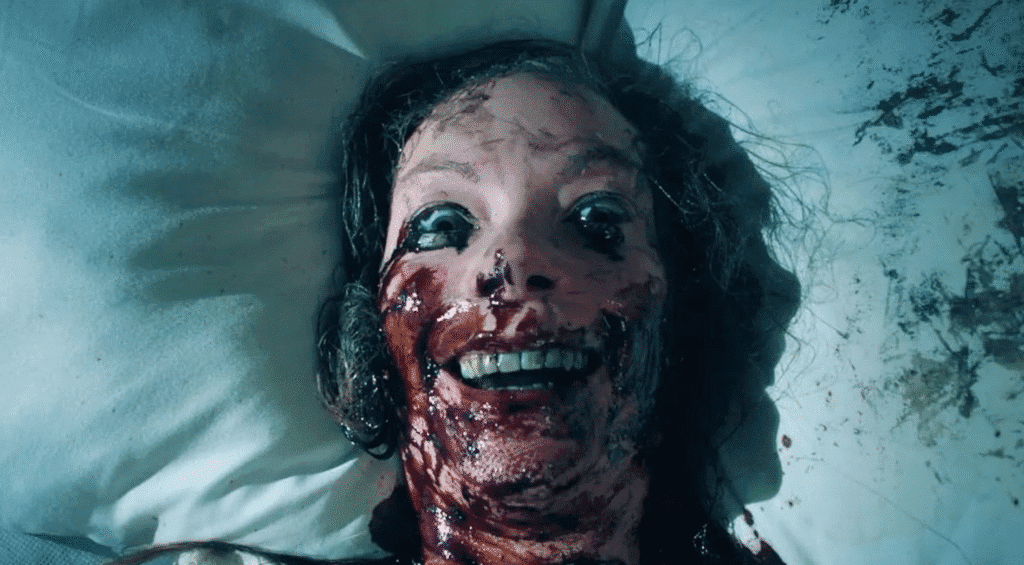
You get the distinct impression that the buried item will somehow find its way out of the sands of Egypt, and you’d be entirely right, at least to judge by what we first see once we have moved forward to our next chapter: California, 2003. We listen to a child making a 911 call, begging for help because his ‘mother is a monster’. He’s not wrong; it’s moments before we get this idea. Abigail (Rebekah Kennedy), as she stalks around the dilapidated, shadowy property, is terrifying: there’s no question permitted here. Covered in blood, gore and sores, scuttling around like a woman possessed, it turns out she is, in fact, a woman possessed.
Director Pierre Tsigaridis has form for these kinds of deliberately overblown horror spectacles, even if we can accept that, in Traumatika, he is reaching for far more emotive and emotional subject matter along the way. Two Witches (2012) was one big love letter to Sam Raimi and the excesses of supernatural-tinged gore, the kind of thing you either adore or abhor. Here, he has unashamedly done it again, this time invoking demonic possession in all its screeching, laughing, crawling glory, albeit forging interesting links between demons, sacrifice and contagion, which makes for a more than acceptable horror premise. Rebekah Kennedy starred in Two Witches too, and here she’s back, cementing her reputation as a damn fine genre actress, giving a lot to the role – whether this be the crazy physicality necessary, or the emotional vulnerability. The latter is important, because there’s more at play here than a relatively simple story of artefact-derived madness.
The film backfills its occult story with a story of family trauma, with the demonic entity handily finding purchase in a family already steeped in trauma and abuse. It’s deliberately grim and challenging in places, and an obvious criticism to level here is that the more emotive aspects can feel like an uncomfortable fit in places: intergenerational trauma married to the film’s relentless kind of splatter (particularly in the film’s first half) might not sit well with everyone. Personally, the film’s relentless early pace allows little time for these concerns, and personally, its good, even great qualities are enough to hold things together.
Whilst the fact that 2003 is presented here as a remote, historical era (right down to the Skinamarink-style retro kids TV footage) is a little galling, Traumatika has a lot to give. It’s a gory, violent, colourful, beautifully-shot, thumping great clout of a film, giving an initial dose of sensory overload which helps to set out its stall; perhaps the final leap forward to the present day is a leap too far for the modest eighty minute runtime, but it only starts to drift a little towards its close. What has come before can sustain it. It utilises a range of shooting styles, with the child’s eye view a particularly effective (and unsettling) motif, and there are great, horror-friendly sets throughout, good performances and a genuine sense of everyone being fully on board.
So whilst Traumatika is sometimes cluttered, sometimes a little free-falling, it’s only occasional, and it’s hard to deny Tsigaridis’s zeal and affection for the horror genre. He has striven to do more here by building on Two Witches, linking (surprisingly given the title) trauma with his more expected OTT elements, whirling us through a decently made and, in places, ambitious film.
Traumatika (2024) opened in select theatres (US) on September 12th.