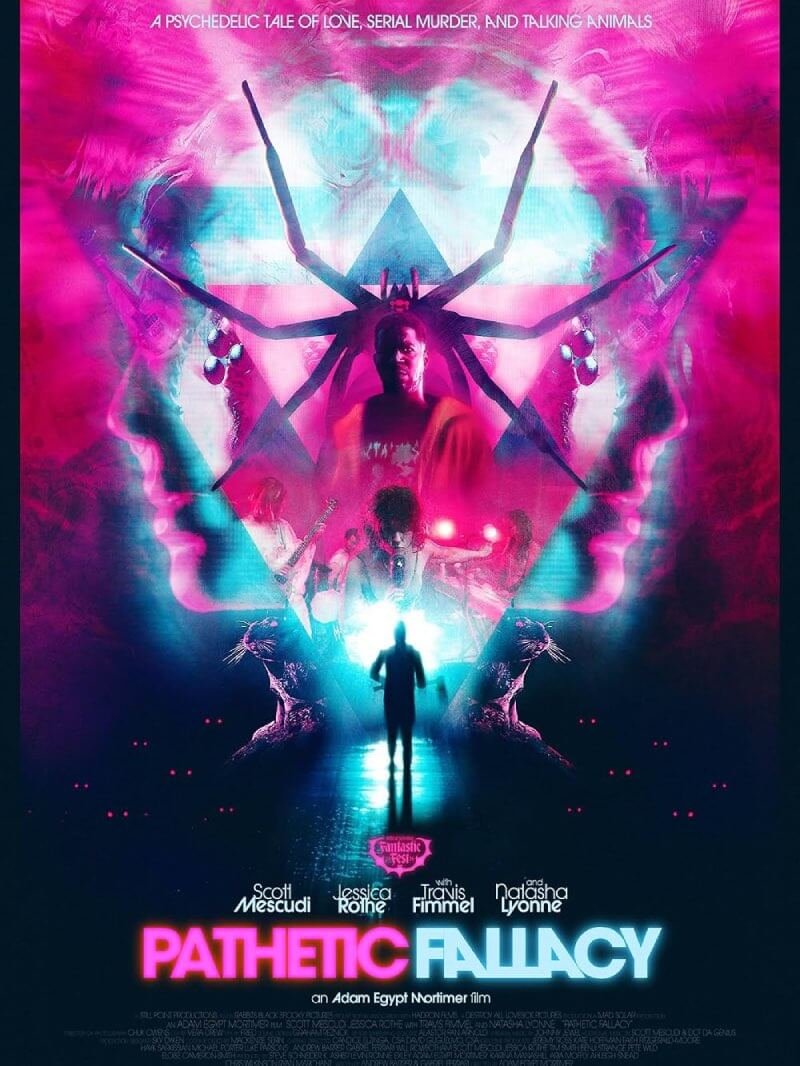

Pathetic Fallacy (2026) – the new feature from Daniel Isn’t Real director Adam Egypt Mortimer – is a designedly oddball proposition. It establishes an achingly real bedrock of love and loss, before using that verisimilitude to launch unreservedly into something completely different – trippy, oblique and meandering. However, given the myriad ways in which it heads off into psychedelic, experimental terrain, it’s unusual that the film ends up really excelling when it sticks to the real, or at least the realistic. And, the stranger it gets, the more recognisable it feels. Allow me to explain.
We begin the film with a gently looping look at the loving marriage between Asher (Kid Cudy) and Iris (Jessica Rothe): we see them moving through all of the relationship landmarks: first love, engagement, moving in together and finally, marriage. But having established all of this, the film reveals the devastation which ensues when Iris discovers she is terminally ill. Asher is bereft; he has no answers, and there are no treatment options. He has no choice but to watch, passively, as she slips away. Before her death, Iris requests that her husband reads a special meditation prayer over her body when it’s clear that she has passed: its aim is to usher her soul onto the next plane of existence. Asher obliges, but it’s clear by the time we reach Iris’s funeral that he is not willing to let her go: he’s angry. This anger is about to drive him into some very strange places.
Perhaps it’s his own search for answers which begins to present him with images which remind him of Iris, or perhaps there’s really a bigger picture, just on the fringes of what he can so far understand, but after picking up on what seem to be hints from the universe that he needs to travel to a place called Mount Samdi, he finds himself heading there. This is his only chance, he believes, to reconnect with the love of his life.
What the audience understands, long before Asher does, is that there’s something sinister and otherworldly already taking place at Mount Samdi. In an edit which shifted us from Iris and Asher’s love to the potentially-fracturing relationship of two other characters who are/were camping in the same area, there’s a killer on the loose. Once Asher arrives at his destination, he meets the killer (Travis Fimmel, doing well in the role, despite it only cementing his ‘wild-eyed geezer’ credentials). He seems strangely drawn to the new guy, inviting him to stay with him out at his camp – an offer Asher, clearly still not in his right mind, accepts. So they head through a mysterious tunnel, and depart a world of rules and rationality, after which point Asher gets offered what he wants: a deal.
Well, sort of. Despite the colourful, creative experiences which have thus far guided Asher to this predestined spiritual landscape, it actually starts to feel much more familiar once we’re through to the other side of the tunnel. The deranged killer motif, acting on instructions coming from outside himself – well, that’s pretty recognisable. Ah, but the talking, singing animals and the mind control spider? Once these settle on you, it’s all strongly reminiscent of the writing of David Wong (John Dies At The End, This Book Is Full of Spiders) and the involvement of Aaron Moorhead and Justin Benson – voicing some of the critters – draws the film even more compellingly into the fold of recent, recognisable high weirdness.
That is not to discredit the ideas being used here: they’re still interesting, they help the film to switch between moods and genres and they showcase the visual skill which underpins the whole project. It’s just that, frankly, whilst all of this might add some flavour to the film, its real triumph is in the establishment of the relationship at its heart, and the ways in which love and grief are created and enacted. That’s what keeps the film engaging, and once we’re into Lost Highway territory, there’s a risk of losing sight of that. All of the psychedelia being painstakingly created and used here potentially becomes a series of diminishing returns.
So, there are some issues with some aspects of the film’s approach, and some of its wackiest elements aren’t after all that wacky, but its formidable performances and its slick, celluloid presentation (no digital cameras here) still make for a rewarding cinematic experience overall. By the time the credits roll, Pathetic Fallacy’s merits are clear; it’s just that many of those merits were in place long before its more experimental material swung into view. And what it does do incredibly well is reveal the gamut of emotions which threaten to overwhelm a person when they are grieving, offering this grief a series of violent outlets prior to the film’s more fantastical resolution. Oh, and placing a veto on AI in the film? Absolute respect.
Pathetic Fallacy (2026) appeared at this year’s Celluloid Screams Horror Film Festival.