By guest contributor Chris Ward
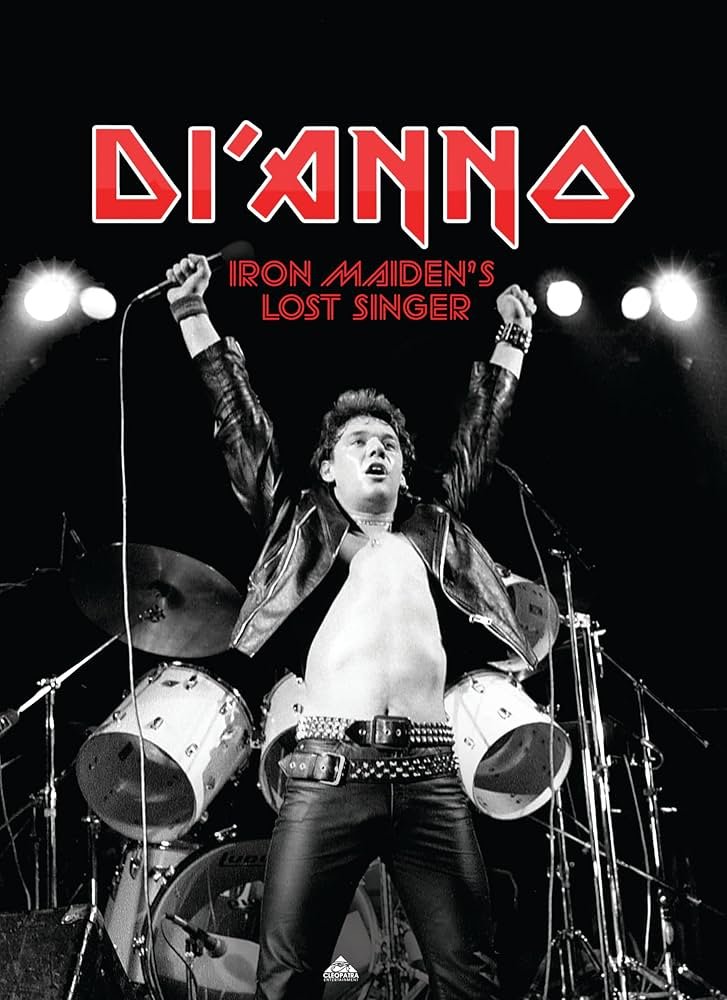
Don’t be misled – the word ‘Lost’ in the title does not mean everyone has forgotten about him, because if he never did anything else in his career, Paul Di’Anno will always be remembered as the voice of heavy metal behemoths Iron Maiden on their first two albums, those being 1980’s self-titled debut and 1981’s sophomore effort ‘Killers’, before he was replaced by Bruce Dickinson.
No, in this instance it means that Di’Anno himself was a lost soul, a victim of the rock n’ roll lifestyle that took so many talented musicians before their time, and a man who never quite found his place outside of that bubble. That Maiden went on to globe-straddling success with Dickinson at the microphone whilst Di’Anno forged ahead with various solo and band collaborations is neither here nor there, as there is no doubt in anyone’s mind that Maiden would never have reached such stratospheric heights if he had remained in the fold. What this documentary aims to highlight is the street-level integrity that he brought to those first two Maiden albums, and that without him, Maiden would never have had that stepping stone between the spit-‘n’-sawdust pubs of London’s East End and becoming a world-class arena-headlining act.
However, this is not just a look at Di’Anno’s stint with the metal legends as, with a bit of help from a few friends and observers, his post-Maiden career is also given a glance-over; not in any great detail, albeit enough to form a picture of a man with talent and passion, but no direction or discipline to keep it all in check. The central narrative device, though, is the man’s various health battles that plagued him in his final years, most notably the surgery that he required after contracting sepsis in 2015 to reduce the swelling in his legs, and the mental issues that came because of his inability to walk and perform.
If you’ve only ever known Paul Di’Anno through his vocal contributions to two of metal’s greatest albums, this warts (literally) and all look at his final couple of years shows a different figure to the strapping young buck who prowled the stage at both The Ruskin Arms and London’s Rainbow Theatre in 1980, which is, in itself, quite impressive. Here we see Di’Anno suffering with agonising pain as his legs swell up to disproportionate sizes as he smokes endless cigarettes, complains that the NHS won’t operate on him because of his general bad health and contemplates suicide, as he doesn’t want to be in a wheelchair any longer.
The answer to his situation came from Iron Maiden superfan Stjepan Juras, who organised a crowdfunder with various fans and friends to raise enough money for Paul to have the necessary treatment in Croatia, where a doctor there came up with a recovery plan on how to heal his legs. However, getting him to Croatia proved to be problematic and the movie doesn’t hold back in showing Di’Anno losing his temper with everyone who tries to help him, which makes him come across as a bad-tempered and ungrateful old sod, helping to enforce Maiden founder Steve Harris’s version of events about how Di’Anno left the band, as Di’Anno’s story has changed a bit over the years, depending on who was asking. Either way you look at it, throughout his life and career, people have gone out of their way to give the talented singer chances at bettering himself and he threw it back in their faces. Anyway, if you’ve ever fancied seeing knee replacement surgery up close, then this movie gives it to you in glorious close-up as Di’Anno’s elephantine legs are cut open, bits are pulled apart and removed, and given how disfigured and discoloured his legs are it doesn’t look quite real, except it is and you can’t really blame the volatile frontman for complaining, as it does look agonising.
We also get to meet Paul’s fiancé, who was also one of his nurses; well, she was his fiancé at the beginning of the documentary, but not by the end, so that tells you something else. It is a sad journey that we go on, because every time Paul seems to have some good news and something to celebrate, he slips back into his old ways, doesn’t keep up with his medical treatments and sinks into depression, which in turn makes him into an angry and unlikeable person who pushes away everyone who tries to help him, including Stjepan Juras.
If you are not an Iron Maiden fan or have no interest in who Paul Di’Anno is then Di’Anno: Iron Maiden’s Lost Singer won’t hold a lot of value, unless you like watching grumpy old men shouting at people who are trying to help them. However, for the Maiden connoisseur there is a wealth of footage from Di’Anno’s glory days with Maiden, his ill-fated eponymous AOR synth band and some clips from his underappreciated Killers project, as well as talking heads interviews with the likes of James Hetfield (Metallica), David Ellefson (ex-Megadeth), Bobby ‘Blitz’ Ellsworth (Overkill), Gary Holt (Exodus/Slayer), Cliff Evans (Killers), Andreas Kisser (Sepultura), notable former Iron Maiden members Blaze Bayley, Dennis Stratton and Doug Sampson plus many other personalities who were there along the journey. You also get to see footage of Paul Di’Anno reconnecting with Steve Harris backstage at a Maiden gig after many years of not seeing each other, which may bring a tear to the eye if you are of a certain vintage. Di’Anno himself starts to cry when he is told that Iron Maiden will foot the bill for the operation on his leg, and it is those moments when he reveals the vulnerable side of him that you see why people were drawn to him.
Paul Di’Anno died in 2024 aged 66 after years of health issues, and this movie works as both a look into how difficult he could be and at how much he was loved by fans and colleagues alike. Yes, if he hadn’t appeared on those first two Iron Maiden albums and they didn’t subsequently go stratospheric (after he left, important to note) then it is very unlikely that any of this would matter to anyone outside of Di’Anno’s own inner circle, but he did sing on them and by way of a send-off this film ends with his replacement in Iron Maiden (who also met Paul for the first time during his health issues, despite a so-called ‘war of words’ between the two in the press over the years) paying tribute to him from the stage of a Maiden gig in the US when the news of his death broke, and the outpouring of love from the crowd says it all. Yes, Iron Maiden without Paul Di’Anno may have the fame, the money and the big gigs, but with him they had a certain something – an X Factor, if you will – that none of the later line-ups had, and that is something that none of his fans have forgotten.