Films like Recluse (2026) come along so rarely: with meticulous handling and careful control of atmosphere, it weaves something quite extraordinary out of what, on paper, sounds recognisable.
We begin with a painter, a renowned ‘tortured artist’ type, Lawrence Wyatt, working in his fracturing, but still comfortable family home. He is putting the finishing touches to a canvas when he’s disturbed by a sound; flames suddenly rush towards him – but is this real? Recluse often layers its elements together in ways which cast doubt on what is real and imagined, and the vision of the fire blends with some audio work being done by sound engineer Joan (Sasha Frolova). Joan is an odd fit for the project she’s working on and, we infer, an odd fit in day-to-day life more broadly. Wyatt is her father; she finds out that there’s been an accident. He’s alive, but now hovering in a liminal state between life and death. The fire was real.
Everything so far feels off; discordant, overwhelming and suggestive of imminent breakdown. Joan is able to speak to her father (or is she?) and he avers that “she” is in the house – Joan instinctively knows he’s talking about her mother, who went missing when her daughter was still a child. This, and her father’s declining condition prompts her to head home.
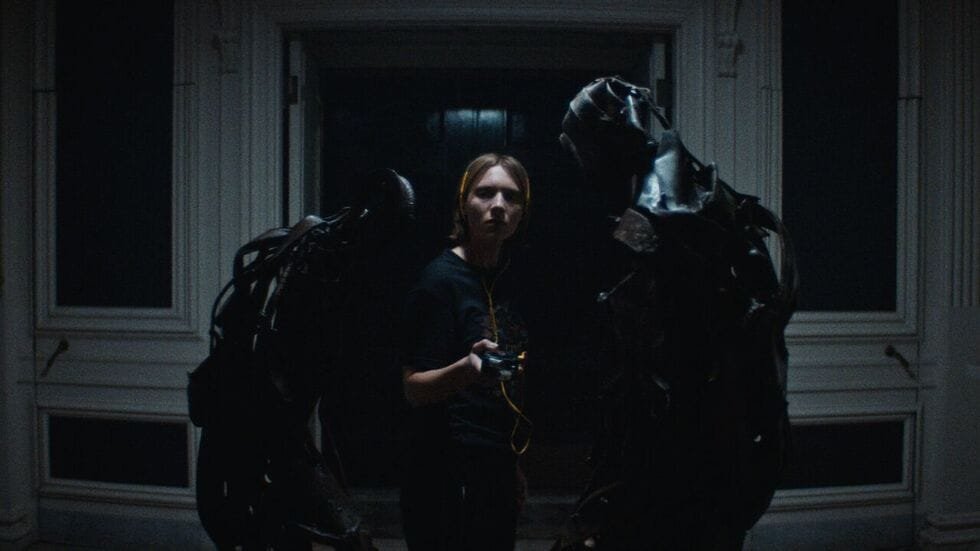
At the house, she’s greeted by longtime housekeeper Lydia (Toby Poser) and a little later, by Lydia’s son Todd (Kimball Farley). Lydia explains Lawrence’s current condition and the condition of the house itself; Lawrence had taken to living and working only in limited areas of the old place, but his work is everywhere, inside and outside. It’s not perfectly clear why, but Joan begins to explore the house using her audio gear. It could be that she uses her tech in a similar way to the protagonists in The Blair Witch Project, refracting the irrational through the rational for comfort, but in any case here it feels emblematic of a kind of amplified, but distorted outsidership. Joan surveils her old home like a stranger, which indeed she seems to be.
There are other reunions and meetings. She meets Emily (Mia Vallet), the only one of her father’s nurses so far who has been able to stick around: they talk about him, but Joan still seems more interested in old tapes, listening to her mother’s accounts of why she had to leave. “There’s something in this place,” the old voice says. This concurs with her father’s beliefs about the house, and Joan believes that her dad’s practices have created a kind of bad energy, something which clings. You could call it a ‘curse’, but it’s deeper and more complex than a pronounced word, and any occult possibilities in the film are framed as subtly as everything else.
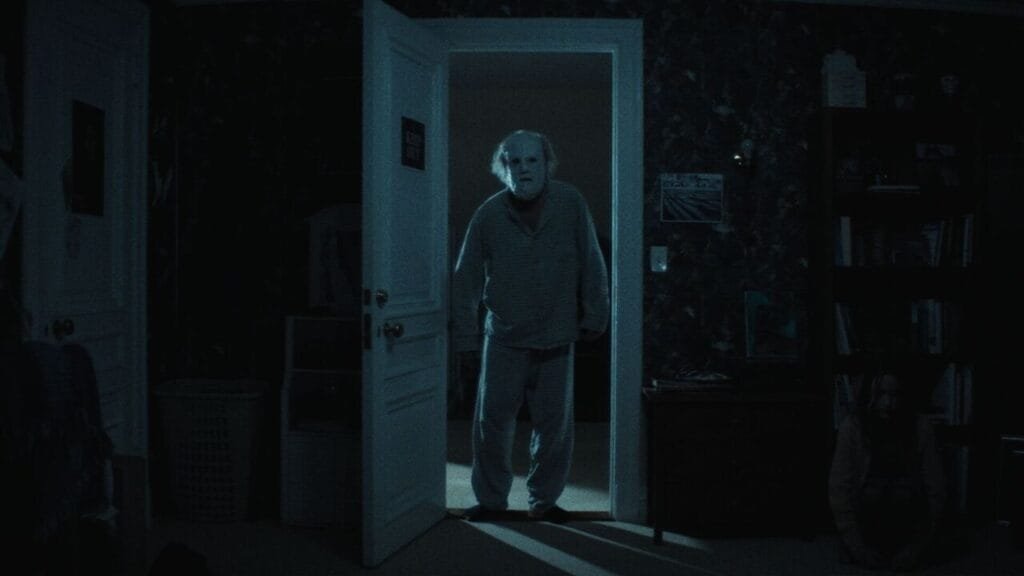
In many respects, writing this review so far feels like unnecessarily, or even clumsily overlaying a familiar framework on a film which doesn’t have one itself. Sure, you could comment on the tormented artist or the possibly-haunted house motifs – but that calls to mind very different approaches than the one chosen here by writer and director Henry Chaisson. It’s even possible that spotting those elements and tropes, however they are treated, will impact upon some audiences, affecting how they finally respond to the key plot elements. Let’s be clear, though: this film has such a singular, careful and restrained approach, that from its very opening moments it manifests a kind of crushing atmospheric weight which is highly distinctive. This film is unnerving, whether offering something supernatural, natural, or other. Recluse makes the cinematic space as a whole feel haunted; it works on our emotions, and feels dark and intolerable. Fusing together different sensory media – sound design (which needs to be, and is flawlessly executed) but art, too – contributes to the dual sensory impact of the film; there are questions raised here about art and sound, their effect on people. This isn’t just in the moment; we also consider topics such as fandom, estates and legacies. Whilst the sound design motif has some overlap with last year’s breakout horror The Undertone (bearing in mind that comparison can be a curse of its own to independent films), Recluse‘s blend of audio recordings and hearsay regarding home and estate remind me most of all of The Woman in Black (1989), even if TWIB is in nearly all respects a more straightforward piece of ghostly tale-telling than this.
There are plenty of other elements to admire: the sets are phenomenal, lit and framed brilliantly, with Wyatt artwork popping up in frame readily enough to begin triggering a limbic system response; all of those strange faces more than contribute to the rest of the strangeness, although the film wisely eschews jump scares, defaulting to a go-slow approach which makes any sharper, briefer scenes doubly unbearable. Performances here are subtle, the dialogue minimal, matching a sense of the house and the present-absent father as always being at the crux of proceedings, with everyone else holding their tongues. Whilst Recluse does have to find a way to drive towards some semblance of truth and understanding, it does this in just as strange a manner as it does everything else, never quite allowing us to walk away knowing what has unfolded, but rather being privy to a few glimpses of something more quantifiable; there are still lines, and scenes, and artefacts found along the way which hold us apart from just consigning events to ‘understood’. To explain any more would do the film a disservice.
Recluse reads like a haunted house movie, and it can be enjoyed as one, but there’s something much more unusual in how things play out here. It has a different molecular weight. This hideously unsettling story about legacies sticks to your bones; it’s an exceptional, creepy, destabilising piece of work which will be best beloved by audiences who appreciate experience and ambience over a snappy, grisly return to reality. This being a debut feature is extraordinary.
Recluse (2026) will feature as part of this year’s Tribeca Film Festival.