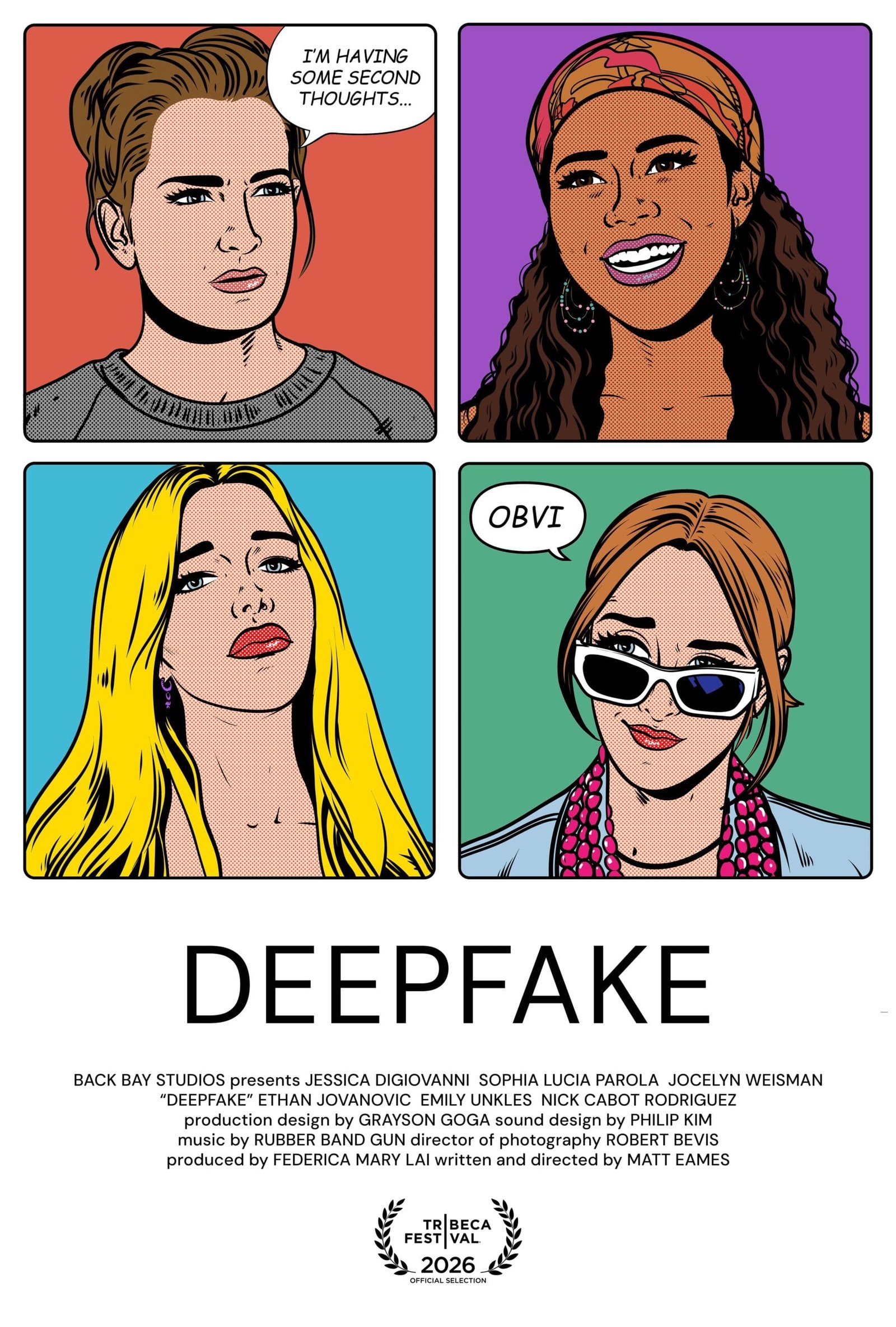
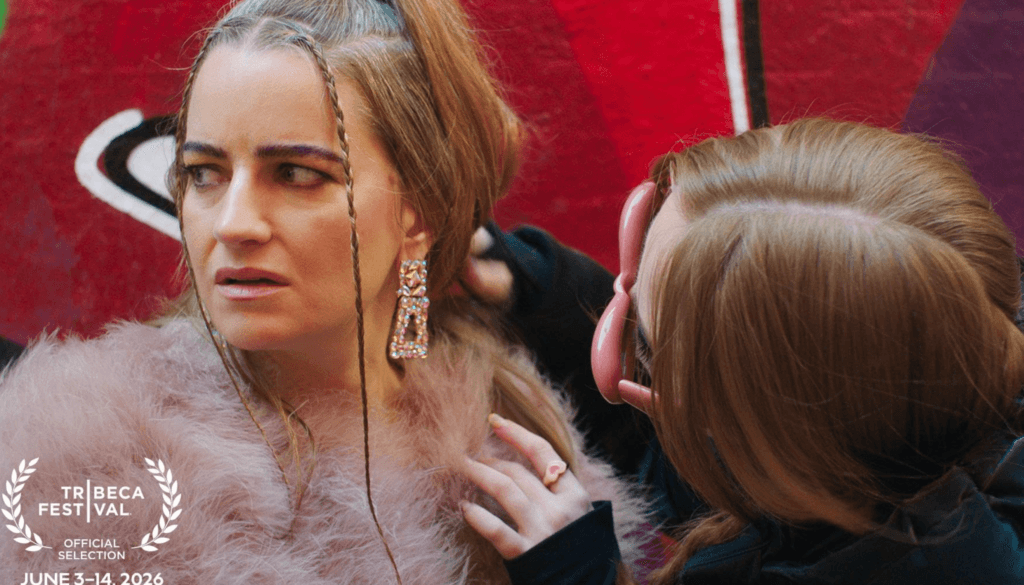
We slowly pan back through a bedroom into a bathroom where a young woman sits, on the floor, bawling her eyes out: yes, Deepfake (2026) starts with a relationship breakdown, and the distressed dumpee Jane (Jessica DiGiovanni) is soon doing everything she can to rehabilitate her self-image and social standing, even if that largely seems to mean dating again as soon as possible. We shouldn’t be too surprised by this: as a woman in her thirties, Jane is currently surrounded by nesting couples, baby showers and concerned questions about her welfare. Oh, and her ex is already posting on Instagram; there are pictures of him with someone new. She’s devastated, but how Jane copes with this is an issue. Early on, there are clues that she’s perhaps not being honest with herself, or anyone else. The dating profile spiel she practices again and again as a kind of voiceover changes every time; she clearly wants to please, and will amend her own thoughts and ideas to do it. That’s key for everything which follows in this light-touch, but nicely-realised pastiche on modern, online living.
After a brief but turbid phase of only looking up from her phone to chin large glasses of alcohol, Jane hits on an idea and no, it isn’t to stop drinking. It’s to use an online service called BFFers, to hire a new friend who will, presumably, listen to her list of woes without judgement. If this is a means of getting out of her rut, then it’s soon made apparent that Jane rather likes her rut, but new BFF Zoe (Sophia Lucia Parola) – who is at the more expensive end of the spectrum of available BFFs – is good at what she does, listening patiently to Jane’s self pity/baseless plans for a fresh start. The hired help really comes into her own, though, when Jane declares that she wants to reinvent herself from the ground up; there’s also a website for that. Zoe hooks Jane up with the site, which hands over control of one’s fresh start to a media company, ready to shape her persona, online and offline, into something more palatable. More fashionable.
Before she knows it, Jane is letting in TikTok sensation London (Jocelyn Weisman), plus a team of photographers and SEO experts who essentially occupy her apartment, forcing more and more content from ‘Jane’, but essentially fictionalising a much cooler version of Jane whenever they see fit. This is a new world of snippy affirmations, endless hashtags, content generation and facetuning, and so it goes on. Jane may have had some inkling of social media and how to use it beforehand, even if just to wind herself up by looking at how great other people are doing, but this is a whole different dimension, and it’s not too long before she is almost entirely sidelined. This section of the film is funny, but perhaps it does get bogged down here by two things: continuing to add to the list of apps, campaigns and userhandles which the film is sending up, and Jane’s surprisingly lengthy torpor, where she seemingly accepts – albeit with a scowl – what is happening to her. But if the point here is the bizarre separation which is now possible between a managed online persona and real life, then that point is made; even without a grand reclamation, the film has meaning, offering something recognisable without handing over the easy comfort of full closure.
It’s good to see all of this focusing on a woman in her thirties for a change, actually, rather than (as we often assume) a teenager, but it’s worth remembering that teenagers have never known anything different than this online existence. Slightly older people probably struggle more to navigate an older version of reality vis-à-vis what we have now, and we see that quite clearly with Jane, whose flashbacks to the time she spent with much-missed ex Tyler (Nick Cabot Roderiguez) offer the film’s only real moments of recognisable, relaxed normality. And yet, even she is somewhat seduced by all the likes and clicks; dopamine is a hell of a drug. She is a likeable mess, inhabiting all the requisite modern outlets for self-humiliation with warmth and a plausible nerviness. DiGiovanni’s no slouch when it comes to physical humour, either, although the film never heads outright into pratfalls or similar. A facial expression, or even an abortive photoshoot will do the trick.
Deepfake is essentially a modern take on the doppelganger motif and it could oh-so easily have been framed as a horror or a thriller. Several films have taken that exact approach, and a fair few of them have found their way to this website, which does tend to focus on darker subject matter and its on-screen treatment. However, there’s plenty to laugh at, even if it’s a rather knowing laugh, and perhaps we should be laughing at least a little bit; comedy is a decent fit and a suitable genre choice here. Deepfake boasts a kind of bubblegum-hued picaresque approach, with some satirical aspects (and even some sad plot points) but few lessons learned, just a sense of someone surviving – or just about surviving – the experience of living life online. There’s also some ethics to consider and some surreal touches to ponder, and whilst these don’t offer any essential, stony-faced life lessons, the film as a whole offers a fun and engaging look at how (some) people live now.
Deepfake (2026) featured as part of this year’s Tribeca Film Festival.