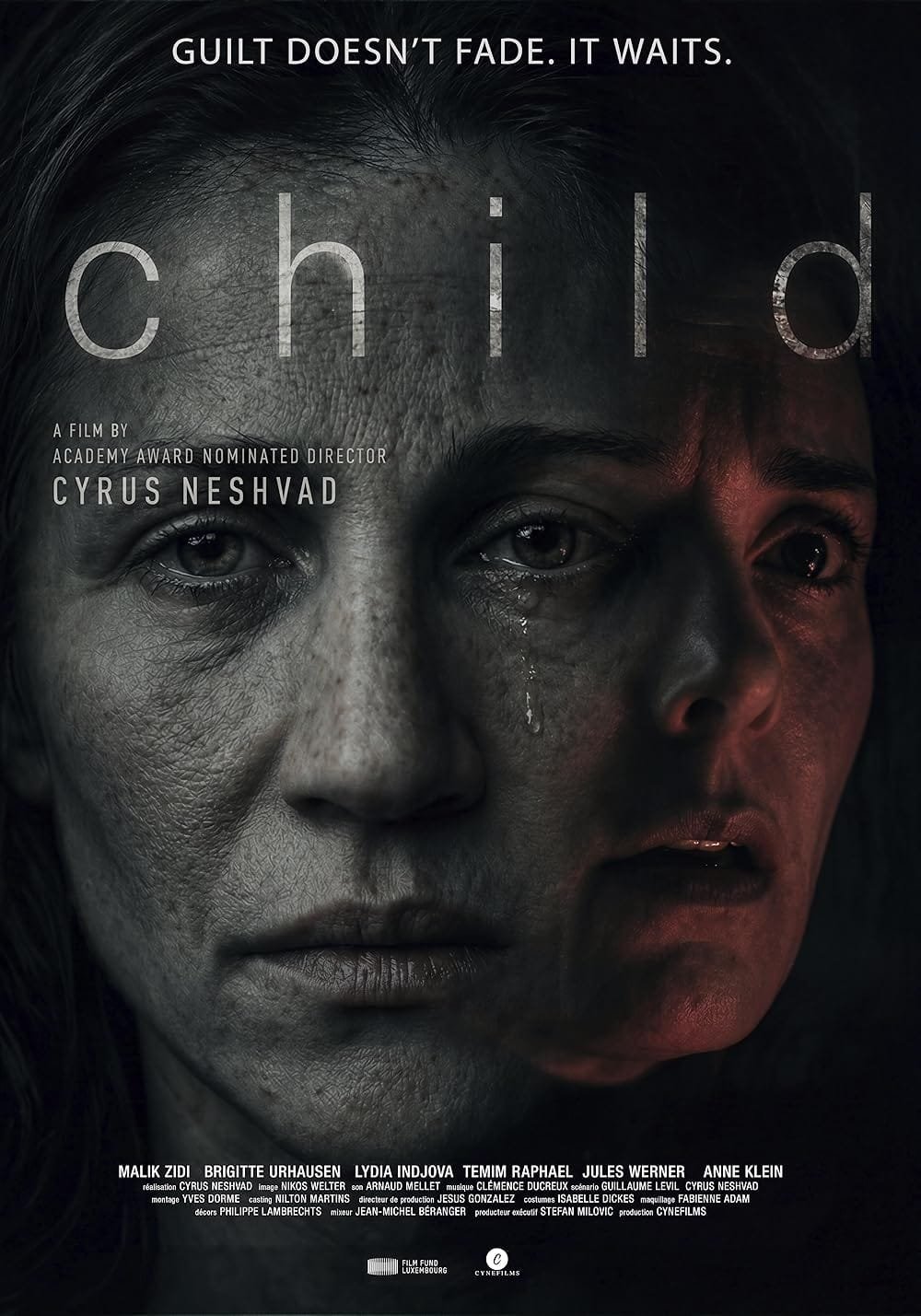
Starting out as a gruelling ethical quandary before progressing somewhere borderline fantastical, Child (2026) is without doubt a bleak film, but an innovative one, and it works effectively on its own terms, keeping a very humane, character-focused approach throughout its bizarre literal and metaphorical journey.
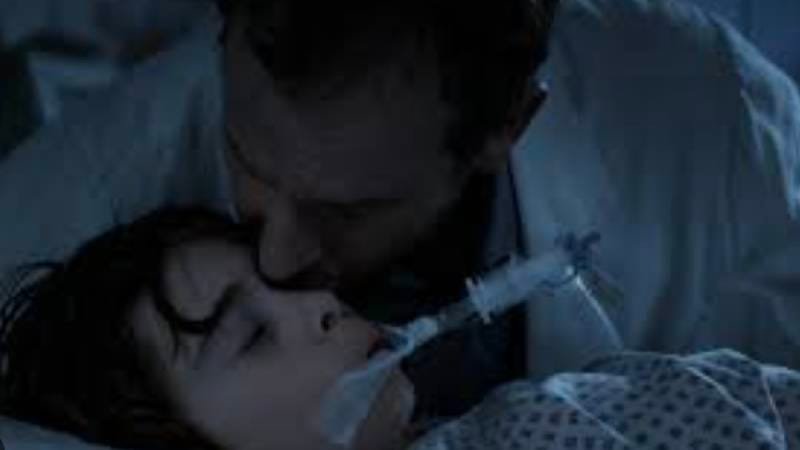
We start with two doctors attending to what is clearly a very ill child: the child is Leo, the son of one of these doctors, though we’d know that there was some bond between them by the level of care and concern on display, which goes above and beyond a purely professional interest. Leo’s father Greg (Malik Zidi) vows to the unresponsive child that life will be the same as it once was; they’ll enjoy the same things, the cabin-building, his picture-perfect, easeful childhood. There’s something strange going on, however, with the hospital director – also Greg’s brother-in-law – hinting at some financial arrangement being used to assure Leo’s care. This secrecy is alarming and alienating, but there’s little time for it to bed in, as Greg is about to accompany wife Marie (Anne Klein) on a very long journey out of Luxembourg, leaving their son behind but apparently taking part in some sort of rendezvous regarding his treatment. Marie won’t discuss it. She blames Greg for Leo’s precarious health, and she is taking control of this situation.
They drive, and drive, and drive, eventually crossing a dusty land border, but we’re never given a specific location with which to orientate ourselves, and of course Google Maps goes down the second they get off-grid. If Greg was expecting a cutting-edge special medical centre, then he’s disappointed: instead, the parents wait on the roadside at what’s obviously an agreed meeting-place, until they are greeted by a stranger coming out of the woods nearby, leading them into a cave mouth which seems to be set up as an impromptu clinic of some kind. The whole arrangement is bizarre, somewhere between modern medicine, criminal enterprise and something which looks a little ritualistic – and it’s not the last time that the film will tantalise at something even stranger and more fearsome going on than the far more realistic emotional turmoil being felt by all of the film’s key characters. As they discuss the arrangements (for what quickly dawns on us is a gravely unethical treatment option) with the team of people lurking in the cave, there’s another arrival – another parent, a woman (Lydia Indjova) who is absolutely set on no one making it out of this place with what they’ve come for. A struggle and a conflict ensues, with Greg and Marie forced to flee on foot through the woods, always aware that their errand here is governed by a strict timeline ticking away back in Luxembourg. Injured, they look for shelter, still determined to make it back home somehow.
But that isn’t it, either. Child spends its first hour, more or less, offering up fresh ideas and surprises, though always with the key theme of parenthood, and with deeply damaged people challenged and horrified by the situations unfolding around them. Greg is clearly traumatised by what is roundly believed – by him, too – to be ‘his fault’, the incident which harmed his son. As a result, he is reduced to a bystander in his own life, seen as weak, though he does retain a moral fibre which, in this situation, turns out to be problematic. Nothing’s straightforward. Marie, and Lydia too, are the more active participants in what unfolds: the film belongs more to them. Marie has dealt with her trauma by closing down; Lydia is dealing with hers differently (and this could have been Lydia’s film, with her perspective as the dominant one). However, throughout, Child is a strange, strained and tense film, only ever providing partial information and answers.
If the film begins to run out of its hefty offering of surprises by the very final act, then that in itself is hardly surprising. In a very lean runtime of just short of 75 minutes, it’s able to cover a great deal of ground, heaving with allegory, whilst allowing borderline supernatural, fantasy elements to become part of the general mix. It marries that Noughties blue-hued ordeal cinema, the likes of Luxembourg co-production Calvaire (2004), with aspects of other genres and titles. To mention a few would be to spoiler the film – you’ll get it, once you get a glimpse at one of the film’s interior spaces and who’s in there – but most of all, it’s reminiscent of the staggering Koko-di Koko-da (2019), with similar unrealistic elements used to explore the very real sensations of parental terror and torpor. Structured wholly around dour fantasy, grief and love, Child is not an easy viewing experience, but it’s strangely gripping, a tale of strangers in a strange land who would do absolutely anything for their child. Horror can amplify our focus on these very human aspirations, even if taking us somewhere which feels impossible in places, and that is the case here. I’m glad that director Cyrus Neshvad has pushed the boundaries in this way for his first-ever feature, and chosen aspects of the horror genre to do it.
Child (2026) received its World Premiere at this year’s Raindance Film Festival.