Editor’s note: please be aware that this special feature discusses Sinners and Beloved in detail, so be mindful of potential spoilers.
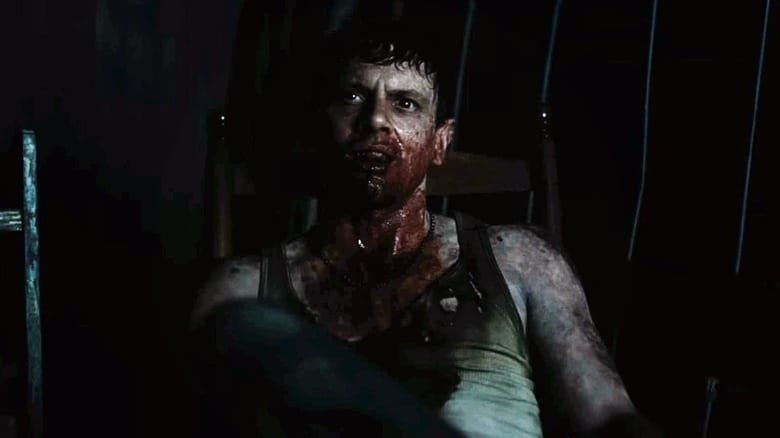
Perhaps, on first pass, it might not feel like the most obvious move to write about both Ryan Cooglan’s smash hit horror Sinners and the more oblique, though no less devastating horrors of Toni Morrison’s Pulitzer Prize-winning novel Beloved, first published in1987 – but, honestly, it’s a comparison which has been in my mind ever since finally catching up with Sinners recently. Despite the obvious differences – Sinners pitches headfirst into classic cinematic vampire lore (and by the way, Universal’s Dracula appeared in 1931; the events of Sinners are set in the year 1932), whilst Beloved treats its own horrors much less graphically – the links between horror and history are clear in each story. In both Sinners and Beloved, the supernatural serves to underscore very real narratives of loss and discrimination. The addition of something otherworldly, in each case, draws down scrutiny on situations and burdens which unfold new meanings for the first time and in new ways under supernaturally-derived pressure.
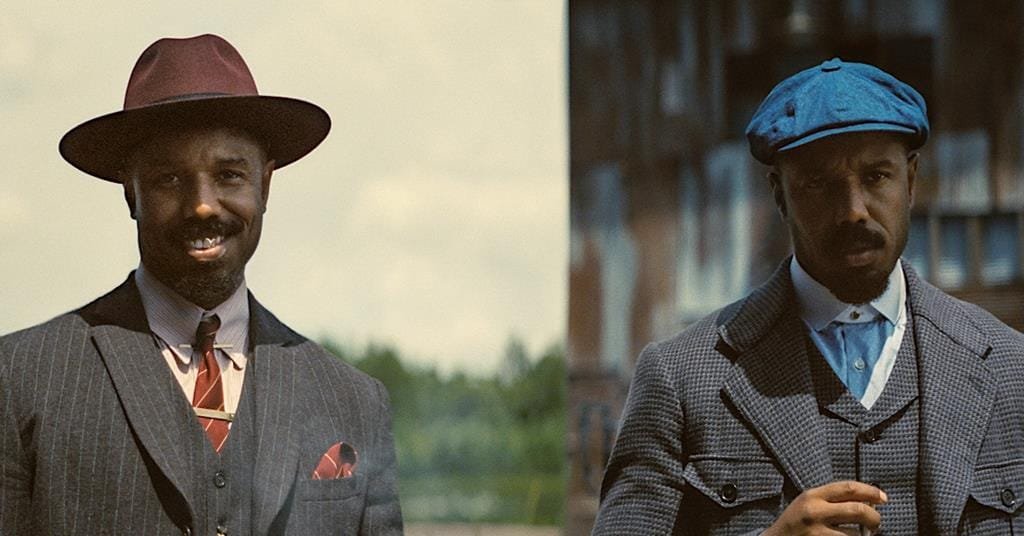
The two timelines – bearing in mind that Beloved never settles fully into a linear structure – are approximately sixty years apart, with Sinners taking pace in a post-WWI, pre-WWII America – which turned out to be the eye of the storm, with a still deeply-segregated nation recuperating from the shocks and horrors of the first decade of the new century whilst awaiting the inevitable shifts which were to come. Beloved, too, is a post-war novel, though it drifts back and forth between an America in which slavery was still legal, and the post-Civil War era; the most modern timeline in Beloved takes place in the 1870s, though always looking back at a period of time around twenty years earlier, when its main characters were still enslaved at a plantation called Sweet Home, in Kentucky. The Deep South of Sinners may not openly rely on slave labour, but with its system of indentured labour known as ‘sharecropping’ (we’re shown that Sammie still works the fields under this system), it seemed that little distance had been really travelled, even by the 1930s. The Jim Crow Laws passed post-Civil War (ostensibly to entrench a ‘separate but equal’ ethos) remained in place well into the 20th Century, outrunning the main timeline of Sinners by thirty years or more. In this febrile atmosphere, one in which brothers Smoke and Stack (Michael B. Jordan) could only ever get so rich, so young by getting involved with the criminal underworld of a large, Northern city (such as, here, Chicago), entrenched racism is still a fact of life in the Old South, with the “filthy talking sheets” described in Beloved (referring to the white costumes worn by the Klan) still both seen in-shot during Sinners, and, later, a key plot point, despite Hogwood’s protestations that “the Klan don’t exist no more”. The Klan is in fact always on the periphery of this film.
Illusions of ownership
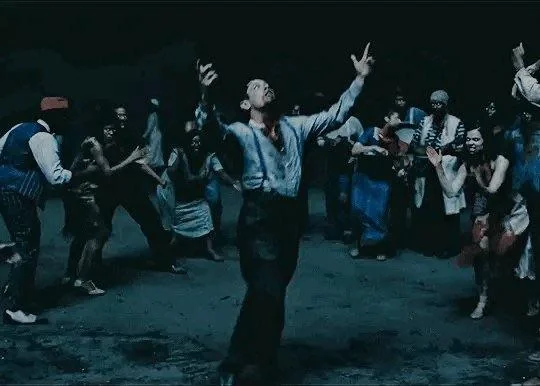
In both the novel and the film, this is the backdrop for a day of celebration against all odds. The motifs of music, community and worship permeate both narratives, with the circular structure of Sinners looping us back to church, and to Sammie’s horrified but loving, accepting father receiving his son back amongst his people after he survives the events at the juke joint. In Beloved, the community matriarch, Baby Suggs, whose freedom is purchased by her son, Halle, often brings her unconventional message of solidarity to the freed Black community of Ohio at a space referred to as ‘the Clearing’, though that’s an expression which could just as easily refer to the sensation of seeing things differently for the first time. Baby Suggs, a woman who finds to her great surprise that her heart can beat just for her, receives the word of God like a conduit, transforming His message into a message of redemption for the gathered former slaves. But rather than the meetings at the Clearing, there’s a much clearer point of comparison between Beloved and Sinners: a day of unanticipated, unbridled celebration of a kind probably unknown to either of the communities it serves. The purchase of the old timber mill by Smoke and Stack Sinclair is intended to make a profit, sure, but its main aim seems to be to offer up a place for the Black community: it’s no accident that it’s a bar, serves food and gives them a place to play music in an era when entertainment, too, was segregated – even if the Blues was popular enough to lead to Black musicians to be hired to play for a whites-only audience.
In Beloved, at Baby Suggs’s house on Bluestone Road, Ohio, an impromptu celebration breaks out when her friend, known as Stamp Paid, brings her a pail of blackberries, partly in response to his joy at successfully escorting Baby’s daughter-in-law, Sethe, and her newborn, safely to the house. From here, the feast begins to grow and grow. In each instance – at the juke joint and at 124 Bluestone Road – events start positively, even happily. But there are issues. Baby Suggs senses resentment brewing, and from her own neighbours, too. For people with next to nothing, the presentation of all of this feels like an outrage; even as the feast is going on, Baby can tell that it will generate resentment. At the juke joint, it’s made clear that this is a house built on sand. The Sinclairs have been double-dealing; if any of the Chicago crime syndicates work this out, then they are in a lot of trouble. They know this much; what they don’t yet know, though they have their suspicions perhaps, is that Hogwood is not a genuine realtor, to say the least, and would have ensured that the venture, and its supporters, were very short-lived. Even without the catastrophe which overtakes each celebration, their foundations are unstable, and easily picked apart in such cautious, fractious, troubled times as these.
Perhaps, in both Beloved and Sinners, one of the key points is that Black people cannot realistically ‘own’ anything. That lack of agency may be given horrific treatment in each narrative, but this only underlines a fact which, even rinsed of the horror elements, serves to destabilise and traumatise the people affected, and would have done by other, less fantastical means. Baby Suggs’s house is gifted to her by some well-meaning (though, arguably, flawed) white people, a brother and sister, the Bodwins. It’s her own house, and the Bodwins assure her that it’s hers; surprised but delighted, she sets about making it a home. She rearranges its layout, she offers a home to Sethe and her children and eagerly awaits the arrival of Halle, her beloved son who, poignantly, never makes it. In Sinners, Smoke and Stack exchange a lot of money for the sawmill; it’s no doubt a deliberate and symbolic choice that they choose to repurpose a place of labour as a place of leisure, and they clearly believe that they have made a successful purchase. But the sale is a sham; even had the vampires not come at dusk, the Klan would have come by day (a fact which seems to have got past the brothers, until it’s revealed to them by the vampires – two of whom were previously related to one of the Klansmen). The arrival of the vampires – seeking admission, but also seeking Sammie in particular – makes something of a mockery of the folklore which decrees that ‘vampires must be invited’, when attendee Grace (Li Jun Li), not an owner, calls out to the bloodsuckers that they can ‘come inside’. That impermeable barrier at the door, guarded so carefully by the brothers and their associates, becomes no barrier at all, just as ‘their’ property was never anything such, and it’s very telling that the chaos and bloodshed which ensues follows a genuine, if short-lived high point for the community – a crashing back to earth which erodes all of the hope and goodwill which was previously there.
Something very similar happens in Beloved; Baby Suggs is shown, in horrific detail, that her property was never her property. Seeking Sethe, who fled slavery in Kentucky, and under the auspices of the Fugitive Slave Act, her owner, now a man only ever referred to as the ‘schoolteacher’, arrives at Bluestone Road to take back his property. Sethe is, just like Sammie, especially valuable. When Sethe sees the schoolteacher, come to reclaim her and her children, she reacts with an intensity of violence which astounds even him – a man already well-versed in ideas of racial science, someone who teaches lessons at Sweet Home all about Sethe’s ‘human’ and ‘animal’ characteristics. Baby Suggs never recovers from the shock of this, and the event which, after a lifetime of slavery finally proves to be her undoing, is that the schoolteacher and his men “came in my yard”, shattering all of her illusions. Baby Suggs never recovers. The banquet, like the sawmill, ends up drenched in blood – it’s just that, in Beloved, the blood belongs to Sethe’s children.
Sethe’s terror that she will be retaken (and as such, her existing children, and any other children, will become Sweet Home slaves) prompts her to attempt to murder all of her children with a handsaw. Morrison based this event on the true story of a Kentucky woman called Margaret Garner who, faced with the same, opted to murder her own child (though tried to kill all four of her children). Margaret Garner cut her daughter’s throat; Sethe is only able to kill the child who comes to be known as ‘Beloved’ by the same method, but the scene of carnage which confronts onlookers – refracted for us by the racist perspective of the schoolteacher – is a shocking one, with blood pooling liberally in the sawdust of the woodshed. She almost severs Beloved’s head from her body; when confronted and arrested for what she has done, she is essentially holding the child’s head on. There’s nothing supernatural here: Sethe’s deeds are, as she avers later, done to protect her children at any cost from a life of slavery. However, it is as a result of this action that the novel gains its clearest supernatural element. Beloved, named for the gravestone which Sethe eventually has carved with that word, returns – first as the ‘baby ghost’, which Sethe refers to as a ‘haint’, a mischievous spirit, like a poltergeist. Hope for a better future for Sethe – which comes via the arrival of another former Sweet Home slave, Paul D – seems to drive the baby ghost out, but before long, Beloved finds another way to get back to 124 Bluestone Road. And, arguably, when she gets there, it’s in the form of a new kind of vampire.
The nature of monsters in Sinners and Beloved
Interestingly, in Sinners, Annie (Wunmi Wosaku) – a woman who never lost sight of the tribal practices and beliefs of her ancestors – makes an explicit comparison between haints and vampires, showing there’s room in her understanding of folklore for both. That in itself is interesting, given that the arrival of Remmick (Jack O’Connell) and the other vampires, who clearly display behaviours we might associate with the Northern/Eastern European vampire traditions, rather than similar tales which belong to West African belief systems. A haint, according to Annie, is a spirit, like a memory – a kind of collective, restless memory. A vampire, on the other hand, loses its soul; it becomes a predator, actively recruiting others. Remmick, still carrying somewhere within himself the trauma memory of the oppression of the Irish (never enslaved, but variously indentured, stripped of their language and land and left to starve en masse) is still searching for that connection to his own ancestors, and has the foresight to see Sammie as a conduit somehow, given his talent for music which speaks to the soul. Remmick, alongside the new vampires he creates, sees the vampiric state as a proxy community, one where everyone shares the memory of what they once were, and what they knew. That this has value to him is itself very revealing.
Similarly, Beloved, the young woman who seems to come out of the creek seeking admittance to 124 Bluestone Road, eventually turns out to be more than a manifestation of Sethe’s dead daughter. Even Denver, Sethe’s surviving child who also lives at 124, eventually sees Beloved as “something more” than her sister. The suggestion, made during Beloved’s alarming, fractured internal monologue once she has established herself as a permanent presence at the house, is that her own family’s suffering is only a small part of centuries of generational suffering, and that Beloved herself is part of this collective memory, too. She recalls events which she couldn’t have seen: she seems to describe life aboard the slave ships, memories which may have persisted for Sethe’s own mother, but not for her daughter or granddaughter, either born in the US, or during the passage. In this, at least in terms of memories and motivations, Remmick and Beloved are similar, each of them with dubious origins, each with a partial or changed name (‘Remmick’ is an Anglo-Saxon-derived word, not a Gaelic name; Remmick himself switches between an American accent and and Irish one, giving further credence to his complaint that his own people had been subjugated and that he lost who he was, even before whatever befell him).
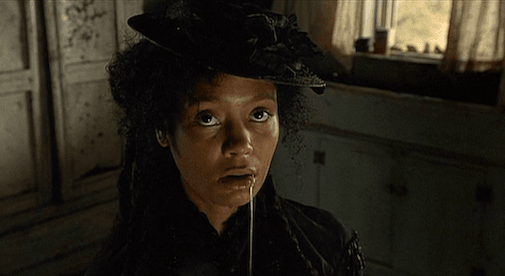
Of course, Beloved is not a monster in the same sense: she is, frequently, a sympathetic character, an unwitting representative for generations of victims who also yearns for a connection to the mother who, for whatever reason she may have had, murdered her. Beloved does not drink blood. She does not perpetrate violence. However she is, in some respects, vampiric: she feeds on Sethe’s ‘rememory’, her guilt and distress over the events of her past. When she is not able to function as the haint she once was, she finds a different incarnation; she is, in this respect, devious. The events of what Stamp comes to call ‘The Misery’ cast a very long shadow over Sethe; her deeds separated her from the Black community which once supported her; her world is already diminished, and when Beloved arrives, the separation grows even more entrenched. Sethe’s mistaken jubilance over repairing her family unit severs her last ties to the outside world. She loses her job, she loses her outcome and then – as the symbiotic link between her and her unnatural, now-grown daughter increases its hold – Sethe begins to starve. It is as though Beloved is physically feeding on her mother, as much as Sethe’s starvation comes about as a result of her new entrapment at home, too afraid to reveal Beloved’s presence to the world, and unable to earn, to cook, to feed. Beloved’s attachment to Sethe might have come from a place of love, but given her position as, arguably, a manifestation of centuries of harm, she also has the capacity to harm others.
“Just for a few hours, we was free.”
Set against these horrific situations – regardless of the differences in scale – Sinners and Beloved each offer horrifying situations only surmountable by the renewed efforts of the community. Again, it’s a blend of Christianity and folklore which eventually drives Beloved out – at the point where she has seemingly grown, now physically overshadowing Sethe. Thanks to Denver’s efforts to establish a kind of life outside of the house, the alienated Black community once again takes an interest in 124 Bluestone Road; a group of local women, headed up by an old friend of Sethe’s called Ella, come to the house to pray, believing that the young woman now lurking inside means harm; she is seen as an aberration. Beloved’s escape back towards the creek indeed marks her out once more as something other than a normal young woman. Beloved is also pregnant, naked, and a child reports seeing her as she flees, noting that she has ‘fish for hair’: offering no answers, only mysteries, she departs the novel as oddly as she appears in it, albeit the process of trying to forget her doesn’t seem to quite shift her. Footprints still appear near the creek; something of her, from time to time, still drifts across the memories of those who remember her. In Beloved, the community, which has been so broken for so long, reunites to save one of its own, or at least to try. The ending of the novel is still deeply ambiguous; Sethe, now bereft of her “best thing”, cannot understand Paul D’s insistence that she is her best thing. He implores her to look to a future – one which he says they both deserve. But Sethe’s last words in the book are disbelieving. “Me?” she repeats. “Me?” We never know what sort of a future, if any, Sethe experiences; the book ends with the strange folklore which sustained Beloved throughout, though there is at least hope for Denver, now forging a life for herself: there is a future for the young woman who finally broke out of the novel’s singular haunted house.
In Sinners, the Black community itself, already showing fault lines from the very start of the film, is irreparably damaged by events at the juke joint; families are lost and divided; lovers are parted; despite their own sympathies with the newly-turned vampires, all of whom they loved, the living need to preserve themselves against them – despite the vampires’ pleadings that theirs is the true community, with all of their knowledge and experiences shared and acknowledged forever. But as Annie warns, the vampires will be lost to their ancestors forever. The only way they can enjoy the kinship of the afterlife is to avoid being turned; this is something she herself insists upon, and Smoke – who dies delivering solo vengeance on the men who would have destroyed his community by decidedly non-supernatural means – is able to join her and his deceased child as a result. The others are turned into ashes, a particularly brutal fate for a community who might have been lynched and burned come the morning anyway. Sammie, who survives, is torn from his friends, but is able to piece together a life. In fact, we know his life has been a long one: he does not give up the music which put a target on his back, and goes on playing. But he encounters two of the vampires again. Stack and Mary escaped on that night; whilst arguably there’s a lull in the threat levels established earlier in the film when they come and speak to Sammie without choosing to harm him, we do at least glean from this that, despite his eternal youth, Stack still sees that night at the juke joint as the happiest of his life, an opinion which Sammie shares – and they say as much to each other. At least in this moment, there’s some community left, something of that moment which was never going to outlast the night. Something in Stack still cherishes the memory of his brother, and what they achieved that night.
However, both Beloved and Sinners end ambiguously, with scattering hopes which never quite match up to those high points of celebration and self-belief, and hopes which have succumbed, in many ways, to the harsh realities which come and cross the threshold, finding issue and form. Whilst each story works perfectly as a realist, historical narrative, the addition of the supernatural – in the forms of entities which literally come to subvert and to consume – help to underline deeper truths about the experience of oppression, whether in 1873 or 1931. But they also highlight what it means to survive, and what might come next. In both of these tales, horror serves as a great distorting mirror with bizarre elements, but a mirror nonetheless, reflecting and emphasising unpalatable ideas and truths.