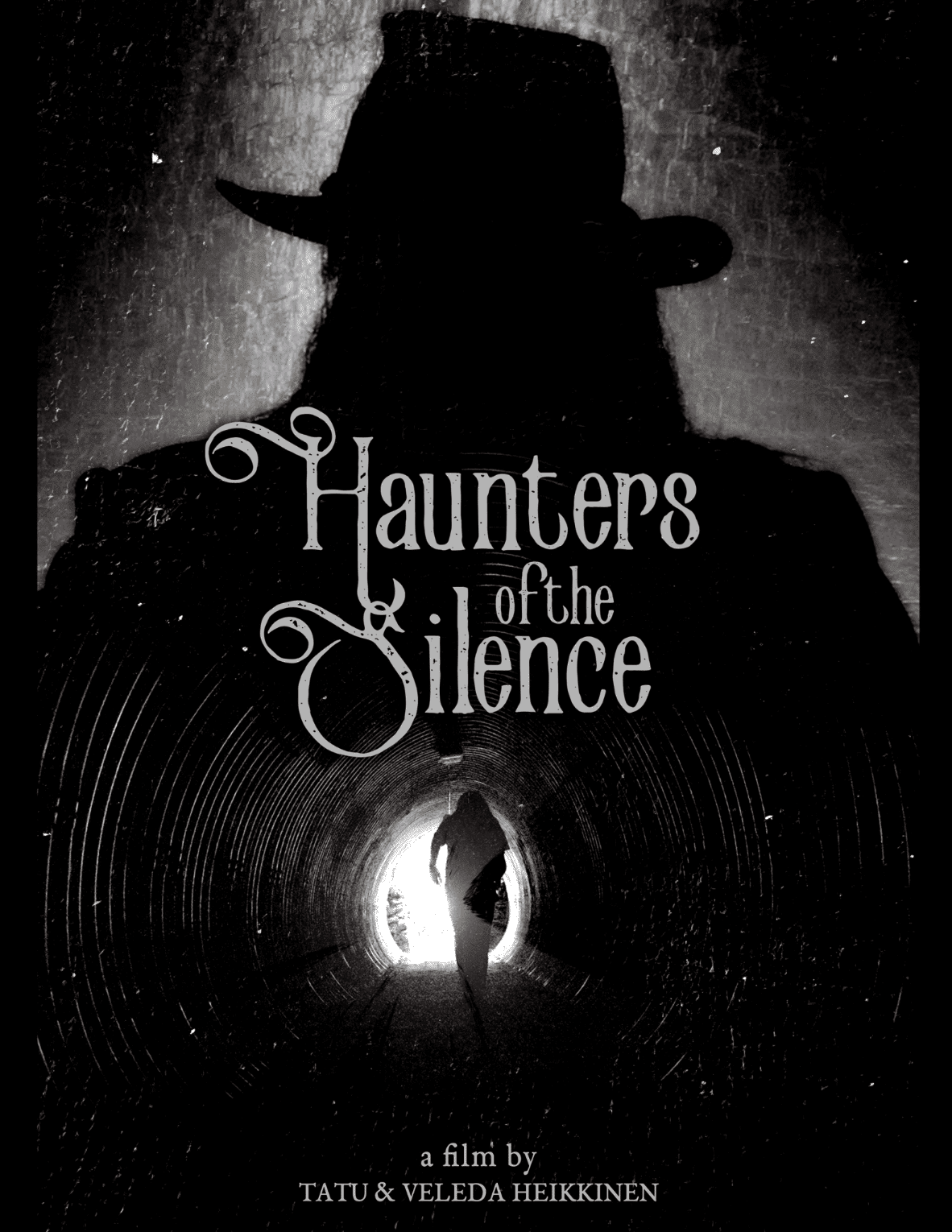
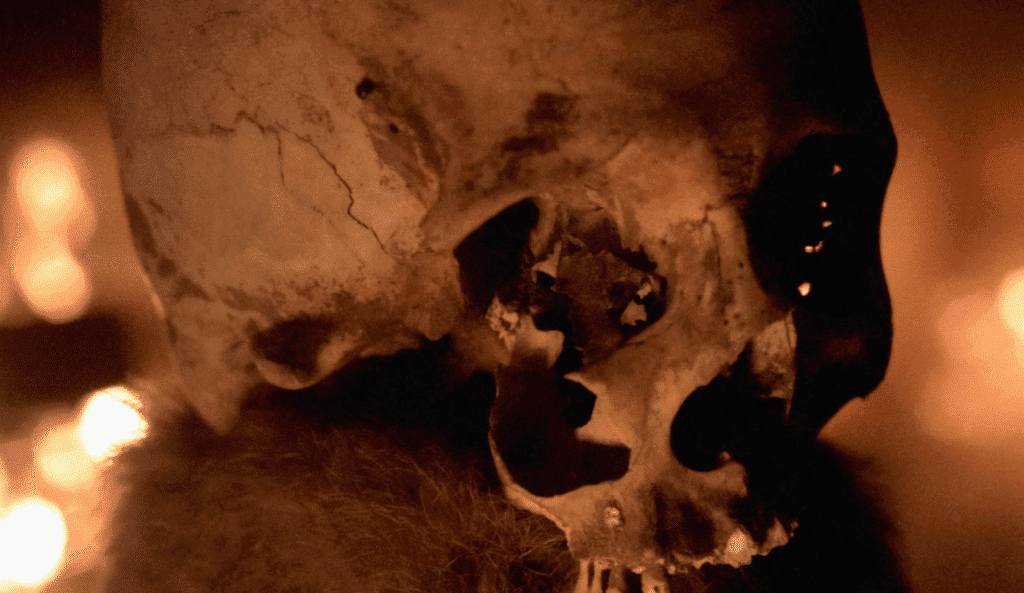
Haunters of the Silence (2025) is avowedly experimental; this is not a narrative piece of filmmaking in any recognisable way, so this review opens with a proviso: it will not be for everyone, and in fact it will probably appeal to a very select band of film fans. If you are interested in the experimental filmmaking process, then there is plenty here to admire, given how it’s geared towards being a sensory experience as much as anything else. It has themes but no plot, people but no characters (in a conventional sense at least). This makes it rather challenging to review, though its strong visual ideas and auditory overload provide an interesting atmosphere.
So what’s it about? If it can be summed up, then I guess Haunters of the Silence is all about searching – for lost loved ones, or family members, or a sense of personal peace. We start with a man scattering ashes at a lake; back at home, grief seems to shape the time he spends, as he strives to fill the space and the hours with light, voices and other distractions. When he tries to sleep that night he is repeatedly woken by his video doorbell; restless wildlife, perhaps, or is that something else on the periphery of the shot? Under normal circumstances, the man would probably just have switched off his phone, but something prompts him to go outside and take a look. This seems to prompt a raft of phenomena which now begin to afflict him when inside his home too, culminating in the appearance of a strange entity which seems to drain and oppress him, sending him fleeing.
The rest of the film follows the man through various dreamlike states, interspliced with external references to objects and ideas; there are some panels from what seems to be a comic-book version of the Du Maurier novel Trilby, the book which gifted the term ‘Svengali’ to the English language, and the ways these begin to utilise stopmotion animation is very skilfully done. There are also books, including a covetable edition of Arthur Machen’s The Great God Pan, with one in particular on the role of drumming in ritual magic recurring several times until it seems to be a motif of sorts. Really, this is a film which doesn’t need (or really reward) rapt attention; you can just as easily get something from it by half watching it, sort of letting it wash over you; it could oh-so easily be played as a video accompaniment for an avant-garde black metal set, by the by, and feel for all the world like it was designed for that purpose.
The film is at its weakest when it seems to threaten a bit of Skinamarink emulation, but thankfully, this is very brief – and could relate more to this reviewer’s post-Skinamarink terror of cinematic grain than any deliberate decision on the part of filmmakers/writers Tatu Heikkinen and Veleda Thorsson-Heikkinen. Elsewhere, in its blurring, segueing but often very attractively framed and lit camerawork, it occasionally resembles work by Alex Bakshaev and Grant McPhee, though each of these directors, despite their arthouse leanings, tend to start off with a narrative framework before moving more towards impressions and ideas. Haunters of the Silence never consciously offers this, and keeps up the same, exploratory approach from the very opening scenes. A slightly clunkily-worded intertitle aside, it’s a film which does what it sets out to do very smoothly and with some undeniable ingenuity. It’s more immersive than informative, and will be best admired by viewers who are okay with that.
Haunters of the Silence (2025) was awarded ‘Best Experimental Film’ at the Paris Film Awards in October.