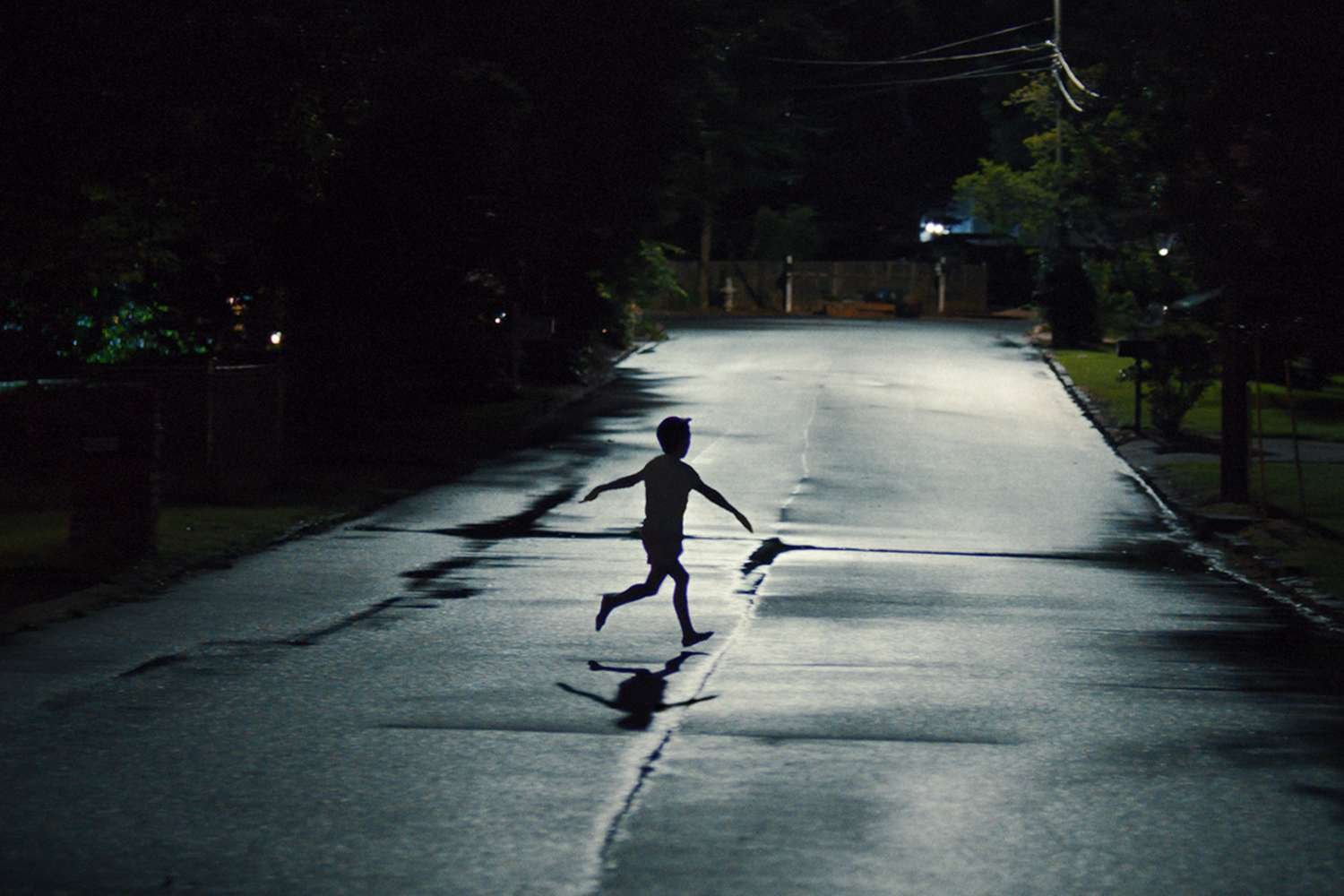
Zach Cregger’s follow-up to Barbarian (2022) has been inspiring tentatively hopeful comment (and some controversy) ever since it was first announced; surely a director who essentially founded Airbnb horror – a genre for our times every bit as valid as social media horror – could do great things with what looked, from its initial premise, like a simple enough set-up. Here’s how it starts (and, by the way, if you haven’t yet seen the film, where your reading should end). The story opens at 2:17 in the morning, when an elementary class all rose from their beds – and ran out into the night. They haven’t been seen since, and only one child from the entire class remains.
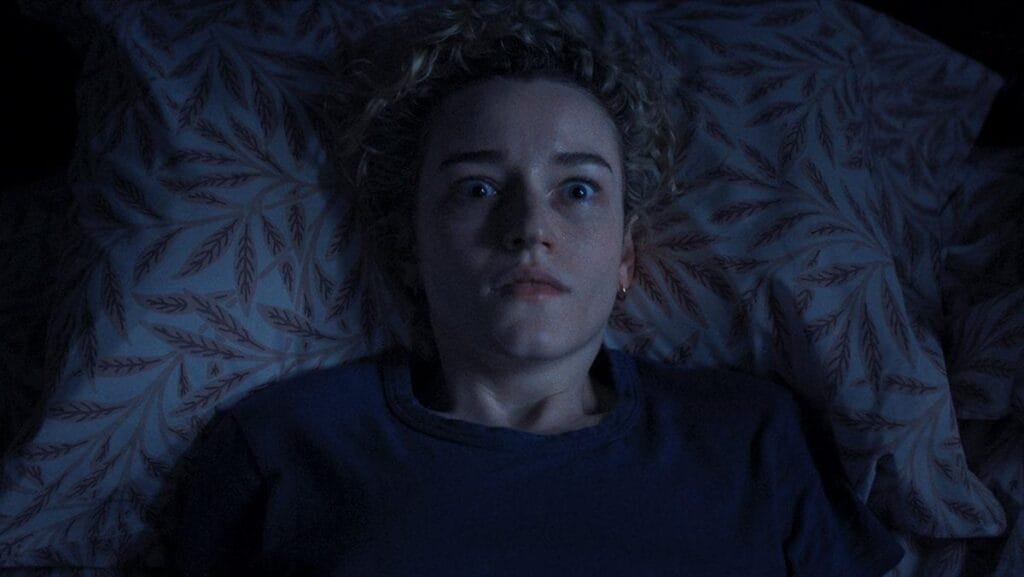
There’s a sense fairly early on in Weapons (2025) that, just maybe, the police could have honed their detective skills a little more sharply and thought up some of the triangulation later performed by another, non-detective character, but hey – mistakes have been made and are being made, and in lieu of tracking down their children the small town has turned its hopeless anger on the class teacher, Justine (Julia Garner). It’s interesting that agency is granted to the teacher in amounts not handed down to the police themselves, although father Archer (Josh Brolin) keeps up both the enquiries at the local sheriff’s office and his desperate witch-hunt; arguably, Justine comes off worse, and starts to retreat into casual alcoholism – though she has made errors along the way, bringing down the weight of the local education authority upon herself for her past sins against safeguarding, then doing so again when her own desperation drives her to look into the disappearances too.
This is a film comprised of interlocking and overlapping narratives, with a range of characters each picking up their own trail, and as they do so, it’s clear to the audience that these are all flawed people. There are seemingly no clear-sighted adults in this film, whether the blame-hungry dad, the class teacher, the troubled cop or the local criminal (and we may notice that addiction issues loom over the film as a whole).
The film valiantly holds onto its secrets for a large swathe of its runtime without sacrificing the interest and engagement which we feel, and it’s only when we get into last classmate Alex’s story that the threads really begin to come together. Its use of supernatural and occult elements may feel overly familiar, given some of this year and last year’s biggest hitters in the horror genre, but for this reviewer it works incredibly well – using the occult as a ripe source not only of the horror itself, but as a source of misdirection. We all know the phrase ‘witch hunt’ and typically understand it to mean an unnecessary, cruel pursuit of the wrong person or persons in pursuit of some eroded sense of justice. Here it’s abundant and abundantly explored, because Weapons also understands that occult in its most literal sense, meaning ‘hidden’, is the key to why events can remain so mysterious for so long.
One character whose story we don’t get in the same way is Gladys (Amy Madigan), and Cregger’s artful use of narrative gaps and obfuscations suits her storyline perfectly, making us glean what we can from what we have.
Please be mindful of spoilers in the following sections...
Weapons makes extensive and creative use of the theme of witchcraft; it also blends the theme cleverly with a whole rack of Chekov’s guns, being as it is a film full of discourse around consumption, around parasitism, and around an exploration of different types of power in society. In Weapons, we see how an aged woman without means develops new means, magically sustaining herself by using the bodies and minds of others as sources of literal and metaphorical strength. It’s entirely possible to read this development as further evidence of women’s comparative powerlessness in society, and to think of all the women – themselves of limited means – who fell victim to other, harsher historical witch hunts in their tens of thousands. That we’re still demonising older women only points back to itself, showing our own prejudices are intact; nothing has changed.
However, and to return to the theme of power, it’s equally possible to see the fear engendered by Gladys as a kind of power – not just over her victims, but over us as the audience. Gladys is fearsome, and fearful only in rare, valedictory, shocking moments of comeuppance. Even so, it’s not possible to say her threat is ever assuaged, because normality never fully resumes here. Even literally consumed in one of the film’s clear nods to fairy tales like Hansel and Gretel, Gladys holds some kind of sway over the home and the town which took her in. It’s a fantasy about a fantasy, sure, but grant this ailing old lady her dues: she’s terrifying, and resourceful.
Hers is a particularly brutal and compelling version of old folkloric beliefs about witches, too; the locks of hair, the wands, even what look like scrying baths have been rendered down and repurposed into means to commit extreme acts, either instantaneous control, or longer-term, draining the life out of anyone coming into contact whether with Gladys herself or with the unwitting magician’s apprentice Alex, who probably suffers the longest and endures the greatest psychological harm. Whilst this isn’t a detailed character study of a film – nor does it need to be – there’s more than enough here to show real, grounded repercussions for its people.
Nonetheless, it’s one of horror cinema’s real mean-spirited joys to be able to show us what a malign witch can do, and Weapons certainly doesn’t disappoint in this respect – particularly when it performs that necessary, but no less enjoyable about-face, granting audiences a particularly hard-hitting, exhilarating final sequence. There are worthy payoffs for the film’s puzzles, offering a crowd-pleasing balance of suspense and high action. Above all else, this film is a lot of fun.
Weapons (2025) is on general cinematic release now.