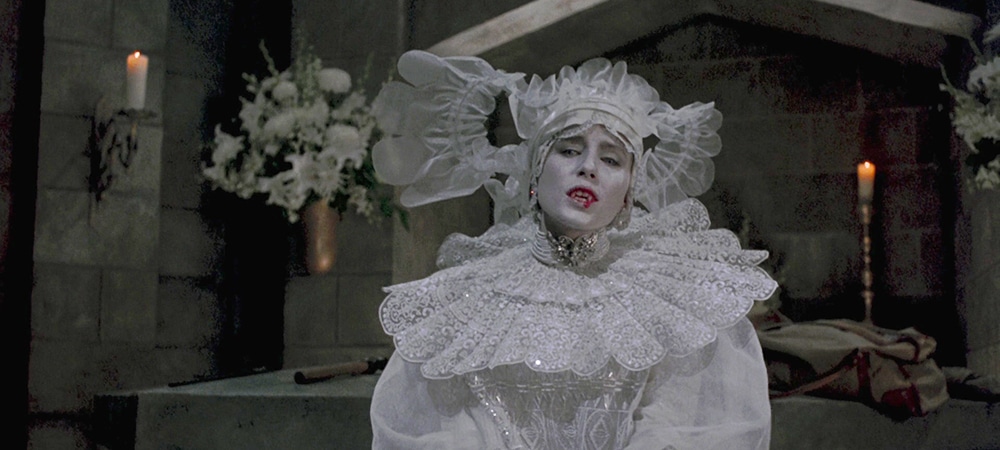
The vampire – at least as we used to know it – seems to have fallen out of favour in recent years. By no means has it disappeared, but certainly, as on-screen monsters go, it’s no longer in its ascendant. Terrific, spellbinding horrors continue to be made, sure, even if more often than not as remakes or prequels/sequels – but glorious, gratuitous cinematic vampires seem harder and harder to find. Vampires have either paced into the modern day, in drab clothes to match, or else they’ve come to identify as something altogether different from a blood-drinker – a creature that can be mollified, without the old need to take a human life. There have, of course, been some superb vampire horror stories in recent years. However, in many other ways, it feels like a very, very long time indeed since Francis Ford Coppola unfolded the last great Dracula movie.
The character of Dracula doesn’t just have a long history with horror; the history of horror is Dracula, and there have been regular interpretations of Bram Stoker’s novel since the inception of cinema in the early 20th Century. In fact, Nosferatu (1922) eventually appeared out of a legal wrangle between director Murnau and Stoker’s still-living widow; subsequent name changes to characters stemmed from issues around copyright. Funnily enough, this tussle between the Stoker estate and the filmmaker reaffirmed the novel’s fading popularity, and probably contributed to the horde of Draculas which eventually graced the screen. The classic ‘Universal Monsters’ legendarily numbered Dracula amongst their ranks, and versions of the charming, deadly aristocratic Dracula embodied by Bela Lugosi dominated horror cinema for the next forty years at least. Advances in technology and filming techniques allowed filmmakers to make Dracula more visceral, more preternaturally frightening perhaps, but he more often than not retained that suave, aristocratic veneer; the cinematic Dracula is now a cultural archetype, a mass-produced and understood image which adorns anything from cereal boxes to kids’ masks.
In terms of horror films, the more successes Dracula enjoyed, the more scope for interpretation there was, but it was some time before a filmmaker earnestly took up the imperative so resonantly uttered by one of the world’s favourite cinematic Draculas, Christopher Lee, whenever he was asked about how you could improve one of his most famous roles: “use the words which Stoker has written”. (When Lee felt that scripts deviated too far into silliness, he elected to play the role mute, remember, so we can assume he meant what he said). However, not only did Francis Ford Coppola ‘use the words’, he also – via screenplay writer James V. Hart – completely transformed Stoker’s original novel, melding the legend of Transylvanian nobleman Vlad Tepes with the fantastical events of the text in a way which Stoker never did.
Books have been written and wars have been fought (or very nearly) about just how much inspiration Stoker took from reading about Tepes, a 15th Century prince whose barbarism is as feted as his fierce nationalism. It’s not for me to get too mired in all of that here, but certainly, Hart’s screenplay begins by placing the narrative squarely in Tepes’s court. In so doing, all the ambiguities regarding Stoker’s book, you know, the ones which have spawned a thousand essays on just why in the hell a Transylvanian nobleman suddenly decides to up sticks (and cases of earth) and move to England, are neatly skewered. Pardon me the pun.
In Coppola’s film, Dracula is Vlad Dracula; no further questions. His great victories over the empire-building Ottomans have secured his nation and his Church, but the church can offer him no gratitude, no spiritual flexibility. The recent suicide of his princess, upon hearing from the Turks that Vlad had in fact been killed, means that she is damned – whoever her beloved is and whatever he has achieved is immaterial. His ensuing grief and rage generates a blasphemy so aberrant that the very crucifixes pour with blood. He becomes a monster, and is damned to live forever for his crimes against God.
In one incredible cinematic sequence, there we have it. We know why Dracula continues to live. That tantalising line in the novel where Dracula asserts that yes, he has in fact loved, suddenly makes profound sense in terms of the narrative. It’s even – whisper it – an improvement on the source text, in my humble opinion.
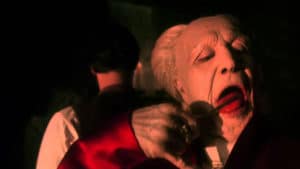 I may as well be blunt here: it’s a notable book for many reasons, not least of which in how it’s generated so many more creative works down through the years, but I don’t think Dracula is a great novel in itself. The epistolary frame is interesting in terms of structure, and it’s cleverly pieced together, but this keeps readers at a distance from its protagonists; certain characters descend readily into farce (and are played faithfully as such in the film!) and there are a number of thankless questions, making the novel feel a bit like a whistle-stop tour of a fascinating place where you never have long to pause and look about you. Francis Ford Coppola’s Dracula adds some sense and coherence to all of this by motivating its monster with undying love, but it doesn’t then abandon the effective and horrifying scenes from the book, either. Some of these – the creature turning into multiple rats which all flee, the still aged Dracula licking Harker’s blood from a cutthroat razor or impossibly scuttling down the castle’s steep walls – have lost none of their power. It’s these contrasts that allows the audience to see a fully-fleshed antagonist; to feel some ‘sympathy for the devil’, or at least sympathy for a damned being. Against the luxuriant add-on of what’s effectively a reincarnation based love story, it’s an absorbing array of contrasts.
This aspect is, by far, not the film’s only strength. It boasts a fantastic aesthetic sensibility throughout, combining shadow theatre with sweeping vistas and an immaculately staged version of the historical with cedes into the impossible. In many respects, Coppola’s vision represents the idea of the ‘hyperreal’, weaving something seemingly impossibly lurid out of even the ostensibly most realistic scenes. This kind of flourish is everywhere, as are a number of forced perspectives which trick the eye and add to the deeply dreamlike atmosphere. Dracula’s armour is blood red, foreshadowing what is to come; Oldman’s turn as the literally ancient Count Dracula, apart from rendering him unrecognisable, takes plausible shape as an elderly European nobleman, dressed hair and all; Sadie Frost transforms from a pre-Raphaelite into a Vaudeville harlot and finally into a beautiful corpse, her funereal/bridal clothes a perfect picture of excessive modesty – Frost’s ‘Bloofer Lady’ is perfect, and whilst more beautiful than terrifying (we owe Frank Langella’s Dracula that honour) it captures the threat which this character poses in the novel: she can still be sexual.
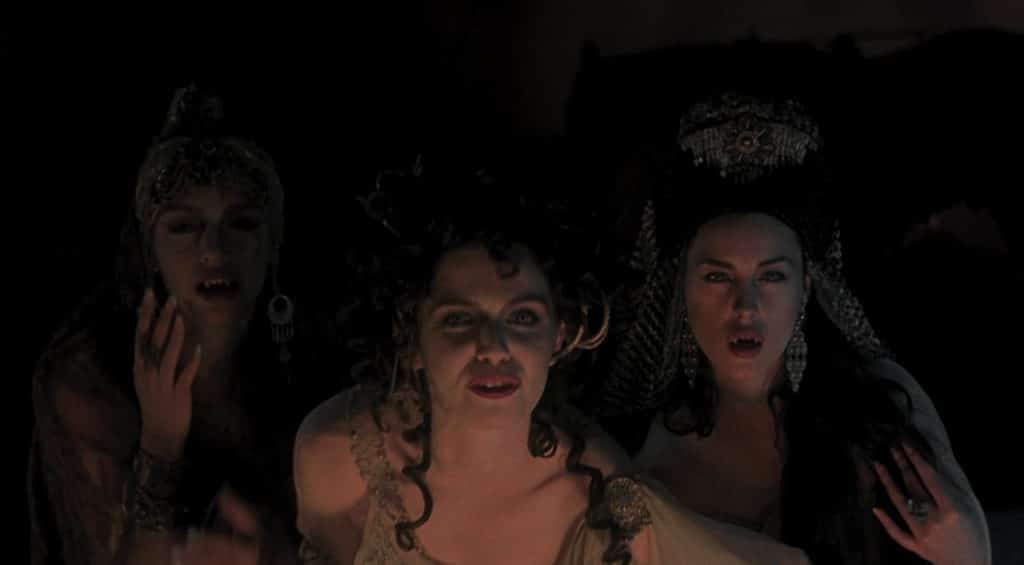 No one can ever accuse Coppola of shying away from things which could only ever be alluded to in 19th Century fiction. The Carmillas and Draculas of the day afforded the tantalising scope to be salacious, but likewise the sexual mores of the day meant calling things to a halt not too long after introducing this possibility of sex, couching even these supernatural encounters in veiled words and glaring omissions. Compare that, to give just one example, to the ‘Dracula’s Brides’ sequence in the 1992 release. Okay, even if the blood-sharing scene between Mina and the Count holds back to an extent (though still sending a million hearts a-flutter, no doubt) then the unholy trinity who make Harker their foodstuff/plaything must have been quite an education for more than a few young men – or women, for that matter. After that, we should be a hell of a lot more understanding as to why Harker’s speech sounds a little off. Then there’s what happens to Lucy Westenra, which is recounted as a ‘mystery illness’ in the novel, but is rendered overtly sexual on screen, in a series of eroticised, if dubiously consensual encounters – in one of which Oldman was advised to whisper scandalous nothings off-screen to actress Sadie Frost in order to encourage her to writhe appealingly. Coppola always intended his film to have this kind of sensory overload, storyboarding about a thousand scenes altogether and insisting that the costumes, alongside the mise-en-scène, underpinned the whole.
Over the ensuing years, much has been made of the film’s flaws – of which I accept there are many, even if for me they are still minor points, a mispronunciation of ‘bastard’ here, a somewhat dialled-in Dutchman there. Overall, this is still simply one of the most sumptuous adaptations of a notorious and oddly-beloved novel there has ever been, and I do not think that we have really seen its like since. It’ll always have a place in my heart, and it’ll always feel like a formative film, one of those many which, over the years, settle on you as a fond memory.
In the intervening years, perhaps only Dracula Untold has sought to interweave history with vampire fantasy on a similar ‘lost love’ theme, but, as broadly entertaining as it is, it just doesn’t come together in the same way. So, assuming we can ignore Dario Argento’s more recent jaw-dropping foray into the source material, will Dracula ever be back? Or has he now crossed the divide into pop culture, there to remain? Or, is this just the perception of viewers like me, all too happy to discard erstwhile Draculas as counterfeit, crass or otherwise lacking?
Perhaps, perhaps. But if Coppola was the man to bring us Count Dracula’s true on-screen swansong in 1992, then I think that it’s an extraordinary place to part company.
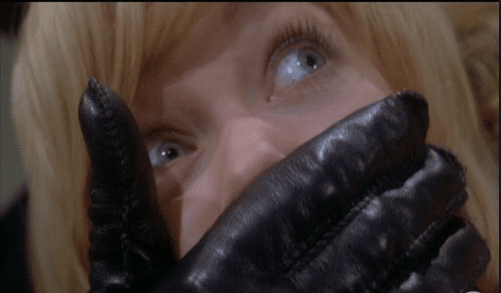 Hammer is best-known for its Kensington Gore and its literary monsters, usually shot against a 60s-coloured 19th Century which is a distinctive aesthetic all of its own; the studio deviated from this formula quite considerably at times, though, in a range of films which seem to have divided critics ever since. Fear in the Night is certainly dramatically different from other projects which had seen director Jimmy Sangster at the helm: the last time he’d worked with Hammer prior to this film, it was to bring us Lust for a Vampire, a film which is itself divisive, but inarguably, classic Hammer fare. Not so with Fear in the Night, with its contemporary setting and extremely slow-burn approach. The film is not without its issues, but it certainly showcases the flexibility of Sangster. There’s ne’er a scrap of flimsy white fabric to be seen.
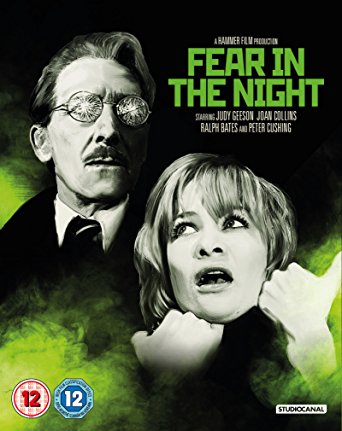 This is a very low-key piece of film, which takes its time establishing the interaction between Peggy’s state of mind and the possible threat to her. Unfortunately, some aspects of Peggy’s character and narrative haven’t aged particularly well; she behaves like a bit of a dupe, going from childlike to catatonic when the going gets tough. Mr. Carmichael’s wife Molly (Joan Collins) refers to her disparagingly as a ‘child bride’, and that is rather how she’s played. Eventually, she seems to withdraw from the plot altogether, every bit as unresponsive as Barbara in Night of the Living Dead. Before we get to that, though, Peggy is apparently primed to simply be ‘a teacher’s wife’, and having no other role, she has ample time to roam the grounds, where she has equally ample time to frighten herself half to death. The script accordingly does lag in several places, perhaps particularly where married life is concerned; perhaps as she is recovering from a mental illness (though we never discover the full nature of this) husband Bob is galvanised in his treatment of her as a lesser being, and the needy/dismissive dichotomy between them can be taxing.
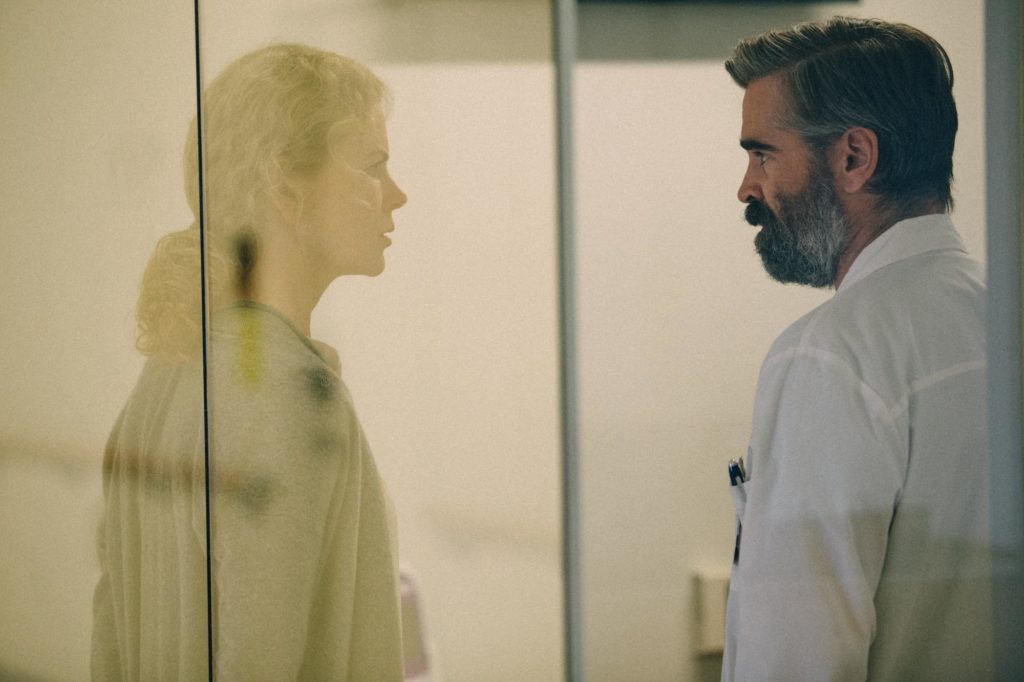 I will confess that I have had no prior experience of director Yorgos Lanthimos’s work, but based on his most recent film, The Killing of a Sacred Deer, I’d imagine that a little goes a long way. That isn’t to say that I wasn’t completely drawn in to this twisted story of unhappy families, but that it’s left an unseemly, faintly uncomfortable after-effect; I found myself squirming in (rewarded) anticipation of horrible violence, and soon after, laughing at things I definitely didn’t feel I should be. It has all conspired to create a queasy sensation, one which clearly took work to establish, and isn’t going away in a hurry.
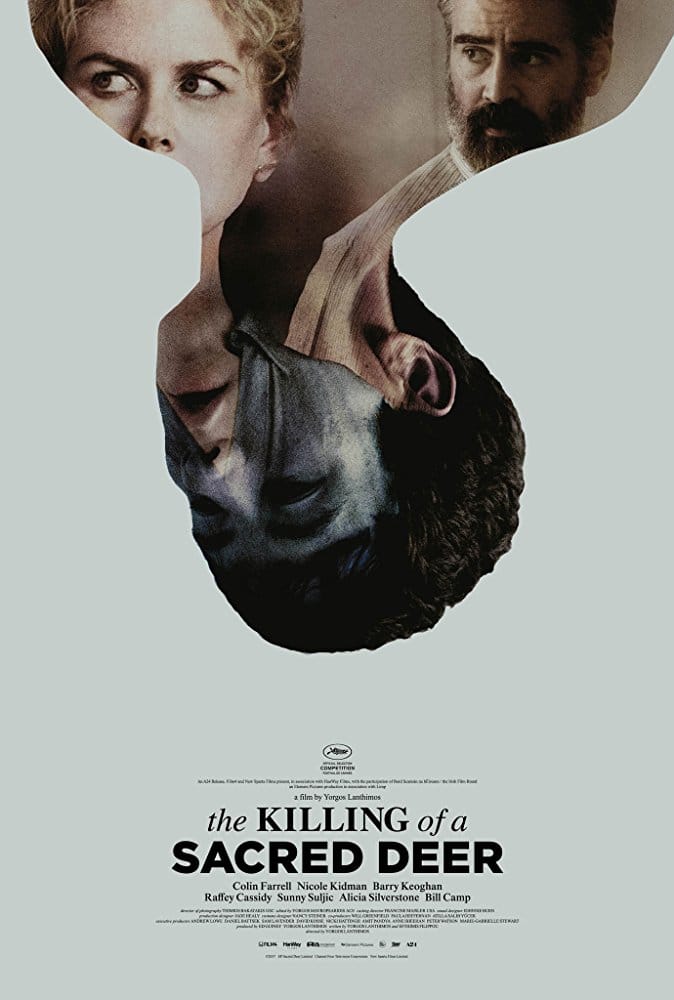 Although loosely based on the Greek myth of Iphigenia – hence the title – The Killing of a Sacred Deer is right up to date, and full of very modern anxieties. Medicalisation, medical procedure, professional practice, wealth inequality and bereavement; here, these things are weaponised. As presented here, accompanied by an overwhelming, atonal soundtrack, the film is a fever dream anyway, but it sticks with the theme of sacrifice, pulling the already loosely-linked Murphy family apart via its genuinely effective, creepy central performance by Keoghan. The physicality of this young actor is – with apologies to the guy – well-suited to the role. He has a sly, usually emotionless face and a voice which betrays no emotion either, no matter what he says. He comes across as deeply unpleasant, and this eventually squeezes some terror and rage out of the Murphys – Steven becomes utterly unreasonable, whilst Anna turns into a conniving nightmare.
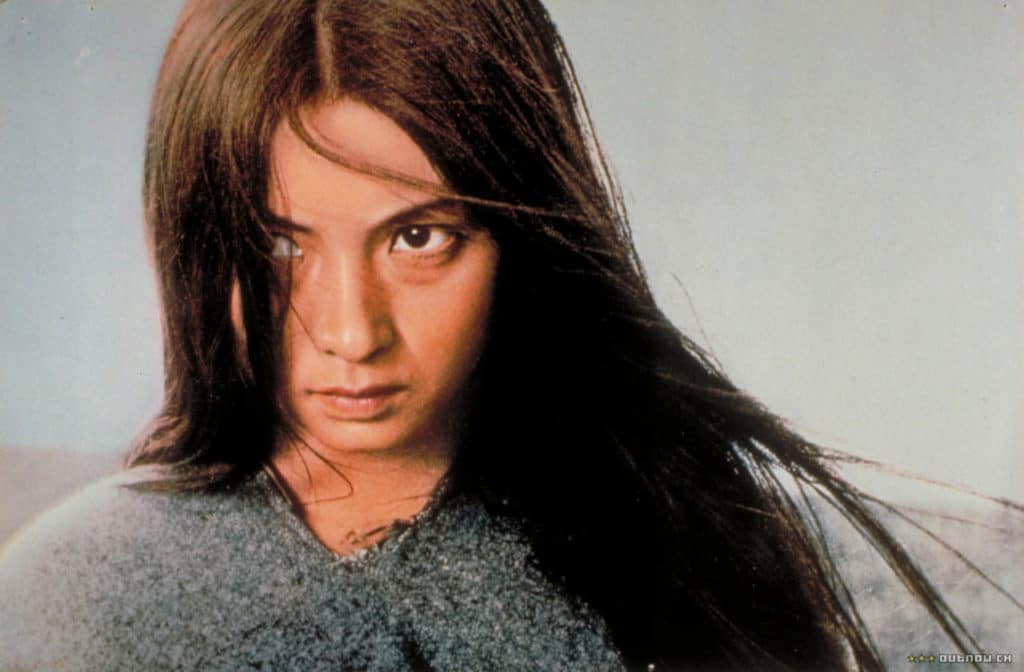 Meiko Kaji is, from a Western perspective, one of the most unmistakable and recognisable Japanese actresses of all time, but this comes with a significant proviso. Most of us know just a tiny fraction of the films she has ever made; only a handful of these nearly one hundred films have really made it over here anyway, and even out of that, we tend to think of her in one of a couple of key roles. Either Meiko Kaji is ‘Scorpion’, the largely mute and indestructible prison inmate of the Female Prisoner series, or she is the sword-wielding agent of doom in Lady Snowblood. This is a state of affairs acknowledged by author Tom Mes in his neat Meiko Kaji book Unchained Melody, available now on the Arrow Books imprint (and thus an extension of the work which Arrow has so far done in publicising Kaji’s work via their existing range of Meiko Kaji releases.)
 I have a real love/hate thing going with Japanese director Sion Sono. On one hand, his so-called ‘hate’ trilogy contains, for me, some of the most genius, subversive films I have ever been immersed in; they’re absolutely jaw-dropping, to the point that I don’t know if I can feasibly revisit Guilty of Romance for fear of washing away that initial impact. He’s also made brilliant cinema with a far more playful edge, albeit for the fact that there’s usually a grim, self-referential message tucked away beneath the many layers of flying limbs and arterial gore. But on the other hand, when I sat down to watch his manga adaptation – usually an indication that things are about to go straight over my head – by the name of Tokyo Tribe, I have to confess I could stand to watch so little of it that I had to abort watching it at all. And I can usually make it through anything. It kind of goes with the territory. Yet here I was, switching off a film by someone I claimed was one of my favourite directors. A straightforward antipathy to hip-hop isn’t quite enough to explain that one.
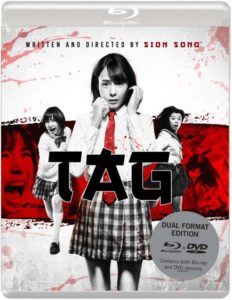 But whilst the justification for all the things which befall our protagonists feels rather hasty and unconvincing in the end, and perhaps a very short hop from the ultimate cop-out of saying it was all a dream, I think what we have here is, overall, a decent Sion Sono film which joins up with many of the styles and preoccupations he has explored previously and feels, at least, a lot truer to form. Really, he’s getting up to his usual mischief here. He’s splicing ultraviolence and cartoonish splatter with questions about, oh you know, selfhood, free will, memory, fate, all the small stuff, even if not dipping into his passion for literature along the way this time. What’s more, Sion Sono is doing all of this with his usual fantastic imagery, set pieces and symbolism – that innovative bridal bouquet is a clear winner – and, to come back to gender for a moment, he’s executing a meticulous disruption of the old archetype of the ‘y
 It’s always a privilege, in these social media-saturated times, to walk into a film screening without the faintest idea of what it’s all about. As I hadn’t even looked at the Celluloid Screams programme before we sat down to watch Habit (and as I almost immediately mix up titles and synopses anyway) it definitely felt like a boon that I had zero expectations, allowing the film to speak entirely for itself. I’m about to stop this being the case for anyone reading, though, by offering the barest of synopses here: Habit is a dark urban crime thriller which gradually adds horror elements, a claustrophobic and nightmarish tale which perhaps overstretches itself in some key regards, but still deserves credit for many of the things it does very well.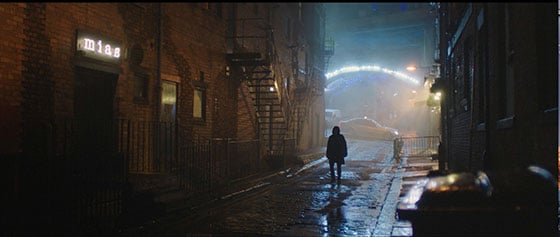
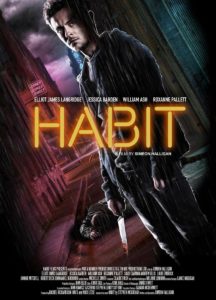 However, as engaging as this new treatment of the cannibalism theme is in We Are What We Are, it brings with it some issues. A little, even just a little more explanation would have benefited the film/s enormously; this doesn’t mean that all loose ends need to be tied up, but some of this would have added a deeper level of understanding for the characters and their motivations. Now, here is where someone on the Habit filmmaking team contacts me to tell me that none of them have even heard of We Are What We Are, so perhaps – perhaps – this may be pure coincidence, but to my mind, the issues which dog the older film cause some of the same issues in Habit. I’d like to know just that shade more about what motivates the characters, or how ‘the family’ were brought together in the first place. If their behaviour makes them feel alive in some new and exciting way, then why, and how does it do so? Admittedly, I don’t know the novel which Habit is based on – this may reveal far more, but going by the film alone is what many, if not most of the film’s viewers will be doing.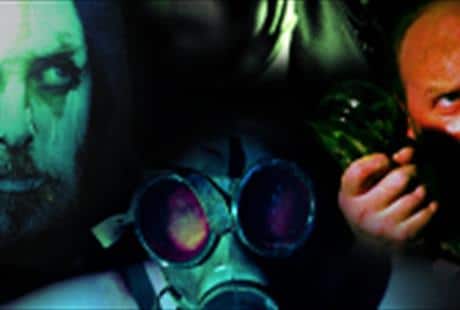
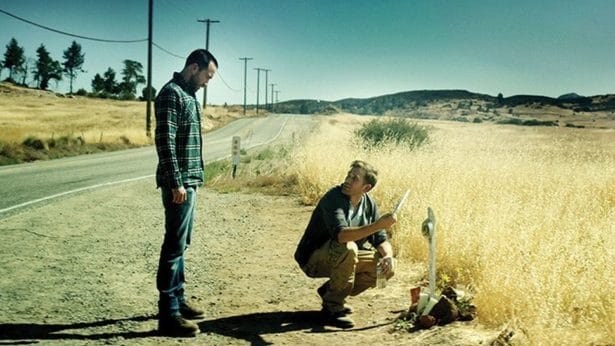 I’ve followed the careers of directors Justin Benson and Aaron Moorhead with interest ever since I covered their challenging and innovative feature debut,
 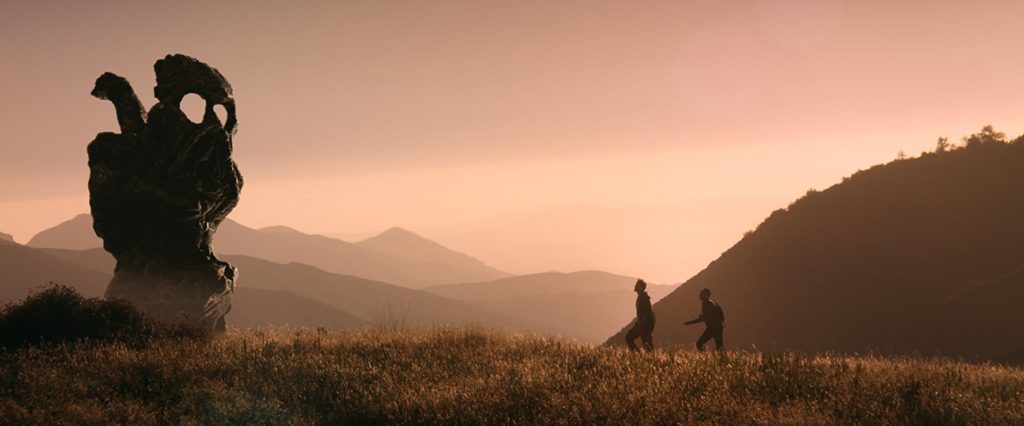 The Endless is not shy of grappling with themes which are terrifying enough in their complexity at the best of times, adding its palpable sense of unease by slow, expertly-wrought degrees. Our vulnerability to something vast and humbling like time itself has long been a source of horror, so the addition of – potentially – a pernicious unknown behind the scenes is both unsettling and ambitious. Linked to this is the idea that personal freedom itself is dubious – something else we don’t like to dwell on, something else that scares us. It would be easy to throw in the word ‘Lovecraftian’ here, and yes, there are a few key moments where that author comes to mind; I’d argue there are some links with his short story, The Unnamable [sic] amongst others. And, like Lovecraft, The Endless knows better than to straightforwardly show its hand. Retaining elements of mystery is key to the film’s success.
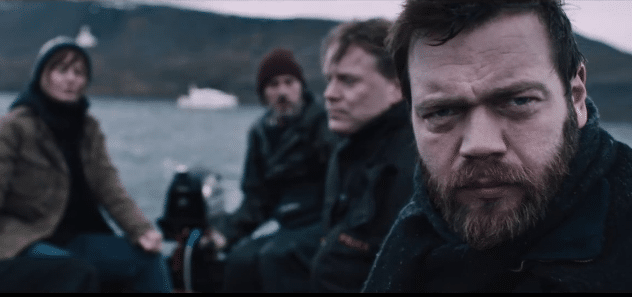 Being a tiny nation, it’s perhaps unsurprising that Iceland hasn’t yet featured very prominently, in its own right, in cinema. Its stunning and evocative landscapes have been used a thousand times in films which simply seek a striking location, but it’s comparatively rare to see Icelandic people, language and stories making their own way to the screen – at least for audiences outside of the country. For this reason alone, it’s welcome to see I Remember You (
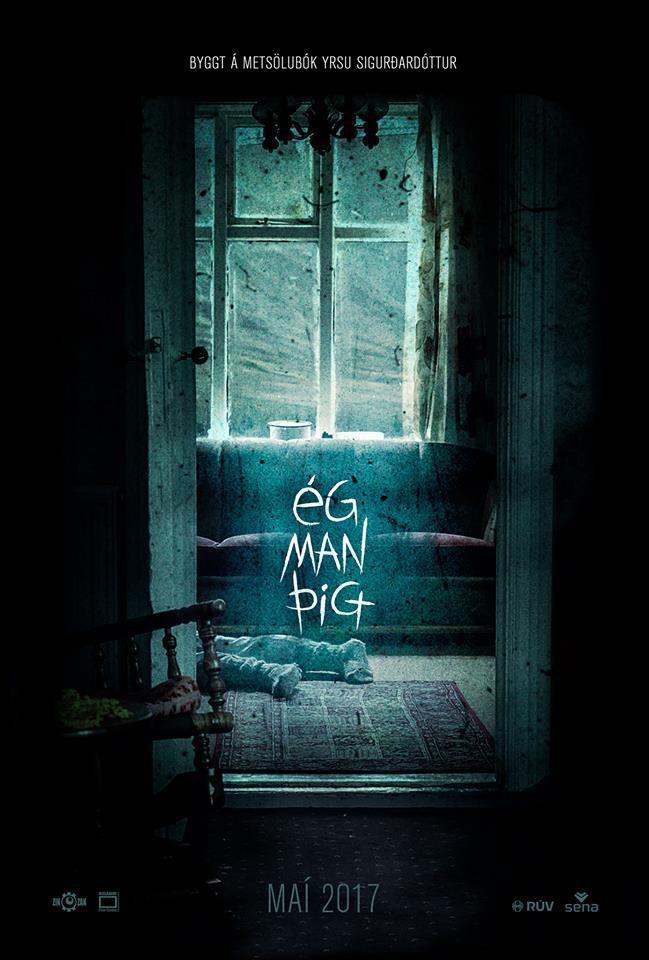 How these two stories will intertwine is kept quiet for a large share of the film, with each story generating its own interest (and several low-key scares); course, you can probably gather that they will, eventually, overlap, and to give credit to writer/director Óskar Thór Axelsson, it’s quite hard to predict the process. That said, it feels like a long road to get to this point: the film runs at 105 minutes, which in today’s climate is not that long at all, but given the deliberation and pace of I Remember You, it feels somewhat longer. If you have patience for these kinds of slow-burn thrillers, then I would say there’s plenty there to reward it, but if you prefer your films more tightly-wrought then you may also feel that this film meanders in places.
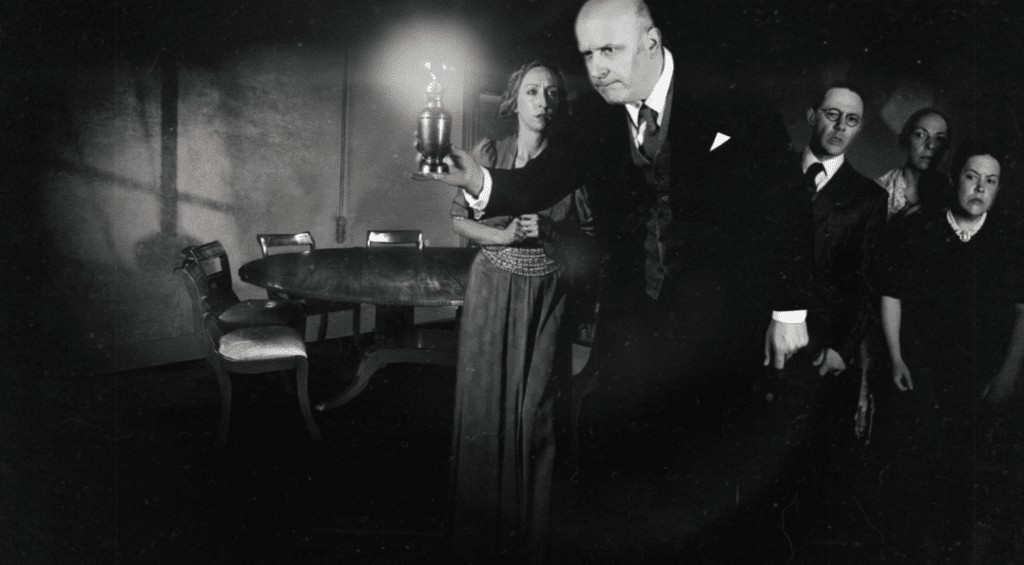 For many of us growing up in the Seventies and Eighties, being terrified by the Borley Rectory hauntings was practically a rite of passage. For my part, I must have been around nine years old, I’d guess, and found out about ‘the most haunted house in England’ from a Readers’ Digest Mysteries of the Unexplained compendium. There were other tales of ghostly phenomena which also fascinated and appalled me – the Matthew Manning story, the Bell Witch case – but the allegedly ghostly scrawls addressed to ‘Marianne’ really fixed themselves in my imagination. I couldn’t bring myself to re-read the section on Borley Rectory for weeks at a time, but thought about it constantly, even beginning to practise my own automatic writing after I read about its use in Borley – thus, terrifying myself even more.
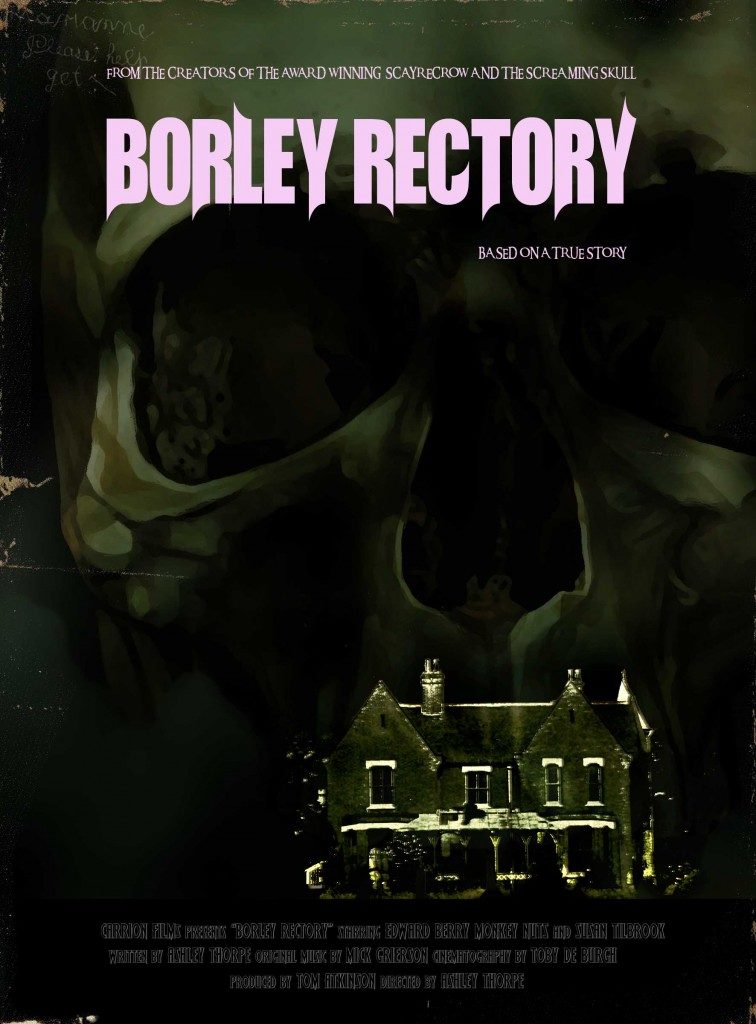 Borley Rectory (2017) is unusually framed as a documentary film, exploring and discussing the events mentioned above in largely linear order with the help of a narrator – none other than Julian Sands. Ashley Thorpe explained at the screening that his film had been heavily influenced by his own childhood nostalgia for spooky 70s TV, such as the works of Lawrence Gordon Clark and the Armchair Thriller series, which had a scary ghost nun of its own. I’m sure I saw some Ghost Story for Christmas artwork tucked away in one of the sequences, too. However, Thorpe also mentioned a love of 1920s and 30s Hollywood horror, which seems altogether heavier in the mix: Borley Rectory is shot entirely in black and white, and the actors wear the heavily stylised costumes and make-up beloved of, say, early James Whale cinema. Whilst it’s somewhat engaging to see some well-beloved actors both dressed in period costume and acting accordingly – with Reece Shearsmith as the Daily Mirror reporter, Nicholas Vince as Reverend Smith and author Jonathan Rigby as Price himself, the rather studied delivery somewhat dwarfs any stylistic links to the barely-glimpsed horrors of Gordon Clark.
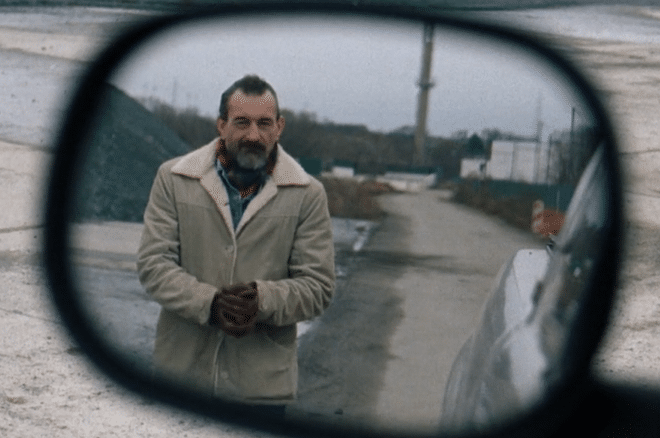 The legacy of Catholicism in French and Belgian left-field cinema seems to mean a strange predilection for Christian themes, although it finds its form in curious ways. In recent years we’ve had Calvaire, made in 2004 (retitled ‘The Ordeal’ for English audiences, which neatly strips it of its Biblical meaning), the Christmas creation horrors of Satan (2006) and of course Martyrs (2008). Now, ten years later, we have something which merges crime drama with something altogether more spiritual and not a little gonzo: voila, Doubleplusungood.
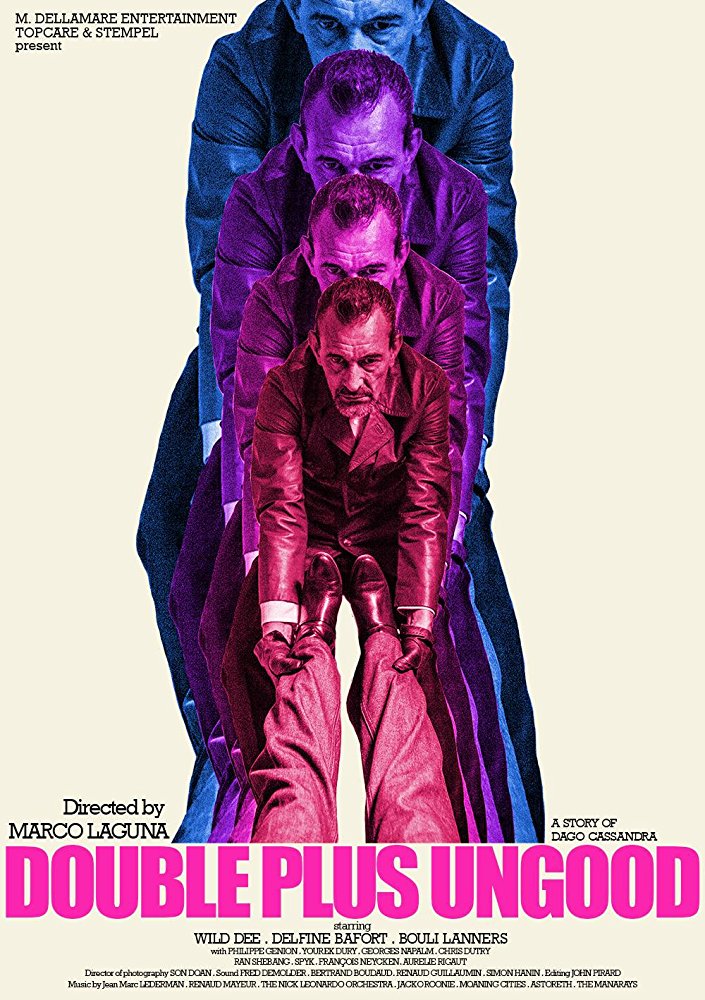 The film, for all its unusual contextual factors, is however broadly linear: it takes its unconventional elements on a pretty straightforward journey through a series of kills, which can feel repetitive, despite the film’s efforts to draw down interest via its inventively-nasty sequences. The film certainly steers away from conventional style or approach throughout: it’s thoughtfully shot, with a wide range of locales and lots of artistic, experimental detail (even veering into psychedelia on occasion). There is undeniably something of the new-wave of French/Belgian horror cinema in the way Doubleplusungood looks, with lots of that blueish colourisation, though it’s still far more of a crime thriller overall. That said, we do see a bit of ‘implement torture’ going on here, which also chimes with those new wave horrors.